American Security Requires Strategic Competence, Not Military Power Alone

H.R. McMaster argues that the greatest danger to American security is not a lack of military power but a loss of strategic competence after the Cold War. In a Hoover Institution discussion, the former national security adviser says U.S. leaders mistook a temporary unipolar advantage for a lasting condition, underestimated the political nature of war, and failed to connect military action to achievable political outcomes. That failure, he argues, now meets a more dangerous environment in which China, Russia, Iran, and North Korea are increasingly reinforcing one another.
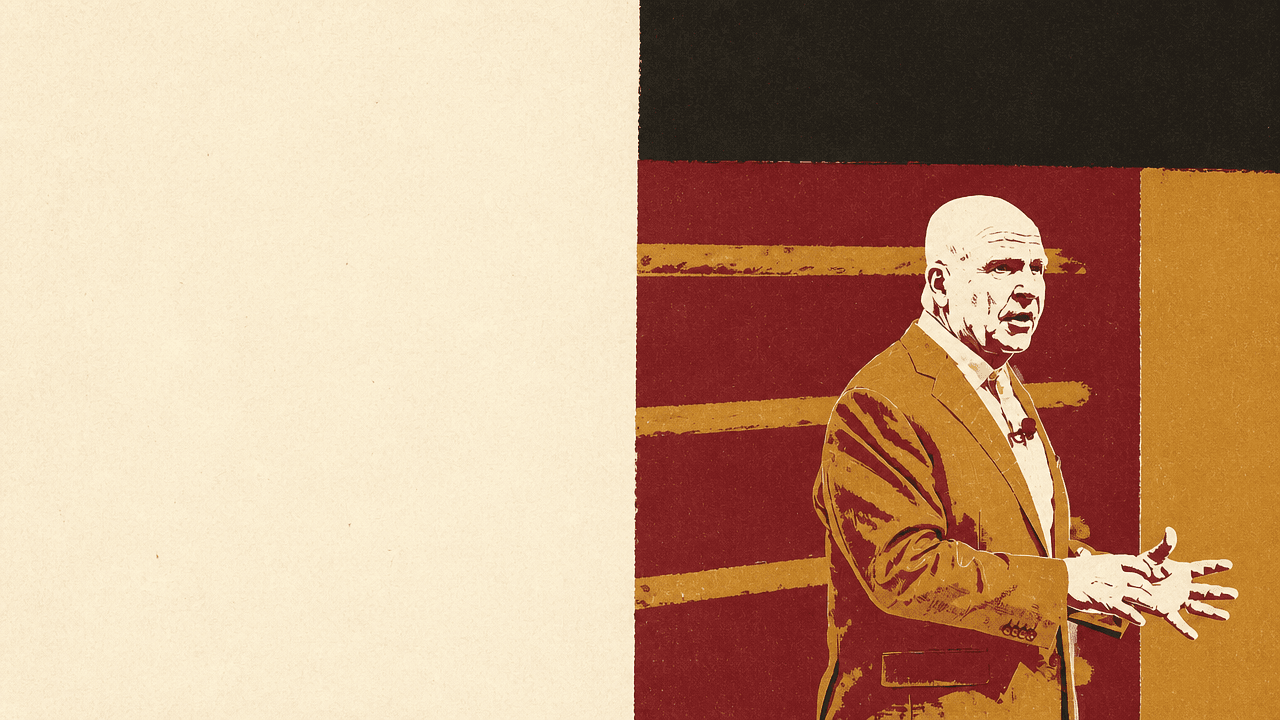
Today’s danger follows from overconfidence, failed war termination, and coordinated adversaries
Herbert McMaster argues that the United States is in a period of significant danger not because American military power disappeared, but because American leaders drew the wrong conclusions from earlier success. In his account, the post-Cold War United States moved from confidence to overconfidence, then into strategic shocks, long wars, and a broader national loss of confidence. That cycle now meets a harsher external environment: China, Russia, Iran, and North Korea, which he describes as an “axis of aggressors,” are aiding one another to an unprecedented degree.

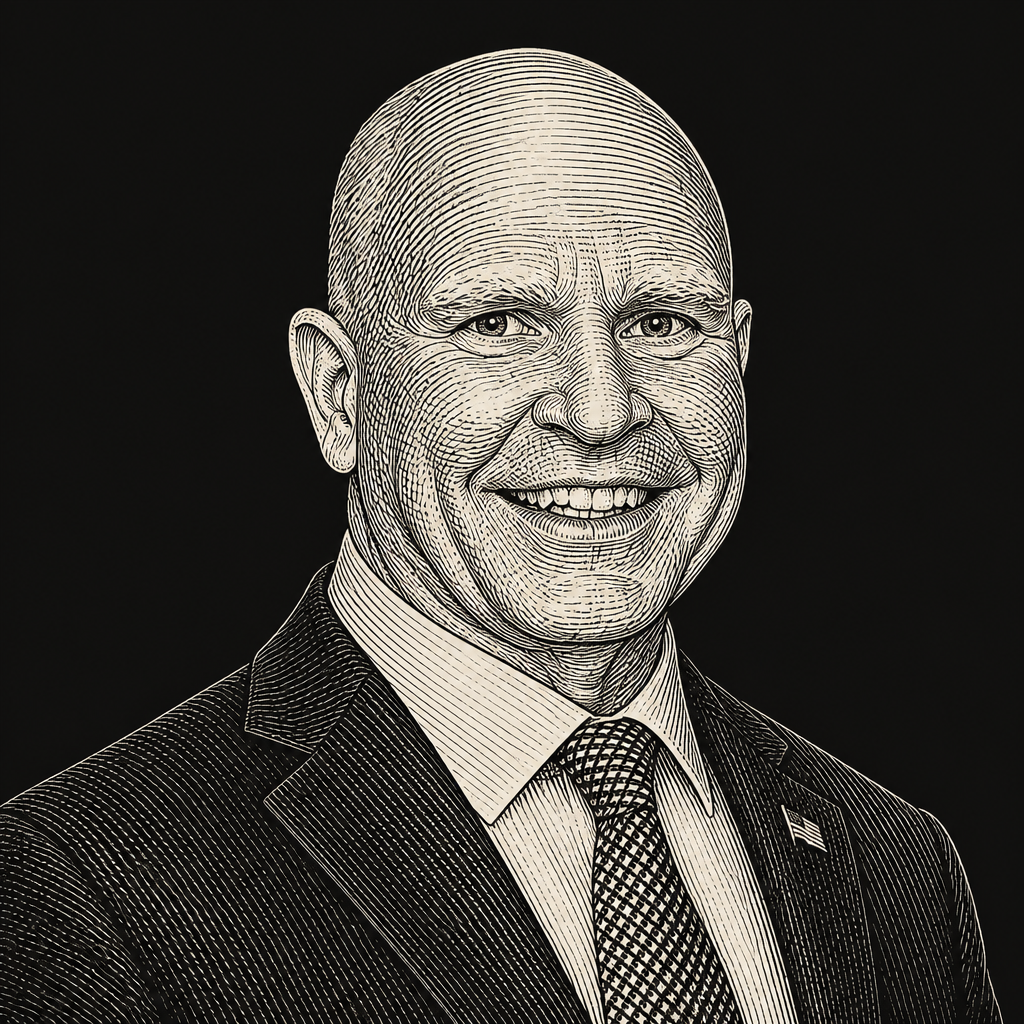
We are in a period of significant danger because we had that period of overconfidence that was a setup for those disappointments of the unanticipated length and difficulty of the wars in Iraq and Afghanistan.
The post-Cold War confidence came, for McMaster, from two formative events. In November 1989, he was serving in Germany when East Germany lifted travel restrictions to the West. His regiment had been patrolling the East-West German border that day. One moment, American soldiers were facing East German border guards; the next, barriers opened and East Germans crossed in growing numbers, bringing wine and flowers, with hugs and tears. “The Cold War ended,” he says, “without us firing a shot.”
That was followed almost immediately by war. Saddam Hussein invaded Kuwait in August 1990, and the same cavalry troop deployed to Saudi Arabia and took part in Operation Desert Storm. McMaster describes that campaign as a lopsided victory over “the fourth largest army in the world.”
Those twin experiences, he says, encouraged three beliefs: that history had guaranteed the primacy of free and open societies over closed authoritarian systems; that great-power rivalry had become a relic of the past; and that American technological military prowess would guarantee security far into the future. The problem was not confidence itself. It was that confidence became overconfidence, “and maybe even a kind of a touch of hubris.”
Charles Krauthammer’s phrase “the unipolar moment” becomes, in McMaster’s telling, a warning Americans misread. “We forgot the moment part of that,” he says. The United States acted as if unipolarity were a durable condition rather than a temporary strategic circumstance, and it “vacated critical arenas of competition” on the assumption that American primacy would endure.
The result was a setup for surprise. The September 11 attacks exposed the limits of technological military superiority: terrorists using box cutters and airplanes bypassed American military prowess and carried out what McMaster calls “the most destructive terrorist attack in history.” The wars that followed in Afghanistan and Iraq then exposed another mistaken belief: that regime change and war termination could be fast, cheap, and efficient.
McMaster does not center his Iraq discussion on whether the 2003 invasion should have happened. He says more time should be spent on a different question: “Who the heck thought it would be easy?”
The 1991 Gulf War had a narrow objective: “give Kuwait back to the Kuwaitis” and return to the status quo ante. Replacing the Iraqi government was a different problem. American assumptions were distorted by the earlier victory and by faith in technological advantage. The deeper error, McMaster argues, was conceptual: Americans “talked ourselves into believing” that consolidating military gains into sustainable political outcomes was “kind of an optional phase of war.”
The loss of confidence that followed was not only about Iraq and Afghanistan. McMaster also points to China’s entry into the World Trade Organization, major transitions in the global economy, manufacturing job losses especially in the Midwest and Rust Belt, the 2008–2009 financial crisis, the opioid epidemic, and the effects of social media. In his telling, social media exacerbates disenchantment and disenfranchisement by feeding users more extreme content in pursuit of advertising dollars and clicks.
The country moved, in this account, from post-Cold War overconfidence to pessimism, disenchantment, and lack of confidence. The task he sets is how to regain confidence in America’s ability to compete effectively in national security and to fight and win wars without returning to the assumptions that produced the earlier overconfidence.
The post-unipolar world is dangerous because rival powers are reinforcing one another
McMaster’s strategic environment is not simply a world after American unipolarity. He describes an “axis of aggressors” built around two revanchist or revisionist powers on the Eurasian landmass: China and Russia.
In his characterization, China and Russia have “pulled into the fold” Iran, which he calls “the only theocratic dictatorship,” and North Korea, which he calls “the only hereditary communist dictatorship in the world.” The notable feature, for McMaster, is the degree of coordination he sees among them. He says there is an “unprecedented degree” of this axis “aiding and abetting each other’s efforts.”
That claim gives urgency to his argument about American overconfidence. If the post-Cold War United States treated great-power rivalry as obsolete, the present requires a different premise: rivalry is again central, and the states McMaster names are helping one another. Strategic competence therefore starts with seeing the environment as it is, not as post-Cold War assumptions suggested it would remain.
Strategic competence means connecting means, risks, and political ends
McMaster’s proposed answer is not a new slogan but a return to “strategic competence.” He frames it as something students and future policymakers should develop as a personal theory: a way to think clearly about complex problems rather than a formula that dictates decisions. He invokes Clausewitz’s view of theory: it does not accompany commanders to the battlefield and make choices for them, but it should sharpen judgment.
The basic military definition of strategy, McMaster says, is the relationship among ends, ways, and means: applying means through ways to achieve ends, with a logical connection among them. But his practical test is sharper. A strategy is real if a platoon leader or company commander can explain to soldiers why the risks they will take, and the sacrifices they may be asked to make, serve an outcome worthy of those risks and sacrifices.
The true test of strategy is if a platoon leader or a company commander can explain to his or her soldiers how the risks that they’re going to take on an operation and the sacrifices they may be called on to make are in service of achieving an outcome that’s worthy of those risks and worthy of those sacrifices.
That standard ties the highest level of policy to the people executing it. A vague aspiration is not enough. Nor is activity. McMaster says one should look at what the United States is doing in the world and ask what the strategy is to achieve a well-defined goal or objective. “Oftentimes you can’t figure it out,” he says. “And there’s a problem. It’s probably because there’s a lack of strategy.”
The 1990s distorted strategic judgment because Americans focused almost entirely on change: changes in the geopolitical environment and technological changes that produced military advantages. They neglected continuities. History matters because it shows both change in the character of warfare and continuity in the nature of war.
McMaster recommends Sir Michael Howard’s method from “The Use and Abuse of Military History”: study military history in width, depth, and context. Studying in width allows a strategist to see across a broad scope of time and identify changes in warfare’s character while remaining alert to what persists. McMaster names four continuities that he says are neglected at great peril: war is political, war is human, war is uncertain, and war is a contest of wills.
These are not academic labels in his argument. They are the test by which recent American failures, and ongoing conflicts, should be understood.
War is political, so military action cannot be separated from the settlement it seeks
The first continuity for Herbert McMaster is the most familiar and the most often violated: war is an extension of politics. He jokes that “everybody knows” Clausewitz’s formulation, but he insists the implication is concrete. War should aim at a sustainable political outcome. If that is true, consolidating military gains is not optional.
He applies that principle to current conflicts. In Gaza, he says, the problem is not only military action against Hamas but the creation of space for an alternative to Hamas to emerge so that a political settlement becomes possible. He describes Hamas as a terrorist organization committed to destroying Israel and killing Jews, and argues that a political settlement cannot come through such an entity. The strategic question, then, is how a different political order could emerge in Gaza.
In Ukraine, McMaster says the war is being fought over territory, populations, and resources. Calls to end the war cannot be separated from the political end state. His view is that Vladimir Putin will not accept a political end until he concludes he cannot continue the war at acceptable cost and risk — “essentially concludes that he could be losing.” Military action and political outcome cannot be disconnected.
That disconnection, he argues, marked Afghanistan and Iraq. On Afghanistan, McMaster is especially blunt. Nearing the fourth anniversary of what he calls the “self-defeat,” “humiliating,” and “deadly” withdrawal, he says American military activity had become disconnected from the political outcome Washington claimed to seek.
He traces the problem back before the final withdrawal. During the Obama administration, he says, the United States stopped designating the Taliban as an enemy and convinced itself that the real problem was al-Qaeda, particularly al-Qaeda in Pakistan, not the Taliban. In McMaster’s view, this was a delusion: the United States “created the enemy we would have preferred” by assuming the Taliban was separate from other jihadist terrorist organizations, including al-Qaeda.
That assumption enabled a preferred strategy: talking to the Taliban political council in Doha while reducing aggressive military pressure on the Taliban. McMaster argues that the United States gave the Taliban little incentive to reach an acceptable settlement, especially after announcing years in advance its schedule for withdrawal from Afghanistan. Military behavior, diplomatic process, and political goals were misaligned.
The larger lesson is not merely that Afghanistan policy failed. It is that war termination cannot be improvised after combat or detached from the enemy’s incentives. If war is political, the question of how gains become a durable settlement has to shape the war from the beginning.
War is human, uncertain, and a contest of wills
McMaster’s second continuity is that war is human. People fight, he says, for the same reasons Thucydides identified 2,500 years ago: fear, honor, and interest. A strategy that does not address the emotions and ideology driving conflict will fail. This point reinforces his critique of treating adversaries as the enemy one wishes one had rather than the enemy one actually faces.
The third continuity is uncertainty. War cannot be plotted linearly because, as Clausewitz wrote, it is a “continuous interaction of opposites.” The enemy acts, adapts, and shapes events. As McMaster puts it, “Your enemy has a say in the future course of events. Your enemy has authorship over the future.”
That makes announced timetables and fixed troop schedules especially suspect in McMaster’s view. When the United States announced years in advance how many troops it would have on the ground and when it would withdraw, he argues, it acted against the nature of war. It treated war as if it could be managed according to a declared administrative sequence rather than as a contest with an enemy who would adapt to that sequence.
The fourth continuity is that war is a contest of wills. A country must be able to sustain its will. McMaster says the United States was unable to do so in recent wars and “succumbed to a mantra of ending endless wars.” He attributes this in large measure to failures of presidential leadership across administrations. A series of American presidents, he says, did a poor job explaining to Americans what they needed to know: what was at stake, and what strategy could deliver a favorable outcome at acceptable cost and risk.
This is a political argument as much as a military one. Public will cannot be sustained by slogans or inertia. It requires an explanation of interests, costs, risks, and plausible outcomes. Without that explanation, wars become either abstractions to be ended or burdens to be endured, rather than contests connected to national purpose.
Confidence has to be rebuilt through competence
McMaster’s call to regain confidence is not a call to recover post-Cold War assumptions. Those assumptions are the problem. Confidence has to be rebuilt through competence: clear objectives, a realistic theory of war, and alignment between military action and political outcomes.
That means rejecting the belief that technological military prowess can substitute for strategy. The Gulf War helped convince many Americans that wars could be fast, cheap, and efficient. Iraq and Afghanistan showed the danger of that belief. But McMaster does not draw the conclusion that the United States cannot achieve favorable outcomes. He argues that favorable outcomes require a better understanding of war’s enduring nature.
For McMaster, strategic competence is a guardrail against self-delusion: the delusion that primacy is guaranteed, that enemies will behave as preferred, that wars can be scheduled in advance, that technology can replace political strategy, or that military gains will consolidate themselves.