Germany’s Defense Shift Recasts Europe’s Role in NATO
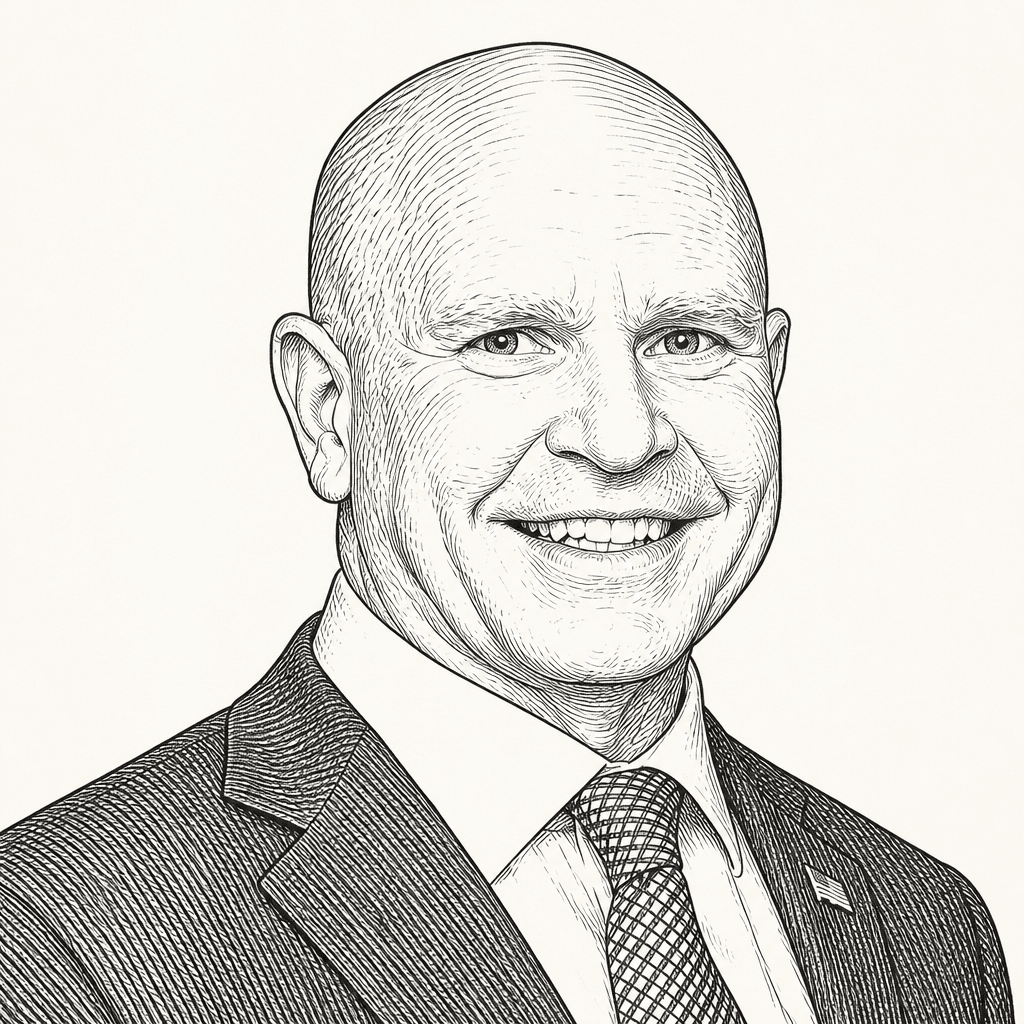
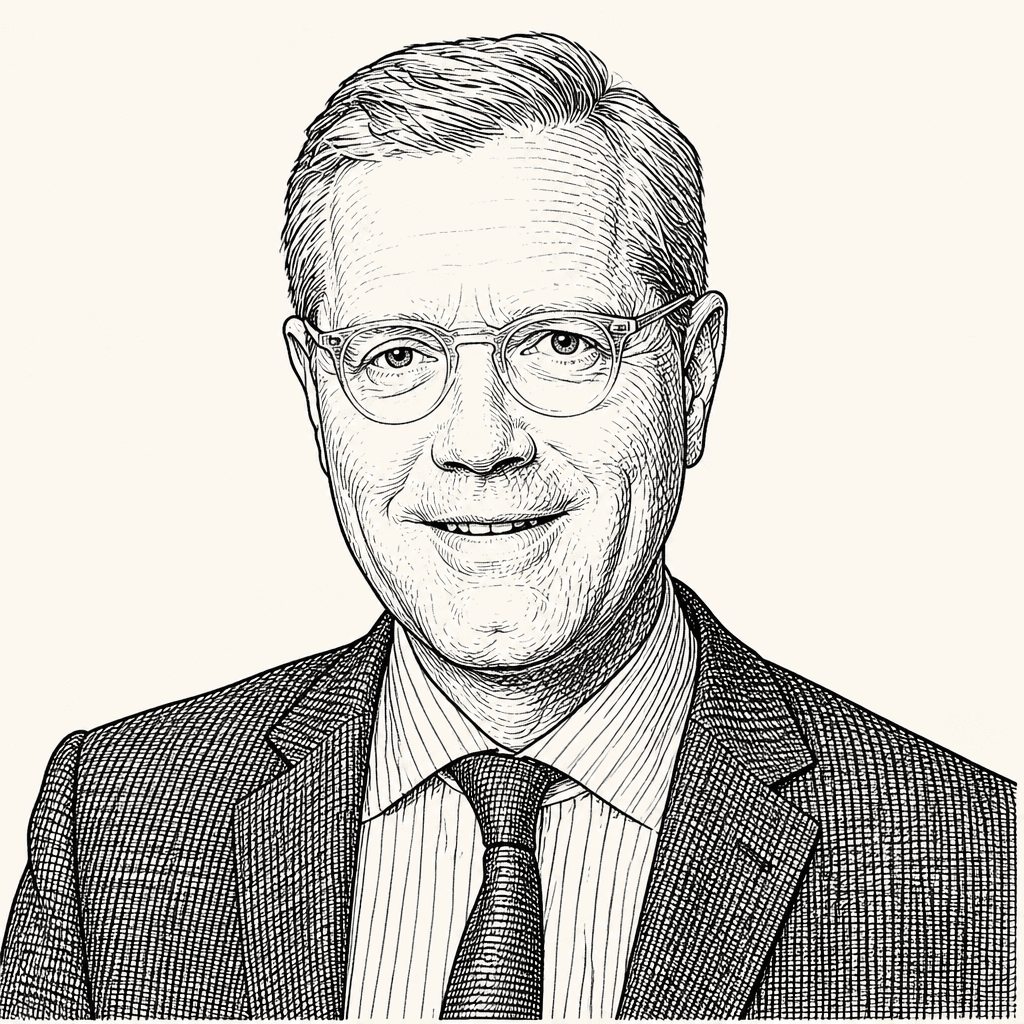
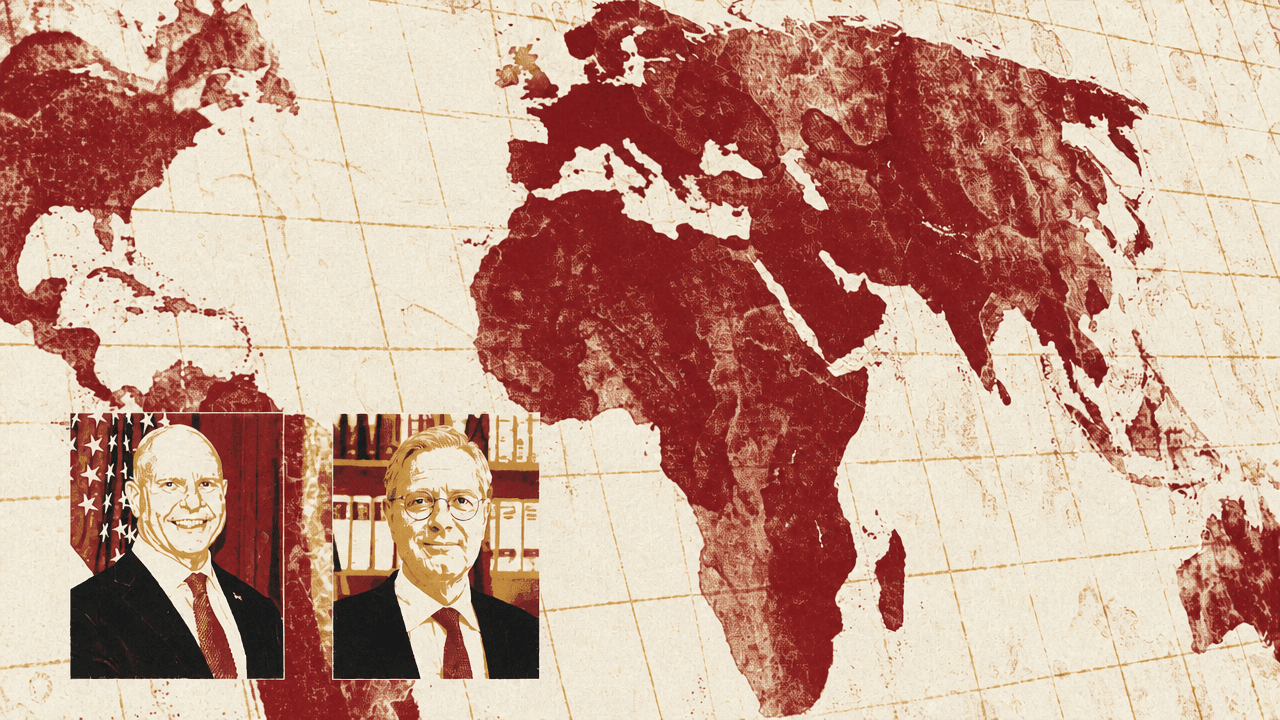
Norbert Röttgen, a senior CDU/CSU lawmaker in the Bundestag, argues in a Hoover Institution discussion with H.R. McMaster that Germany has belatedly accepted that Europe’s peace now depends on deterrence, defense capacity and resilience against Russian coercion. He says Berlin’s post-Cold War assumptions about trade, Russian moderation and American security guarantees cost it crucial time, but that Germany’s sharp rise in defense spending marks a real strategic shift. Röttgen’s answer is not a looser transatlantic relationship, but a new division of labor in which Europe carries more of its own defense while preserving the United States as partner and backstop.
Germany’s strategic shift is real, but late
Norbert Röttgen treats Germany’s postwar success as inseparable from the United States. Democracy, rule of law, prosperity, a liberal social market economy, peace, freedom, and reunification, he says, “would not have happened without America.” That history is not nostalgia for him. It is the premise for his argument that the US-German alliance remains necessary because the postwar period has ended, while no stable new international order has yet replaced it.
The central claim is that Germany is living through a dangerous interregnum. Aggressive powers that reject Western values want a larger role in whatever order comes next. The defense of freedom and peace, in Röttgen’s view, is therefore no less urgent than it was during the Cold War.
That argument rests on an admission of German error. The fall of the Berlin Wall and the collapse of communism produced what Röttgen calls a “great victory” for the values and political systems of the West. Eastern Europeans and East Germans had refused to remain deprived of democracy, self-determination, free movement, and free expression. Germany reunified “in peace and in freedom.” But the victory encouraged an assumption that the lesson of the twentieth century had been permanently learned and that Europe had achieved a lasting peace order.
Röttgen says he shared some of that optimism. He recalls being in the Bundestag in 2001 when Vladimir Putin addressed German parliamentarians and spoke of building a European house with Russia included. In Germany, the prevailing phrase was that the country was “encircled of friends.” That confidence had consequences. Germany neglected military capability, treated the Bundeswehr as less central, and became “quite pacifist” in the post-Cold War period. The comfort of that world made it harder for German governments to accept that the environment had changed.
Germany’s postwar story in the source runs from devastation and occupation to Western reconstruction, NATO integration, division, and reunification. The images are stark: a ruined city seen from above; a map of Germany divided into British, Soviet, American, and French occupation zones; a construction-site scene with a Marshall Plan poster reading “BERLINER-NOT-PROGRAMM MIT MARSHALL-PLAN-HILFE”; NATO delegates seated beneath the alliance logo; East German missiles on parade; a border guard tower; long queues outside a building; then the Berlin Wall, crowds standing on it, and the Reichstag after reunification. The point is not only that the United States helped rebuild West Germany. It is that Germany’s democratic, prosperous, Western identity was built inside a specific security architecture.
After reunification, Germany remained anchored in NATO and the European Union while pursuing economic engagement with Russia and China under the doctrine of “Wandel durch Handel,” or change through trade. The source places that doctrine beside images of Gerhard Schröder with Vladimir Putin, the Beijing DaimlerChrysler Automotive cornerstone, and a 2007 Nord Stream conference slide identifying Schröder as chair of the Nord Stream shareholders’ committee. It then turns to Nord Stream infrastructure, Russian military action, and Chinese military assertiveness. The narration’s claim is direct: German leaders expected commerce to moderate Moscow and Beijing; instead, Russia and China turned interdependence into instruments of coercion.
The latest point at which reality should have broken through, Röttgen says, was 2014, when Russia annexed Crimea after Ukraine had chosen a westward course. He rejects the idea that this was a result of Western expansion. In his telling, it was Ukraine’s sovereign decision and the aspiration of Ukrainians to remove a corrupt leadership and join the European democratic family. That prospect was intolerable to Putin because a successful European Ukraine would expose the stagnation and repression of Russia’s authoritarian system. Crimea was therefore the point at which Russia “left the order” and became aggressive, violent, illegal, and imperialistic.
Germany did not respond with sufficient seriousness. There was outrage and sanctions, but within a year, Röttgen says, German government and business had returned to business as usual. He had been a vocal critic of that policy, but the majority position remained attached to the comfortable assumption that Germany did not need to defend itself. The result, in his view, was a loss of time that should have been used to rebuild deterrence and thereby avoid war.
We really missed a lot of time to react and to build up our defenses and our deterrence in order to avoid a violent escalation, basically to avoid war.
Herbert McMaster sharpens the point by listing earlier warnings that, in his view, should have challenged Western complacency: the poisoning of a Ukrainian presidential candidate in 2003, Putin’s Munich speech in 2007, denial-of-service attacks on Estonia, the invasion of Georgia in 2008, and the annexation of Crimea in 2014. McMaster frames the failure as a broader Western mistake: an assumption that the arc of history had guaranteed the primacy of free societies, that great-power rivalry was over, and that economic and technological strength would automatically secure the future.
Röttgen divides the failure into two periods. Before Russia’s full-scale invasion in February 2022, he sees complacency and a lack of leadership. Putin’s speeches and actions made his course increasingly clear, even if he did not literally announce war. Germany nonetheless clung to cheap Russian gas, which industry and consumers liked. The cost, Röttgen says, was not only euros. It was dependency and the neglect of defense.
He recalls the Munich Security Conference shortly before the invasion, when American officials told German counterparts that they had real evidence Putin would attack within days or weeks. Röttgen says the US warnings were met with disbelief by German officials. For him, that disbelief marked “a major political failure in leadership and responsibility for peace and freedom.”
After the invasion, however, Germany changed. He calls it a real paradigm shift, not only in government but among citizens. Military security, defense capabilities, and readiness to defend are now seen as integral to foreign policy because they deter war and protect security. The change is reflected in defense spending. Germany’s annual defense budget was about €50 billion before the war. Röttgen says it is €108 billion in 2026, with budget planning moving toward €150 billion and €170 billion annually.
The political significance of those numbers is as important to him as the fiscal scale. He says the spending is accepted because a majority of Germans now understand that peace is in danger. War is already happening in Ukraine; if Russia succeeds, Europe would be fundamentally different, Germany would not be the same country, and war would move closer.
Röttgen also draws a second lesson from the war: Europe can no longer assume that a non-European power will defend it if Europeans are unwilling to make their own contribution. Germany, he says, now understands that European defense is Europe’s responsibility.
Germany’s military strategy turns responsibility into doctrine
Germany’s April 2026 military strategy gives institutional form to the shift Röttgen describes. The source presents it as Germany’s first standalone military strategy since the Second World War. Its title, “Verantwortung für Europa,” means “Responsibility for Europe.” According to the source narration, the strategy names Russia as the principal threat and commits Germany to lead Europe’s defense by building the continent’s largest army by 2039.
The military-strategy material is concrete rather than atmospheric. The documents shown on screen carry titles including “Entbürokratisierungs- und Modernisierungsagenda,” “Gesamtkonzeption der militärischen Verteidigung,” and “Militärstrategie und Plan für die Streitkräfte — Verantwortung für Europa.” A Bundeswehr command center appears with personnel at computer terminals under the sign “OPERATIVES FÜHRUNGSKOMMANDO DER BUNDESWEHR.” The visual emphasis is on state machinery: strategy documents, operational command, and the bureaucracy required to turn a political declaration into usable force.
The phrase “Responsibility for Europe” fits Röttgen’s wider thesis. Germany’s old post-Cold War premise was that it was surrounded by friends and could let military capacity decline. The new premise is that Germany has to help produce the security environment it wants to live in. The difference is not merely larger budgets. It is a different conception of what German power is for.
McMaster describes the burden-sharing issue as one that long predates Donald Trump. Former US Defense Secretary Robert Gates warned Europeans during the Obama years that they needed to spend more. Trump made the same point more bluntly, asking Chancellor Angela Merkel why Germany was not paying more if it cared so much about NATO.
Röttgen’s answer is direct: Trump was right on that point. Germany promised to move toward 2 percent of GDP at the Wales NATO summit and did not live up to it. Röttgen calls that failure a lack of responsibility. Germany was hesitant, reluctant, and resistant even when the United States under different administrations demanded more. Now, he says, Germany has to conduct “a race against time.”
McMaster invokes George Marshall’s warning before World War II: when there is time, there is no money; when there is money, there is no time. He suggests that Trump and those around him should recognize that Germany is now addressing the central burden-sharing complaint in an aggressive way and, politically, “declare a victory.”
Röttgen says the change is being noticed in Washington, especially in Congress, where he had recently met with members. Trump, in Röttgen’s view, could claim a share of credit for Germany’s shift because his insistence was one reason Germany changed “to the better.” But recognition from Washington matters because Germany is making a hard domestic case: welfare-state cuts are being debated at the same time defense budgets are rising rapidly.
If you don’t have peace, even your welfare state will not feed citizens.
Röttgen frames the choice around the basic function of the state. Security is the first priority because without peace, even a welfare state cannot feed citizens. Public acceptance of this tradeoff, he argues, shows the maturity of the German people. What Germany wants in return is recognition that its contribution is not rhetoric but action: budget growth, military expansion, and a contribution to alliance capability that can uphold peace and, in his phrase, bring peace back to Europe.
Russia is fighting one visible war and one deniable war
Röttgen argues that Russia is already waging two wars in Europe. The first is the conventional war against Ukraine. The second is a hybrid war against the rest of Europe, especially countries such as Germany and the Baltic states. Its purpose is not merely disruption. It is to destabilize democratic systems and weaken citizens’ confidence in the state’s ability to function.
McMaster describes that campaign as a “shadow war” and, in his question, names acts he associates with it: cutting undersea cables, an assassination contract on the head of Germany’s largest defense firm, warehouse explosions, bombs on DHL aircraft, drone incursions, and cognitive warfare. He links the campaign to what he sees as Putin’s broader desire to break NATO and rupture the transatlantic relationship.
Röttgen’s account of the hybrid campaign has several components. Attacks on infrastructure are meant to create a sense of insecurity and to suggest that Western governments are no longer in control. Migration is weaponized, in his view, by bringing in illegal migrants to create the impression that Western states cannot control their borders. Public discourse is targeted through lies and disinformation, which are intended to undermine the credibility and reliability of democratic debate.
The German response, he says, is becoming more serious. Parliament is expected, in his account, to pass a bill creating a much more effective foreign intelligence service. Röttgen presents that as part of a broader recognition that Germany must strengthen resilience across all levels and layers of national defense.
The disinformation problem leads to a tension that McMaster presses directly: how should democracies balance freedom of speech with the need to counter organized propaganda designed to crush confidence in democratic institutions? McMaster says some American leaders have treated European efforts against disinformation as a free-speech problem, and he points to Putin’s self-presentation as a defender of “traditional values” against an allegedly decadent West.
Röttgen separates the two issues. Putin’s claim to be a savior of Western civilization, he says, is not a serious threat in Germany because an overwhelming majority of Germans understand who Putin is: an aggressor, a warmonger, and a figure who attacks the dignity of people and traditional values rather than defending them. The deeper challenge is digital. Artificial intelligence and the broader information environment make it harder to distinguish lies from reality “on the face of it.” Authoritarian adversaries use those tools to undermine the integrity of public communication.
Freedom of speech remains foundational in Röttgen’s account. It is protected in Germany’s constitution and belongs to the foundation of democratic society. Democracies, he says, do not need lectures on free speech from authoritarian dictators or others. But he also argues that freedom has preconditions that the state alone cannot supply; citizens must sustain them. A democratic state can and must protect the integrity of its free society and democratic system. Those who actively and violently seek to destroy democracy, freedom, and the rule of law from within, he says, will be prosecuted, just as threats from outside are resisted.
This is not presented as a narrow security problem. Röttgen links external attack and internal vulnerability. The same societies facing Russian hybrid operations are also experiencing public mistrust, fragmentation, and populist pressure. Deterrence, in this account, now includes military readiness, intelligence capability, resilient infrastructure, public confidence, and the health of democratic discourse.
The alliance still functions, but rhetoric is damaging trust
Herbert McMaster distinguishes physical strength from emotional strength. His concern is that trust across the alliance has been strained by public comments from Trump that Europeans experienced as insulting or threatening. In the discussion, he cites talk of invading Greenland, comments about NATO not being there for the United States despite NATO’s Article 5 invocation after September 11, and remarks about Denmark that he says landed especially hard because Danes suffered high casualties per capita in Afghanistan. He also raises current tensions over what he calls the Iran war, possible withholding of long-range precision-strike capabilities, and a possible withdrawal of troops from southern Germany, including his old regiment, the Second Cavalry.
Norbert Röttgen answers by separating layers. On the level of public rhetoric and communication, he agrees that the situation is often as McMaster describes. It comes at a cost: trust, respect, and even strength. Many Germans, he says, deeply deplore the hostile elements in the rhetoric because they want the friendship and partnership, including its emotional dimension, to continue.
But he also emphasizes a second layer: the continuity of normal relations. NATO is functioning as well as in the past, he says. The United States still has a little less than 40,000 troops in Germany and around 80,000 in Europe. The economies remain closely interlinked, companies operate across both countries, and cultural and friendship networks persist. In that sense, the institutional and societal relationship remains more stable than the rhetoric suggests.
Röttgen also distinguishes announcements from implementation. Announced immediate higher tariffs on cars had been delayed, and he says he thinks they can be sorted out. On McMaster’s reference to an announced withdrawal of 5,000 troops, Röttgen says he has not seen a plan and prefers to wait. On the possible cancellation of Tomahawk cruise missile deployment, however, his warning is sharper. If that cancellation happens, he says, it would create a hole in European deterrence against Russian threats. Russia has Iskander missiles deployed in Kaliningrad that can reach any European capital. For deterrence to be credible, Europe needs an equivalent response; the Tomahawks were that response. Röttgen does not claim to know the outcome and suggests waiting a month or two to see whether an agreement can be reached.
McMaster’s Iran question becomes another test of whether the alliance can preserve common purpose amid public tension. Röttgen describes himself in German politics as both an Iran hawk and a China hawk and says Chancellor Friedrich Merz is on the same side on these questions. His assessment of the Iranian regime is severe: he points to repression and brutality against more than 90 million Iranians, support for Hamas and the conditions behind October 7, assassinations in Europe, and the supply of drones, weapons, and technology to Russia for its war against Ukraine. In Röttgen’s view, the regime actively supports war and terror in the region and beyond.
Röttgen says destabilizing the Iranian regime is a legitimate moral and political goal. He does not dismiss war against Iran in principle, though he says any decision would depend on facts he does not possess: whether consequences have been properly weighed, what the risks are, and whether the strategy is rational. His criticism, within McMaster’s scenario of an Iran war, is that the economic-war dimension appeared to have been underestimated, especially given the long-standing strategic concern over the Strait of Hormuz.
Once a war has begun, Röttgen says, “there is no option to lose the war.” He identifies two goals he says are shared by the German and European governments: Iran must not obtain a nuclear bomb, and the Strait of Hormuz must remain open. Neither Europe nor Iran’s Arab neighbors, in his view, can accept a regime holding a major share of the world economy at risk through a standing threat to close the Strait. Germany, he argues, should express those shared goals fully and publicly.
Röttgen wants a new division of labor, not a looser West
Röttgen begins his agenda for the future of US-German relations with Europe assuming responsibility for European security. His formula is not separation from the United States but a changed division of labor. Europe must become the guarantor of peace and security in Europe, with American backup. Conventional defense and European security should become European responsibilities.
That priority is inseparable from Ukraine. Putin’s war must become a failure, Röttgen says. If Europe and the United States do not succeed in that, he would not be optimistic about NATO’s future. McMaster adds that Putin is likely seeking ceasefire terms unacceptable to Ukraine and Europe as a way to widen divisions across the alliance. Röttgen’s priority implies that such a wedge must be denied: Ukraine’s outcome is not a side issue but a test of NATO’s credibility and Europe’s future security architecture.
The second priority is sovereignty in economic policy. Germany and Europe must regain the ability to pursue their own interests and assert themselves. That means reducing excessive dependency on China. Germany has accepted too much economic exposure, Röttgen argues, creating potential retaliation power if Beijing fundamentally disagrees with a German political decision. Germany already has some experience with such pressure, and he warns that the country’s sovereign decision-making is in jeopardy.
His answer is explicitly transatlantic. He wants a shared China strategy because the issue concerns common interests and values. The earlier account of “Wandel durch Handel” gives that demand its force. German engagement with Russia and China was supposed to moderate hostile behavior. Röttgen’s argument is that dependency instead became a political vulnerability.
He applies the lesson to China policy without reducing it to economic competition. Dependency becomes a political constraint when a state cannot act freely without fearing retaliation. For a country whose industrial model has depended heavily on global trade, that is not a small adjustment. It means reassessing where economic efficiency has produced strategic vulnerability.
The third priority is to “preserve the West.” Röttgen uses the term not as geography but as a normative concept: human dignity, freedom, liberal economies, and democratic values. He rejects the idea that the West is outdated. For future security and freedom, he says, it remains indispensable.
I still believe in the concept of the West. Not as a geography, but as a normative concept.
That position runs through his entire account of the transatlantic relationship. Interests matter, but values are what make the alliance more than a transactional arrangement. The relationship, in his view, must be preserved because democracies need one another in a dangerous period, and because their political principles are under pressure from authoritarian rivals and domestic populist movements at the same time.
Democracy has to compete again on results
McMaster asks Röttgen to explain the rise of the Alternative for Germany, the AfD, and the broader fragmentation of German politics. Röttgen acknowledges that the AfD is rising and that traditional parties are shrinking. He also notes that the liberal party failed to clear the parliamentary threshold in the latest election. But he does not treat this as a uniquely German development. He sees it as one version of a shared problem across Western democracies.
Different electoral systems produce different symptoms. In parliamentary systems like Germany’s, political fragmentation brings new parties into parliament. In first-past-the-post systems such as the United States and Britain, the pressure can appear as radicalization within traditional parties. Röttgen says the Republican Party under Donald Trump is different from the party under the Bushes or Ronald Reagan, and that Reagan Republicans are not currently shaping foreign policy inside the party.
The common cause, in his analysis, is not one grievance but a multiplicity of fundamental changes affecting individual lives: technology, demography, geopolitics, globalization, rising costs, the transfer of traditional industries to Asia and China, the decline of former industrial regions, and the insecurity of workers whose communities have lost jobs. People feel insecure, left behind, and let down. They increasingly see the traditional establishment as a self-serving elite.
Röttgen rejects the idea that mainstream democratic leaders are simply self-serving, but he says there is a real truth behind the perception: traditional parties have not responded adequately to the scale and quality of the new challenges. They have been unprepared, too slow, and insufficient. Voters therefore have reason to ask whether established parties are solving their problems.
That failure creates space for populists. Röttgen says they do not actually have solutions, but they offer simple answers, often through scapegoats: foreigners, aliens, immigrants. Germany has historical experience with this kind of politics, he notes. The populist offer pairs blame with the lure of a strong leader who can bypass slow democratic processes.
For Röttgen, the resulting pressure is serious because democracy is being attacked from outside and inside at the same time. The answer is not simply to denounce populists. Democratic politicians must focus on solving daily-life problems for ordinary people. They will be measured by whether they can improve security, prosperity, and the practical conditions of life. If they cannot raise their problem-solving capacity, new parties will continue to gain strength, though Röttgen doubts such parties are truly acting for the betterment of citizens rather than for power.
McMaster ends on guarded confidence, arguing that democracies still have a say in how they are governed and can reform institutions. He invokes the historian Fritz Stern’s warning about cultural pessimism as a political danger and quotes Stern on US-German relations: “interest and sentiment should tell us that there is no escape from our friendship.”
Röttgen accepts the emotional dimension of that friendship. The countries are tied not only by interests but by values. They need to stay together because the times are dangerous, and they want to stay together because of the kind of societies they aspire to be.