Finland Brings NATO a Border With Russia and a Whole-Society Defense Model
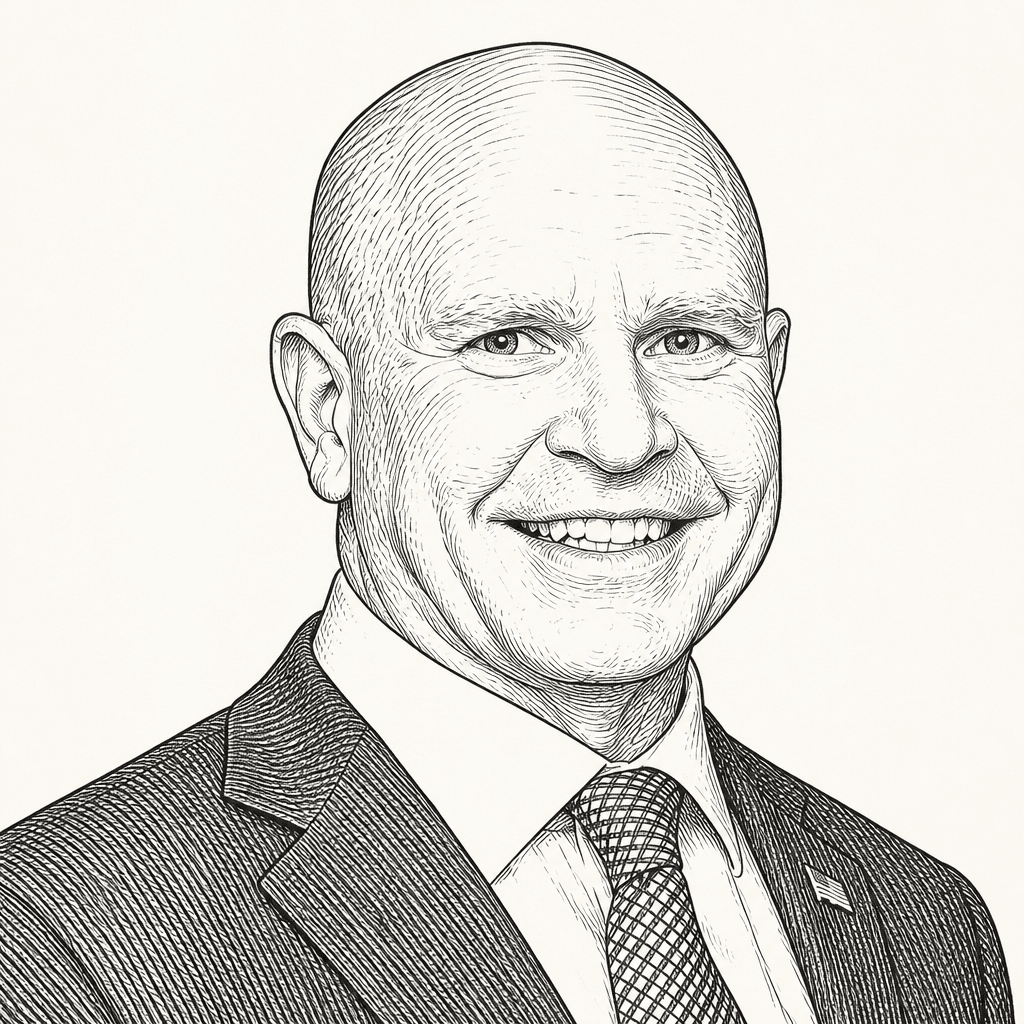

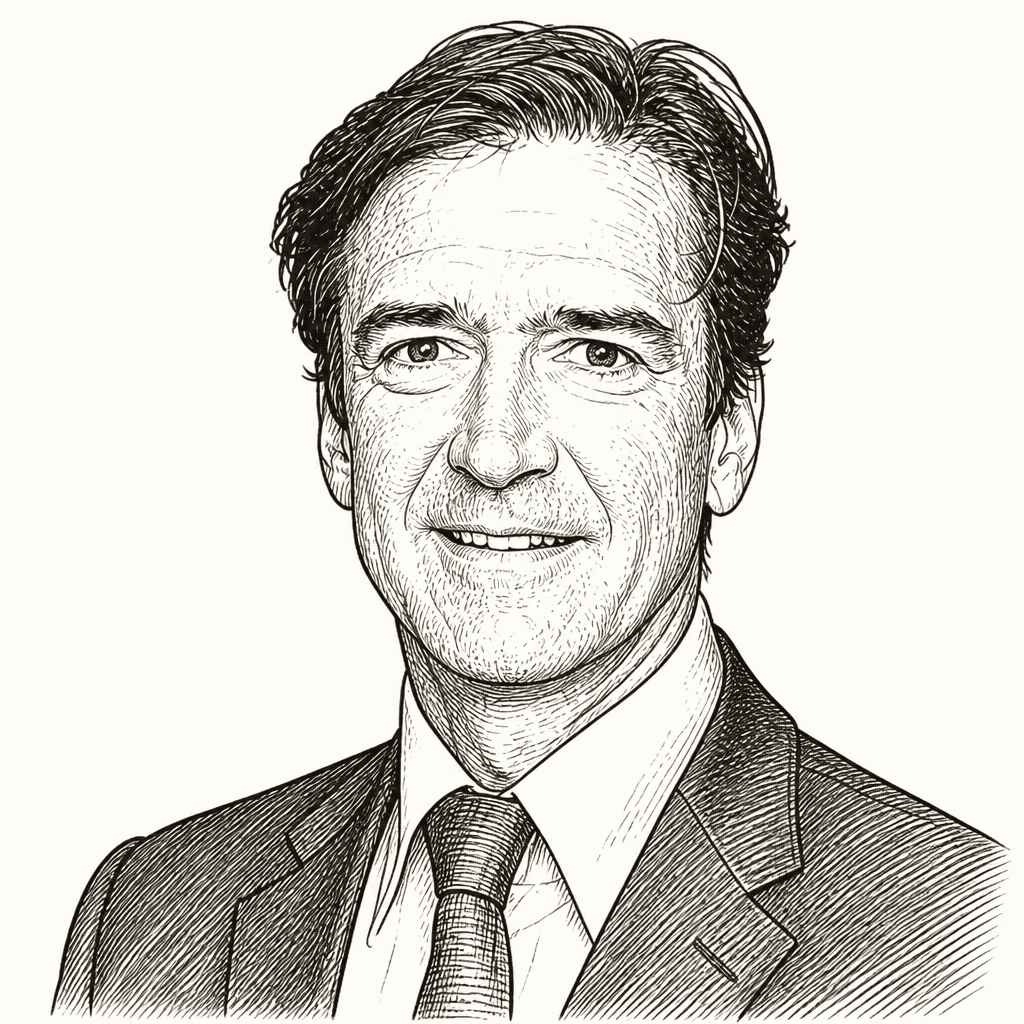
Finnish diplomat Kai Sauer argues that Finland’s entry into NATO is not a turn toward confrontation with Russia but a response to Moscow’s assault on Ukraine and its challenge to sovereign states’ right to choose their own alignments. In a discussion with H.R. McMaster, Sauer presents Finland as a front-line ally whose contribution rests not only on geography, but on conscription, whole-of-society resilience, energy diversification, and trusted technology capabilities. McMaster frames those strengths as part of a broader transatlantic agenda: moving burden-sharing from complaint to practical cooperation.
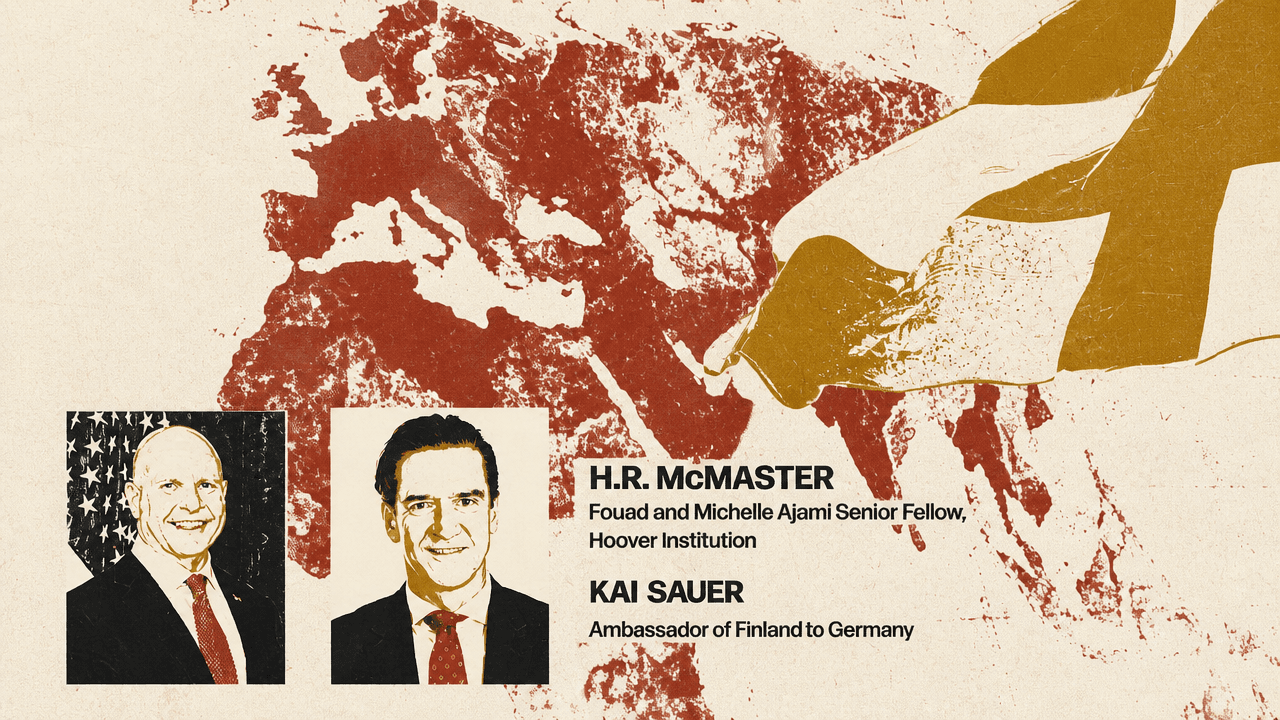
Finland’s NATO entry is not an opt-in to confrontation, but a reaction to a changed equilibrium
Kai Sauer frames Finland’s NATO membership less as a sudden strategic conversion than as the latest in a sequence of deliberate “ins”: independence, European integration, and then NATO. After joining the alliance in April 2023, Sauer says Finland’s task is no longer to choose a new geopolitical direction but to consolidate its position inside NATO while the alliance itself moves through a larger transition.
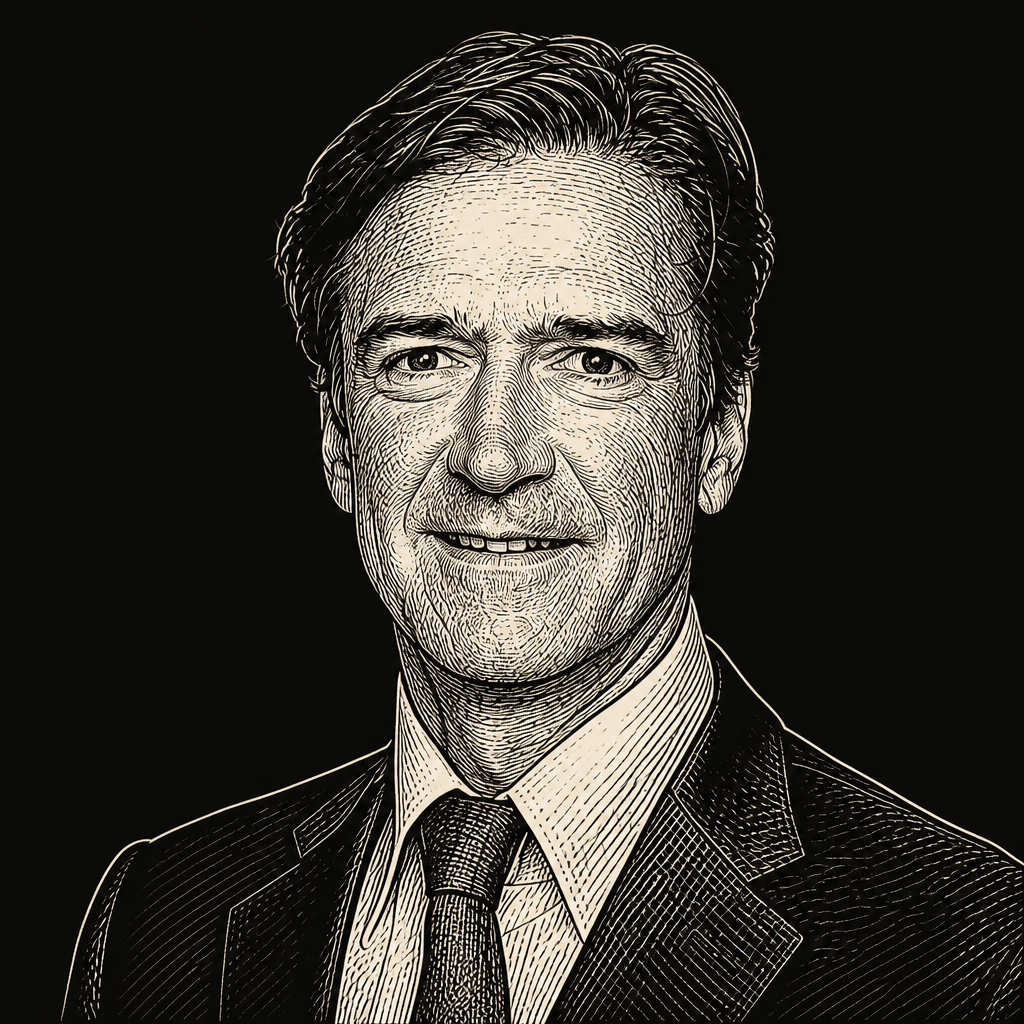
That transition, in Sauer’s telling, is the managed shift of defense burden from the United States to Europe. He does not treat the shift as optional. He says there is political will in Europe and an understanding of necessity. The condition he stresses is that the transfer must not weaken deterrence while it is happening.
We can do the transition, I think there's political will to do that, understanding the necessity, but it needs to be managed so that we will maintain the deterrence.
Finland’s accession also materially changed NATO’s geography. An on-screen chart showed Russia’s border with NATO increasing from 1,215 kilometers to 2,555 kilometers after Finland’s application — an additional 1,340 kilometers. The narrator describes Finland’s accession as extending NATO’s border with Russia by more than 800 miles and strengthening the alliance’s defense capabilities in the Baltic, Nordic, and Arctic regions.
Sauer is careful to pair that altered geography with a claim about intent. Finland, he says, is not projecting aggression. NATO is defensive. Finland wants to be a predictable, reliable neighbor “to the east and to the west.” But he also argues that Russia itself changed the equilibrium by invading Ukraine.
Finland had long kept what Sauer calls the “NATO option” visible. It appeared in Finnish white papers over decades, he says, and Russian officials knew it existed. The decision to join did not emerge from an invented threat or an opportunistic policy shift. It followed Russia’s own conduct: first the 2014 invasion, as Herbert McMaster interjects, and then the massive reinvasion in 2022.
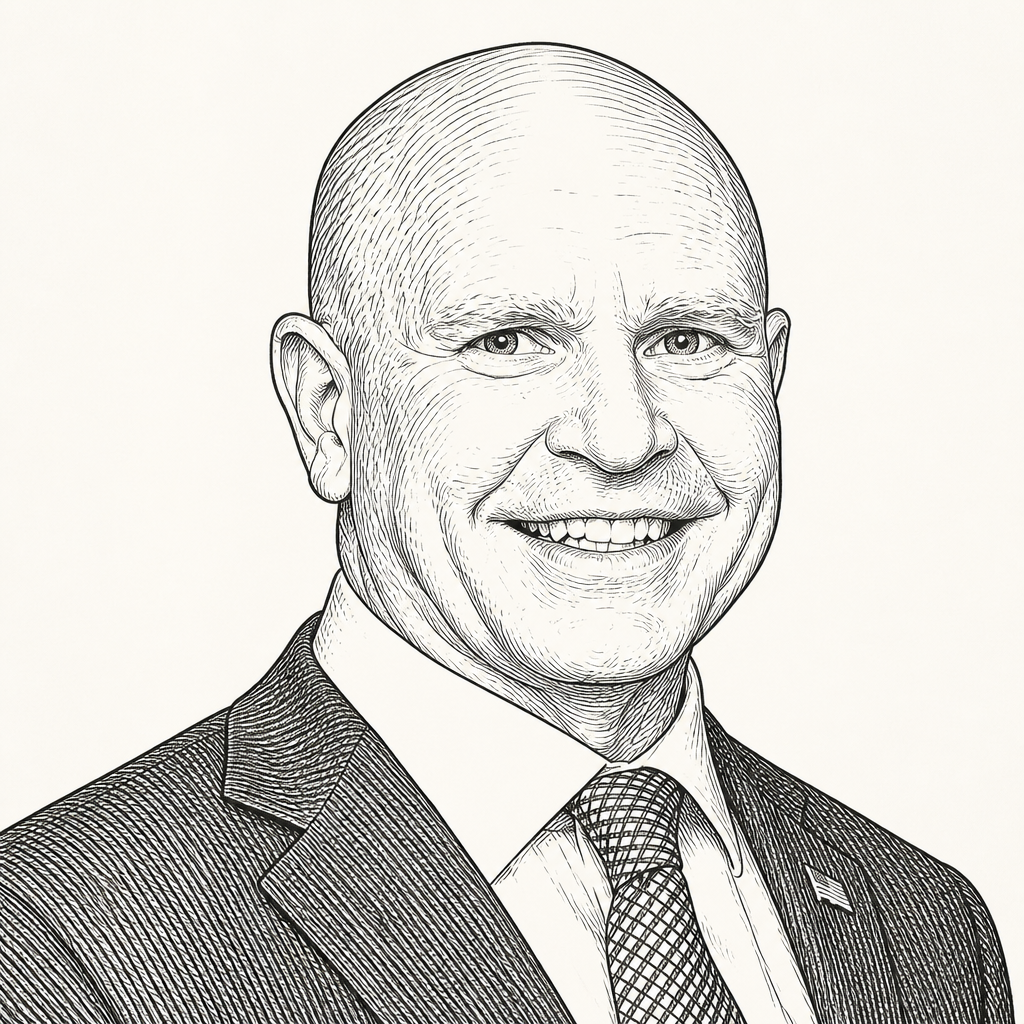
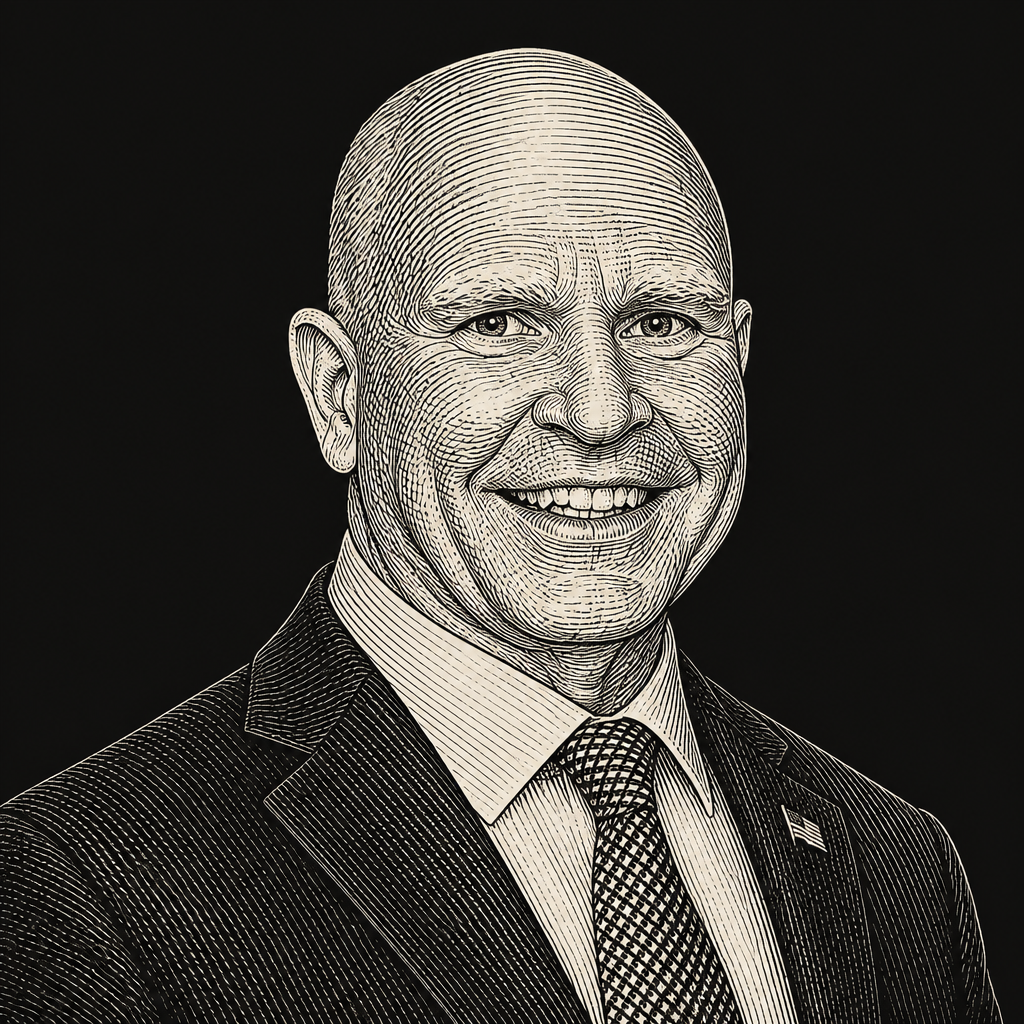
Sauer’s formulation is constitutional as much as military. Finland’s concern is not only Russian force; it is Russia’s claim that neighboring sovereign states should not be free to choose their own security, political, or economic alignments. He later returns to Russia’s 2021 demands, which he describes as questioning the right of sovereign countries to choose their security arrangements. McMaster adds that those demands also implicated countries’ political and economic relationships with the European Union.
For Sauer, resisting that premise is the point. Europe should not return to a Cold War order of spheres of interest and constrained self-determination. Finland’s NATO membership is a rejection of that model.
Finland’s geography made defense a social system, not just a military budget
Kai Sauer describes Finland’s geography bluntly: “we didn’t win in the geographic lottery.” Unlike Iceland or New Zealand, Finland has long lived between larger powers. It was part of Sweden for 600 years and served as Sweden’s frontline against the Russian Empire. Sauer describes “constant incursions” and “constant wars,” while also acknowledging that Sweden itself was an expansive power. He notes, with some hesitation, that Finns serving in the Swedish army during the Thirty Years’ War did “bad things” on the European continent.
The point is not historical grievance. It is institutional inheritance. Finland’s geography and history, Sauer argues, shaped a national “DNA” in which defense investment is normal rather than exceptional. The Second World War reinforced a further lesson: “you should never walk alone.” Finland, in his account, moved from Nordic cooperation, to European integration once Cold War constraints eased, to NATO after Russia’s war in Ukraine transformed the security environment.
Herbert McMaster presents Finland as an exception to a pattern that has caused friction inside the transatlantic relationship. In the American critique he summarizes, Europe represented 19% of world GDP and 50% of world social spending while underinvesting in defense, leaving American taxpayers to underwrite European welfare states by covering their security bills. McMaster says this frustration is visible in President Donald Trump’s burden-sharing arguments, while adding that Finland has long looked different: a country that took ownership of its own defense, maintained mobilization capacity, and could rapidly bring large numbers of citizens into service.
Sauer accepts the contrast but adds an important qualification. For Finland, security is not only military. It is “comprehensive security.” That means military readiness, but also social standards, cohesion, private-sector preparedness, civic participation, and a public that understands its role in crisis.
Finland’s private sector is part of that model. Sauer describes a network of companies critical to security — logistics, construction, telecommunications, medical services, and others — that know what to do because they have rehearsed it repeatedly. Their role applies across crisis types: military conflict, natural disaster, or another emergency. Civic organizations and other actors are also integrated.
This is where Finland’s model differs, in Sauer’s view, even from many European peers. It has a “360 degrees” understanding of security. The state does not simply own defense. Society participates in it.
McMaster connects that model to the cognitive and psychological domain, where Russia has practiced gray-zone warfare: polarizing societies, pitting groups against one another, and fomenting weakness from within. The narrator had earlier described Russia continuing to pressure Finland through hybrid means: weaponizing refugees, cyberattacks, border tensions, and other forms of subversion. The source also showed a yellow border-zone warning sign in a forested area behind a barrier gate. Its warning text appeared in Finnish, Swedish, German, English, and Russian: “SEIS STOP RAJAVYÖHYKE GRÄNSZON GRENZZONE BORDER ZONE ПОГРАНИЧНАЯ ЗОНА.” The image matters because Sauer’s subject is not only an abstract frontier of values or institutions. Finland’s frontier with Russia is also physical, watched, marked, and administratively enforced.
Sauer’s first defense against political subversion is education. Media literacy, he says, is key in a social-media environment he and McMaster describe as unhealthy. Citizens must be able to distinguish real information from fake information, and Sauer grounds that ability in schools, books, and habits of reading.
Finland’s language gives it one unusual advantage. Finnish is small and difficult, Sauer says, making it harder to penetrate with trolls, memes, and artificial text. McMaster jokes that it is almost a form of encryption. Sauer’s point is practical: when a Finnish text contains strange grammar or odd word choices, readers can more easily suspect artificial or foreign manipulation.
But language is only a partial shield. Sauer places greater weight on conscription. In Finland’s system, conscription helps pass security awareness from generation to generation. McMaster draws a comparison to Israel and mentions Singapore, South Korea, and Taiwan as societies in insecure environments that require broad participation in defense. Sauer agrees that these countries form a kind of association of like-minded cases: societies where national defense cannot be outsourced to a narrow professional class.
A strained transatlantic relationship still rests on converging interests
Herbert McMaster is explicit that the transatlantic relationship has been damaged by recent rhetoric. He cites Trump’s skepticism toward NATO burden sharing, which he says Trump can credibly claim to have pushed successfully, but then distinguishes that argument from comments about Greenland and Denmark that McMaster calls “lamentable” and damaging to trust. He also points to disparaging claims that NATO was never there for the United States, when the only invocation of Article 5 came after the September 11 attacks.
Kai Sauer answers cautiously but not evasively. He says President Alexander Stubb is deeply transatlantic, partly because of his personal history studying in the United States. Sauer places himself in the same broad tradition. He lived in the United States for eight years, mostly in New York, and served there during 9/11. He says he took the attacks “to my heart,” saw their effect on the country, and personally witnessed NATO’s response and the invocation of Article 5 at the Security Council.
That experience shapes his view, but he does not romanticize the relationship. Transatlantic ties have had phases, including serious disagreements. McMaster mentions tensions between George W. Bush and Gerhard Schröder over the Iraq War. Sauer points to the United States and United Kingdom as an example of a “special relationship” that has still had ups and downs.
The stabilizing factor, for Sauer, is not sentiment. It is interest. Intergovernmental relations may include friendships, but in the end interests matter. On that basis, he sees substantial common ground between the United States and Europe: economic interests, strategic interests, and, in Finland’s case, specific capabilities that are valuable to the United States.
Finland’s value begins with political orientation — pro-Western and pro-American — but Sauer quickly moves to concrete facts. Geography matters. Russian missile bases are close to Finnish and Norwegian territory. Finland is therefore “the eyes and ears” in that region, while still not projecting aggression. Because Finland has invested in defense resources, it can be useful to the alliance in practical terms.
He also argues for division of labor among partners. In a family, not everyone has to do everything. The more rational and pragmatic approach is for countries to contribute in areas where they have real competence. Finland’s competencies include information technology, engineering, icebreakers, and communications technology.
McMaster picks up those examples and links them to allied vulnerabilities. Finland’s 5G and communications hardware matter, in his view, because the United States and allies need alternatives to Huawei and Chinese-controlled supply chains. Finland’s icebreaker expertise matters because, as McMaster puts it, the United States has recognized that it cannot rebuild resilient supply chains, revitalize its defense industrial base, and counter Chinese economic pressure alone. McMaster states that Finland designs 80% of the world’s icebreakers; Sauer had already identified icebreakers as a Finnish specialization.
The broader agenda Sauer proposes is to stop unnecessary competition among friends and identify common interests more actively. McMaster wants to move the relationship beyond a negative burden-sharing argument toward a positive agenda: missile defense, Arctic security, energy security, supply-chain resilience, and defense industrial cooperation. Sauer does not supply a detailed program, but he agrees with the premise. The opportunity is to translate converging interests into action rather than let mistrust consume the relationship.
Values-based realism means engaging beyond the democratic club without abandoning sovereignty
Herbert McMaster asks Sauer to explain President Stubb’s idea of “values-based realism,” a phrase McMaster associates with the competition against Russia and the need for deterrence grounded both in strength and values. Kai Sauer describes Stubb as unusual among political leaders: a president, former prime minister, former foreign minister, former member of the European Parliament, and also a scholar who spent time at the European University Institute in Florence.
Sauer’s explanation of values-based realism begins with a changing distribution of power. Power is not permanent, and economic power is emerging in parts of the world where Western countries are not accustomed to seeing it concentrated. He specifically identifies the Global South.
The concept, as Sauer presents it, does not require pretending that Finland or Europe shares the same values with all partners in the Global South. It requires dialogue anyway, and a search for common ground. Countries such as India and Indonesia are part of the world Finland must engage. Sauer, who served as Finland’s ambassador to Indonesia, Timor Leste, and ASEAN, says he knows Indonesia well and ties the concept to possible institutional reform: global institutions may need to reflect new power structures.
That institutional emphasis matters for a smaller country. Sauer says Finland believes in institutions because they provide protection and predictability. The logic is not abstract idealism. It is realism from the standpoint of a country that has spent its history trying to preserve sovereign space between larger powers.
McMaster offers sovereignty as a bridge between Western democracies and developing economies. He argues that people share a common desire for a better life for their children and grandchildren and a say in how they are governed. He links that to the American founding idea that sovereignty lies with the people. Sauer answers by returning to Finland’s history between Sweden and Russia: sovereignty is not a slogan for a country that has repeatedly had to defend it.
This is where values-based realism appears to meet Finland’s security doctrine. Engagement with non-Western partners is necessary because power is changing. Institutions matter because they protect smaller states. Sovereignty matters because without it, both security alignments and political choices can be dictated by stronger neighbors. Finland’s view of Russia’s war in Ukraine follows directly from that logic.
Energy security is treated as diversification, not ideology
Herbert McMaster raises energy security as one of the most important areas for U.S.-European cooperation, especially in light of instability in the Middle East. He frames Finland’s lesson as recognizing that it is dangerous to give a hostile regime coercive power over one’s economy. He explicitly compares Europe’s dependence on Russian energy with Western dependence on Chinese manufacturing and critical supply chains.
Kai Sauer answers in practical rather than ideological terms. Finland was not blessed with oil or major natural resources, he says, but it is an engineering country and has remained open to technology in the energy sector. It is pro-nuclear. He notes that Finland is opening a nuclear waste storage facility that he describes as unique in the world — a topic he says is especially sensitive in Germany.
McMaster contrasts Finland’s approach with Germany’s decision to cancel nuclear power and attempt a rapid move to renewables. In McMaster’s view, that move became a “leap off a cliff and into Vladimir Putin’s arms” through dependence on cheap Russian natural gas. He notes that Germany is reassessing and that France never gave up nuclear power, to France’s benefit in energy security.
Sauer’s broader lesson is diversification. A small investor does not put all his money in one basket. Finland relies on nuclear energy but also uses and builds other sources, including wind, hydro, and other renewables. Solar is less significant, he says, but wind is promising. The point is that Finland was never dependent on Russian energy. Russian energy was useful when it worked, but it was only one part of the mix.
That distinction matters. Finland’s energy security was not achieved by eliminating all exposure. It was achieved by preventing exposure from becoming dependency. In Sauer’s analogy, a diversified portfolio becomes more valuable when conditions shift. With a new energy challenge emerging from the Gulf, investments in renewables look better.
The same logic carries into supply chains and technology. McMaster’s concern is coercive dependence: on Russian gas, Chinese manufacturing, Chinese communications hardware, or other strategic chokepoints. Sauer’s Finnish answer is not autarky. It is diversified capability, allied division of labor, and an engineering base that gives partners options.
Ukraine is described as both a victim of aggression and a shield for Europe
Kai Sauer centers his view of Ukraine on sovereignty and Europe’s own defense. Ukraine, he says, has evolved from “a low military power” into a front-runner in many fields. He defers military judgment to Herbert McMaster, a former general, but his political judgment is clear: Ukraine is defending itself against an incursion, defending its sovereignty, and acting within international law. Countries supporting Ukraine are also acting within international law.
Ukraine by resisting this incursion is also protecting Europe.
That is why Finland supports Ukraine with resources and political backing. For Sauer, the danger of Russian aggression is not limited to Ukrainian territory. If an aggressor is allowed to change borders by force, the consequences are political and systemic. It violates the rules and Finland’s interests.
This is also why Sauer returns to Russia’s 2021 demands. In his account, Russia was not merely making a battlefield claim; it was questioning whether sovereign countries have the right to choose their own security arrangements. McMaster adds that the same logic extended to political and economic choices involving the European Union. Sauer’s answer is that Europe should not return to a Cold War order of spheres of interest and constrained self-determination.
McMaster broadens the point by arguing that Ukraine has become a security provider as well as a recipient of aid. In McMaster’s account, Ukraine’s resistance blunted a Russian offensive that was intended to be a short war followed by a parade in Kyiv, and the war has been devastating for the Russian military and for Russia more broadly. He also says Ukraine is providing defense capabilities to Gulf states in connection with Iranian attacks against countries in the region. Sauer’s core claim is narrower and direct: Ukraine’s defense of its sovereignty also protects Europe by resisting the normalization of conquest.
Authoritarian pressure is real, but Sauer’s test is sustainability
Herbert McMaster describes a wider contest with what he calls an “axis of aggressors”: China and Russia as revanchist powers on the Eurasian landmass, with North Korea and Iran pulled into the fold. In that framing, McMaster says North Korea has 15,000 soldiers fighting on European soil and describes Iran as a theocratic dictatorship that has long waged war against the United States, Israel, Arab neighbors, and the West.
Kai Sauer does not adopt every element of McMaster’s formulation. His response is to look at the pressures inside authoritarian systems. He recounts an interview with the head of the Estonian security services, who observed that the life of a dictator is stressful. Democratic leaders’ lives are stressful too, Sauer says, but for different reasons.
Sauer’s examples are broad but cautious. Iran is under tremendous military pressure. North Korea is a military dictatorship and “not a welfare society.” Russia is under deep stress of its own. Rather than forecast collapse, he recommends looking from Moscow’s point of view and asking how sustainable the war can be, and what benefits it brings to Russia’s political leadership or people. His answer is not categorical, but he says there are “very big doubts.”
McMaster presses the same theme in sharper terms. He says Putin appears beleaguered, citing reports about an underwhelming May Day parade, the shutdown of Telegram, and a crackdown against any nascent opposition. He later extends the stress argument across other authoritarian regimes, asserting that Nicolás Maduro is “in a near prison,” that the Cuban army regime may be in its last days, weeks, or months, that Iran is more beleaguered than press coverage suggests, and that China appears strong externally while facing severe economic problems.
Sauer’s more disciplined contribution is the sustainability question. Authoritarian cooperation may create real pressure on Europe and the United States, but the systems applying that pressure also have internal weaknesses. In Sauer’s formulation, the war should be assessed not only by immediate coercive capacity but by whether Moscow can sustain the costs and whether the war produces any durable benefit for Russia’s rulers or people.
China is distant geographically but present in markets and dependencies
Finland does not treat China as an immediate geographic threat in the way it treats Russia. Kai Sauer says China is far away, and Finland tries to maintain a relationship through visits and diplomatic contact. But distance does not make the issue irrelevant. The competition reaches Finland through technology markets, unequal access, and the question of dependency.
Sauer points to Nokia and 5G as a concrete example. Some Finnish products do not have the same market access in China that Chinese products have in Europe. That creates an unfair position. Herbert McMaster describes this as a form of economic aggression: massive subsidies to Chinese firms, products sold at artificially low prices, and competitors driven out of business. He says the same pattern is visible in electric vehicles as well as fifth-generation communications hardware.
Sauer’s reply introduces a restraint that runs through his diplomacy. Globalization has created deep interdependencies among the United States, China, Europe, and others, and those interdependencies cannot really be reversed. In that situation, he says, it is better to try to work things out than to be too confrontational.
McMaster jokes that China’s “win-win” formulation often means China wins twice. Sauer answers with the idea of give-and-take, while acknowledging the imbalance: “I win, you lose” is not real exchange. His view is not that economic conflict should be ignored. It is that interdependence creates both risk and limits. The task is to reduce unfairness and dependency without imagining that the global economy can simply be unwound.
That position is consistent with Sauer’s broader account of Finnish security. Finland’s answer to dependency is not isolation. It is the creation of options: diversified energy, allied division of labor, resilient supply chains, and trusted suppliers inside NATO and the wider transatlantic community. Competition with China, in this account, is not only a matter of confrontation. It is also a test of whether allies can field credible alternatives in the sectors where dependency becomes coercive.
AI sharpens the same question: whose systems can allies trust
Herbert McMaster treats artificial intelligence as both an opportunity and a danger. He points to productivity gains, physical AI, advanced manufacturing, science, medicine, and bioengineering as areas of promise, while also noting the risks attached to the technology.
Kai Sauer declines to present himself as an AI expert, but he connects the issue to Europe’s current debate over dependency and “data sovereignty.” Europe, he says, is looking for more independent solutions that do not make it dependent on either the United States or China, because the trust level “could be higher.” McMaster interjects that trust should be higher with the United States than with China, and Sauer agrees.
The important point is operational. AI can make diplomacy and government more effective. It is also increasingly present in warfare. Sauer identifies the transfer of huge amounts of AI-generated information as one of the practical requirements, and he uses that point to return to Finnish capabilities. NATO countries, he says, do not have to buy such solutions from non-NATO suppliers.
The technology argument therefore returns to the alliance argument. Finland’s role is not only to occupy territory on NATO’s northeastern flank. It is to provide trusted capabilities — in communications, data movement, engineering, icebreakers, energy systems, and defense-related technology — that reduce allied dependence on adversarial or non-NATO suppliers.
That is also the practical answer to the burden-sharing dispute underneath much of the exchange. McMaster names the American frustration: European underinvestment in defense, U.S. taxpayers carrying disproportionate costs, and recent political rhetoric that damaged trust even where the burden-sharing criticism had force. Sauer answers that most European countries have “received the memo” and are acting on it. Finland’s adjustment is less dramatic because history and geography had already made defense investment normal.
Finland is useful not as a universal template, but as a capabilities case. Some Finnish advantages cannot simply be copied. Its small, difficult language makes certain information operations easier to spot in ways English, French, and German cannot replicate. Its conscription model reflects a social compact that cannot be reconstituted overnight; Sauer notes that Germany froze conscription in 2011 and that bringing it back is difficult. Its energy portfolio reflects long-running engineering choices and political acceptance of nuclear power. Its frontier with Russia gives it an intelligence and deterrence role that other allies do not have.
The transferable agenda is more concrete: maintain deterrence while Europe assumes more of the defense burden; treat security as comprehensive; build allied division of labor around real strengths; reduce coercive dependency through diversified energy, resilient supply chains, and trusted technology suppliers; and defend sovereignty as a practical rule of order. States must be free to choose their security, political, and economic alignments.
Sauer ends with a phrase he attributes to someone else: the transatlantic bond is now “a bridge over the troubled water.” His prescription is modest and demanding at the same time. The United States and Europe should work together to improve the situation because the potential remains substantial. The relationship is strained, but not empty. Its future depends on whether allies can turn common interests into concrete capabilities while maintaining the deterrence that Finland regards as nonnegotiable.