Chile’s Market Reforms Succeeded, but Success Did Not Defend Itself

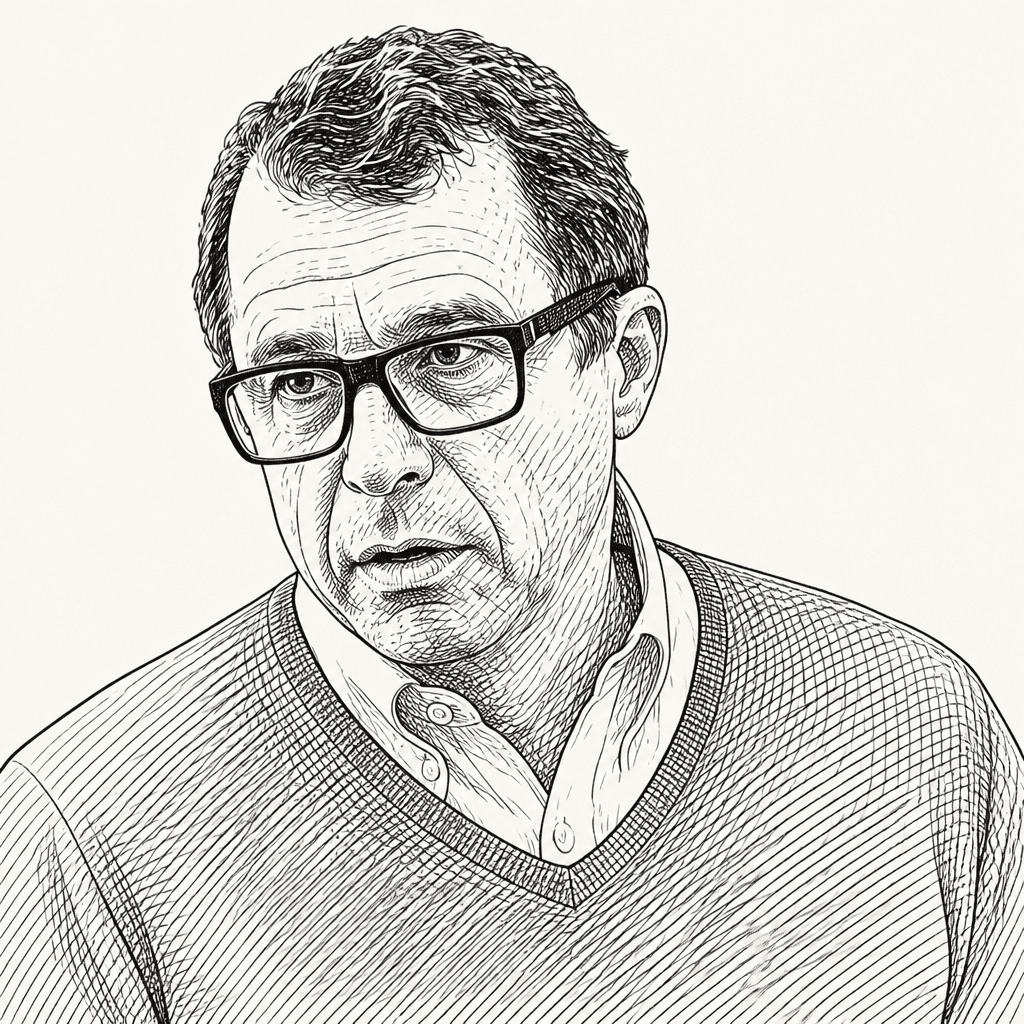
Sebastian Edwards, the UCLA economist and author of The Chile Project, argues that Chile’s market reforms were a radical dismantling of state control, not a marginal liberalization, and that their success was later obscured by slower growth and political complacency. In a Hoover Institution conversation with Jon Hartley, Edwards makes the case that Latin America’s growth failures are rooted in institutions, policy choices, and recurring hostility to economic freedom, while pointing to deregulation and renewed market reform in countries such as Argentina and Chile as the region’s clearest path back to faster growth.
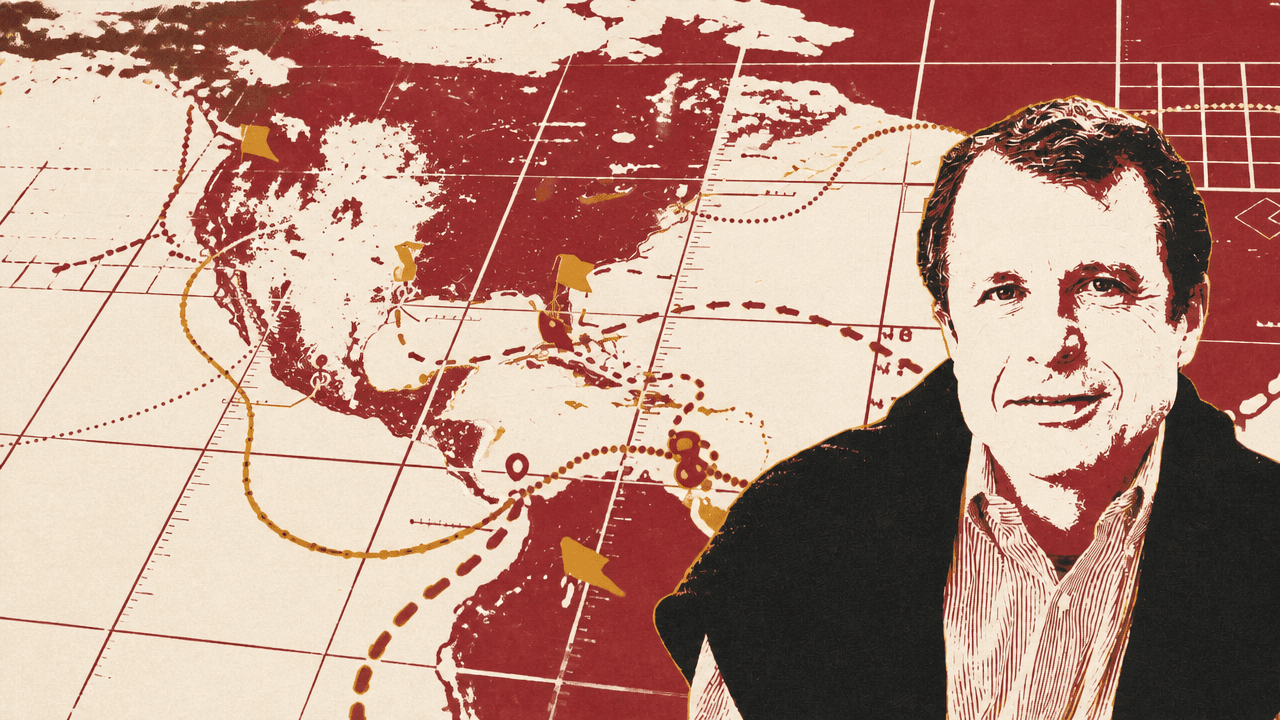
Chile’s market turn was not a marginal adjustment
Sebastian Edwards describes Chile before the market reforms as a country whose economic problem was not underperformance at the margin but deep system failure. When he was growing up, inflation ran “year in, year out” around 30%, per capita growth was perhaps one-half of 1%, and Chile looked increasingly weak even within Latin America. Argentina, just across the Andes, was the country Chileans looked up to.
The background matters because Edwards does not present the Chicago Boys’ program as a technocratic tweak to a mixed economy. He emphasizes that by the time the military coup removed Salvador Allende in 1973, Chile had been trying to move toward “real socialism” — not Nordic-style social democracy, but a Soviet-style system in which the state owned or controlled the means of production.
That distinction is central to Edwards’s account. He draws a sharp line between social democracy, where markets generally operate alongside a welfare state, and “real socialism,” the system that existed on the other side of the Berlin Wall and in Cuba, China, and Vietnam at the time. Chile, under Allende, had gone far down the second path. About 3,000 prices were controlled by the government. Interest rates were controlled. Credit was allocated by bureaucrats. Inflation, depending on measurement, was about 1,000% per year. Roughly 300 large manufacturing firms had been nationalized. Copper mines that had been joint ventures between the Chilean state and large American companies, including Anaconda Copper and Kennecott Copper, were nationalized as well.
Market reform, in that setting, meant unwinding a comprehensive system of state control. Edwards says the Chicago Boys did not decide to free 500 prices and leave the rest. They freed all of them. They moved to let markets determine interest rates. They privatized banks early and let those banks decide where to lend based on projects, risks, and expected returns rather than bureaucratic allocation.
The mechanics of moving a country from being totally government controlled into being one of the freest markets in the world, that's very challenging and very difficult and it was done in a very good way.
Edwards’s claim about the results is equally unambiguous: the reforms were “incredibly successful.” In 1974, he says, Chile, Costa Rica, and Ecuador had identical income per capita, around $3,300. Today, in his telling, Chile’s income per capita is about double Ecuador’s and 50% higher than Costa Rica’s. In 2001, he says, Chile surpassed Argentina on a range of indicators, including income per capita, life expectancy, nutrition, and other social indicators. For Chileans, he adds, overtaking Argentina carried enormous symbolic weight because Argentina had long seemed superior “in everything,” including, as he notes, soccer.
For Edwards, the strongest evidence that the reforms worked was not only the growth record but the behavior of the democratic governments that followed the dictatorship. The center-left governments that took office after Pinochet included people who had been imprisoned, tortured, or exiled by the military. Yet those governments did not reverse the Chicago Boys’ economic program. They deepened it.
That choice sits at the center of Edwards’s interpretation of Chile. The democratic left, once in power, concluded that the economic transformation had succeeded. As he puts it, “there is nothing more attractive and seductive than success.”
The Chicago Boys were a Chilean institution before they were a political label
Jon Hartley frames the Chicago Boys as a group often understood through Milton Friedman’s connection to Chile. Edwards shifts the emphasis. Friedman mattered, but Arnold Harberger mattered more directly. Edwards calls Harberger “the real father of the Chicago Boys.”


The institutional origin, in Edwards’s telling, runs through the Catholic University in Santiago, where he himself studied as an undergraduate. Chile had a continental university structure: students did not first pursue a broad liberal-arts degree but entered a professional track. Five years of undergraduate economics, Edwards says, was roughly equivalent to a U.S. master’s degree. The Chicago Boys’ “brand name” was anchored at that university, from which students went on to graduate study at the University of Chicago and then returned to Chile.
The program began before the Pinochet years. Edwards traces it to Theodore W. Schultz, the University of Chicago economist and longtime department chair, who was advising Latin American countries on agriculture in the early 1950s through the predecessor of USAID, then called ICA. Schultz concluded that agricultural advice would not work in isolation. If the central bank, tax system, and broader policy framework were dysfunctional, better agricultural policy alone could not produce development. Latin American countries, in Schultz’s view, needed economists trained to understand how modern economies worked.
A Princeton-trained ICA official, Pat Patterson, agreed. Patterson was transferred from Paraguay to Chile, and the effort began there. The idea was to train a handful of Chilean economists at Chicago, have them return, and have them train others. Edwards describes the second generation as the “grandchildren” of Chicago: not necessarily educated in Chicago themselves, but trained by those who were.
Schultz visited Chile in 1955 to see whether a Chilean university would participate. He brought colleagues with Spanish-language ability and Latin American experience, including economic historian Earl Hamilton, Simon “Cy” Rothenberg, and the young assistant professor Arnold Harberger. Harberger, Edwards says, “fell in love with the country,” later married a Chilean woman, Anita, and became first an older-brother figure and then a father figure to the Chilean economists.
Hartley notes Harberger’s association with deadweight-loss “Harberger triangles,” a staple of introductory economics. Edwards adds that Harberger’s influence was personal as well as intellectual: Harberger, still alive at 101 in Edwards’s telling, became a grandfather figure to Edwards’s children. Edwards also describes traveling widely with Harberger — to Indonesia, Central America, the Dominican Republic, Russia, and Africa — including one assignment in the Dominican Republic where, in Edwards’s telling, the archbishop hired Harberger to help referee an economic dispute because the archbishop did not know economics.
Friedman’s role, by contrast, is politically magnified by one episode. Edwards says Friedman spent perhaps five days in Chile and only 45 minutes with Pinochet. He discussed the episode extensively with Friedman years later, when both served on California governor Arnold Schwarzenegger’s Council of Economic Advisers, chaired by George Shultz and including Hoover figures such as John Taylor and Eddie Lazear.
The problem for Friedman, Edwards says, was a letter he wrote to Pinochet after that visit. In the letter, Friedman argued that ending inflation required “shock treatment.” The term became, for critics on the left, evidence of an inhumane program that created poverty. Edwards says Friedman used examples from Germany and Japan to explain what he meant by shock treatment. In Germany, Konrad Adenauer and Ludwig Erhard freed prices over a long weekend so occupying authorities — especially the British, then under Labour — could not reverse the decision. Friedman later reproduced both his letter to Pinochet and Pinochet’s reply in an appendix to his and Rose Friedman’s autobiography, Two Lucky People. Edwards notes that a 45-minute meeting became a roughly 30-page appendix.
The backlash in Chile followed success, slowdown, and a lost argument
Sebastian Edwards wrote The Chile Project partly because people kept asking him why a country that had risen from the middle of Latin America to the top could later erupt in protest and elect Gabriel Boric, whom Edwards describes as a far-left president. His answer is not that the market reforms failed. It is that growth slowed, expectations remained high, and defenders of markets stopped making the case.
Chile, he says, grew at about 7% for roughly a decade. Then the growth rate fell: to 4%, 3%, 2%. Some of that reflected the exhaustion of low-hanging fruit. Some reflected the accumulation of regulation and overregulation. People had formed aspirations around the earlier growth rates, and when the economy slowed, those aspirations were frustrated.
The second factor, in Edwards’s account, was intellectual and political. Pro-market people “declared victory in the battle of ideas and then went home.” Many joined corporate boards rather than continuing to research, argue, and explain market ideas. The left, he says, did not join boards. It went to school, read Gramsci, studied radical environmentalism, and built a narrative around unfairness, social injustice, and collusion that appealed to young people.
The pro-market people decided to declare victory in the battle of ideas and then went home.
That imbalance left the market order vulnerable. In 2019, protests, demonstrations, and riots broke out. The political class attempted to resolve the crisis by rewriting the social contract through a new constitution. Edwards calls the resulting draft “very, very slanted to the left” and “totally crazy” in his opinion. In the referendum, he says, it was defeated decisively: 38% voted in favor.
The discussion treats Chile as trying to find its footing and return to faster growth. Hartley frames Boric as no longer in office and José Antonio Kast as having taken the reins; Edwards accepts that frame and discusses a “new government” under Kast as having been in power for about two months. The article does not need to resolve that political chronology to preserve Edwards’s economic point: in his account, the reform challenge is restarting growth while navigating a left that, though politically disorganized, can still frame reform as benefiting only the rich.
Edwards is ambivalent about the speed of the reform push he attributes to Kast. On the one hand, he thinks the government is trying to do too much too fast. On the other, he remembers an exchange in 1991 with Václav Klaus, then finance minister of Czechoslovakia and later prime minister and president of the Czech Republic. Edwards had written on sequencing reforms — which reforms should come first, which should wait, and how privatization, stabilization, labor markets, banks, and regulation should be ordered. At a conference in Prague, Klaus recognized him as “the sequencing professor,” then told him his paper was completely wrong. When in power, Klaus said, one should do as much as possible as fast as possible because the window of opportunity is short.
Edwards says that memory complicates his own criticism. The Czech Republic, he notes, did well compared with other countries in the former Soviet sphere.
Still, the policy area Edwards emphasizes most for Chile is deregulation. He says Chile is the largest copper producer in the world and has by far the largest copper deposits and reserves, yet it takes 12 years to obtain permits for a new copper mine. Chile is number two in lithium reserves, but a new lithium project can take 12 to 15 years to approve, if approval comes at all. Patagonia has what he calls the best winds in the world for wind energy, and the Atacama Desert the best sun in the world for solar, yet approvals can take 12 to 15 years.
For Edwards, that makes no economic sense. He does not call for approvals in 15 days. He calls for “reasonable periods” — one, two, or three years. If Chile can do that, he argues, investment could boom. But the adversaries, in his description, are ideological: degrowth advocates and radical environmentalists who want to stop these projects.
Latin America’s long lag is institutional, cultural, geographic, and policy-made
Asked why Latin America has struggled with inflation, fiscal crises, socialism, political economy problems, and weak growth, Sebastian Edwards answers with “all of the above.” He does not offer a single-cause theory. He points to culture, institutions, natural resources, and bad policy.
The long-run comparison he uses is stark. In the mid-18th century, he says, the main colonies of North America and Spanish America had roughly the same income per capita. Today, even Chile — which Edwards calls the region’s number one — has income per capita around 23% of the United States. The gap widened over centuries.
Edwards links part of that divergence to the different colonial structures of Britain and Spain. North America was decentralized. Alexis de Tocqueville, in Democracy in America, was struck by local self-government: towns elected officials, had their own sheriffs, and made decisions locally. Spanish America was centralized. Edwards connects that to the Reformation and Counter-Reformation. Spain sided with the Pope and became the armed arm of the Counter-Reformation. To prevent another Luther or Henry VIII, authority was centralized. Decisions in the colonies had to be ratified in Spain, with messages traveling to Seville, then Madrid, then back across the Atlantic.
He also points to economic geography. Latin America, especially farther south, relied heavily on mining. Large-scale mining required different organization than family farming on the U.S. plains. Edwards illustrates the contrast with The Wizard of Oz: Dorothy, her aunt and uncle, Toto, and three hired hands — the Lion, the Tin Man, and the Scarecrow. Latin America, he says, did not have farms owned by families with three hired hands. Large properties required dozens or even hundreds of Indigenous laborers. That structure shaped property, hierarchy, and institutions.
Legal and constitutional traditions add another layer. Edwards says Latin America’s legal scaffolding is Napoleonic: “all Napoleonic code.” Yet its constitutions were copied from the American presidential model. No Latin American country, he says, is a parliamentary democracy; parliamentary systems in the region are in the Caribbean, reflecting British influence. He says some historians regard the mix — French legal scaffolding and American presidential constitutions — as “a lethal cocktail.”
Hartley raises the Acemoglu and Robinson distinction between inclusive and extractive institutions. Edwards responds that Douglass North told the story earlier, and Adam Smith before that. He points specifically to Book IV, Chapter 7 of The Wealth of Nations, “On the Colonies,” where Smith compares colonial powers and ranks the British, French, Spanish, and Dutch while explaining differences in institutional development. For Edwards, much of the modern institutions argument was already present in Smith, though economists neglected the chapter because it was called “On the Colonies.”
The current regional picture, in Edwards’s view, is mixed. He is optimistic about Argentina. Chile, he says, is trying to move back in the right direction after what he characterizes as four years of far-left government. Uruguay, even under a center-left government, remains “very reasonable.” Peru is politically strange — heads of state are replaced frequently, and many former leaders are jailed or prosecuted — but its economy continues to function and inflation is low. Ecuador is moving in the right direction. Colombia and Mexico worry him. Venezuela, he says, is a case where improvement is hoped for but not straightforward.
Argentina has a path back, but Venezuela’s recovery is harder
Sebastian Edwards is particularly hopeful about Argentina under Javier Milei, and he singles out Federico Sturzenegger’s deregulation work as “fantastic.” Sturzenegger, he says, has examined the supposed rationale behind many regulations and found it difficult to understand why they were ever put in place.
Argentina’s potential, in Edwards’s view, is “amazing.” The obstacle is the difficulty of moving from 200% inflation toward 2%. He uses a familiar phrase: one cannot make an omelet without breaking eggs. Adjustment has costs; without those costs, the omelet is never made. He also sees a generational opening in Argentina. Unlike in some other countries, young Argentines are strongly pro-Milei, which could give the reform effort political staying power.
Venezuela is harder. Edwards says recovery is doable, but the transition must first “control and clean things up” before elections. In the discussion’s political framing, Edwards says Secretary Rubio has pushed for elections next year, and he says he hopes that works. The democratic opposition, he says, has been fragmented; he hopes it can unite behind María Corina Machado or another figure.
Hartley suggests that control over the military matters and that the U.S. approach has been careful. Edwards agrees that the United States is “doing the right thing.” On the scale of corruption, Edwards says a recent New York Times article framed Venezuela’s oil corruption this way: out of two dollars from the oil business, one dollar is stolen by corrupt people. He notes the framing — “out of $2 one goes to corruption” rather than “out of $1, 50 cents” — but the implication is the same. The claim is presented here as Edwards’s characterization of an article he had seen, not as independently sourced reporting.
Hartley describes a broader Latin American political cycle that may be moving away from earlier “pink tide” anti-market politics in some countries. He names Milei in Argentina, Kast in Chile, Paz in Bolivia, Chaves in Costa Rica, Azura in Honduras, possible Fujimori leadership in Peru, and possible Bolsonaro-family change in Brazil. Edwards is careful not to generalize too far. “Not everywhere,” he says. Mexico is a concern. Colombia worries him. But he hopes the new wave can bring growth back, especially if deregulation becomes central.
Inflation is fiscal as well as monetary, but the threshold problem remains
Sebastian Edwards sees the early-2020s inflation surge through a lens familiar from Latin American experience: fiscal dominance can be at the basis of inflation. He says that some economists have always kept this in mind. Speaking in the setting of Hoover’s Monetary Policy Conference, he says people who come to the conference — including Kevin Warsh, whom Edwards refers to in that setting as the incoming Federal Reserve chair — have had the issue on their radar. He also points to Hoover’s John Cochrane as someone who has emphasized a fiscal route to inflation.
The lesson, in Edwards’s view, has been learned, but not made easy. The difficulty is thresholds. The relationship is nonlinear. A little more fiscal pressure does not produce a proportionate inflationary response in a clean, predictable way. That makes it hard to know when a fiscal position becomes dangerous.
The technical expression Edwards wants policymakers to understand is : the interest rate minus the growth rate. Growth matters because the debt-to-GDP ratio depends not only on borrowing and interest costs but also on the size of the denominator. If GDP grows fast enough, debt as a share of GDP can fall dramatically even if debt is not eliminated.
His example is Chile. Chile’s debt-to-GDP ratio was about 30%, he says. After a decade of roughly 7% growth, it fell to around 7% or 6%. It collapsed not because the government stopped issuing debt altogether but because GDP grew so fast.
That leads Edwards to a broader prescription: maintain a competitive economy through agile regulation, avoid killing investment projects, and keep the fiscal side healthy and sustainable. He cautions that economists will immediately raise Japan, whose debt-to-GDP ratio he gives as around 260% and which appears to be doing all right. The Japan example, for Edwards, is part of the problem: it shows that the threshold is not obvious.
He recalls the debates over the euro. At the time, the economics profession broadly treated 60% of GDP as the absolute debt limit, a view embodied in the Maastricht rules. Countries above 60% had to reduce debt to join. Greece and Belgium, he says, had to act. Then the Lehman crisis pushed U.S. debt higher, the pandemic pushed it higher still, and the U.S. is now around 110% of GDP. The country has not collapsed or disappeared. Edwards remains concerned, but the crisis threshold has not shown itself in the way many expected. He notes that Ken Rogoff, appearing at the same conference, had previously argued with Carmen Reinhart that 90% was a critical limit; the U.S. passed it and remains standing.
The conclusion Edwards draws is not complacency. It is that growth must not be forgotten. Deficits matter. Debt matters. But the United States differs from Europe in part because it continues to grow “in spite of everything,” while Europe does not. The widening gap between the U.S. and Europe, in his view, reinforces the point: controlling deficits is necessary, but growth is part of the solution.
Neoliberalism, in Edwards’s definition, is broader than the market economy itself
Sebastian Edwards defines neoliberalism in The Chile Project as a system that relies on market solutions for almost every problem in society. The word “almost” matters. He says Michael Sandel built a straw man around Gary Becker, Edwards’s former professor at Chicago, by suggesting Becker thought economics should be used for everything. Edwards says Becker never said that.
Chile’s version of neoliberalism, as Edwards defines it, went beyond using markets for economic problems. It used market approaches in education, health, culture, and much else. Edwards does not argue that every country needs that broad application. He is satisfied if the economy itself is governed by market principles: free prices, free interest rates, a floating exchange rate, low inflation, and related institutions.
That distinction matters because Edwards sees free-market ideas as having taken damage after the 2008 financial crisis, the rise of democratic socialism in the United States, similar concerns in the United Kingdom, and the public focus on inequality. His defense of markets is therefore not a claim that every social question must be converted into a market problem. It is a claim that economic life should be governed by market prices, monetary stability, competition, and investment rather than state allocation and overregulation.
The line also clarifies why Edwards treats Chile as both model and warning. The reforms he praises were not merely symbolic privatizations. They changed prices, credit, inflation, ownership, tradeoffs, and incentives throughout the economy. But the political backlash, in his telling, shows that a successful market order can still lose legitimacy if growth slows, regulation accumulates, and defenders of the system stop explaining why it works.
Edwards also connects the recent political turn against some progressive movements to what he calls the overextension of identity politics and “wokism.” His claim is not developed as a full theory of growth, but as part of the political environment in which market ideas are contested. In the United States, Europe, and Latin America, he sees people looking for more “reasonable” and “common sense” solutions. Milei, he says, has a highly personal way of phrasing things, but represents some return of common sense.
Technology enters Edwards’s argument mainly through growth. Hartley notes that economic freedom affects whether new technologies are allowed to develop. Edwards says he has become much more impressed by artificial intelligence. A few years earlier, asked to speak about AI to enthusiasts in Latin America, he told them it was “very artificial and not very intelligent.” Now he would say it is “not very artificial” and “really super intelligent.” What strikes him is the pace of improvement in large language models, which he describes as week by week. He still has a UCLA PhD student research assistant, he says, but increasingly relies on “my other RA called Claude.” Edwards is less pessimistic about AI than Daron Acemoglu, whom he describes as too concerned.
The economic through line remains the same: growth depends on allowing markets, investment, and innovation to work while keeping inflation and fiscal instability under control. The unresolved problem is political. Market success can generate its own complacency. If defenders of markets stop defending them, Edwards argues, opponents will supply the story.