Gigawatt-Scale Data Centers Turn AI Growth Into a Local Fight

At a Hoover Institution discussion on the local effects of the AI boom, energy and policy experts argued that data centers have moved from routine commercial development to gigawatt-scale infrastructure fights. Dado Slezak of QTS said the projects can deliver jobs, tax revenue, grid investment, and local benefits, but Robert Bryce and other panelists warned that communities increasingly see them as vehicles for higher power costs, water risk, farmland loss, and big-tech intrusion. The central issue, the panel suggested, is whether developers and regulators can make the benefits credible before local opposition defines the projects as a loss of control.

Communities are being asked to host city-scale electricity demand before they trust either the economics of the projects or the companies behind them. That is the center of the data-center fight: gigawatt-scale campuses can bring construction work, tax revenue, infrastructure spending, and utility revenue, but they also arrive as visible symbols of AI, big tech, power-price anxiety, water scarcity, farmland loss, and local loss of control.
The old industry posture is failing. Developers once treated data centers as another commercial building category: acquire land, secure power, build quietly, and explain little. That model is colliding with a new political reality. Local communities are not only asking whether a facility will create jobs. They are asking who pays for the grid, whether electricity rates rise, whether water claims are credible, whether farmland and rural culture are being traded away, and why the benefits of AI should justify local disruption.
The data-center fight is no longer about a few server buildings
The local politics of data centers are being shaped by a basic scale change: what used to be a specialized real-estate and infrastructure category has become gigawatt-scale power demand concentrated in single campuses.
Dado Slezak described the shift from inside the industry. Around 2018 and 2019, he said, a 20-megawatt hyperscale campus was a milestone. Typical deals in his earlier data-center investing work were half a megawatt or 1 megawatt. By 2021 and 2022, as AI demand accelerated, hyperscale campuses were reaching 100 megawatts and above. Since 2023, he said, typical hyperscale deal sizes have moved toward a gigawatt and larger.
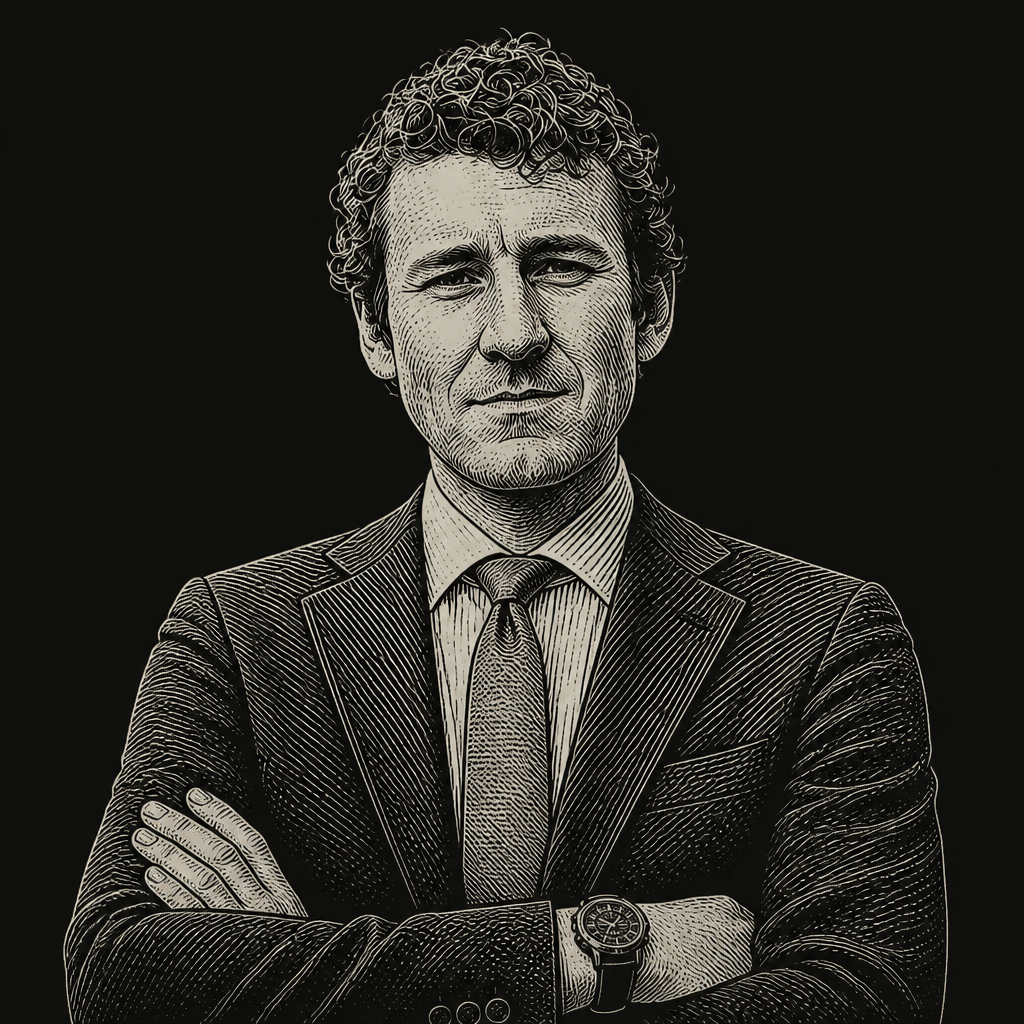
That matters because a gigawatt-scale data center is not just “a building.” Slezak compared a gigawatt-plus data-center campus to the electricity consumption of a city of roughly 750,000 to 1 million people, compressed into a dense point. QTS, where he is executive vice president of energy capital and strategy, has built or advanced several gigawatt-plus campuses, he said. One Iowa project he cited is north of 1 gigawatt across seven buildings, with roughly a million square feet per building.
The discussion distinguished smaller data centers from the hyperscale facilities driving the current controversy. Enterprise data centers may host many customers renting racks, cages, or cloud capacity. Smaller facilities can serve hospitals, small and medium-sized businesses, or private-cloud users. The political and infrastructure pressure is coming from hyperscalers: very large campuses built to serve the cloud and AI workloads of major technology companies.
Robert Bryce put the national buildout in starker terms. Citing Atario, a data source he had reviewed, Bryce said there are roughly 3,000 existing data centers in the United States and 769 under construction. The capacity associated with those 769 projects, he said, is 58 gigawatts, up by 10 gigawatts in two months. He compared that 58 gigawatts to the installed generation capacity of Pennsylvania, which he put at 50 gigawatts.
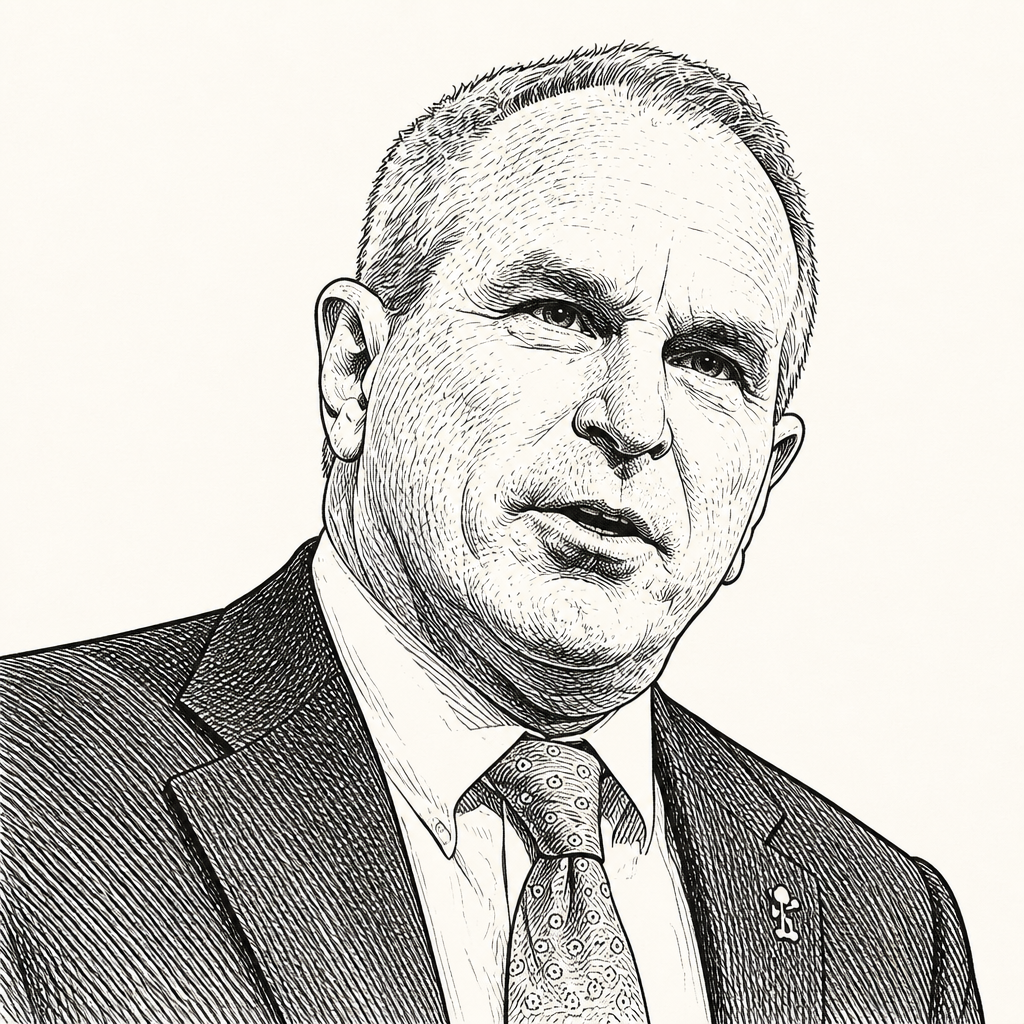
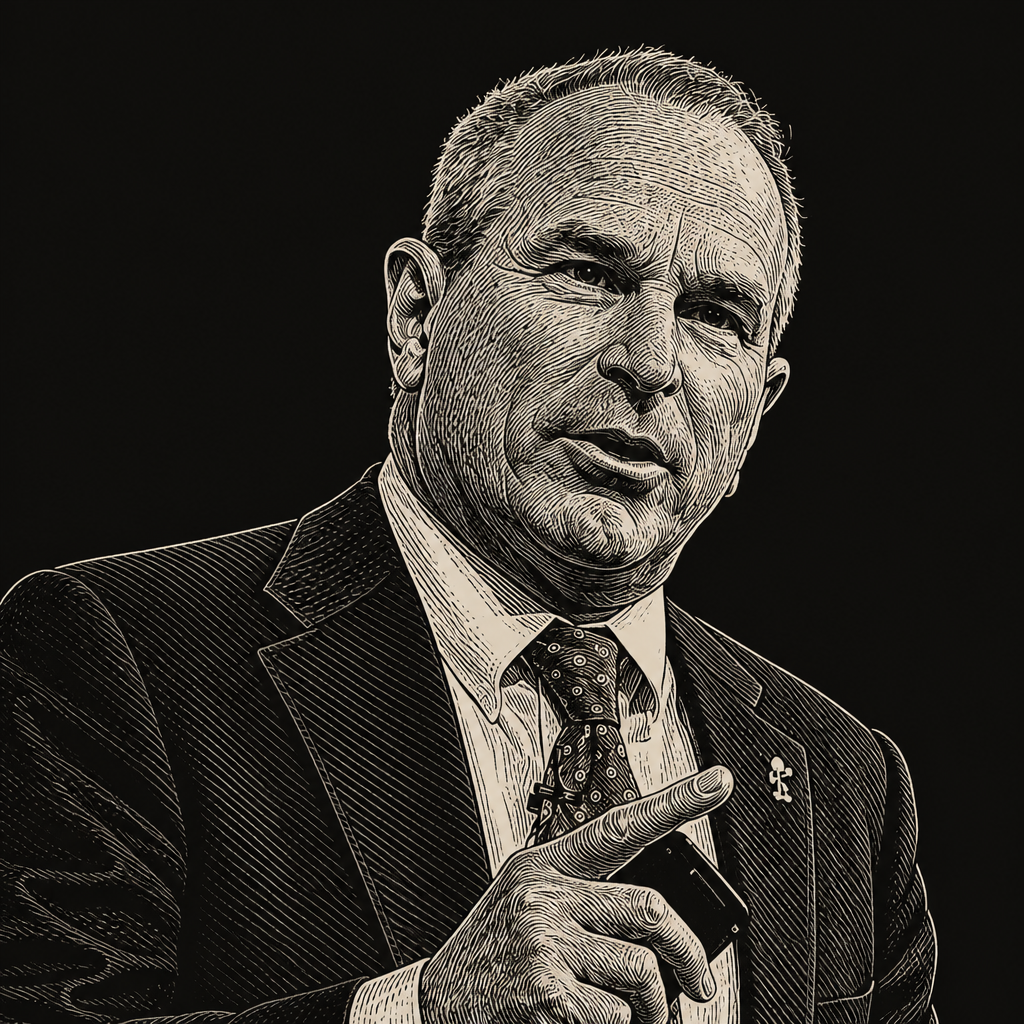
Bryce also used Meta’s Louisiana project as a scale marker: a 2-gigawatt facility, which he said is equivalent to the peak power demand of 1,000 Costcos. The point was not that the comparisons are exact planning tools, but that ordinary land-use language undersells the magnitude of the load being added to local grids and communities.
Dominic Parker framed the local tradeoff as jobs, payments to local governments, and payments to private landowners on one side, with fears about electricity prices, pollution, water use, noise, property values, and quality of life on the other. The scale change makes those tradeoffs more visible. A community is not merely deciding whether to permit another commercial facility. It may be deciding whether to host a load comparable to a city, a large new industrial complex, or a major power-market event.
The backlash is broad, fast-moving, and not neatly partisan
Bryce argued that resistance to data centers is unlike the land-use backlash he has tracked for wind, solar, and battery projects. He said he has maintained a database of rejections and restrictions of renewable-energy projects for 16 years, documenting nearly 1,200 cases, mainly since 2016. But the pace of data-center opposition, in his account, has been unusually rapid: 81 rejections or restrictions in the United States so far this year, compared with 49 in all of the previous year. He cited two in the prior week alone: Wichita Falls, Texas, and Ferguson, Missouri.
The geography and politics of those examples mattered to him. Ferguson is heavily Democratic, he said, while Wichita Falls is heavily Republican. The opposition is not, in his view, sorting cleanly into a red-blue pattern. It is instead forming around local concerns that can travel across party lines.
Bryce’s core political claim was that the data-center fight layers new anxieties on top of familiar land-use conflicts. From his work on opposition to solar, wind, battery, and now data-center projects, he said local coalitions often form across ideology, income, and party because people care about their towns. He rejected the term “NIMBY” as a slur, saying that everyone cares about their neighborhood.
The recurring concerns are property values, noise, viewsheds, the character of neighborhoods, tourism, and protection of farmland. Data centers add several issues that wind and solar fights did not always have in the same form: electricity prices, water use, distrust or hatred of big tech, and fear that AI will destroy jobs. Those additions, Bryce said, create “a perfect set of political issues” that appeal across the political spectrum.
We can’t fight Microsoft, Amazon, Google. Privacy is dead. We can’t fight them in the virtual world, but we can fight them here in Box Elder County.
His example was Box Elder County, Utah, where he said 900 people appeared at a county commission hearing over a proposed 9-gigawatt data-center project associated with Kevin O’Leary. About 600 were inside the county fairgrounds building and 300 outside, almost all protesting, according to Bryce. The intensity of the reaction illustrated his broader point: the public does not necessarily respond to technical assurances about rate design or water systems. Once a project becomes a symbol of big tech, AI, and local loss of control, the opposition can move faster than the industry’s explanations.
Asked whether the issue is becoming more partisan, Bryce pointed to unlikely alignment in national politics. Josh Hawley has spoken about this, he said, while Alexandria Ocasio-Cortez and Bernie Sanders have introduced bills that would put a moratorium on data centers. “I don’t think Josh Hawley and AOC have coffee often,” Bryce said, but on this issue they can agree. For communities skeptical of big tech and AI, data centers become a concrete place to register that skepticism.
Slezak did not dispute the existence of the backlash. He said that “everything Robert said” describes his daily work: data-center developers were popular a year ago, and now less so. His explanation focused on an industry that failed to communicate before the politics hardened. Until roughly a year earlier, he said, QTS did not even have a community-engagement function because there was no perceived need for one. Data centers were treated like office buildings: developers built them, signed nondisclosure agreements, and did not explain much about what they were doing, for whom, or why.
That, Slezak said, created a gap between the benefits the industry believed it was bringing and the way communities interpreted the projects. If residents already believe a data center is a set of “big evaporative chimneys,” it may be too late for a developer to explain that its water system is closed-loop. Some communities, in his account, could benefit substantially from the capital injection but have already framed the project as a threat. Others are earlier in the process and more receptive when developers explain what the project would mean locally.
Bryce’s reply was political rather than technical: if a developer is explaining, it is already losing. The opposition’s bumper sticker, as he put it, is that big tech, QTS, Amazon, and Google will raise electricity rates and use a lot of water. The industry’s answer — “no we’re not” — starts from a defensive position. He said data centers are still being built in large numbers, but Slezak’s job is getting harder, not easier.
The benefits are real, but communities may not experience them as sufficient
Slezak laid out the benefits data-center companies offer in five broad categories: construction and operating jobs, local sourcing, education and workforce development, tax revenue and infrastructure, and broader community investments.
The jobs case begins with construction. Large data-center campuses require several years of construction work and, in Slezak’s description, thousands of well-paid workers. QTS seeks to fill those jobs locally where possible and set up training centers for local workers. Where local labor is not available, workers come from outside the city or state. The construction phase can also extend because a data center may be followed by power-plant upgrades or other system investments.
After construction, Slezak said, the facility still needs hundreds of workers. He pushed back on the idea that data centers are empty boxes. A multi-billion-dollar campus requires daily maintenance of equipment, security, white-collar staff, blue-collar staff, and ongoing operations. The capital involved in a 2-gigawatt project, he said, can run into tens of billions of dollars, and in some cases perhaps more.
The second layer is local sourcing. QTS, he said, tries to source locally, creating secondary employment through the supply chain. He pointed to counties in Georgia where construction companies were built from scratch on data-center projects, and to Virginia families that built family wealth around the sector.
The third layer is education and labor development. Slezak said QTS is working with universities to create new curricula and training pathways because of a severe labor shortage. He cited Iowa and Arizona as places where the company is working on education tied to expected labor demand.
The fourth is public finance. Data centers can generate tax revenue, incentives, and infrastructure investments that change the fiscal position of a community, especially places where older industries have left. Slezak mentioned former coal communities as an example of places that may need a new economic engine. Data-center capital can fund schools, roads, and other public goods. QTS itself builds roads during construction, he said, and then follows local direction on whether to decommission, replant, or otherwise handle them afterward.
The fifth is what Slezak called community impact more than sustainability. He said QTS counts every tree when acquiring land, inventories them, and replants them as projects are completed. He also said QTS works on water-source projects even though, in his description, its data centers do not use water continuously in the way many critics imagine. In his account, the system is filled once and then operates in a closed loop.
On electricity rates, Slezak offered Iowa as a concrete example of a claimed community benefit. The data center’s capital becomes revenue for the utility, and because the utility is regulated, that revenue can help fix rates for community members. He said that in Iowa, community members would have five years without rate increases.
Parker added that emerging economic studies of county-level data-center effects estimate positive outcomes: more employment, higher wages, lower unemployment, rising household income, and broader property-value gains away from the immediate vicinity of the data center. But he also raised an important uncertainty: studies of energy-infrastructure projects often cannot show clearly whether jobs go to local workers or to specialized labor brought in from outside.
That uncertainty goes to the heart of the political problem. Slezak described communities receiving jobs, tax revenue, infrastructure, schools, roads, parks, fire-department equipment, and utility-rate protection. Bryce described many residents seeing an extractive project whose visible benefits go to big tech and whose local burdens fall on them. The practical question is whether the benefits can be made local, legible, trusted, and timely enough to overcome fears about place, power, and control.
Electricity prices depend on market design, but politics may not wait for the design
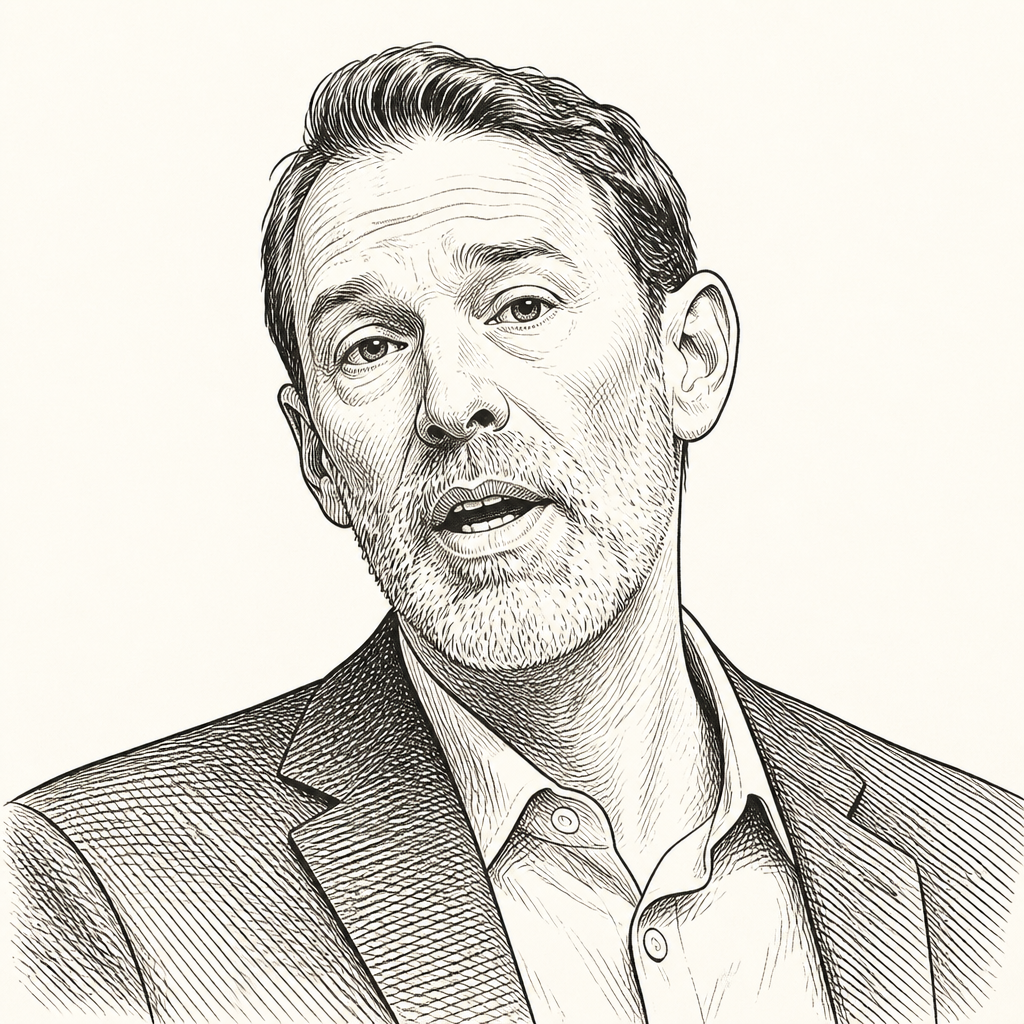
David Fedor argued that data centers do not have a single inevitable effect on electricity prices. Their impact depends on market structure, policy choices, and developer behavior. In some systems, he said, hyperscale demand could lower residential rates rather than raise them.
Fedor’s starting point was the structure of electricity costs. Customers pay for generation, transmission, distribution, retail functions, and public-purpose programs. Generation gets the most attention, but transmission and distribution account for roughly comparable shares in the overall system. The key questions are who pays for new costs, how efficiently the grid is used, and how much it costs to build additional infrastructure.
Hyperscalers, in Fedor’s framing, are unusual customers because their willingness to pay for power can exceed that of ordinary residential customers, especially if paying more gets them power faster. A company investing $40 billion or $50 billion in equipment for a gigawatt-scale data center has enormous capital waiting on power. If that company pays more than the cost to serve it, the excess revenue can help offset costs for the broader system.
He pointed to regulated utility markets in the Southeast, including Georgia, where tariff cases can require a hyperscale customer to guarantee purchase of 70% or 80% of a specified block of power over eight or nine years. That gives the utility a revenue guarantee and allows it to plan distribution upgrades, substations, and related investments. If structured well, Fedor said, that arrangement can control or reduce costs for other customers.
But he also acknowledged the counterexample that made many people worry about data centers and power prices: a PJM capacity auction. Capacity markets pay for the ability to produce power during peak conditions. In Fedor’s view, that particular auction was poorly designed and likely too conservative in how much capacity it sought. It cleared at high prices, with bill effects he estimated at $15 to $$20 per month for residential customers in markets such as New Jersey, Pennsylvania, or Maryland. That was politically damaging.
The regional contrast is important. In PJM, Fedor said, the system was already near capacity in terms of grid and generation availability. Asking it to procure more power pushed it high on the marginal supply curve. In the West, he said, average grid utilization is lower. He cited the PG&E chief executive’s line that each new gigawatt of load could reduce residential rates by 1%, because existing transmission and distribution capacity could be used more fully to pay for the broader system without triggering new upgrades.
Fedor emphasized that power costs are rising with or without data centers, for multiple reasons. Data centers are politically salient, so they are easy to blame. But if the new load is structured to make better use of underused infrastructure and pay more than its cost to serve, it could help a system that already needs deferred investment and maintenance.
Bryce did not reject the complexity, but he argued that the politics will not wait for it. Voters are now talking about electricity costs in a way he had not seen in 40 years of reporting. He cited New Jersey and Maryland races as examples. For the first time in his career, he said, electricity prices are salient in political campaigns.
He also argued that the rate effects cannot be isolated to tariff design. In his view, a 58-gigawatt data-center buildout creates inflationary pressure across the power sector: engineering, procurement and construction firms are booked; labor costs rise; gas turbines from GE Vernova, Mitsubishi, and Siemens become more expensive; transformers, switchgear, arresters, and other grid equipment rise in price. He said a friend pursuing a data-center project saw a bid increase by 50% over 18 months.
In Bryce’s view, even if a particular community gets a rate pledge or a tariff that holds residential bills down, the national buildout will raise costs for power-sector labor and equipment. Investor-owned utilities also have incentives to build new transmission they can put into rate base. The result, he said, is complicated and varies by region, but data centers are one contributor to rising prices.
| Question | Fedor’s emphasis | Bryce’s emphasis |
|---|---|---|
| Can data centers lower residential rates? | Yes, if hyperscalers pay more than their cost to serve and help use existing grid capacity more efficiently. | Possibly in specific cases, but broad buildout pressure still raises power-sector costs. |
| What made the issue politically salient? | High-cost capacity outcomes in constrained markets, such as the PJM auction he criticized. | Voters now connect electricity prices to data centers, big tech, and AI. |
| Where does the main risk sit? | Poor market design, inefficient cost allocation, and failure to structure flexible load. | Inflation in labor, turbines, transformers, switchgear, transmission, and other grid inputs. |
Fedor and Bryce therefore placed the emphasis in different places. Fedor saw a plausible design path in which hyperscale load helps pay for existing and needed infrastructure. Bryce saw a political economy in which massive demand tightens the whole supply chain and becomes a visible target for public anger.
Ratepayer pledges may calm fears, but they do not solve the infrastructure problem
Parker raised what he described as the Trump administration’s March 2026 effort to accelerate data-center development, including a ratepayer-protection pledge that would require technology companies to build their own power sources and commit to reliable, low-cost energy in host communities. The responses were directionally sympathetic to protecting ratepayers but skeptical that a pledge alone could resolve the operational problem.
Fedor said the effect depends on how concrete the pledges are. A pledge may help people “feel it in their gut” that their electricity prices will not be affected, but it may do more for narrative reassurance than for actual developer behavior. Power is already the limiting factor for many projects. Fedor summarized the developer evolution this way: a few years ago, companies wanted power that was clean, reliable, and cheap; then reliable and cheap; then reliable; and now just power.
That desperation has made developers creative. Fedor cited Elon Musk’s Colossus project in Memphis, where he said temporary generators were placed around the plant while grid arrangements were worked out. Bryce interjected that the project did not ask for a permit; Fedor said it proceeded and effectively said, “sue me.” The example served as a warning about the gap between policy pledges and what companies may do when billions in compute infrastructure are waiting for electricity.
Fedor said the near-term reality is pragmatic: developers are trying to build gas behind the meter, gas in front of the meter, bring in generators, rehabilitate existing plants, and do whatever they can to get power while hoping to resolve broader impacts later. He said that, when he looked at EIA data on where U.S. power generation grew most the prior year, the biggest increases were in solar and coal generation rather than in new capacity. He also said data-center demand is reshaping discussions of batteries, renewables, and especially nuclear. But the immediate race is for deliverable power.
Bryce agreed that the Trump move, as Parker described it, was directionally right in trying to protect ratepayers, but he returned to scale. If 58 gigawatts of data-center capacity is under construction, the pledge operates against a very large physical and market reality. Even if residential rates are shielded in one place, the broader buildout strains labor, turbines, transformers, switchgear, and transmission development.
Slezak approached the pledge through four “hats.” As a community member, he said, he would find the message comforting: someone is ensuring rates do not rise because of the data center. In his professional role, he said, he knows utilities and public utility commissions already spend years trying to make sure that does not happen, but that regulatory explanation is not easy to convey in a town meeting.
As a data-center executive, Slezak said the job of a data-center company is not to build power plants. Yet because power has become the bottleneck, he spends about 75% of his time talking to independent power producers, gas companies, turbine companies, and major equipment suppliers. The rest of his time, he said, is largely spent with communities, including taking residents to data centers to show them that the facilities are not as threatening as they may seem from the outside.
As a finance professional, he saw a more serious problem: capital cannot be deployed into unknown rules. The projects involve billions of dollars, “a lot of money even for Blackstone,” he said. Developers need to know how they can build power, move it to a facility, comply with franchise rules, comply with public utility commission mandates, satisfy regional transmission organizations, and still meet project timelines. Turbine orders can take five years. To complete a development next year, he said, he would have needed to order four years ago.
As a consumer, Slezak said, he expects the capital now being deployed into AI and data centers to be recovered eventually. If capex is higher today, consumers may later pay through subscription fees or some other mechanism. His conclusion was mixed: he applauded the move toward protecting host communities because it could remove a layer of fear, but the policy details matter and the different roles — community member, developer, financier, consumer — can conflict.
Water fears collide with closed-loop claims
An audience question asked whether the industry should stop saying merely “don’t worry, we won’t have the impact you fear” and instead promise a net-positive contribution: more water, more energy, more carbon offset, and measurable local improvement. The premise was that the upside of AI and data centers may be large, but the industry faces a trust gap rather than only a market gap.
Slezak said QTS has been doing some of that but has been “terrible communicators.” On water, he offered Phoenix as the example. QTS built a gigawatt data center there with a closed-loop water system, he said. Since 2018 or 2019, he said, QTS has built zero evaporative data centers. The system is filled once — roughly one Olympic swimming pool of water, in his comparison — and then not refilled in ordinary operation. On an ongoing basis, he said, the water use resembles a restaurant or office building because the main continuing use is people in the facility.
The difficulty, in his telling, is that QTS has failed for seven years to get that point across. In Arizona, he said, the company is involved in a northern watershed project with Microsoft and the utility, not because the data center itself consumes large volumes of water, but because Arizona has serious water concerns from golf courses, agriculture, and other uses. Employees at the data center are members of the same community and have the same interest in local water resilience.
Slezak then described a shift in how QTS negotiates with communities. Twenty years ago, he said, the conversation was often about which locality would give the largest tax break. Now QTS asks officials to build a program that first takes care of the community. Rather than asking what a community can do for QTS, the company is asking what it can do for the community so that residents see it as community-oriented before a project is approved.
That move tries to answer the trust problem, not just the factual dispute. If people already associate data centers with water scarcity, high power bills, secrecy, and AI-driven job loss, a technical explanation of closed-loop cooling may not be enough. Slezak’s own account suggests that developers need to make their positive local commitments visible before opposition organizes around simpler and more emotionally durable claims.
Data centers could become flexible grid assets, not just new load
Fedor identified one possible way to turn data centers from a burden into a grid resource: make them flexible during the small number of hours that drive system costs. He said the grid is built around roughly 30 hours a year of peak demand. Those hours impose a large share of capacity costs. If data centers agreed to reduce load during those periods, they could lower their effect on the system.
He pointed to federal activity around the interconnection queue — the line of new loads and projects trying to connect to the grid. Demand to connect far exceeds the ability to serve it. A Department of Energy-initiated request to the Federal Energy Regulatory Commission, he said, asks whether new loads that agree to scale back during peak hours should be prioritized. If a data center can curtail demand during the most expensive hours, it lowers the cost of serving it. If its backup generation can also be dispatched during those peak hours, then the data center is not merely reducing harm; it is adding a valuable peak resource.
Bryce supported the principle of better utilization. He described moderating a panel at Southern Methodist University where Vistra chief executive Jim Burke made a similar point: the system needs better use of existing generation. Data centers are also building large amounts of backup generation, including 2.5-megawatt generator sets, which Bryce linked to Caterpillar’s strong stock performance. That backup capacity, he said, could be brought online during grid crises. He also said Energy Secretary Chris Wright made a similar point in January.
An audience member added that a recent Hoover meeting of financial, utility, grid, regulatory, and energy participants had left him more optimistic that a significant amount of generation could be brought online in a relatively short period, perhaps a year or two, using levers such as unused or idle capacity.
Fedor noted there is a federalism problem in this area, though he did not elaborate in the remaining time. The constructive path he outlined was still clear: if data centers are going to demand enormous amounts of power, their flexibility and backup systems may need to become part of grid planning rather than private insurance used only for the data center’s own uptime.
The siting problem is now a Venn diagram that often does not overlap
A second audience question shifted the discussion from economics to culture. Data-center developers often enter rural communities where landowners may have the right to sell, but the project changes the culture of the place. The questioner, who said he works with farmers and ranchers across about 1.5 million acres in 40 states, argued that some of the pushback is a cultural rejection in rural America that will not change easily. Why not build where the culture is already aligned with AI, such as Silicon Valley?
Bryce said the point was sound, but data centers need land, cheap power, fiber, water, and related infrastructure. That pushes projects toward places where land is available and cheaper. The backlash over farmland protection is already appearing. He cited Cheyenne, Wyoming, where council member Mark Moody had introduced a proposed 12-month moratorium on new data centers, partly to protect agricultural land around the city. Bryce connected this to solar, wind, and battery fights, where preservation of prime agricultural land is a common issue in the United States and abroad.
Slezak described the siting process as a Venn diagram whose circles keep changing. Five to seven years ago, data centers were sited near “eyeballs” — human populations consuming workloads. Then the industry emphasized fiber. Once fiber could be extended almost anywhere for enough money, the focus shifted to inexpensive land and state incentives. Then many developers found they had land parcels but no power. About two years ago, Slezak said, the question became: where would utilities send data centers so they could benefit the grid, using capacity that otherwise might never be used?
That is how many projects ended up in rural areas. Those areas may have grid capacity they are unlikely to grow into on their own. But now a new circle must overlap: community acceptance. Power availability, land, labor, fiber, and incentives are no longer sufficient. The community’s willingness to host the facility must align as well.
Bryce added that gas is now part of the siting equation. Drawing on his Oklahoma background, he said his nephew works at Williams, a pipeline company that has become, in his words, a gas-to-power company. Williams has done $7 billion in gas-to-power deals, Bryce said, another sign of the capital flowing into the sector and of the importance of gas availability alongside land and power.
The result is a siting challenge that is harder than the industry faced when data centers were smaller and less visible. The best location technically may not be the best location politically. The cheapest land may be culturally expensive. The place with unused grid capacity may also be the place most resistant to becoming an AI infrastructure hub.