Free-Market Politics Must Be Rebuilt From First Principles


Daniel Hannan, the new director of the Institute of Economic Affairs, argues that Britain’s problem is not just bad policy but a lost understanding of the case for markets, trade and limited government. In a Hoover Institution conversation with Andrew Roberts, Hannan says free-market ideas must be rebuilt from first principles, especially among younger voters, because their core claims are counter-intuitive and no longer carried by political habit. His wider case links economic illiteracy to protectionism, legal and bureaucratic overreach, culture-war imports and a politics that denies scarcity and trade-offs.
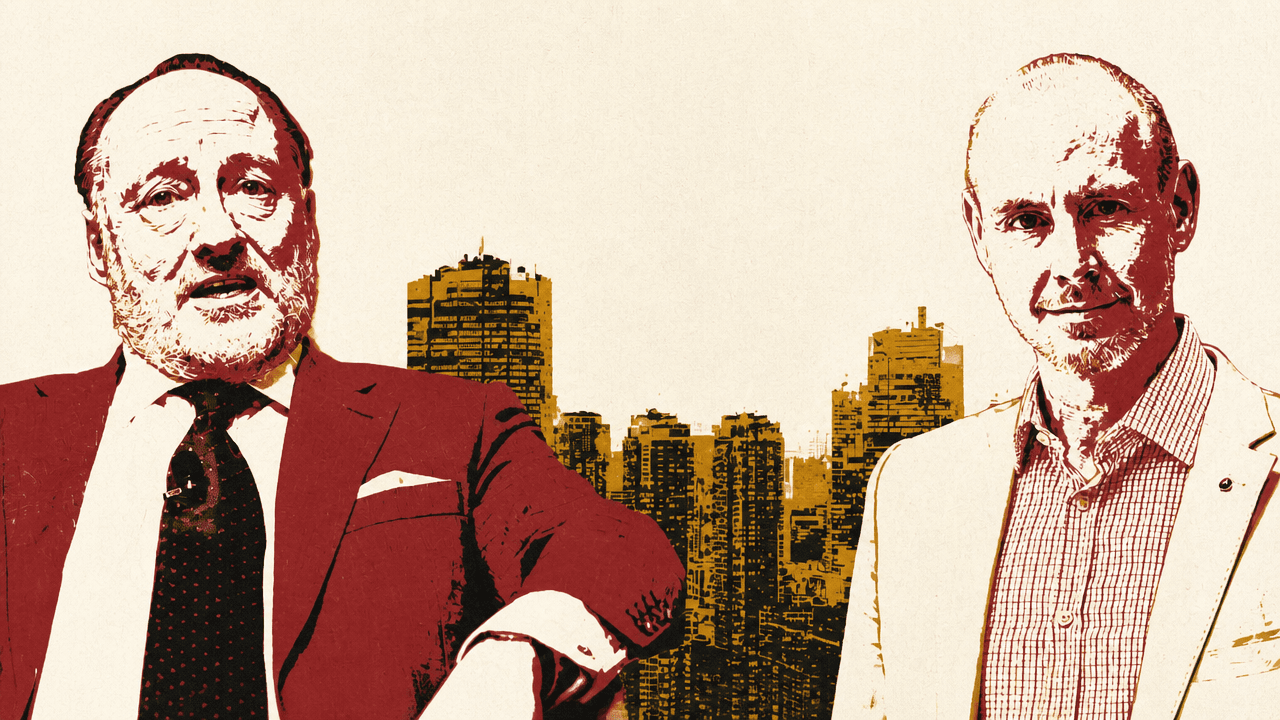
Hannan says the free-market case has to be rebuilt from first principles
Daniel Hannan takes over the Institute of Economic Affairs with a diagnosis more severe than a routine complaint about bad ministers or bad policy. His view is that Britain has not merely drifted from free-market politics; it has forgotten the underlying arguments that once made such politics intelligible.


The IEA, founded in 1955 by Ralph Harris and Arthur Seldon, began in a Britain where the Second World War had permanently altered expectations of the state. Hannan describes that postwar settlement as one in which people expected government to run healthcare, education, economic planning, and much else, under the assumption that “the gentlemen in Whitehall really knew best.” He connects that assumption to Hayek’s “fatal conceit”: the belief that wise, disinterested planners can organize economic life better than millions of dispersed decisions can.
In Hannan’s account, the IEA’s achievement was incremental rather than theatrical. It changed the climate “conversation by conversation, pamphlet by pamphlet,” especially by engaging newly elected MPs. Within a generation, he says, it had helped prepare the intellectual ground for Thatcherism. By the 1990s, when he was attending IEA meetings, he thought the central argument had been won: limited government was broadly understood, allowing discussion to move to specifics such as pension reform and housing policy.
That, he argues, is no longer the environment. Britain today looks closer to the 1950s than to the 1990s. Free-marketeers, in his phrase, have allowed the case “to go almost by default.” Even where young people are moving rightward, he does not read that as a return to classical liberalism. He sees a more authoritarian right: statist, protectionist, nativist, MAGA-influenced, and in some cases openly authoritarian or integralist.
That is why Hannan frames the IEA’s task not as a technical policy shop’s normal work, but as a campaign of basic economic education. The core propositions he wants to reintroduce are deliberately counter-intuitive: that cutting a tax rate can increase revenue; that rent controls reduce supply and can raise rents; that free trade benefits the weaker and less competitive economy as well as the stronger one.
All of these things require a little bit of explanation. And I think that when you and I were growing up, Andrew, we'd won those arguments. But of course, because they're counter-intuitive, we've got to make them all over again.
The program Hannan sets out for the IEA is familiar liberal economics — deregulation, sound money, lower, flatter and simpler taxes, open competition — but his emphasis is on public understanding. He rejects the “facile” claim that Britain’s problem is simply a corrupt or cowardly political class. Democracies, he says, generally get the leaders they deserve. Bad government is the symptom. The deeper problem, in his account, is an electorate voting for high-spending policies without understanding the consequences.
Two episodes, in his view, helped create the belief that resources were effectively unlimited: the bank bailouts and the lockdowns. Those convinced large parts of the electorate that there really was “a magic money tree,” and that resistance to spending must reflect meanness or sadism by rulers rather than scarcity, trade-offs, or arithmetic.
We don't have a politician problem. Or rather, we have a politician problem only as a symptom of our real problem, which is an electorate problem.
Hannan’s answer is to widen the IEA’s work beyond Westminster. Yes, it will engage MPs in Labour, Liberal Democrat, Conservative, and Reform circles. But he wants a much larger effort in secondary education. By university, he thinks, many students’ cultural assumptions have already formed. They may not have detailed views on tax or trade, but they have absorbed broad premises: for instance, that the rich become rich by impoverishing the poor. Those assumptions, he says, are set by schools and by the media environment in which children grow up.
His target age is roughly 15 or 16. The IEA, he says, should put in front of pupils ideas they will not hear in the classroom and “consciously remedy” the deficits of the state education system. He envisages animated videos, TikToks, classroom materials, and direct programs for pupils, alongside the think tank’s political work.
Because they're counter-intuitive, we've got to make them all over again.
Free trade is true, useful, and politically unnatural
For Hannan, free trade is the clearest example of an economic truth that must be taught because it does not feel natural. It runs, he says, against intuitions “buried deep in our genome.” Human beings evolved for scarcity and threat, not global supply chains. The protectionist appeal fits the psychology of hunter-gatherers: keep a stash of food nearby; do not depend on outsiders.
That is why slogans against trade are so politically resilient. Hannan lists the familiar forms: Britain cannot trade with “slave wage economies”; it must protect strategic industries; it cannot sustain a large trade deficit; it must grow its own food. Each sounds like common sense, he says. Each can win votes. And each, when implemented, makes the country needlessly poorer.
The political problem is not that the arguments for free trade are unavailable. It is that they are hard to make at scale because protectionist claims have immediate emotional force. Hannan’s answer again returns to education. People must be taught, repeatedly, that countries as well as households must live within their means; that planned economies perform worse than freer systems; that tax-rate cuts can, in some circumstances, raise revenue; and that competition remains beneficial when it crosses national boundaries.
When Andrew Roberts raises the possibility that teachers may resist an IEA push into schools, Hannan softens the premise. He distinguishes “propagating” truth from “propagandizing” it, and says teachers themselves can be reached by the same counter-intuitive arguments. He cites the IEA’s existing work with A-level economics teachers, presenting them with teaching aids, and argues that most teachers want to give pupils enthusiasm and insight.


The example he gives is a classroom demonstration of trade. Students receive bags containing small goods — for older students, conference-style items such as lanyards, caps, or pencil sharpeners; for younger pupils, sweets. Each student values the contents of the bag on a scale of one to ten. They are then allowed to trade, first with a neighbor and then in a wider market, before valuing their holdings again.
The lesson, as Hannan describes it, is that total value rises even though no new physical goods have entered the room. Wealth is not merely the product of theft or exploitation; it can be created through exchange, because people value goods differently. He argues that only a very hardline teacher would fail to see the pedagogical value of such an exercise.
He is especially interested in pupils for whom economics is not already part of their world. Some may have immigrant parents who hope they will become engineers or doctors. Hannan’s argument to them is not that they should become economists, but that basic economics — opportunity cost, trade-offs, value, incentives — will help them make better life decisions. It will also, he says, make them better voters and more responsible citizens.
Toryism, in Hannan’s telling, is a tradition of order, home, and property
Hannan’s history of Toryism matters to the wider argument because he treats political traditions as carriers of institutional memory. He is writing a one-volume history of Toryism, and his account begins by separating the formal Conservative Party from the older Tory tradition. The Conservative Party under that name is generally dated to 1834, when Sir Robert Peel wrote the Tamworth Manifesto. But Hannan says that date is artificial. Tory candidates were running as Conservatives before 1834, and Conservatives continued calling themselves Tories afterward. The modern Conservative Party, in his account, plainly grew out of the earlier Tory Party.
The harder question is how far back the Tory Party can be traced. Hannan notes one reason this matters to American listeners: if 1834 is accepted as the starting date, then the oldest party in the world becomes the US Democratic Party, “an outcome to be avoided if we possibly can.” He wants to establish what he calls an apostolic succession between the old Tory Party and today’s Conservative Party.
He argues that this succession can be pushed back to the years after the English Civil War in the late seventeenth century. The difficulty is a gap in the 1760s and 1770s, when there was no Tory Party as a coherent parliamentary organization. Yet Toryism itself, he says, did not disappear. Dr. Johnson remained an eloquent Tory; American Loyalists used the word Tory as a self-description. Toryism as a creed of order, patriotism, and “church and king” continued to exist. Hannan believes he has found enough MPs in the period to bridge the gap until Pitt.
If forced to choose a starting point for the two-party system, Hannan chooses November 22, 1641: the vote on the Grand Remonstrance. That vote, in his telling, forced members of Parliament to pick a side. The Remonstrance presented grievances against Charles I. Most MPs would have agreed with some grievances and rejected others, but the vote was on the package. Which way an MP jumped largely determined the side his family would occupy for the next century.
What strikes Hannan is not only the antiquity of the divide, but its modernity. Even in the seventeenth century, he says, one sees recognizable party politics: differently colored rosettes, fundraising for candidates in marginal seats, partisan newspapers, different clubs, even different drinks. Claret was associated with Tories, while Whigs preferred port and considered claret unpatriotic. The astonishing fact, for him, is that one of those two political traditions remains in business.
The strongest continuities he sees are not now “church and king,” since Britain is no longer an Anglican society and monarchy has become broadly consensual. They are patriotism, attachment to home, suspicion of excessive social change, and concern for property rights.
He illustrates the Tory attachment to home through defeated Civil War royalists in exile. Some followed the future Charles II to France and the Low Countries; others lived in communities in Spain or Germany. Many had lost estates, seen property sequestered, and left families under surveillance. Their letters, Hannan says, show not merely hardship — anxiety over firewood or clothing — but painful homesickness: a longing for familiar countryside and food. He links this to Roger Scruton’s idea of oikophilia, an attachment to a partly idealized motherland that remains emotionally real.
The figures Hannan treats as the real founders of Toryism are Lucius Cary, second Viscount Falkland, and Edward Hyde, later Earl of Clarendon. They were royalists “faute de mieux,” not absolutists. They understood Charles I’s flaws but feared the alternative more. Clarendon warned in the 1640s that if the other side won, there would be no property, law, or order, and that the process would end in dictatorship. Falkland, speaking in a 1640 debate about bishops, produced what Hannan calls a near-perfect Tory sentiment: “If it is not necessary to change, it is necessary not to change.”
For Hannan, that continuity is not antiquarian. It is another instance of a recurring theme in his argument: liberal and conservative institutions depend on habits — attachment to home, property, law, restraint, and continuity — that can be lost if they are not renewed.
Starmer is presented as a lawyer who expected institutions to govern for him
Andrew Roberts frames Keir Starmer’s premiership as a puzzle: Labour had years to prepare for power, Roberts says, and arrived with what he calls a 160-seat majority, yet did not appear to have a governing plan. Hannan’s answer is personal and institutional. Starmer, he says, understands the premiership through the habits of a human rights lawyer rather than a political executive.
Hannan cites Starmer telling his biographer Tom Baldwin that “there is no version of my life that doesn’t revolve around being a human rights lawyer.” He takes that as explanatory. In his view, Starmer sees the prime minister’s role as almost ceremonial: someone who gives effect to the decisions of courts, international and national tribunals, and civil service processes.
That, Hannan argues, left Starmer unprepared for the responsibility of governing. He describes him as having arrived in Downing Street expecting someone to tell him what to do, then discovering that no such person existed. The result, in his view, is a leader unwilling to do anything unpopular in the short term, thereby becoming unpopular in the short, medium, and long term.
Roberts connects this to the Chagos Islands issue, describing the proposed transfer of sovereignty over the islands, including Diego Garcia, to Mauritius. Roberts says Britain has had sovereignty for 200 years, Mauritius never had sovereignty, and Britain was to pay £35 billion for the arrangement. Hannan says only a human rights lawyer could have produced such a deal.
Hannan’s criticism is not limited to sovereignty. He argues that the episode exposes what he calls the political nature of the “human rights industry.” It is not, he says, centered on the rights of the indigenous Chagossians. Hannan claims the deal would end hopes of return for the Chagossians and would amount to dispossessing an already badly treated black population a second time. He also objects to what he describes as handing a “pristine maritime conservation zone” to a country with what he calls a poor biodiversity record.
Hannan thinks Labour approached the matter as an anti-colonial dispute: a poorer ex-colony against a richer ex-colonizer, a browner population against a whiter one. As details became clearer — in his telling, that Mauritius had never owned the islands, that the people who lived there did not want to be Mauritian, and that return for Chagossians would be foreclosed — he says the mood shifted. His preferred alternative is resettlement: allow the “genuinely injured party” to go home, making the territory inhabited and giving it a right to self-determination.
On Iran, Roberts asks whether the refusal to allow Americans to use British bases for initial strikes reflected the same international-law mentality and party-political calculation. Hannan says yes, and argues that Britain has become unusually constrained by international tribunals “that no one else cares about.” He objects in particular to the distinction Starmer drew between allowing facilities to defend neutral countries attacked by Iran and not allowing them for attacks on Iran. Hannan treats that distinction as operationally absurd.
His deeper concern is that expansive, politicized invocations of international law may discredit older, narrower norms that he considers valuable: the sanctity of diplomatic legations, the rules of the high seas, fair treatment of diplomats, and treatment of prisoners of war. Those rules, he says, governed relations between states and are now in danger because of backlash against overreach. The institutional failure, in his account, is the same one that appears in economic policy: elected officials outsource judgment to legal or bureaucratic processes, then lose the capacity to govern responsibly.
Hannan thinks Britain imported America’s culture-war script
Daniel Hannan says “woke” has peaked in the United States, where he believes it originated, and he hopes Britain will follow the same trajectory. But he argues that British woke politics has largely been an attempt to fit an American narrative onto British circumstances.
He extends that claim across the Anglosphere. During the Black Lives Matter summer of 2020, he says, other English-speaking democracies tried to adopt local versions of an American script. In Canada, Hannan characterizes this as a claim about an indigenous genocide in boarding schools, which he says has since been debunked without the debunking receiving comparable attention. In Australia, he points to the Indigenous Voice to Parliament referendum. In New Zealand, to the reopening of Treaty of Waitangi questions. In Britain, he says, “we just all pretended we were from Alabama.”
The image that crystallized this for him was a white British BLM crowd outside Downing Street chanting “hands up, don’t shoot” at unarmed Metropolitan Police officers. He sees the whole iconography as American: white conservatives called Klansmen, black conservatives called Uncle Toms. His objection is not only that the language is rude, but that it belongs to another country’s history. “Selma and segregation was not our story,” he says. In Britain, he adds, black people are not the principal minority in the way South Asians are, but that distinction is obscured by what he calls being “America-brained.”
He applies the same critique to reparations. Reparations for slavery, in his view, is a fundamentally American argument being forced into a British setting. He argues that no country invested more in stamping out slavery than the United Kingdom. Even during the struggle with Napoleon, he says, Britain diverted ships to hunt down slavers.
His example is the Green Party’s reparations officer, whom he identifies as coming from a slave-trading Nigerian family. In Hannan’s telling, her family’s side resisted British abolitionism, and Britain took responsibility for large parts of West Africa in order to stop slaving operations by kings. He regards it as absurd that such a figure would now demand reparations from the British state.
The Green Party becomes the vehicle for a broader warning about utopian politics. Roberts raises Green leader Zack Polanski’s willingness, as Roberts characterizes it, to keep borrowing and not worry about the debt-to-GDP ratio. Hannan attributes the appeal of such politics partly to what Times writer James Marriott calls the post-literate generation: people whose attention spans have been diminished by screens and whose politics is formed in sound bites and 280-character bursts.
Polanski, in Hannan’s view, is the politician for that generation. He speaks, Hannan says, “like a random generator of left-wing tweets,” deploying prepared lines regardless of the question. If challenged on contradiction, Hannan says Polanski’s move is to say, “I’ve got the billionaires rattled.” For about a fifth of the electorate, Hannan argues, that is enough: politics becomes the identification of evil people rather than an argument about limited resources, trade-offs, and difficult choices.
What alarms him most is Polanski’s language about utopia. Hannan says Polanski spoke of “when we build utopia” and asked what should be done with people who call themselves right-wing and continue “pushing their toxicity.” Hannan compares that dilemma to the one faced by Pol Pot, Mao, and Lenin: what to do with those who refuse to join the utopia. Roberts extends the analogy, suggesting some softer Green figures may resemble Girondins or Mensheviks — early revolutionaries later consumed by harder revolutionaries.
Hannan’s point is not that every Green activist is already a revolutionary cadre. It is that utopian politics can move quickly from sentimentality to coercion. People convinced that only bad people stand between them and utopia can, in his view, move from caring about animals and environmental causes to joining campaigns against “evil, hateful right-wingers.” That warning belongs to his broader case: a politics that forgets scarcity and trade-offs does not become generous; it can become punitive toward those who insist that limits exist.
Free speech is not the cure for antisemitism, but Hannan wants a high bar for incitement
Andrew Roberts raises antisemitism, Gaza, and radicalization among young women, asking where free speech ends and the duty to silence antisemitism begins. Hannan’s answer is stark: only when speech crosses the line into harassment or incitement.
He says he has little patience for “I’m all for free speech but” arguments, and invokes Britain as the country of Milton, Mill, Lilburne, and Locke. Roberts presses the point by citing marches in London and recent attacks in Britain, suggesting that incitement can seem like the inevitable next step. Hannan replies that consistency matters: if one wants to treat those marches as incitement, one should also accept the jailing of Lucy Connolly and the prosecution of a man in North Wales who chose jury trial and was acquitted.
Hannan’s preferred model is the American standard from Brandenburg, as he describes it. Proving incitement, he says, should require that someone be realistically incited to commit an actual crime. He recounts the case as involving a Klansman whose conviction was overturned because he had made inflammatory remarks to “a bunch of losers on some farm in Ohio,” with no realistic prospect that they would act on his words and attack a synagogue. Hannan says the threshold should be high because a looser rule gives government a powerful weapon.
I would much rather take the American position on incitement that was established in the Brandenburg case, which is that for you to prove incitement, somebody has to have been realistically incited to do some actual crime.
But he does not treat free speech doctrine as the main answer to antisemitism. He says the real question is why Britain suddenly has this problem. He emphasizes “suddenly.” Britain, in his telling, has a long history of philosemitism and Zionism. The Balfour Declaration did not come out of nowhere; it drew on a tradition going back at least to Palmerston on the liberal side and Disraeli on the conservative side.
He invokes Paul Johnson’s history of the Jews to argue that before the settlement of North America, England may have been the best place in the world to be Jewish. Non-Anglicans suffered legal and cultural penalties until 1830, but Hannan stresses that these were comparatively mild, and after that there was complete equality at a time when, as he notes, the Spanish Inquisition lasted until 1834.
He roots this in a perceived affinity between Jewish and British liberal civilization. Continental authoritarians of right or left who denounce “degenerate Anglo-Saxon liberalism,” bourgeois decadence, or British materialism, he says, are almost always antisemites. The hostility is the same thing in another form.
Hannan also draws a contrast between Britain and continental Europe. Before what he describes as an attack on a synagogue in Manchester the previous year, he says, Britain had not had an attack of that kind. He contrasts that with Belgium, the Netherlands, Germany, France, Sweden, and Denmark, where he says antisemitic incidents such as graveyard desecrations and attacks on school buses have become tragically regular, and where synagogues and Jewish schools need permanent security guards.
The answer, in his account, is not to crack down on how people talk about the Gaza war. It is to recover a British civic understanding grounded in individualism. Britain should be a welcoming country for religious minorities, and people should understand that whatever a perpetrator thinks about Gaza, the people in a synagogue are not responsible for it. For Hannan, that is part of the Anglosphere inheritance: individuals are not defined by caste, creed, or tribe, and the individual is elevated above the collective. He thinks that inheritance has been lost by both children of settlers and families long established in Britain.
CANZUK and Brexit test whether Britain can use self-government well
Hannan and Roberts both support CANZUK: a closer trading, defense, and diplomatic relationship between Canada, Australia, New Zealand, and the United Kingdom, supported by some free movement of labor. Hannan describes the labor element as a single visa allowing someone to take a job in any of the four countries, subject to conditions such as no criminal record.
The United States is not part of the proposal, in Hannan’s account, because the current US administration would plainly exclude itself from such an arrangement. But he thinks it would still serve American interests to have a buttress of friendly countries working more closely together.
Roberts lists the shared foundations: language, legal system, literature, monarch. Hannan adds the parliamentary system and, more practically, interoperable regulation. A doctor, lawyer, architect, or similar professional trained in one of the countries has often followed a similar curriculum, used the same sources, and earned comparable qualifications. That makes mutual work unusually easy among sovereign states. He notes that such movement used to be possible as a matter of legal right before Britain joined the European Economic Community and began raising barriers.
The argument is economic and strategic. Closer relations would, Hannan says, boost growth and security. The countries can do more together because it is unthinkable that they would be on opposite sides in a major dispute, permitting economies of scale.
This leads into Brexit, approaching its tenth anniversary. Roberts says that in the decade since Brexit, the EU has imposed 13,000 regulations on European businesses. Hannan says the advantages of Brexit have been mostly negative: Britain avoided things that would otherwise have applied to it. He cites EU regulation of AI, which he says reflects hostility to an independent internet; “Luddite” rules on gene editing and biotech; and the post-Covid recovery fund, which EU members had to fund.
But Hannan is disappointed by Britain’s failure to seize positive opportunities. Domestically, Britain could have escaped “pettifogging” green rules, but instead often chose more interventionist and expensive policies itself. Internationally, it has been slow and unambitious on trade deals.
He is especially critical of the way agriculture constrained trade policy. He describes Britain as a food-importing country with a relatively efficient farming sector, yet says the sector — which he puts at around 0.2% of the workforce — was allowed to block lucrative deals in services and other areas.
Some of the problem, he says, is a civil service or “administrative state” that is anti-Brexit and wants to keep open the possibility of reentry, with Starmer offering it that path. But Hannan also blames Britain’s domestic “safetyist” culture.
After roughly 50 years of membership, he says, Britain’s governing muscles had atrophied. Powers repatriated from Brussels were often passed immediately to domestic regulators who are risk-averse, often woke, and not notably interested in enterprise or growth. His example is financial regulation: when Britain opted out of EU banking and financial services rules, the first use of the regained power was to increase statutory minimum bank reserves above the EU level.
For Hannan, that is the disappointment of Brexit so far. The country avoided some bad decisions from Brussels, but too often reproduced the same or worse instincts at home. Self-government, on this account, is not a sufficient condition for economic liberalism. It creates the opportunity to choose freer policy, but a risk-averse electorate, civil service, and regulatory culture can decline the opportunity.
The constitutional counterfactual turns on visible responsibility
The closing historical counterfactual returns to a recurring concern in Hannan’s argument: who actually governs, and whether responsibility is visible. In 1694, he says, the country opposition tried to pass the Place Bill, which would have prevented Crown officers from sitting in Parliament. It passed the Commons and failed in the Lords by two votes. Hannan calls it extraordinary that 80 years before the American Revolution Britain almost adopted a full separation of powers.
Had the bill passed, British government would have developed very differently. Hannan imagines a US-style executive combined with hereditary monarchy. That raises several possibilities: Britain might have become a republic; it might have moved toward European-style enlightened despotism; or it might have reached a modern arrangement more quickly, with a symbolic monarch and a separately created executive.
The American implications interest him most. If the monarch had already become essentially symbolic, and if it had been impossible to disguise that the American quarrel was really with Parliament, would the Revolution have unfolded differently? Roberts, as George III’s biographer, is invited into that question.
Hannan then makes the provocation explicit. He says that although he thinks he would have supported the American Revolution — he would have been on the Whig and Patriot side, as he believes many in England were — it was based on what he calls a “QAnon level conspiracy theory”: the belief that George III, a “dim and dutiful monarch,” was scheming to establish a medieval autocracy, and even a Catholic one. That belief, he says, was widespread on both sides of the Atlantic in the 1760s and 1770s, despite the broader trend in both Britain and America being toward more freedom, rule of law, and democracy.
The irony, Hannan adds, is that the more unconstrained monarchy now sits in the White House. George III could not have started a war without parliamentary approval in the way Donald Trump can, he says. Roberts adds that George III certainly could not have imposed tariffs without Parliament.
The counterfactual is not separate from the economic argument. It returns to Hannan’s larger preoccupation with responsibility. Markets, parliaments, free speech, and self-government all require people to see where decisions are made and to accept the costs of those decisions. When responsibility is hidden — behind courts, regulators, historical myths, or slogans about limitless spending — politics becomes easier to sell and harder to govern.