Civic Education Must Balance Democratic Attachment With Liberal Inquiry
 Melinda Zook
 Joseph Knippenberg
 Dan Edelstein
 Benjamin StoreyHoover InstitutionSunday, May 24, 202619 min read
A Hoover Institution webinar with Melinda Zook, Joseph Knippenberg, Benjamin Storey and Dan Edelstein argues that civic education belongs within liberal education but cannot be treated as a neutral extension of it. The panelists frame the central problem as a tension between cultivating inquiry, skepticism and intellectual independence, and teaching students to understand and care for the constitutional republic in which they share political responsibility. Their institutional question is how universities can build that education through general education, civic-thought programs and existing departments without reducing civics to either indoctrination or another academic silo.

Civic education is being asked to do two things that do not always sit comfortably together: prepare students for democratic citizenship and remain faithful to liberal education’s habits of inquiry, skepticism, and intellectual independence. The practical question for universities is no longer only what civics should teach, but where it should live — in general education, in new civic-thought programs, in existing departments, or in some combination that avoids turning civic learning into another silo.
Civic education has a directional aim that liberal education cannot ignore
The central tension is not whether civic education and liberal education overlap. All three speakers treated that overlap as real. The harder question is whether civic education can remain liberal when it has an avowed civic end: forming students who understand, and in some sense care for, the constitutional republic in which they are citizens.
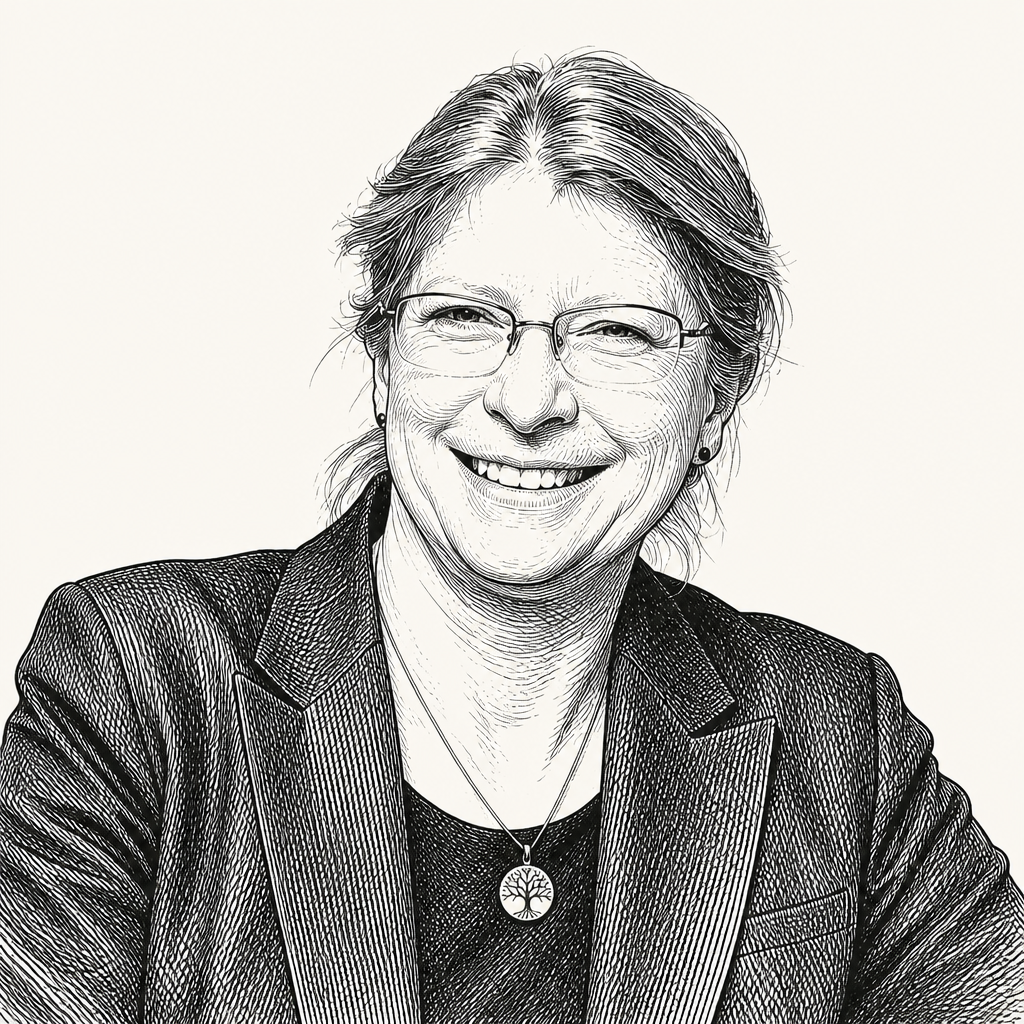
Melinda Zook put the problem most directly. Civic education uses many of the same habits as liberal education: close reading, interpretation, the analysis of texts, and the play of words and ideas. In that respect, it belongs inside liberal education. But it also has what she called “a more pointed goal post.” The teacher of civics is not merely opening a field of inquiry. She is trying to build an affinity between students and the constitutional republic of the United States.
You really want to build an affinity between the students and the constitutional republic of the United States.
That aim creates a fault line. A classroom committed to liberal education is supposed to cultivate inquiry, distance, and judgment. It is not supposed to be indoctrination. Yet civic education, at least as Zook described it, cannot pretend to be wholly neutral about whether students should value constitutional self-government. The problem is not fatal, in her view, but it is real.
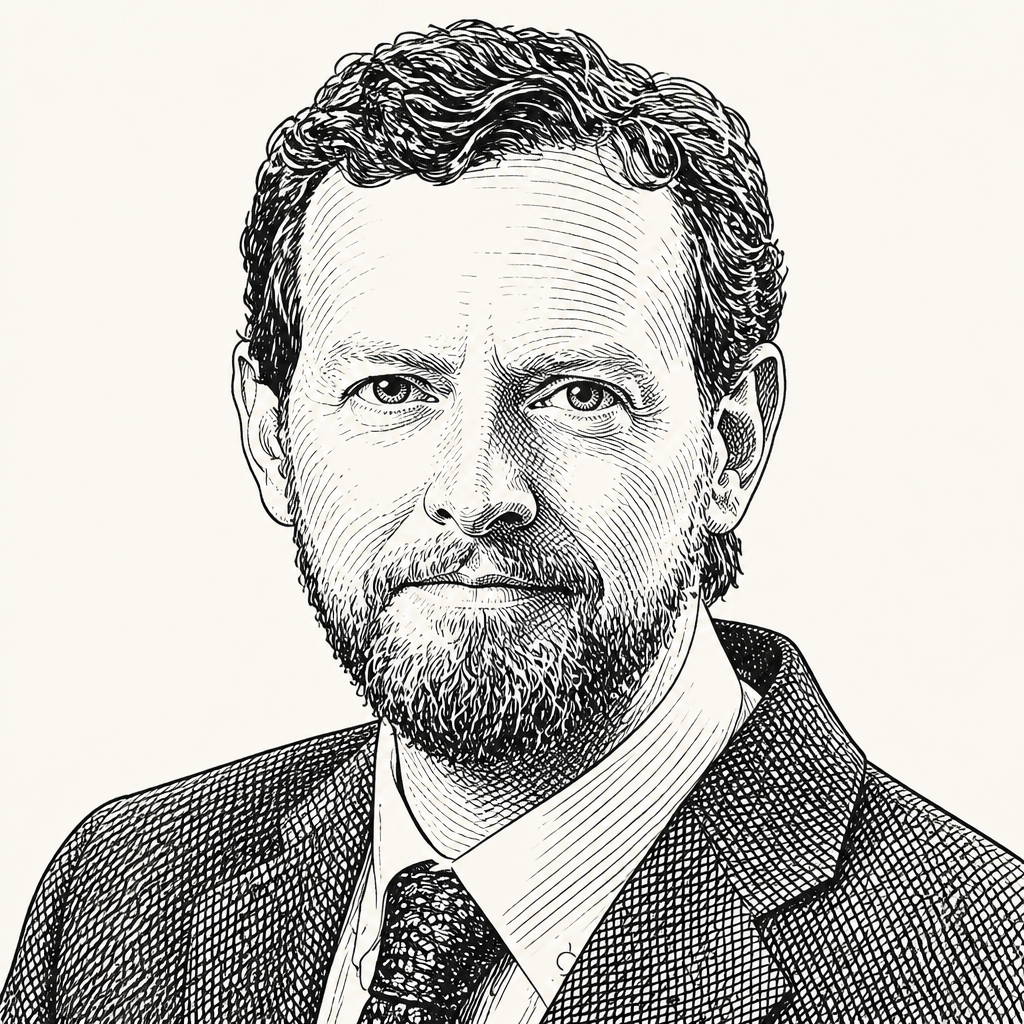
The others did not deny the tension. They tried to locate it inside a broader account of citizenship. Benjamin Storey argued that the apparent conflict between civic and liberal education can be reduced if citizenship is understood more ambitiously. A citizen is not simply a member of a political community who owes it allegiance. A citizen has, as Storey put it, “a share of sovereign responsibility for the political whole.” To be sovereign is to have, in the final instance, power over the elements of common political life. The citizen is therefore not merely inside the regime; the citizen must in some way stand over it, see it, and judge it.
What it means to be a citizen is to have a share of sovereign responsibility for the political whole.
That account makes liberal education not an ornament to citizenship but a condition of responsible citizenship. One cannot govern well, Storey argued, if one has no capacity to see beyond the inherited terms of one’s political community. The citizen needs to be “a disciplined generalist,” and the discipline is prudence: the habit of taking responsibility for the whole over which one shares sovereignty.
Joseph Knippenberg framed the relationship through Plato. Recasting the famous claim from the Republic that cities will find no rest until philosophy and political power coincide, he proposed an analogy: unless civic education and liberal education “coincide in the same place,” there is no rest from ills for cities. Civic education and liberal education have different aims, he said, but each needs the other. Civic education cannot prosper unless it is situated in a liberal education. Liberal education, without a civic component, cannot fully accomplish its own aims.

The common ground was therefore precise but not simple. Civic education, on this account, cannot be mere allegiance training. Liberal education cannot be a posture of detached skepticism with no responsibility for common life.
Democratic citizenship sets a higher bar than universities usually admit
Storey’s account of citizenship raised an immediate objection from Dan Edelstein: is this realistic in a democracy? If citizenship requires prudence, generality, and the ability to see beyond one’s own regime, the standard is very high. It is especially high if applied not to a ruling class but to an entire citizenry.

Storey’s answer was that the standard may be high, but it is the standard Americans have set for themselves. A country in which citizens are ultimately sovereign has chosen a demanding form of political life. The Greeks, he said, understood democracy as a kind of “stealing fire from the gods.” They knew self-government should be intimidating. Americans, in his view, are not intimidated enough by the difficulty of governing themselves.
That concern shapes how civic education should begin. Storey warned against starting with America. Not because America is unworthy of study — he repeatedly said he loves the country and wants students to understand it — but because students cannot understand the American experiment if they encounter it only from within. They need to see how human beings have attempted self-government in other times and places, and to see that the adventure “often doesn’t go very well.” Only then can they gain a proper perspective on what the United States is attempting.
This is where Storey’s argument links the philosophical and institutional questions. Universities already manage analogous distinctions between elite expertise and general education. A mathematics department employs scholars working at levels most students will never approach, while also staffing requirements for students who need mathematical literacy. Storey suggested civic education should be understood similarly. Some people will devote their lives to the study of civic questions. All students, however, should know as much as they can about the subject because all share responsibility for political life.
The implication is that civic education should not be reduced to either professional specialization or mass moral exhortation. It has to include serious scholarship and broad formation. It needs people who study civic questions deeply, and it needs courses that reach students who will never major in the field.
Civic education has to choose institutional homes without becoming a silo
Civic education belongs somewhere in the university. The disagreement was over institutional form: whether its most important home should be general education, new civic-thought programs, existing departments, or some combination.
Melinda Zook argued that general education is the essential place. The practical reason is access. Purdue’s Cornerstone Integrated Liberal Arts program reaches students across the university, including engineers, business students, and veterinary technology students. Civics, she argued, is the kind of thing “every single human being” needs to know because all are citizens. If civic education is confined to a major or a specialized department, many students will never encounter it.
Her caution about creating whole new departments came from the structure of students’ degree programs. Many students have little room for courses outside their majors. They are pragmatic and career-minded. A civics major may struggle to persuade students who ask where, exactly, it leads. Law school once served as an answer, she said, but “hasn’t been for years.” For that reason, the more promising route, in her view, is to integrate civic learning into general education.
Joseph Knippenberg also favored general education but distrusted the idea that political science departments, as they now exist, could simply be assigned the task. He said political science, as it has evolved, has often been “either indifferent or hostile to citizenship.” He did not develop that claim at length, but he made clear that he hesitates to place responsibility for civics on political scientists alone.
That is why Knippenberg welcomed competition from new civic programs. At research universities in particular, he said, political science departments are unlikely to return to a more civic role without pressure from institutions that recruit students, build programs, and offer another account of what political study is for. He pointed to civic thought programs at universities including North Carolina, Texas, and Tennessee as examples of the new landscape.
Benjamin Storey resisted making this an either/or choice. He supports civic general education, but he also thinks university-level civic education deserves institutional permanence comparable to history or English departments. He described higher education as being in its largest watershed moment “since 1876,” with departmental divisions shifting across the country. His advice to those who care about civic education was direct.
Get in the game, make a case for the thing that you think is important.
The disagreement was less philosophical than institutional. Zook emphasized the route that reaches everyone. Storey emphasized the need for civic education to have durable institutional homes. Knippenberg emphasized the need for new civic programs to challenge departments that have not reliably served civic purposes.
Edelstein named the underlying concern as siloization. If civic education becomes a separate school or center, it may gain identity and resources while losing access to the full student body. If it is folded into general education, it may reach more students but remain underpowered, underfunded, or treated as a service obligation. The discussion left that tension in place as a governing problem for universities trying to build civic education now.
General education fails when universities signal that it does not matter
Melinda Zook began her institutional answer with a cultural one: “The first thing we have to do is elevate Gen Ed.” General education will not be taken seriously by students if institutions signal that it is peripheral. Students notice when a required course is assigned to an overworked adjunct with multiple jobs or a graduate student struggling to finish coursework. They understand that the university has disregarded the class.
The first thing we have to do is elevate Gen Ed.
For Zook, elevating general education means putting tenure-track and full-time faculty into it and designing courses that faculty actually want to teach. Faculty do not want to teach generic “skills-based courses,” she said. They want to teach courses in civic thought or transformative texts that mean something. Cornerstone’s success at Purdue required not only curricular design but institutional diplomacy: working with 11 colleges, building goodwill, and persuading colleagues over lunches and coffees.
Dan Edelstein agreed that general education requirements built around box-checking exercises are losing credibility. He said the public no longer buys requirements that amount to courses being designated as satisfying one skill or another, and he expects universities will need to change on this front.
Joseph Knippenberg added two cautions. First, students often arrive at universities poorly prepared to read, write, or succeed civically. For that reason, many civic programs are reaching back into K–12 education to improve the knowledge base of teachers. In Georgia and across the South, he said, high school civics is often taught by coaches hired primarily to coach, not to teach civics. Without better preparation before college, universities will struggle to teach civics or anything else at the level they hope.
Second, he worried that some new civic programs at research universities may reproduce the prestige incentives of the existing academy. Because they are under pressure to hire faculty who look respectable to other departments, they may prioritize distinguished publication records over teaching success. If these programs hope to attract and educate undergraduates, that could be a risk.
Benjamin Storey answered the siloization concern practically: “if you don’t want a silo, don’t make a silo.” He described leaders of new civic thought programs as working hard to build bridges to existing departments, especially because a well-funded new program can be received as the “new guy” in town getting attention. He also argued that the competition for students need not be zero-sum. Civic thought programs can bring alienated students back toward the humanities and social sciences, creating energy that benefits other parts of the university.
The optimistic version of the institutional story was a possible renaissance in the humanities and social sciences. But Storey, Zook, and Knippenberg all attached that hope to institutional conditions: general education must be dignified; faculty must teach it seriously; civic programs must not isolate themselves; and universities must treat undergraduate formation as more than credentialing logistics.
AI sharpens the case for responsible agency
The rise of AI entered the discussion as both economic disruption and possible opening for liberal education. Dan Edelstein suggested that AI has sharpened students’ economic anxieties, but may also become a “blessing in disguise” for the kind of education under discussion.
Melinda Zook saw the change at Purdue. Students who had treated STEM as the safe bet suddenly no longer felt that safety in the same way. Their confusion and anxiety were visible. Her response was that the humanities may now be able to offer what has been missing: “truth, beauty, purpose, meaning.” She acknowledged having had “AI hating” moments, but also saw a possibility that AI could help revive students’ interest in humanistic education.
Benjamin Storey made the case in terms of agency. “One thing a computer can’t do is take responsibility,” he said. As someone working in a Washington think tank that hires young people, he said responsible agency is something employers look for. Civic education, properly understood, and liberal education, properly understood, are both educations in responsible agency: agency supported by knowledge.
One thing a computer can’t do is take responsibility.
Storey connected that point to a larger imbalance in higher education, attributing to Danielle Allen the claim that the country spends $50 on STEM for every 5 cents on civic education. His conclusion was blunt: “you get what you pay for.” He was careful to say he had nothing against STEM, but he argued that shifting some of the balance back toward humanistic and social scientific education would be helpful. Students want to be responsible agents, he said, and humanists and social scientists should speak to that desire.
Joseph Knippenberg approached AI through Oglethorpe’s motto: “make a life, make a living, make a difference.” AI complicates the “making a living” portion. If machines do more work, students may have to ask what to do with leisure. That could point toward the old liberal-education question of how to make life meaningful. But Knippenberg also raised the opposite possibility: perhaps human beings are made to work, not in the sense of being forced to labor, but in the sense that work is part of who they are. If machines can perform much of what people now do, then humans still have to ask what work should become.
That question, he said, should not be left for AI to answer.
Liberal education is also education for leisure, attention, and time
AI opened onto a deeper theme: liberal education was never primarily designed to prepare students for their first job. Dan Edelstein pointed to the Greek word schole, the root of “school,” meaning leisure. For Greeks and Romans, he said, liberal education was about knowing how to spend leisure well. It may also have prepared citizens for political life, but leisure was central.
The problem is that this purpose has largely disappeared from the cultural narrative students bring to college. Liberal education is judged by job preparation, even though its older claim is preparation for life, work, and leisure. Edelstein asked how universities can change that narrative.
Joseph Knippenberg answered with Tocqueville. He pointed to the problem of restlessness and Tocqueville’s call to “detain the mind in theory.” He tells students about schole, scholars, and leisure, but often finds that they treat it as a joke.
Benjamin Storey offered a personal example. He was not educated as a religious person, but later came to observe a sabbath — a day of rest, leisure, and stepping back. An unexpected result, he said, was a deepened capacity for agency and meaningful work. One has to pause, reflect, look, and think about fundamental things in order to orient oneself toward meaningful action.
He described the university, borrowing from Michael Oakeshott, as an interval: a pause between the passions of adolescence and the responsibilities of adulthood. The point is not that reflection ends after college. The rest of life will be busier, which is why practices such as sabbath matter. Without such pauses, work risks becoming a mere reaction to whatever stimulus appears next in one’s inbox.
Edelstein connected the point to Seneca and the shortness of life: education can teach students to become masters of their own time. Melinda Zook brought the question down to practice. She tries to walk four miles a day simply to think. At Purdue, Cornerstone is experimenting with two learning communities called “The Art of Attention,” in which students will keep phones and electronics out of the classroom, live together, and take classes together. Faculty, including Zook, will participate in the experiment as well.
The experiment is not simple. Zook noted that parents are not necessarily happy about students being disconnected from them. Edelstein described the broader idea as a digital or technological sabbath. Zook’s judgment was succinct: “It’s going to be tough.”
Civic education can be particular without becoming parochial
The presence of international students does not, in Storey’s account, require American civic education to become placeless. Benjamin Storey answered the question from his own experience studying in France. In French classes, he said, he did not want “an education in globalism.” He wanted an education in France because he wanted to understand the distinctive place where he was studying.
He suggested many international students in the United States feel similarly. They are not offended by being introduced to American things; they often want that introduction. The point was not to deny the need for breadth. Storey said civic education should have a broad and, in some sense, cosmopolitan vision, because many cultures have done wonderful things. But American universities should not be shy about taking American traditions seriously or about helping students, wherever they are from, understand the particular dramas of American national life.
That answer fits the broader account of civic education in the discussion. Civic education does not become liberal by dissolving national particularity into global abstraction. It becomes liberal by studying particular regimes, including one’s own, with breadth, comparison, seriousness, and judgment.
Required courses have to become communities of attention
Required civic or liberal education carries an obvious risk: students may resent the requirement before they understand the point. Melinda Zook said that this happens in Cornerstone. Students often look at the syllabus in the first week, see five books along with poetry and drama, and say they will hate the class. By the third week, she said, many love it and regard it as their favorite class.
The reason is not simply the texts themselves. The classes are small by Purdue standards and resemble liberal arts college classes inside a large research university. Students know each other and know the faculty member. The course reaches them in a way many of their other courses do not. Zook emphasized the role of the teacher: “A good professor can change your life.” It is not enough for the professor to walk into the room loving Shakespeare. The professor has to project love for the students. They are not adversaries; they are “your children, your grandchildren, your brothers, your sisters.”
Joseph Knippenberg described a similar pattern at Oglethorpe, where the core curriculum extends through all four years. First-year students often resist it. But the strongest friends of the core are alumni. If there is any hint that the core may be altered or abolished, he said, he can rally hundreds of alumni within 24 hours. His point was that students may not immediately understand the value of such an education, but many come to defend it later.
Dan Edelstein drew out the question of format. The durable first-year core programs he had in mind, including Columbia and Chicago, are largely seminar-based. They are not big lectures in which students passively receive “the truths of all time” while shopping on laptops. He suggested that a revival of the humanities may require a return to the seminar model. Put 17 students in a room with a charismatic instructor, and the subject almost becomes secondary to the transformative experience of serious discussion.
Benjamin Storey agreed, while noting that the much-criticized German research university also gave the world the seminar. Seminar education, he said, puts students “front and center,” asks them to speak, give an account of themselves, and explain what they see in the books they read together. That trains not only their minds but their hearts. Still, he also credited faculty at large public universities who must do this work in large lectures and are developing the art of excellent lecturing.
Zook noted that scale is relative. At Purdue, Cornerstone classes enroll 30 students. That would be large elsewhere, but at Purdue it is small. The program has learned to make it work through active learning techniques.
The economic constraint remained unresolved. Seminar education is labor-intensive. Edelstein joked that, with the possible exception of the sex industry, education has not made many productivity gains over 2,000 years. Faculty still have to be paid to be in the classroom.
The classroom can model deliberative citizenship while leaving judgment open
The sharpest version of Zook’s opening concern returned near the end: what if civic education works liberally and students reach anti-democratic conclusions?
Dan Edelstein posed the case directly. Suppose a student studies democratic experiments and decides that technocracy, or even autocracy, is preferable. The student concludes that democracies become messy and fall apart, while a place like China appears to get things done and build high-speed trains. From a liberal education standpoint, there is a sense in which that might be an acceptable outcome: the student has made up his or her mind. From a civic education standpoint, however, a program that turns out many students on “team technocracy” or “team autocracy” would not feel like a success.
Before that challenge, Benjamin Storey had described the goal of civic education as the cultivation of “reflective patriotism” or “rational patriotism,” borrowing a formulation from Paul Carrese. Understanding the American experiment in light of other civic experiments naturally becomes an exercise in appreciation, he argued. He also invoked Yuval Levin’s observation that, looking at the American landscape, “it’s just not that bad.” A country with institutions like Purdue, Stanford, and Oglethorpe is, in some sense, doing something significant.
Storey did not treat understanding and love as opposites. Plato, he said, thought they went together, and Storey agreed. Civic education can shape civic identity, but those identities will differ from student to student.
Joseph Knippenberg developed the classroom side of that claim. He recalled his undergraduate experience at Michigan State’s James Madison College, a small residential unit inside a larger university. Its model drew on Martin Diamond’s The Democratic Republic. For Knippenberg, the small discussion classroom can model deliberative citizenship: students contribute, speak persuasively, listen respectfully, and learn both what they know and what they do not know. He tied this to Aristotle’s account in Politics Book 3, Chapter 11: citizens bring partial insights together into a coherent whole.
The classroom cannot be a complete model of democratic life. But if students come to love that kind of conversation, Knippenberg argued, they may become dissatisfied with the chanting, talking heads, and shouting that characterize much contemporary politics and too much campus discourse. Civic education should bring people back to speaking with one another about real questions.
Storey’s answer to the deeper worry about ideological outcomes shifted to the present institutional context. He said a Yale report that had come out a couple of weeks earlier acknowledged that the partisan skew of university faculty and curricula had become a major public trust issue for higher education. He also said a Harvard Radcliffe Institute report published earlier that week made the same point even more strongly. Storey presented these reports, along with conversations he said were happening across elite private higher education, as evidence that higher education is beginning to acknowledge a significant ideological-skew problem.
In that light, Storey framed new civic thought schools as one way to address the problem. He said they should be internally pluralistic and, as far as he can tell, are. At the same time, they are hiring in fields that are “coded right” on the academic political spectrum. Everyone in the academy knows, he said, that some fields code left and others right: gender history sounds more left-coded than military history, which sounds more right-coded. Those perceptions already shape hiring and curricular decisions. A shift toward some more conservative-coded areas, in his view, is good for the university.
His final institutional claim was pragmatic. If conservatives came to love the university again, as they did not very long ago, that would benefit everyone. There is already politics on campus; it is simply taking a different shape.
The exchange did not eliminate the tension between liberal openness and civic attachment. It clarified the position Storey, Zook, and Knippenberg kept returning to: civic education has to teach students through serious texts, plural examples, disciplined conversation, and faculty who believe that understanding and love can reinforce rather than cancel each other.