Central Banks Cannot Conceal the Fiscal Signal in Rising Yields

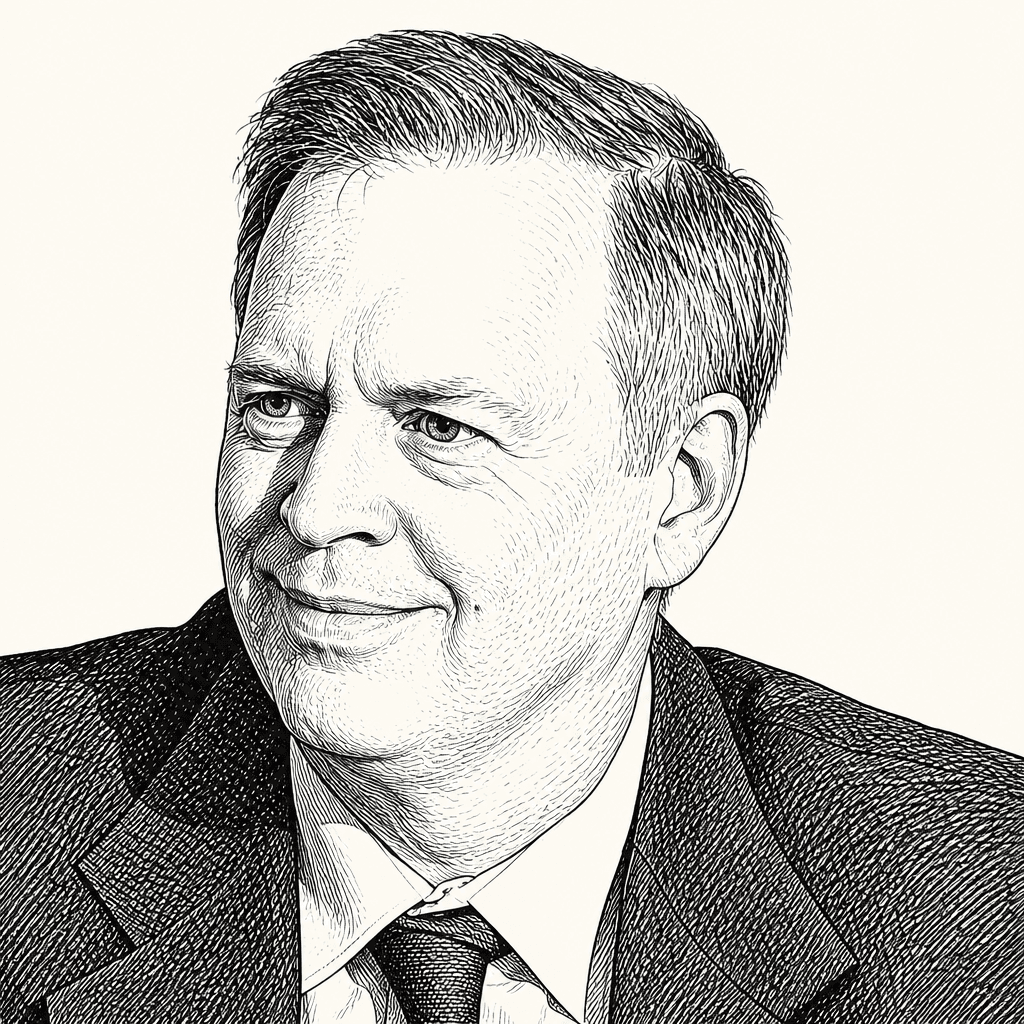
Former Reserve Bank of India governor Raghuram Rajan argues that central banks cannot solve a fiscal problem by suppressing the market signals it produces. Rising long-term yields may reflect government deficits and the future cost of accumulated debt, he says, rather than market dysfunction requiring intervention; attempts to push them down risk delaying the fiscal adjustment policymakers must eventually make. Central banks can restore liquidity in a genuine market crisis, Rajan contends, but they cannot make persistent public borrowing sustainable.

Long-term yields are carrying a fiscal signal
Raghuram Rajan argues that governments should be reluctant to suppress long-term interest rates simply because those rates are rising. The central distinction, he says, is between a market disruption that warrants a narrowly tailored intervention and a market response to underlying fiscal conditions. Treating the latter as the former risks concealing pressure that should instead force political action.


That distinction came into focus in the discussion of Treasury secretary Scott Bessent’s visible, though small-scale, intervention at the long end of the US Treasury market. Rajan acknowledged turmoil in bond markets internationally, pointing in particular to Japan, where long rates had risen substantially. A government may reasonably try to address short-term movements in and out of a market. But a rise in yields is not, by itself, evidence of dysfunction.
“How much of this is fundamentals, which you can’t go against,” Rajan asked, “and how much of it is frictions which you can deal with?” Governments’ first impulse, he said, is often to label the problem a friction and intervene. Only afterward do they confront the possibility that the rise reflects fundamentals.
In this case, Rajan’s view was that the more fundamental explanation is the large fiscal deficit. If that is the driver, getting yields down requires fixing the deficit—not intervening in bond markets to make the symptom less visible. He said there appeared to be “zero appetite” to do that quickly.
You don't want to bring down yields. If the message they're sending to Congress is, you guys better get your act together. That's the more you push in the pain, the worse the eventual action will have to be.
The relevant signal extends beyond financial-market pricing. As Steven Davis put it, rising yields make the cost of servicing public debt more visible, but they also feed through to household borrowing costs—especially mortgages. Higher mortgage rates create a more immediate political question: why is borrowing so expensive? Rajan said that is one mechanism through which debt-service costs can become politically salient enough to change policy.

His objection is not an absolute prohibition on intervention. Rajan distinguished a legitimate response to market dysfunction from an attempt to obscure a fiscal problem. An intervention should be widely accepted, temporary, and targeted; it should address a specific credit or market-functioning problem and end once that problem has passed. Davis said such a discrete problem was not apparent to him in the Treasury-market episode under discussion, and Rajan agreed.
The Fed can address inflation without promising a formula
In Rajan’s reading, Kevin Warsh’s Jackson Hole speech was designed to do two things at once: reiterate an intention to bring inflation under control, and make that commitment operational without offering forward guidance or a mechanical monetary-policy rule.
Raghuram Rajan considered both parts important. He said that a central-bank reaction function—a rule linking policy rates to inflation, growth, or other conditions—can be useful to academics, but becomes misleading if presented to the public as an automatic formula. If monetary policy could be reduced to a fixed set of inputs and outputs, he said, “we’d just put it into a computer and let it run.” In practice, policymakers must weigh many moving indicators and make a complicated judgment.
Warsh’s rejection of forward guidance and a mechanical reaction function therefore did not mean withholding a view on inflation. He could not specify precisely when action would come without effectively providing the forward guidance he had rejected. But he could make clear that the Federal Reserve was worried about inflation’s course and prepared to act.
That combination, Rajan said, was enough to shift the market’s natural interpretation toward a greater likelihood of tightening. It also countered what he described as two doubts surrounding the central bank: whether its chair understood the job, and whether he had the will to do it.
Davis drew out two features of the speech that supported a less-easy policy stance. Warsh had explained why recent inflation readings had not reassured him, and he had described a relatively optimistic medium- to long-term economic outlook shaped by artificial intelligence. A stronger economy would itself give the Fed less reason to lean toward easier policy immediately.
Rajan agreed, while adding an important qualification. AI’s supply-side effects could eventually allow more moderate interest rates, but Warsh did not promise that outcome or imply that the Fed would wait for it. He was not, in Rajan’s reading, banking on either a natural increase in long rates to tighten financial conditions or an AI-driven improvement in supply to lower inflation.
I think he allowed for the possibility down the line that there might be room to have more moderate interest rates if the supply effect kicks in of AI and so on. But he wasn't making any promises and he wasn't saying that's gonna deter me.
The communication choice matters because it separates discipline from a precommitted decision. Davis characterized Warsh’s message as an announced discipline, not an announced rate move. Rajan regarded that as appropriate amid broad uncertainty: policy can state its purpose and concern without pretending to know in advance how every relevant condition will evolve.
Rajan also thought the Fed was right not to comment publicly on the Treasury’s bond-market operation. As government debt becomes a concern in countries where it had not been for decades, central-bank balance-sheet actions are more readily read as support for government debt. The Fed, he said, had no winning public intervention in that debate: whatever it said would be interpreted through that lens.
Cheap borrowing still adds to the debt that must be serviced
Davis connected the present situation to Ken Rogoff’s warning that real interest rates can move up as well as down. In Rajan’s account of Rogoff’s presentation, Rogoff’s historical work traces a slow, material decline in long-term government-bond rates over centuries, alongside considerable volatility. Rajan emphasized that Rogoff’s luncheon argument was not simply a restatement of that long-run series. Rogoff’s point, as Rajan described it, was that the recent decline in long rates may have been especially sharp relative to trend and therefore could be followed by a reversion toward the mean.
Neither Rajan nor Davis treated the path of rates as predictable. Davis said real rates could rise further or decline again, depending on shocks to the economy and on monetary policy. But Rajan’s concern was with the policy inference drawn from a period of low rates: that governments could borrow more without meaningful future cost.
He said a number of economists had effectively encouraged that conclusion. Rajan singled out Stephanie Kelton’s spending-oriented message as an example that, in his judgment, was not on the right track. More broadly, he criticized prominent economists who encouraged additional borrowing without sufficiently emphasizing the consequences once conditions changed.
Public debt is a stock, Rajan stressed. Borrowing at low rates increases the amount outstanding, and that amount must eventually be serviced. A later increase in interest rates therefore raises the carrying cost of a larger accumulated debt burden. Advice to borrow while rates are low, he said, should come with an explicit recognition that policymakers will have to deal with those consequences down the line.
Rajan also placed responsibility on politics as well as economics. Congress, he suggested, has people looking for advisers who will endorse what they already want to do. But economists who know how their words will be interpreted should not extrapolate recent conditions indefinitely. Uncertainty about where rates will go is itself a reason not to treat fiscal capacity as costless.
A central bank can backstop liquidity, not a fiscal crisis
The further constraint in Rajan’s argument is institutional. A central bank may respond to a liquidity crisis or a malfunctioning securities market, but it cannot resolve a fiscal crisis by buying government debt. Those are different problems, even if both can appear as stress in bond markets.
Raghuram Rajan framed the distinction through the relationship between the central bank’s balance sheet and the government’s. If the government’s balance sheet is suspect, he said, actions by the central bank are suspect as well. Monetary authorities are not independent of the underlying public finances in the sense required to make persistent deficits disappear.
No magic wand. You're tied at the hip to fundamental economics. You can't escape that.
Rajan’s concern is directed at the expectation that central banks will somehow rescue developed economies as fiscal pressures build. He said political fracturing in those economies is being met by “opening the tap on spending”: competing factions demand different priorities, and governments choose what he associated with an emerging-market pattern of “not this, not that, both.”
That approach made emerging markets fragile, Rajan said. Developed countries are confronting a similar dynamic for the first time, in his view, while holding an unwarranted belief that the central bank can absorb the consequences. Its proper role in a market crisis is limited to restoring liquidity or functioning; buying up debt does not repair a government’s fiscal position.