Political Costs Keep Broad Agreement on Healthcare Reform From Becoming Action
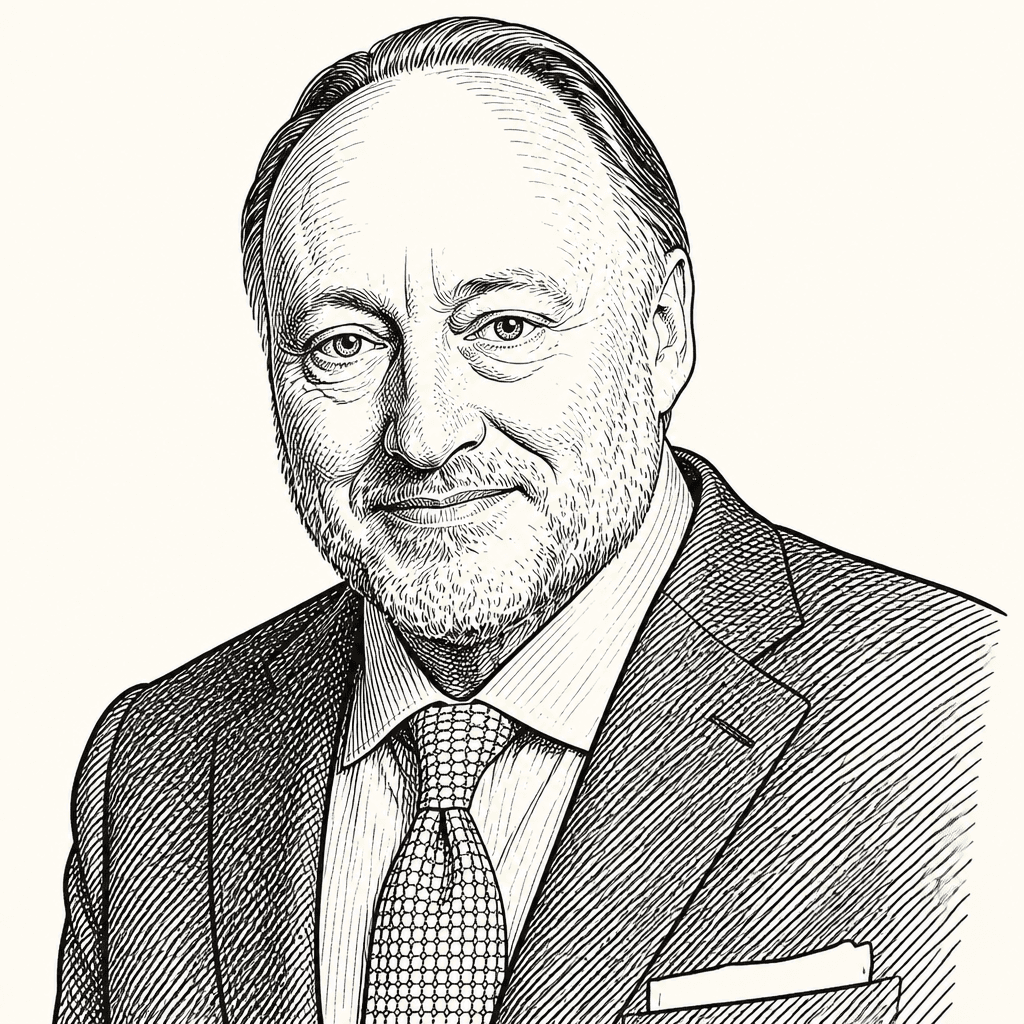
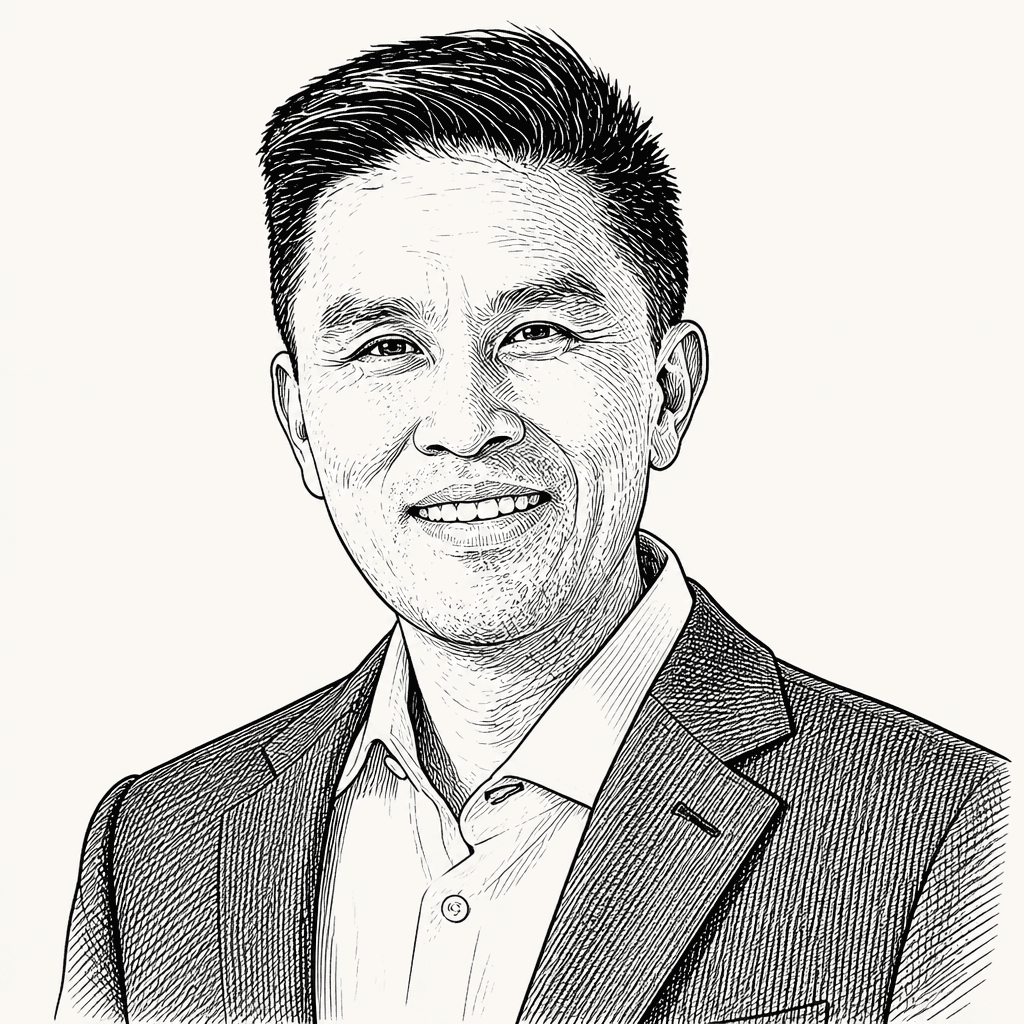
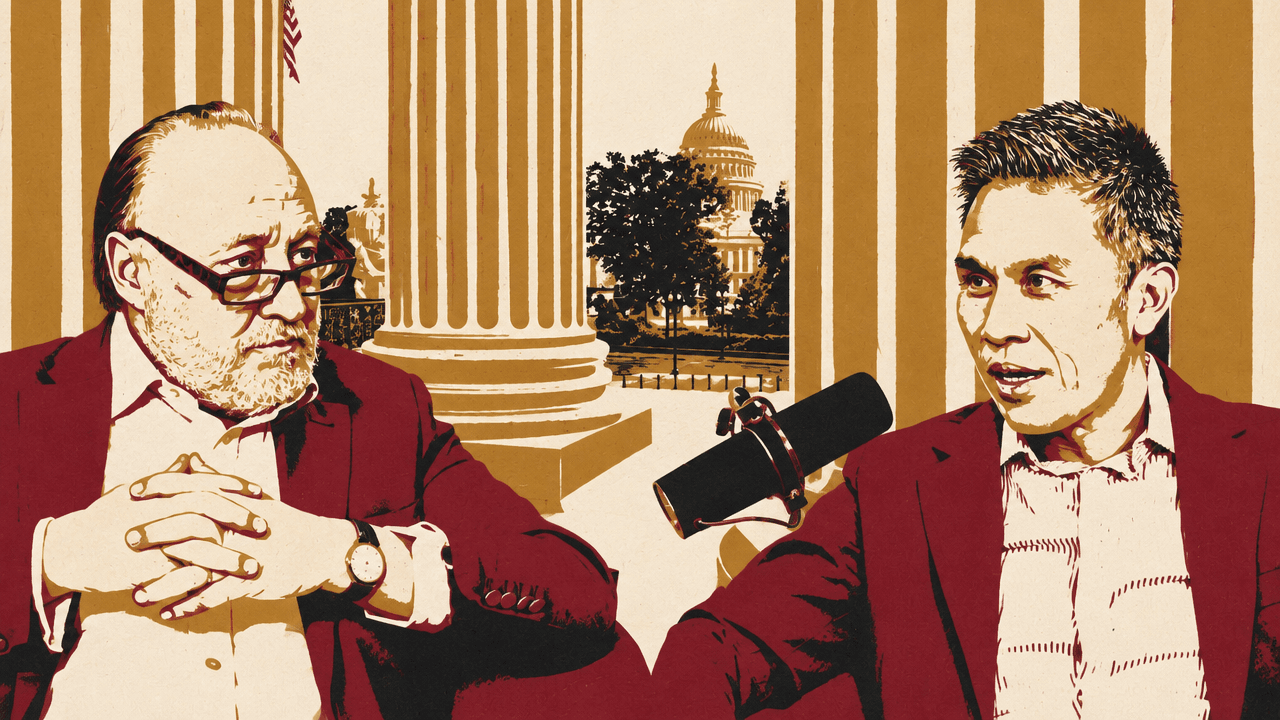
Lanhee Chen argues that policy problems can be easier to identify than to turn into politically viable reforms. Drawing on his campaign for California State Controller and his work on Mitt Romney’s 2012 campaign, the Hoover Institution fellow says politicians often avoid healthcare changes they consider necessary because they fear the political cost, while market-oriented alternatives take longer to explain than simpler promises of government control. His account points to a recurring gap between proposals Chen considers workable and politicians’ willingness to explain them to voters.
The policy problem is often easier to identify than to explain
For Lanhee Chen Lanhee Chen, running for California State Controller made the distance between policy design and political viability tangible. A candidate has to take responsibility for proposals bearing his name, he said, and explain what they mean to people whose attention is fixed on other demands. His campaign did not change his policy positions so much as force him to see them from the perspective of the person who would have to live with them.
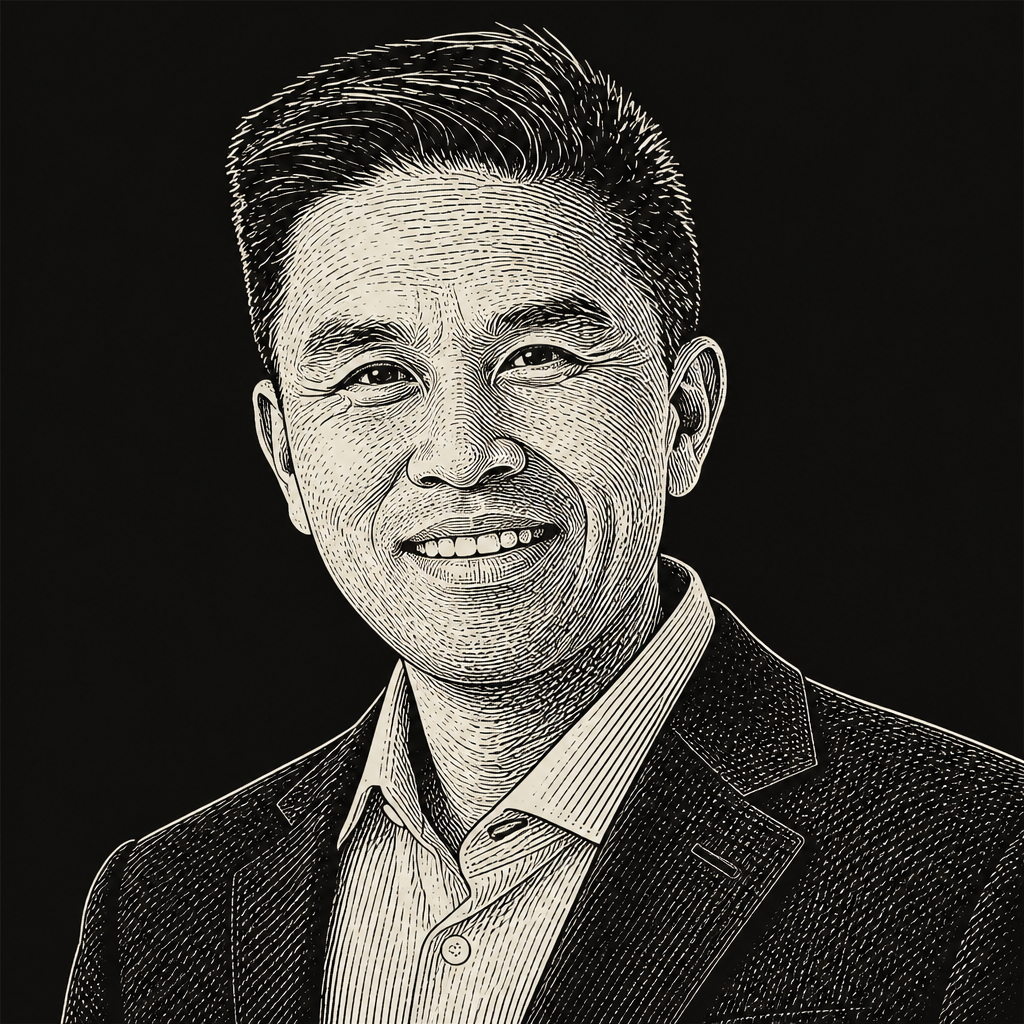
Chen had proposed greater public accountability and transparency around California’s finances. Stronger accountability, in his view, could impose fiscal discipline and improve the state’s financial position. But measures that might help were not necessarily things voters wanted to hear about, and fiscal discipline itself could be difficult to sell. Campaigning required him to connect abstract questions—such as tax-code design or health-insurance policy—to individual circumstances and everyday concerns. He considers that perspective healthy for public officials.
That experience informs a broader point in Chen’s account: agreement about a problem does not necessarily produce action. He says Republicans and Democrats can acknowledge privately that American healthcare faces a fiscal challenge, yet become reluctant to discuss systemic reform in public. He sees a similar difficulty in explaining market-oriented alternatives to voters: individual proposals may be defensible, but the package is harder to make clear than a simple promise of government control.
The healthcare example gives the tension a concrete form. Most Americans, Chen says, get coverage through private employers, a longstanding feature of the American system. Others rely on government programs, including Medicare and Medicaid. He argues that public programs face fiscal pressures that, if left unaddressed, could lead to benefit and service cuts and fewer providers willing to serve patients. Democrats, he says, can be reluctant to acknowledge the fiscal problem; Republicans have become wary of advocating reform because they think it is politically costly.
One possible reform, Chen argues, would be to compensate the same service at the same rate regardless of where it is performed. A blood test in a hospital may bring a higher payment than the same test in an outpatient clinic. In his account, that difference creates fiscal exposure for the federal government. Equalizing payments would probably mean hospitals received less for some services. Chen calls the principle intuitive, but says politicians look at the political liability and decline to take it on.
The problem is that Democrats sometimes refuse to acknowledge that we have a fiscal problem. And Republicans have become very shy in talking about it because they believe it’s a political loser to advocate for systemic reform.
Chen does not claim the parties agree on every remedy. His narrower point is that there can be agreement about the accounting problem, while the prospect of political costs discourages action on even a basic reform.
He also sees a communications problem in the alternatives conservatives offer. Chen points to expanded individual healthcare savings and insurance products that people can choose to suit their needs, rather than coverage defined by government. He argues for more transparency around both prices and outcomes. These ideas, he says, could preserve what works in American healthcare while improving what does not.
But a market-based system is harder to explain than “Medicare for All” or single-payer healthcare. Chen describes the latter message as easy to grasp: remove the middleman and let government take over. By contrast, savings, insurance choice and better information about prices and outcomes are separate proposals whose relationship needs explaining. He believes market-oriented reforms could lower costs and give consumers more choice, but acknowledges that the case takes longer to make.
Tax reform asks voters to weigh simplicity against popular promises
The tax proposal Chen worked on for Mitt Romney’s 2012 campaign addressed a related problem: people are asked to participate in a system they may not understand. Most Americans, he says, fill out tax forms, see what they owe and pay without having a clear grasp of how the tax system is structured. He describes the system as a combination of multiple marginal rates and a complicated set of deductions, exemptions and credits.
Chen says the proposal was not a flat tax, but a flatter and simpler structure. One version would have limited the number of rates to three—10, 20 and 30 percent—and reduced the complexity of exemptions and deductions. Taxpayers could still take write-offs, but in a more self-directed way that was easier to understand.
The goal, as Chen describes it, was not simply to reduce the amount of revenue collected. He says the principles were to simplify the rate structure, make deductions and other provisions easier to use, lower the overall marginal rate, and still raise a significant amount of revenue. He argues that complexity makes the system inefficient, gives people opportunities to game it and can leave poorly designed provisions producing weak results. He points to California as an example of a tax system he considers both awkward and overly complex.
Roberts raised the popularity of wealth taxes in Britain as a contrast to tax simplification. He referred to a British poll and argued that higher taxes on the wealthy can be popular even when, in his view, they do not necessarily raise more revenue. The on-screen YouGov chart asked whether respondents supported or opposed a 2% wealth tax on wealth above £10 million.
| Response | Share |
|---|---|
| Strongly support | 49% |
| Somewhat support | 26% |
| Somewhat oppose | 7% |
| Strongly oppose | 6% |
| Don't know | 12% |
The chart’s displayed attribution was YouGov. Roberts then asked Chen about the flatter-tax proposal and simplification he had developed for Romney’s campaign. Chen described the proposal’s principles: simplify rates and provisions, give taxpayers some control over deductions, and aim to raise a similar amount of revenue to the existing system. He did not directly address the polling figures or Roberts’s claim about the revenue effects of wealth taxes.
Targeted workforce policies can address gaps in access
Chen links healthcare access not only to insurance and payment rules, but to the supply of people permitted to provide care. He says shortages of skilled providers are particularly acute in rural areas, where access is more limited than in urban centers. Some of the problem, in his view, lies in state rules: well-trained nurses may be limited in how much they can do because state laws prevent them from practicing to the full extent of their licenses.
He also argues that immigration policy could be used to address shortages in specific places. Doctors trained abroad may have strong qualifications but lack a workable route to practicing in the United States. Chen points to a program his father and other physicians used: doctors willing to practice for a set number of years in a rural area could move more quickly toward a green card and citizenship. The program, he says, no longer exists.
A rural placement may be less attractive to a doctor deciding where to move, Chen acknowledges. A faster route to permanent status could help make that placement viable. He frames the policy as a way to fill identified gaps with trained professionals from overseas, not as a way to take jobs from Americans. The example is specific: identify where providers are scarce, then use immigration rules to help bring qualified doctors to those areas.
Taiwan’s exposure makes US commitments consequential
Chen describes Taiwan’s security as a matter of great concern. He points to its proximity to mainland China—about 80 miles across the Taiwan Strait at its narrowest point—and to what he sees as an aggressive leadership in the People’s Republic of China. In his assessment, Xi Jinping regards reunification with Taiwan as a signature part of his legacy and has spoken about it repeatedly.
Chen argues that the United States and other countries in the free world need to make clear where they stand as Taiwan faces pressure from the PRC. He says he does not see the challenge easing, and emphasizes continuing US commitments under the Taiwan Relations Act and related policies established over the previous four decades. In his view, the United States has obligations to help Taiwan defend itself against PRC aggression.
Mid-cycle redistricting turns a census process into a partisan tool
Chen objects to mid-cycle redistricting by both parties, while giving particular attention to California’s Proposition 50. Redistricting after a census, he says, reflects changes in population distribution. The last census was in 2020 and the next is scheduled for 2030. Redrawing lines in between to pursue partisan advantage, in his view, changes the purpose of the process.
He does not draw a distinction between Texas and California on the basic question. Both, he says, used redistricting for partisan advantage rather than to respond to population changes. His sharper criticism of California is that Proposition 50 was presented as a temporary response to Donald Trump, while, in his view, making possible a more fundamental change: repeated redistricting driven by political advantage.
Chen says the measure gained support in California partly because voters held negative views of the Republican Party and Trump. He argues that the public case for the referendum did not make clear the possibility he saw in its outcome: that district lines could be redrawn based on party advantage rather than population distribution. He describes the measure as cynical because he believes the anti-Trump appeal obscured a change with lasting consequences for the state’s political system.
The potential electoral effect, as Chen estimates it, was a drop from roughly 15 to 20 competitive seats for Republicans in California to only five or six. He argues that such a change would leave many Californians whose views differ from those of the ruling Democratic Party with less influence over representation.
Chen says Republican-led states in the South have acted to help Republicans, while Democratic-leaning states such as Illinois and New York have discussed rule changes to benefit Democrats. He is troubled by the chain reaction: a process tied to population distribution becomes a means for both parties to gain advantage.
Military objectives become harder to pursue when political pressures compete
Lanhee Chen Chen’s standard for using military force is that it should serve the national interest. He supports preventing Iran from obtaining a nuclear capability, which he calls a laudable goal for the United States and its allies. His concern is that the aims and benchmarks for the conflict have been expressed in different ways, making it harder for Americans to see what success would mean and what resources might be required.
He says there should be a direct line between military force and the national interest, particularly in an active conflict. In the case of Iran, he sees the stated goal as legitimate, but argues that shifting or confused goals have made the conflict more difficult for the president and the public to understand. He worries that achieving the objective may require further investments of time and money.
The political context adds to that uncertainty. Chen says the desire to lower energy prices could become an overriding concern as elections approach and control of Congress is at stake. Politics is always a factor in decisions about conflict, he says; the concern is how overtly it competes with the military and strategic objectives set out earlier.
The Strait of Hormuz illustrates why the effects do not fall evenly. Chen says disruption to oil flows through the strait affects Asia-Pacific countries more directly than the United States, which is less directly dependent on those supplies. Viewed only from the American perspective, that might make the disruption seem less pressing. But he argues that the issues are connected, making the situation more confusing and fraught than that narrow calculation suggests.
Trump’s influence shapes the incentives facing Republicans
Lanhee Chen Chen describes Donald Trump as the dominant force in Republican politics, calling him “the alpha and the omega” of political careers in the party. He says that when Trump backs a candidate in a contested Republican primary, that candidate has generally won, with only one or two exceptions over the previous decade. Chen expects Trump’s influence to persist even if his choices fare badly in the midterms.
That influence, in Chen’s view, reaches beyond immediate contests. He expects multiple Republicans could seek the 2028 presidential nomination, naming Ted Cruz, Rand Paul, Glenn Youngkin, Marco Rubio and Vice President J. D. Vance. But he distinguishes the possible field from what he expects to determine the nominee: Trump’s blessing.
Chen thinks Trump is more likely to let the race develop before backing the candidate he considers strongest than to intervene early to prevent a messy primary. That is his expectation, not a certainty. He allows that Trump might let the contest play out without intervening. But if Trump does decide to influence the race, Chen expects his choice to be decisive.
Asked whether Trump would want to choose the Republican most likely to defeat the Democrats, and perhaps pardon him, Chen says he believes Trump’s first priority would be a winner. Other considerations may matter, he says, but he sees the ability to win and advance Trump’s political project as the central concern.
The “YOLO caucus” offers a contrast with lawmakers who still have political careers to protect. Roberts uses the phrase for members of Congress and senators who are not facing voters at the next election and may therefore be freer to follow their convictions. Chen’s account helps explain why that distinction matters: if Trump’s standing with Republican voters can determine the prospects of other Republicans, those still seeking office have a strong incentive to keep his support.
California’s natural advantages do not settle the question of governance
Lanhee Chen Chen remains optimistic about California because of its natural advantages and continued appeal to people despite what he considers poor policy. But his optimism is not a claim that the state’s current leadership is performing well. He says the problems extend from Sacramento to major cities, especially Los Angeles, and to local communities.
Asked what evidence would show a change of direction, Chen points first to public expectations about order and basic government performance. He cites homelessness, open drug use, litter and pollution, as well as what he sees as failures to carry out basic functions. He also wants to see greater respect for public safety and for the people responsible for it. For him, a change in public opinion on those issues would have to precede a change in political leadership.
He connects the state’s economic direction to public attitudes as well. Chen criticizes proposals for a substantial tax on billionaires, warning that the target could ultimately expand to successful people more broadly. He sees what he calls the penalizing of success as a feature of recent California policy. A shift in public opinion on order, public safety and the treatment of economic success is what he would look for before concluding the state was changing course.
Information systems can reinforce the beliefs they are meant to test
Lanhee Chen Asked what gives him hope, Chen names the American people. He points to the country’s innovative economy and to people who want their children to have better lives than they did. He also acknowledges that families increasingly find it difficult to make that aspiration real. Even so, he sees the desire to create a better future for the next generation as a durable source of hope.
His concern is the news media and the loss of public trust. Chen says many journalists still want to provide information that lets people make their own decisions. But he believes trust has declined partly because of actions by the media itself over several decades, including what he describes as clear bias and cases where journalists have not done their jobs.
Social media, he says, compounds the problem because people can select information that fits their views, including material from sources that are not credible. Roberts raises the spread of conspiracy theories and false accounts of history. Chen says people who rely heavily on social media can receive repeated reinforcement of claims that fit their political or personal outlook. As networks around those claims become active, he argues, the information can spread quickly and remain in the everyday stream of material people encounter.
Chen does not describe social media as wholly harmful; he says it has enabled many good things. His concern is how rapidly information can circulate and continue to be reinforced. That dynamic makes it difficult, in his view, to interrupt the spread of claims people already want to believe.
Romney’s hypothetical victory raises a question about political tone
Lanhee Chen Chen’s historical “what if” is Mitt Romney winning the 2012 presidential election. He says he would have wanted to serve in a Romney administration and was drawn to the campaign’s policy ideas. But the broader counterfactual, for him, is whether a Romney victory would have delayed or altered the populist turn that led to Trump’s election, or ushered in a different political era. He says there is no way to know, but thinks the country’s political history would have taken a different course.
He identifies two areas where he believes Romney might have differed from Barack Obama. First, Chen thinks Romney would have been less conflict-driven and more inclined to work with people across party lines to achieve policy results. He points to Romney’s later Senate service, where, in Chen’s view, he sought agreement on infrastructure and economic growth. Chen says Obama’s supporters would argue that Republicans did not want to work with him, but believes that account does not hold Obama sufficiently responsible for what Chen describes as a conflictual era.
The second difference is tone. Chen describes Romney as respectful toward people with whom he disagreed and wonders whether a Romney presidency might have produced a more civil public discussion. He does not claim that a different president would necessarily have reversed the political forces that followed; the uncertainty is central to the counterfactual.
Chen offers a similarly qualified view of George W. Bush’s legacy. He expects history to treat Bush kindly, pointing both to domestic policy and to his leadership after September 11. Chen says he disagreed at the time with adding prescription-drug coverage to Medicare because it expanded the federal government, but now regards the benefit as one of the better-functioning systems in American governance and policy.
He expects the Iraq war and its aftermath to remain subjects of debate, and calls those debates rightful. But he says he remembers Bush particularly for the way he brought the country together and led it after the September 11 attacks. In Chen’s account, a complicated record can include both continuing arguments over policy and a favorable judgment of a president’s leadership in a defining moment.