California Wealth-Tax Deal Nears Deadline as Unions Split Over Revenue
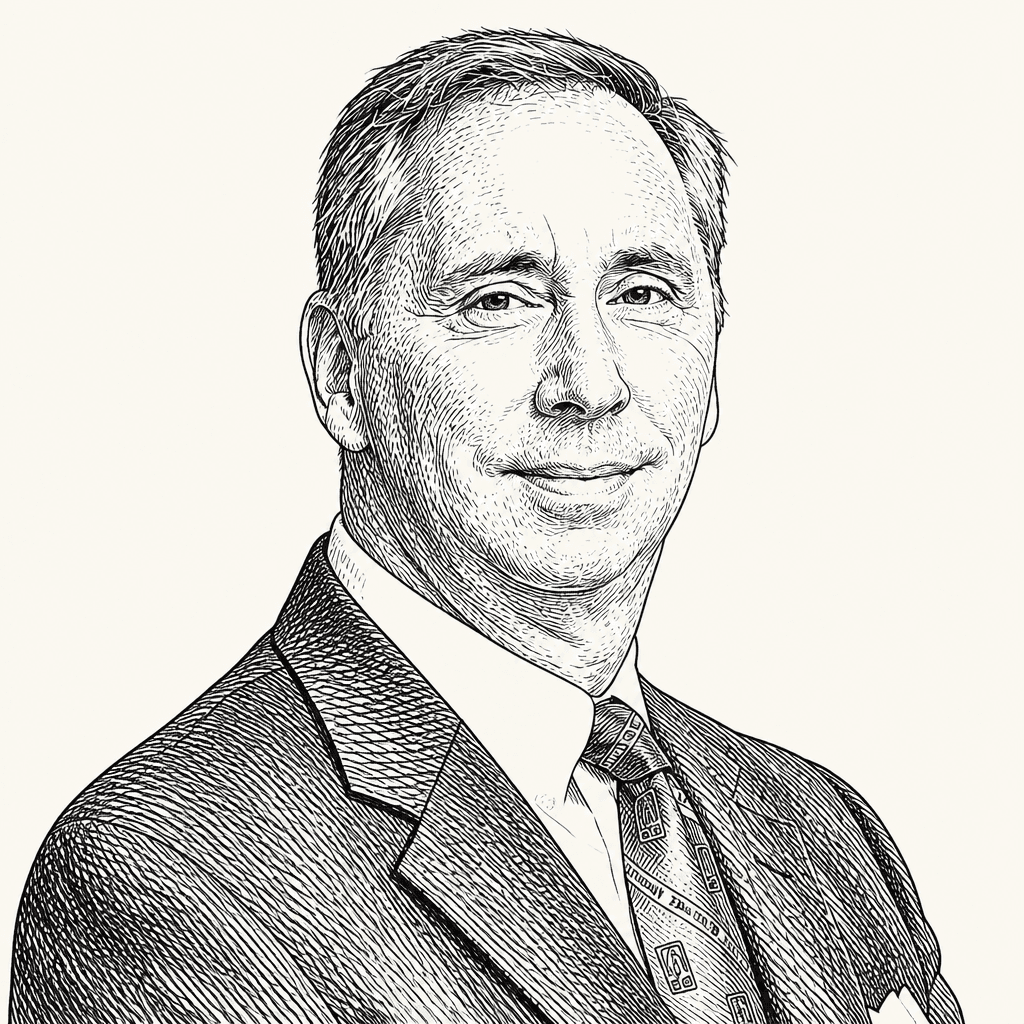
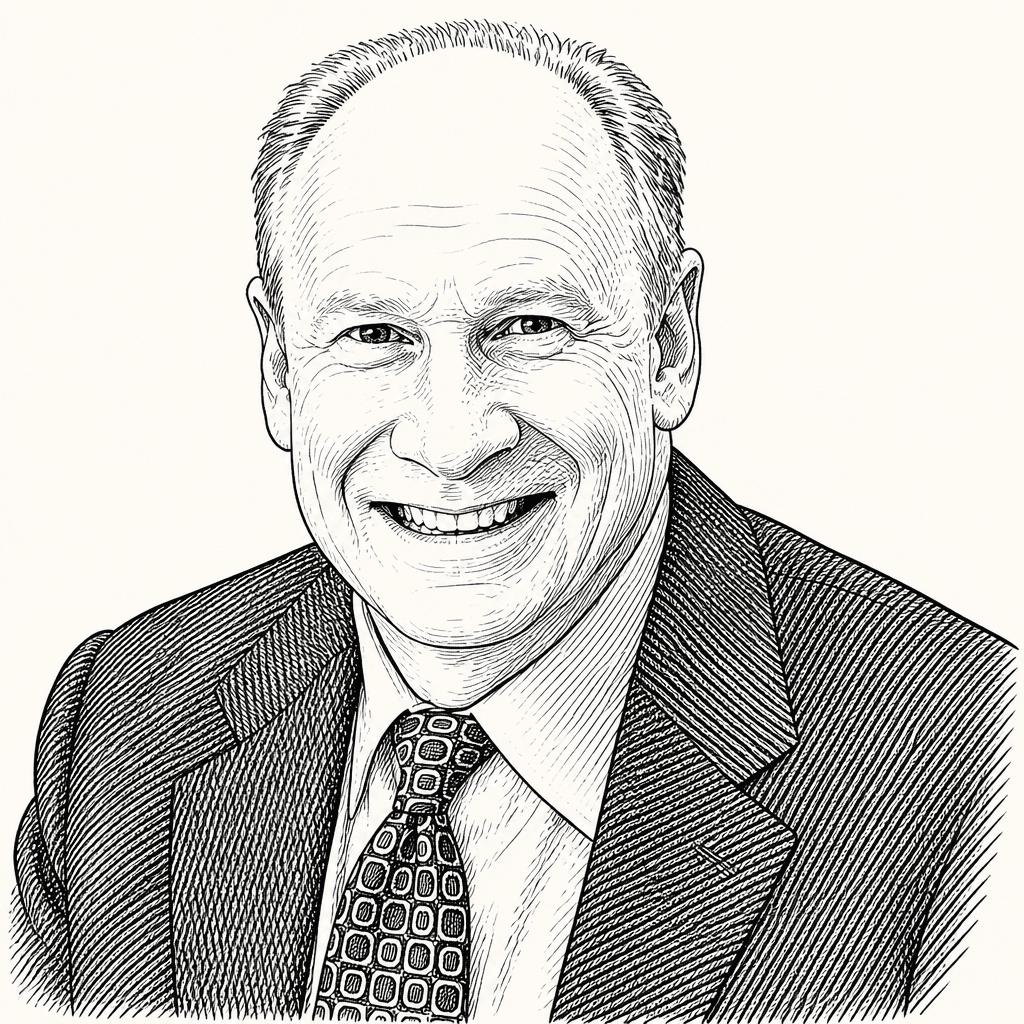
In a Hoover Institution California update, Bill Whalen and Lee Ohanian argue that the state’s politics are being shaped by institutional strain more than any single scandal. They say the federal investigation of Gavin Newsom and Jennifer Siebel Newsom could help Newsom cast himself as a Trump target in a Democratic presidential race, while exposing family finances and behested payments to deeper scrutiny. They also frame California’s election rules, Xavier Becerra’s likely succession, and a possible deal to avert a billionaire wealth-tax ballot fight as evidence of a system increasingly governed by distrust, weak execution, and interest-group bargaining.

Newsom’s investigation is both a short-term political asset and a long-term liability
The federal investigation of Governor Gavin Newsom and Jennifer Siebel Newsom enters California politics with more unknowns than facts. Bill Whalen described it as a “very big bombshell by Sacramento standards,” but also stressed that the substance remains unclear: whether investigators are examining Siebel Newsom’s nonprofit work, the state practice of “behestments,” the governor’s own finances, or some combination of those issues.
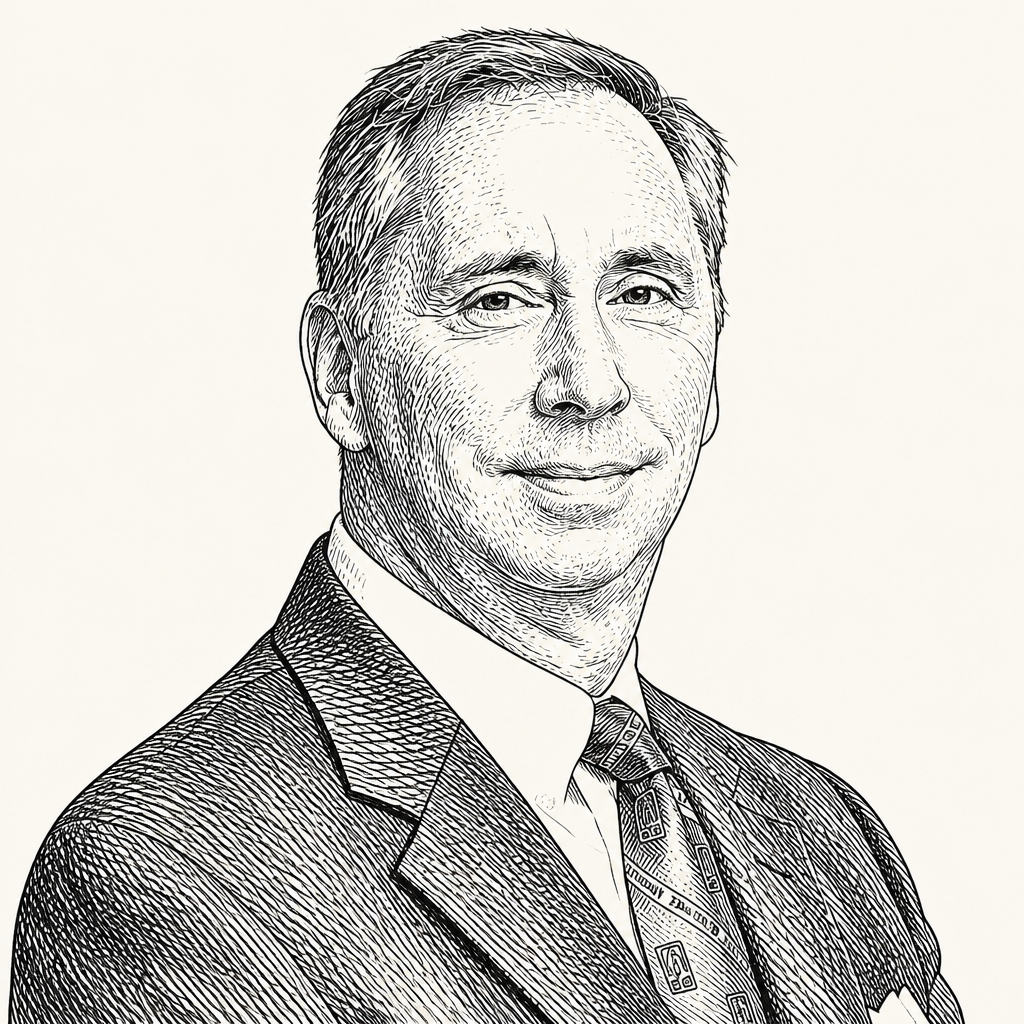
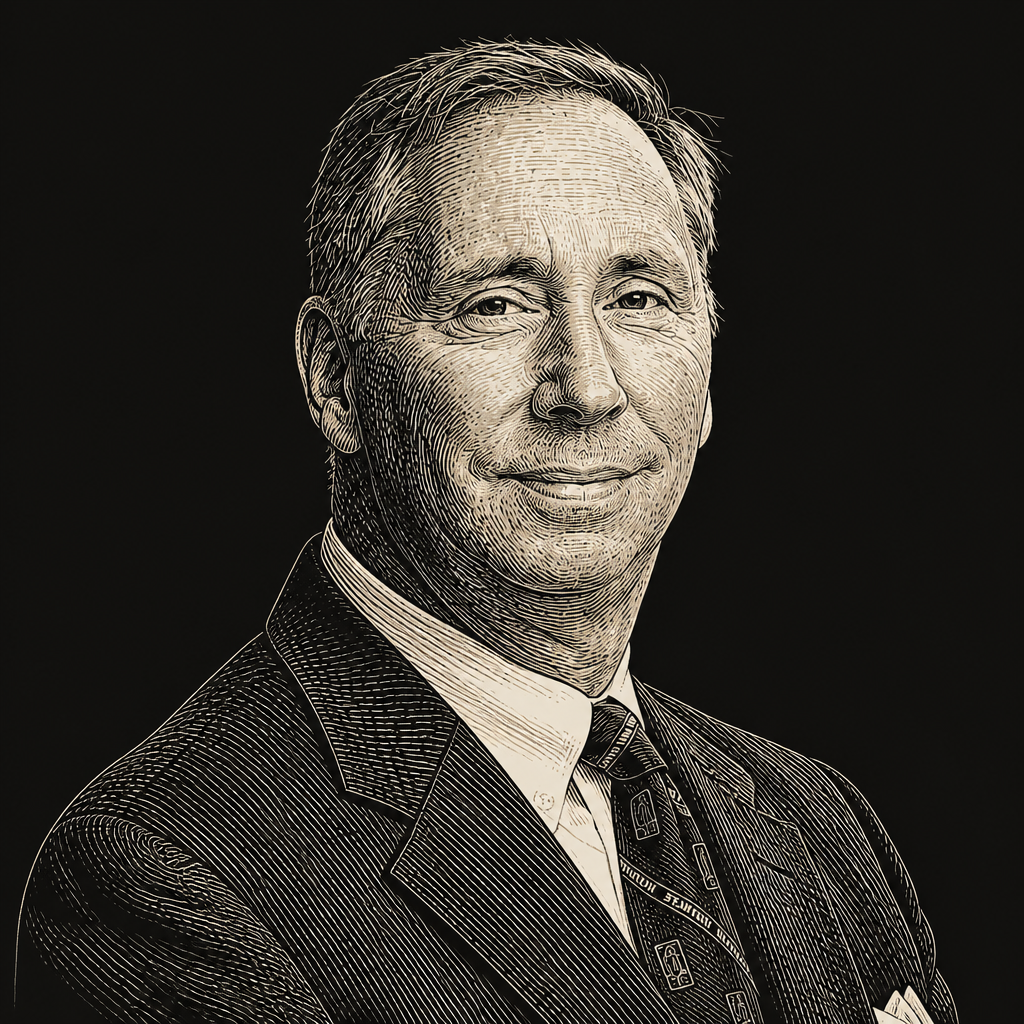
Newsom’s public account, as Whalen summarized it, is that the Trump Justice Department is coming after him because he is one of Donald Trump’s “mortal political enemies.” Whalen was careful not to accept that framing at face value. He said the U.S. attorney in Sacramento has apparently been looking into related matters for about a year, which complicates the idea that the investigation is simply a new political strike from Washington.
The immediate political upside for Newsom, in Whalen’s view, is straightforward. If Newsom is positioning himself to run for president in 2027, and if the Democratic contest turns partly on who can most credibly claim to be targeted by Trump, then a federal investigation gives him material to use. Whalen said Newsom appeared to recognize that quickly: within about 24 hours of announcing the investigation, he was sending fundraising solicitations.
The analogy Whalen drew was to Donald Trump’s own use of “lawfare” in 2024. Newsom can now say he is under investigation by Trump’s Justice Department and fold that into a presidential narrative. But Whalen argued that what may help Newsom in June 2026 could become a persistent problem in a national campaign.
The reason is scrutiny. Whalen said Newsom and Siebel Newsom have not really released their tax returns, and that a federal investigation may prompt media attention to the way their finances work. He framed the question bluntly: how does a governor and first partner “live high off the hog as a humble public servant”? In a presidential campaign, he argued, controversies expand and the press becomes more diligent and antagonistic.
Whalen’s comparison was Hillary Clinton in 1992. Questions about the Rose Law Firm and billing practices did not sink Bill Clinton’s campaign, he said, but became “a problem that wouldn’t go away” and carried into the administration. His point was not that the Newsom matter is equivalent, but that spousal finances and professional arrangements can become durable campaign liabilities even when they do not decide the race.
Lee Ohanian said the limited public information points him toward one likely area of inquiry: behested payments. He explained the practice as a “gray area in politics” in which a government official asks an organization to donate to a nonprofit or government agency “on behalf of the public good.” Citing CalMatters as a source he considers reliable, Ohanian said Newsom had roughly $321 million in behested payments from around the time he took office through 2024, with some millions going to Siebel Newsom’s nonprofit.
Ohanian also connected the investigation to an already messy political network around Sacramento. He said at least one investigation began under Biden and involved Newsom’s former chief of staff. Whalen identified that figure as Dana Williamson and said it involved an account belonging to Xavier Becerra, the Democratic nominee for governor. Whalen called it “an octopus” because of the interconnections among Becerra, Newsom, and Williamson.
Both Whalen and Ohanian argued that even if the investigation produces no charges, the underlying facts could still be politically damaging. Ohanian said that if behested payments to Siebel Newsom’s nonprofit were entirely legal, voters may still be skeptical of the arrangement. Whalen added that the public role of Siebel Newsom herself could become a problem. He recalled an appearance with Newsom at a Planned Parenthood of California event, where he said she became “huffy and indignant” that questions were directed to her husband rather than to her and Planned Parenthood. For Whalen, that raised the risk that defending her own role in a financial controversy could go badly.
The possible presidential consequences go beyond the investigation itself. Whalen suggested that renewed attention to Siebel Newsom’s documentaries could create political problems for Newsom in swing states, pointing to what he called “toxic male talk” in that body of work. Ohanian agreed that such material may not play well in states such as Ohio, Pennsylvania, and Wisconsin.
The shared judgment was therefore double-edged: Newsom has a plausible immediate way to turn the investigation into a Democratic primary asset, but the facts around family finances, behested payments, and Siebel Newsom’s nonprofit work could become a long-running liability if Newsom moves onto the national stage.
California’s election rules are producing distrust even when conspiracy is the wrong explanation
California’s election system came under criticism not because Whalen and Ohanian claimed a stolen election, but because they argued the rules create conditions in which distrust flourishes. Jonathan Movroydis framed the problem around four features: every registered voter receives a mail-in ballot; completed ballots can arrive up to seven days after Election Day and still be counted; interest groups may harvest ballots; and late-arriving ballots can change the apparent outcome after election night.
Whalen said the recurring pattern in California is that election-night numbers come in, and then “the numbers move” as later ballots are counted. He said this has traditionally hurt conservatives and Republicans, because Republicans tend to vote earlier and Democrats later. In an era of high suspicion, those shifts easily become evidence for claims that “the fix is in.”
California election officials, Whalen said, often defend the prolonged count by asking whether voters want speed or accuracy. He called that a false narrative. Florida, he argued, manages to count a large number of ballots quickly. His point was not that California should sacrifice accuracy, but that a slow count should not be treated as the necessary price of a reliable one.
Whalen’s proposed reforms were direct. First, end the universal mailing of ballots to every voter. He called that system a vestige of the Covid era, justified in 2020 when there were legitimate public-health concerns about crowding polling places, but no longer necessary six years later. He said mail ballots could remain available, but should be optional rather than automatic.
Second, Whalen said California should eliminate ballot harvesting. His objection was rooted in the privacy of voting. Voting, he said, is supposed to be private; that is why polling booths have curtains. Ballot harvesting makes the act more public, with others potentially asking whether someone has voted, how they intend to vote, and whether they need help voting.
Third, Whalen said ballots should have to be received by Election Day. If a voter has not mailed a ballot in time, he argued, the voter should have to deliver it personally or vote in person. He noted that a pending Supreme Court case involving Mississippi could create “chaos” in California if the Court rules that states cannot count ballots arriving after Election Day.
Ohanian largely agreed, adding same-day conditional registration to the list of practices that concern him. He said universal mail ballots became permanent in 2021 after being offered in 2020 under emergency conditions. The combination of mailed ballots, conditional registration up to Election Day, and ballot harvesting, in his view, is simply not how voting was understood “five or 10 years ago.”
Ohanian also argued for voter identification, acknowledging that it is controversial and a “no-go in California,” while saying most polls show Americans overwhelmingly support it and that many countries require it. Whalen noted that a voter-ID proposition had qualified for the November ballot.
But Whalen was pessimistic about any legislative reform. Asked implicitly what chance such changes have in California, he answered with the same odds as “Donald Trump’s birthday becoming a state holiday.” His reasoning was political: the system benefits Democrats, and Democrats control state government, so they have no incentive to change it.
The Los Angeles mayoral primary became the practical example. Spencer Pratt, a reality-TV figure running a high-attention campaign, failed to make the runoff against Karen Bass and Nithya Raman. Movroydis noted a conspiracy circulating about ballots supporting Pratt being found in a dumpster, while also saying the supposed dumpster was located in a fictional place called San Recto.
Whalen resisted the conspiracy account. He said it is tempting to claim Pratt was “hosed by the system,” but elections often come down to mechanics. He recalled watching Pete Wilson’s 1994 reelection operation map out precisely what percentage of votes he needed in each of California’s 58 counties. Running for Los Angeles mayor, Whalen suggested, is similarly mechanical: attention is not the same as votes, and Pratt’s campaign may not have been as strong at ballot harvesting or voter targeting as it was at generating “gonzo advertising.”
Ohanian also rejected a conspiracy explanation. He said Bass was around 34 percent, Raman around 29 percent, and Pratt around 25 or 26 percent, with about 30,000 votes separating Pratt from Raman. He cited reports that a DOJ attorney had found evidence involving roughly 7,000 ballots, which he said would be substantial in a race where the second- and third-place candidates were not far apart, but he did not claim that would change the result.
His explanation of Pratt’s shortfall was geographic and informational. Pratt was strong on the Westside, especially where the Palisades fire had the largest effect, and in the Valley. But closer to downtown Los Angeles and South Central Los Angeles, Ohanian said many voters likely had no idea who he was.
Ohanian’s deeper concern was turnout. He said Bass received around 290,000 votes in a city with a voter-eligible population of about 3.1 million adults. That means Bass received less than 10 percent of eligible voters, by his calculation. For Ohanian, the problem is that many Los Angeles voters are either disengaged or uninformed despite receiving mail ballots that would take only minutes to complete, even if they voted only for mayor.
Whalen added that large post-election shifts are not new in Los Angeles. In the 2022 mayoral race, he said, Rick Caruso led by five points on election night and trailed by seven points a week later. That history, for Whalen, is a reason not to leap to conspiracy — but also evidence of why California’s system invites suspicion.
Becerra looks like a lower-drama successor to Newsom, not a candidate with a governing theory
Xavier Becerra emerged from the primary as the Democratic nominee for governor, facing former Fox News personality Steve Hilton. Hilton’s message, as Movroydis summarized it, is simple: attack one-party rule in California across taxation, spending, bureaucracy, housing, and public safety. Becerra’s message is less clear. He opposes the billionaire wealth tax and does not support single-payer health care, making him look to Movroydis like a continuation of Newsom “without the flare.”
Bill Whalen said Becerra’s career points toward caution. Becerra spent decades in the House, beginning around 1990, before Jerry Brown appointed him California attorney general after Kamala Harris was elected to the U.S. Senate. He then served in Washington as Health and Human Services secretary before returning to run for governor.
Whalen said Becerra appears “more Jerry than Gavin.” He does not support the billionaire wealth tax, and he opposes single-payer care, which Newsom supported when he ran in 2018. Whalen also does not see him running a “fire and brimstone campaign” that excites Democratic voters. Becerra can talk about suing Trump repeatedly as attorney general, but Whalen said he does not appeal to youth or imagination in the way Newsom tried to.
The comparison Whalen offered was Gray Davis’s 2002 reelection: a mechanical, low-excitement campaign by an unpopular governor who still won. After eight years of Newsom’s stylish, high-profile governorship, Whalen said California may be headed for four or eight years of something more relaxed — and “maybe not such a bad thing.”
Ohanian’s assessment was harsher. He called Becerra “a politician who’s always been in the right place at the right time.” Becerra served 24 years in the House, Ohanian noted, but was not particularly distinguished there. He was appointed attorney general when Harris left for the Senate and later appointed to HHS by Biden.
Ohanian said Becerra’s record at HHS raised doubts about his management ability. He cited a New York Times story and critics who say Becerra lost track of about 80,000 undocumented children, with terrible consequences for some of them. Ohanian said Becerra’s defense is that the department could perhaps have done better follow-up, but made phone calls that were not returned. Ohanian also said media reports from inside the Biden White House suggested Biden was unhappy with Becerra moving too slowly on undocumented children and that Becerra seemed sidelined during part of the Covid period.
Becerra’s political climb in the governor’s race also appeared, to Ohanian, to depend on timing and attrition. He said Becerra entered the race around March or April 2025 polling at 3 to 5 percent, and a year later was still at 3 to 5 percent. A USC gubernatorial debate scheduled for late March was canceled at the last hour, with one reason being that Becerra, Tony Thurmond, and Betty Yee — candidates of color — were left out in favor of San Jose Mayor Matt Mahan because their poll numbers were too low. Then Eric Swalwell left the race, and Becerra suddenly became the Democrat moving into the November election.
Ohanian also mentioned stories about fake social media accounts that seemed related to the Becerra campaign, criticizing his Democratic rival Tom Steyer and promoting Becerra. He did not present the matter as resolved, but included it as part of the picture of a candidate who benefited from circumstances.
The core criticism from both Whalen and Ohanian was that Becerra has not articulated large governing ideas. Whalen said that as a speechwriter he could imagine Becerra’s inaugural address as a strong upward-mobility story: son of immigrants, Stanford undergraduate and law degrees, and a rise through California politics. But he wondered what Becerra would say in a State of the State address. Newsom in 2018 had big promises, including single-payer care and a “Marshall Plan” for three million new housing units. Becerra, Whalen said, does not offer comparable ideas.
Ohanian said the most memorable line from Becerra in the debates was not a policy idea but the insult that Trump was Hilton’s “daddy.” On substance, Ohanian said Matt Mahan offered more content among the Democrats. Becerra’s answers on high-speed rail and housing were, in Ohanian’s view, amorphous: he says California will build high-speed rail, get it done, and build more houses, but offers few specifics about how.
That matters because, according to Ohanian, California has already tried an enormous amount of housing legislation without solving the problem. He said there have probably been close to 200 laws passed to promote housing, yet private housing permits on average under Newsom have been fewer than in the year before he took office. If Becerra’s answer is simply that California will build more housing, Ohanian said, that does not explain how he would break the pattern.
Whalen allowed that Becerra’s dullness might be an asset if paired with administrative competence. Newsom, he said, is “terrific at rhetoric,” good at big ideas and stagecraft, but “terrible at the follow-through.” If Becerra proved to be a better administrator, California might benefit from less drama and better execution.
But Whalen also noted why Becerra would have little incentive to criticize Newsom’s record. Newsom’s political team helped rescue Becerra and sent money his way. For Newsom, that matters because an antagonistic successor in 2027 could make his presidential campaign miserable by pointing daily to California’s failures. Whalen expects Becerra, by contrast, to speak in terms of making things better “thanks to Gavin Newsom,” rather than highlighting what is wrong.
Ohanian said Becerra currently has about a 20-point lead over Hilton, with about 20 percent of voters undecided. He does not expect Becerra, if elected, to be a particularly distinguished governor. Whalen’s more charitable version was that California may be ready for understatement — but only if understatement produces results.
The primary also showed the limits of attention, money, and technocratic competence
Several high-profile candidates failed in the primaries for different reasons, and Whalen and Ohanian treated those failures as signals about California’s political mechanics.
Spencer Pratt’s Los Angeles mayoral campaign received attention through AI-generated and clickbait-style content, and Whalen said he was “brilliant on message” and strong in debates. But Pratt did not make the runoff. The explanation Whalen favored was not that Pratt was robbed, but that his campaign may not have built the machinery required to identify, target, and collect votes in a citywide race. The campaign’s media attention may simply have outweighed its vote operation.
Ohanian’s account was similar. Pratt had pockets of strength, especially on the Westside and in the Valley, but not enough recognition across the city. Bass’s low vote share among eligible adults also suggested to Ohanian a broader civic problem: a small electorate making major city decisions.
Tom Steyer’s failed gubernatorial run illustrated a different limit: money. Movroydis said Steyer spent $555 million of his own money, including television and internet advertising, but did not move the needle where he needed it. Later, Whalen referred to Steyer spending roughly $215 million or $250 million on the race, indicating some uncertainty or inconsistency in the figures discussed. The shared point was that Steyer spent heavily and still lost.
Ohanian’s explanation was personal and political. He said Steyer did not come across as likable in debates. He was not brash or argumentative, but he did not connect. Steyer also lacked a political background from which to build a base, and Ohanian did not think Newsom favored him among the candidates. He added that Steyer leaned hard into the trans issue, which Ohanian considered strategically unwise regardless of one’s substantive view of the issue. It was not, in his view, a way to win voters in the middle.
Whalen described Steyer’s problem as “coming on too strong on a first date.” The phrase captured both overexposure and an inability to convert resources into trust.
Saikat Chakrabarti, a former tech engineer and former aide to Alexandria Ocasio-Cortez, finished third in the primary to replace Nancy Pelosi in San Francisco’s congressional seat. Whalen said Chakrabarti tried to bring an AOC-style flavor to San Francisco, but the more interesting race now is the runoff between State Senator Scott Wiener and Supervisor Connie Chan.
Whalen framed that runoff through Pelosi’s final influence. He said politics is personal and suggested Pelosi may want one final act: to make sure Wiener does not get her seat. Ohanian said he doubted Pelosi wants Wiener as her “effective swan song,” though he would still be surprised if Chan were elected. Whalen agreed that Chan would be an upset, partly because Pelosi’s endorsement and political muscle may not transfer as powerfully as they once did. Pelosi has held the seat for about 40 years, he noted, and San Francisco has changed during that time.
Whalen’s own view of Wiener was skeptical. He said he looks at legislation the way one looks at a product label, and when he sees Scott Wiener’s name on a bill, he usually thinks, “uh oh, this is trouble.” He did not spell out a policy critique in detail, but the comment made clear that he sees Wiener as a consequential and controversial legislative figure.
Matt Mahan, the San Jose mayor who ran for governor, represented the limits of competence and moderation in a noisy statewide race. Whalen said Mahan entered too late, had internal campaign divisions, and leaned too heavily on a message that he had done a good job in San Jose. The rest of California, Whalen said, does not care much about San Jose compared with San Francisco, Los Angeles, and even San Diego. He also criticized Mahan’s advertising style as too “bro-ish” and “tech chic,” with scruff and an untucked shirt that did not convey executive authority.
Ohanian thought Mahan was the most competent Democrat in the debates, but said that may have worked against him in an era when candidates need to “jump out and scream at people.” Mahan appeared thoughtful and bookish. Ohanian said he may have been better off choosing one, two, or three issues — housing, crime, other core problems — and saying directly what he would do and why it would work. Instead, his campaign seemed to reflect different advice from different people, which Ohanian said rarely ends well.
Whalen offered Mahan a longer-term path by comparing him to Pete Wilson. Wilson was 43 when, as mayor of San Diego, he ran in the 1978 Republican gubernatorial primary and finished a distant fourth. Four years later he won a U.S. Senate race against Jerry Brown, and eight years after that became governor. Mahan is also 43. But Whalen said California’s political calendar complicates a similar comeback: most statewide offices open this year will likely be closed in 2030 if incumbents seek second terms. Mahan could challenge Senator Alex Padilla in 2028, but Whalen called that an uphill fight. His best bet may be to wait for a Democratic president in 2029 and seek a Washington post.
There is one catch: if Newsom becomes president, Whalen doubts he would give Mahan a job. Newsom was unhappy with Mahan’s criticism, Ohanian said, even when that criticism was implicit or subtle. Whalen said Mahan may have held back from going harder at Newsom because he wanted to “live to fight another day.” Whether that other day comes in politics or the private sector remains unclear.
The billionaire wealth-tax fight exposes how California’s budget politics are negotiated around interests, not just ideology
The proposed billionaire wealth tax is qualified for the November ballot unless its backers withdraw it by June 25. Whalen described the initiative as requiring California’s 200-plus billionaires to pay 5 percent of their wealth to the state over five years. Its backer is the healthcare wing of SEIU. The signatures have been certified, so the question is whether the campaign chooses to proceed.
Bill Whalen said the politics are unusual because many unions oppose a tax that would send more money to state government. Their reason, he said, is distributional rather than ideological: about 90 percent of the revenue would go to healthcare spending, not education or other interests. In his phrase, other unions “don’t get any of the sugar.” The tech community, billionaires, the governor, and other unions all want the measure killed. SEIU itself may also prefer a deal, because polling around 53 or 54 percent is a dangerous level for a California initiative.
The deadline creates leverage. Whalen said Governor Newsom, lawmakers, special interests, and SEIU are all negotiating to keep the measure off the ballot. The possible deal, in his telling, could involve promises of future healthcare money, especially if AI initial public offerings bring more revenue into Sacramento. But he noted a basic problem: Newsom will not be around as governor to make good on promises beyond his term, so SEIU may not trust such a bargain.
Ohanian used the moment to criticize Newsom’s leadership. He said Newsom should have acted much earlier, in the summer, by telling SEIU he would not support the wealth tax under any circumstances and would actively oppose it. To Ohanian, the late scramble fits a broader pattern: Newsom had trouble getting teachers unions to reopen classrooms in 2021; he now faces state workers who do not want to return to in-person work; and he has allowed the wealth-tax issue to advance almost to the deadline.
Ohanian wondered what SEIU would demand in exchange for withdrawing the measure. He mentioned the union’s past efforts to get into the dialysis industry over one or two cycles and asked whether support for that might become part of a deal. His broader view was categorical: he said that in 30 years as an economist, he does not know any economist, including many Democratic economists, who thinks the wealth tax is a good idea.
He also argued that the mere threat has already cost California important people. Ohanian said California has “preemptively lost” Sergey Brin, Larry Page, Peter Thiel, and Travis Kalanick because of the threat of the tax. His claim was that the state needs such people for many reasons and that policy uncertainty pushes them away.
Whalen added SpaceX as an example of lost fiscal upside. He said California missed out on the SpaceX IPO, with something like 4,000 SpaceX workers now millionaires on paper. That means capital-gains tax revenue California will not receive. For Whalen, this is the cost of “killing the golden geese”: fewer golden eggs.
The wealth-tax negotiation is also tied to state-worker return-to-office disputes. Whalen said SEIU has proposed that state workers receive $25 per day for reporting to work, another $25 per day for commuting costs if they use transit, or $500 per month for garage fees if they drive. He called those suggestions “almost comically laughable.” The political problem for Newsom, especially as a potential presidential candidate, is that paying public employees simply to show up to work looks like a participation trophy.
California’s larger budget picture intensifies the argument. Ohanian said Newsom inherited a $201 billion budget from Jerry Brown, while the budget coming through the Legislature is about $356 billion or $357 billion — roughly a 75 to 77 percent increase. He argued there is no rationale for the state to still be struggling with revenue after such growth. The Legislative Analyst’s Office, he said, has warned about chronic fiscal problems.
Ohanian argued that this will be a problem for Newsom nationally. If he runs for president, he will have to explain presiding over a roughly three-quarter increase in California’s budget while the state remains revenue-starved. Ohanian contrasted that with Florida and Texas, which he said have grown without comparable budget expansion.
Whalen noted that California voters will face multiple tax-related measures, including a Howard Jarvis Foundation measure that would undo Los Angeles’s mansion tax. He also predicted that the campaign to kill the billionaire tax, if it goes forward, could have around $100 million to spend. A consultant who made money from Steyer’s gubernatorial run, Whalen joked, could next profit from the anti-wealth-tax campaign and end up with “a nice beach house somewhere in California.”
The underlying point was not that California’s budget fights are anti-tax versus pro-tax in a simple sense. The billionaire-tax battle shows a more complicated Sacramento reality: unions may oppose revenue they cannot control, politicians may oppose taxes that threaten the state’s wealth base, and initiative backers may use qualified ballot measures as bargaining chips. Newsom’s challenge is to stop a measure he dislikes without appearing captive to the same interest-group politics that allowed it to get this far.