California’s Revenue Windfall Masks a Narrow and Mobile Tax Base
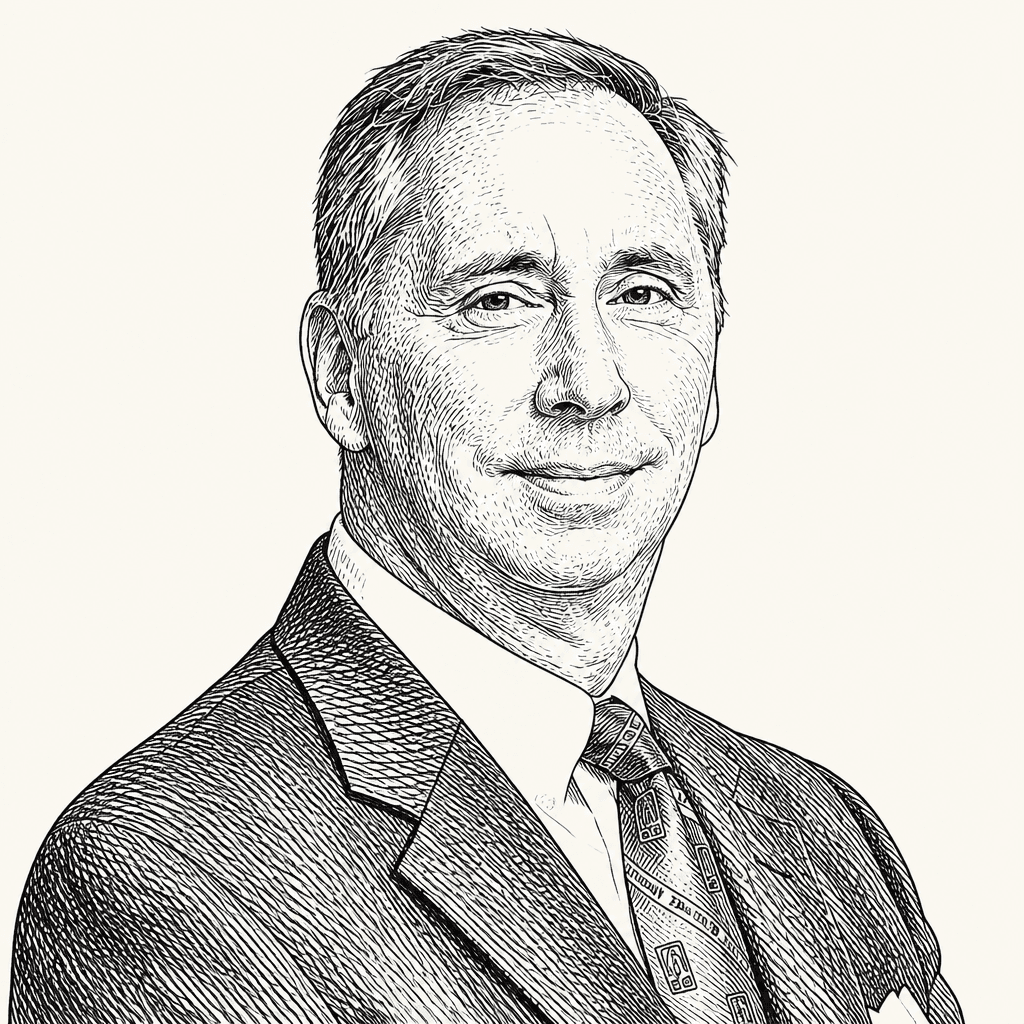
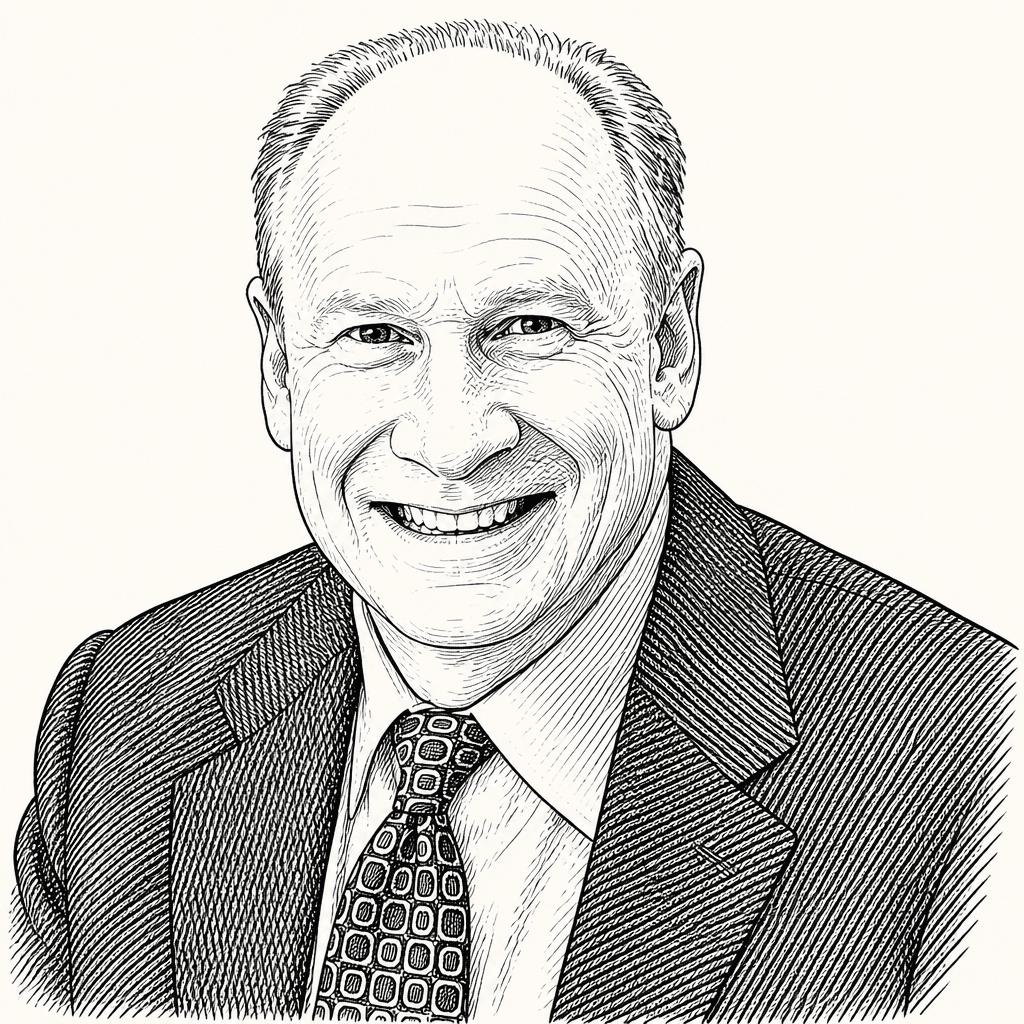
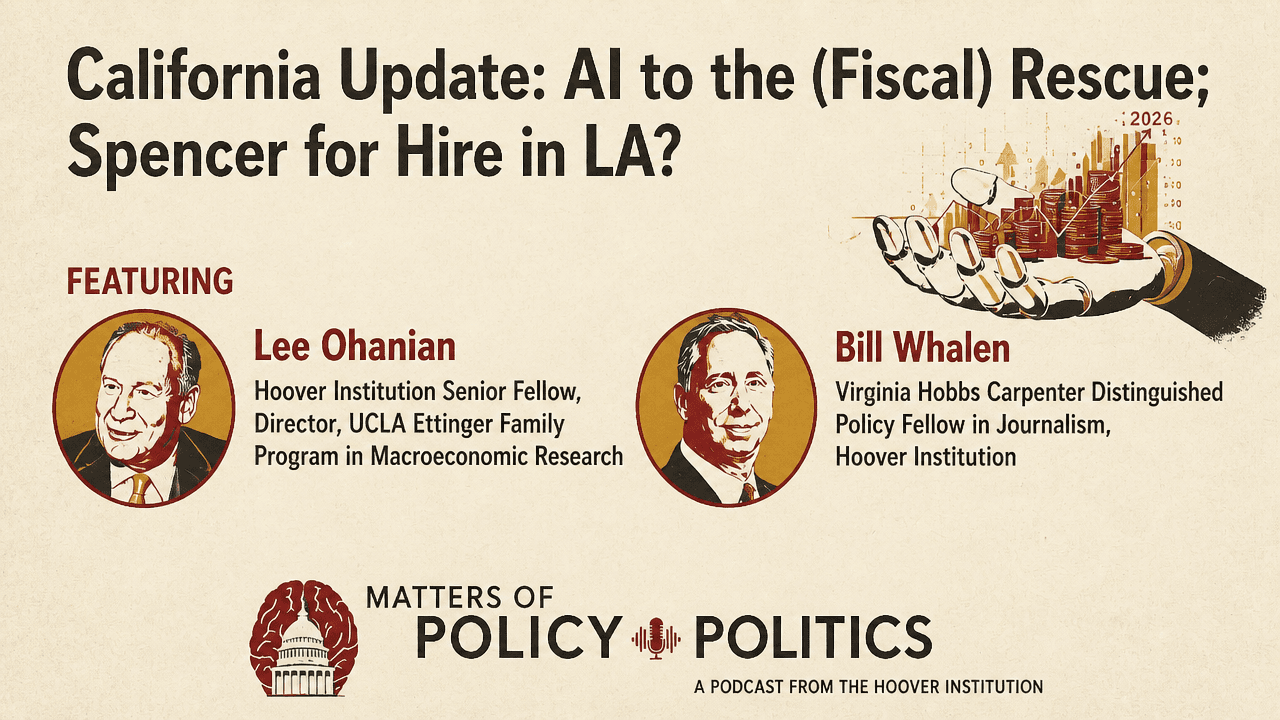
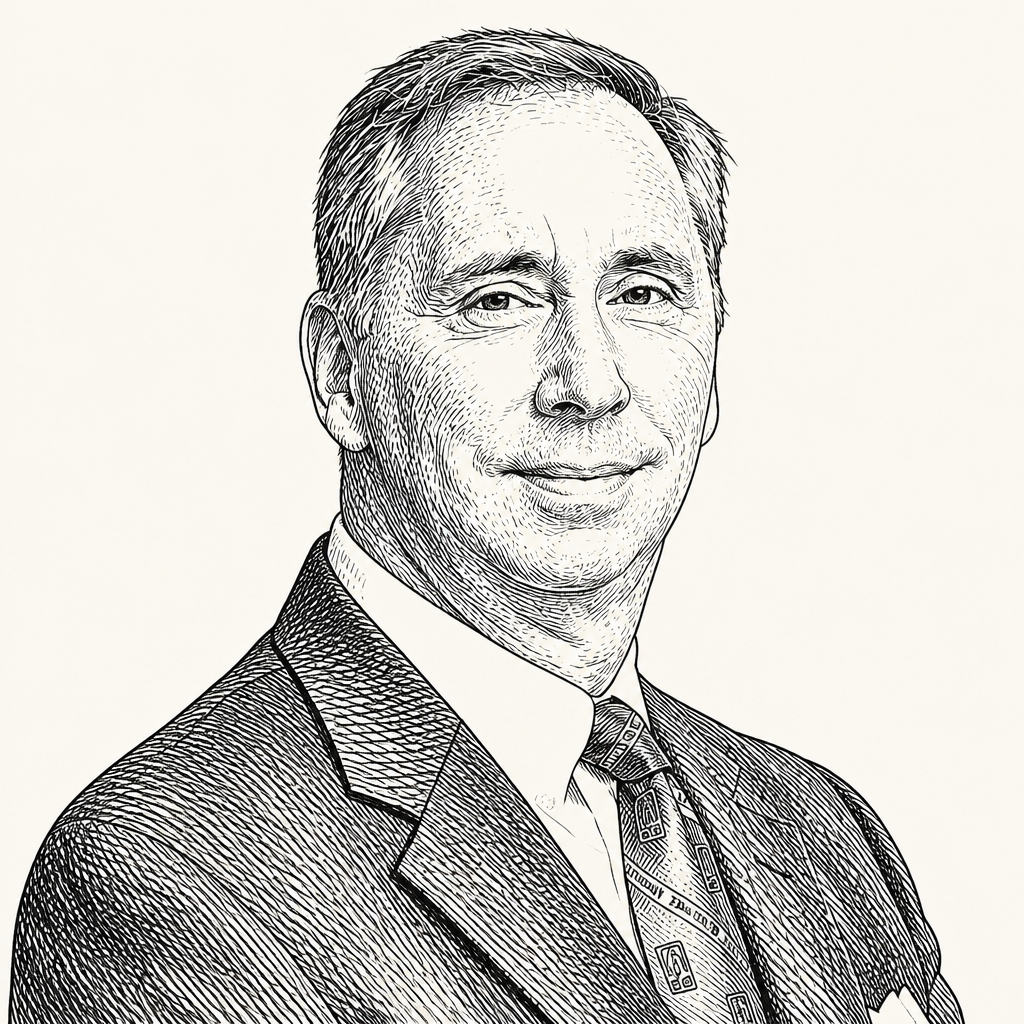
In a Hoover Institution California update, Bill Whalen and Lee Ohanian argue that the state’s newly balanced budget reflects another capital-gains windfall rather than a sounder fiscal model. They say California remains dependent on a narrow group of high-income, mobile taxpayers, with AI and possible IPOs offering more revenue upside while reinforcing the same volatility. The discussion extends that critique into state and Los Angeles politics, where they see unsettled Democratic fields and Spencer Pratt’s mayoral bid as symptoms of frustration with incumbent governance.
California balanced the budget by catching another capital-gains wave
California’s latest budget picture turned not on a structural correction, but on a revenue surge from high-income taxpayers and capital gains. The May revision for the coming fiscal year moved from an earlier projected $2.9 billion deficit to a claimed balance after an unexpected $16.5 billion windfall. Of that, Bill Whalen said, roughly $12 billion came from capital gains: “the stock market is coming to California’s rescue.”
Whalen’s concern was not that the state found the money. It was that California has repeatedly built spending commitments around revenue sources that rise and fall with the stock market, IPOs, and asset sales. California is required to balance its budget, unlike the federal government, but Whalen said governors can “put their thumb on the scale” by anticipating revenue or moving obligations in ways that produce future shortfalls. In this case, he credited Governor Gavin Newsom with having “lowballed revenue expectations” in January, which made the later windfall politically useful. But he described the underlying model as “found money under the sofa,” not fiscal discipline.
Lee Ohanian put the same point in economic terms: depending on volatile capital gains is “a little like praying for rain.” The state got what he called a “revenue waterfall,” typically associated with IPOs or large stock-sale gains. But a waterfall is not a fiscal base.
The scale of spending is central to Ohanian’s critique. California’s budget was about $201 billion in Jerry Brown’s final year and is now projected at roughly $349 billion to $350 billion in Newsom’s last year. Jonathan Movroydis framed that as about $27,000 per household and a 73% increase since Newsom took office in 2019. Ohanian said he did not believe any other state had seen a comparable percentage increase, including fast-growing states such as Texas and Florida, while California has not had substantial population growth.
Whalen used Florida and Illinois as rough comparisons. Ron DeSantis, also finishing a second term, signed a $91.1 billion Florida budget in 2019 and proposed a $117.4 billion budget most recently, which Whalen calculated as about a 29% to 30% increase. Illinois governor JB Pritzker signed a $40 billion budget in 2019 and proposed $56 billion most recently, a roughly 40% increase. Those increases are large, Whalen said, but still far below California’s.
| State | Governor discussed | Starting budget | Most recent budget figure cited | Approximate increase cited |
|---|---|---|---|---|
| California | Gavin Newsom | $201B | $349B–$350B | 73% |
| Florida | Ron DeSantis | $91.1B | $117.4B | 29%–30% |
| Illinois | JB Pritzker | $40B | $56B | 40% |
For Whalen, the danger is visible in California’s own recent history. He pointed back to Newsom’s earlier presentation of a then-record $97.5 billion surplus, followed only months later by a January 2023 budget proposal warning of a $22.5 billion deficit — a swing Whalen described as roughly $110 billion. Whalen said Newsom himself used a chart at the time to show how volatile capital gains were as a share of personal income: they had peaked at 9.7% in 2021 and were expected to decline to about 5% by 2025. A roughly four-point movement in that category, Whalen said, can mean tens of billions of dollars for the state.
Ohanian said this has been California’s fiscal problem “for decades.” The state depends heavily on personal income tax revenue; that revenue depends heavily on the top 1%; and those taxpayers’ incomes depend heavily on volatile capital gains, IPOs, and stock-market performance. “There’s either a waterfall or a trickle,” he said.
The concentration is stark. Ohanian said that in 2021, roughly the top 0.05% of California tax filings — about 5,200 filings out of roughly 18 million or 19 million — paid about $30 billion in personal income tax revenue. That is why, in his words, California can spend so much: a small group of “golden geese” produce enormous taxable income.
But those taxpayers are also the most mobile. California’s top income tax rate is about 13.3%, Ohanian said, and can rise as high as 14.4% on wage income. He cited the Tax Foundation, which he described as a nonpartisan research organization studying taxes and fiscal policy, as ranking California 48th in tax competitiveness, largely because of high personal income tax rates on top earners.
The fiscal critique is therefore not simply that California taxes heavily or spends heavily. It is that its tax base is both narrow and volatile, while its spending commitments are durable.
A proposed billionaire tax would test the state’s dependence on mobile taxpayers
The proposed billionaire tax, as described by Movroydis, Whalen, and Ohanian, would take 5% of California billionaires’ wealth and allow the state to collect it over a five-year period. It was expected to qualify for the November ballot, and Lee Ohanian said it originated with the Service Employees International Union roughly a year earlier. Newsom had said he did not support it at the state level, which Ohanian called the correct response, but Ohanian criticized the governor for not trying earlier to shut it down.
Ohanian’s economic objection was direct: a wealth tax on California billionaires would cause some of them to leave. They would take not just their wealth, he argued, but also their income-tax filings. States such as Texas, Florida, and Nevada offer obvious alternatives for people capable of maintaining multiple homes and establishing residency elsewhere.
The proposal attempts to address that problem by applying to people who were California residents before January 1, 2026, for some number of years even after they leave. Ohanian said he did not know whether that had been constitutionally tested and suggested it might be difficult to enforce once someone established residency in another state.
The broader concern, in Ohanian’s telling, is that even the prospect of such a tax changes behavior. He said Larry Page and Sergey Brin appeared to be leaving as of January 1, Peter Thiel was moving to Florida, Travis Kalanick had left, Steven Spielberg had left for New York, and Elon Musk, Larry Ellison, and Charles Schwab had already left. He described some of these figures as “one in 10 million people” and said California should not want to lose either their creativity or the tax checks they write.
Bill Whalen added two separate long-term risks. The first is budgetary: the tax would create a one-time source of money for programs that would likely become permanent. If the tax funded health-care programs, for example, the programs would not expire after five years simply because the billionaire wealth base had been depleted or had moved away. The state would then face pressure either to renew the tax or lower the threshold — from billionaires to people with nine-figure wealth, then perhaps lower still.
Whalen compared that pattern to California’s earlier top-rate increase during the 2010s budget crisis. Ohanian said the top income-tax increase to 13.3% under Jerry Brown was originally framed as temporary, at a time when California was “issuing essentially IOUs” and nearing what he called “the level of Argentina.” Whalen noted that the increase was supposed to last four years, was renewed for another 12, and was now approaching renewal again. Ohanian added that a sales-tax increase from that package did expire, but the top-rate increase did not.
No government program is ever temporary. No tax is ever temporary.
The second risk is strategic. Whalen asked whether a billionaire tax would drive out not only wealthy individuals, but also businesses, jobs, creativity, and future founders. He noted that some billionaires may be willing to stay — he cited Nvidia’s Jensen Huang as saying he would gladly give the money to California — but framed the larger question as a possible “brain drain.”
Ohanian said that is “the real risk.” California is special, he said, but it has substitutes, including Austin, Texas, where tech firms such as Apple have made major investments. People who are highly productive, well paid, and able to manage multiple homes can relocate if they believe they are being “fleeced” or if they see their tax dollars “burned up and go down the drain.”
That point led Ohanian back to the 73% to 75% budget increase. He said he would like to hear from a Californian who can clearly identify better public goods or services today than eight years ago that justify the increase. “I would love to hear that from someone,” he said. “Because I just don’t see it personally.”
Whalen said he was already seeing ads against the billionaire tax in the Bay Area before it had qualified for the ballot, which he described as unusual in California politics. He said the ads mentioned the Hoover Institution and appeared to reference work by Josh Rauh, whom Whalen said estimated a $25 billion hit to the state budget. Ohanian said Rauh’s conclusions differ sharply from those of Berkeley economist Emmanuel Saez. Ohanian has known Saez for decades and described both Saez and Rauh as experts in public-sector economics, but said Rauh had been more accurate about prior tax-increase predictions because he accounted more fully for taxpayers’ ability to avoid taxes by relocating.
Ohanian expected the pro-tax advertising to argue that federal health-care cuts need to be restored, billionaires can afford it, and the levy is one-time. His answer was the public-finance maxim he returned to repeatedly: “Don’t kill the golden goose.” California’s golden geese, in his account, are precisely the taxpayers the proposal would target.
AI could rescue California’s revenues while deepening its infrastructure problem
The same revenue structure that makes California vulnerable to capital-gains swings could also deliver another windfall through AI and space-related IPOs. Anthropic, OpenAI, and SpaceX were described as companies that could hold IPOs later in the year, with the possibility of large revenue effects for the state if that happens. Movroydis recalled that Facebook’s IPO more than a decade earlier generated about $1 billion in revenue for Sacramento after a $100 billion valuation; he suggested the newer companies could produce several times that.
Bill Whalen said AI could be “very good friends” with California’s next governor. SpaceX, he said, might go public in 2026 or push into 2027, and he cited estimates of a possible $1.75 trillion valuation — 17 times the Facebook IPO figure. He did not claim that Sacramento would receive 17 times the Facebook windfall, but said it implied “a bunch of cash” could come into the state.
That upside does not resolve the volatility problem. It repeats it. AI-related IPOs could produce another revenue waterfall while leaving the state dependent on high-end capital gains and tempted to expand permanent commitments around temporary surges. In Whalen and Ohanian’s framing, the state’s fiscal rescue mechanism and its fiscal vulnerability are the same mechanism.
Lee Ohanian addressed the labor-market side of AI with caution. He said economists disagree sharply about whether AI will be a major threat to workers. Daron Acemoglu of MIT, whom Ohanian identified as a Nobel Prize winner, has a pessimistic view. Ohanian described his own view as “less pessimistic,” while emphasizing that “no one knows” and that all forecasts are educated guesses.
His reason for relative optimism is historical. The economy has always evolved through labor-saving technological change. In the 1800s, he said, nearly one out of two workers were on farms, meaning about half the workforce was needed to produce the food people ate. Today, under 1% of workers produce all the food Americans consume and export food abroad. Past technological changes opened new avenues for work, and human beings, Ohanian said, are “incredibly adaptable.” He does not know what the worker of 20 years from now will look like or how complementary AI will become, but in his own work, he said AI is already “remarkably complementary”: not a substitute, but a tool that makes him much more productive.
His larger concern was not that AI alone would damage California, but that California’s technology sector had already weakened relative to its earlier position. Around 1998, he said, California had only a few fewer IT workers than it has now, despite enormous growth in IT over the period. California was once “by far and away the leader in IT,” but now Apple, Microsoft, and Google have established hubs in Florida and Texas. He also cited the loss of a lithium-recycling company to Nevada. Even without AI, he argued, California’s IT sector “was not the same as it was back in the 1990s.”
Whalen placed the AI issue inside Newsom’s national political positioning. Newsom had recently gone to Washington, D.C., met with EPA administrator Lee Zeldin, and also spoken at the Center for American Progress. Whalen described that appearance as a preview of a possible 2028 campaign. On AI, he said, Newsom faces a political juggling act: young people are afraid of AI, so he cannot simply embrace it; but as a California politician who wants to appear futuristic, he cannot reject it either.
The practical constraint is infrastructure. AI does not only mean software companies and tax receipts. It means data centers, and data centers require water and electricity. Whalen said data centers could help rural California economies if built in the Central Valley or beyond. But they are “very thirsty,” and agriculture is also thirsty. A governor may have to decide who gets the water: the data center or the farmer.
Ohanian added electricity to the question. Data centers are “energy hogs,” he said, and California does not have the electrical infrastructure or grid capacity to support enormous data-center investments. The state would like to host AI thought leaders and infrastructure, but if it cannot provide water and electricity, those projects can move to Texas. California, in his view, has failed to look down the road and invest in the basics: electricity, water, and natural gas. The state keeps “kicking the can down the road.”
The governor’s race is volatile because Democrats have not settled on a compelling alternative
California’s gubernatorial primary was presented as unusually fluid. Movroydis cited an Emerson poll showing former California attorney general and former Health and Human Services secretary Xavier Becerra leading with 19%, conservative media personality Steve Hilton and billionaire Tom Steyer each at 17%, and the rest of the field trailing. Bill Whalen then cited a California Democratic Party poll — with an explicit “buyer beware” caveat — that put Hilton at 22%, Becerra at 21%, Steyer at 15%, Riverside County sheriff Chad Bianco at 10%, former congresswoman Katie Porter at 7%, and San Jose mayor Matt Mahan at 4%.
Whalen said he believes a Republican will make the top-two runoff, most likely Hilton. He did not think that Republican would necessarily be competitive in November because California Democrats outnumber Republicans roughly two to one. But the primary structure and the fragmented Democratic field make a Republican runoff slot plausible.
Whalen emphasized voter fluidity. The Emerson poll, as he described it, showed about 12% undecided and 28% willing to change their vote, which he characterized as 40% of the electorate still movable. At this stage of a California campaign, he said, there is usually a more entrenched front-runner.
The campaign itself, in Whalen’s view, had become ugly rather than substantive. Pro-Steyer ads accused Becerra of ties to Chevron, big oil, and fossil fuels. Pro-Becerra or anti-Steyer ads attacked Steyer as a hedge-fund figure and “phony progressive.” Whalen saw little positive or uplifting messaging and called it a “race to the bottom.”
Lee Ohanian agreed and said he had seen Porter, Steyer, and Becerra firing at each other. He had also seen articles alleging that Steyer was paying people on social media to post favorable things about him, which he called concerning. Becerra, to Ohanian, is the most interesting case: he had been stuck around 3%, 4%, or 5% for months, then rose after Eric Swalwell dropped out and enough of Swalwell’s support moved to him. Ohanian said nothing about Becerra had changed substantively between then and now; what changed was the alignment of support.
Ohanian’s guess was that the state Democratic Party was moving behind Becerra because party actors did not favor Steyer and did not see a candidate they liked. Whalen sharpened that argument: Democratic circles, especially those around Newsom, saw Steyer proposing a billionaire tax and single-payer health care, saw Porter as an ambitious Elizabeth Warren-style progressive, and saw Becerra as someone they could work with. Whalen joked that “Becerra” loosely translated into Spanish means “status quo” in this race.
That status-quo impression is why both men were skeptical of Becerra’s policy offering. Whalen said Becerra’s ads are vague, heavy on attacking Donald Trump and noting that he sued Trump repeatedly as attorney general, but unclear on where he would take the state. Ohanian said he could not find evidence that Becerra played a particularly important or highly regarded role as HHS secretary in the Biden administration. Ohanian also referred to public controversy over “losing 85,000 children,” while explicitly presenting Becerra’s response as Ohanian characterized it: that the department tried to contact them and did not get calls back.
On housing, Ohanian found Becerra’s website lacking. California’s housing problem is central, he said, but Becerra’s message sounded like a generic promise to build more housing, reduce costs, and “get it done” — similar to Newsom’s earlier promises. Housing permits under Newsom, Ohanian said, have fluctuated month to month, but averaged across his terms, excluding COVID, have not meaningfully moved. The key test is whether a candidate identifies the actual barriers to more housing; Ohanian did not think Becerra had. He said Steyer had better housing ideas than Becerra, though he did not endorse Steyer.
Whalen added that Newsom himself ran in 2018 on an ambitious “Marshall Plan for housing,” so candidates should not be judged only by where they start. Still, Steyer’s campaign illustrated another problem: massive spending with limited evidence of traction. Whalen said Steyer had spent at least $150 million in the primary, surpassing Meg Whitman’s 2010 self-funding record of $144 million. Using John Cox’s 2018 second-place primary vote total as a rough benchmark, Whalen estimated Steyer’s spending translated into about $40 to $45 per vote, joking that it might have been more efficient to offer voters $45 directly.
Early voting added another wrinkle. Movroydis cited returns showing 37% of ballots from Republican voters and only 10% from voters aged 18 to 34. Whalen rejected the idea that this means California is “turning red.” Republicans have a simpler choice, he said: Hilton or Bianco. Democrats are still sorting through a muddled field. The low youth vote, by contrast, he saw as evidence that younger voters are turned off by a race with no invigorating policy idea. A billionaire tax is not inspiration, in his phrase; it is “pound of flesh politics.”
Spencer Pratt’s Los Angeles campaign is exploiting a failure of incumbent defense
The Los Angeles mayoral race was framed as a test of whether a nontraditional candidate can convert social media attention and public anger into a runoff campaign. Spencer Pratt, a reality-TV figure who lost his home in the Palisades fire, entered the race on quality-of-life issues: wildfires, homelessness, crime, water, and city services. Movroydis highlighted AI-generated campaign content, including a version of “California Dreamin’” recast as “California Burnin’” with Nancy Pelosi, Karen Bass, and others depicted singing.
Bill Whalen said it would be too easy to explain Pratt’s rise as merely the power of AI advertising. The ads are striking: some riff on Tupac Shakur’s “California Love,” others present Pratt as a lightsaber-wielding superhero, Gavin Newsom as the Joker, and Mayor Karen Bass as a grinning fool. Whalen called the work “eye candy.” But the more important factor, he argued, is that Pratt has found a way to stay in the news while tapping into what Whalen described as the “very sorry state of Los Angeles.”
Whalen compared his own reaction to 2016, when he had told audiences Donald Trump would go nowhere in politics and turned out to be wrong. He was careful not to say Pratt is Trump, though he noted Trump had recently said he liked Pratt and thought he was “a MAGA guy,” a comment Whalen expected would become campaign material if Pratt made the runoff.
The underlying opening, in Whalen’s analysis, is the incumbent’s burden. Whalen said an incumbent never wants to defend the indefensible, and he argued that Bass faces that problem on several fronts: the Los Angeles fires, homelessness, basic city services, and what he described as a hostile relationship with the business community. Progressive council member Nithya Raman, also in the race, might have benefited from that opening, but Whalen suggested she looked like another card from the same deck.
Pratt’s rise, in Whalen’s view, is ultimately about Angelenos’ frustration with the status quo. Lee Ohanian said many wealthy, influential, very Democratic people in Los Angeles are “just fed up” with Bass. Pratt’s Republican registration is a serious obstacle in Los Angeles County, where Whalen said Republicans are only 18% of registered voters. If no candidate reaches 50%, the top two advance to November; Whalen cited a recent poll with Bass first, Pratt second at 22%, and Raman third at 18%. If Pratt reaches the runoff, Whalen said, he will be tied to Trump.
Ohanian agreed that the Republican label could hurt Pratt badly in Los Angeles, but said anger over the city’s condition cuts across party, religion, and social lines. He found it striking not that Bass was leading, but that she retained support at all after the fires. He attributed some of her durability to union support, including from public-sector and teachers unions, and worried that such institutional support now strongly shapes voter choices. His blunt rule was that if things are not going well, voters should not reelect the person who failed.
Rick Caruso’s absence also mattered to Ohanian’s analysis. Ohanian noted that Caruso, a registered Democrat, had forced Bass into a runoff last time and spent heavily. He thought Caruso could have made a compelling case this time by arguing Los Angeles would have been better prepared under him, and Ohanian said Caruso had his own fire trucks in the Palisades before the fires erupted. But Caruso did not run, leaving space for Pratt.
What changed for Pratt, Whalen said, was a candidate debate a few weeks earlier. Pratt performed well enough to show he was not merely a frivolous celebrity. He was “really on message” about the fires. Negative ads against him then began appearing, which Whalen interpreted as a possible Bass strategy to elevate Pratt into second place on the assumption that a Republican reality-TV figure would be easier to beat in November. Whalen warned that this would be “playing with fire.”
The issue, in Whalen’s telling, is that Pratt keeps returning to questions Bass cannot easily answer: why she was out of the country when the fire struck, why the reservoir was empty, why the city response was slow, and why rebuilding has been slow. Those were Whalen’s examples of Pratt’s line of attack, not an independent audit of the fire response. Whalen expected Bass would probably beat Pratt because of the numbers, but said the political climate makes the strategy risky.
Ohanian compared Pratt favorably with Steve Garvey’s 2024 Senate campaign debate performances. Garvey, in Ohanian’s view, was impressive personally but lacked sufficient knowledge or policy depth to move voters; Pratt, by contrast, was sharp in debate and has detailed command of the fire issue. Whalen described a possible hidden protest vote: Los Angeles Democrats and independents who are not Republicans but want to send the establishment a message by voting for Pratt. Ohanian said people in and around the entertainment industry — politically liberal, but affected directly or indirectly by fires in the Palisades, Santa Monica, and Beverly Hills — see Pratt as energetic, emotionally open, and serious enough that “you just can’t push him out of the room.”
Newsom’s national problem is not the deficit number but the California record
The question for Gavin Newsom’s national ambitions is whether a balanced budget and possible AI-driven revenue windfall can neutralize California as a liability in a 2028 presidential campaign. Movroydis cited a Politico framing: Newsom is trying to balance California’s books and head off 2028 liabilities, positioning himself to argue that California is a successful model of progressive governance.
Bill Whalen rejected that view emphatically. He did not think California’s fiscal condition, as a headline deficit or surplus number, is Newsom’s main vulnerability with progressive primary voters. Democrats may tolerate taxes, and other blue-state governors have their own budget problems; Whalen mentioned Illinois looking to balance its books partly with a tax affecting internet business.
The vulnerability, in Whalen’s telling, is the collection of specific California controversies that opponents could turn into ads. He said attack ads could target health benefits for illegal immigrants; what he described as the Newsom administration handing out 90,000 taxpayer-funded tablets and allowing inmates to watch pornography; and what he called a $12.5 million diaper giveaway involving a nonprofit with direct ties to First Partner Jennifer Siebel Newsom. These were Whalen’s examples of likely opposition arguments. Newsom may describe California as a progressive “paradise” and “a place with no peers,” Whalen said, but opponents will frame it as “paradise lost,” using visible homelessness in Los Angeles’ Skid Row or San Francisco as the opening image.
Lee Ohanian agreed and identified one image he expects to recur in opposition advertising: a photo, as Ohanian described it, of Newsom walking through Skid Row in a well-tailored suit, holding a latte, while a Black man lies on the ground reaching up. Ohanian said he did not fault Newsom for not stopping, given security concerns, but called it a devastating visual for an ad about homelessness. He said homelessness has increased on Newsom’s watch by roughly 30,000 to 35,000 people. He also cited poor school quality, water, electricity, and fires as areas where he believes the record is difficult to defend.
Ohanian said the San Francisco Chronicle, which he described as a progressive newspaper, has criticized Newsom for years for not tending to state business. He referred to a recent editorial board line saying that as Newsom “is sucking all the oxygen out of California” with his 2028 presidential run, the paper would discuss the governor’s race. Ohanian expects Newsom to run as a fighter: the Democrat who emerged after Biden’s loss, fights for “little people,” teachers, unions, and workers, and pushes back against Trump and federal overreach. Ohanian called that a likely “one trick pony” and doubted it would be enough.
Whalen said Newsom’s Center for American Progress remarks fit exactly that model: Democrats must fight, including on redistricting and Trump. That could work in a Democratic primary if the contest becomes, as Whalen put it, “who hates Donald Trump the most.” But if another governor — he named Pritzker or Pennsylvania’s Josh Shapiro — compares state records directly, California becomes a problem. In a general election, Whalen said, California would be “put on trial,” evoking Michael Dukakis and Massachusetts in 1988. Transgender sports, prison tablets, and other issues would allow Republicans, in Whalen’s view, to argue that Newsom and California are outside the American mainstream.
Ohanian’s final assessment was even more blunt: if the election were held now, he could not think of a swing state Newsom would plausibly win. And a presidential campaign, unlike a California primary, must win swing states.