Falling Marriage Rates Deepen China’s Aging and Shrinking Population


China’s demographic decline is not simply the delayed consequence of the one-child policy, argues Carl Minzner: fertility was already falling, and a steep drop in marriage is compounding the trend. In a discussion with Elizabeth Economy, Minzner says an older, shrinking population will strain pensions, family-based care and rural communities, while Beijing’s efforts to encourage births have done little to change people’s choices. He points to economic pressures and unequal gender expectations as reasons marriage and childbearing have become less appealing.
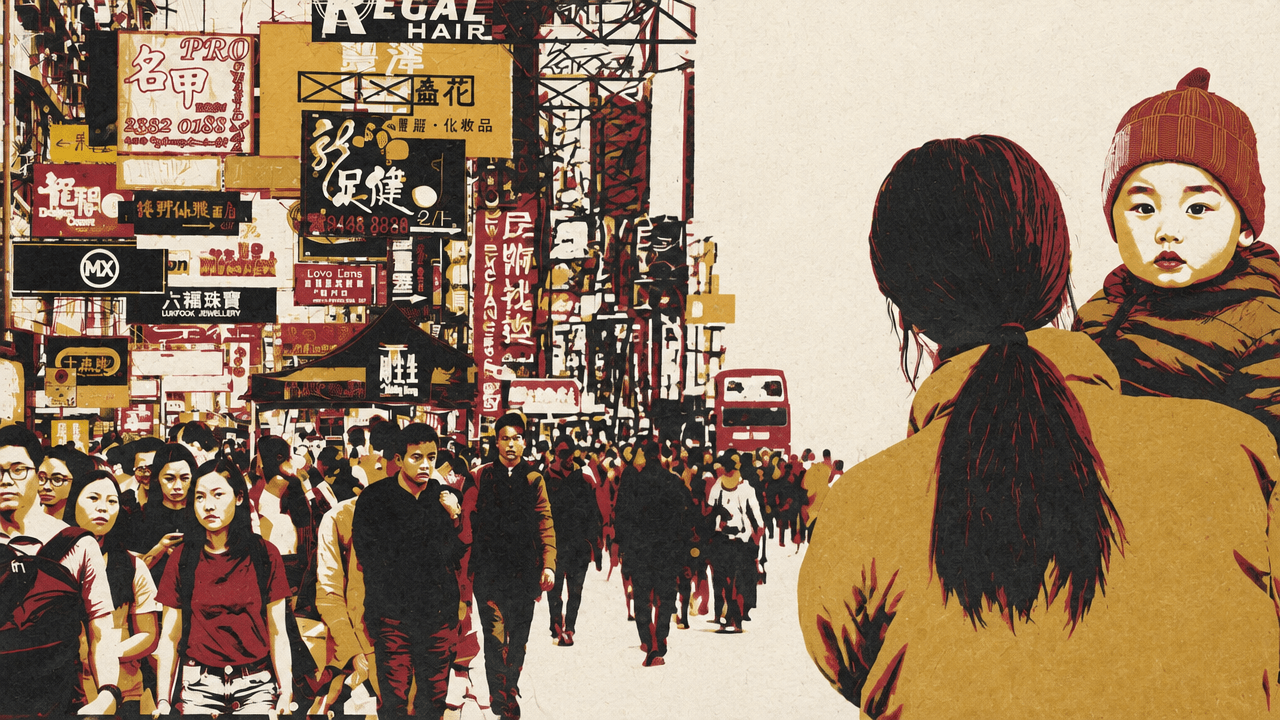
The demographic shift is larger than the one-child policy
China’s fertility rate has fallen to about one child per woman, but Carl Minzner argues that the one-child policy is only part of the explanation. The decline began earlier, followed a broader East Asian pattern, and is now compounded by a sharp fall in marriage. Together, these trends are changing the assumptions that underpin family life, social welfare, and the economy.


The long decline began before the coercive phase of birth control. In the late 1960s and early 1970s, Chinese women had roughly five or six children on average. The government’s “later, longer, fewer” campaign encouraged people to delay marriage and childbirth and have fewer children; fertility fell from around six in the early 1970s to about three by the early 1980s. The one-child policy, enforced with fines and, in some cases, forced abortions, pushed the rate lower. By the 1990s it had fallen below replacement level. Today, Minzner says, it is around one child per woman on average. Some people do not marry or have children, while others have two or more.
A low fertility rate does not cause the total population to shrink immediately, because people are living longer. China’s working-age population began contracting first; the overall population started to decline in 2022.
The speed of aging is striking. China’s median age is about 41, Minzner says, above the United States’ just-under-40, but below Taiwan and South Korea at roughly 45 and Japan at 50. He estimates that people 65 and older could make up 30% of China’s population by the middle of the century, and perhaps 45% to 50% by its end.
Marriage is part of that trajectory, not merely a separate social trend. Chinese marriages have fallen by about half since the early 2010s, according to Minzner. In East Asia, births outside marriage are exceptionally uncommon: he puts the share at roughly 1% to 4%. When fewer people marry, fewer births follow; the decline in marriage compounds the effect of people having fewer children within marriage. Minzner cautions against treating falling marriage rates as solely a political story: similar changes are taking place elsewhere in East Asia.
Policy and social expectations make it harder for some people to form families on different terms. Minzner notes that IVF in China is officially restricted to people who are married, as it is in Taiwan and other parts of East Asia. Single women have also faced difficulties registering children for benefits, alongside social stigma, though some localities have begun to take a more liberal approach.
The legacy of birth limits includes serious gender imbalances, particularly in rural areas, where sex-selective abortions contributed to a shortage of women. Economy says that in an earlier period some baby girls were abandoned and adopted by families in the United States and elsewhere, and suggests this may have largely stopped. Minzner agrees that there are fewer children now and says attitudes have shifted.
The government began relaxing birth limits only after a delayed recognition that the policy was producing problems. Minzner points to bureaucratic resistance: birth control had become a core party policy, with a large apparatus devoted to enforcing it. Chinese demographers, including Wang Feng, quietly pressed authorities to take the long-term risks seriously. By the 2010s, the government began to change course, assuming that people would have more children once restrictions eased. The policy shifted from one child to two in 2016, then to three in 2021. Fertility kept falling.
Minzner says recent figures have become less reliable, which he sees as a possible sign that the issue has become politically sensitive. He suspects the rate may be lower still. Removing a birth limit did not restore the family sizes people had chosen decades earlier; the reasons for having fewer children had changed.
Aging changes who provides care—and what families look like
Minzner resists describing population decline as inherently bad. His concern is the strain created when institutions built around a younger, growing population meet a much older one with fewer young people. Tax and welfare systems rely on workers to fund public services and pensions. Schools and universities are organized around large cohorts of young people. In East Asia, care for older relatives has traditionally been treated as an extended family’s responsibility. Each of those arrangements may become harder to sustain as the population ages and families shrink.
That pressure is not confined to pension budgets or health care. Minzner points to rural depopulation, school closures, and growing care needs. Young people move to cities for work, leaving rural towns with fewer workers and fewer relatives available to look after older residents. In Japan, he says, declining populations are no longer limited to remote rural areas; the contraction is reaching larger towns as young people concentrate in cities.
The family structure behind informal care also narrows. Minzner describes a possible result of the one-child pattern: a child with no siblings marries someone who also has no siblings, and they have one child. That child has no cousins. Extend the pattern across generations and, he says, second cousins could disappear too. The extended family may provide a smaller pool of relatives to share responsibilities.
Minzner connects that change to the familiar “4-2-1” formulation: one child may be expected to support two parents and four grandparents. Economy recalls a rule requiring young people to visit their parents at least once a year. Minzner says he has seen one or two cases in which it was enforced.
Minzner cites Taiwan and South Korea to illustrate how family formation may change. He says roughly 25% to 30% of 49-year-olds in those societies may never have married; he also refers to people who have never been in a relationship, without giving a separate figure for that group. In South Korea, he says, about 40% of households consist of people living alone. That includes some people who have never married and some older divorcees. He describes a shift toward societies where more people live alone and have fewer family connections to rely on across their lives.
The consequences reach beyond care. Elizabeth Economy asks whether fewer young people could affect recruitment into the People’s Liberation Army, innovation, and consumer demand. Minzner does not claim that an aging society will necessarily become more peaceful; he pushes back against that as a general conclusion. He says a smaller pool of young people could change the composition of military forces, while the possibility of older people operating drones means demographic decline does not settle what future conflict would look like.

Minzner agrees that consumption is consequential, but he focuses on a China-specific barrier: the divide between rural and urban residents under the hukou system. Rural social security is weak, and older people in the countryside have reason to save rather than spend. Migrant children working in cities also send money back to their parents. Minzner argues that a serious effort to increase domestic consumption would have to address the security of rural households, but he does not see Beijing taking meaningful steps on that scale.
Economy adds another concern: she estimates that only a little over 20% of workers in the urban gig economy are tied into the formal pension system. She argues that weak enrollment could have economic consequences down the line.
More generous birth policies cannot compensate for unequal expectations
The government’s shift toward encouraging births resembles efforts in Japan, South Korea, and Taiwan. Minzner says China has expanded kindergartens and parental leave, and in the last few years introduced financial bonuses for having children. He considers some measures worthwhile: longer leave and more childcare are good, he says. But such policies have not substantially raised birth rates in those other East Asian societies, and have not moved the needle in China.
Economic pressures are part of the explanation across countries. Younger people face the costs of housing and longer education, and often put off marriage and childbirth. Minzner describes this as a broader international pattern, not one unique to China. But he argues that in East Asia these pressures meet particularly conservative expectations about gender and family life.
Women may face the prospect of giving up work, doing most of the housework, caring for children, and looking after elderly relatives. Minzner says some women see marriage as a package that could mean a career penalty and an unequal share of care. If marriage entails responsibility for four older relatives as well as children and domestic work, he says, some decide against it. Economy responds that, as described, the arrangement does not sound attractive to women.
Minzner does not reduce the decision to women’s experience alone. He says young men face particular pressures too, and that dating and marriage can involve negative dynamics on both sides. But he sees unequal domestic and care responsibilities as a major part of why people opt out.
He worries that China may make those expectations harder to change. In his account, the country’s revolutionary socialist period at least publicly embraced socialist feminism and different gender norms. Under Xi Jinping, Minzner sees a move toward traditionalist rhetoric: more references to Confucianism, statements about men’s roles, and portrayals of women as having a special place in the family. He describes the shift as a state-led “neo-traditionalist” turn. The concern, he says, is that this rhetoric could worsen already difficult gender relations rather than make family formation more attractive.
Economy points to specific signs of women’s position in public life. She says China’s World Economic Forum ranking on women’s access to education, health, the economy, and the political system fell from 69th when Xi Jinping came to power to 93rd. She also notes that after the woman who had served on the Politburo left in 2022, there were no women on it, and that women made up about 4% of Central Committee members. For Economy, those figures and changes in representation send a negative signal about women’s standing in the political system.
Minzner raises an additional political risk. Where some young men feel left behind by economic change and social shifts, leaders may find it easier to validate their grievances by blaming women than to address the underlying causes. He cites South Korea’s 2022 election as an example of young men mobilizing against progressive gender reform, and worries that a similar dynamic could emerge in China. Concern about social unrest, he says, could make leaders more likely to tell young men that their grievances are justified, even if doing so worsens gender relations.
The government’s pro-natalist messaging has some positive elements, Minzner says, including calls for men and women to share domestic responsibilities. But other steps make him uneasy. The population-planning apparatus once used to limit births has been repurposed to call young women and ask whether they have considered having children. Official language about dating, marrying, and having children at the “right” or “appropriate” time also sounds to him like pressure, not simply support.
Economy recalls a proposal that college students should have children, which she says did not go anywhere but was striking. Minzner says a more consequential boundary would be reached if officials began treating women’s higher education as a problem for fertility—by changing access to graduate programs or adjusting admissions to bring in more men. That would, in his view, be a warning sign.
Minzner’s preferred objective is not to plan people’s family lives, but to help them pursue their own ambitions.
Migration may fill gaps, but robots are no demographic shortcut
Immigration is often raised as a way to offset labor shortages and provide care. Minzner says migrant workers have already acted as a buffer elsewhere in East Asia. Taiwan and South Korea each had foreign residents making up about 0.1% of their population around 1990; he says both are now around 5%. Many workers come from Southeast Asia and take jobs in elder care, construction, and agriculture. These arrangements have not generally been designed as pathways to citizenship. They have developed unevenly, often amid resistance, as families and employers face the practical question of who will do the work.
China’s foreign-resident share was also about 0.1% in the 2010 and 2020 censuses, according to Minzner. He sees a possible future in which labor needs create similar pressures, even though Chinese authorities have not embraced immigration. He points to resistance to a proposed green-card program around 2020 and to a visa for young foreign technology workers, as well as public suspicion that foreign workers will take jobs. In his account, official nationalism and warnings about foreign spies can reinforce that resistance.
Minzner expects migration pressures may appear in less formal ways. He mentions African women marrying into rural China, where there is a shortage of young women, and men who return from overseas projects with foreign wives. Economy cautions that cross-border marriage can also involve trafficking, including women brought from poorer countries to become brides. Minzner agrees that coercion is a serious concern and adds that labor shortages can produce informal workarounds, such as people entering a country nominally as students and then working. Whether such patterns emerge in China, he says, remains an open question.
The other proposed shortcut is technology. Minzner recalls the Japanese argument, prominent around 2000, that robots would resolve elder-care and labor shortages. A 2006 book called Robots Will Save Japan captured a mood that also aligned with industrial policy ambitions. Minzner says the expected transformation did not happen as advocates anticipated: he points to Japan’s foreign-resident population rising from about 1.2% in 2010 to 3.4% now. He asks why China should expect robots to resolve demographic pressures that technology did not eliminate elsewhere in East Asia.
Technology could also intensify some pressures. Minzner describes older people being scammed through AI or struggling with phones configured in unfamiliar ways. In those cases, relatives have to step in—sometimes by taking away a grandparent’s phone and sorting out what has happened.
Economy raises the risk that AI companions could displace social interaction among young people. Minzner adds that economic anxiety about AI’s effect on jobs could make it harder for young people to imagine establishing a stable life. If people feel unable to provide for a family or do not know how to relate to others, he says, technology may deepen rather than relieve the pressures behind declining marriage and birth rates.
The policy response turns on openness, redistribution, and trust
Minzner’s scenarios for China’s future are political as well as demographic. He calls them “Open Empire,” “Revolutionary China,” and “Fortress China.” In the near term, he says, a liberal democracy is difficult to imagine under the current regime. But he sees different possible paths within a one-party system.
Fortress China is the most negative scenario in Minzner’s account. The party turns further inward, resists foreign inflows, and responds to social pressure with more control rather than addressing polarization or inequality. He likens it to a declining Ming empire: tensions build without resolution, potentially producing a toxic political and social situation. He sees that as bad for China both politically and demographically.
Open Empire would still be an empire and a one-party system, but a more open one. China would accept people from outside, intermarriage, and a broader definition of national belonging. Minzner argues that this would not require China to imitate the West; he points to earlier periods, including the Tang, as examples of an empire with Central Asian and Han Chinese elements. Greater openness might also create some opportunity for migration to meet labor needs.
Revolutionary China would draw instead on a domestic history of challenging entrenched power. Minzner says China has not built the kind of national health-care systems found in Japan, South Korea, and Taiwan. Urban residents may resist changes to existing pension arrangements, while rural residents remain underserved. A reforming state might try to break through those interests and improve the distribution of social support. Minzner does not think that path is likely under current political conditions, but he sees it as a possible way to address the problems without requiring liberal democracy.
None of these scenarios promises a return to high fertility. Minzner doubts China can bring its fertility rate back to 2.1 children per woman. He frames a more modest aim: avoid policies and social conditions that push the rate still lower, toward 0.63. Improving people’s confidence in their economic future, strengthening social support, and avoiding regressive gender policy could help China move toward the rates seen in Japan or perhaps higher, he says. The objective is to help people realize their own family and life ambitions.
Minzner says China is becoming a “black box,” making it difficult to see what young people think or how political dynamics are changing. He also says recent demographic figures have become less reliable and may be politically sensitive. He points to writers such as Helen Gao, who reports on the views of young Chinese people, and Jiao Shukai, a former party official writing about rural reform, as windows into questions that official statistics alone cannot answer.
Economy describes watching videos of young Chinese people talking about daily life, including the absence of relationships and the diminishing place of marriage in some people’s plans. She notes that those who post such videos are a self-selecting group. Still, both speakers regard personal accounts as valuable as access to China becomes more difficult. The uncertainty is not only about how many people are marrying or having children, but also about how people understand their choices and how political constraints shape the response.