Cross-Border Threats Demand Intelligence Before Crisis Forces Clarity
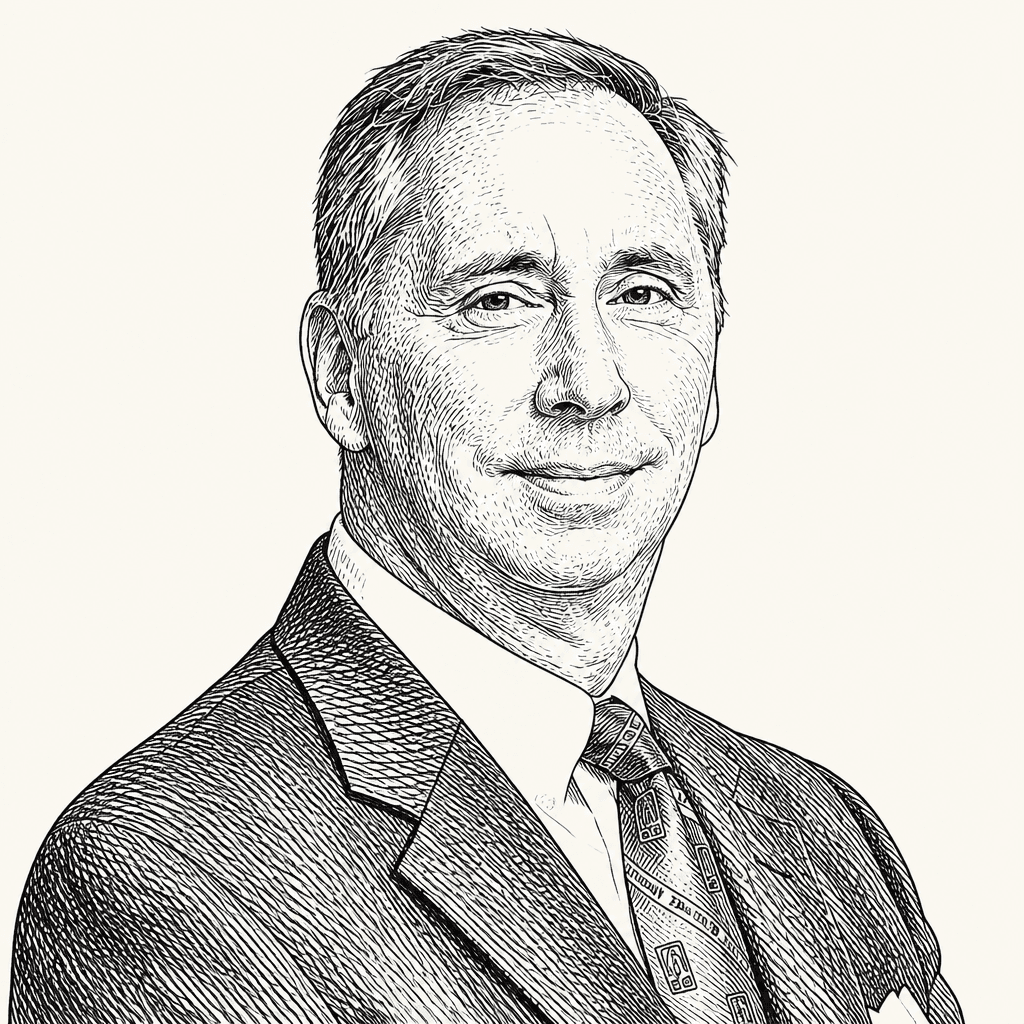
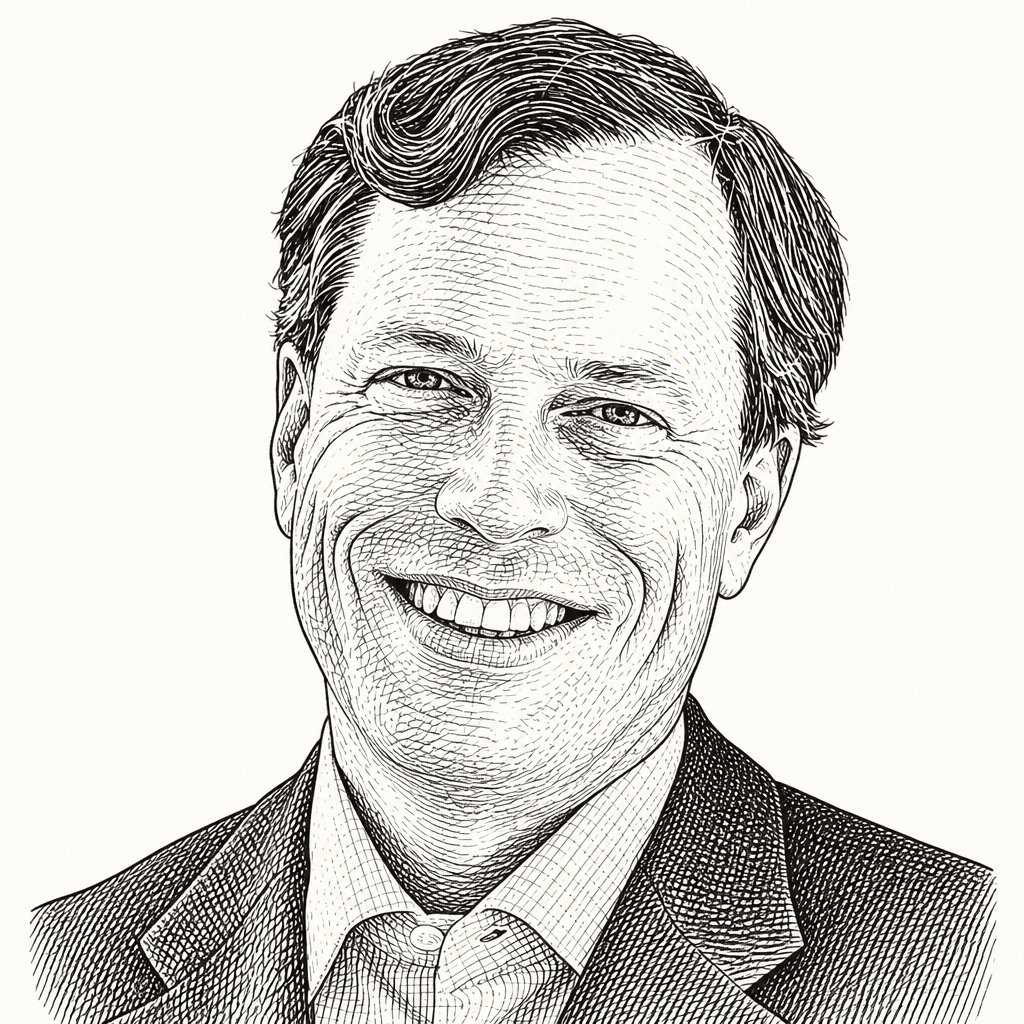
Phillip Zelikow, executive director of the 9/11 Commission, argues that the attacks exposed a war the United States had failed to recognize and forced it to confront how transnational threats exploit safe havens, porous travel and identity systems, and divided government agencies. He credits post-9/11 reforms with making another attack harder, while arguing that the underlying lesson now applies to AI-enabled risks, pandemics, cyber threats and criminal networks: institutions built for earlier eras should be reviewed before another crisis dictates the response.

The attack exposed a war Americans did not know they were in
Philip Zelikow frames September 11 as the moment when the United States recognized a conflict that al-Qaeda had already declared. In early 1998, he says, the group sent a declaration of war against the United States to London. Few Americans knew it had done so, and the country did not think of itself as being at war.
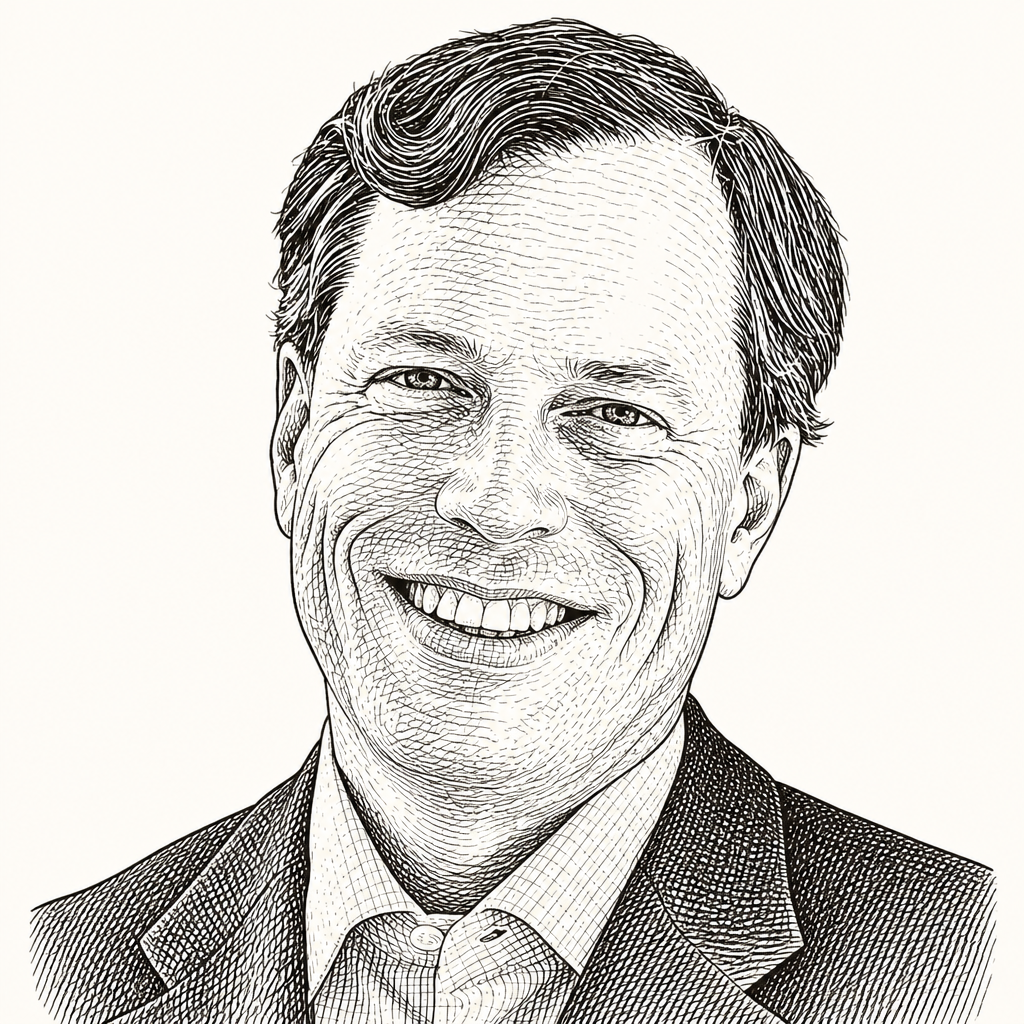
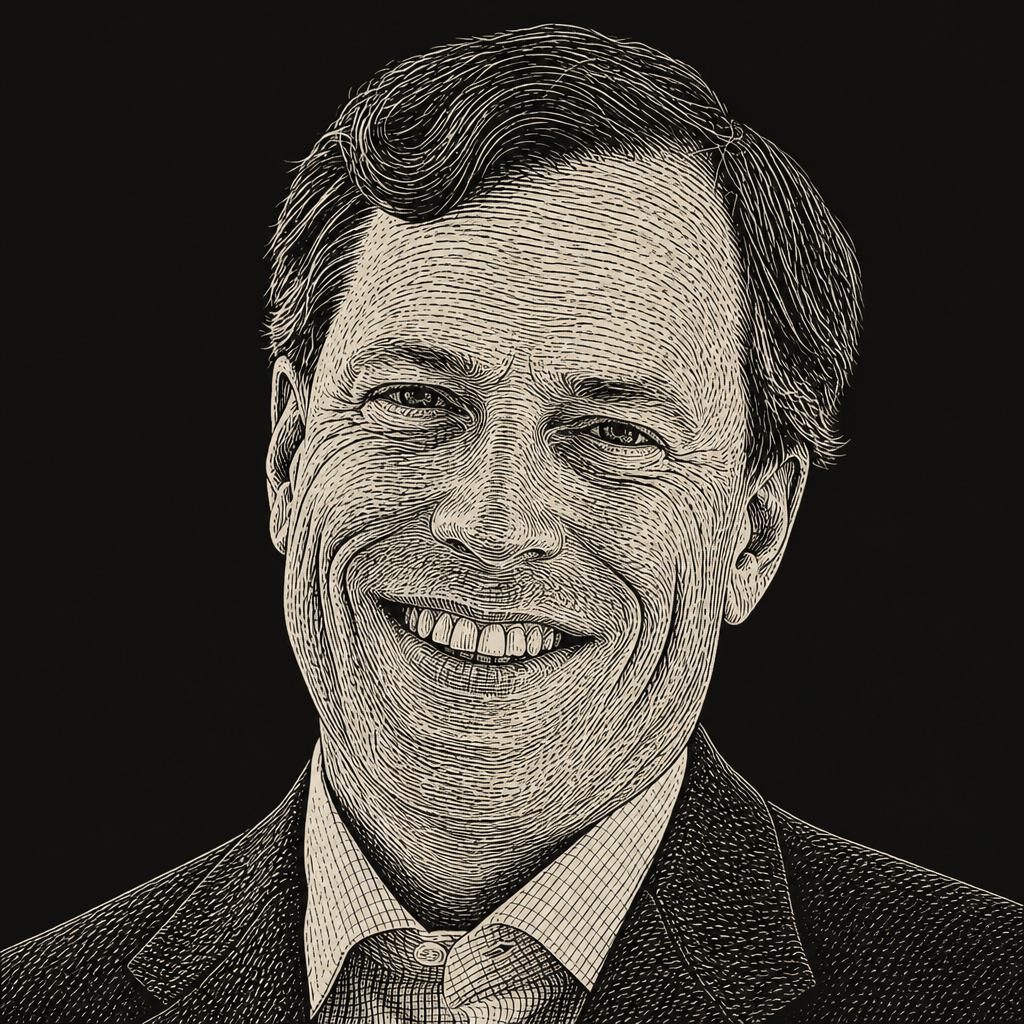
That failure of recognition shaped the pre-attack posture. Afterward, Zelikow maintains, the problem could no longer be understood as one for indictments, grand juries, and FBI agents pursuing bin Laden’s network in places such as Yemen after the bombing of an American destroyer. The United States had to confront a war against a transnational enemy. The hard questions then became where to fight, what rules should govern that fight, and whether particular strategies—including those used in Afghanistan—were sound.
We were at war and we didn’t know it.
Zelikow had studied catastrophic terrorism before the attacks. In a 1998 Foreign Affairs article written with Ash Carter, Robert Gates, and former CIA director John Deutch, he used an attack on the World Trade Center to illustrate a “before and after” event comparable in its effect on American thinking to Pearl Harbor. The 1993 truck bombing at the site was already part of the background to that concern.
On September 11, while running the Miller Center of Public Affairs at the University of Virginia, Zelikow initially wondered whether the first crash might be an accident. The second strike ended that ambiguity. The scenario he and his colleagues had worried about had arrived.
The shock is difficult to recover a quarter-century later, he suggests. Few Americans in 2001 had living memory of a serious attack on the country. Pearl Harbor was geographically distant for most of the public and had not unfolded live on television. On September 11, thousands were killed before a national audience. Flight 93, which Zelikow believes was intended to strike the Capitol dome, reinforced the sense that the country remained under attack and that the outcome could have been worse.
The more consequential atmosphere, in his view, was inside the White House. Zelikow was then a member of the President’s Intelligence Advisory Board, chaired by Brent Scowcroft. Senior officials lived amid recurring alerts, some real and some false. He describes a false-positive ricin alarm that led Condoleezza Rice to fear she had been exposed to a lethal biological agent. Officials were sometimes removed from their homes at night because of threat reports that later proved unfounded.
Every morning, President George W. Bush received a “Threat Matrix” prepared by the intelligence community. Information was passed through with little filtering because officials feared withholding a warning that might prove genuine. For months, Zelikow says, the president began the day with highly classified, nerve-jangling reports, many of which later appeared to be false alarms.
That concentrated psychological environment is essential, he argues, to understanding why Iraq rose to the top of the administration’s agenda in spring and early summer 2002. It was not necessarily visible to most people working in government. But it shaped the judgments of the small group receiving those morning briefings.
Prevention required closing the gaps terrorists used
Zelikow credits the commission, alongside many other actions, with helping make the United States safer over the following 25 years. He does not treat the absence of another attack on the scale of 9/11 as proof that adversaries lost the desire to strike. They still wanted to do so, he says; strategic and institutional changes made their task harder. A terrible event could still happen tomorrow, but the absence of a repeat was not accidental.
The prevention model begins with sanctuary. Before 9/11, al-Qaeda had built a large operational base in Afghanistan where thousands of people could arrive, organize, train, be screened, and be redirected to different conflicts or missions. Zelikow offers the example of German expatriates who came to train for fighting Russia in Chechnya and were instead sifted, evaluated, and diverted. The sanctuary gave al-Qaeda the infrastructure to mount complex international operations.
The commission’s strategic conclusion was that such sanctuaries had to be disrupted, even when action might appear disproportionate in advance. A large-scale intervention in Afghanistan had been “literally inconceivable” on September 10, Zelikow says; by the afternoon of September 11, it could look like something that should have been undertaken months before. His point is not that every later decision in Afghanistan was right. It is that a hostile transnational organization’s ability to operate with impunity from a large sanctuary creates a danger governments cannot simply absorb.
A second task was to prevent terrorist networks from treating the United States itself as a safe staging ground. The hijackers had arrived months before the attack, trained and prepared in the country, and often traveled under their real names. That environment has changed, Zelikow says: terrorist groups can no longer assume they can conduct comparable preparation inside the United States with relatively little concern.
The connection between those changes is institutional. A threat moving across borders, agencies, and jurisdictions cannot be addressed by one bureau following one clue. Intelligence has to be combined across domestic and foreign lines; travel and identity systems have to create points where clandestine actors become visible; and watch lists need to be usable in operational settings such as passenger screening.
The institutional expression of that approach was the National Counterterrorism Center. Before 9/11, no organization pooled what the government knew about potential terrorist dangers across the domestic-foreign divide. NCTC was created to fill that gap, building on structures already beginning to emerge before the commission’s report. In its early years, Zelikow regards it as highly effective. Among its functions is maintaining watch lists that can be used to screen airline passenger manifests.
Before 9/11, there was no institution that pooled what we knew about potential terrorist dangers across both domestic and foreign lines treating this as a transnational problem.
The commission also challenged the premise that terrorism was best tracked by following money. Financial investigation remains useful, especially after an attack, but the funding behind 9/11 was trivial. It was not the central point of leverage.
Travel documents were more important. Terrorists periodically have to surface from clandestine activity to cross a border, board transportation, or establish identity. Zelikow compares this to a submarine forced to surface at a choke point before it can submerge again into a population. Those moments are dangerous for the terrorist and useful to governments.
The commission therefore pressed for higher-quality travel documents, stronger data-sharing around them, and more trustworthy identification used in domestic travel. Zelikow connects the often unpopular Real ID requirement to that recommendation: the United States needed to raise the authenticity and quality of documents such as driver’s licenses. Biometric entry-exit systems remain unfinished work, he says, and reliable identity systems may become still more important as AI makes counterfeiting easier.
He acknowledges the American reluctance to accept identification systems perceived as invasive or susceptible to misuse by a government they do not trust. There are reasons for that reluctance. But for international travel especially, he maintains that getting identification right is a vital security issue.
The commission’s authority depended on bipartisan discipline
The National Commission on Terrorist Attacks Upon the United States was not initially inevitable. Victims’ families called for an inquiry soon after the attacks, but the Bush administration was divided and reluctant. Officials believed they were managing an immense emergency, while Vice President Dick Cheney feared a congressional-style investigation could reproduce the partisan showmanship he associated with Iran-Contra.
The commission became law at the end of 2002 after Senator John McCain, Democratic Senator Joe Lieberman, and others maneuvered its creation into end-of-year legislation. Zelikow characterizes the administration’s acceptance as ambivalent rather than enthusiastic.
The report was displayed in the source as The 9/11 Commission Report: Final Report of the National Commission on Terrorist Attacks Upon the United States, its red, white, and blue cover a reminder that the inquiry was charged with both reconstructing the attack and recommending safeguards against another one.
Its first leadership arrangement collapsed quickly. President Bush selected Henry Kissinger as chair and Democratic congressional leaders chose former Senate majority leader George Mitchell as vice chair. Kissinger resigned amid controversy over potential conflicts and disclosure obligations; Mitchell soon withdrew as well.
The replacements—former New Jersey governor Tom Kean and former Indiana representative Lee Hamilton—proved decisive. Kean, a Republican, and Hamilton, a Democrat, decided that their authority depended on making their cooperation visible. They would appear inseparable, leave “no daylight” between them, and make that posture the commission’s operating model.
Zelikow describes Kean as politically gifted and historically minded, and Hamilton as careful, businesslike, and able to cross party lines while standing up for his own side. The essential point was less their biographies than the discipline of their partnership. The commission was tasked with identifying institutional failures, assessing sensitive evidence, and recommending reforms while the country was at war. It could not plausibly do that work if it became another arena for partisan combat.
The commission held 12 hearings between March 2003 and June 2004, but Zelikow cautions against treating public hearings as the engine of an investigation. Hearings can distract from investigative work. Their value comes after research has been done: they allow investigators to make evidence, witnesses, and lines of inquiry public.
The commission began its public work in New York rather than with an abstract history of al-Qaeda. Its report likewise begins with the day of the attacks, works backward to explain how the country reached that point, and then looks forward. The commission maintained a team in New York while most staff worked in Washington, examining the performance of the New York Police Department and Fire Department, emergency communications, and first-responder problems.
For Zelikow, beginning there was also an obligation to victims’ families. He recalls lower Manhattan as a physical scar, with the smell of burned debris apparent before a person could see Ground Zero. That sensory reality was inseparable from the trauma of families looking to the commission for answers. No inquiry could fully satisfy every family, he says, but the commission had to show up, listen, and take the demand for an account seriously.
Accountability required distinguishing evidence from suspicion
The litigation involving victims’ families and Saudi Arabia concerns a narrow part of the broader plot, Zelikow says. He declines to assess the merits of the pending New York case, stressing that he is independent of both sides.
The commission identified evidence that two future hijackers received initial assistance from Saudis after arriving in the Los Angeles area. One of those Saudis was on a Saudi government grant and was reportedly asked to meet them by an official at the Saudi consulate working in Islamic affairs. But those two men were unsuccessful pilot trainees who later became ordinary hijackers; the principal operational groups and pilots entered, staged, and trained mainly on the East Coast.
The commission concluded that the hijackers had a support network in the United States. Zelikow says many of its principal suspects were Yemeni, including the Yemeni American Anwar al-Awlaki, who was later killed by the U.S. government in the Arabian Peninsula. The legal question is whether people associated with the Saudi thread were connected to the kingdom’s actual leadership and whether Saudi Arabia should be held accountable.
That distinction reflects a larger principle: accusing a person or government of complicity in mass murder requires what Zelikow calls airtight evidence. Saudi Arabia’s relationship to Islamist extremism before 9/11 was, in his account, deeply ambivalent. Extremists viewed the kingdom’s rulers as apostates allied with the United States and wanted to overthrow them, while Saudi authorities sometimes tried to contain, appease, or indulge currents of fundamentalist ideology. After militants began targeting Saudi officials and government employees, he says, the kingdom recognized it could not tolerate the danger.
The long-delayed trial of Khalid Sheikh Mohammed and three alleged co-conspirators presents a different failure of accountability. Zelikow considers the delay terrible. The commission was already impatient for the defendants to be brought to trial when it issued its report.
The obstacle was foreseeable: some detainees were subjected to extreme interrogation methods, complicating later prosecution. Zelikow says he dissented from those methods while in government and worked, with help from McCain and Rice, to get them stopped.
He does not believe interrogation evidence is necessary for conviction. Al-Qaeda publicly celebrated the attacks before the defendants were captured, he says, and bin Laden’s documents provide abundant evidence. Interrogation material had intelligence value, but a trial could add to the public record of the attack planning without relying on it. Its delay has instead left a central act of accountability unresolved.
Zelikow also rejects efforts to place the murders of September 11 into a generalized accounting of war. The attacks were mass murder, he says, and contextualizing them that way does not honor the victims. He does not regard the U.S. decision to act against the terrorist sanctuary in Afghanistan as a mistake; he considers it nearly inconceivable that an American administration of either party would not have acted after the attacks. That does not end the argument over how the war should have been conducted. It marks the distinction, for him, between debating policy and dissolving responsibility for the attack itself.
Solidarity depended on leaders who could make it credible
The response to 9/11 rested not only on security architecture but on a temporary domestic and international solidarity. Bill Whalen notes that this response can be difficult to remember amid today’s more fraught world opinion. Vladimir Putin was among the first foreign leaders to call Bush after the attacks. Zelikow places that contact in the context of 2001: Putin was fighting Islamist extremists within Russia, Bush still hoped to find common strategic cause with him, and the Putin of that moment was not yet, in Zelikow’s view, the Putin of 2007 or today.
The larger fact was collective. NATO invoked Article 5—the alliance’s common-defense commitment—for the first time in its history, and it did so in defense of the United States. Allied forces fought alongside Americans in Afghanistan. Zelikow encountered commanders from those countries during his visits there.
Whether a comparable attack would generate the same rapid response today is uncertain. Foreign leaders would first pause to understand who had attacked and what was happening, Zelikow says. Controversy surrounding the current president would complicate the moment—controversy he believes the president provokes and treats as politically useful.
Still, he believes a reservoir of affinity for Americans persists beneath political noise. Foreign visitors may arrive with a distorted image of the country and discover an ordinary society whose people are welcoming. If the United States were attacked, that cultural and social kinship could produce solidarity that is easy to overlook amid current disputes.
Domestic unity is possible too, though not guaranteed. Whalen raises the possibility that social media, conspiracy theories, and polarization would make a new rally-around-the-flag response much harder. Zelikow’s answer is conditional: the country can rally if a president rises to the moment.
Bush did, in his telling, because his response felt authentic. His bullhorn appearance at Ground Zero was spontaneous rather than scripted. He also made clear at once that the response would not be about hatred of Muslims, and he worked with Democrats on emergency measures rather than treating the crisis as an instrument of division. Americans sensed an effort to rally and unite them, Zelikow says, and responded in kind.
The unity did not last indefinitely. Politics returned, and the Iraq war’s difficulties deepened division in 2003 and 2004. But the first year established a proposition about leadership: a leader who genuinely tries to bring people together can be met halfway; one who descends into division can pull the public downward as well.
The next reform agenda is broader than counterterrorism
The post-9/11 reforms Zelikow credits were built around a particular problem: a transnational terrorist threat exploiting safe havens, weak travel controls, and bureaucratic divisions. The durable pieces of that response include stronger attention to travel documents, watch-listing, intelligence-sharing, and organizations designed to combine domestic and foreign threat information.
But some work remains unfinished. Biometric entry-exit screening is one example. The broader problem of trustworthy identity documents has become more acute, Zelikow says, as AI makes counterfeiting easier. The point is not simply to add surveillance tools. It is to ensure that people crossing international borders and moving through travel systems can be reliably identified, while confronting the legitimate American concern that identification systems can be invasive or abused.
The threat environment has also shifted. Transnational terrorism has not disappeared, but the main places where groups can gather with relative impunity are no longer principally in Afghanistan. Many are organizing in Africa, especially its northern half. Transnational criminal networks are another serious concern.
AI is a further complication because it democratizes expertise in ways that are beneficial as well as dangerous. Zelikow does not describe himself as an AI alarmist. Yet he argues that the technology can enable cyber threats and biological threats, and that it raises the possibility of another pandemic outbreak. The United States, he says, did not make preparations after COVID that it should have made. Unlike 9/11, COVID did not produce a national commission.
The analytical problem is again one of coordination. If someone asks why intelligence must be integrated across institutional silos, assessing AI-related risks is an answer. Cyber operations, biological capabilities, criminal networks, pandemic preparedness, and identity fraud do not fit neatly inside a single agency’s remit. The president has assigned the task of evaluating AI-related threats to the director of national intelligence, Zelikow says, but the job requires stronger defensive capacity and more convincing public leadership on safety.
His preferred approach is not to put “the genie back in the bottle.” It is to manage it: make systems safer, prepare better for foreseeable dangers, and give the public reason to believe that government is addressing the risks.
That task also raises a more fundamental question about the architecture of national security. Zelikow is involved in Hoover’s Commons Initiative, which starts from the premise that the United States and other advanced democracies are living through a period of generational change. One of its nearly 30 teams is examining national-security reform.
The basic organization of U.S. national security remains largely the system built in the 1940s and 1950s for the Cold War, with later institutions grafted onto it. Much of that structure has now been disrupted. Zelikow sees an opportunity not merely to restore what existed, but to ask what should be rebuilt.
Even the Office of the Director of National Intelligence—an organizational reform that followed the 9/11 Commission’s recommendations, though not in precisely the form the commission proposed—should be reconsidered. Is it still the right way to organize the intelligence community? He does not offer an answer in advance. His argument is that institutions designed for older threats should be open to fundamental review before a new crisis supplies its own answer.