California’s Ballot Rules Extend Vote Counts Weeks Beyond Election Day
Hoover Institution fellow Benjamin Ginsberg argues that California’s vote counts take weeks because the state has chosen broad mail-ballot access and post-election correction opportunities alongside extensive verification requirements. Counties must receive ballots for seven days after Election Day, review signatures and possible duplicate voting, and allow up to 22 days to cure certain envelope defects while processing millions of ballots. Ginsberg frames the resulting delay as a trade-off: state officials prioritize participation and accuracy, while critics say faster results are also essential to public confidence.
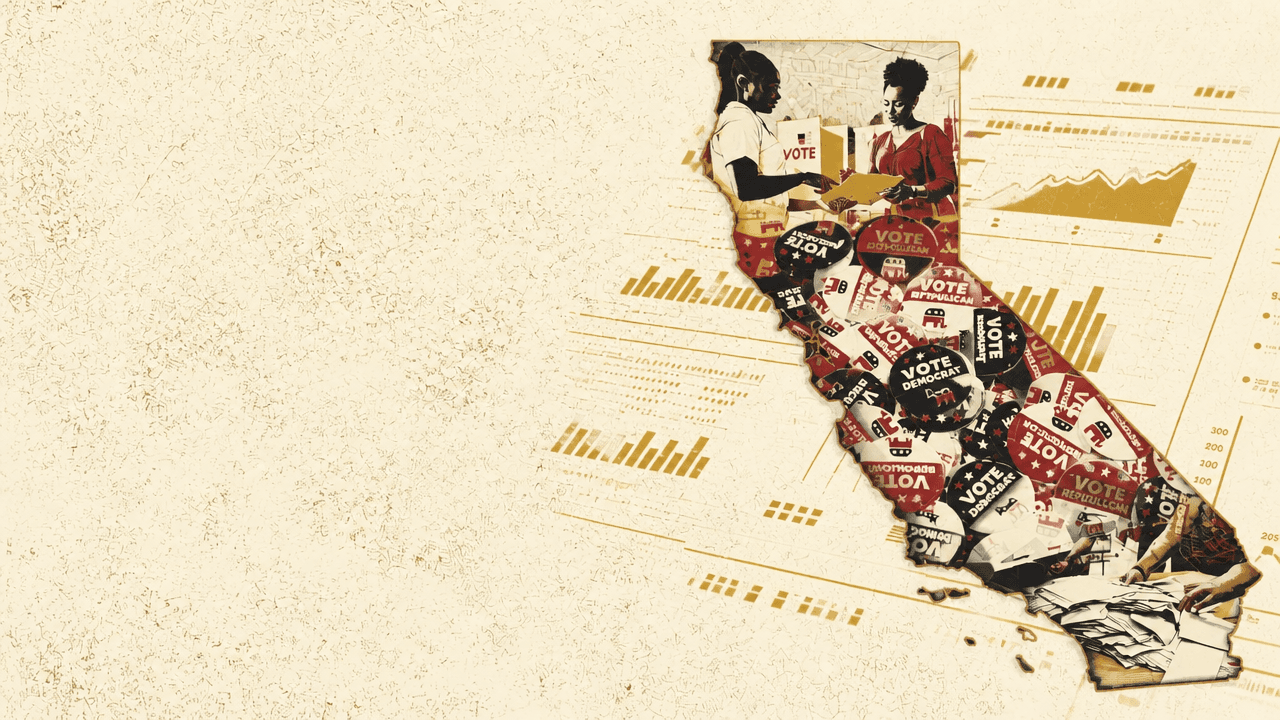
California’s count is slow by design, not by accident
Benjamin Ginsberg describes California’s election administration as a system of shared authority and deliberate trade-offs. The Secretary of State maintains the statewide voter-registration database, certifies candidates and voting equipment, and ultimately certifies results. County officials, however, supervise registration locally, provide voting equipment, run polling places, appoint and train election personnel, tabulate returns, and transmit them to the state.
That arrangement produces a count that can take weeks—and, Ginsberg says, sometimes up to a month—to complete. In his account, the delay is not simply an inevitable result of California’s population. It follows from policy choices about when ballots may arrive, the checks required before they are counted, the opportunity voters have to correct defects, and the capacity counties have to process the work.
State officials defend the longer process as a way to maximize participation and prioritize accurate results over fast ones. Critics argue that prolonged uncertainty itself damages confidence: as returns change after Election Day, they say, the delay encourages allegations that votes are being manipulated or rigged, whether or not those allegations are supported.
Ginsberg says the practical dispute is not whether California can count votes, but whether its current combination of access measures and verification procedures justifies how long results take to settle. Critics point to Florida and Texas, which he says have high participation rates while generally reporting unofficial results by Election Day or election night. California’s defenders place greater weight on allowing ballots to arrive and be reviewed after polls close.
A ballot can remain in the process well after Election Day
The most consequential source of delay, Benjamin Ginsberg says, is universal vote-by-mail. Every registered voter receives a live absentee ballot without having to request one. That gives every voter a ballot at hand, which he presents as a participation benefit, but it also means election offices must process mail ballots at scale.
More than 80 percent of Californians vote by mail, according to Ginsberg. California accepts a ballot postmarked by Election Day for up to seven days afterward. Counties can therefore continue receiving eligible ballots for a week after polls close, particularly because many voters wait until the last minute to mail them.
A ballot that arrives within that window is not necessarily ready to tabulate. Ginsberg says election officials inspect the ballot envelope and use a machine to compare its signature with the signature in the statewide voter-registration database. When the system flags an envelope, a person may need to review the signature. Officials must also check the statewide system for possible duplicate voting.
The effect is cumulative. Late-arriving ballots add to the queue, and each may require signature and eligibility review. In a close race, the outstanding ballots can keep the outcome uncertain while they move through those steps.
Ginsberg also describes the security dispute around universal mail voting. Critics worry that live ballots sent to every registered voter’s home can be taken from porches or mailboxes and cast by someone else. California maintains that its identification and verification procedures adequately address that risk. The same procedures state officials cite as safeguards, however, are part of what makes the count take longer.
The Supreme Court ruling Ginsberg discusses does not change California’s deadline before the November election. He says the Court upheld a Mississippi law allowing mail ballots to arrive as many as three days after Election Day, holding that longstanding federal law did not require states to stop receiving ballots when polls closed. California’s seven-day receipt period can therefore remain intact.
Correcting ballot defects can extend a close race
California adds another period after verification: ballot curing. If an envelope’s signature does not match, or if a voter omitted required information on the envelope, the county must notify the voter and provide an opportunity to correct the defect.
Benjamin Ginsberg says voters have 22 days after the election to cure those ballots.
That deadline does not necessarily hold up every contest. In an election decided by a wide margin, Ginsberg says the remaining cure ballots will ordinarily be too few to change the outcome. In a narrow race, though, officials may need to wait through the cure process before they can know which ballots remain eligible and whether they could affect the result.
The policy reflects the same choice embedded in the receipt deadline. A voter does not lose a ballot automatically because of a remediable signature mismatch or envelope error. Critics of the slower system argue that voters should bear greater responsibility for returning a complete ballot on time and note, in Ginsberg’s account, that states requiring ballots to be received by Election Day can still produce accurate results. Supporters give more weight to preserving a voter’s opportunity to correct a mistake.
Scale and county capacity turn those rules into a long count
California’s size is Benjamin Ginsberg’s fourth operational explanation. He estimates that a midterm election produces roughly 10 million to 12.5 million ballots. A presidential election such as 2028, he says, can produce between 15 million and 18 million.
| Election type | Ballots cited by Ginsberg |
|---|---|
| Midterm election | 10 million to 12.5 million |
| Presidential election | 15 million to 18 million |
Volume alone does not settle the matter, Ginsberg says. With sufficient funding, work can be completed faster. But California counties testify semiannually before the state legislature that they lack the resources to process ballots promptly. The long count is therefore a capacity problem as well as a rules problem: locally administered offices must handle millions of ballots while managing late arrivals, signature review, duplicate-vote checks, and curing procedures.
Ginsberg’s fifth explanation—the top-two primary system—is more tentative. Some people believe the system produces tighter primary margins, making a complete count especially important. But he calls it a “highly debatable” reason for the state’s broader delays. California does not generally have the same tight-election problem in general elections, he says, yet the count still takes a long time. A narrow margin can make the delay more consequential or visible; it does not explain the operational backlog as clearly as the mail-ballot rules, verification requirements, cure period, scale, and funding constraints.
Local administration makes the process observable and challengeable
The county-centered system also contains mechanisms intended to make ballot handling observable and contestable. Benjamin Ginsberg says poll workers are citizens who volunteer for county governments to help conduct elections. They may be Republicans or Democrats. According to Ginsberg, counties state in their policies that they want partisan balance—described as having a Democrat and a Republican at each counting station—so that both parties have eyes on ballots from the government’s side.
Political parties may also assign their own observers, known as poll watchers, to be present whenever ballots are cast or tabulated. A prospective watcher can volunteer through a local party, which is responsible for assigning those observers.
These procedures do not appear in Ginsberg’s list of five main reasons for a slow count. They are part of the governance framework around it. Candidates and citizens who believe something has gone wrong can seek recounts in close races, file election contests in California, or bring court cases. As Ginsberg puts it, those options allow people to “pop open the hood” and test whether votes were properly counted.
Proposition 39 would shift the balance toward identification and verification
Benjamin Ginsberg describes the November voter-ID initiative, identified in an on-screen California Secretary of State document as Proposition 39, as a significant proposed change to the state’s election framework. The measure sits within the same access-versus-security dispute that shapes the argument over a slow count: its proponents seek more identification, citizenship verification, and voter-roll scrutiny, while opponents see new barriers to voting and a potential source of litigation.
Under the displayed summary, in-person voters would need to present government-issued identification, while vote-by-mail voters would provide the last four digits of a government-issued identification number. The measure would also provide voter-identification cards on request and require annual reporting on the percentage of voters in each county whose citizenship has been verified.
Ginsberg says the proposal would require government-issued photo ID at the polls each time a voter casts a ballot. For mailed ballots, he says, the last four digits of a unique government-issued identification number would be matched against the state voter-registration database. He notes that Minnesota, which he characterizes as a strongly Democratic state, uses voter-specific digits to verify voter authenticity.
The measure would also require state and local officials to maintain accurate voter rolls, use government data to verify citizenship, and publicly report the percentage of voter rolls properly verified each year. Citizens could seek judicial review if they believed a state or county was not complying.
Ginsberg presents the objection as twofold: opponents argue that the requirements would create barriers to voting, and that allowing individual citizens to sue could generate politically motivated litigation that slows certification. He expects the initiative’s ID, citizenship, and mail-ballot verification provisions to be a major November issue.
Ballot collection concentrates the same access and security conflict
Ballot collection, often called ballot harvesting, is a separate flashpoint, but it reflects the same disagreement over how much convenience an election system should permit in exchange for confidence in ballot handling. Benjamin Ginsberg defines the practice as an individual collecting other people’s ballots and turning them in.
California places no limit on how many ballots one person may collect, he says, unlike states that permit collection but cap the number. In a universal-mail-ballot state, critics argue that unlimited collection heightens the risk that ballots will be gathered and cast by someone other than the voter. Ginsberg describes recurring allegations involving people entering nursing homes, collecting ballots from people who may not be able to vote for themselves, directing or completing ballots, and returning them.
The more neutral description, he says, is voter participation. But he distinguishes a family member or neighbor taking a few ballots to a drop-off location from one person collecting an unlimited number of ballots. That distinction, and the question of whether California’s rules provide adequate safeguards, is likely to remain contentious when elections are close.