The Hormuz Shock Is Raising the Cost of Energy Security
 Malcolm MooreKatie Martin
 Donald TrumpGideon Rachman
 Martin WolfFinancial TimesThursday, October 8, 20266 min read
The Financial Times’ analysis of the Iran war argues that the disruption to energy supplies through the Strait of Hormuz has exposed how quickly a regional conflict can raise prices and strain economies. Its contributors differ on whether the shock marks a new normal, but several warn that governments may need to pay more for backup supplies, diversified energy sources and greater resilience, even if the conflict ends.
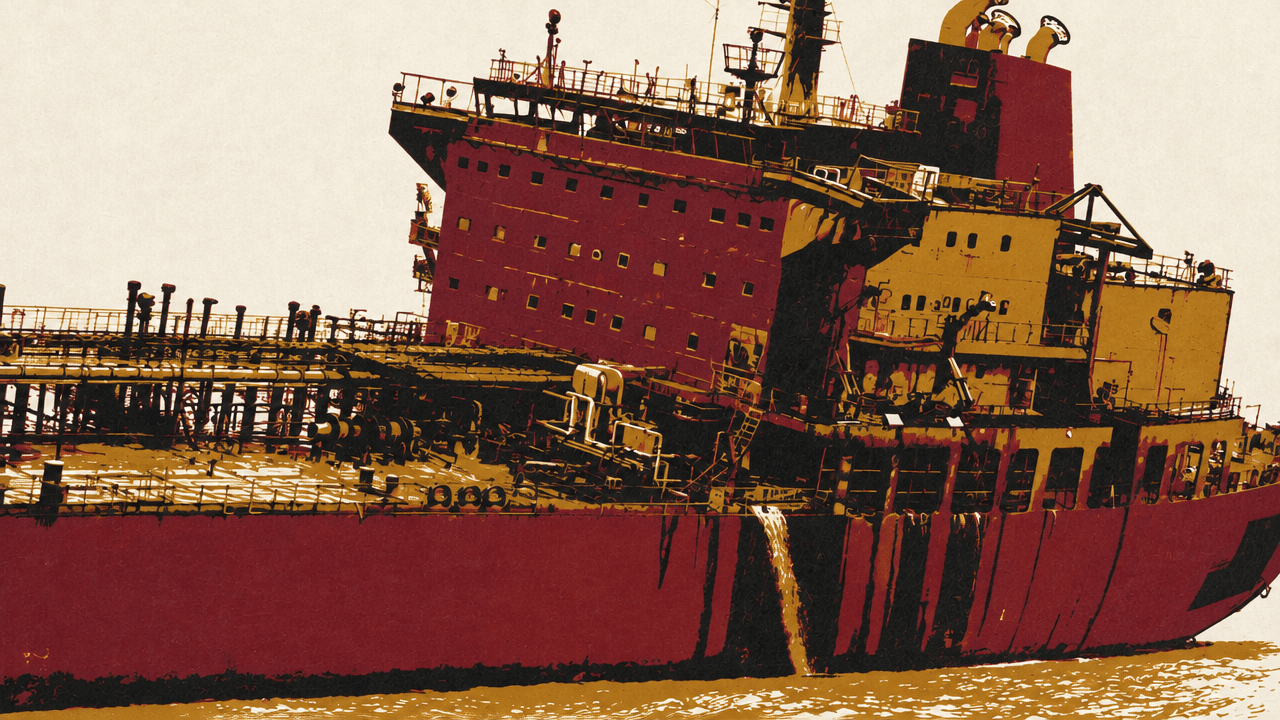
Hormuz turned a military gamble into an energy shock
The disruption to oil markets began with panic, but the deeper shock was that the conflict did not quickly resolve. Malcolm Moore said early US messaging described the interruption as short-lived. Yet once Iran had control of the Strait of Hormuz, he argued, it had little incentive to give that leverage up. Katie Martin said she had expected an extended conflict from the outset.


The initial market response was not as straightforward as the supply threat suggested. Oil prices did not immediately rise above $100 a barrel. Moore attributed that in part to the White House talking down the conflict, and later to China sharply cutting its oil imports. As the world’s largest oil importer, China’s withdrawal from the market mattered: it reduced demand at the same time that flows through Hormuz were under threat.
But the bond market sent a different signal. Martin said government bonds—normally treated as safe assets during crises—fell alongside the rise in oil prices. Yields and borrowing costs climbed rather than providing a haven. The accompanying chart of US 10-year Treasury yields shows the rise after the marked start of the war. Martin read that move as evidence that markets were pricing in the inflationary effects of energy costs, not simply reacting to danger.
The inflation risk is less 2022 replay than prolonged pressure
The question of whether the shock will recreate the inflation surge of 2022 drew different answers. Martin’s was “yes and no”: higher oil prices add pressure to inflation that had not fully returned to central-bank targets after the pandemic, but she did not see the same scale as in 2022. Martin Wolf was more definite that a comparable shock was not yet evident. A much larger rise—oil at $200 a barrel or more—would have a greater effect, he said, but he would be surprised if the outcome matched 2022.
The warning, Moore said, is not necessarily crude oil itself. The chart of Brent crude shows prices surging after the war began and then falling; Moore said diesel, petrol and jet fuel had been more telling warning signals, with some of their increases already feeding into inflation. Natural gas is another concern. The chart of Dutch TTF futures shows a spike that remained elevated, and Moore said gas prices were 160 per cent higher than when the war began.
Gideon Rachman recalled that the head of the International Energy Agency had warned early on that the crisis could rival the two 1970s oil shocks combined. That initially seemed overstated, he said, as the world appeared to absorb the disruption. But renewed price increases, winter approaching in the Western world and concerns about inventories could make conditions deteriorate quickly.
For Wolf, the larger economic danger may be a slowdown rather than an inflation episode on the scale of 2022. A sharp rise in oil prices takes income away from households, reducing disposable income. He said a slowdown seemed plausible, while stressing that he was not predicting a recession.
Moore described the risk as a shrinking buffer. Countries can draw on oil and gas reserves for a time, but those reserves do not last indefinitely. If supplies remain constrained and the buffer runs out, prices may have to rise sharply to force consumers to use less.
Energy security means paying for redundancy
For Europe, the shock sharpens a dependence already made more complicated by the loss of gas from Qatar. Moore said Europe now relied on the US for more than half of its imported gas. That leaves the continent exposed to a supplier whose president has challenged allies over their response to the Hormuz crisis. Moore said Europe might question that dependence, but did not see an immediate alternative.
A displayed Truth Social post by Donald Trump makes the pressure on allies explicit. Addressing countries struggling to get jet fuel, Trump told them to “buy from the U.S.” and urged them to go to the Strait and “just TAKE IT.” The post singled out the United Kingdom for refusing to join the operation against Iran.

Rachman described several possible responses: more US supply, renewed calls to drill at home, and a stronger push for wind, solar and perhaps nuclear power. Moore argued that nuclear could benefit if governments pursue energy security, as high energy prices make nuclear look less expensive by comparison. Martin said the long-term route out of the crisis would require more renewable energy, despite the upfront costs. Wolf agreed that energy systems need rethinking, but said climate change—not these shocks alone—was the central reason: irreversible changes to the climate were a risk not worth taking.
Diversification does not eliminate dependence. Moore asked whether renewables would be secure if Europe depended on China for solar panels, wind turbines, rare earths, magnets and batteries. Rachman’s answer was to keep multiple energy options available and accept that choosing only the cheapest supply may no longer be viable.
That resilience has a price. Moore said storage, backup supply and alternative sources would add costs even after the crisis passes. Martin said bond investors were considering how governments would finance energy and defense spending in a more dangerous world. If governments could not raise taxes, she argued, borrowing would place the burden on bond investors. Moore expected consumers ultimately to pay more for energy, whether the initial costs fell on companies or governments.
The lasting change may be a weaker capacity to absorb shocks
The geopolitical consequences remain unresolved. Rachman said the outcome could range from Iran emerging as the dominant regional power while the US pulls back, to the eventual collapse of Iran’s regime under economic and domestic pressure. Until the conflict’s end is clearer, he said, it is too early to settle on its long-term effects.
Martin said Europe and Asia would remember that a war beyond their control had raised their inflation and energy costs. Moore saw a harder alignment taking shape between Russia, China and Iran on one side and the US, its allies in the Gulf and other partners on the other. He also pointed to US-China rivalry as a force likely to play out in energy.
Wolf’s concern was not just the shocks themselves, but the world’s ability to respond. Institutions such as the IMF, World Bank and WTO, he said, were not working well enough to help manage uncertainty. He recalled that after the oil shocks of the 1970s, many assumed prices would stay high and volatile; a few years later, they collapsed. The lesson, in his view, is that geopolitical shocks are difficult to predict—and that confident forecasts of a permanent new price regime can be wrong.
The contributors differ on whether this is a “new normal.” Rachman rejected the phrase as a description of a world at war, but said hopes of a quick return to stable, cheap energy looked vain. Martin expected inflation and borrowing costs to remain higher for the long term. Moore said energy-industry figures were already describing an era of geopolitical volatility and “permacrisis,” with US-China competition increasingly tied to energy.
What they share is a less reassuring conclusion: even if the immediate conflict ends, rebuilding supply options and buffers will cost money. The era of assuming that energy will remain cheap, secure and easy to replace looks harder to sustain.