AI Moves Medical Alerts From Fall Response to Fall Prevention
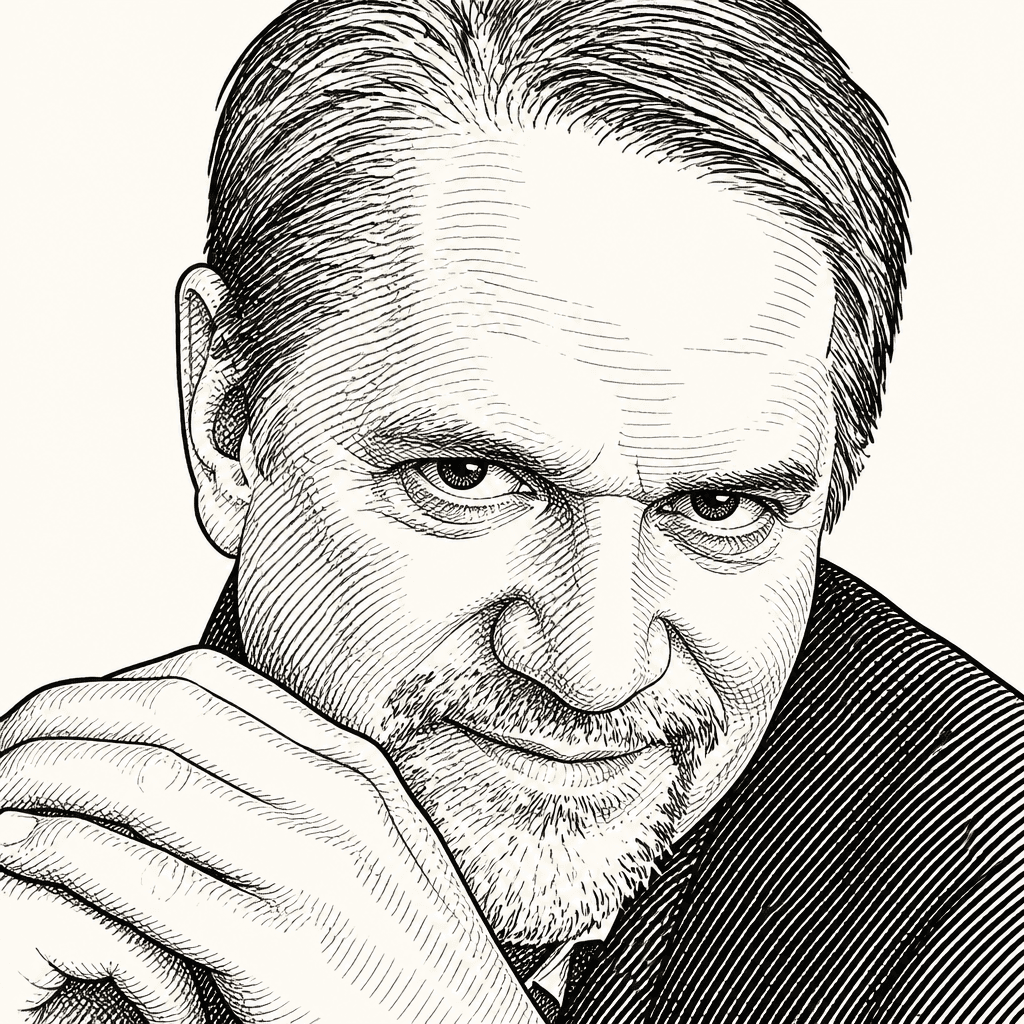

LogicMark chief executive Chia-Lin Simmons argues that medical-alert technology for older adults has remained too reactive, built around emergency buttons that assume a user can call for help after a fall. In an interview with Craig Smith, she describes LogicMark’s shift toward AI-supported monitoring that builds individual baselines from activity, sleep, medication and location patterns, then flags signs of decline before a crisis. Simmons says the aim is not to replace human responders, but to give families, caregivers and monitoring services earlier signals that can help more seniors age at home safely.
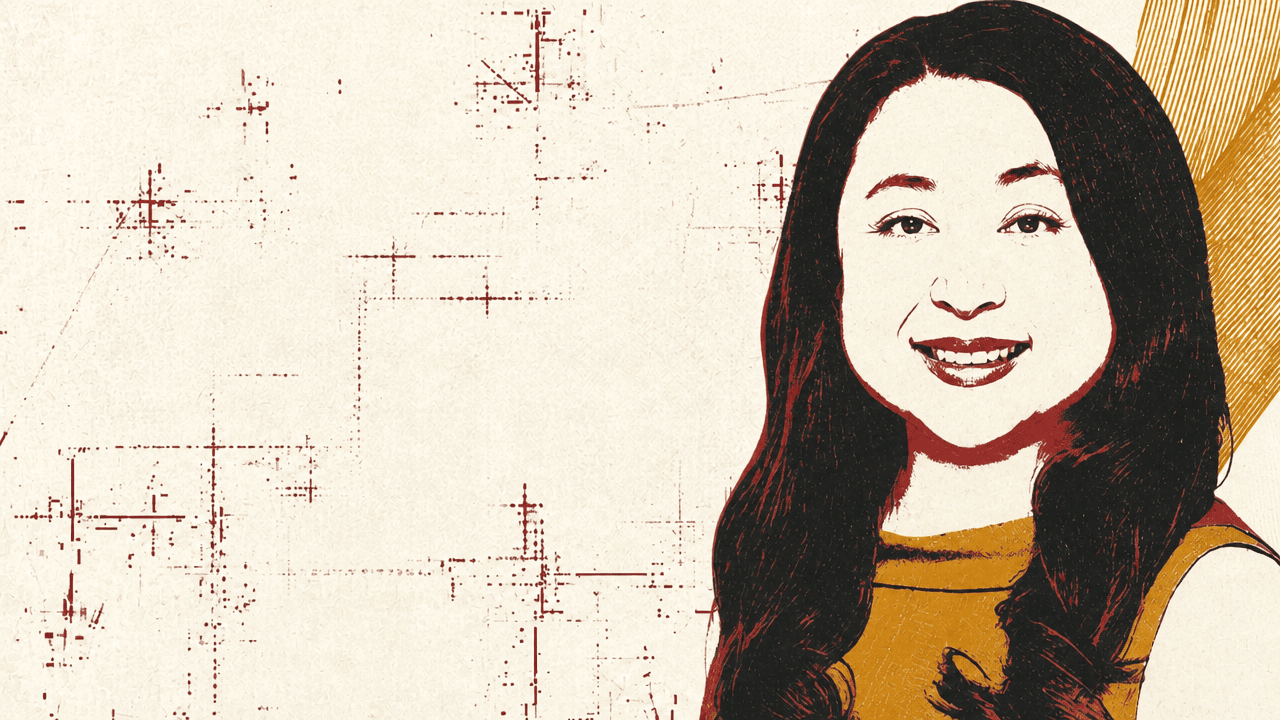
The medical-alert problem is no longer just emergency response
Chia-Lin Simmons describes LogicMark’s work as an attempt to move personal safety for older adults out of a reactive model that, she says, has changed too little since the “I’ve fallen and I can’t get up” era. The older model assumes that a person falls, remains conscious, can move, can reach a button, and can ask for help. Simmons argues that those assumptions often fail: people fall in showers, may not be able to crawl to a wall-mounted cord, and may not be conscious or mobile enough to trigger a response.
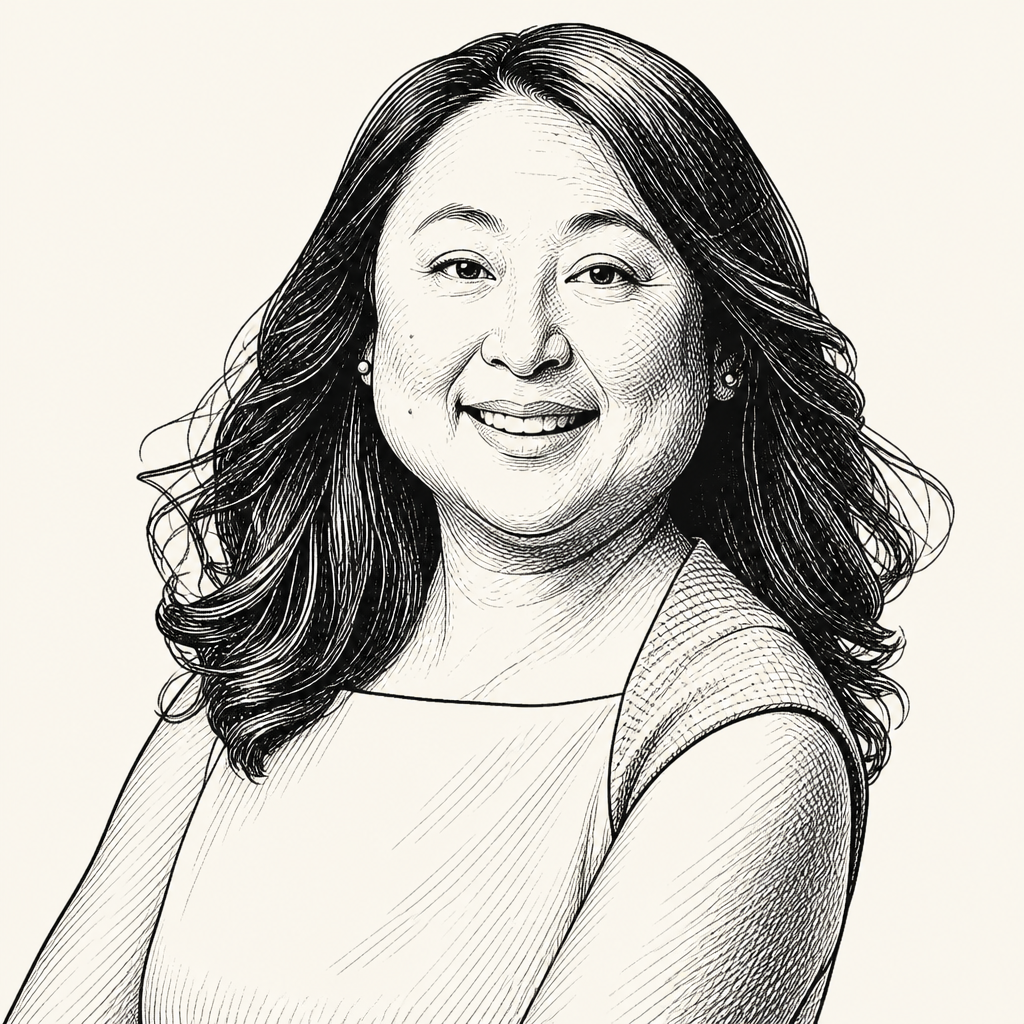

The industry’s roots, Simmons says, are in home security. The logic was to protect a house with sensors and call centers, then attach a device to an aging parent and route alerts through a similar response system. That produced devices that were useful but limited: pendant-style buttons, direct-to-911 units, and systems built primarily around crisis activation. Simmons says the category became “stuck in the 1980s” while connected cars, consumer wearables, and subscription services evolved around it.
The demographic pressure makes that stagnation harder to ignore. Simmons says more than 90% of people over 50 want to age at home, and that one in four people over 65 will experience a fall. The question, for her, is not only how to respond after a fall but how to reduce the likelihood that the fall happens at all.
Freedom Alert Max, the LogicMark product Craig Smith asks her to describe, is not simply a better panic button. Simmons describes it as a connected personal emergency response system with fall detection, caregiver tools, location services, and AI-supported pattern recognition. The shift she emphasizes is from a device that waits for an emergency to one that gathers enough longitudinal context to identify risk: medication adherence, activity levels, sleep and wake patterns, location routines, and changes in those patterns over time.
That claim depends on a narrower but important distinction. LogicMark still needs to be good at reactive fall detection. Simmons says the system must distinguish an actual fall from sitting down too quickly, or from a recurring non-emergency pattern such as a yoga class. False positives matter because they create alarm fatigue and make users less likely to wear the device. But Simmons sees fall detection as only the first layer. The more consequential role for AI, she argues, is predictive analytics: identifying the signals that may precede a fall or health decline.
How do we help you not have that fall? How do we get predictive? And that's where AI plays a huge, huge role.
Consumer wearables are not designed around frailty, confusion, or crisis
Craig Smith raises the practical objection to building a separate device: many people already have phones or smartwatches. But he also describes the difficulty of using an Apple Watch for an elderly parent or relative. The interface is tiny, the touchscreen can be overly sensitive, and the device carries many functions irrelevant to the particular safety problem.
Simmons does not argue that Apple Watch is bad technology. Her point is that it is built for a broad audience, not specifically for an 80-year-old person at risk of a slow fall, a slump, Parkinsonian tremor, medication confusion, wandering, or inability to answer a phone. Apple, in her words, is making “a watch for everybody.” LogicMark is trying to build for a more senior user whose interface, services, and emergency response needs are different.
The distinction becomes clearest in fall and crash detection. Simmons refers to a New York Times article about Apple Watch alerts overwhelming a 911 system in a Colorado ski town to explain the limits of detecting high-velocity events with a general-purpose accelerometer. Apple Watch, she says, is strong at recognizing crash-like events: a person moving quickly and stopping suddenly. That is not the usual profile of a frail older adult’s fall. When LogicMark speaks with clinicians at the Veterans Administration, she says, the question they ask is whether a device can detect a slump.
That difference changes the engineering problem. Detecting a fast ski crash or vehicle-like stop is not the same as detecting a slow collapse, a slide from a chair, or a fall that produces no clear verbal distress. Simmons says LogicMark’s AI is meant to learn not only generic motion signatures but personal context. If Craig’s device repeatedly flags a movement pattern on Tuesdays and Thursdays at 10 a.m., and GPS and history show he is in yoga class, the system should learn that this is “looks like a fall, but not a fall.” The point is not merely convenience. Reducing false positives helps keep the user from abandoning the device.
Freedom Alert Max therefore takes a different form from a full smartphone or general smartwatch. Simmons shows a small rectangular device with a screen, attached to a lanyard, and compares it with a standard smartphone. It resembles a miniature phone because, as she puts it, it is “literally a cell phone plus a medical alert product.” The smaller size is deliberate. She says many older users have difficulty gripping a full-size phone, and most people use only a fraction of the apps on their smartphones anyway. LogicMark reduces the experience to safety, communication, caregiver access, and a few health-related functions.
The caregiver app can program simple contact entries — for example, son, grandson, neighbor — rather than requiring the wearer to navigate a full phone interface. The device includes emergency access features, a mental-health crisis hotline, fall detection, and front and rear cameras. Simmons says the cameras are not always available for open-ended surveillance; in her description, they become available to a caregiver when a fall detection event is triggered, allowing the caregiver to see whether the device is down and switch camera perspective.
The design is shaped by experiences like Simmons’s mother-in-law, who had early Parkinson’s and eventually struggled with the fine finger movements required by an iPhone. Simmons says LogicMark learned from users who need screen-based and touch-based interactions that accommodate tremor, frailty, and reduced dexterity. A wrist product is one direction the company is working toward, but she says its interface has to be tailored to a different audience than Apple’s.
The digital twin is individual first, then compared against cohorts
Chia-Lin Simmons uses “digital twin” in a specific way: a model of an individual user’s patterns, not an abstract average senior. For LogicMark, the digital twin begins with ordinary routines. A person wakes at 8 a.m., sleeps at 10 p.m., walks 5,000 steps a day, takes certain medications, has no falls, and follows a familiar weekly pattern. The system builds a profile around those regularities. When the pattern changes — later wake time, earlier sleep, fewer steps, missed medication — the system can treat the difference as meaningful because it is measured against that person’s own baseline.
The key, Simmons says, is longitudinal analysis. A caregiver who sees a parent every day may not notice gradual decline. A drop from 5,000 steps to 4,000 and then 3,000, paired with changing sleep patterns and missed medication, may emerge slowly enough to feel normal in daily life. AI, as Simmons describes it, is useful because it can identify small deviations over time and compare them with other patterns at scale.
Medication adherence is one of the anchors in that model. Simmons says poor medication adherence contributes about $500 billion in avoidable healthcare costs and about 125,000 preventable deaths. LogicMark’s interest is not only reminding someone to take a pill; it is using adherence as one signal among many. A person who misses blood-pressure medication several times a week may be more vulnerable to dizziness or instability. A person on a blood thinner such as Coumadin may face different consequences from a fall than someone not taking it.
The model then extends beyond the individual. Simmons says LogicMark wants to compare a person’s digital twin against anonymized aggregate cohorts. A 65-year-old woman on Coumadin with declining steps and disrupted medication adherence might be compared against similar patterns in people of similar age, gender, medications, conditions, or activity profiles. The goal is not to declare certainty. It is to ask what happened three or six months later when similar patterns appeared in similar cohorts. If falls increased after a particular pattern of decline, the system could alert professional or family caregivers to consider intervention.
Those interventions, in Simmons’s examples, are practical rather than futuristic: a walker, a cane, more physical therapy, a review of medication adherence, or a conversation with a clinician. The AI’s value is in surfacing the pattern early enough that a human can act.
She also emphasizes that personal baselines matter more than universal thresholds. In her own family, Simmons says, low blood pressure may be normal; a “normal” reading by population standards could represent an increase for that individual. What matters, then, is the differential: the change from the person’s own baseline, and whether similar changes in comparable cohorts have led to bad outcomes.
LogicMark’s digital-twin and predictive-analytics work, Simmons says, is patented and structurally prepared, with cloud-based development underway. But she is explicit about the dependency: algorithms are not useful without devices in the field gathering data. The company is in the phase of rolling out connected devices that can collect the longitudinal information needed for the models. She says LogicMark had to build cloud infrastructure, mobile apps, fall AI, data analytics, and digital-twin systems after she joined in 2021, when the company’s main product was still a one-button device that did not connect to the internet.
AI should detect the crisis; a person should still answer it
Chia-Lin Simmons draws a sharp line between using AI for pattern recognition and using AI as the front-line agent in a crisis. She is skeptical of replacing the human responder with an AI caretaker persona. Her example is deliberately blunt: if she has broken her hip, the last thing she wants is to talk to “Ava AI” in a customer-support loop.
LogicMark does use AI to analyze signals, detect falls, identify sound patterns, and run language or utterance recognition. But Simmons argues that crisis response still requires human interpretation. An AI system may not hear the word “help.” It may not detect a clear utterance in any language. It may conclude, based on what it has been trained to recognize, that there is nothing there. A human listener, by contrast, might hear no words but notice heavy, labored breathing and treat that as urgent.
I want a real person with, you know, intuition, mortality, fragility, experience of having been fragile, and listen.
That view shapes the system architecture Simmons describes. Freedom Alert Max offers what LogicMark calls “triple protection”: family members, a 24/7 US-based monitoring service, and 911. The caregiver app allows a family to “build your village,” assigning who is on call and who gets contacted first. Simmons’s examples reflect the reality that adult children may live in another state, a neighbor may be closer, and a sibling may be 40 minutes away. The system can route the first call depending on availability while still notifying the broader group.
The monitoring center is the backup when family cannot respond. If an emergency is triggered, the system can contact the wearer, the assigned caregiver, the monitoring service, and ultimately 911. Simmons says the monitoring service also becomes important in wandering scenarios. If a user leaves a geofenced area and family members are unavailable, a human responder can call and ask whether the person is lost or needs help.
This is also where the device’s phone-like design matters. Freedom Alert Max is independent of a user’s iPhone; it does not pair with an existing phone. It functions as its own device with cellular service. Simmons says that is partly because some older users already wear phones around their necks in waterproof pouches, which can be heavy and not optimized for emergency use. Freedom Alert Max is designed to be easier to carry while providing unlimited talk and the safety services associated with the product.
Privacy pushes more computation to the edge
Chia-Lin Simmons separates immediate detection from broader analytics. Initial fall algorithms reside on the devices themselves. LogicMark’s cloud platform — which she calls a caring platform as a service, or CPaaS — handles pattern recognition, analysis, and the larger predictive work.
Privacy is the reason she gives for emphasizing edge processing. LogicMark is working not only with wearables but also with in-home sensors, and Simmons says privacy is “number one” when putting devices in someone’s home. The company has a patent for Freedom Alert Max and patents around tokenizing data. She describes a system in which the device looks for pattern differentials locally, and the data transferred onward is tokenized pattern data rather than raw private information wherever possible.
The privacy problem becomes more acute with non-wearable sensors. Simmons says LogicMark is in beta on an AI-driven, non-wearable, in-home product using multimodal sensing. The system includes sound-based AI algorithms intended to help detect a heavy fall or a slump. Future sensing could include vibration, cameras, accelerometers, altimeters, and gyroscopes. But she treats cameras as especially controversial in the home, and says the company’s initial beta approach is more privacy-oriented.
That in-home hub is intended to work with a wearable rather than replace it. Simmons’s point is that older adults should not be confined to the home to be monitored safely. A wearable provides continuity outside the home; the hub adds ambient context inside it. The data should be connected, processed at the edge where appropriate, and combined with cloud-based analytics for longer-term patterns.
She also argues that LogicMark should not try to build every health sensor itself. Blood pressure and blood glucose monitoring, in her view, are difficult specialties and not LogicMark’s expertise. She prefers an ecosystem of partners connected through APIs in a safe, HIPAA-compliant environment. The problem she sees in healthcare data is fragmentation: every product, down to ordinary consumer apps, keeps its own isolated store of data. Doctors and healthcare providers are left trying to assemble disparate pieces. Simmons wants AI to help gather and interpret those pieces, particularly for pattern recognition and longitudinal anomalies.
Wandering, loneliness, and caregiver logistics are part of the safety problem
Chia-Lin Simmons defines safety more broadly than fall detection. Freedom Alert Max includes geofencing because, according to Simmons, six in ten people with early memory-care issues and Alzheimer’s will wander. The caregiver can set a boundary; if the user leaves it, the system can alert family and provide GPS location. Because the device has front and rear cameras and phone capability, caregivers or the monitoring service may be able to confirm movement, see some context, and contact the wearer.
Simmons frames the urgency around the first day. She says there are too many frightening stories in which families do not know a parent has wandered until two or three days later. She also says she had read that Silver Alerts were increasing in an article in the San Jose Mercury. Her aim is for the system to identify the problem within minutes rather than after a long delay.
Mental health is also built into the product in a limited but explicit way. Freedom Alert Max includes a pre-programmed emergency mental-health crisis hotline. Simmons says seniors have been shown to be more prone to suicide, in part because of loneliness and isolation. She describes successful aging as resting on three pillars: physical health, mental health, and financial health. LogicMark, she says, is “barely touching” the mental-health portion, but the hotline and caregiver connectivity are part of that layer.
The caregiver app is meant to reduce another common failure: nobody knows who is responsible at the moment of crisis. Simmons describes families spread across states, neighbors who may be closest but not always available, and adult children who travel or sit in meetings. The app lets a family schedule who is on call, set the order of contact, and keep everyone notified. That operational detail is central to the company’s claim. A safety device is not only a sensor; it is a coordination system for the people who must respond.
LogicMark wants subscription intelligence without abandoning low-cost safety
Chia-Lin Simmons joined LogicMark in June 2021 as a “pivot CEO.” The company had existed since 2005 and was originally built around an affordability mission: personal safety for seniors, including low-income and fixed-income seniors, through a device that could call 911 directly without a monthly subscription. When Simmons arrived, she says, the company had not created new products since about 2015 and did not have a connected product in a world where subscription services had become common and cheaper.
That history still shapes the product line. Freedom Alert Max is a subscription product. Simmons says the base product is $34.99 per month and includes 24/7 monitoring, the apps, and core features. Fall detection is typically an additional $9.99 per month, and geofencing also costs extra because it requires additional services, data processing, and GPS work. The device itself is purchased separately. Because Freedom Alert Max is also a cell phone, Simmons says users pay $20 for cellular service, including unlimited talk and associated service features.
| Offering or feature | How Simmons describes it | Pricing or status mentioned |
|---|---|---|
| Freedom Alert Max base service | 24/7 monitoring, caregiver apps, core connected safety features | $34.99 per month |
| Fall detection | Additional detection service used by most customers | $9.99 per month extra |
| Geofencing | Location boundary alerts for wandering risk | Extra monthly cost |
| Cellular service for Freedom Alert Max | Independent phone service with unlimited talk | $20 |
| Guardian Alert 911 Plus | One-button direct-to-911 product with automatic fall detection included | No monthly subscription |
| Non-wearable in-home sensor | Sound-based, AI-driven multimodal sensing for heavy falls or slumps | In beta |
At the same time, Simmons says LogicMark intends to keep non-subscription products in market for people who cannot or do not want to pay monthly fees. Guardian Alert 911 Plus is the example she gives: a one-button direct-to-911 device with automatic fall detection included for life and no monthly subscription. She presents that as a mission commitment, not just a legacy product. “Pay once and live 20 years” remains important, she says, because nobody should be prevented from feeling safe because they are on a fixed or low income.
Simmons also wants to push AI and predictive features into lower-cost devices where engineering allows. The constraint is not only will. Smaller and simpler devices have limited processing, battery capacity, screens, and chipsets. A medicine reminder is straightforward on a screened phone-like device that can display “take Coumadin at 10 o’clock”; it is harder on a button-only device. The company is evaluating how far those services can be cascaded down without making devices too costly, too power-hungry, or too difficult to wear.
LogicMark also has Astro, an app-connected safety button for active seniors, hikers, college students, and others. A user can tell family they are going on a hike from 10 to 11 and ask them to check in if they are not heard from afterward. If the user’s phone falls away or cannot be reached, they can press the button and reach the monitoring service while family is notified. Simmons uses Astro to broaden the concept of personal safety beyond old age: women going on dates, students crossing a dark campus, or adults walking near home at night. She says more than 54% of US adults are afraid of walking near their home at night within a mile of home.
Aging at home will require monitoring that scales human care
Craig Smith frames the long-term question as whether enough monitoring can let people stay in their homes longer without families having to worry as much. Simmons’s view is that devices can become another layer of protection in a system facing both strong preference for aging at home and a shortage of professional caregivers.
Simmons cites surveys indicating that more than 90% of people over 50 want to age at home, and says there is a shortage of more than 700,000 professional home caregivers. The numbers, in her words, “are not favorable to us.” Connected devices, predictive analytics, and in-home monitoring are therefore not just consumer conveniences. They may allow professional caregivers to serve more families by giving them better remote context and alerts. Simmons says organizations in the caregiving space have told LogicMark they want technology that lets a caregiver support five families rather than only two.
The model she imagines combines a connected home component with a wearable device. The home environment can be “senior proofed” in the way parents baby-proof a house before a child arrives. Simmons says families often avoid talking about frailty and independent living because the conversation is frightening and emotionally loaded. As a result, they do not prepare the home until after something happens. AI-enabled connected-home packages, in her view, should help families put safety infrastructure in place before a crisis.
She is careful to frame this not as technology for frailty alone. Simmons says personal safety should let people “fly and be free.” That applies to an older parent, a child going to college, an active senior walking the neighborhood, or an adult who has slipped in a bathroom. AI’s proper role, in her view, is to run unobtrusively in the background, analyze patterns, and surface problems only when they need attention.
The company’s current status is layered. Freedom Alert Max is already in market with geofencing, fall detection, caregiver apps, crisis hotline access, 24/7 monitoring, and emergency camera access. Button-based devices are available for users who prefer simple physical controls. Activity tracking is being rolled into lower-cost devices to support predictive analytics. Simmons describes a wrist-based product that would include some features by virtue of its form factor, including activity tracking, predictive analytics, medication reminders, fall detection, app connection, and cloud connection. The non-wearable, sound-based in-home product is in beta with retirement communities and senior living facilities evaluating the data. Digital-twin and predictive-analytics systems, Simmons says, are patented and structurally set up, but their usefulness depends on rolling out connected devices and collecting enough longitudinal data.
That dependency is the central constraint in Simmons’s account. Predictive AI is not magic layered onto a pendant. It needs a baseline for the individual, enough data to compare that baseline against relevant cohorts, privacy architecture that makes home monitoring acceptable, and a response network that can turn a signal into action. The system may surface that a person’s pattern resembles cohorts that later experienced falls. It may suggest that a family look at physical therapy, mobility aids, or medication adherence. The decision remains human and clinical.