LOT Turns to ElevenLabs for Multilingual AI Passenger Support
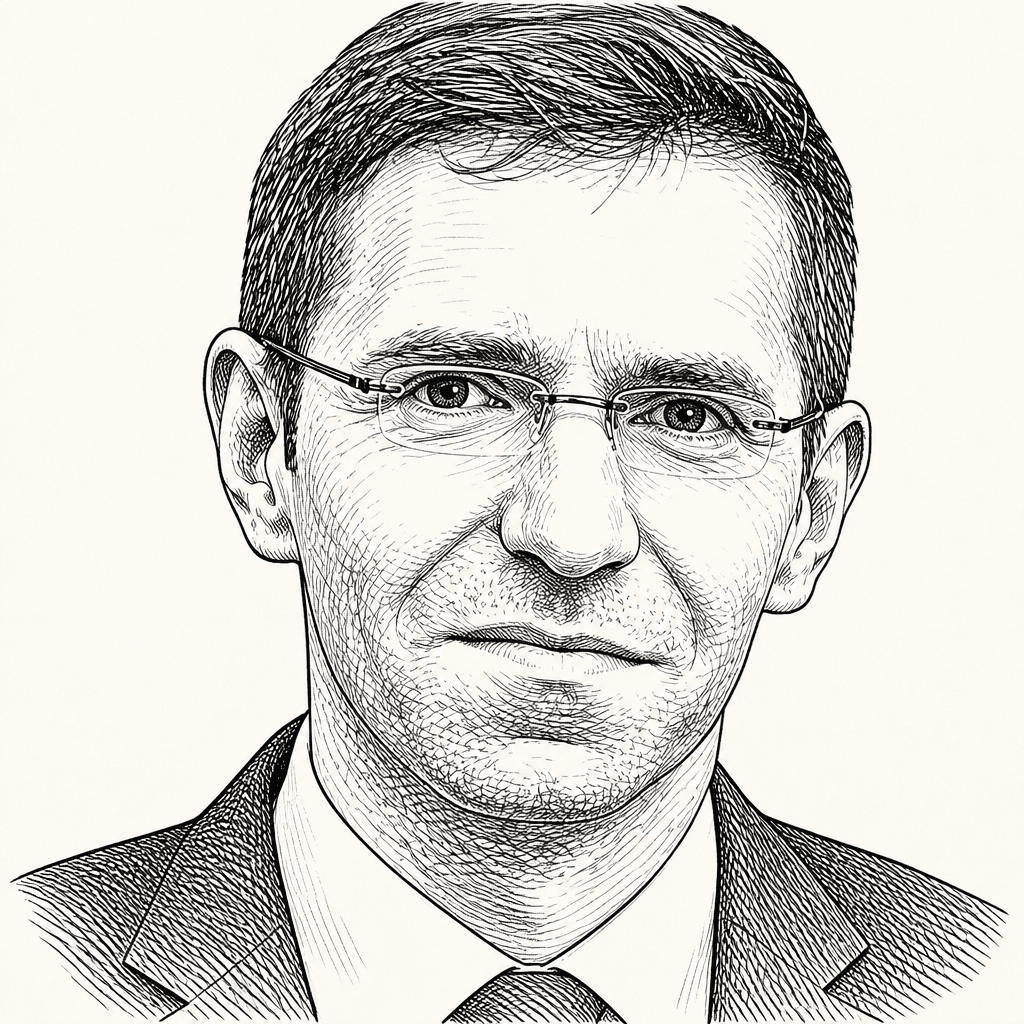
LOT Polish Airlines chief executive Michał Fijoł used an ElevenLabs summit in Warsaw to announce a collaboration that will bring ElevenAgents into the airline’s passenger support. His argument was that customer communication has become an operational challenge for LOT: nearly 200 IT systems, flights across dozens of markets, and routine passenger questions arriving in multiple languages and time zones. Fijoł positioned AI voice support not as a replacement for airline staff, but as a way to handle language, timing, and information access at a scale a Warsaw-centered contact model cannot easily cover.
LOT is treating passenger communication as an operations problem, not a call-center problem
Michał Fijoł framed LOT Polish Airlines’ collaboration with ElevenLabs around the practical complexity of running a global airline: many aircraft, many markets, many passenger questions, and many languages, all tied into a technology stack that already underpins core operations.
The airline, he said, operates nearly 90 aircraft today, with almost 100 more on order. Its fleet includes regional Embraer aircraft, the incoming Airbus A220, Boeing 737 MAX aircraft for medium-haul routes in Europe and the Middle East, and Boeing 787 Dreamliners for long-haul routes including San Francisco, Chicago, Seoul, and Toronto.
But Fijoł’s main point was that aircraft and crews are only the visible surface of the business. LOT, he said, runs nearly 200 IT systems across operations, sales, customer service, analytics, marketing, finance, planning, and communication. For passengers, those systems support the journey from planning and ticket purchase through the digital experience in LOT’s app. For the company, they support crew planning, flight operations, revenue optimization, marketing, and analysis of large operational datasets.
One example carried the scale: according to Fijoł, a Dreamliner can generate as much as half a terabyte of data during a single flight. LOT operates about 600 flights a day, or more than 100,000 per year.
Fijoł described aviation as a “red ocean” because airlines must compete with the largest global players while also collaborating with them. In that environment, he argued, the technology stack is not peripheral. It is part of how an airline earns passenger attention and delivers service. LOT’s past decade, he said, has involved major investment of time and resources to reach its current technology position.
The goal of that investment, he said, is not technology for its own sake. “Ultimately, there is one goal we are focusing on”: passenger needs.
The passenger base makes language and timing hard to solve with humans alone
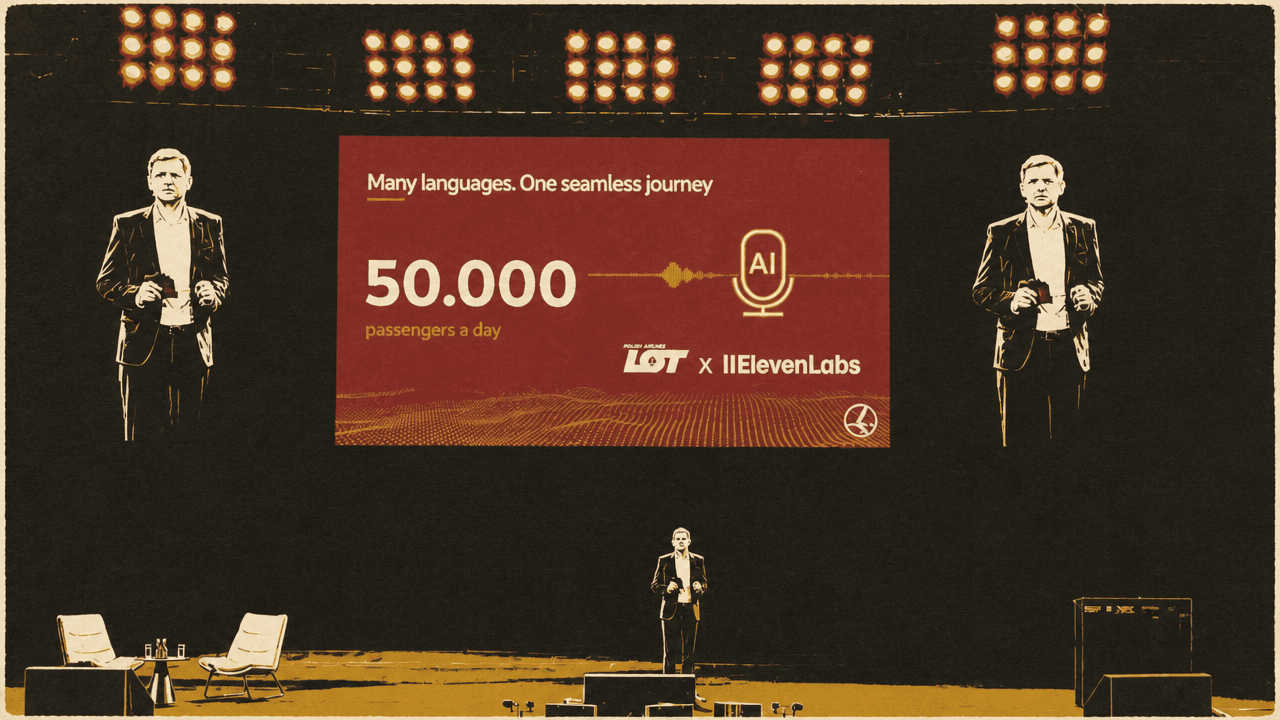
LOT’s network now spans more than 100 scheduled destinations and more than 100 charter destinations. Fijoł said the airline carried nearly 12 million passengers last year and expects more than 13 million this year. During the summer season, he said, LOT will serve around 50,000 passengers per day.
| Metric | LOT figure cited |
|---|---|
| Aircraft in service | Nearly 90 |
| Aircraft on order | Almost 100 |
| IT systems | Nearly 200 |
| Scheduled destinations | 100+ |
| Charter destinations | 100+ |
| Countries in LOT’s markets and airports | 50 |
| Passengers expected this year | 13M+ |
| Summer passengers per day | Around 50,000 |
Those passengers are not a single domestic audience. Nearly half come from Poland, while the other half either travel to Poland or transfer through Warsaw. Fijoł’s examples were deliberately global: Seoul to Dubrovnik, New York to Tel Aviv, Delhi to San Francisco, Yerevan to Los Angeles.
The everyday questions are ordinary, but their volume and context make them operationally difficult: Can I bring my dog? Do I need a visa? What happens if I change my ticket? Can I request a special meal? Is my luggage the right size?
Fijoł’s argument was that the “most proper” and natural communication is in the customer’s own language. LOT serves airports and markets in 50 countries, and its tickets are also available through global distribution systems, partner sales networks, codeshares, and interline arrangements. That distribution footprint expands the range of languages, locations, and customer expectations beyond what a Warsaw-centered support model can comfortably absorb.
Timing adds another constraint. Fijoł gave a simple example: when it is 4 p.m. in San Francisco, it is the middle of the night in Warsaw. LOT is not going to keep all contact-center agents working through the night, he said. That is the “proper spot” for technology: support that can respond in the passenger’s language, at any time, with the necessary information and a friendly tone.
The business case is the collision of those factors: 50,000 passengers a day in the summer season, markets across 50 countries, multilingual distribution beyond LOT’s own sales channels, and passenger questions that do not arrive on Warsaw office hours.
The ElevenLabs partnership is positioned as a two-way aviation collaboration
Fijoł made the partnership official on stage: LOT Polish Airlines is beginning a collaboration with ElevenLabs to develop friendly, multilingual passenger communication for travelers around the world.
The fit is partly strategic and partly symbolic. Both companies, Fijoł said, have deep ties to Poland while thinking globally. Both are trying to build recognition through quality and ambition. Both, in his framing, believe technology should serve people.
For LOT, the collaboration is a natural step in improving the digital passenger experience. For ElevenLabs, it offers exposure to aviation’s realities: operational complexity, safety, emotion, and the needs of millions of people. Fijoł noted that LOT is one of ElevenLabs’ first aviation partners.
Aviation is an exceptional business, exceptionally complex. It brings together technology, operations, safety, emotions, and needs of millions of people.
The two-way nature mattered. LOT gets ElevenLabs’ technology and expertise. ElevenLabs gets a real-world view into the responsibilities and opportunities of airline operations. Fijoł placed that exchange in a broader Polish context, saying LOT has connected Poland to the world for over a century and that the collaboration is meant to show “the strength of Polish technology and ambition.”
The collaboration was not described as a generic customer-service overlay. Fijoł tied it to the practical front line of passenger communication: multilingual speech, booking-specific questions, routing information, baggage requests, pet rules, and the emotional texture of travel.
The demonstrated use cases were ordinary by design
The simulated LOT x ElevenLabs concept focused on routine passenger questions rather than edge-case automation. The operational burden Fijoł described comes from everyday requests arriving at high volume, across languages and time zones.
The examples included a passenger asking whether a flight to Los Angeles would have Wi-Fi, an Italian-language baggage request, and a Hindi-language terminal question for Delhi Airport. In each case, the agent responded conversationally with specific travel information or an offer to check the booking.
The Polish-language pet example included a human handoff. A passenger asked whether he could take his dog, Tiger, on holiday to Malaga. The agent asked the dog’s breed. When the passenger answered that Tiger was a Maltese, the agent said it could see that a Maltese could be taken on board, then offered to transfer the passenger to a consultant who could add Tiger to the booking.
That example did not present the interaction as fully automated end to end. The demonstrated agent supplied the relevant information and then offered a consultant handoff for the booking update. Fijoł’s broader argument for the system was not that airline support no longer needs people. It was that technology can cover language, timing, and information access at a scale that is difficult for a Warsaw-centered human support model alone.
Fijoł called the collaboration “just a beginning,” tied the announcement back to LOT’s advertising claim, “who you travel with,” and thanked both teams for what he described as a very short-term implementation of the system.