Military Force Depends on Selection, Command and Restraint
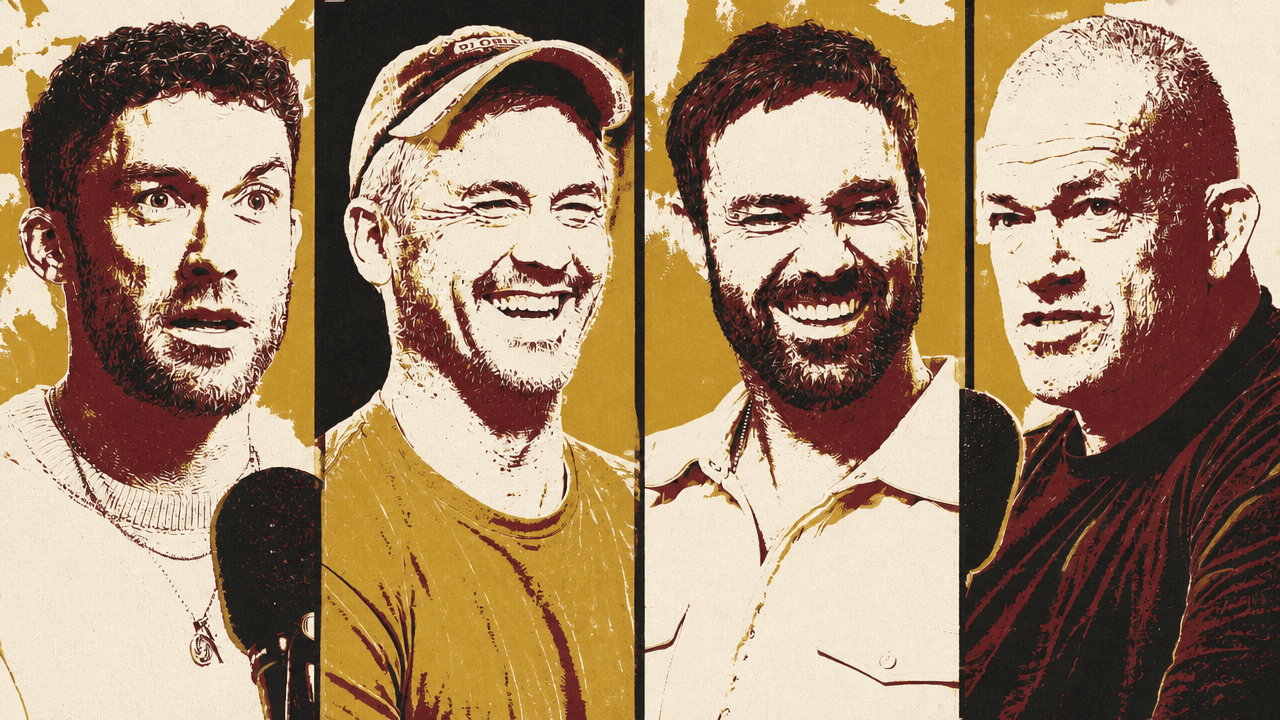
 Chris Williamson
 Matt McCusker
 Jeff Dye
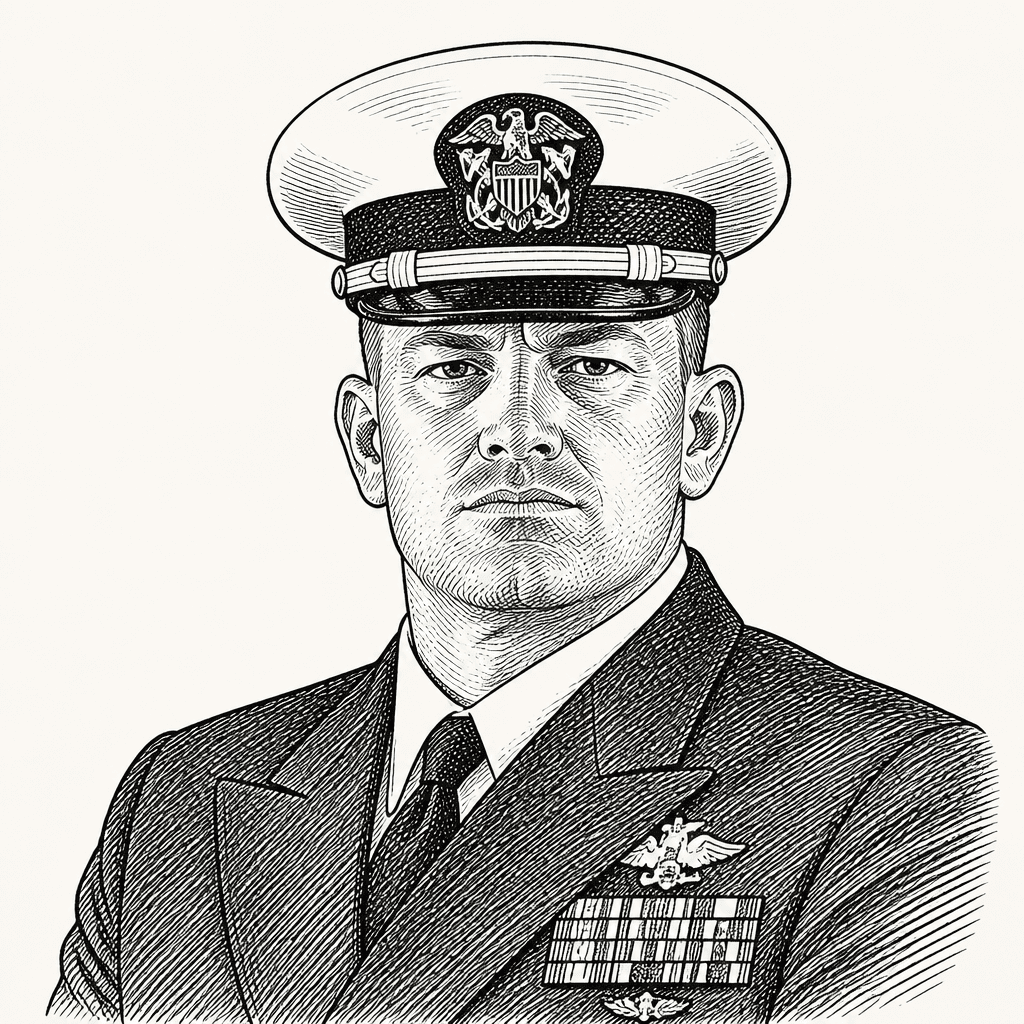 Jocko WillinkChris WilliamsonThursday, August 20, 202614 min read
Retired Navy SEAL officer Jocko Willink argues that military effectiveness depends less on raw toughness or aggression than on an institution’s ability to select, direct and restrain it. Drawing on SEAL selection, hazing, difficult personnel and working dogs, he says physical capability and willingness to fight become useful only when they are tied to a defined mission, accountable leadership and clear limits.
Force becomes useful only when an institution can select, direct and restrain it
Jocko Willink describes military selection, hazing, unusually aggressive personnel and working animals as versions of the same institutional problem: raw capacity is not enough. A person may be strong, fearless or violent; a dog may be fast and willing to bite; a dolphin may be trainable underwater. None of those traits is automatically useful. The task is to identify the capability, place it under command and prevent it from becoming destructive outside the task it is meant to serve.
That framework starts with SEAL selection. The popular claim that it is “more mental than physical,” Willink says, is incomplete. Mental endurance matters because candidates are physically exhausted. But physical competence remains non-negotiable: a candidate who cannot perform a required task does not pass it through determination alone.
The same tension appears in the group’s discussion of initiation. A painful ritual can mark entry into a demanding community and mean something to the people who have earned it. But a ritual can also become an opportunity for someone to turn sanctioned roughness into cruelty. Willink’s account of highly aggressive personnel pushes the question further. In war, a person who is difficult to contain in ordinary life may be highly effective when he has a defined mission. In peacetime, leadership has to find lawful outlets, watch for escalation and intervene when aggression turns into misconduct.
The working-dog discussion supplies the clearest operational example. Willink says military dogs are selected with unusual stringency, trained for a specific job and controlled by handlers. The quality is not simply that they are dangerous. It is that they can be directed toward a target at the necessary moment. The later discussion of dolphins tests the limits of that principle: public descriptions of marine mammals performing detection and protection work are concrete; the more spectacular claims about explosive attacks remain a subject of speculation and comedy.
SEAL selection is neither a test of will nor a test of fitness alone
Jocko Willink says the opening physical requirements for SEAL selection are lower than outsiders may imagine. A normal high-school athlete, in his account, should possess enough athletic capacity to begin. That should not be mistaken for saying the course is easy. Selection becomes punishing because candidates are repeatedly worn down until the physical load becomes a test of whether their minds can continue operating under it.
The conventional phrase that selection is “more mental than physical” therefore gets the relationship backward if it implies that fitness is optional. Willink points to rope climbs as the plainest example. Candidates may face 10-foot and 30-foot ropes, rope obstacles and a set of ten straight ropes on the beach. They climb, descend and repeat until they can no longer do it. A person who cannot climb the rope does not continue because he has the right attitude.
But it is mental too, ’cause you can have total studs going through there and they quit just as much as a slacker.
The point is not that physical training and mental persistence can be separated cleanly. They work on each other. Physical depletion creates the conditions in which quitting becomes attractive; the candidate’s mental disposition determines whether he keeps trying; but a basic task still has to be completed. Willink rejects both fantasies at once: that athleticism guarantees completion, and that mental toughness can overcome an inability to meet the physical standard.
The group’s joking self-assessments make the contrast clearer. Matt McCusker says that swimming regularly and owning a Panerai watch associated with the Navy SEAL brand make him essentially ready to go. Jeff Dye plays along. Willink’s answer gives the joke its structure: the baseline may be attainable for an ordinary athlete, but selection is designed to discover what remains after that athlete has been exhausted.




Age is part of the same calculation. Willink puts the usual cutoff at around 31, with occasional waivers for candidates who are 32 or 33. Those exceptions are rare, he says. The group recalls an exhausted 21-year-old coming over the top of a cargo net, perhaps 30 to 50 feet above the sand, and falling with his gear on. According to Willink, the man landed, got back to his feet and ran off. At 21, he says, the candidate was “made of rubber and magic.” The others imagine the same fall in their late thirties as an event involving broken bones, lawyers and financial ruin.
Body type does not supply a useful shortcut either. Willink mentions SEALs at roughly 5'3" and one he believes was around 6'7" or 6'8". A Google search displayed during the discussion described 6'8" as the believed height of the tallest Navy SEAL. His larger point is that instructors cannot reliably identify eventual finishers by looking at them. A person may appear too small, too large, too polished or too unprepared, yet those impressions do not answer the question selection is asking.
You can’t look at a human being and figure out if they’re going to make it or not.
Willink says he recently raised that question with someone who had spent years as an instructor. Even with that accumulated exposure, the instructor’s answer was no: he could not tell in advance who would make it. What matters, Willink says, is something in a candidate’s head that makes him unwilling to quit. That quality is not visible in height, appearance or apparent athletic pedigree. It also cannot carry someone who has failed to train for the actual physical demands.
Ritual may bind a group, but it can also give cruelty permission
Matt McCusker recalls a Netflix account of a Trident-pinning ritual. In his version, a man who has made it beyond BUD/S and been accepted into a platoon receives the Trident insignia, and fellow SEALs punch it into his chest. The program said the practice had stopped in 1994 because of hazing. Willink identifies the insignia as the Trident and says he would be confident the practice likely still occurs unofficially.
McCusker understands the ritual through the scale of what precedes it. Someone who has endured sand, exhaustion, sleep deprivation and selection is not likely to regard a strike against a freshly pinned insignia as the central hardship. The mark fits the badge’s meaning, he argues: it is an honor and a sign that someone has joined a group after a difficult process.
Jeff Dye sees the same scene differently. He concedes that driving the insignia into skin is not nothing, but finds the image of grown men gathered around to punch a badge into someone’s chest “kind of lame.” The disagreement is not over whether the ritual hurts. It is about whether pain is elevated by the achievement it follows or made faintly absurd by the ceremonial form it takes.
The group compares Trident pinning with martial-arts schools that make new black belts walk through a gauntlet while other practitioners whip them with belts. Willink says not every school does this. Some do; some do not. The practice depends on the culture of the school rather than on the black belt itself. The credential does not require a beating to count.
That distinction matters because the conversation moves from controlled ritual to much harsher rites of passage: men jumping from towers with vines tied around their ankles, accounts of genital cutting, and stories of communities making initiation deliberately dangerous. The group handles much of this material as crude comedy, but Willink draws a practical boundary. In any organization, he says, there are people who will use an initiation as a chance to go further than the ritual requires.
There are sadistic people in wherever, in any organization.
Willink describes the person who decides, in effect, that he has “a better idea” for making the ritual more severe. The problem is not merely that the idea is tough. It may be reckless, humiliating or sadistic. The group jokes that someone has to be the safety officer who tells the person holding a scalpel to put it away. Under the joke is Willink’s point that groups need limits precisely because rituals create a setting in which participants can rationalize escalation.
Military environments may sharpen that problem. They select for people who can tolerate discomfort and who may be more comfortable with aggression than the general population. That does not mean every rough custom is abuse or that every aggressive person is sadistic. It does mean leadership cannot treat toughness as a substitute for judgment. An institution has to distinguish between a difficult rite that participants understand and a participant who uses the rite as cover to hurt someone.
The people built for war can be difficult to contain in peace
Chris Williamson offers a rough explanation for why highly aggressive or psychopathic traits might persist: a person who is destructive in a small civilian group may become useful when a larger group needs people able to raid, kill or act without hesitation. Willink answers with an image he says circulated in the SEAL teams: a drawing of a frogman in a glass case.


In case of war, break glass.
Willink says historical military heroes were often “totally out of control” as ordinary civilians. War gives them an external purpose: a mission, an enemy and a place to focus aggression and testosterone. In that setting, the trait that creates trouble elsewhere may make a person decisive, durable and brave. The group describes that person as a “weapon,” not as a general ideal of masculinity but as a specialized capability.
The difficulty comes when the weapon has no appropriate use. Willink imagines someone he calls a Viking—someone born and bred to kill—being told that there is a uniform inspection tomorrow. The mismatch is obvious to him. It is like stirring coffee with a gun: the object may be effective for a particular purpose but is being used outside the purpose for which it exists.
That does not make peacetime misconduct inevitable or excusable. It makes supervision necessary. Willink says leaders must check on the people who are “barely hanging on” and find them outlets for aggression. He names working out, jiu-jitsu, boxing, wrestling and fighting. These are pressure-release valves, not cures. They offer a place to direct intensity without pretending that all intensity disappears.
Willink is explicit that the system still fails. A person may go into town, get into a serious fight or cause enough harm to receive administrative punishment, be kicked out of the military or be sent to the brig. The lesson is not that such behavior should be tolerated because the person might be valuable in combat. It is that leaders need to know what they are managing: forceful people require purpose, scrutiny and boundaries.
The conversation returns repeatedly to the relation between aggression and control. If an organization strips away people unable to tolerate physical hardship, it may also concentrate people who enjoy pain, intimidation or confrontation. That is why an initiation cannot be left to the most extreme participant. It is why a leader cannot assume that a physically capable fighter will be easy to manage. And it is why the best military use of force, in Willink’s account, depends on disciplined direction rather than raw appetite.
Dye supplies a small civilian example. After a show in Tucson, he spent time with a group of casually dressed SEALs who were talking with women. Other men arrived later and began posturing, apparently unaware whom they were confronting. Dye says he wanted to see a fight; the SEALs outnumbered the newcomers and seemed entirely untroubled. Instead, they remained composed. Eventually one spoke to the other men, and they left. The anecdote is comic, but it reinforces the distinction Willink is making: capability is not demonstrated only by using it.
A working dog is dangerous because it can be directed
Jocko Willink says military working-dog selection is probably more stringent than special-operations selection. His estimate is that only one in 20 or 30 dogs entering the pipeline becomes a fully qualified working dog. The number is offered as his assessment rather than as a documented program statistic, but the institutional logic is clear: the military is not looking for a pet with an intimidating appearance. It is looking for an animal that can meet a narrow operational standard.
The group briefly asks whether female dogs serve in military roles and consults ChatGPT on screen. The result they read says 73% of military working dogs are male and 26% female, but no one examines the source, categories or basis of the figure, and the conversation quickly returns to selection and performance.
Willink says Belgian Malinois are common in the SEAL teams because their smaller size makes them easier to move with, including in jumps. The others focus on their athleticism, especially the claim that a Malinois can clear an eight-foot fence. They turn that into fantasies about owning one to intimidate delivery drivers or people at a coffee shop. Willink’s response is a warning: the dog used by the military is not the animal someone should want in a normal house.
He makes the analogy direct. A working dog is bred and trained to bite. It may not respond like an ordinary family pet when an unfamiliar delivery driver appears. The fact that it is excellent at its job is exactly why it can be inappropriate in a civilian household. The mistake is to admire a specialized capability while ignoring the conditions that make it safe and useful.
Willink recalls first seeing a military dog work during a training event involving the assault of a large building. He was the ground-force commander. A man wearing a padded dog suit was set to flee from the target building, and Willink initially did not see what the dog would add. Then the runner emerged. The handler focused the dog, released it with a quick-release mechanism, and the animal accelerated toward the target.
It took off going a thousand miles an hour, launched at this dude, and just took him down like nothing.
The dog began tearing at the protective suit. Willink’s reaction was immediate: “We want these things.” The moment matters because the dog is not depicted as a free-floating threat. It is held until the target runs, oriented by a handler, released at a particular time and used within a team operation. Speed and willingness to bite are useful because they are part of a controlled chain of command.
That is the difference between the group’s jokes about turning a dog loose on a nuisance and the military use Willink describes. The fantasy is about having a dangerous animal nearby. The operational value is in a selected animal that can be reliably tasked, restrained and deployed.
Dolphin missions are concrete; kamikaze dolphins remain a spectacle
Jeff Dye asks why the SEALs do not have “water animals.” Willink says they do, confirming that the military has working mammals, including dolphins and other animals. He declines to provide operational detail beyond saying that they perform various missions and suggesting that the group look at what is publicly available.
A video displayed during the discussion, attributed on screen to YouTube / IP Reports, gives the public account that the conversation otherwise lacks. Its narrator says the U.S. Navy has trained dolphins and sea lions for military work since the 1960s. The stated tasks are finding underwater mines, recovering lost equipment, and helping protect ships and harbors. The clip calls the program the U.S. Navy Marine Mammal Program.
The same clip is framed around a more sensational question: “Can you kind of clarify these reports of kamikaze dolphins?” Its narration says military leaders were asked whether the United States had such animals, while distinguishing that question from the publicly described tasks of mine detection, recovery and harbor protection. The narrator also says that the Soviet Navy ran a dolphin program in the Black Sea during the Cold War and that part of Ukraine’s program was transferred to Iran after the Soviet Union collapsed.
The clip’s public framing is itself the useful contrast: some marine-mammal roles are described as practical support missions, while the explosive-dolphin premise remains the dramatic hook. Willink does not resolve the latter question. When the others push him for specifics, he becomes guarded about what is publicly available.
The dolphins are smart as hell.
The group’s real question is control. Dye imagines a dolphin approaching a fishing boat full of fish rather than completing a mission, and asks how anyone could issue reliable instructions underwater. That concern gives the dolphin discussion a different function from the dog discussion. The working dog is a concrete example of selection, handling and command. Dolphins are presented as trainable, but the operational mechanism is left largely unexplained in the source.
A shark anecdote, attributed by Dye to a dinner conversation with Palmer Luckey, makes the same distinction through absurdity. Dye says Luckey proposed putting a bag of glucose and a hypodermic syringe on a shark so it could travel long distances as a tracking animal without needing to feed. The others immediately ask how anyone would tell the shark where to go. Endurance, they suggest, is worthless if the animal cannot be controlled; the imagined shark might simply eat fish, wander off or try to mate. Dye calls himself “the ideas guy,” while the others ask for the technicalities.
Dye and McCusker also describe a non-military experience with dolphins that makes them uneasy in retrospect. Dye says he rode dolphins at a Mexican tourist attraction in 2008 or 2009, before he believed he understood the harm of keeping animals adapted to open-water movement in confined pools. He says the animals were fed fish containing medication for ulcers. McCusker recalls arriving at a similar setting and feeling sadness at seeing dolphins in a small enclosure.
Dye had initially treated dolphins as harmless playmates. When his children encountered them at a submerged platform, he encouraged them not to be scared—then found himself intimidated by their size. He calls them “big water dogs,” while also describing them as friendly and sweet. The conversation leaves dolphins in two sharply different roles: animals in tourist settings that Dye and McCusker now view uneasily, and animals in military programs whose publicly described roles are more ordinary and concrete than the idea of weaponized attacks.