Allied Planning Must Account for a Low-Probability U.S. Expansion Risk
 Chris Williamson
 John Mearsheimer
 Peter Turchin
 Jiang Xueqin
 Robert PapeChris WilliamsonWednesday, September 2, 20265 min read
A participant who says he has studied Trump rallies and violent populism argues that Canada, Greenland and Venezuela should treat U.S. territorial rhetoric as a planning risk, even if invasion remains unlikely. He ties the danger to a stronger MAGA coalition after the 2028 election and says Trump’s talk of borders, resources and Greenland has become more consequential since his return to power. Other participants offer possible motives, including demographic pressure, while one cautions that U.S. political division has historical precedents and need not signal national rupture.
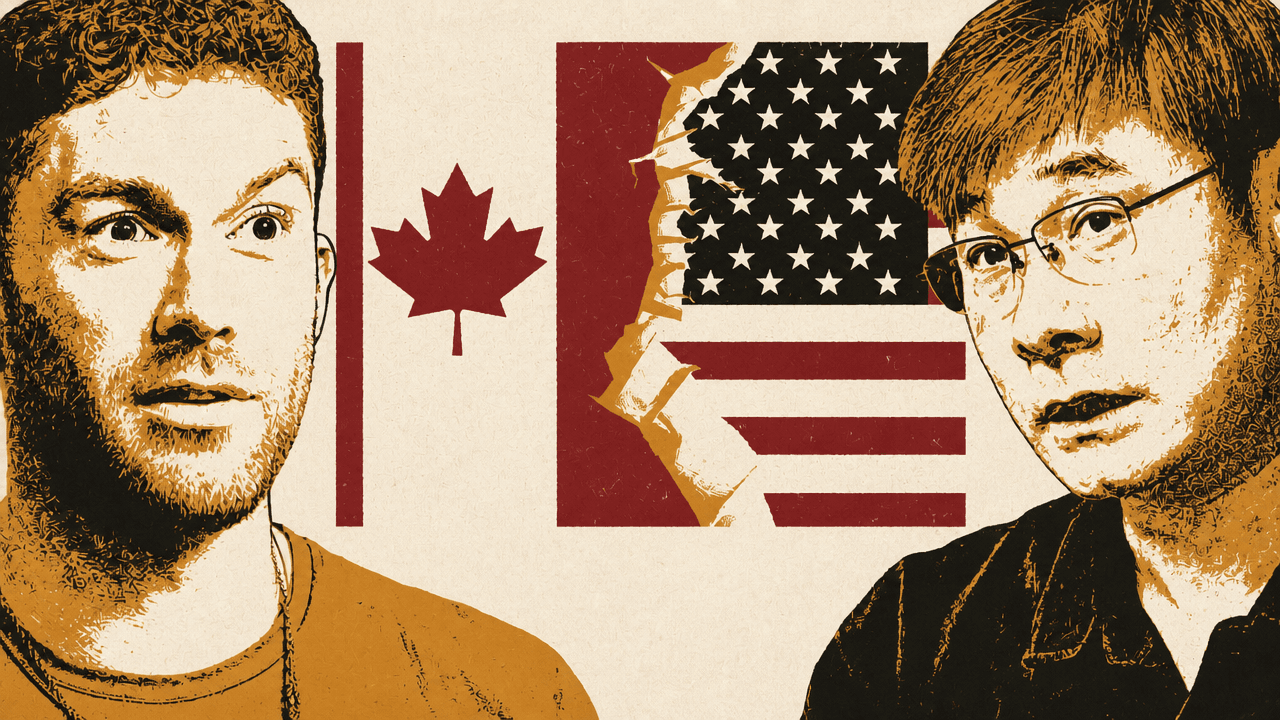
A low-probability invasion risk should change allied planning
The central warning is not that U.S. conquest of Canada, Greenland, or Venezuela is inevitable. It is that the possibility has become consequential enough that neighboring governments should plan around it.
Chris Williamson asks whether talk of colonizing Canada, Greenland, and Venezuela means more than replacing leaders or exercising soft power. The speaker advancing the territorial-expansion case answers yes. “Why wouldn’t the United States just take Alberta?” he asks, arguing that no outside power could stop it. Another participant identifies Alberta’s oil as the significance of that example, while a third says Albertans may want to leave anyway.


Williamson responds that taking Alberta would be war. The answer—“Canada has what army again?”—frames the issue in terms of the imbalance between Canadian and U.S. power.
The speaker drawing on rally research is more circumspect about likelihood. He says he works in probabilities and is not assigning a 70% chance to invasion. But he argues that even a 20% chance would be strategically significant. Canadian leaders do not need to believe an invasion is 80% likely, in his view, for the prospect to alter how they interpret U.S. territorial rhetoric, resource interests, and military preparations.
The key contingency is the 2028 election. If the United States remains internally divided, the rally-research speaker thinks external expansion is less likely. If a MAGA “red wave” instead grows stronger, he says there is “a very good chance” that the ambitions described by the demographic-theory speaker will materialize.
He points to what he sees as a developing pattern: Trump’s language about territory, discussions with Canadian prime ministers about moving the border and abandoning the 1908 treaty with Canada, the prospect of taking Venezuelan oil, and serious planning around Greenland. He also cites Mark Carney’s Munich speech as an indication that Canadian leaders see a threat on the horizon.
Williamson initially treats the prospect as absurd: an American move into Canada, Greenland, or Venezuela would be an invasion. The rally-research speaker agrees, but says the political context changed after the election. Before it, he says, Trump’s remarks could be treated as “talky talky.” Afterward, they became “seriousy seriousy.”
Demographic pressure is offered as a motive for expansion
The speaker advancing the demographic theory connects territorial expansion to what he calls the “young man problem.” He argues that many young men cannot find suitable partners, while marriage and children can reduce their violent tendencies and make them more productive members of society.
If large numbers of young men remain unattached, he asks, what outlet is available? One historical answer, in his account, is war: sending them “off to war to die.” Conscription could backfire, he adds, if those men preferred to fight their own government. His alternative scenario is a colonial project that turns North and South America into a U.S. sphere of control—beginning, he says, with Venezuela and potentially extending to Canada and Greenland.
The rally-research speaker does not fully adopt that account. He says he would not go “quite that far” on the exact dynamic. His own concern comes from studying violent populism and observing Trump’s political base.
He says he watched more than 200 Trump campaign speeches, attended four Trump rallies, surveyed attendees, and also attended Harris rallies. The Trump events, he says, required arriving early and waiting for hours in dense crowds; the Harris rallies were easier to enter and offered seating even for later arrivals. Those experiences, he says, gave him a view of what lay beneath Trump’s support and of the political “seeds” Trump had been planting.
The difference between the two accounts matters. The demographic theory presents a reason an internally strained country might channel discontent outward. The rally-research argument places more weight on political coalition-building, territorial language, and the conditions that could follow a stronger MAGA movement.
The group rates U.S. expansion above a Chinese move on Taiwan
When Chris Williamson asks whether China entering Taiwan is more likely than the United States moving into Canada, Greenland, or Venezuela, two participants choose the latter. One says he would “vote for” U.S. expansion; another answers “100%.”
Their view of Taiwan is not that China lacks leverage. The speaker who chooses U.S. expansion argues that, if China “plays its cards right,” Taiwan could fall into China’s hands without a direct invasion. Continued Chinese growth would further outweigh Taiwan economically, he says, and more people in Taiwan might want to make money in China.
He grounds that view partly in a January 2003 visit to Taiwan, where President Chen invited him and four other air-power experts for a two-day discussion. The question was what Taiwan should do if China attacked while the United States was preemptively attacking Iraq. He says conversations with the president and senior air-force officials, along with non-classified internal polling, showed him how economic aspirations sat alongside military fears.
Taiwan is therefore presented as a case in which political control could emerge through a changing economic relationship rather than an immediate military assault. That is why the participants treat a Chinese move as less imminent than a U.S. decision to extend power within the Western Hemisphere.
Historical resilience qualifies the diagnosis of domestic rupture
A final speaker agrees that serious strains are coming, but disputes the idea that present U.S. divisions are historically unprecedented or necessarily predictive of national breakdown.
He describes the United States as a community with common values that has repeatedly contained deep internal conflict. Immigration, he says, has been contested from the founding. Scots-Irish migrants were profoundly marginalized; business owners sought cheap labor while workers resisted it. The country built on immigration while continually fighting over it.
His argument is one of proportionality. People who have not experienced comparable divisions may see current tensions as more uniquely grave than they are, he says, when American history contains precedents for conflict and recovery. He invokes the Civil War as the most extreme example: a rupture so severe that it nevertheless did not prevent national recovery.
That historical frame does not directly resolve the territorial claims about Canada, Greenland, or Venezuela. It narrows one premise behind the broader warning: that internal division itself signals an unprecedented and irreversible turn. The disagreement is over how much weight current domestic fracture should carry when assessing the political conditions for external expansion.