Apple Leasing Program Sets Fixed Upgrade Cycles Across Devices

Apple plans to replace its existing financing and iPhone upgrade offers with a Klarna-backed leasing program that requires customers to return devices or pay a buyout fee at the end of fixed terms, according to Bloomberg’s Mark Gurman. Gurman argues that lower monthly payments could make increasingly expensive Apple hardware more accessible while creating scheduled moments for customers to upgrade. The program would extend the model beyond iPhones to Apple Watches, iPads and Macs.
Leasing would turn Apple upgrades into fixed decision points
Mark Gurman says Apple plans to replace its current financing and iPhone upgrade programs with fixed-term hardware leases. The commercial change is not merely a new way to spread a purchase across monthly payments: at the end of a set term, customers would have to return the device or pay a fee to buy it out.
That structure gives Apple a defined point at which customers must make another hardware decision. Gurman says the company is trying to spur more frequent upgrades, keep consumers committed to its products over the long term, and make devices accessible to people who might not otherwise be able to afford them.
Apple is expected to announce the program, called Apple Upgrade, next Tuesday and offer it through both its online store and physical retail locations. Gurman describes it as a hardware subscription or leasing program, a model Wall Street has wanted as Apple devices become more expensive and investors look for ways to encourage more frequent replacement.
This is essentially a hardware subscription program or a leasing program.
The proposed terms would vary by product. Customers could lease an iPhone or Apple Watch for 24 months, while iPads and Macs would carry 36-month terms. They would make monthly payments, in the manner of a car lease, and at the conclusion of the term could either hand back the hardware or purchase it for an additional fee.
Gurman says the monthly payments would be less costly than those in Apple’s existing financing and iPhone upgrade offerings. That lower periodic payment is central to the model’s appeal as he describes it: it changes a potentially large upfront device purchase into a recurring commitment, while making the end of the lease a built-in moment to choose between keeping the device, returning it, or moving to another one.
Higher device prices make the payment model more consequential
The timing matters because Gurman says Apple has already raised prices across its Mac and iPad lines, while an iPhone price increase is also approaching. He also points to the foldable iPhone discussed earlier in the program, which he expects to cost more than $2,000.
For customers considering expensive hardware, leasing can make the monthly cost more immediately visible than the full price. For Apple, Gurman’s argument is that the arrangement could support purchases that would otherwise be out of reach, while linking those customers more tightly to future Apple upgrade decisions.
The program would cover more than the iPhone. By including Apple Watch, iPad and Mac, Apple would apply the same return-or-buyout structure across much of its hardware range. Gurman calls the initiative a “gigantic” move because it combines a lower-payment proposition with a mechanism intended to generate repeat upgrades and longer-running customer relationships.
Klarna replaces the in-house financial-services plan
Apple has been pursuing this kind of program since 2022, Gurman says. The original approach would have been an in-house version financially backed by Apple alongside Goldman Sachs. That relationship has since fallen apart, and Apple has decided against doing as much financial services work internally.
Mark Gurman says Klarna will instead be Apple’s partner for the lease program. The shift means Apple can offer a broad hardware-leasing arrangement through a recognizable outside financial-services brand rather than building and backing the system itself with Goldman Sachs.
Klarna’s role is therefore part of the operating model, not a peripheral distribution partnership. Apple would retain the customer relationship through its online and physical stores, while the leasing program supplies the financial structure that Apple had once considered supporting in-house.
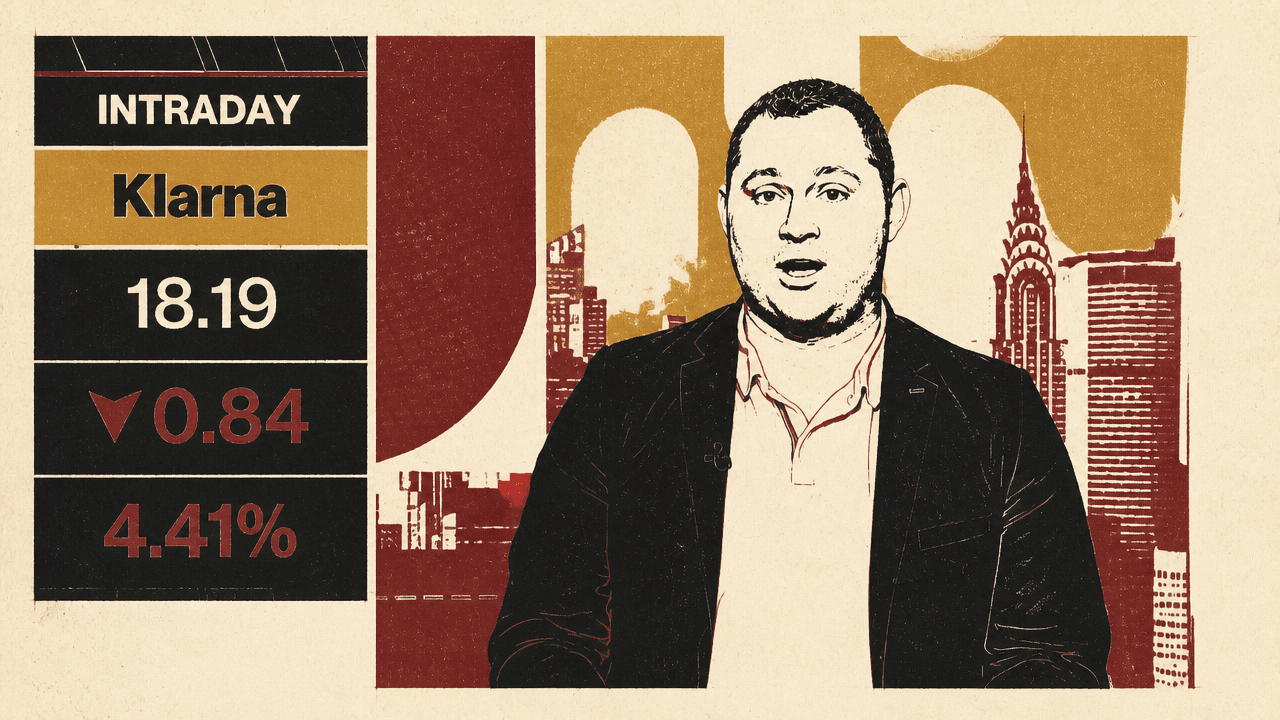
Gurman said Klarna shares rose about 11% after Bloomberg published its report the previous day. That was distinct from the intraday reading displayed on screen.