Apple’s Software Shortcomings Are Limiting Its Next Generation of Devices

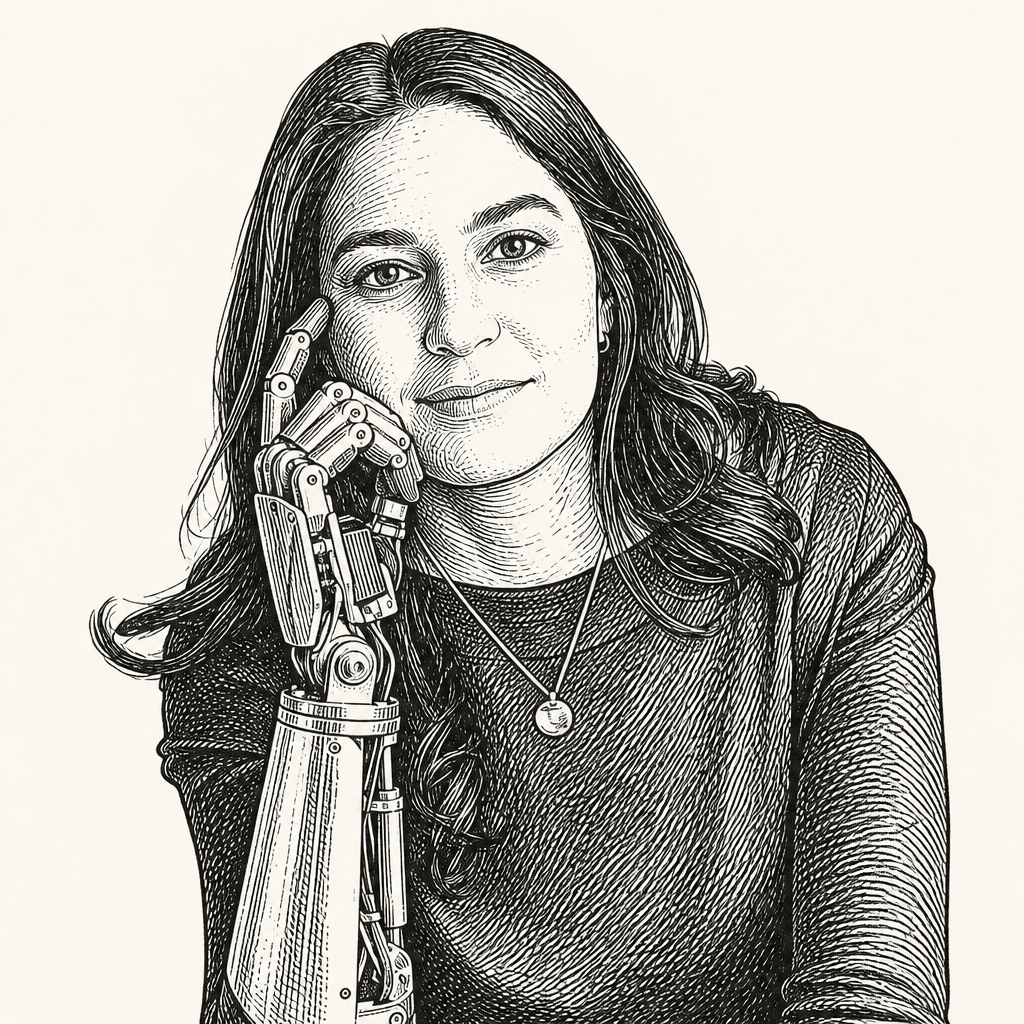
Mark Gurman argues that Apple’s software shortcomings are limiting products the company wants to build, from smart-home devices to AirPods and glasses that depend on Siri and app integrations. In a discussion with Joanna Stern, he says Apple has fallen behind in AI and needs to move faster; Stern points to unreliable everyday features and a software organization that makes change difficult. Their assessment is qualified by the iPhone Duo, which both praise despite its early software flaws and missing Face ID.
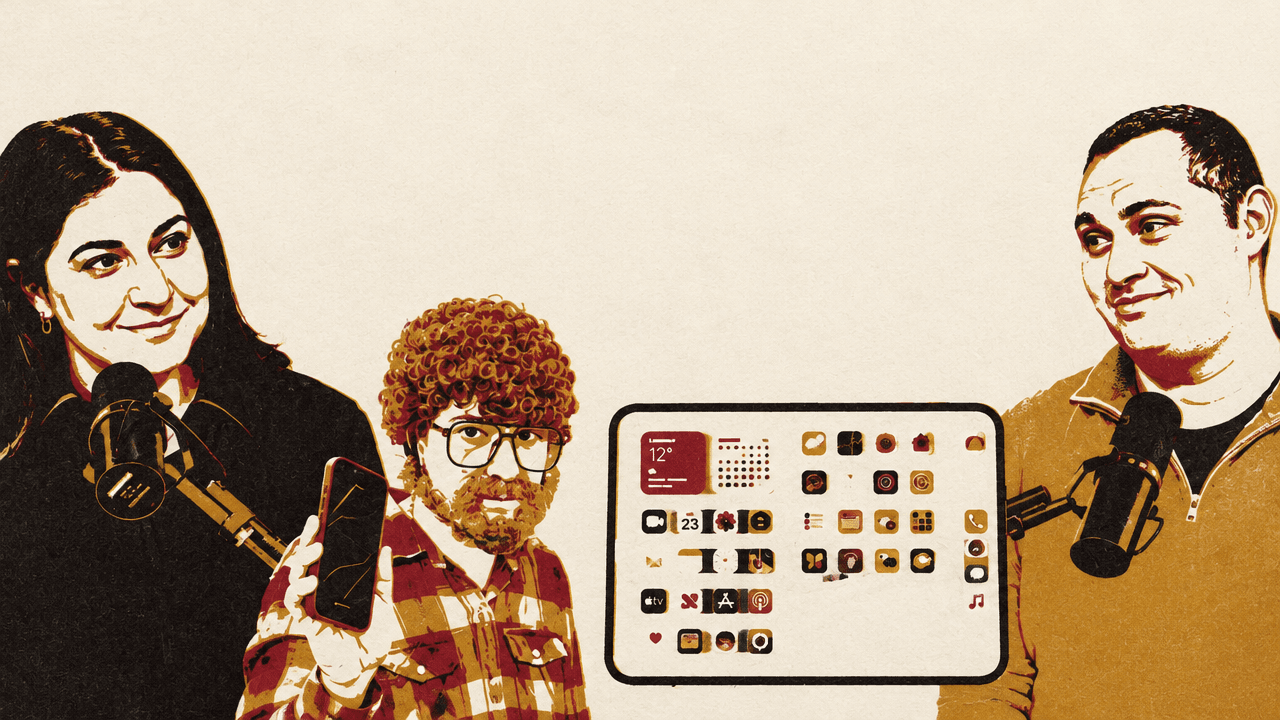
Apple’s software is holding back its hardware ambitions
Apple’s AI problem is not confined to Siri. Mark Gurman says software shortcomings are delaying or limiting products Apple wants to build: the HomeView smart-home device, AirPods with camera sensors, a tabletop robot and smart glasses. For the glasses, he says, the intended experience depends on Siri carrying out requests through third-party apps. Apple’s App Intents are meant to let someone ask Siri to take an action inside an app—for example, open and rotate a photo, then send it to someone. Gurman says App Intents for third-party apps are not expected until next year, though they are central to the glasses’ planned capabilities.
That makes Apple’s AI shortfall a product problem, not just a comparison with frontier labs. Gurman rejects the argument that Apple is a hardware company and therefore does not need to compete in AI. He says AI is becoming relevant to every kind of company, and that Apple’s AI problems are already constraining what its hardware can do. A HomeView that cannot reliably respond to voice requests, or glasses whose central feature depends on app integrations that are not ready, is limited by software whether or not Apple wants to build its own frontier models.
Joanna Stern sees the distinction between hardware and software clearly in her review of HomeView. She says the device recognizes people in her family and handles some cooking-related tasks well. If Apple had released it two years earlier as a screen for music, alarms and home controls, she says, she might have considered it a good product. The trouble begins when Apple adds AI expectations that the experience cannot meet. She also encountered problems with smart-home controls, including getting the device to open her garage door; she says Apple had an update planned to address that problem.
Gurman connects HomeView’s timing to the readiness of Siri AI, saying the product was delayed two years because Apple needed the underlying AI foundation. He argues that it would have been a nightmare if it had shipped two years earlier, before that foundation was in place. Stern’s response distinguishes the product’s basic uses from its AI ambitions: a version focused on music, alarms and home controls, she says, could have been good without promising capabilities that have proved unreliable.
Gurman says AirPods with camera sensors were expected earlier and are now coming later than planned, attributing the delay to Siri AI. He also says the tabletop robot could have been out sooner but has run into software issues. For the glasses, he offers a more specific account: their intended experience depends on Siri passing a spoken request to an app and carrying out an action there. Until App Intents work with third-party apps, that connection is not ready. Gurman says the glasses could be in a good position if the integrations work, while also saying there is a lot of work left.
Stern is less certain that consumers will want to use voice assistants for all those interactions. She uses Meta glasses for some visual queries and sometimes turns to other AI services through them. For her, the larger question is whether an assistant can function as a trusted platform across devices. If Apple does not deliver a useful, reliable assistant there, she says, people can get functionality elsewhere—from ChatGPT, Meta or other services. The risk for Apple is not only that another company has a better chatbot. It is that the assistant users trust, and the services they expect it to connect to, may belong to someone else.
Siri has to work before its intelligence can matter
Stern’s assessment of Siri is not simply that it has made no progress. She says she now asks Siri to do some things on her phone because she expects it to be the quickest way to get them done. She credits recent improvements in part to Apple’s work with Google and Private Cloud Compute. But she draws a distinction between large-language-model capabilities and the basic systems a user must get through to reach them.
Her HomeView review made those basics unusually visible. It is a voice-first device: users cannot type a request into it, and it may be across the room. Stern says Siri misheard her son, and that the clip in her review showed only some of the recognition failures she had encountered. In the review clip, shown during the discussion, Stern demonstrates the device failing to complete a request; the accompanying footage shows the HomeView interface. The clip’s frustration became part of the point. Stern says the review drew attention partly because her reaction was visible, but also because people who use Siri recognize the feeling of wondering why it cannot simply listen or work properly.
She also points to dictation, which she and Gurman describe as poor. A message she dictated to her wife from the car, Stern says, was not legible. She compares Apple’s voice recognition with tools from other companies, including Whisper Flow and Google’s services, and says the gap is evident in this basic part of using an assistant.
Another failure is deciding which device should answer. Stern and Gurman describe having multiple Apple devices respond to the same “Siri” request—or none of them handling it. Gurman asks why a user cannot direct a request to a particular device, or have the closest device respond. Stern says that in her bathroom the wrong device often sets an alarm. When Siri begins a request, makes its familiar sounds and then stops, she suspects the devices may be uncertain about which one is responsible. She says she asked Apple about the behavior but did not get an answer that explained it.
These failures are not the same as an assistant failing at a complex task. As Stern puts it, she was not faulting HomeView for failing to search old messages, complete a complicated multi-step task or create a calendar entry with all the relevant context. She wanted it to hear a request and carry it out. When the basic interaction fails, advanced features do not get a chance to matter.
Gurman’s examples reach further into the promised personal context and on-screen awareness. He describes asking Siri to put a meeting on his calendar after someone sent him an Apple Maps link and they agreed on a time. Siri asked him to supply the meeting title and time, then created an appointment without the location that had been sent. Stern agrees that Siri often asks too many questions. She compares the experience to a computer repeatedly asking for permission. She also says personal context can sometimes be useful: messages hold addresses and other information she may want Siri to find. But the results are inconsistent.
The early Apple Intelligence experience gave each of them reason to be wary. Gurman recalls phones overheating during Genmoji use and unreliable notification summaries, including a widely discussed false summary about a news event. Stern’s own notification summaries repeatedly described her as having a husband, though she has a wife. A screenshot shown during the discussion reproduces one of those notifications, which described a “husband” expressing frustration with messiness. Stern says the error became a joke between her and her wife, but it also illustrates the personal nature of an incorrect summary. Gurman notes that Apple now warns in Settings that summaries may not be accurate.
Gurman says the first Siri AI Apple introduced in 2024 never shipped in that form, and that the version that eventually shipped came more than two years later. He describes Apple’s first Apple Intelligence release as a failure. Afterward, Apple put Craig Federighi in charge of AI and Siri and hired people from outside the company. Gurman says Apple also moved away from its effort to build a large foundation-model organization and now relies on Google’s Gemini technology for parts of Apple Intelligence and Siri. He calls that reliance embarrassing for Apple, while saying the company had no choice.
The question they raise is whether Apple should keep the Siri name at all. Stern asks whether the company should abandon Siri and start fresh. Gurman agrees that a clean start may be needed. He suggests Apple may have kept the Siri AI name because it was uncertain whether the current approach would work and might want to reserve a new name for a future system. Neither presents a new assistant as a confirmed plan or a guaranteed fix. Their point is that years of accumulated expectations and technical baggage may make the existing experience harder to repair.
Stern’s formulation is that users need Siri to answer questions and get things done. The distance between that expectation and the system she describes is not simply a shortage of ambitious features. It is the repeated failure of ordinary requests.
Apple’s AI advantage may not stay an advantage
Apple’s potential advantage, Stern says, is access to personal information: messages, family group chats and the everyday details of someone’s life. In her account, AI becomes more useful when it can draw on the data that matters to the user. She has seen Siri find information in messages, including an address someone had sent her. But she has also seen it fail at the same kind of request. The value of personal context depends on reliability.
Gurman argues that Apple no longer has much of a lead there. He says competing assistants can connect to services such as iCloud or Gmail, and that other AI products are beginning to work with personal data too. Stern agrees that the advantage is narrowing. For a time, Apple’s access to its own devices and services could have mattered. But users may go elsewhere if Apple cannot make that access dependable.
Gurman places the missed opportunity further back. He says Apple hired John Giannandrea, formerly a senior Google executive, to improve Siri and ensure Apple did not miss the next stage of AI. In Gurman’s assessment, Apple missed that stage anyway, and Giannandrea’s tenure ended in embarrassment. He says Apple tried to recruit leading researchers and build a substantial foundation-model organization, but ultimately moved away from that effort. The current use of Gemini in parts of Apple’s AI systems is, in Gurman’s account, one consequence of that shift.
Stern offers a different explanation for why Apple may not want to become a frontier lab: the company may regard that work as a poor fit, and the frontier labs themselves are messy. But she does not argue that this settles the question. Apple could, she suggests, have opportunities as an enterprise or cloud company, though that would be a major shift from its recent direction. Gurman’s response is that Apple’s statements about what it does not need to do often track what it is able to do. He compares dismissing AI because Apple is not a search company to dismissing the need to build its own processors because it once used Intel.
The disagreement is partly about capability and partly about strategy. Stern says Apple has long described machine learning across its products as AI, but that does not make it one of the companies powering the current wave of generative AI. She thinks Apple may want AI offerings without trying to become a frontier lab. Gurman says Apple may claim it does not want to be one because, in his view, the company was not prepared for large language models and lacks the infrastructure to compete at the frontier. He says Apple did not see the arrival of ChatGPT and large language models coming.
For both, the test is not whether Apple uses the right label. It is whether its systems work well enough to keep users from shifting their habits. Stern says she is already willing to use other assistants and services through different devices. Gurman says his own experiments with AI agents have changed his sense of how far behind Apple is: he describes agents running in different services and handling tasks on his behalf so he can focus on other work. The same gap that shows up as a frustrating Siri response could become a broader change in where users place their attention and trust.
The AI miss has become a leadership and retention problem
The leadership changes Gurman discusses connect Apple’s software problems to a broader shift in what the company needs from its senior team. He describes the transition involving Tim Cook and John Ternus as both well timed and, in another sense, premature. In Gurman’s view, Cook recognized that Apple was entering a new era and needed fresh leadership with a stronger product focus. Gurman also argues that Cook failed to anticipate the importance of AI and left Apple in a difficult position. He says Ternus was ready for a larger role, though perhaps not yet fully ready to be CEO.
Stern offers another way to understand Cook’s choice. She says he spent much of his time as CEO, particularly during the Trump administration, on policy and steering Apple through changing political conditions. That work suited Cook’s strengths as an operator and negotiator, she says, but raises a question about where a CEO’s time is best spent during a period of major innovation in AI and devices. Gurman agrees that Cook could have remained CEO while handing Ternus a broader product role, rather than making a full transition. Stern adds that Cook may simply be tired; Gurman points to the demands of the job and Cook’s age.
The discussion of Nvidia sharpens the question of how much of a CEO’s attention goes to product and technology, and how much to politics and government. Stern notes that Jensen Huang, too, had become a political operator, spending time in the orbit of President Trump and on the global stage. She sees that as part of a larger question about where the chief executive’s time is best spent during a period of rapid innovation. The conversation uses the comparison to consider leadership demands and succession.
Gurman says Apple had a separate retention problem involving Johny Srouji, its chip chief. He reports that Srouji was frustrated in 2025 and considering what to do next. Srouji had led major efforts involving Apple’s in-house silicon, including the Mac’s transition away from Intel, modems, display technologies and wireless components. Gurman says Srouji told Cook he wanted something new to work on—one more substantial challenge before retirement—and had held loose conversations with other companies, including Nvidia.
In Gurman’s account, Apple needed to keep Srouji. He describes the company’s internal components as among its main differentiators and says Srouji was too important to lose. Making him CEO, however, was not the plan: Gurman says Apple viewed Ternus as someone who could lead the company for 15 or 20 years. The solution was to make Srouji chief hardware officer, overseeing all hardware, while Ternus became CEO and Cook moved to executive chairman. Gurman compares the expanded hardware role to one previously held by Bob Mansfield.
That arrangement also shaped speculation about Nvidia’s next CEO. Gurman says Srouji had been a possible candidate for Nvidia and might consider the job, but questions whether it would be attractive now. He describes Nvidia as needing to change from a business that operated like a family enterprise into a corporation, while also dealing with the White House and government. Srouji, by contrast, would be Apple’s number two with a major product pipeline to oversee. Gurman thinks Srouji and Nvidia will ultimately go in different directions, though Stern notes that the prospect of leading a company at the center of AI could still be compelling.
The succession debate shows why Apple’s software problem is difficult to assign to one executive. The company needs product leadership, technical leadership and the ability to retain people whose work underpins its hardware. It also needs an organization that can direct those people’s work and move quickly enough to respond.
Federighi’s role is constrained by a software system built for annual releases
Stern and Gurman do not reduce Apple’s software problems to one executive. Stern says she does not know enough about the company’s internal structure to identify a single person responsible; she suspects the causes are operational and organizational. Gurman likewise separates the origins of Apple’s AI failure from Federighi’s later role. He says Federighi did not cause Apple to miss the arrival of large language models, and credits him with pushing a difficult Siri rebuild into a better place than it had been two years earlier. But he adds that Siri AI is still not good.
Gurman also describes concerns about Federighi’s leadership style and planning: whether Apple looks far enough ahead, and whether decisions are too concentrated in one person who can dominate a discussion. He says some people worry that Federighi presents himself as the smartest person in the room, takes over the whiteboard and does not allow different opinions in. These concerns coexist, in Gurman’s account, with Federighi taking on a difficult recovery.
Liquid Glass is another case where responsibility is hard to assign. Stern says she does not know whose fault the design problems were. Gurman says he sees the interface less as a failure than as the result of design ambitions running into engineering constraints. He offers the slider as an example of a feature designers may have wanted earlier but that took time to implement. He also suggests the design direction may have been pushed by people at Apple after Alan Dye left for a competitor; he presents that as his theory, not as a settled account.
More broadly, Gurman says Apple’s software organization is built around an annual fall release cycle, with work divided across releases and calendars that are difficult to rearrange. He compares changing that structure to moving a large ship—or rebuilding an airplane in the air. Stern says she has heard for years that Apple’s software teams and product managers work within long development cycles and separated organizational groups. Gurman says the structure was established around the original iPhone and remained in place because Apple saw little reason to change it. He says Ternus wants the company to move faster.
The signs of faster iteration are visible in the software updates the two discuss. On the iPhone Duo, Gurman says the initial software was buggy: apps crashed, and one bug turned the message-reply screen black. The next beta, in his view, felt like the first proper release for the device. Stern points to other changes, including vertical tabs and a new face-unlock option. She sees these changes as evidence that Apple may be responding more quickly to product criticism than it has in the past, even if the company does not publicly describe them as reversals.
Stern’s broader description of Apple is a company with strong hardware and software that is catching up. That creates a difficult balancing act. Apple has a large base of devices, many of whose owners rely on familiar features working consistently. At the same time, the company faces pressure to improve software quickly and build new capabilities for a different kind of product. Stern says rapid development cannot come at the cost of everyday reliability; Apple must move fast to fix problems as well as to add features.
Gurman says Ternus has pushed for faster, more ambitious AI development, including the idea of an AI agent. He says Apple discussed its AI progress in a closed-door meeting and that Ternus pressed the company to move more quickly and do bigger things. Gurman would be surprised if Apple completed an AI agent soon, though he is hopeful it could happen before the end of 2027. He describes such a system as necessary if Apple is to get back on track, but does not present the timing as certain.
The question of speed is also a question of how much change Apple can impose on an installed base. Stern says older and newer users need different things: early adopters may want new capabilities, while many people simply need the features they already use to work. Apple must improve quickly without disrupting the ordinary functions people depend on. Gurman argues that the AI era may eventually require more than faster updates. He asks whether Apple will need a new operating system for a period in which people interact with assistants rather than opening apps one by one. In his view, simply layering AI onto the existing system may be the wrong approach.
Stern says Google, in a conversation she had with Android chief Sameer, did not appear to think it needed to start over. She suggests Google’s approach—letting people use Gemini alongside apps—may offer a way to change interaction without abandoning the existing system. Gurman agrees that Google has been better at rebuilding its platform while it remains in use, and says Apple has not shown the same ability to combine old and new systems smoothly.
The exchange leaves a real difference in emphasis. Gurman sees a risk in adding AI to an operating system whose basic interaction model may be changing. Stern points to an alternative: let people use an assistant and conventional apps in parallel, and improve the connection between them. Neither treats a new operating system as a settled plan. The question is whether Apple can make its existing systems work better quickly enough, or whether changes in how people use devices will demand a more fundamental redesign.
The Duo shows what Apple can get right—and what it still has to fix
The iPhone Duo is the clearest positive example in their discussion, though neither treats it as a finished product. Gurman says he loves the device and uses it as his main phone. Stern says the review unit remains her main phone several weeks after she received it, and that she now wants to buy one. She had initial reservations, including the weight, the unfamiliar volume-button placement and the absence of Face ID, but has adjusted to some of them.
The larger screen has changed how both use the device. Stern says she now reads and reviews video on it, including work in Frame.io, and no longer wants to return to a standard iPhone. Gurman says he barely uses his iPad Pro now. He values the Duo as a do-it-all device and finds split-screen useful, although he wants finer control over how much space each app occupies. Both say the software and app situation improved quickly, even during Stern’s review period; she had to re-record the software section as apps arrived and changed. Frame.io, in particular, altered her video-review workflow enough that she was glad she kept testing it.
That enthusiasm sits alongside real limitations. Stern is still waiting for some apps, including Google’s Gmail app, and says the volume buttons remain frustrating. Gurman mentions reports of cracked screens and a friend whose rear camera did not work. He says the phone reported a foreign camera part, and describes a software algorithm that can lock a camera when it detects an unauthorized replacement part. They both see the Duo as a first-generation product with room to improve, including its cameras, buttons and biometric access.
The most immediate change to biometrics is a new face-unlock feature. In a post shown during the discussion, Gurman describes the feature as a “stop gap,” says it uses technology similar to HomeView’s, and notes that it does not work for Apple Pay and some other features. He expects full Face ID on a later Duo. In the discussion, Gurman says the camera-based system is similar to the one used in HomeView, rather than the depth-sensing system behind Face ID. Stern says it is conditional: the phone must have been unlocked recently through another method, such as Touch ID or a passcode, before it can use the camera to recognize the user. Gurman says the feature does not support Apple Pay, password access or some protected apps. It reduces the inconvenience of having no face unlock, but does not replace Face ID.
Gurman says Apple wants Face ID on a future Duo, though he describes the technical and cost questions as unresolved. He says the company was locking in decisions about the next Duo and that Face ID was a priority, while Stern notes that the device’s thinness presents a technical constraint. Both expect the first generation’s compromises to be addressed in later models, but the timing and specifications remain uncertain. Gurman says the feature might arrive on the Duo 2 or Duo 3, and Stern leaves open the possibility that cost or technical limits could affect the decision.
The new face unlock also fits their discussion of faster software iteration. Stern argues that Apple’s updates are changing the experience after launch, including the addition of vertical tabs and the camera-based unlock. She notes that the Duo was presented as having the same experience on its outer and inner screens, but the face-unlock change complicates that promise. Gurman says Apple is looking at Face ID for the outer screen, while the inner screen is too thin for that system. The distinction matters: the workaround helps with access, but the more secure functions Stern and Gurman discuss still require other verification.
Their discussion of the Duo reflects a wider distinction in how they assess Apple. Stern approaches the company through the product: what it does, what fails and how it feels to use. Gurman adds what he hears about internal decisions and development. The Duo can be a compelling product while its software remains rough; a fast update can improve the experience without erasing the underlying problems. For Stern, that combination is increasingly the story of Apple’s hardware: strong devices whose software is still catching up.