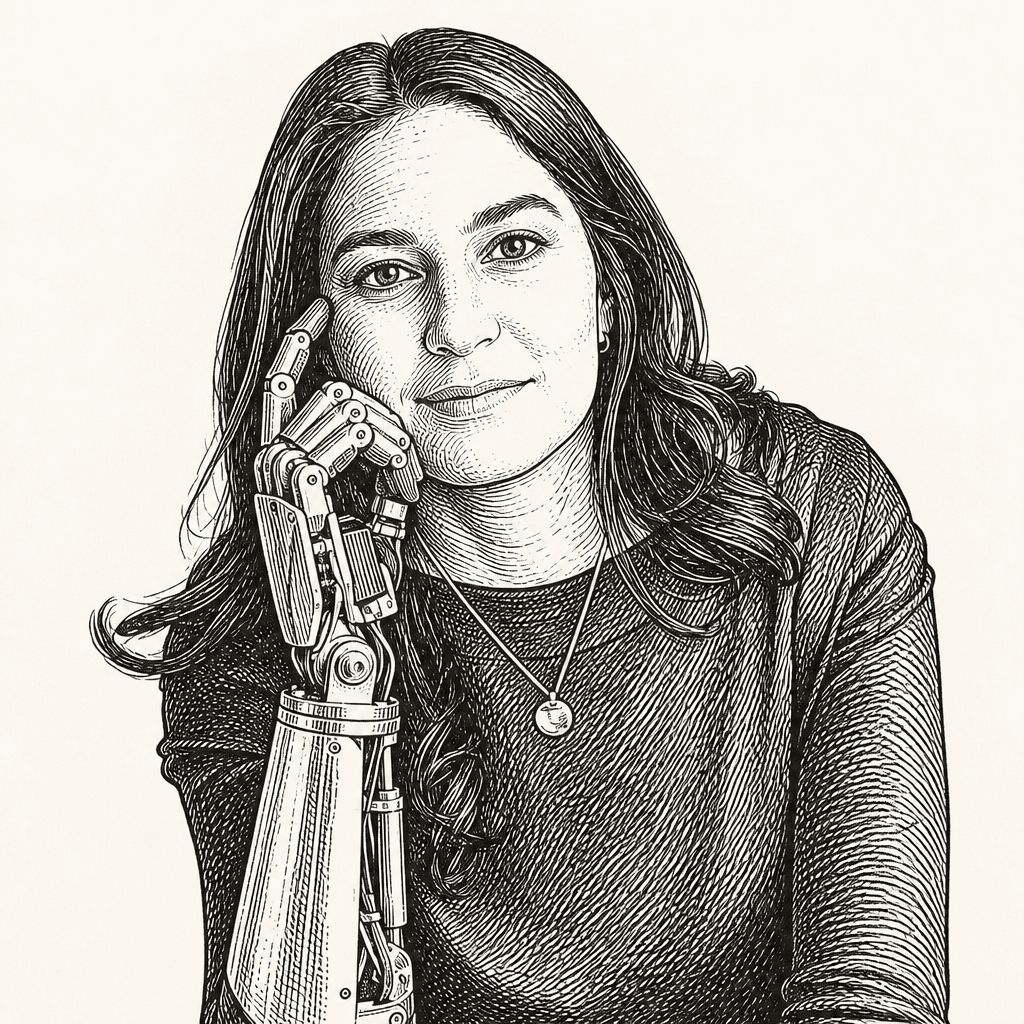
Joanna Stern
Joanna Stern is an Emmy-winning technology journalist, founder of New Things, NBC News chief technology analyst, and former Wall Street Journal senior personal technology columnist. She covers consumer technology and AI, and is the author of I Am Not a Robot: My Year Using AI to Do (Almost) Everything.
AI Growth Is Running Into Power, Memory, and Inference Bottlenecks
TBPN’s discussion recast the AI boom around physical and economic bottlenecks — power, cooling, chip scarcity, inference cost and memory — rather than model ambition alone. Mike Isaac, Rowan Trollope and Dean Leitersdorf described an industry where local utilities, low-level inference optimization and fast state management are becoming central constraints, a capacity problem the hosts also saw in the whey protein shortage. Everlane’s reported sale to Shein pointed to a different limit: Hays argued that venture-backed ethical basics struggled against price pressure, brand preference and the demand for sustained growth. Joanna Stern supplied the adoption constraint, arguing from her reporting that AI’s progress will be judged through trust, job anxiety, children’s safety and whether new devices ease or deepen phone dependence.
AI Companions Are Tempting Because They Make Relationships Too Easy
Joanna Stern, author of I Am Not a Robot, argues on Big Technology Podcast that AI’s most plausible near-term role is not as a standalone gadget or replacement professional, but as a second layer on devices, workflows, and relationships people already use. Drawing on a year of trying to put AI into daily life, she says the tools can be genuinely useful in wearables, medical interpretation, and solo work, while chatbot companionship exposes a more troubling risk: systems that are always available, agreeable, and easier than human relationships.
Prediction-Market Scandals Spur Calls for Insider-Trading Rules
Hard Fork’s Kevin Roose and Casey Newton argue that prediction markets have entered a more dangerous phase, with recent scandals showing how liquid event-betting platforms can reward insider knowledge, manipulation and even national-security breaches before regulators have caught up. The episode broadens that concern into a larger question about technologies whose incentives are outrunning public rules, through Joanna Stern’s year-long test of AI in daily life and Rachel Cohn’s reporting from a Brooklyn school trying to resist the commodification of attention.