Sport’s Social Value Depends on Access, Agency, and Power


Sports sociologist Jay Coakley argues that sport does not automatically create belonging, democratic participation or freedom; its effects depend on who gets access, who holds authority and how much control players retain. In a conversation with Aspen Institute Sports & Society Program executive director Tom Farrey, Coakley says commercialized elite sport can narrow participation, normalize top-down power and constrain athlete expression, while informal play offers more room for adaptation and agency. If sport is to connect people across differences, he argues, institutions must deliberately organize for it.
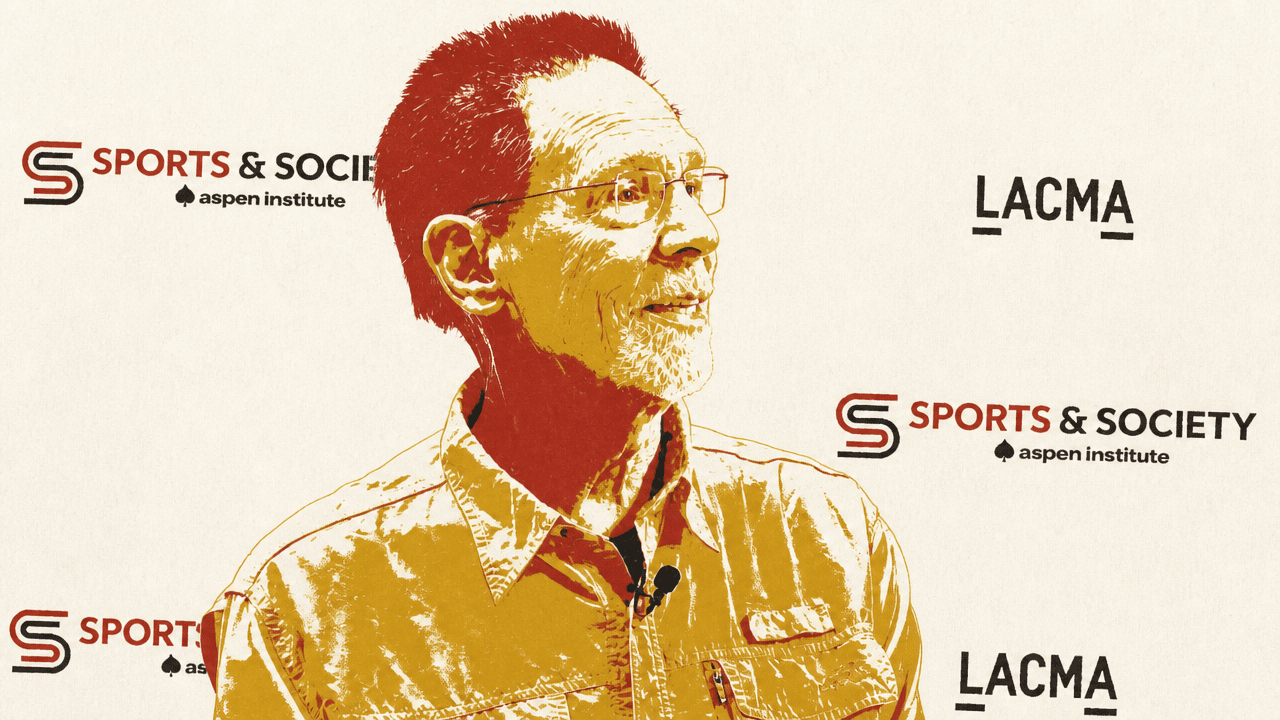
Sport’s social promise depends on deliberate choices
Jay Coakley does not treat sport as inherently connective, democratic, or freeing. Its social effects depend on how it is organized: who can participate, who can afford to attend, who makes decisions, and how much control players retain. The same institution can create common cause, concentrate authority, discourage dissent, or constrain play.
Sport’s capacity for belonging begins with its emotional intensity. Participants and spectators do not arrive as blank strangers: their affiliations, responses, and identities are often already visible. A person’s reaction to a play, a loss, a rival, or a moment of collective suspense can reveal more than conventional first encounters tend to reveal. People are, as Coakley puts it, “speaking from the whole body in a sense.”
That openness can create immediate emotional connections. Sport gives people a shared object of attention and a setting in which excitement, disappointment, anger, loyalty, and admiration disclose something about the people experiencing them. For players, the longer-term effects of those relationships are better understood. For spectators, Coakley says, much less is known. Seasons bring people back to the same venues, often to the same seats beside the same people, and those repeated encounters may develop into relationships beyond the event.
So that sets the stage for at least temporary and emotional connections. Now the extent to which those connections go beyond temporary and emotional is something that we don't know enough about.
Tom Farrey raises sport’s appeal as a shared space in a society marked by isolation, silos, and social bubbles. Coakley agrees that it has the potential to bring people together, but he sees that potential being weakened even inside venues built for collective experience. He imagines a cartoon of 80,000 people at an event, all looking at phones rather than engaging with those seated beside them. Physical proximity does not by itself produce face-to-face exchange, and face-to-face connection is different from connecting online.


The more consequential question is access. Coakley argues that broad participation matters if sport is to help people develop a wider range of relationships. At the spectator level, however, elite sport may be moving toward a narrower public. Owners and venue developers, he says, have incentives to build smaller facilities, charge more for tickets, and target wealthier customers able to pay for admission, concessions, parking, and everything else attached to attending a game.
The result, in his view, would not merely be a smaller audience. It would reduce opportunities for connections across racial, ethnic, and social-class lines. Sport cannot be assumed to generate belonging simply because people gather around it.
The intentionality has to be informed by goals for what you want the connections to be.
For Coakley, intentionality means deciding how broad those connections should be, what differences an institution intends to incorporate, and whether inclusion is actually part of its strategy. If sport is to contribute to a society that works across difference, he says, those choices have to be made rather than left to the commercial or competitive logic of the institution.
Elite sport teaches a visible lesson about who gets to decide
In informal games, power can be embedded in relationships and used to keep people involved. Jay Coakley describes rules in pickup sport as constraints that participants can adapt to sustain the game. A pitcher may move closer to give a weaker batter a chance to make contact, for example, not because the formal rules require it but because everyone wants opportunities to participate.
That arrangement changes as sport becomes organized, commercialized, and attached to serious competitive stakes. Power becomes formal and conspicuous: coaches have authority over players; managers have authority over coaches and players; owners have authority over professional organizations built on an ownership model. Athletes understand who controls the conditions of their work, Coakley says, and that knowledge shapes their behavior, the issues they raise publicly, and even how they deal with journalists.
The athletes are sensitive to that, and so when it comes to what I would call athlete activism, they have to think twice before they make a public statement about a particular social or cultural issue that is contentious or potentially divisive.
Coakley points to Colin Kaepernick’s criticism of police violence against Black people in particular neighborhoods and the kneeling protests joined by other athletes. He describes the power structure responding quickly, banning the protest, and Kaepernick being suspended and never returning to the league. For Coakley, that was a major career disruption connected to activism—and an outcome other athletes remember when deciding whether to speak on contentious issues.
He says women in the WNBA and on the national soccer team have had a somewhat broader sense of permission to raise public issues, though he sees the stakes as lower than in many men’s sports. Black women athletes who speak out, he adds, can face pushback that reaches beyond a career into ordinary life. Coakley recalls former Black women athletes saying they thought “three times” before making a potentially contentious statement because they did not want to spend the rest of a season dealing with the consequences.
Spectators see this hierarchy unfold in public. They see coaches issue instructions, players expected to follow them, and organizations operating through ranked roles. Coakley contrasts this with what he calls a more “vertical” operation of power: one in which leaders seek feedback from participants and involve them in decisions even while retaining final responsibility. What elite sport tends to display instead is hierarchy, with communication flowing from the top down rather than from the bottom up.
Tom Farrey asks whether sport therefore provides a model for organizing a broad and messy society with competing interests. Coakley does not suggest that companies consciously copy team structures. The effect is more informal. Watching sport can reaffirm a hierarchical approach to authority and top-down communication, he says. Because sport is a respected American institution, that arrangement can acquire legitimacy beyond the field.
The public visibility of sport does not mean the public sees every important exercise of power. Fans can observe coaches, players, and owners, but they do not sit at the table where media companies negotiate coverage rights, payments, and mergers. They encounter those conflicts through news reports, recognize that power is being exercised, and may still feel powerless to challenge it.
Coakley contrasts that relative passivity with European club settings, including FC Barcelona, where organized supporters can voice political and club-related positions. If an owner makes a bad deal, coordinated fans in prominent seats can make their response impossible to miss in the stadium and on television—unless media coverage removes it. Sport can make power visible, but players and spectators need structures through which they can contest it.
The visibility of elite sport also includes its financial rewards. Coakley says athlete compensation has become much more socially significant over the past 70 years. When he played college basketball and received what he calls a token invitation to try out for Denver’s team, average salaries were between $12,000 and $15,000, roughly comparable to what his father earned. Graduate school could plausibly offer as much or more.
That scale bears little resemblance to current contracts. Discussing Shohei Ohtani’s deal, Coakley initially says “800,000 or 900,000 dollars,” then corrects himself to $900 million. The number is so far outside his own experience that it belongs, he says, to a “dream world.”
Tom Farrey asks whether highly visible athlete pay helps justify the compensation of CEOs, university presidents, and other leaders. Coakley answers, “Oh yeah, definitely.” He sees extreme sports pay as part of the social backdrop against which compensation elsewhere is judged.
He also refers to the NCAA considering a compensation limit tied to four years of tuition and expenses. What strikes him is that he had not previously heard coaches’ or athletes’ pay invoked in that kind of decision-making context. In his account, sports compensation has become conspicuous enough to serve as a reference point outside sport itself.
Play becomes less free when organization takes over movement
For Jay Coakley, freedom in sport is tied first to movement under one’s own control. He begins with young children, roughly from age two to seven, discovering their bodies, taking on physical challenges, and mastering them. The smile after a child accomplishes a new movement reflects both achievement and freedom. He sees the same joy when a child leaves the confines of a playpen and can move around a house without those boundaries.
Informal neighborhood games preserve much of that freedom. They have rules, but the rules remain flexible and responsive to the people playing. In Coakley’s pickup-baseball example, a pitcher moves closer rather than striking out a weaker batter, allowing the batter to hit and fielders to get the experience they want. The game is organized around movement, involvement, and the continuation of play rather than a rigid pursuit of outcome.
Formal organization constricts that freedom, Coakley says. Once sports become more organized, players have less room for spontaneous experimentation and control over how they move. Coaching can either deepen that constraint or resist it. Especially in youth sport, he argues, coaches can allow players the freedom needed to continue exploring their bodies through movement that is spontaneous and partly under their own control.
Tom Farrey asks how sport can produce more agency, ownership, and expression. Coakley answers through Mihaly Csikszentmihalyi’s concept of flow. Flow arises when an athlete’s ability matches the challenge being faced: the task demands the athlete’s full capability without exceeding it.
When the abilities of an athlete match the challenge that that athlete is facing, so that they have to use their abilities to the max, they oftentimes enter a state of flow, where they become one with the activity.
Coakley describes skiing on a slope that matches his skills exactly. He must be fully alert to make it down safely, yet feels melded with the mountain and his skis, with no meaningful separation between himself and the activity. In team sports, he says, a similar experience can emerge when a player understands teammates, opponents, the ball, and the unfolding situation so intuitively that they simply know where to be.
That is a peak experience of joy and freedom. It does not come from escaping all constraints; it comes from the alignment of skill, challenge, and action. People who have experienced it seek it again, Coakley says. Mountain climbers do the same, sometimes pursuing a challenge that exceeds their abilities and getting into trouble while seeking that feeling of freedom.