Communal Singing Reframes Illness as a Shared Practice of Care
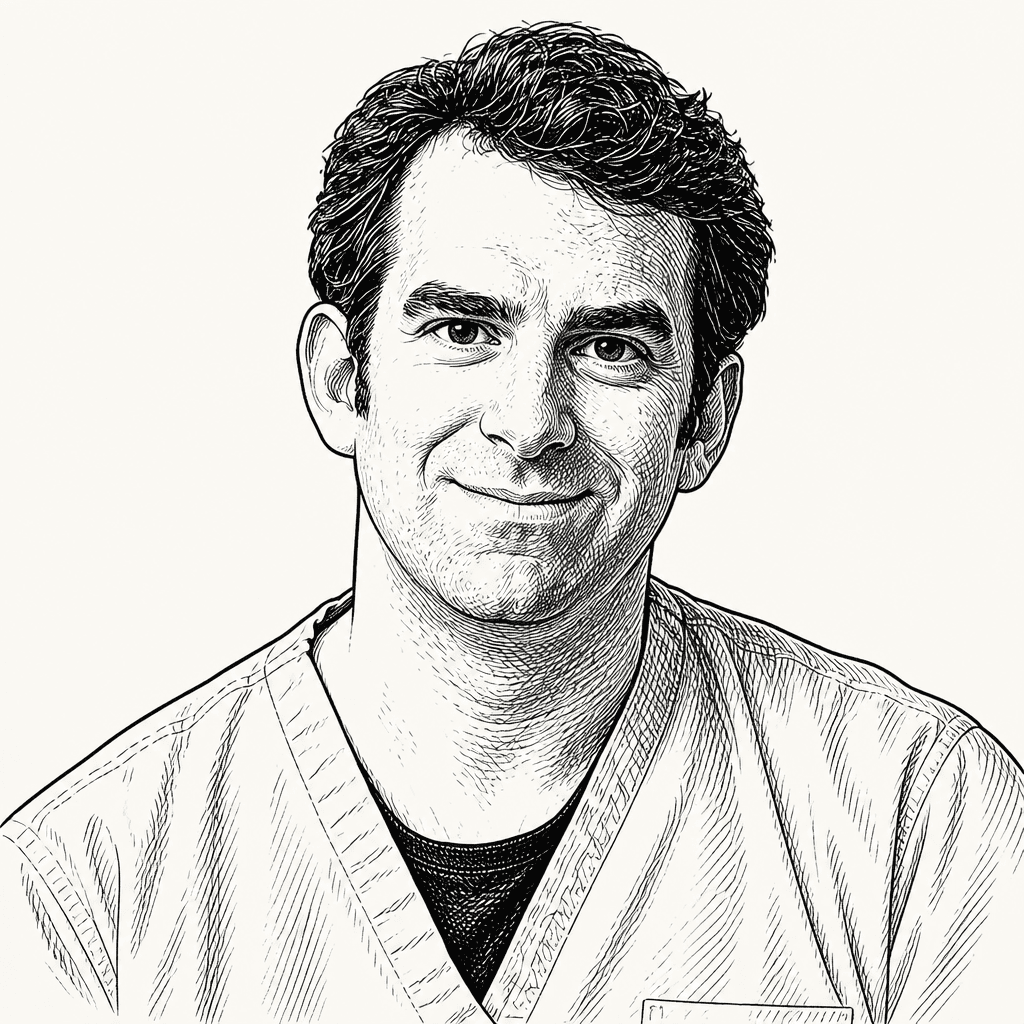
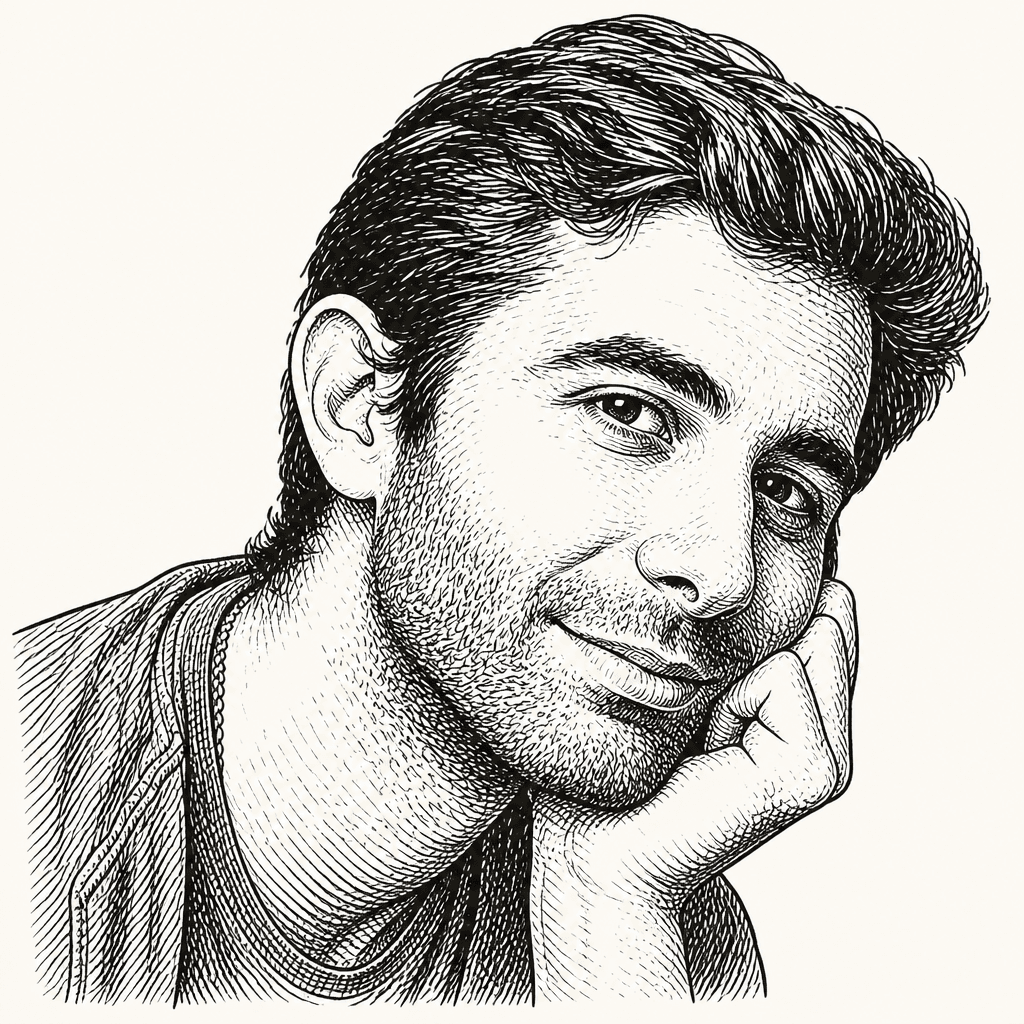
At Aspen Ideas: Health, emergency physician and musician Jeremy Faust joined Patrick and Daniel Lazour to make the case behind their cancer musical Night Side Songs: communal singing can turn private illness into shared care. The Lazours argue that patients, caregivers, and clinicians do not need forced optimism or perfect language so much as practices that help them remain present with one another through treatment, grief, remission, and ordinary life.
Communal singing becomes a form of care, not a performance
Jeremy Faust framed the session around a simple cultural deficit: people do not sing together very much. Faust, an emergency physician, writer, musician, and choral conductor, contrasted that with World Cup crowds whose songs extend beyond national anthems into a continuing communal practice. He described group singing as a “neuro hack,” saying that singing together releases oxytocin, but his larger point was social rather than technical. Singing together, in his framing, is something a culture can practice more often than it does.
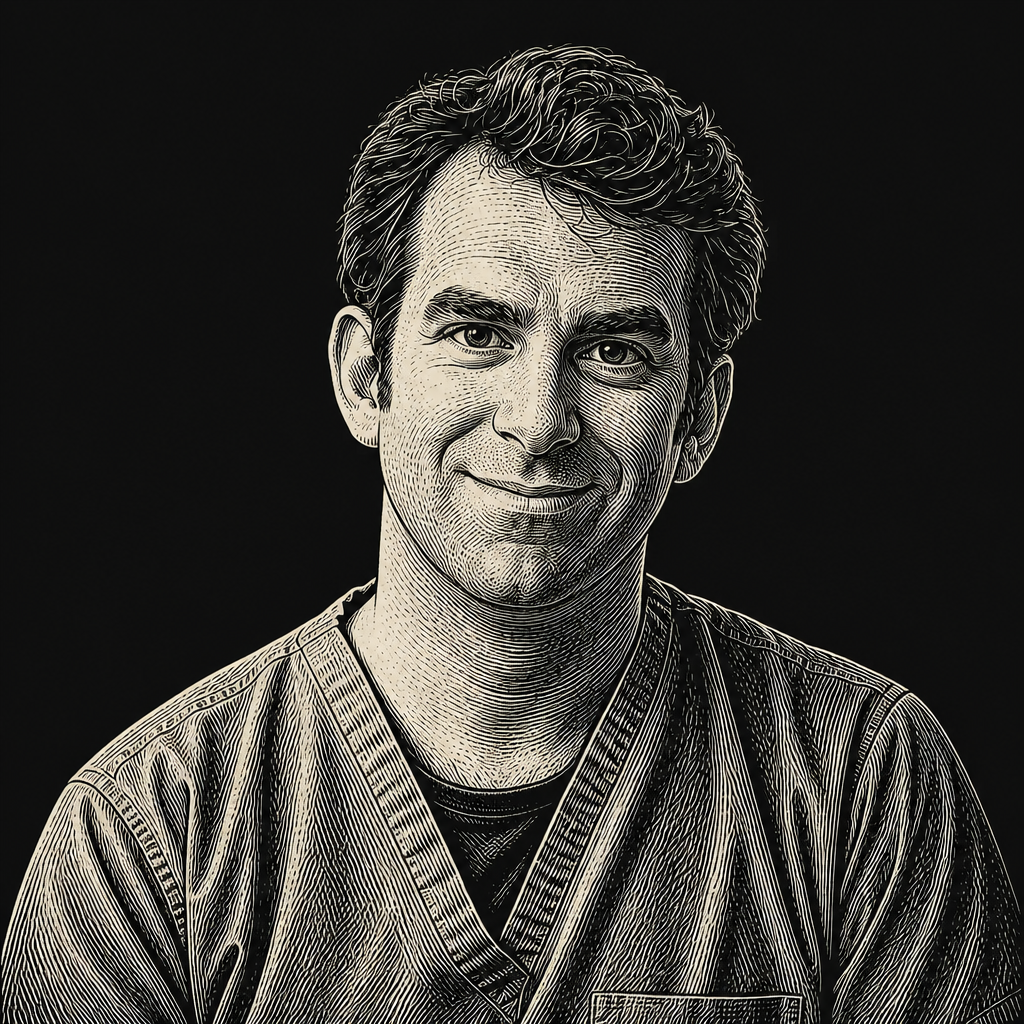
That premise is central to what Patrick Lazour and Daniel Lazour built in Night Side Songs, their musical about cancer, treatment, caregiving, grief, and ordinary time. The show, which premiered at Lincoln Center Theater, does not ask the audience only to observe illness from a safe distance. It invites them to sing. In Aspen, the same structure was put into practice: the audience rehearsed tones, learned refrains, and became, in Faust’s phrase, the “Aspen Ideas Festival Chorale.”
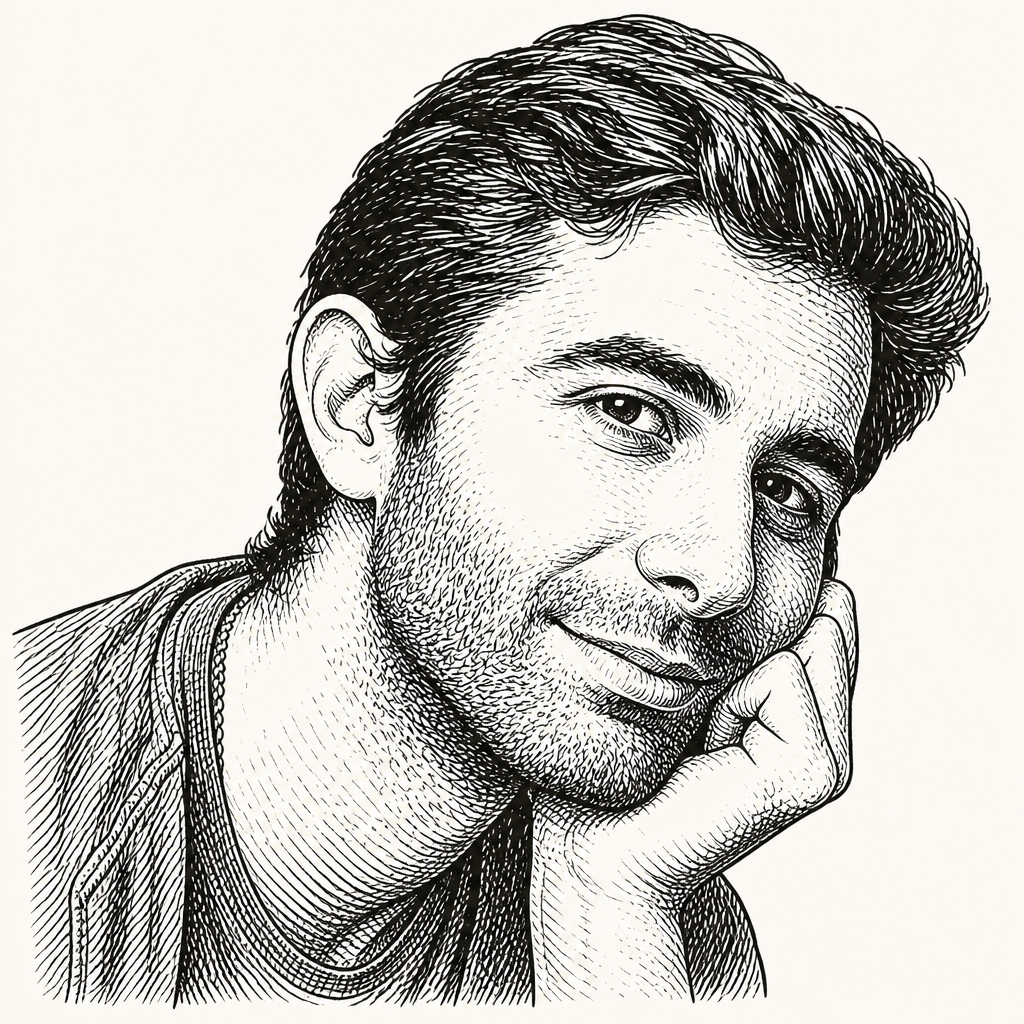

The participation was deliberately modest. No one was asked to become a trained singer, to perform grief correctly, or to manufacture an uplifting emotional response. The audience’s job was to lend a voice. Patrick later described the show’s mission in terms of making private bedside conversations more shared: conversations that usually happen “in hushed tones by the bedside” should be brought into the open, because many people are having versions of the same conversation, just not together.
Bring it out into the open. These conversations you'd have in hushed tones by the bedside, we want to bring it out into the open, since we're all having them.
Faust connected that structure to a distinction he found important as a clinician. He invoked Barbara Ehrenreich’s resistance to the demand that sick people remain hopeful, cheerful, or personally responsible for their outcomes through optimism. Faust’s reading of Night Side Songs was that patients do not need coerced hope. They need community: someone to get them to treatment, stay with them, and look after them afterward.
Patrick said that was precisely what one of their mentors, Susan Block, helped them articulate. Block, whom he described as one of the founders of the palliative care movement and a real mentor during the writing process, asked what they wanted people to take away from the show. Patrick’s answer was plain: “We get through it together.” Illness “sucks,” he said, and contains many ups and downs, but the constant is the presence of loved ones and community.
The first chemotherapy musical showed what the subject required
The Lazours did not begin with a participatory theater piece. Their first idea was a more conventional musical about the early chemotherapy trials at the NIH in the 1960s. Patrick said they were fascinated by Emil Frei and Emil Freireich, whom he referred to as inventors of “sort of modern chemotherapy,” and by the story of mavericks trying to change the world. They had just written a show about the Egyptian Revolution of 2011, and this seemed, at first, like another story about radical actors in history.
That early version followed the structure Daniel called a traditional musical: song, scene, song, scene, staged as a “book musical” on a proscenium. They wrote about 20 minutes and presented it to friends. The response was polite but clarifying. People said the work was good, Patrick recalled, and then began talking about their own experiences with illness. The presentation had become permission for a different kind of conversation.
That reaction changed the premise. Patrick said the piece could not simply be something people sat and watched. It had to be an experience, an event, and a musical that made room for audience members to bring their own lives into the room.
Daniel added that the development unfolded over years — he noted that musical theater often has a seven-to-ten-year gestation period — and that their writing was shaped by bedside experiences with their grandmother and uncle, who died of cancer in quick succession. Because those relatives were not nuclear family, he said, the brothers could hold both involvement and a degree of objectivity: close enough to participate in caregiving, but also able to observe.
The final form matched that intimacy. Night Side Songs premiered in a space Daniel described as in the round, with the audience surrounding the players. The Lazours invited the audience to sing along, even though Daniel said they “sort of hate participatory theater” and assumed many people share that reaction. The challenge was to make participation feel neither manipulative nor embarrassing. The aim was to give people something they could carry out of the theater.
One audience member gave Daniel a formulation that stayed with him: the show contained songs about “a moment in life that no one has written songs about.” That “moment” was not an extreme exception but a common passage: diagnosis, treatment, remission, caregiving, dying, and the relationships that reorganize around them.
Faust described this as one of the show’s strongest choices. Much art, he said, is about a regular person going through something extraordinary. Night Side Songs is about a regular person going through a regular thing. Cancer and chemotherapy, in his formulation, are not outside life. They are part of life.
Yasmine is an everyperson moving through ordinary catastrophe
The central character in Night Side Songs is Yasmine Holly. Patrick Lazour described her through the theatrical idea of the everyman, revised as an “every person” who moves through cancer diagnosis, treatment, and “onwards” — what he called the illness journey. The show is set in Worcester, Massachusetts, where the Lazours are from.
Daniel Lazour connected the dramatic method to Thornton Wilder’s Our Town. He cited a David Cromer production of the play as an influence, especially its emphasis on ordinariness. The lesson the Lazours took from it was a theater principle: the more specific the detail, the more universal the scene can become. Wilder’s world, Daniel said, is “so cosmic and so beautiful,” but “could not be smaller.”
Patrick described a related artistic instinct: finding “the strangeness in the ordinary.” He did not mean making ordinary life grotesque or alien for its own sake. He meant skewing ordinary things just enough that an audience can see them newly.
One example is “My Stuff,” a song sung by Yasmine’s mother from beyond the grave. Patrick described the mother standing with something like an Amazon box and singing an aria about her belongings. The staging, which he credited to director Taibi Magar, made the Amazon box and its contents strange enough to think about. Daniel called this part of the show’s “distancing quality.” Sometimes the audience is close to Yasmine. Sometimes it is pushed toward its own memories and life.
Daniel described the whole show as “an experiment in proximity.” At times, the audience is with Yasmine directly. At other times, the show creates distance so viewers can meditate on themselves, their own families, and their own possible movement between wellness and illness.
Faust, speaking as a clinician, recognized the show’s attention to the way illness clarifies relationships. In the emergency department, he said, he often asks patients, “Who is with you today?” rather than assuming a formal relationship. Asking “What’s your relation?” can quickly become awkward: “We’re not related,” “No, it’s my daughter,” “I’m the ex,” “I’m the partner,” “What am I?” Medical crisis, in Faust’s experience, often makes relationships newly legible. Exes become fiancés, partners, or spouses.
The Lazours had found the same thing in the show. Patrick recalled a scene in which a marriage proposal arrives abruptly. An audience member who had been through illness told them it might seem strange to people who had not, but for him and those around him it felt true. In such circumstances, people seize what they have.
“Let’s Go Walking” gives distraction a place in care
The first song performed, “Let’s Go Walking,” comes during a relatively good day in Yasmine’s treatment. Her mother has helped reconnect her with a man from her past. At first, Daniel said, Yasmine goes along “through gritted teeth,” but the relationship eventually becomes real. In this song, she is genuinely happy to see him and, more importantly, genuinely happy to be feeling good.
The audience was taught the refrain “I appreciate your voice.” Around it, the song offers ordinary invitations: walking in the garden, in the park, in daylight and darkness; walking to a tree with initials in the bark; talking about someone named Neal and a birthday meal gone wrong; saying things one is too afraid to say after “a really shitty day.” The recurring reason is simple: “you distract me.”
The line does not make distraction into a cure or a solution. It places distraction among the useful things people can offer each other when illness is present: walking, talking, laughing, listening, and letting a frightening day contain something besides fear.
Faust saw the clinical truth in that arrangement. Terrifying moments do not only produce medical decisions. They also reveal who sits in the room, who accompanies someone outside, who can make the sick person laugh, and who is trusted enough to distract them.
The refrain also gave the Aspen audience a direct role in the song. The people in the room were not simply told that voice and presence matter; they supplied a small version of both.
“When You” compresses remission into accumulated ordinary life
A second song, “When You,” comes after Yasmine is told she is in remission. Patrick Lazour described it as “eight years of remission in a five minute song.” Even at that length, he said, it is inevitably reductive. Its structure depends on accumulation: one memory after another, many of them small, comic, bodily, domestic, or embarrassing.
Patrick explained that the song uses a different kind of communal singing from “Let’s Go Walking.” He teaches a simple melody and then the lyrics move forward almost karaoke-style. He compared the experience to hymn singing: if someone knows the tune, they can piece together later verses even if they do not know all the words. The show is not religious, he said, but it borrows some mechanics from forms of group song.
The projected lyrics at Aspen made clear how the song locates meaning in minute particulars. The recurring couplet was simple enough for the room to keep carrying:
When you put your hand inside my hand / What you said or did is of no consequence.
Other projected lines moved through an iPhone waking people at noon, McDonald’s toys, charades, a cat taken to the vet, Nintendo 64, a cracked window by the bed, picking a pimple, treating toe fungus, sending sexual pictures, modeling nude for a painting class, offending a best friend, and failing to pull off a fashion trend. These were not narrated as heroic milestones. They were presented as the ordinary material out of which the song makes time feel lived.
Patrick described the song’s relationship to audience memory through the “law of large numbers.” Not every line will belong to every listener. But across enough details, one or two may catch on something personal. The song is about Yasmine’s eight years of remission, yet it is also designed to call up the audience’s own memories of being with people under pressure.
Daniel Lazour said that from the theater’s catwalk he could watch different couples and families react to different lines on different nights. Those little moments were part of the show’s purpose. By that point, the Lazours hoped the audience felt comfortable enough not only to sing but to be with one another.
Faust read the song as a meditation on what time is for. In medicine, “more time” can become a clinical phrase, but the show asks what kind of life the time contains. He cited a line in the show in which someone says they are trying to give Yasmine more time, and another voice responds that they want more time “to live.” More time, in Faust’s reading, need not mean time for grand achievement. It may mean time to be with people one cares about.
That distinction matters in treatment decisions. Faust described arguments among clinicians about whether a treatment that extends life by six months is worth it. A colleague once answered that if one’s children are eight and four, six months is a huge part of their memory. In that case, six months can matter enormously. In another case, Faust said, extending life may not be right if the patient says the life being extended is not what they call living.
The song does not resolve the problem into a doctrine for or against treatment. It keeps the question concrete: what is time, what is life, what is value, and who gets to define it?
The chemotherapy history remains ethically complicated
The historical chemotherapy material did not disappear from Night Side Songs. It became part of the show’s wider frame. Patrick Lazour described “visions” between sections of Yasmine’s story: small stories or skits about cancer throughout time. He said these were influenced by Siddhartha Mukherjee’s The Emperor of All Maladies and by the sense that cancer has existed across millennia.
Daniel Lazour tied those visions back to the early chemotherapy trials that first drew the Lazours to the subject. He said the ethics of chemotherapy were fiercely debated when it emerged at the NIH in the 1960s. One argument was that children with leukemia should be kept comfortable and ushered toward death gently. Another, made by the mavericks, was that doctors should in effect poison them in hopes of survival.
Daniel said the show tries to give a sense that the doctors arguing for and against chemotherapy may each have had a point, especially before the outcome was known. If the trials had not succeeded, the objections would not look foolish in retrospect.
Faust had earlier named the ethical tension too, while also emphasizing the stakes of research. He said chemotherapy trials are how childhood ALL moved from being deadly to routinely curable, and said every patient treated in those hospitals was also in a trial. In Faust’s telling, the trials were ethically necessary to the progress that followed. Daniel’s point sat beside that rather than simply negating it: before success is known, the ethical debate is not a formality.
This is part of the reason the show’s material is not confined to the feelings of one patient. The intimate story of Yasmine sits inside medical history, trial ethics, institutional decisions, and changing definitions of cure. Daniel later asked directly: What do we mean by cure, when everyone is given only a certain amount of time?
Caregiving is presence without mastery
The final song performed, “I Will Check In,” is sung in the show by Frank, one of the caregivers. Its refrain is a statement of limited competence and durable commitment:
I won't know what to say but I will check in on you every day.
The verses name the physical and emotional resistance that can accompany care: tensing when picking up the phone, worrying that one’s ugly crying will make the patient cry, not wanting to go to the grocery store or put on a shoe, being scared to enter the room where the sick person is sleeping and breathing hard.
Jeremy Faust said that when he first read the line in the script, before watching the show, his brain supplied a different version: “I won’t know what to say, I will check in on you almost every day.” The misreading led him to a related point. Caregivers are often asked a great deal, and sometimes “almost every day” is enough. Caregivers need grace too. Patients may not always want someone there every day, and the people around them need permission not to be perfect.
Patrick Lazour said the end of the show speaks to a related need from the patient’s side: the wish to know that loved ones will be okay. During palliative care, he said, there can be a reversal in which the person dying wants reassurance for the sake of those who remain.
Faust called caregivers “the second patient”: the people around the patient who are grieving or helping and often do not care for themselves. In the emergency department, he said, he has seen caregivers ignore their own symptoms because the person they accompany is the one “really sick.” He gave the example of telling someone with a week of chest pain to register too: the hospital can take care of the mother while also evaluating the caregiver.
Daniel Lazour connected the song to his own fear at the bedside. The number of times he was scared to enter the room, he said, felt innumerable. The Lazours asked what comfort they could honestly offer, especially as young people. Their answer was modest: being present can be enough.
That modesty gives the refrain its force. The caregiver does not promise wisdom, perfect emotional control, or the right words. He promises return. Care, as the song defines it, includes showing up without pretending to have mastered the fear.
Illness is public without becoming solemn
Daniel Lazour cautioned that Night Side Songs should not be mistaken for an unrelentingly heavy experience. It is funny, he said, and contains many laughs. Patrick Lazour acknowledged that the material is heavy on one level, but Faust said he did not feel burdened watching it, even as someone whose work in the ER already brings him close to suffering. The show is funny, light, human, and dignified, Faust said, without shoving anything under the rug.
That tonal balance is part of how the Lazours described the work. Illness is often hidden, whispered around, or treated as something to keep below the surface. Patrick said the show’s mission was to bring those hushed bedside conversations into the open because people are already having them, just separately.
The discussion’s intellectual frame included Susan Sontag. Faust said that when he began watching the show, he recognized the opening line as Sontag before the speaker named her. He recommended Illness as Metaphor and AIDS and Its Metaphors, describing the former as dealing with cancer and tuberculosis and the latter as written around the AIDS crisis. Daniel then recited the Sontag language that gives the show its title and terrain.
Illness is the night side of life. A more onerous citizenship. But we all hold passport to the night side of life and the day side of life.
Faust drew out the implication as he understood it: whether people like it or not, they are obliged to be part of both the kingdom of the well and the kingdom of the sick. He also described a corollary of the Sontag frame: people who are well cannot fully imagine what it is to be unwell, and people who are unwell cannot fully imagine what it is to be well. Remission complicates that boundary.
The show’s structure, as the Lazours described it, moves between Yasmine’s contemporary story, historical visions of cancer, songs that invite audience memory, and direct communal singing. Faust’s Sontag frame sharpened what is at stake in that movement: illness is not only a medical state, and the language around it can either isolate people or help them recognize a shared condition.
Longevity without art leaves the wrong question unanswered
An audience question pushed the discussion toward longevity culture: the desire, especially among “super cyber bros,” not merely to live well but to never die. Patrick Lazour answered bluntly that he was “not a fan” of that tendency. More substantively, he said the pursuit of living forever seemed symptomatic of a society that cannot fathom death or mortality. Talk of consciousness entering the cloud, he suggested, is another way of denying what will happen regardless of preference.
Patrick said Night Side Songs is not trying to provide a mind-blowing answer to the meaning of life, or even necessarily to make people feel better about death. Its offer is smaller: a framework, some lines, and some music to take away.
Daniel Lazour said director Taibi Magar spoke often about building the show with artists who had “a sense of the end.” He admitted the phrase is hard to define — who truly has such a sense? — but said it guided the assembly of the creative team. They needed people willing to go to darker places without becoming pseudo-spiritual, and willing to be heartfelt without fear or evasion.
Patrick added that longevity fantasies can also deny grief. Many people have grief, he said, and part of the show’s work is to shepherd people through it by placing onstage something they have experienced but have not seen represented.
Faust connected the longevity question to his own experience as a physician and musician. He said he had discussed related issues with Zeke Emanuel, whose views on longevity and mortality he described as having had a “phenomenally interesting arc.” Faust allowed that people may be able to biohack their way to a few more years, perhaps many. But he paraphrased a Mark Twain line: if doctors become clever enough and people do everything doctors say, they may live forever — and it will feel like it.
For Faust, the corollary is that the arts are among the things that make longevity worth wanting. He described an “arts embargo” he imposed on himself in 2020, when COVID first arrived in his ER. Without deciding to, he stopped listening to and playing music. Only after seeing the first public vaccine injection on television did he allow himself to search YouTube for Beethoven’s Fourth Piano Concerto and watch a performance. He realized how long he had shut music out. His lesson was not anti-medicine; he said, in effect, thank God for the vaccine. But medicine’s success raises a further question: what should people do with the life preserved?
His answer was to buy a ticket, go to something, and do the things that make longevity worthwhile in the first place. Patrick made a related plea for live performance. Established shows have value, he said, but he urged people also to attend new work that engages large ideas. In a culture of phones and AI, he said, theater is one of the few remaining places where people are required to sit, pay attention, and be present. It is a ritual — “one of the final rituals.”
Writing about death changed the Lazours’ own conversations
A final audience question asked how writing Night Side Songs affected the Lazours’ thinking about the inevitable deaths of their parents, each other, and themselves. Patrick Lazour answered that it definitely changed conversations with their parents. It urged more honest and measured discussion about end-of-life wishes, though he stressed how difficult those conversations remain.
The show also bridged a gap because parts of it are true to family members and include characters drawn from the Lazours’ lives. That made it easier, in some ways, to open conversations. But Patrick distinguished between watching the show and working on it. Faust had said the show did not feel heavy to watch. Patrick and Daniel Lazour said it was heavy to make.
Part of that weight came from the interviews behind the show. Patrick said the work was based in part on interviews with friends and others, including people who died after those interviews. Because the show took years to develop, the brothers were repeatedly returning to mortality, grief, and the question of when their own moment would arrive. There was sadness in that, Patrick said.
Yet he also said he hopes the show has taught him things that will help when that moment comes. The remark reverses the usual assumption that artists simply pour what they know into a work. Here, the work became a teacher to its makers.
Faust ended with an action item: return to making art as part of life, double down on it, or get as close to it as possible. The medical innovations discussed at Aspen Ideas: Health — the ones Faust said he sees every day in the ER — matter because they can preserve and extend life. The question Night Side Songs keeps asking is what practices make that life livable together.