Employee Ownership Requires Workplace Practices, Not Just Equity Grants
 Adria Scharf
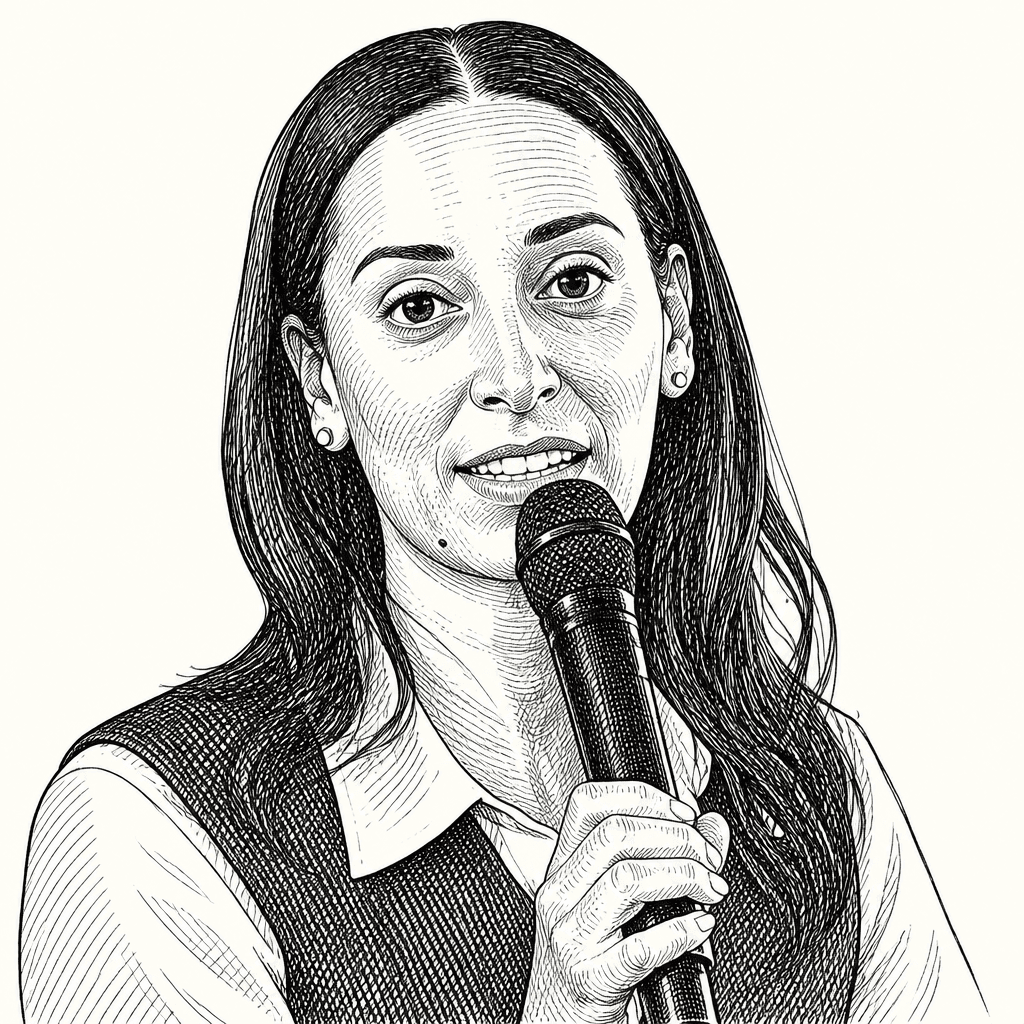 Anna-Lisa Miller
 Evan EdwardsChris Mackin
 Melissa HooverThe Aspen InstituteTuesday, June 9, 202621 min read
At the 2026 Employee Ownership Ideas Forum, Adria Scharf moderated a panel arguing that employee ownership does not produce better jobs or stronger companies simply because workers receive shares or an ownership plan is created. Evan Edwards, Melissa Hoover, Chris Mackin and Anna-Lisa Miller made the case that ownership has to be built into workplace culture through information sharing, job quality, management practice, governance and accountability. Their shared contention was that the field’s business case depends on making ownership credible in daily operations, not treating it as a transaction or communications campaign.
Ownership culture is not an announcement
Employee ownership does not become real for workers simply because a transaction closes or a company tells employees they are owners. The panelists treated ownership culture as the set of operating conditions, management habits, information flows, incentives, and governance practices that determine whether workers have reason to act and trust like owners.
Adria Scharf framed the issue at two levels: culture on the “shop floor” or “office floor” inside worker-owned organizations, and the larger American narrative about ownership, work, business, and economic empowerment. Culture, she noted, had surfaced throughout the 2026 Employee Ownership Ideas Forum, including in discussions of storytelling, the American dream, and worker owners’ accounts of the meaning of ownership.


For Chris Mackin, the question goes back to the beginning of his work in the field. Mackin said he started in employee ownership in 1978 “before there were ESOPs,” and wrote a Harvard thesis titled “The Social Psychology of Ownership,” a case study of a democratically owned firm. His concern then and now is that ownership is too often only partially understood: as compensation, as a benefit plan, or as an investment thesis.
Those understandings are incomplete, he argued, because ownership has an “interior” value structure: the rights and responsibilities of ownership, and the risks and rewards of ownership. A healthy ownership culture is not simply one where employees receive financial upside. It is one where the organization helps people understand and balance those categories. A culture weighted toward rights without responsibilities, or rewards without risks, is unstable. The task is to get managers and rank-and-file employees into real conversation about what those balances mean.
Anna-Lisa Miller described Ownership Works as operating in a distinct lane from ESOPs, cooperatives, employee ownership trusts, and similar structures. The organization works primarily with companies unlikely to adopt those established forms, including through private equity firms that commit to sharing ownership broadly in companies they acquire. In many of those contexts, equity participation has historically been limited to management teams; Ownership Works pushes it “all the way down to the front line.”
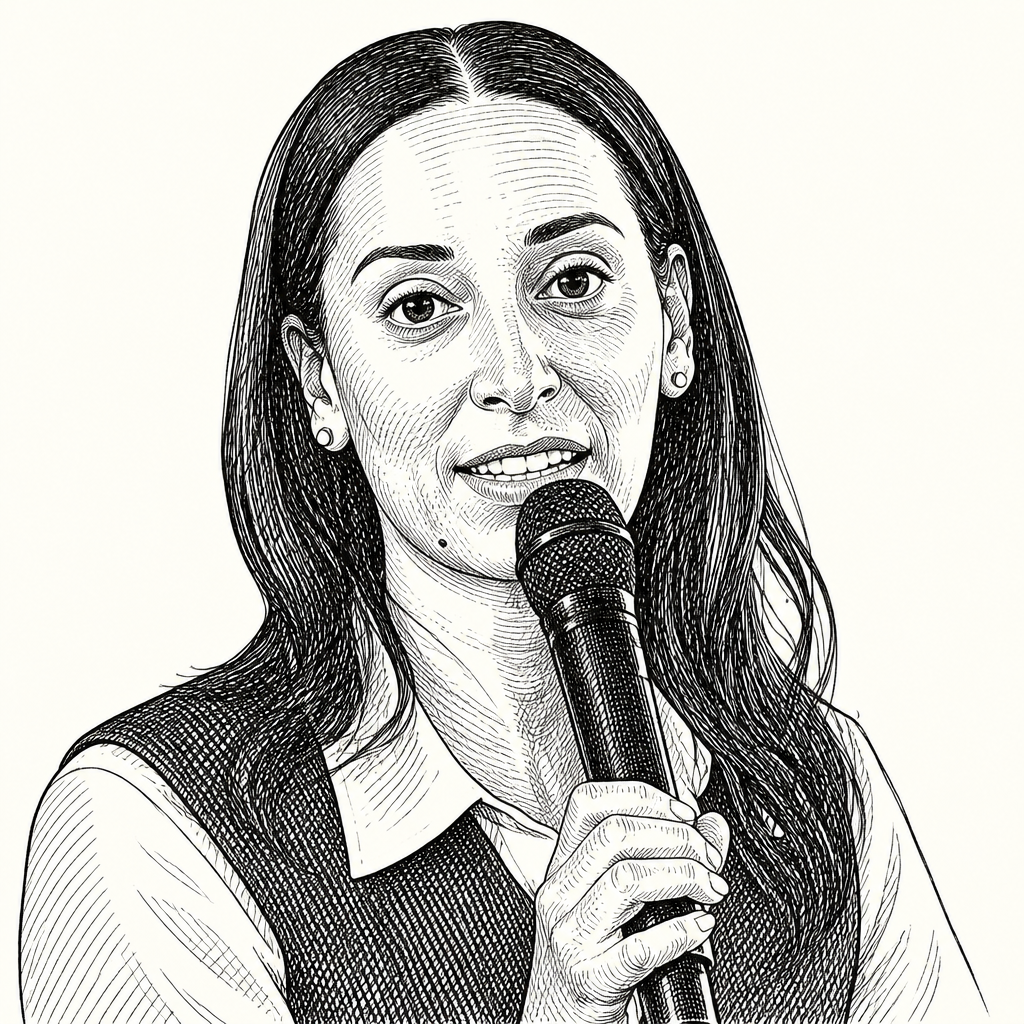

Miller’s definition of ownership culture is operational rather than symbolic. Employees need to understand the business and how they contribute to it. They need to feel that their input and ideas are valued, and to see that reflected in company decisions. They need to believe the company cares about their well-being. And ownership values and behaviors need to be embedded in day-to-day operations and business processes.
That third point matters because Miller does not think external motivation alone can produce the behavioral shift advocates often expect. Compensation and equity participation can matter, but they do not by themselves create intrinsic motivation. Employees need some basis for believing the company actually cares about them.
Evan Edwards put the same point through the familiar line that “culture eats strategy for breakfast.” Project Equity’s work is aimed at wealth-building for low- and moderate-income workers and communities of color, with a broader goal of normalizing and scaling employee ownership. In the workplace itself, Edwards said, culture is inseparable from whether workers feel valued, want to stay, and want to be part of the enterprise.
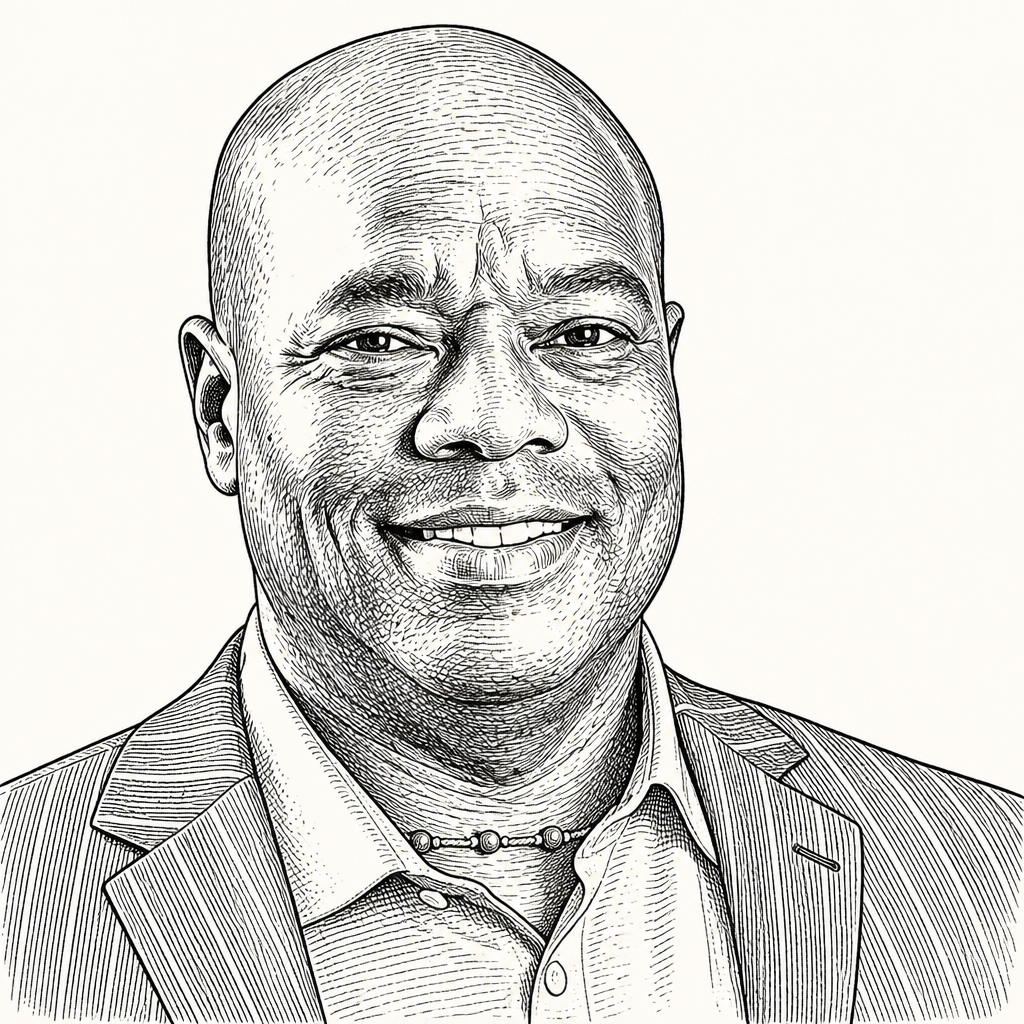
Melissa Hoover brought the issue back to low- and moderate-wage work. Apis & Heritage invests in companies in essential industries and transitions ownership to 100% S-corp ESOPs under its current fund model. Hoover’s role, as she describes it to workers inside portfolio companies, is “to make their jobs better.” That priority shows up in due diligence, plan design, post-transaction support, and the firm’s internal operations.


Hoover defined culture as “what you say, what you believe, what you value, what you do, what your space looks like,” and invoked the idea associated with Herb Kelleher that culture is what happens when no one is watching. For her, the useful part of that phrase is not the slogan but the focus on habits, reflexes, and unconscious interactions. Ownership culture, in that frame, is not a communications campaign. It is a different pattern of daily behavior.
Workers need the conditions to act like owners
Hoover argued that in the industries Apis & Heritage works in, workers are not automatically excited by employee ownership. Many are afraid and skeptical, especially where they have been underpaid, poorly managed, and exposed to repeated transitions. She situated that skepticism in the broader condition of American workers, citing Gallup figures: 49% of workers say they are struggling in their lives; 31% are engaged at work, meaning nearly 70% report not being engaged; and more than 50% are looking or actively looking for a new job. Hoover said those numbers are likely worse in low- and moderate-wage industries.
The practical question, then, is how ownership becomes meaningful for someone who may not be earning enough to make ends meet day to day. Hoover’s answer begins before ownership culture itself: the conditions for ownership culture have to exist.
Apis & Heritage looks first at job quality. Do jobs meet basic needs? Do workers have opportunities for growth and advancement? Are there channels for employee voice? Hoover distinguished voice from control: the question at this stage is not whether workers make every decision, but whether they can be heard and act as agents in their workplace.
The second condition is employee health and well-being. Are employees well enough to be at work in a healthy and whole way? Does the company have support systems that make that possible?
The third is information sharing. Hoover said workers cannot be told to “think like an owner” if they do not know how the company makes money at a basic level. Information is not an optional supplement to ownership; it is a cornerstone of whether ownership can be understood.
The fourth is leadership commitment. Leaders have to be invested, at some level, in job quality, health and well-being, and information sharing. If leaders are the foundation, Hoover said, managers are where the culture happens. Most people leave jobs because of a bad manager, so middle management is not a peripheral audience for ownership work. It is one of the main places where ownership either becomes credible or collapses.
Hoover’s clearest example was a landscape company. Landscaping is hard physical work, often hot and heavy, with low pay and very high turnover. Workers may leave for 25 cents more per hour, then return for 28 cents more somewhere else. When Apis & Heritage began working with the company, turnover was over 200%, much of it early in employment but with churn throughout.
The company focused on reducing turnover, and Hoover said turnover fell every year during the investment period, eventually dropping well below industry standard. Then the company hit a difficult macroeconomic year. Its work pipeline softened, creating a period when there might not be enough work to cover staffing. The industry-standard response would be immediate layoffs, followed by attempts to rehire when work returned. Hoover described that as expensive and destabilizing: it erodes quality, loses workers, and may not be necessary if work is visible on the other side of the downturn.
The incoming CEO, whom Apis & Heritage had been coaching, took a different view. The company had spent years getting workers to stay. Employees were beginning to understand the ESOP, and their accounts were reaching four figures. Rather than lay people off, the CEO asked whether the company could do something else. He found new work and trained supervisors on how to talk with crews about the slowdown. Workers could sense that work was slowing, and that fear could make them jump. Supervisors needed to explain what a slow period meant, when recovery was expected, and why the company was suddenly doing work such as parking lots.
The company did not lay anyone off, Hoover said. It grew sales in new directions, and employees knew how and why that was happening. The example matters because it ties together systems, people, and processes. The ownership culture was not a poster or a benefits explanation. It was a decision about whether to preserve employment, a managerial practice for explaining business conditions, and a willingness to find work rather than treat labor as immediately disposable.
Evan Edwards described a similar pattern in Project Equity’s client work. The organization begins establishing ownership culture early in its “client journey.” After a business owner has engaged in consultations and advanced to feasibility, Project Equity generally starts involving a small group of the workforce in discussions about what it means to be an employee-owned company.
But Edwards cautioned that sequencing matters. Business owners often want to take the concept of employee ownership directly to their teams. Project Equity tells them “absolutely not,” because doing so too early can frighten workers. The work begins early, but not casually. It is designed to prepare the workforce for what ownership will require.
Project Equity also stays with companies after the transaction through a program called Thrive, for at least two years. The program helps ensure that governance is in place, that teams can read financial statements, and that employees participate in decision-making. Edwards said the point is to make sure that, on the other side of the transaction, the team is able to lead the business.
During the pandemic, he said, some Project Equity clients made workforce-driven decisions to reduce everyone to 60% schedules rather than lay people off, or to diversify products and bring new products online. Those decisions were possible because the ownership culture had been built early enough for workers to understand that they were empowered to shape the company’s survival.
The business case depends on workplace practice
Anna-Lisa Miller was explicit that in Ownership Works’ model, ownership culture is not a soft add-on. It is the conduit through which shared ownership becomes a business case. Investors and business owners may not be moved primarily by social impact arguments; many want to know how broad-based ownership improves company performance, engagement, retention, and operations. But the answer cannot be simply “give people equity.” The answer is the set of practices that make equity meaningful.
Ownership Works organizes those practices into four pillars: share knowledge, share responsibility, show care, and embed ownership into company processes.
| Ownership Works pillar | What it requires in practice |
|---|---|
| Share knowledge | Employees understand company goals and how their work contributes. |
| Share responsibility | Employees have ways to contribute ideas and see them reflected in operations. |
| Show care | The company addresses employee needs and concerns in ways that build trust. |
| Embed in operations | Ownership values and behaviors are built into day-to-day business processes. |
Miller gave several concrete examples. Companies that are not surveying employees on engagement should begin. Ownership Works encourages companies to add ownership-culture questions to engagement surveys, including statements such as “I trust the leadership of my company” and “I believe in the direction of the company.”
Ownership Works also encourages complementary financial wellness programs. Even when ownership grants are free and incremental, with no downside risk to employees, the upside is uncertain, depends on company performance, and may be five years away. Miller framed the practical question as: what do employees need today? Financial coaching and emergency hardship funds can help workers manage immediate shocks while they wait for longer-term ownership value.
The organization’s work with management teams starts with leadership alignment. Miller said Ownership Works recommends a workshop with the management team to get the C-suite aligned on why the ownership program is being launched and what goals it should serve. Those goals should not be limited to EBITDA. They should include operational goals front-line workers can affect and people-and-culture goals such as engagement and turnover.
That alignment is not automatic. A CEO may be enthusiastic about sharing ownership while a CFO remains unconvinced that it is the right investment in the workforce. Miller sees alignment among senior leaders as a precondition for moving consistently.
After launch planning, Ownership Works helps companies build an 18-month post-launch roadmap. The roadmap identifies initiatives under the four pillars: knowledge, responsibility, care, and operating integration. Tactics can include quarterly town halls, visible and accessible goals, scorecards, cascading goals to the front line, and manager training. Ownership Works also maintains an “inspiration gallery” showing what other companies have done, and convenes conferences where companies learn from one another.
Miller reported that among 186 companies that have launched shared ownership programs, where Ownership Works has data, more than 75% have seen improvements in turnover, employee engagement, and safety, the operational metric on which the organization currently has the most data. It hopes to collect more data on customer satisfaction.
The emphasis on measurement returned when Miller addressed companies where worker representation on the board is unlikely. In those cases, she argued for a board-level scorecard that holds management accountable for people and culture metrics as well as financial metrics. Turnover, engagement, and safety should sit alongside financial performance. Boards should press management to conduct root-cause analysis when those indicators are weak, just as they would when financial performance is weak.
That proposal is narrower than workplace democracy, but it is not merely symbolic. It changes what boards ask about and what management must explain. If people metrics are not measured, Miller said, they often do not become part of the accountability system.
The panelists’ models differ, but their operating logic overlapped. Apis & Heritage begins with the conditions of ownership for low- and moderate-wage workers in ESOP transitions. Project Equity begins the cultural work during feasibility and continues after the transaction through post-close support, governance development, financial literacy, and decision participation. Ownership Works, working in shared-ownership programs outside the most common employee-ownership structures, treats culture as the mechanism that connects equity participation to business performance. In each model, the financial structure alone is not expected to carry the whole burden of ownership.
Governance is the hardest unresolved culture question
Chris Mackin accepted the importance of work design, training, information, and management systems, but pressed the conversation toward governance. If a company is 100% employee-owned, he asked, should that affect how the corporation is governed? His answer was yes, though not in the simplest or most romantic form.
This is the field’s hardest institutional question because it asks whether employee ownership changes only incentives and workplace practices, or whether it must also change where power sits and how authority is legitimized.
A board of directors, Mackin argued, needs to be three things: expert, largely independent, and subject to some vetting or voting process. His view has evolved partly in response to versions of employee ownership that assume workers should elect a majority of the board from among their peers. He recounted a lawyer in the ESOP movement responding to that model by saying, “That’s a staff meeting.” If workers simply elect colleagues who report to the CEO immediately after the meeting ends, Mackin asked, what kind of robust deliberation is possible?
His concern is not that workers should be excluded from governance. It is that governance has to be designed. Boards need outside professionals whose careers and livelihoods do not depend on management’s approval. They need expertise. But they also need legitimacy and accountability.
Mackin proposed focusing on the board nomination committee. An elected employee task force or group could evaluate candidates put forward for board seats. Workers might interview lawyers, engineers, HR specialists, or other experts the company needs on its board. Mackin said workers may not have all the technical expertise those candidates have, but they are well positioned to judge character: whether professionals show respect, interact well, and are able to learn from employees. Once candidates are professionally vetted for expertise and independence, workers could have a final say in some form.
He was cautious about mandating a single model in legislation. Each company starts from a different point; governance design may need to be a “bespoke custom suit.” But he also acknowledged the critique, including from unions and the left, that employee ownership can amount to ownership without real voice, leaving power untouched. Mackin thinks the field can and should respond to that critique with developmental governance structures.
Melissa Hoover found the vetting idea significant because Apis & Heritage’s model already requires an employee seat on the board, to be filled within 18 months of investment. Typically, management runs a nominating process followed by an employee election. Some early companies want to nominate only one person, creating what Hoover called an awkward up-or-down vote. Some eventually allow contested elections.
But the single board seat has not solved the cultural question. Hoover said employee directors often take one to two years to feel comfortable speaking in board meetings, even with training and board-capacity support. Apis & Heritage conducts an annual employee sentiment survey and audits systems meant to support ownership culture. Across companies, engagement and ownership mindset are rising, including where contested elections have occurred. But questions about the employee board seat remain confusing. In one company that had just held an election, more than half of employees said they did not understand employee elections and employees on the board.
For Hoover, that suggests the single seat may carry too much symbolic and representational weight. A governance model in which employees vet board candidates could, she suggested, build ownership culture more effectively than a single election every three years.
| Governance mechanism | How it works | Tension identified |
|---|---|---|
| Consultative power | Workers give input that can shape a decision, while formal authority remains elsewhere. | The process must be clear up front so consultation is not mistaken for final decision-making power. |
| Decision-making power | A designated person or body makes the final call and is accountable for the result. | Employee input can be valuable without implying that every decision should be made by referendum. |
| Employee board seat | Employees elect or approve a worker representative to sit on the board. | Hoover said one seat can carry too much pressure, and employees may remain confused about what the seat means. |
| Employee vetting of directors | An elected employee group evaluates professionally qualified board candidates before selection. | Mackin saw this as a way to combine expertise, independence, and worker legitimacy without turning the board into a staff meeting. |
Mackin added another distinction: consultative power versus decision-making power. Employee input can be valuable even when employees are not the final decision-makers, but the process has to be clear. Workers should know whether they are being consulted or deciding. If the decision belongs to a manager whose job and compensation are tied to the outcome, that should be stated up front. The invitation to workers is then to shape decisions with their knowledge, not to be misled about where formal authority sits.
His test for a healthy culture is what happens when people lose a decision. A culture is healthy when someone does not get the outcome they wanted but does not feel destroyed by it because they know there will be another chance. That requires structures, not just spoken philosophies. People need rules and processes that make participation recurring rather than zero-sum.
How do you know you’ve got a healthy culture? You know you’ve got a healthy culture when you lose a decision that you wanted to win but you don’t feel so bad about it because you know there’s another day.
Mackin’s “final fantasy,” as he put it, is lively debate over the budget. A budget could become a site of democratic engagement if employees are given resources and training ahead of time to evaluate management’s preliminary budget and develop an alternative. They may not win, but they would be participating in a tangible decision that affects them.
Normalization cannot come at the cost of substance
At the societal level, the task is to make employee ownership normal to people who do not already identify with the movement. Scharf framed this through an earlier forum phrase that employee ownership should become as American as apple pie.
Evan Edwards described Project Equity’s broader cultural work through a small-c/big-C distinction. The field ultimately wants to reach the “capital C” culture inside workplaces: the embedded habits, structures, and expectations that make ownership meaningful after a transition. But Edwards argued that getting there also requires showing up more effectively in the “small c” culture around businesses: the advisors, classrooms, media channels, and public narratives that determine whether business owners and workers even encounter employee ownership as a live option.
One key audience is business advisors — CPAs, attorneys, wealth advisors, fractional CFOs — who are often the first professional contact for small and middle-market business owners. Project Equity has developed accredited learning programs for these advisors, with the goal that they bring employee ownership into their practices and make regular referrals to EO transition options. Edwards said that in roughly two and a half years, more than 5,500 advisors have used the learning modules.
The appetite has extended into higher education. Edwards named Virginia Tech and the Ross School at the University of Michigan as partners using Project Equity’s learning programs, and said Project Equity has worked with Morehouse College for several years. The logic is not that every student will become an employee ownership practitioner. It is that exposure in college can make an idea familiar and acceptable. Project Equity was preparing a module specifically for undergraduates who are not studying business.
Edwards also emphasized mass communication. Project Equity produced a 30-second television commercial that aired on linear and digital platforms in several markets. He said it had been seen by more than 1.25 million viewers, driven a quarter million visitors to Project Equity’s website, brought more advisors into its learning programs, and contributed to the fullest transaction-services pipeline the organization has had.
His point was not that advertising replaces workplace design. It was that pipeline and normalization are cultural work too. If business owners never hear employee ownership presented as a credible succession or ownership-transition option, the deeper work of governance, job quality, and ownership culture never begins. The field’s ability to communicate its value propositions affects how many companies enter the path where those harder changes can happen.
Anna-Lisa Miller offered a more cautious account of narrative. Ownership Works launched in 2021, when many firms were looking for credible ESG strategies. At that point, the organization emphasized both social impact and the business case. The environment has changed, with ESG less favorable. Miller said Ownership Works has enough momentum among participating firms that many still see shared ownership as a way to “do well and do good.”
But she warned that neither the social impact narrative nor the business case is sufficient on its own. Social impact is necessary but not sufficient. The business case is also necessary but not sufficient, because many businesses have been profitable without employee ownership.
Miller increasingly sees the work as a leadership movement. A small segment of mission-minded CEOs and investors will immediately see broad-based ownership as both morally compelling and performance-enhancing. But the larger opportunity is among leaders who already believe people can transform business performance: those oriented toward high-engagement and high-performance cultures. For them, ownership can be presented as an accelerant, a tool that takes the organization to another level.
That means embedding employee ownership into discussions of value creation, operational improvement, and people-and-culture strategy. In Miller’s view, absent policy, shared ownership will not scale unless it becomes synonymous with value creation. In a public-company board meeting or a private equity value-creation plan, someone needs to be able to introduce employee ownership as a strategy for achieving business goals. Otherwise, it will remain mainly within the domain of already-converted, mission-minded leaders.
Melissa Hoover rejected the premise that the field must choose between a business case and a fairness case. Her answer was “both and.” She agreed with moving beyond only a values-based business case, but not with removing values from the argument. Values, she argued, are part of what drives the business case.
She described a statement day at one company where crew leads began spontaneously shouting out one another, and then front-line workers began shouting out crew leads and peers. Hoover said she thought in that moment, “They’re going to have a good year,” because she could see productivity rising. She said the data bears out the link, but the moment itself showed how values and performance can be mutually reinforcing.
Her broader claim was that employee ownership can hold together values and business at a time when the economy, politics, and worker well-being are fractured. She said the field should not treat the combination as mushy centrism but as a strong assertion that values and business “belong together and need to stay together” if the economy and society are to be repaired. Employee ownership, in her view, has the material reality to make that claim.
Workplace democracy requires institutions, not slogans
Adria Scharf asked Mackin to address a tension at the heart of the field: the United States claims to be a democratic society, yet workplace democracy often feels unnatural. Chris Mackin responded by naming not only a wealth deficit but a democracy deficit.
He referred to an earlier forum invocation of David Ellerman’s description of the employer-employee relationship as, in some sense, a “human rental relationship.” In a conventional employment relationship, Mackin said, workers have few rights. When rights are imposed externally, they must constantly be shored up and protected because they are treated as threats to the underlying relationship.
For Mackin, democracy needs to be built firm by firm. He compared the question to the political uncertainty of the American founding: if people had only known themselves as subjects of a king, self-government would have seemed frightening or implausible. The workplace version of that question is whether people are ready to govern themselves inside firms.
He was careful not to equate workplace democracy with management by referendum. Firms still have divisions of labor and expertise. They need checks and balances. They need expert boards. They need structures that prevent democratic rhetoric from becoming chaotic or superficial.
But Mackin wants the field to ask plainly whether it wants democratic firms and a democratic economy. Labor movements and workplace democracy advocates, he said, have made partial efforts, but often stopped at the “water’s edge” of collective bargaining rather than pursuing ownership and governance of firms.
If employee ownership is not to become a public-relations claim that ownership is just a feeling, Mackin argued, it needs structures, commitments, laws, and regulations. He described the work as a long march toward “constitutional democracies at the organizational level,” where workplaces develop constitutions that can be amended over time. He suggested that analogies between political and economic governance should be permissible: firms should have judiciary-like, legislative-like, and executive-like functions. Power should not sit in one place.
This was the most expansive version of ownership culture offered in the session. It treats culture not as attitude or engagement, but as institutional design. A democratic ownership culture would need practices for participation, rules for authority, processes for amendment, and safeguards against concentrated power.
Scaling ownership culture means scaling design, not just training
An audience member pressed on scale. If employee ownership is to reach thousands, hundreds of thousands, or millions of businesses, how can the field scale transition training and support when the work is so high-touch?
Melissa Hoover answered by challenging the premise. The first step, she said, is to “blow out of the water” the notion that ownership culture is training. Training is useful and necessary, but it is not culture. Digital learning systems can distribute content, but most people have experienced digital training without meaningful behavioral change.
For Hoover, the scalable elements are structure and process. Ownership culture lives to a significant degree in organizational design, and design can be applied across multiple entities. It also lives in business processes, where existing tools and communities already exist. She named open-book management and the coaching approach to supervision as cornerstones of Apis & Heritage’s ownership culture work. If companies adopted those two practices and connected with the existing experts and resources around them, the field could multiply its impact without simply adding more staff.
That answer drew together much of the panel’s argument. Ownership culture includes education, but it cannot be reduced to education. It includes communication, but communication has to be backed by information sharing, job quality, management practices, governance processes, financial literacy, well-being supports, scorecards, and decisions that workers can see.
Apis & Heritage’s ESOP transitions, Ownership Works’ private-equity-linked shared ownership programs, and Project Equity’s transition and post-transaction support differ in structure and target market. Mackin’s governance ambitions go further than what many firms currently practice. But the shared premise was consistent: ownership becomes credible only when it changes how the company is run.