Iran’s Military Losses Have Not Ended Its Leverage Over Hormuz
 Karim Sadjadpour
 Chris MurphyMatthew Shirfrin
 Lauren Hickey
 Robert Greenway
 Roxana Saberi
 Jim SciuttoThe Aspen InstituteFriday, July 17, 202614 min read
Former U.S. national security official Robert Greenway argues that U.S. military action has reduced Iran’s nuclear, missile and drone capabilities enough to justify eliminating its remaining ability to threaten regional trade and energy flows. Senator Chris Murphy counters that Tehran’s survival and continued leverage over the Strait of Hormuz have left Washington with a weaker hand in any future negotiation. Carnegie’s Karim Sadjadpour adds that a militarily diminished Iran may nonetheless emerge more confident that coercion works.

Military damage has not settled the contest over political leverage
The central dispute is not whether Iran has lost military capacity. It is whether that damage has made the conflict more solvable, or whether Tehran has converted the war into leverage over the Strait of Hormuz, oil sanctions, and the terms of any future nuclear negotiation.
Robert Greenway defined the U.S. objective more narrowly than the shifting public language around the war. Iran’s ideological motive cannot be eliminated, he argued. The practical task is to deny Tehran the “means and opportunity” to threaten U.S. interests: stable energy and trade markets, nonproliferation, and protection against terrorism.


Iran is a problem. You're never going to eliminate the motive. They are going to retain that ideological perspective... The goal really is to eliminate the means and opportunity with which they can constitute a threat to vital national U.S. interests.
On that measure, Greenway said, the campaign has succeeded to an important degree. Iran’s nuclear, missile, and drone programs have been “significantly attrited,” he argued, leaving its capacity to threaten U.S. and global interests at its lowest point since 1979. He said Iran had not been at zero enrichment capacity since 2006 and that relatively little remained to be done to remove the residual threat.
Chris Murphy rejected both the framing and the assessment. He called the war one of the gravest U.S. foreign-policy errors in decades. The stated goals at the outset, he said, were to degrade Iran’s missile and drone programs and stop its nuclear program. Those goals remain unachieved. Citing reports that only three of 33 missile sites along the Strait of Hormuz had been destroyed, Murphy argued that Iran had survived the U.S. campaign and learned that it could use the strait to improve its bargaining position.
That survival matters, in Murphy’s account, because Tehran can make the reopening of Hormuz the price of an agreement, including oil-sanctions relief that Washington would otherwise need as leverage in nuclear negotiations. The United States may therefore have expended military power without resolving the nuclear question while weakening its own position for a later settlement.
Murphy connected the cost to a wider strategic tradeoff. He said the campaign had depleted U.S. munitions to dangerously low levels, leaving the country with half the stealth missiles it held at the beginning of the war. If China moved on Taiwan and the United States chose to defend it, he argued, the United States could not do so with the capacity it previously possessed. Replenishment, he said, would impose domestic costs through public budgets as well as higher prices for fuel, fertilizer, and groceries.
Greenway saw the tradeoff differently. Allowing Iran to retain a nuclear program under the umbrella of ballistic missiles, he argued, would be the more expensive and durable danger. Diplomacy had failed because Iran was not a genuine negotiating partner. Eliminating its physical ability to create recurring threats would reduce, rather than perpetuate, the need for U.S. forces in the Middle East.
The disagreement is therefore over what counts as strategic success. Greenway treats diminished Iranian capability as the decisive evidence. Murphy treats the regime’s survival, its control of Hormuz, and its potential sanctions leverage as evidence that military damage has not delivered a usable political result.
A militarily weaker regime may feel more confident
Karim Sadjadpour offered an explanation for how military degradation and political resilience can coexist. Iran, he said, is militarily weaker than it was four and a half months earlier but psychologically stronger. The war did not advance the condition he considers necessary for lasting regional stability: a government in Tehran that puts the economic and security interests of Iranians ahead of the revolutionary ideology of 1979.
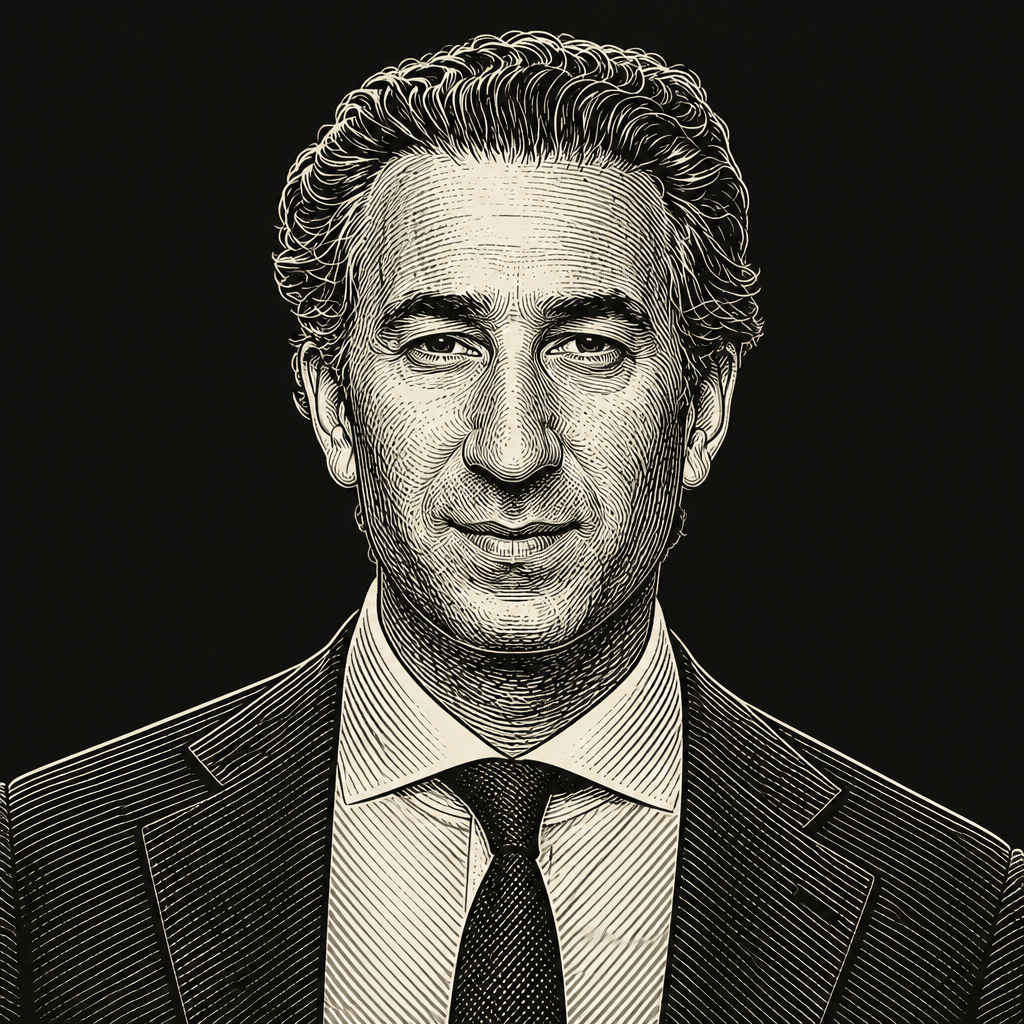
It’s a regime which is militarily weaker than it was four and a half months ago. But psychologically it feels much stronger.
Sadjadpour did not expect Tehran to surrender control of the Strait of Hormuz or make meaningful compromises soon. Its lesson from the conflict, he argued, may be that Washington yields not to accommodation but to pressure: attacking neighbors, disrupting energy flows, closing the strait, and raising the costs of escalation.
He compared the emerging direction of the Islamic Republic to post-Soviet Russia: a regime prepared to pursue its own security through the insecurity of its neighbors and to use energy and trade as weapons. He was not equating Iran’s global threat with that of the Soviet Union. The comparison concerned the nature of the system and how it responds to pressure.
That diagnosis shapes his view of diplomacy. Sadjadpour rejected two common analogies. Iran is not Nazi Germany, he said: it is “homicidal” but not suicidal, and the regime wants to stay in power. Nor is it China, a state likely to accept a grand bargain or put economic and national interests ahead of revolutionary ideology in return for wider integration with the world.
Iran has compromised only rarely over 47 years, Sadjadpour said, and when it has, the conditions were specific: significant, nearly existential economic pressure coupled with a viable and concrete diplomatic exit. That combination does not exist now. Tehran can endure pain and play a longer game than elected governments constrained by public opinion. In his view, it may stretch negotiations, accept a ceasefire without resolving the hard issues, and wait out the Trump administration.
The implication is not that diplomacy is impossible, but that a pause in fighting would not by itself answer the underlying question. A durable negotiation would need both pressure severe enough to alter Iranian calculations and an exit Tehran could concretely accept. Sadjadpour did not see either condition adequately present.
The choice to escalate carries its own theory of victory
Greenway’s preferred end state is the physical elimination of the remaining threat. He said Iran can no longer defend itself against a U.S. or allied attack and argued that its nuclear, missile, and drone programs have been reduced to their least capable condition since their creation. If Iran retains the ability to disrupt energy markets, global trade, or U.S. interests, he said, the United States will repeatedly have to surge forces into the region. Eliminating that ability is the faster route out of recurring military deployments.
Greenway did not call for a broad ground invasion. He identified two possible exceptions to a general prohibition on putting troops on the ground: recovering downed personnel and conducting a limited operation to remove a particular capability that Iran would not otherwise surrender. Enriched uranium buried under rubble does not pose an immediate danger in his view if it can be monitored continuously and Iran can be prevented from recovering it. Retrieval might be necessary in the long term, but he did not see a current need for boots on the ground.
He also challenged the notion that the campaign’s economic effects prove it is strategically unsound. A price of $84 per barrel of oil might be painful for several months, he said, but he contrasted it with an average price of roughly $104 per barrel from 2010 through 2014, during a period he characterized as failed diplomacy.
Murphy regarded calls to “finish the job” as a warning that the conflict could become a broader war with no credible endpoint. For some regional allies, he said, finishing the job means removing the Iranian regime, potentially through ground forces. He considered that catastrophic and unsupported by the American public.
Further attacks on oil infrastructure or other major economic targets would not be a marginal adjustment, Murphy argued. They would be a major escalation. Iran has signaled possible responses, he said, including drawing in the Houthis, who have remained comparatively outside the conflict. If the Houthis compromised the Red Sea while Iran constrained Hormuz, the region would face a wider disruption of trade and likely pressure for another escalation.
Murphy’s alternative is not a claim that the prewar order can be restored easily. A future administration may inherit a strait under Iranian control, perhaps with Oman as a partner under a preliminary agreement, and Gulf governments more willing to deal directly with Tehran because they doubt Washington’s reliability. The immediate task, he said, would be reopening the strait, then working with regional governments toward a more durable arrangement.
That path would carry its own costs. Murphy said Washington might have to release sanctions and help permanently wind down the Israel-Lebanon-Hezbollah conflict, potentially by applying additional pressure to Israel. He did not present that as an attractive settlement. He presented it as the price Iran may now be able to demand after surviving the U.S. campaign.
His broader objection is rooted in the JCPOA, the nuclear agreement that he said had constrained Iran’s nuclear program. Murphy described it as politically controversial but effective, and said the president’s national-security advisers had recommended maintaining it. The present war is unlikely to produce a better agreement, he argued, because Washington has lost two important forms of leverage: oil sanctions that may have to be exchanged for access through Hormuz, and uncertainty over whether U.S. strikes might threaten the regime’s survival. Tehran, in his view, now knows that it can survive such strikes.
Congress, Murphy said, retains formal tools to intervene. It could legislate that the president lacks authorization for the war or deny the money required to continue it. But he does not expect a Republican-controlled Congress to use those authorities. The nearer constraint, he argued, is political: public opposition to a costly war without clear objectives could make congressional war powers an election issue.
Opposition to the regime does not translate into support for war
For Roxana Saberi, strategic debate cannot be separated from the people living under the Islamic Republic. Based on conversations with Iranians inside the country, she described a population deeply opposed to the regime but divided over whether renewed strikes offer a route toward change or merely add to civilian suffering.


Saberi said polls suggest anti-regime Iranians may account for roughly 80 percent of a population of about 93 million. That opposition has not produced agreement about outside military action. She identified three broad groups: people opposed to renewed strikes, people who support them, and people too economically overwhelmed or traumatized to take a firm position.
The first group sees the war’s initial phase as bringing pain without political change. They point to economic hardship, civilian casualties, and damaged infrastructure. Some were especially disillusioned by the contrast between U.S. rhetoric during the January crackdown on protesters and subsequent negotiations with Tehran. Saberi said that people who heard President Trump say help was on the way later watched him reach an agreement with the government and call it a “new regime,” a characterization they reject.
She described the anti-strikes group as large and growing, particularly as renewed attacks produce civilian casualties. Those who favor continued strikes are not necessarily confident that war will deliver freedom. Many are desperate because they see no other path toward democracy. One woman told Saberi that she was glad Washington had recognized that the Islamic Republic was incapable of genuine negotiation, hoped the war would continue until the regime was destroyed, and was willing to bear the cost for freedom.
The third group is trying to survive. Saberi described people struggling to afford milk and eggs after a year of repression, conflict, and deteriorating economic conditions. She said roughly 40 percent of Iranians were below the poverty line as of January, according to the Iranian government, and that conditions had become harder in the following months.
Saberi said the 47 executions included 21 people connected to the January protests. One protester told her that staying alive had become a form of resistance: “Hey, you bastards, I’m still alive.”
The divisions over strikes have themselves become a source of social damage. A therapist in a network of 200 therapists across Iran told Saberi that conflict between pro- and anti-strike Iranians has intensified within families and friendship circles. People cannot direct their anger at the Revolutionary Guards, Israel, or the United States, the therapist said, so they often direct it at one another.
Her account complicates any effort to read military pressure straightforwardly as support for Iranian freedom. Opposition to the Islamic Republic may be broad, but many opponents see war as compounding their vulnerability rather than strengthening their political position.
The regional system will adapt to Iran before it resolves Iran
The dispute over Iran’s future is also a dispute about what its regional network can do with fewer resources. Greenway argued that Tehran’s ability to sustain that network has been radically weakened. The removal of Qasem Soleimani, who built and led it, was important, he said. More consequential now, in his assessment, is Tehran’s reduced ability to finance, equip, direct, and provide intelligence to its partners.
He cited Iraq’s Hashd al-Shaabi, or Popular Mobilization forces, as the largest armed group in the network and said it had at one point been more capable than Hezbollah at its peak. Yet it had not acted against U.S. infrastructure or regional targets to the degree it had previously been capable of, he argued, because Iranian influence had waned. Hezbollah had been “radically decimated” in his assessment, while the Houthis faced a depleted sponsor less able to direct their actions.
Sadjadpour agreed that Iran’s resources had diminished but argued that its will had not. Before October 7, 2023, he said, the countries most exposed to Iranian influence—Syria, Lebanon, Iraq, Yemen, and Gaza—were places with weak central governments and major power vacuums. That is where Iran thrives. It will continue trying to sow instability and fill those vacuums with proxy organizations, he said.
The same distinction shapes the choices of Gulf governments. Sadjadpour said they cannot change their geography and are making country-by-country arrangements with Tehran. Qatar needs Hormuz open to export LNG; Saudi Arabia and the United Arab Emirates are exploring alternative logistical routes. Those accommodations do not mean they will abandon the United States for China or Russia, he argued. Gulf states still see Iran as an existential threat and do not believe Beijing or Moscow can protect them as Washington can.
Greenway offered a more optimistic assessment of U.S. credibility in the region. In his conversations with heads of state and security leaders, he said, the prevailing view was that the threat had diminished and that the United States and Israel should finish the job. He also argued that U.S. operations in Iran and Venezuela had demonstrated that China and Russia could not prevent American action even where their partners were directly affected.
Murphy saw the regional consequence differently. If Gulf governments come to believe the United States cannot secure them, he said, they may need closer relationships with Iran to protect their own interests. That could produce a new diplomatic reality in which Washington is not the leading security guarantor but one participant among regional powers trying to manage Iranian influence.
A sustainable policy cannot leave Iranian civil society outside the settlement
Saberi’s policy argument begins with the distinction between weakening a state and supporting the people subject to it. If neither a decisive military outcome nor a near-term diplomatic agreement is assured, she argued, U.S. policy still has ways to influence the conditions in which Iranians live and organize.
If the United States wants durable relations with Iran, she said, its best prospect is a government that represents people seeking a more democratic and secular society. This was also the political condition Sadjadpour identified as necessary for lasting regional stability: a government that places the country’s national and economic interests ahead of revolutionary ideology.
Saberi urged Washington to make human rights a concrete part of any future negotiation: verifiable commitments to stop executions, release political prisoners, and permit internet freedom. She also called for reinstating support to organizations documenting abuses, including the January crackdown on protesters, and for funding internet-freedom efforts inside Iran.
Communications technology matters because the regime has imposed two internet blackouts that year, Saberi said, limiting Iranians’ ability to communicate, conduct business, seek help, and share evidence of abuses. She pointed to emerging direct-to-cell satellite technology that could allow newer phones to connect to satellites without a terminal such as Starlink.
Starlink can be useful inside Iran, she said, but the terminals are expensive, difficult to obtain, and dangerous for people whom the regime targets for possessing them. The United States, she argued, should rejoin multilateral discussions over rules for these new technologies rather than remain outside them.
Saberi also emphasized the value of public attention for people who have been imprisoned or silenced. Her own experience of imprisonment in Iran informed that view. When people do not have a voice, she said, they need people outside the country to speak for them. External advocacy can keep cases from being buried and make people feel less abandoned.
She closed with a practical appeal on behalf of Iranians facing immediate economic and medical hardship: wounded protesters unable to pay for treatment, people who cannot afford psychotherapy or antidepressants, and families struggling to buy food. U.S.-based human-rights organizations with OFAC licenses can help, she said, and relatively small contributions can make a substantial difference for people inside Iran.
This is not presented as a substitute for resolving the nuclear program, the strait, or Iran’s regional conduct. It is a separate form of pressure and support, aimed at the political constituency whose interests the current government does not, in Saberi’s and Sadjadpour’s view, represent.