Food Workers’ Essential Role Has Not Translated Into Pay or Power
 Priya Fielding-Singh
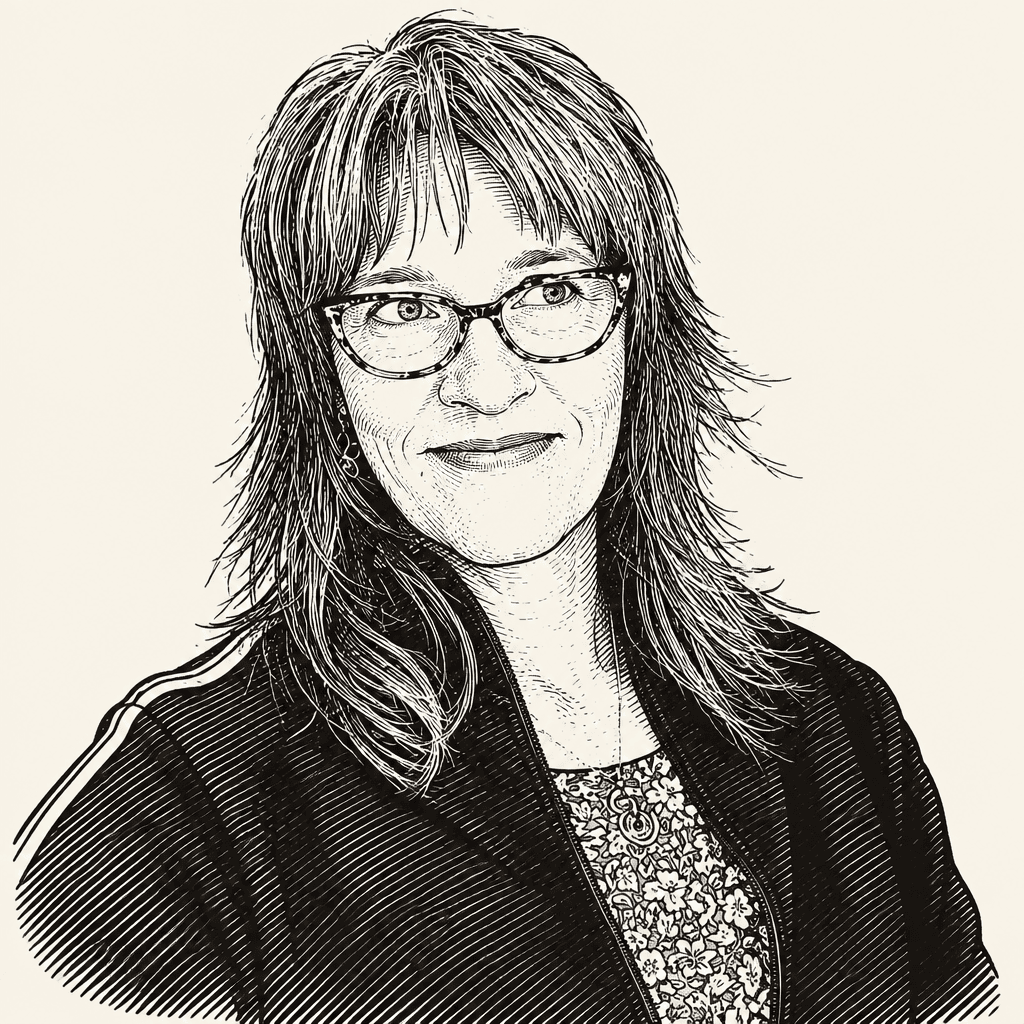 Ivy Ken
 Emma Scott
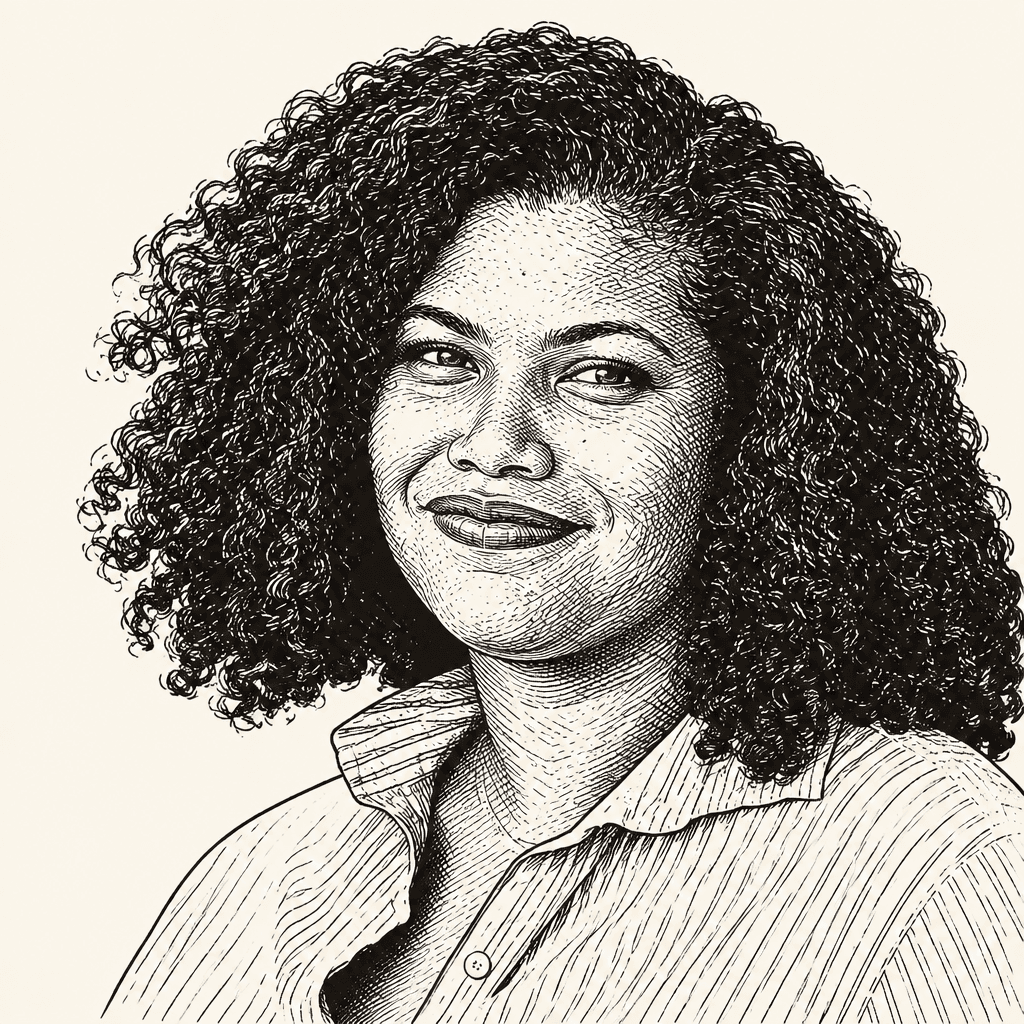 Vanessa Polanco
 Corby KummerJose OlivaMike BradyThe Aspen InstituteFriday, October 2, 202615 min read
The food economy depends on workers who often lack fair pay, safe conditions, a voice at work and a share in business growth. In a panel on food justice, the speakers present different ways to build worker power and share value, from collective organizing to employee ownership. They do not treat any one model as a substitute for workers’ voice or the power to make institutions respond.

Essential work, limited power, and little share in growth
The people who grow, process, transport, sell, cook, and serve food make an essential system run, but that does not mean they share fairly in its rewards. The panel’s central tension was between the food economy’s dependence on workers and workers’ limited pay, voice, safety, and access to ownership. Its proposed remedies ranged from unions and community organizing to labor standards in purchasing contracts, cooperatives, and employee ownership. None was presented as a substitute for listening to workers or building the power to make institutions respond.
Moderator Ivy Ken made that dependence concrete by asking the audience to imagine food workers stopping work across the supply chain. Crops would rot, ships would back up at ports, and children in schools and patients in hospitals would struggle to get food. The image spans paid and unpaid work: farm labor, processing, shipping, food service, waste removal, and the work of putting away a family’s leftovers. Ken cited at least 23 million people doing paid work in the U.S. food system and said most were frontline workers. For food-service workers, she gave an annual mean wage of $33,000.
Jose Oliva offered a larger estimate. He described nearly 28 million workers in the food system, later specifying 28.5 million across six sectors: farming; meat, poultry, and other food processing; transportation and warehousing; food service; grocery; and food-waste work. He argued that the system appears smaller in official labor statistics because activities such as hospitality and agriculture are separated into different industries. The numbers differ, but both accounts point to a large workforce whose essential role can be obscured by how jobs are categorized.
Oliva’s argument was that the labor problem cannot be separated from the rest of the food system. The HEAL Food Alliance’s name—Health, Environment, Agriculture, and Labor—signals the connections his organization makes among those areas. Purchasing choices affect which businesses get access to markets; those businesses shape working conditions; and the wider effects of food production touch workers as well as consumers and the environment. Treating labor as a narrow, self-contained issue, he said, misses those relationships.
The opening statements made the stakes concrete without suggesting that every food job or workplace is alike. Ken named wage theft, sexual violence, immigration enforcement, and heat exposure among the abuses workers face. Vanessa Polanco described people who want to enter or reshape agriculture—including young people, immigrants, refugees, former farmworkers, and former service members—yet are often seen as labor rather than potential owners or business leaders. Mike Brady framed the problem as a divide between having a job and sharing in a business’s growth. Across these accounts, the concern was not just whether food businesses create work, but who gets treated as a stakeholder and who can claim a share of value.

Brady described that distinction through his experience at Greyston Bakery. For ten years, he said, people could come to the bakery’s door, put their names on a list, and be offered a job without background checks, reference checks, or interviews. He saw the practice as an expression of trust in people’s potential. The bakery grew its profits about fivefold, he said, but that growth did not long-term “trickle down” to team members. Providing jobs mattered, but his experience led him to a further question: how could workers participate in the assets and growth of the business itself?
Polanco described a generational and demographic transition in agriculture. Young people want to be in agriculture and to redefine it, she said, as do immigrants, refugees, former farmworkers, and former service members. The challenge is to build infrastructure, support, and programs that match the people entering the sector and recognize their potential to own businesses and lead them. In her account, treating people only as labor wastes both their skills and their aspirations to have a stake in the food system.
Different forms of organizing reach different workers
Jose Oliva called unions the most impactful and best-known tool for improving working conditions. He said workers at unionized meatpacking plants can earn up to twice as much as workers at nonunion plants. At the same time, he described a major gap in who has been organized: roughly 60% of pork and beef workers, compared with at most one-third of poultry workers. He connected that difference to the industries’ racial histories and demographics. Pork and beef workers were historically more likely to be white men; poultry workers were historically more likely to be Black women and are now largely immigrant women.
The comparison makes a case for collective bargaining, but Oliva’s account also cautions against treating unions as the only route to worker power or assuming their reach is even across the food system. Other kinds of organizing have developed where union organizing does not reach. Worker centers, he explained, are generally local, community-based nonprofit organizations that address issues at work and in the wider community. He named the Rural Workers Community Alliance in Missouri as an organization that organizes workers both in workplaces and in their communities, filling some of the gaps left by unions.
Community organizations can play a different role again. Oliva described churches, particularly Catholic churches, as important sources of support for families affected by immigration raids. He referred to workers rounded up at meatpacking plants in Kansas and Missouri and deported, leaving family members and children behind. In those circumstances, support can mean food and other resources for relatives, as well as organizing workers around conditions at work. Oliva emphasized that the landscape is complicated and that these efforts do not always succeed. He called it a difficult time for immigrant workers.
A further model comes from the Coalition of Immokalee Workers, which Oliva described as organizing workers, tomato growers, and the brands that buy their tomatoes. By bringing those parties into a three-way arrangement, he said, the coalition has substantially improved wages and working conditions. He cautioned that such examples are specific and still relatively small. Their importance lies in showing how organizing can reach beyond the employer-worker relationship and engage the buyers whose purchasing decisions affect the terms of work.
These approaches serve different purposes. A union organizes workers to bargain collectively. A worker center can work on workplace issues while also organizing in the surrounding community. Churches and service organizations may provide immediate support to families left behind after raids. The Immokalee arrangement involves workers, growers, and brands in a shared agreement. They are not interchangeable, and none guarantees coverage for every worker or solves every problem. Oliva described an ecosystem of efforts that can fill some of one another’s gaps, while acknowledging that organizing does not always succeed.
Procurement offers another route, though it does not replace organizing. Oliva described the Good Food Purchasing Policy as a framework for public institutions’ food purchasing, organized around health, environment, agriculture, and labor. He said the policy had passed in a little more than 20 jurisdictions. He also described campaigns in New York and Illinois: New York’s legislature had passed a bill, which he said was awaiting Governor Hochul’s signature, while advocates in Illinois were working to pass a state law.
Oliva described the policy’s labor component as having three levels. He explained the first as a requirement that companies not break the law, and said companies that go beyond legal requirements—such as by paying above minimum wage—can receive preference. He did not detail the other levels. In his account, even the first level addresses a basic problem: employment-law violations are common in food work, including failures to pay minimum wage or overtime, discrimination, and health and safety violations across the food chain.
The policy, as Oliva described it, uses institutional purchasing to set conditions for suppliers seeking access to participating buyers. The leverage comes from the buyer’s choice of supplier and the preference given to businesses that go beyond the minimum. That differs from collective bargaining, which gives workers a mechanism to negotiate with employers, and from worker centers, which can organize around workplace and community concerns. Procurement can reward or exclude suppliers according to standards; by itself, it does not create worker representation or guarantee that workers can report violations safely.
Policy needs organizing to make its possibilities real
Emma Scott said food-policy debates often address health and safety from the consumer’s perspective without taking the same systemic view of the people who produce and serve food. She pointed to a recent vote by the Senate Agriculture Committee on a Farm Bill that did not include marker bills intended to incorporate farmworker interests and priorities more fully into the U.S. Department of Agriculture’s agenda.
Scott works on both legal education and resources for advocates. At Vermont Law and Graduate School, she teaches future lawyers to account for workers in food and agricultural policy. Through her clinic, she also helps produce public resources intended to support people doing advocacy on the ground. One recent resource looks at state approaches to preventing heat illness in agricultural settings. A federal workplace heat rule that had been under development would have applied to farms as well as other businesses, she said, but had lost momentum under the change of administration. Scott described states stepping up with their own regulations; the resource compares those rules and offers template language for states without protections in place.
The example shows both the reach and the limits of a policy strategy. A federal standard could establish protections across states, but Scott described its loss of momentum and the resulting importance of state action. Her clinic’s role is to make legal information and possible regulatory language accessible to advocates and to train lawyers who will work in the field. The work links expertise in law and policy to the efforts of people pressing for protections.
Polanco cautioned against treating the current policy landscape as fixed. She recalled that a Farm Bill proposal from then-chair Debbie Stabenow had included nine bills related to farmworkers and would have expanded the USDA’s role in supporting workers. That proposal, she said, made a different policy future seem possible to advocates in Washington. Her point was that political possibilities can change, and organizing can help change them.
That political opening does not mean agricultural groups speak with one voice. Polanco said many farmers in the National Young Farmers Coalition begin as farmworkers. Some work on farms for three to five years before becoming eligible to apply for beginning-farmer loans. Their experience shapes the coalition’s support for policies related to farm labor and immigration. She said its policy committee had voted against a proposal to reform the H-2A guest-worker program, because the coalition did not believe the program was the best way to improve conditions for either domestic or foreign farm labor.
The disagreement matters because it challenges a simple division between the interests of farmers and the interests of workers. Polanco said farmers and farm groups represent different interests, and that advocacy requires building coalitions with people who may disagree, negotiating, and sometimes compromising. At the same time, she argued that policy works as a vehicle for change only when people organize and put pressure on elected officials. Compromise is part of the work, not a reason to treat the policy process as separate from worker power.
Ownership can share value, but it cannot replace a viable business
Scott described agricultural cooperatives as a long-established form of collective enterprise. Farmers have used cooperatives to share equipment, access markets, and, in some cases, land. USDA rural-development grants already support cooperative development, she said, but in her review they did not appear to focus heavily on worker-owned cooperatives. She saw an opportunity to build on existing programs and direct more attention toward the people who have long worked in agriculture.
For Scott, the distinction between farmworker and farmer can be artificial: farmworkers are part of farming, and worker-owned cooperatives in agriculture can also be understood as farmer-owned cooperatives. The appeal is not limited to sharing profits. Worker-owners can have greater agency in setting workplace policies and building a dignified workplace. Scott cited Riquezas del Campo cooperative farm in Massachusetts as an example, while noting that the worker-owned farm cooperatives she knew were still relatively small. The opportunity is to consider how existing cooperative supports might help the model grow.
Brady’s work focuses more often on larger businesses, where he said employee stock ownership plans, or ESOPs, are a common option. He described a hypothetical regional food manufacturer whose family owner is preparing to retire. The business might be sold to a large food conglomerate or to a private-equity buyer. In Brady’s hypothetical comparison, a conglomerate’s tight margins could limit the opportunity to raise wages, while a private-equity buyer might seek to increase profitability by lowering wages and benefits and extracting more profit for investors outside the community. He presented a sale to employees as another possible outcome, not as a description of a particular business transaction.
Selling to employees offers a different possibility in Brady’s account. Workers could share in long-term business growth, while questions about wages, benefits, rights, and voice would become concerns for co-owners. This connects his ownership proposal to the panel’s wider focus on dignity and worker influence. The forms discussed are not identical: Scott’s examples involve cooperatives, while Brady described employee ownership plans used in larger businesses. Both can involve workers sharing in ownership, but they apply in different settings.
Brady argued that employee ownership can benefit workers and communities while also supporting the business. He reported research associated with Rutgers University as finding that employee-owned businesses performed three to five percentage points better than comparable manufacturers. He connected that claimed performance advantage to the prospect of keeping regional businesses strong, particularly in rural communities, and called on large corporate buyers to consider employee ownership among their suppliers.
The proposal depends on more than the ownership transaction. Asked how employees without management or operations experience could take over an existing business, Brady said that moving a team into an ownership structure is not a magic bullet. The business still needs to operate effectively and generate cash flow. Owners planning to retire need to think about leadership, develop a second tier of management, and train people before a transition. Brady argued that the question of whether a team can operate a business would arise under any sale, not just a sale to employees.
Employee ownership can create a route for workers to share in a viable company’s value, but the transition also requires management capacity and financial stability. Brady’s description of wages, benefits, rights, and voice as concerns for co-owners points to the workplace practices that must accompany the structure.
The panel’s approaches address different settings. Brady focused on giving workers a stake when owners retire, a transition that can otherwise move a business to outside investors or larger companies. Scott’s discussion centered on farmworkers gaining agency within agriculture, where existing supports could potentially be directed toward worker ownership. Both challenge the idea that workers should only receive wages while others own the assets their work helps build.
Standards matter when workers can shape and enforce them
Oliva connected the food system’s reliance on cheap labor to a history that includes slavery and later guest-worker programs. He argued that Black people brought from Africa and forced to work in agriculture were the original farmworkers, and that the system’s reliance on coerced labor helped establish an ongoing appetite for cheap or free labor. In his account, guest-worker programs continued that pattern by allowing employers to bring workers from other countries, pay them less than minimum wage, and send them back when their labor was no longer needed. These are Oliva’s historical claims about how labor arrangements developed.
For Oliva, the failure to hear workers is not abstract. He said food-system workers have historically been marginalized and that the public has not wanted to listen to their accounts because doing so would reveal how much is broken. His measure of that failure was that two out of three food-system workers access SNAP or other food benefits. The people who put food on others’ tables, he said, may not earn enough to buy food themselves.
The importance of worker voice also shaped Scott’s distinction between ordinary certification programs and worker-driven approaches to accountability. She said U.S. farmworker certifications were not necessarily crowded, but that it could be difficult to verify what some of them actually did. She pointed to the Coalition of Immokalee Workers’ Fair Food Program and Migrant Justice’s Milk with Dignity program as stronger examples of worker-driven social responsibility.
In the Fair Food Program model as Scott described it, large buyers agree to source from participating farms and pay a price premium that can support better working conditions and higher wages. Workers help establish standards and monitor compliance. Scott said the program interviews more than half of workers and gives workers access to a 24-hour hotline for reporting abuses without retaliation. She contrasted that with audits that may happen once a year and rely mainly on paperwork rather than workers’ accounts of day-to-day conditions.
Milk with Dignity, which Scott said grew out of Migrant Justice in Vermont, applies a similar worker-driven approach to dairy. She described the program’s work with Ben & Jerry’s and its campaign to get Hannaford to sign on and source milk from participating dairies. She also mentioned a cheese-with-dignity product carrying the Milk with Dignity logo. In both examples, the question is not just whether a product carries a label, but what commitments stand behind it and what role workers have in checking that those commitments are met.
A credible standard, Scott argued, depends on whether workers help establish the rules, take part in monitoring adherence, and can report violations without fear of retaliation. She saw worker-driven social responsibility as something certifications should aspire toward. The model also turns buyer power into a potential source of support: large retailers can commit to buying from participating farms, and a price premium can help cover improvements in working conditions. Scott noted that some farms operate on tight margins, while also pointing to the importance of identifying where power and resources sit in the supply chain.
This differs from a purchasing policy that sets criteria for suppliers across public institutions. A worker-driven agreement ties particular buyers and suppliers to standards that workers help create and monitor, with channels for reporting abuses. Both approaches use buyer relationships, but the worker-driven model gives workers a defined role in accountability rather than relying only on a purchaser’s supplier requirements or an audit.
Polanco extended the question of accountability to consumers. She encouraged people to support organizations pressing Congress for better conditions, even if they are not policy experts, and recommended a guide from Not Our Farm for asking farmers about labor practices. Buying local or organic, she cautioned, does not guarantee that workers are treated well. Consumers should not assume an appealing label answers questions about labor.
Scaling the models requires action and imagination
The panel did not offer one policy solution to the question of how to expand promising approaches amid rising production costs. Polanco argued that federal policy interventions can have broad impact because they can establish national standards. She urged people to take action with organizations lobbying Congress, and stressed that a consumer need not be an expert to press for better conditions. Her example of the Not Our Farm guide also translated that invitation into a practical question: what can people ask farmers with whom they have a relationship about farm labor?
Brady made a related point about the terms of food-system debates. Conversations about food and nutrition, he said, too often leave out workers. Discussions of food as medicine and of changing food systems should include the people who make them work.
When asked how to move forward if economic conditions were worsening, the panelists’ brief responses were not a detailed program. Polanco said, “Get angry.” Brady agreed that people should act with urgency, adding that the situation would not fix itself and that the opportunity for change had to be taken. Scott urged broader economic reform rather than only adjustments to existing laws. She raised the possibility of asking what a universal basic income for farmworkers might look like and suggested imagining a different economic system and future.