Rural Opportunity Requires Childcare, Jobs, and Benefits Built Together
 Pamela Shepard-McKnight
 Jack GriffinJanti Soeripto
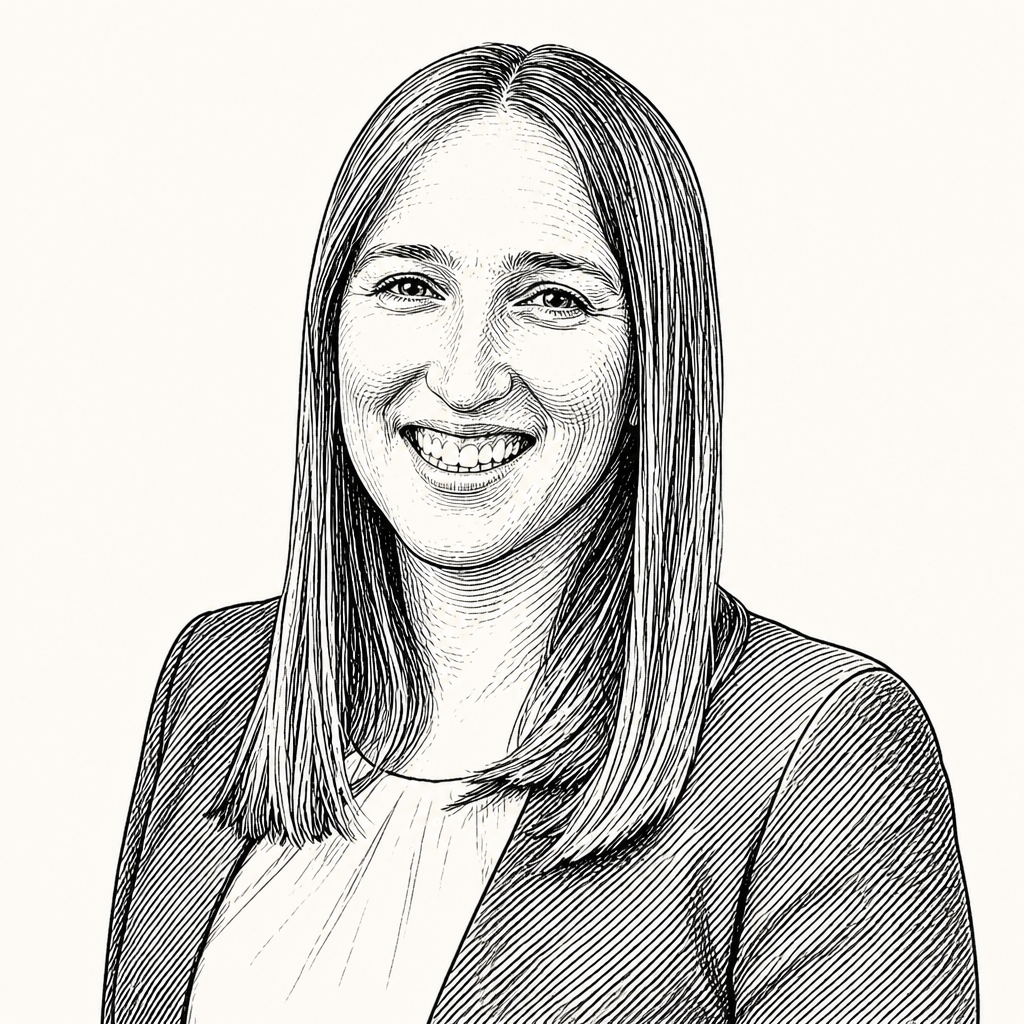
 Katie Colton
 David Jones
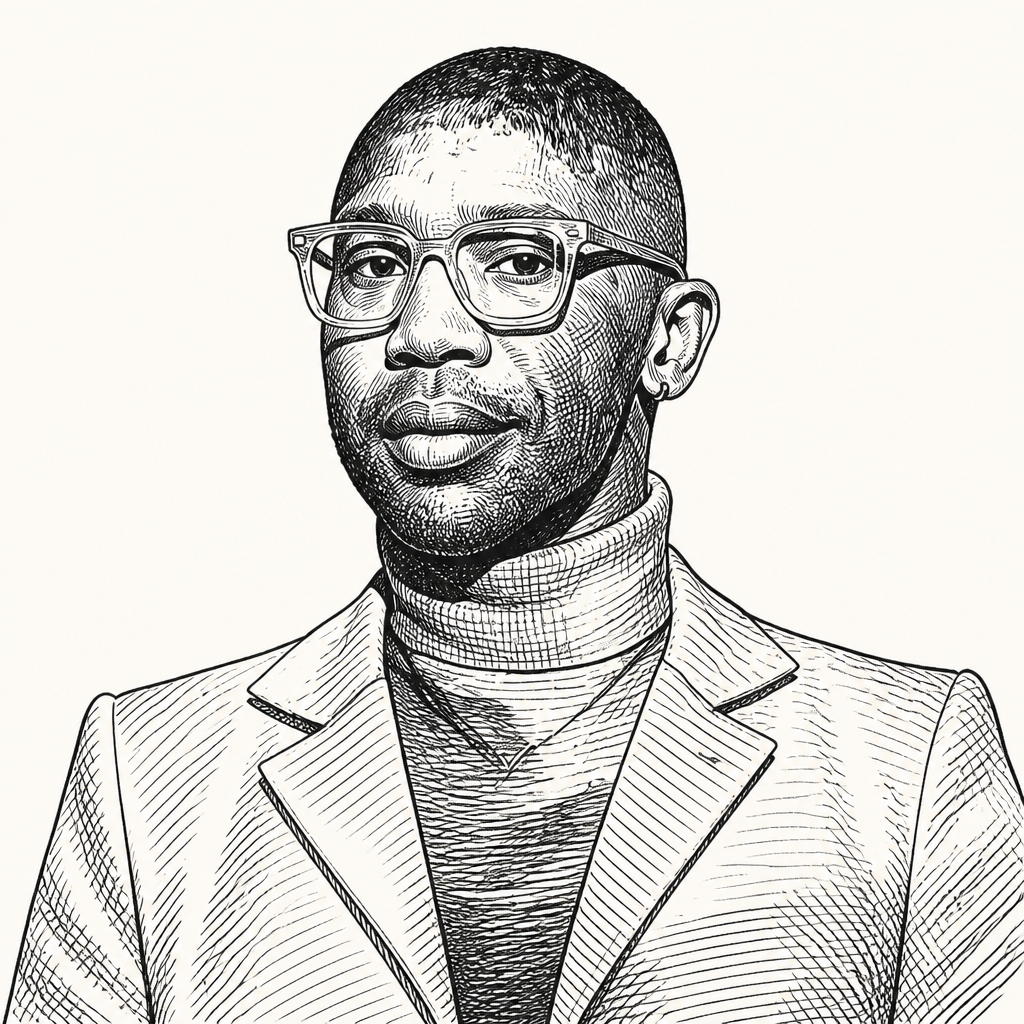
 Derek Kilmer
 Godfrey Riddle
 Cynthia McFaddenThe Aspen InstituteTuesday, June 30, 202617 min read
At the Aspen Ideas Festival, Cynthia McFadden led a discussion with Derek Kilmer of the Rockefeller Foundation, Save the Children’s Janti Soeripto and South Carolina community leader Pamela McKnight on why rural opportunity policy fails when jobs, childcare, food, housing, broadband and benefits are treated separately. The speakers argued that rural families experience those systems together, and that economic mobility depends on investing in both work and family infrastructure through locally designed partnerships. Their case was that rural America is not a single problem to be solved from Washington, but an underinvested set of communities where access, administrative complexity and inflexible funding often determine whether children and parents can use opportunities that formally exist.

Rural opportunity fails when family infrastructure and jobs are designed apart
Rural families experience work, childcare, food, transportation, broadband, benefits, housing, and health care as one system. Policy often treats them as separate files. Cynthia McFadden put that mismatch at the center of the discussion: parents cannot take jobs, even where jobs exist, if there is no childcare; children cannot arrive at school ready to learn if food, housing, health care, transportation, internet access, and early education are unstable or unreachable.
McFadden framed rural America as geographically vast, politically neglected, and often misunderstood through averages. She said 97% of the United States is considered rural, while about 20% of the population lives there. She also said the country has not had a comprehensive federal program for rural America since the Rural Development Act during the Carter administration.
The scale, as McFadden described it, is severe: she said 85% of the counties in rural America are food insecure, nearly half of rural children receive free or reduced-price school lunches, and 3 million rural children live in poverty. She noted that some rural places have strong job situations, but said that in many others the job situation is not good and unemployment is much higher than in urban America. Her premise was that jobs and families cannot be discussed as separate rural policy conversations.
For Derek Kilmer, that premise is rooted in personal experience. Kilmer grew up in a small logging town in Washington state and was in high school when the timber industry “took it on the chin.” He watched friends’ parents and neighbors lose jobs, and said the experience shaped his college thesis, his professional work in economic development, his decision to run for office, and his current role at the Rockefeller Foundation leading work on economic opportunity.
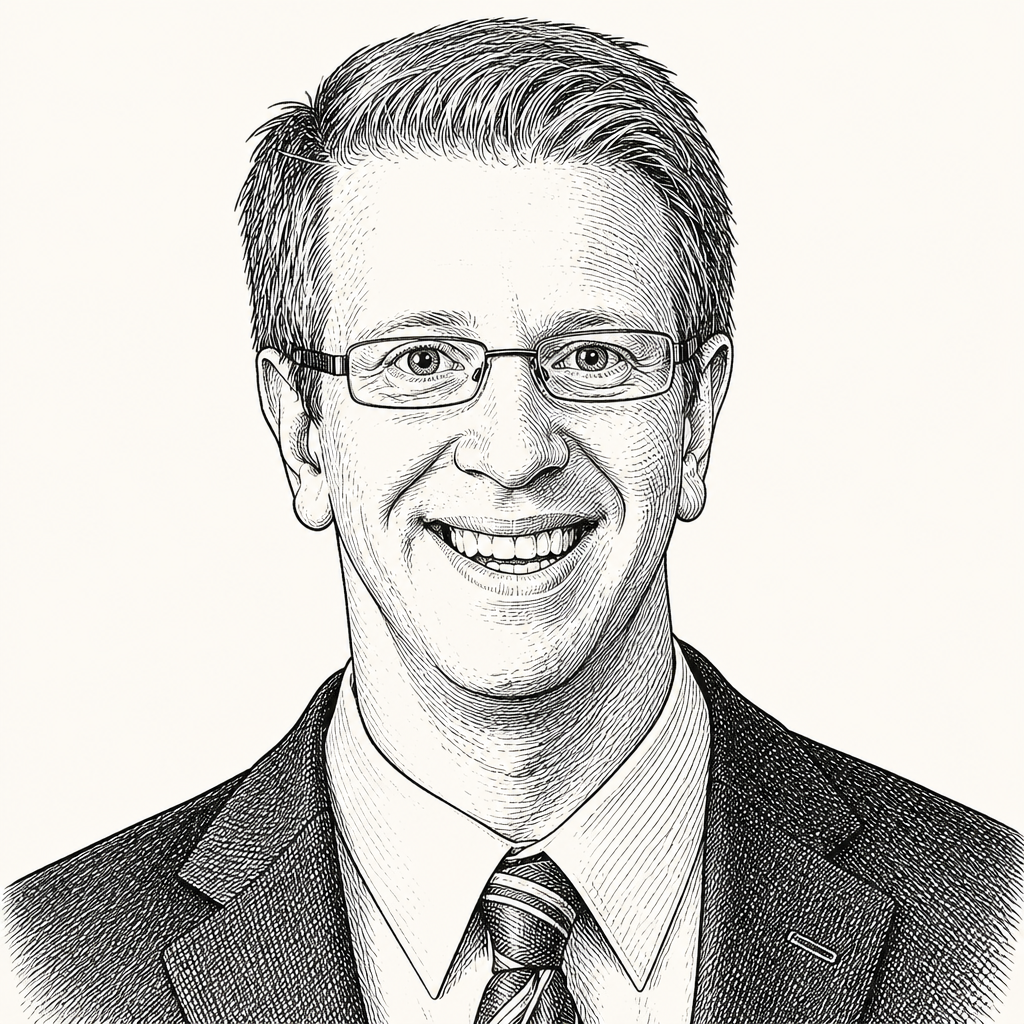
Kilmer argued that rural distress is not only a local economic problem. It becomes a national civic problem. He said about a third of U.S. counties are economically distressed and that those counties are disproportionately rural. In distressed communities, he said, weaker health outcomes and a weaker tax base limit investment in schools, roads, and other public goods. He also connected economic abandonment to distrust and polarization: communities left behind “know it, and they feel it.”
This is not just a “those places” problem, it is an “all of us” challenge.
Janti Soeripto approached the same problem through early childhood. She described visiting a Head Start classroom in Tennessee and being struck by how few words many three- and four-year-olds had at the beginning of the year. For Soeripto, the scene showed how early developmental gaps appear before formal schooling and then compound through primary and secondary school. After the program, she said, the children “had words” and made progress toward grade-level reading.
That example carried her larger claim: the problems are solvable. She listed food insecurity, access to childcare, basic healthcare, and early education as areas where “we know how to do this.” The failure, in her telling, is not a lack of knowledge. It is a choice not to provide what is known to work.
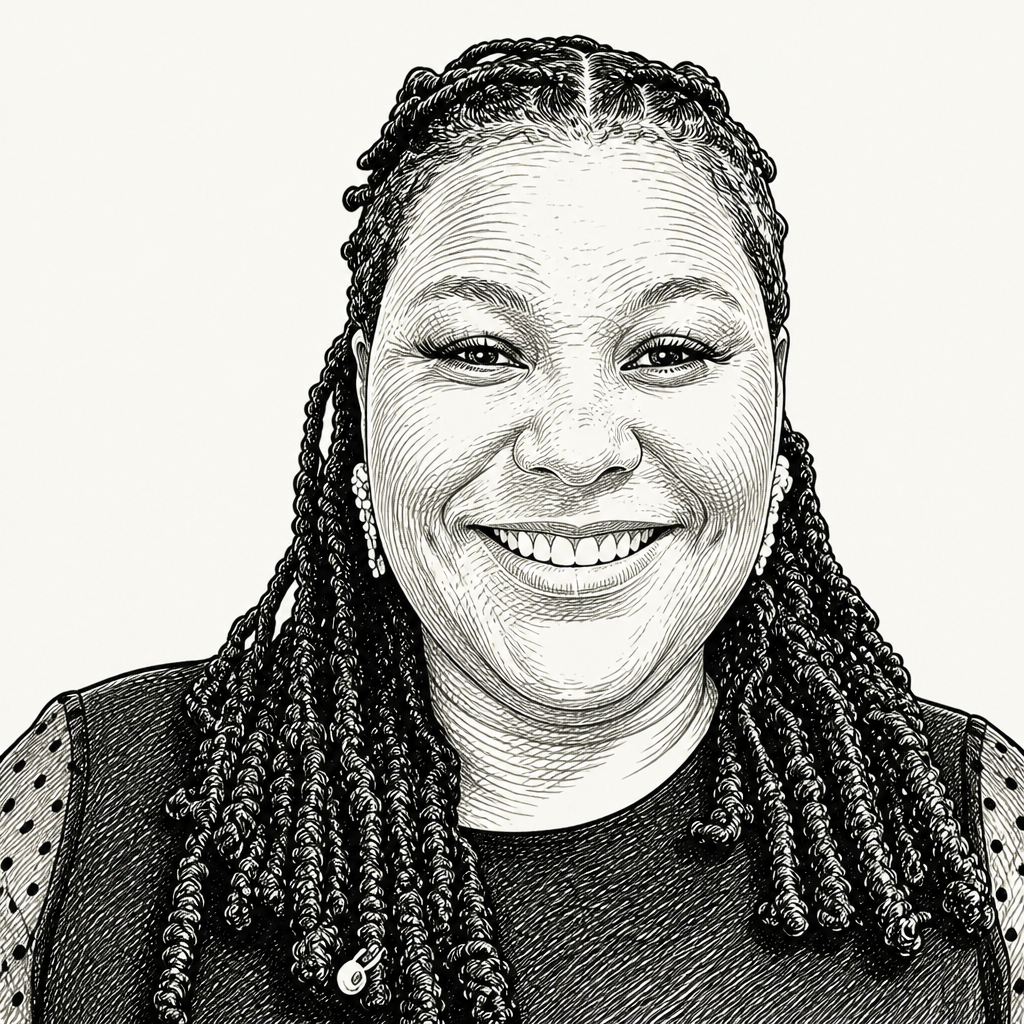
For Pamela Shepard-McKnight, rural America is not first a set of statistics. It is family, neighbors, friends, and the families she serves through The Well Community Collaborative and Pantry in South Carolina. She said many families she works with are in “survival mode.” If a parent is deciding whether to pay a utility bill, buy gas, or buy groceries, that parent does not have the bandwidth to absorb program instructions or navigate bureaucracy. Rural hardship, she argued, should be understood as a question of children and opportunity: if opportunity matters, then places where opportunity is hardest to access deserve attention.
The national jobs story hides where growth is actually going
Derek Kilmer rejected the idea that strong national jobs numbers tell the whole story. He said the stock market may be “cooking” and employment numbers may look broadly positive, but jobs and growth are highly concentrated. Of a little more than 3,000 counties nationwide, he said, 100 counties have half the jobs and have seen half the job growth. By contrast, roughly one-third of counties are economically distressed, with 50 million people living in them, disproportionately in rural areas.
| Measure | Claim made by Kilmer |
|---|---|
| U.S. counties | A little more than 3,000 nationwide |
| Concentration of jobs | 100 counties have 50% of the jobs |
| Concentration of job growth | 100 counties have seen 50% of job growth |
| Economically distressed counties | About one-third of counties |
| People in distressed counties | 50 million people |
That analysis underlies the Rockefeller Foundation’s new Good Jobs for America program, which Kilmer said dedicates $100 million to creating economic opportunity in places that have struggled and to helping people remain connected to work amid disruption. He connected the program to a broader concern raised across Aspen Ideas sessions: the country has not managed economic change well, and artificial intelligence may bring another wave of disruption.
A policy view associated with some economists says that rather than invest in places where the economy has moved on, public resources should help people relocate to where jobs already are. Kilmer said the country has effectively tried that experiment for 50 years without success.
He gave three reasons. First, mobility in the United States is at a 40-year low, according to Kilmer. People are staying where they are. Second, some people stay because they want to stay. They have attachments to community, land, culture, and heritage. Third, relocation often makes no economic sense. In the timber communities of his former congressional district, Kilmer said, the average home sale price is about $250,000 to $300,000. In Washington state’s job centers around Seattle and the I-5 corridor, he said, the average home sale price is about $900,000 to $1 million.
The alternative, in Kilmer’s view, is not nostalgia. It is investment in reinvention. He cited economist Scott Andes’s review of counties that were economically distressed in 2000. Of roughly 500 or 600 distressed counties, Kilmer said, about 200 had made it out of distress by 2023, accounting for 1.8 million jobs. He used Okanogan County in Washington state as an example of a timber- and mining-dependent place that reinvented itself.
Kilmer also disputed the stereotype that rural communities are unwilling to change. He pointed to the Composite Recycling Technology Center on Washington’s Olympic Peninsula, where smaller-diameter logs are turned into cross-laminated timber and scrap composite material from Boeing is converted into new products alongside wood products. He described a North Dakota farm using autonomous tractors and AI in ways that would impress Silicon Valley, and mine workers in Eastern Kentucky working on computer coding and AI.
Rural economies, in this telling, are not locked into agriculture or extraction. McFadden said she was stunned to learn that only 5% of rural jobs are currently agricultural, with the bulk in service jobs and manufacturing. Kilmer’s answer was to identify “innovative, replicable, and scalable hacks”: practical local solutions that solve a problem in one community and might travel to others.
Childcare is both family infrastructure and jobs infrastructure
Janti Soeripto described rural childcare access in stark terms. She said 70% of rural children live in what are called childcare deserts, meaning there are no available childcare spaces within 10 miles of where they live. That lack of care holds back parents who cannot take jobs without a safe, reliable place for their children. But Soeripto also emphasized that quality childcare is not just supervision. It includes emotional and social-emotional learning, which shapes children’s later development.
| Access measure | Figure cited by Soeripto |
|---|---|
| Rural children in childcare deserts | 70% |
| Early pre-K or early education access in most OECD countries | About 90% |
| Early pre-K or early education access in the United States | About 60% |
| Early pre-K or early education access in many rural counties | 40% to 50% |
Soeripto compared access to early education in the United States with other wealthy countries. In most OECD countries, she said, about 90% of the population has access to early pre-K or early education. In the United States, she put that number at 60%, and in many rural counties at 40% to 50%. Her conclusion was blunt: other countries have faced similar problems and solved them. “This is not rocket science.”
The staffing problem is part of the same constraint. Save the Children, Soeripto said, works with young people and adolescents to see early education and childcare as possible careers, helps remove tuition barriers, and supports them in getting degrees. But childcare and early education programs compete for workers with employers such as McDonald’s or other jobs that may be easier to get. Soeripto called that a “huge shame of potential opportunity,” because early teachers can have a lasting impact on children.
Pamela Shepard-McKnight described the childcare shortage from Barnwell County, South Carolina. Her community did not have enough slots for children, and some providers lacked support for skill-building and technology. Classes can close not because there are no children, but because there are not enough teachers. The result is a “perpetual issue”: families cannot work without childcare, children cannot access early learning, and providers cannot sustain classrooms without staff and resources.
McKnight’s own work shows what local collective action can accomplish. The Well Community Collaborative and Pantry operates as part of a broader health coalition, Barnwell County Healing Partners, with an emphasis on “HEAL”: Healthy Eating Active Living. The pantry is client-choice, designed to treat shoppers with respect, even though McKnight said some people still feel uncomfortable having to come through the doors. Around that hub, the coalition convenes partners on food, early learning, infant and maternal health, and other local needs.
When funding was abundant, McKnight said, the coalition could fund partners directly. When that money went away, the question changed: what can be done at little or no cost with the people already at the table? She called this “turn the curve thinking.” One example was early learning. Her community shared 240 Head Start slots with a larger neighboring county, and the larger county naturally received many of them. Local First Steps programming for three- and four-year-old classes was no longer operating. Healing Partners unified local voices, elevated the shortage, got the funder’s attention, and the funder contracted with the local district for 98 new slots. McKnight said every seat was filled.
With our intervention, every seat was filled.
Kilmer called childcare one of the rare “three-fers.” Solving it creates more opportunity for young children, creates jobs in childcare, and unlocks jobs for parents who are otherwise stuck outside the workforce. McFadden asked whether childcare must come first and jobs second, or the other way around. Kilmer said they have to happen together.
Available benefits can still be unreachable
Janti Soeripto used WIC enrollment to show how programs can exist on paper while remaining difficult to access in practice. She said people have to sign up for WIC in person. For a parent in a remote area, that can mean driving two hours with an infant, without a car, and with little or no public transportation. She estimated that WIC sign-up is about 60% of what it ought to be. In her words, the resources are there, but the system makes them “very hard” to access.
The same pattern applies beyond WIC. McFadden named transportation and broadband as serious barriers in rural America. Soeripto said families in survival mode often lack the bandwidth to fix every logistical problem required to claim benefits to which they have a right. The burden is not just the formal eligibility rule; it is the distance, the transportation, the internet connection, the paperwork, and the time.
Derek Kilmer offered a broadband example from his time representing 12 Native American tribes. He recalled visiting the Makah tribe and asking the tribal chairman how things were going. The chairman said every high school senior was graduating that year, but the state of Washington was requiring students for the first time to take a mandated exam online. The tribe did not have high-speed internet. On a sample test, after answering ten questions and clicking to the next page, it took one minute and 34 seconds for the next page to load. The workaround was to bus students 90 minutes away to a school, and for some of them a town, they had never been to.
That story led into Kilmer’s critique of federal complexity. He acknowledged positive federal efforts around broadband, infrastructure, and bipartisan work addressing the opioid epidemic. But he said rural America remains underinvested in, with worse outcomes in health, food security, and employment. He also described the federal support system as almost impossible for small local governments to navigate.
He recalled visiting a rural mayor who was mowing the lawn outside city hall when he arrived. “She was the city government,” he said. Kilmer cited Tony Pipa of Brookings on the scale of the problem: 400 federal programs touching rural America, spread across 13 agencies and more than 50 offices. For a mayor who is also the lawn mower, navigating that system is not a realistic access strategy.
Funding levels matter, but so does administrative design. A rural strategy that ignores capacity constraints will fail even if money exists somewhere in the federal system. For Kilmer, any workable strategy has to address both the resources provided and the accessibility of those resources.
No rural community is the template
Janti Soeripto offered the line that became a governing principle: when you have seen one rural community, you have seen one rural community. Rural America is not a monolith. Every county and state is different, and the starting point should be what the community already has, has already solved, and has already innovated.
Save the Children’s U.S. work, Soeripto said, dates to 1932 in Perry County, Kentucky. Today it works in more than 250 rural communities with thousands of children in schools, alongside teachers, superintendents, and local leaders. The organization’s role, as she described it, is not to arrive with a universal model, but to work with local partners to determine what will help children in that place.
Pamela Shepard-McKnight made the same point more granularly: “Eight miles down the road is different.” Her argument for investment was also an argument about trust. Policies and funding should be entrusted to leaders who can respond to local realities. Save the Children’s value in her community, she said, was that it recognized traditional approaches were not working and linked arms with people already doing the work.
Soeripto described “collective impact” as the operating method: bring together local stakeholders, including banks, community centers, schools, law enforcement, nonprofits, and others with something to contribute; agree on shared indicators; gather the data; and work on the agreed priorities. Data, she said, are key, but the agenda starts with the community.
She gave a Mississippi example from the rural prosperity commission’s listening work. Housing was a major issue: families had rented for decades, could not build wealth, and lived in suboptimal housing. A local community development finance institution, or CDFI, worked with a nonprofit and the community to design a mortgage product that fit local circumstances. The central insight was that if people had paid rent for years, that payment history should count as evidence of ability to pay a mortgage. Soeripto said 5,000 families would own homes for the first time through a sustainable commercial product.
Her broader point was that more money is not always the only answer. Sometimes the barrier is that mainstream products were not designed for the people being asked to use them. Local partnership can reveal different underwriting logic, different delivery models, or different ways to make existing resources work.
McFadden connected that posture to crisis management: start with the assets available and figure out how to expand them. Soeripto described rural America as an “under invested asset” with energy, talent, and a will to reinvigorate communities that have been left behind.
A rural roadmap has to simplify the spaghetti
Cynthia McFadden noted that the country has not had a comprehensive federal rural policy for roughly 50 years and turned to the Commission on U.S. Rural Prosperity, a bipartisan commission sponsored by Brookings and the American Enterprise Institute. Kilmer and Soeripto both serve on it. McFadden said the commission is expected to issue recommendations in 2027.
Janti Soeripto described the commission as truly bipartisan and diverse, with participants from the private sector, public sector, technology, and rural communities, including places more remote than the Washington logging town Kilmer grew up in. The commission’s first task, she said, is listening and learning. The goal is not to pretend outside experts have all the answers, but to identify promising local ideas and ask whether they can be turned into practical recommendations.
The list of issue areas includes workforce development, connectivity, healthcare, and food security. Soeripto returned to children’s hunger as a moral and practical failure in a wealthy country. She described children coming back to school on Monday morning and running to the cafeteria because they had not had a decent meal over the weekend.
Derek Kilmer said the commission is led by former Democratic senator Heidi Heitkamp and former Republican governor Chris Sununu, with members from diverse backgrounds. Its early work is to understand rural assets as well as challenges, then pull out lessons that could become a playbook for a future administration or Congress. The purpose, in his language, is to “make good on the promise” owed to these communities.
Pamela Shepard-McKnight was not quick to call herself optimistic. When McFadden asked whether she was optimistic, McKnight answered, “No, girl.” But she emphasized investment, policy, and the importance of supporting leaders who can act locally. The distinction that followed came from Kilmer, quoting Rabbi Jonathan Sacks: optimism is passive, the belief that things will get better; hope is active, the belief that together people can make things better.
Hope is an active virtue, it’s the belief that together we can make things better.
Kilmer used that distinction to assign responsibilities across sectors. Philanthropy should confront the fact, cited by McFadden, that only 3% of philanthropic dollars go to rural America despite 20% of the population living there. Private industry should consider placing jobs somewhere other than the same few ZIP codes already attracting growth. Government should not arrive with prefabricated solutions, but listen to local leaders such as McKnight and Soeripto and provide resources that support what works.
Help has to strengthen local control, not replace it
National institutions were not asked to take over rural work. They were asked to make local work easier to sustain.
For funders, the request was direct: unrestricted grants. A participant asked how people with full-time jobs and distant ties to rural places could help. An audience member called out, “Unrestricted grants,” and McKnight immediately agreed. Soeripto did too, saying unrestricted funding lets organizations like McKnight’s do what they need to do in their own communities, where the needs and workable responses vary place by place.
Jack Griffin, the founder of FoodFinder, asked how national philanthropy and practitioners can support local groups like McKnight’s pantry, especially if rural communities face worse headwinds from gas prices, pressure on SNAP, and other benefit constraints. Kilmer said Rockefeller’s approach, including its food work and jobs work, is to find innovative community organizations, show up, listen, understand what is working, and support it.


Kilmer accepted that the federal budget and policy environment present serious risks, especially for rural healthcare providers “living on the razor’s edge.” Soeripto shared concern about SNAP, WIC, and healthcare, warning that if states must find more money for these programs, they may take it from other areas, creating a “robbing Peter to pay Paul” dynamic.
For policymakers and citizens, the lever was pressure. Soeripto urged people to contact legislators, support systemic changes, protect programs that disproportionately support rural America, and seek out collective-impact organizations doing local work. Kilmer added that individuals must reject the idea that it is acceptable for neighbors to be left behind. He recalled being told after he was elected to Congress that if he focused on Tacoma, he could hold the job indefinitely. He responded that he came from the rural part of the district. His point was that top-line jobs numbers can look good while whole communities remain outside the story.
For employers, the lever was where they place jobs and source materials. Godfrey Riddle described building a business that links rural and urban communities by sourcing materials from a rural conglomerate for earthen homes. Kilmer said such choices matter “so much.” He gave the example of speaking to the Seattle Chamber of Commerce: urban areas have a growth problem, visible in traffic and housing shortages, while many rural areas have a jobs problem. His message was that they can solve each other’s problems. Microsoft’s placement of 40 jobs on Washington’s Olympic Peninsula, he said, was front-page news for two weeks; the same 40 jobs in Redmond would barely register. In rural places, small job placements can be a major economic event.
A housing question put the same issue in funder language. Katie Colton of the Colorado Housing Consortium asked how to change the return-on-investment story for philanthropy and the public sector when a $5 million investment may build more units in Denver than in rural Colorado, even though the rural investment may be crucial to economic development. Kilmer said every foundation is different, but Rockefeller is intentionally focusing on economically distressed communities across urban, rural, and tribal areas and looking for solutions that can travel. Philanthropy can help find what works, but he stressed that none of the solutions can depend on permanent philanthropy; they must ultimately be scalable through policy or sustainable models.
The measure of success cannot be luck
Pamela Shepard-McKnight returned to a word she hears too often in rural America: luck. People say they were lucky to be the first in their family to graduate from college, lucky to find childcare, lucky to access an opportunity. McKnight argued that this is evidence of a system where success is exceptional rather than predictable. What should be expected becomes a special case.
She called the pattern “systemic apathy” that rolls downward. If a problem is not in someone’s backyard, people do not feel urgency. Even within communities, she said, people may show up when a garden launches or when tragedy strikes, but drift away when the crisis feels less immediate. Rural communities have deep connectedness, and when tragedy happens “everybody pitches in.” The challenge is to sustain that urgency after the moment passes.
McFadden interpreted the point as a problem of predictability. When nothing can be counted on — not childcare, shoes for school, food, transportation, internet, or a safety net — every step requires improvisation. McKnight agreed and said that is why community is important.
Rural America was described as underinvested, administratively burdened, and often invisible, but also full of local capacity. The most concrete successes came where trusted local leaders had resources flexible enough to match local reality: new Head Start slots in Barnwell County, a mortgage product in Mississippi, timber and composite reinvention on the Olympic Peninsula, AI and autonomous equipment on farms, and rural sourcing decisions by businesses.
The demand was not charity as a substitute for policy, or philanthropy as permanent operating support. It was investment that respects local knowledge, simplifies access, and treats rural families’ opportunity as central to the country’s economic and civic health.