Anti-Muslim Politics Is Testing the Limits of Religious Liberty
 Asma Uddin
 Guthrie Graves-Fitzsimmons
 Tristan Snell
 Fraser NelsonDwayne Royster
 Hannah Allam
 Megan Goodwin
 Josh GoodThe Aspen InstituteTuesday, May 12, 202623 min read
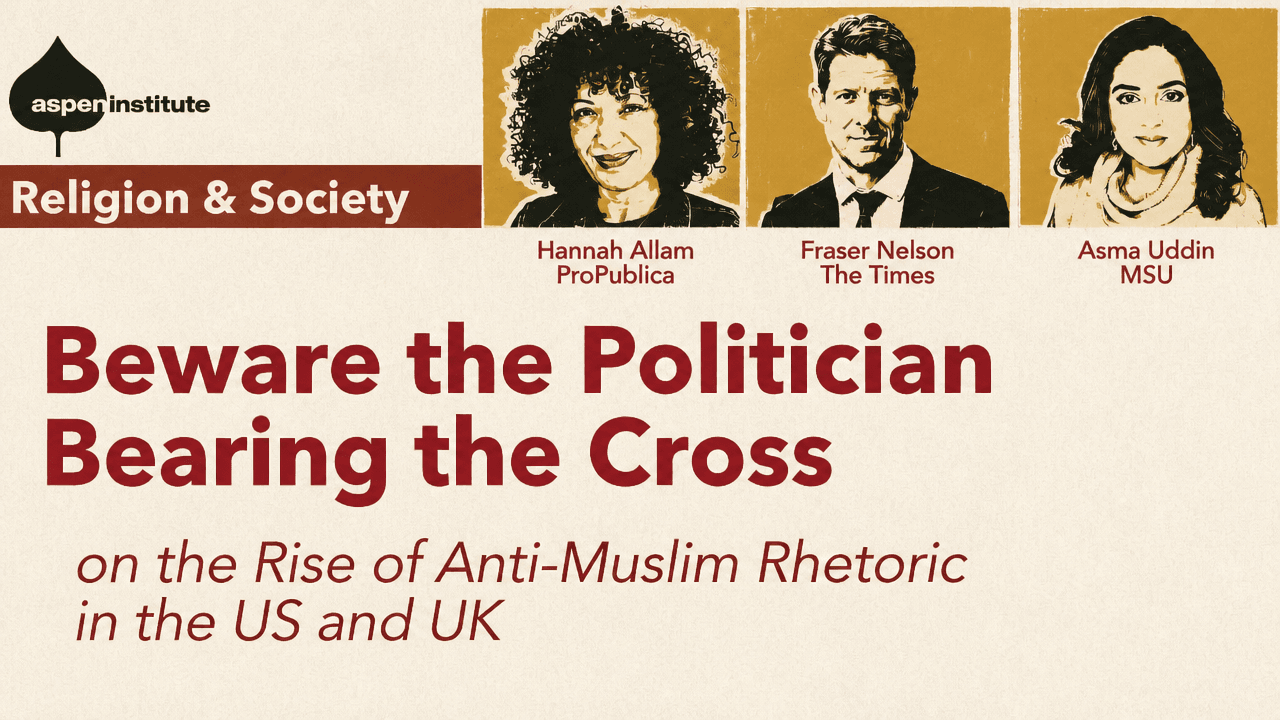
Anti-Muslim politics in the US and UK works by recasting Islam not as a religion but as an ideology, racial threat or civilizational enemy, according to legal scholar Asma Uddin, journalist Hannah Allam and British commentator Fraser Nelson. Uddin argues that this move can push Muslims outside religious-liberty protections; Nelson sees it as a revival of sectarian tribalism dressed in Christian language; and Allam warns that journalism and national-security policy have helped make Muslims a suspect category whose logic now extends to others.
Anti-Muslim politics begins by moving Islam outside religion
Asma Uddin began from a proposition she said should not be controversial in American public life: “Islam is a religion.” Its instability, in her account, is the point. Anti-Muslim rhetoric often works by reclassifying Islam as something else — a political ideology, a civilizational threat, or a marker of foreignness.
That reclassification carries legal and political consequences. Uddin, a law professor and religious-liberty attorney, said the danger is not only that such rhetoric can make persecution and violence easier to justify. It is also a way to move Muslims outside the protections of religious liberty. Religious liberty protects religions; if Islam is treated as not-religion, Muslim religious claims can be treated as undeserving of those protections.
The case that made the pattern concrete for Uddin involved the Islamic Center of Murfreesboro in Tennessee. The center sought to expand its facilities and received a permit. Opponents challenged the permit in court, arguing that religious land-use protections should not apply because Islam was not a religion. Uddin said the argument was troubling enough that the US Department of Justice filed an amicus brief in a local chancery court, making what should have been a basic point: in the United States, Islam is considered a religion.
From there, she saw the same logic behind mosque-building disputes across the country. She placed that wave in the aftermath of the Manhattan “ground zero” controversy, where a building that she said was not even supposed to be a mosque was portrayed as one. The fire, in her words, did not stay contained in Manhattan. It spread to Murfreesboro and then into mosque-construction fights “across the entire nation for decades afterwards.”
The suspicion extended beyond mosques to Muslim cemeteries. Uddin treated that as especially revealing. Cemeteries, for her, represent “life and death,” a sacred and human setting where one might expect death itself to soften the impulse to otherize. Instead, she said, Muslim cemeteries were described as potential terrorist training grounds.
She also pointed to anti-Sharia bills. According to Uddin, 43 states enacted or attempted to enact such bills, even though the underlying target often involved ordinary private arbitration — the kind of internal arbitration other religious communities use for personal-law matters. She emphasized that such awards still require civil-court enforcement, meaning there are built-in safeguards. The political claim, however, was that allowing Muslims to handle a divorce or similar matter according to Islamic law could somehow subvert the Constitution or erode American values.
The core pattern, as Uddin described it, is that Islam is treated as distinct from all other religions in the United States: an object of suspicion, fear, and threat. Even religious liberty — which she called one of the country’s most cherished constitutional rights — becomes something Muslims are said to stand outside.
That earlier pattern has returned in current disputes, she said. Uddin pointed to Texas, Oklahoma, Tennessee, and elsewhere, with Texas as the most prominent example. She described a community being built around the East Plano Islamic Center that opponents have dubbed a “Sharia city,” portraying it as a threat to Texas and the United States. Uddin said the Trump Justice Department conducted an investigation and found no illegal activity, but that the fearmongering has continued. Even an Eid event at a water park, she said, had recently been challenged.
The irony for Uddin is geographic and political. Texas, Oklahoma, and Tennessee are places often understood as deeply religious, deeply Christian, and broadly supportive of recent Supreme Court moves to expand protections for religion. Yet, she argued, those same places are seeing “a concerted attempt” to ensure expanded religious protections do not reach Muslims.
Uddin connected this to a broader political sorting she developed in her later book, The Politics of Vulnerability. She argued that Muslims have been perceived as aligned with a “liberal mega-identity” — a collection of traits coded as left — against a right-coded cluster that includes conservatism, Christianity, and whiteness. Religious divides, in that account, become layered onto ideological and political divides, making anti-Muslim rhetoric especially potent among conservative white Christians.
The alternative she wanted to bring into view was not a thin call for politeness. It was pluralism as discipline: restraint, humility, reciprocity, and the difficult work of understanding real differences rather than pretending they are shallow. Uddin said Americans can have shared moral commitments while still negotiating deep, uncomfortable differences. For her, that is not merely a political arrangement; it is a practice many religious Americans can recognize as consonant with their own traditions.
Civilizational politics is old tribalism in Christian language
Fraser Nelson described the rise of Christian nationalism in Britain and Europe as strange partly because, in his country, faith and politics had long been largely separate. He recalled the 2001 census joke that Jedi had become one of Britain’s largest religious groups because so many people wrote “Jedi Knight” as their religion. The point of the joke, as Nelson framed it, was that religion was not the government’s business and seemed to be declining anyway.
That makes the new politics more jarring. Nelson called it “civilizationalism”: the claim that Europe’s civilization and culture are being eroded by mass immigration, with Muslims cast as the implied or explicit threat whose views and ways of life are said to be inimical to those of the natives. He said some figures who once operated as race-related agitators have now “found religion,” often Catholicism, and have taken up the cross as a cudgel.
In Britain, Nelson said, anti-immigration rallies now feature crosses. A “radical right carol concert” took place in Westminster. Radical clerics, in his telling, now appear where they did not before. He traced the broader narrative to Hungary and central Europe, while saying it is also being stoked from the United States. Nelson claimed Elon Musk is interested in this narrative and that Musk’s algorithms promote portrayals of Europe as aflame. He also said MAGA politics appears “almost obsessed” with Britain and Europe as places facing a law-and-order crisis, including depictions of London as burning. Nelson’s counterclaim was that London is, in his words, the safest it has been in centuries “in terms of how safe it is to walk the streets,” even though Americans may encounter a very different picture.
For Nelson, the religious language is not finally about religion. It is about identity, tribalism, and a political technology that is both new and very old. Human beings, he said, are tribal and inclined to see one another through prisms of threat.
His personal comparison was Catholicism in Scotland. Nelson is a Catholic from the Highlands, from what he described as an unbroken Catholic line. When he moved to Glasgow, he encountered sectarian assumptions linked to Catholic-Protestant divisions and Northern Ireland. Catholicism had been illegal in Britain for centuries. Even in Nelson’s youth, he said, there was a sense that a Catholic could not be properly patriotic because his loyalties lay elsewhere — to Rome and to a foreign religion. Irish immigrants to Scotland were treated as fundamentally un-Scottish. Nelson recalled being told he could never be Scottish because he was Catholic.
He did not take all of it seriously, but he said the sectarianism was real: people were attacked, and some were killed. When he worked for the Glasgow Herald, he was advised that “no good could come” from anyone knowing he was Catholic. He followed that advice for a long time.
Nelson said he has only recently begun mentioning his Catholicism because he sees the same sectarian playbook being directed at Muslims. The role once played by Catholics, in his argument, is now being played by Muslims. Before that, he noted, Jews were often treated as the perfidious and untrustworthy other. The history matters because it shows how little doctrinal difference is needed for tribal hostility to become intense. Catholicism and Protestantism are both Christian faiths, yet in parts of Nelson’s upbringing it was unthinkable for a Protestant man to date a Catholic woman.
This has nothing to do with faith. This is about tribalism.
Nelson acknowledged “genuine concerns” in Britain’s current religious and demographic situation, noting that about one in ten children in Britain is growing up in a Muslim household. He also said roughly 200 Muslim independent candidates had been elected in recent local elections, which he called unusual. But he resisted the claim that sectarianism is being imported into Britain. His point was that it is being revived.
He compared the emergence of Muslim political independents with older Catholic voting patterns in Scotland. Catholics voted for the Scottish Labour Party, he said, partly because they grew up being told they were a problem and were constantly asked to disavow IRA terrorism, as though Catholics existed on a continuum with terrorism unless they explicitly condemned it. Nelson hated having to do that. He wondered what it is like for Muslim children in Britain today to see their faith discussed almost entirely in negative terms and to be expected to denounce “this jihadi or that jihadi” as though they belong to the same family.
If the main parties treat Muslims, their friends, and their families as a problem, Nelson said, he can see why they might vote for a Muslim independent candidate. He did not say Britain has a sectarianism problem overall. In fact, he argued Britain has handled globalization and demographic change better than almost any country. But he stressed that the achievement is fragile. He once thought he was seeing the dying embers of religious sectarianism. Instead, he now sees the political power that comes from portraying a group as threat, creating a cause, identifying an enemy, and inviting people to join the struggle.
That dynamic is not limited to religion. Nelson said ethno-nationalism is also being revived, citing Suella Braverman’s statement that she could never be English because of the color of her skin, no matter what she did. To Nelson, the liberal settlement is fragile when not defended. Silence in the face of madness may be mistaken for prudence, but history shows, in his view, that madness does not always burn itself out.
Nelson’s own definition of the civilization worth defending was not ethnic or confessional. He pointed to the King’s coronation: a Hindu prime minister doing the readings with his Indian wife, a Buddhist home secretary, a Muslim mayor of London, a Muslim first minister of Scotland, and the Chief Rabbi walking over after staying overnight as the King’s guest. That, for Nelson, was the civilization Britain has built and should defend.
The Muslim security category did not stay contained
Hannah Allam located her perspective in journalism, especially in covering national security, counterterrorism, militant movements, and civil liberties. Her own arc began on 9/11, when she was a local reporter in St. Paul, Minnesota, covering cops and courts. After the attacks, American Muslims moved, as she put it, from “pretty much an invisible minority” to a “hyper-visible” one. Her editors, she recalled, seemed to look around the newsroom and realize, “we have one.”
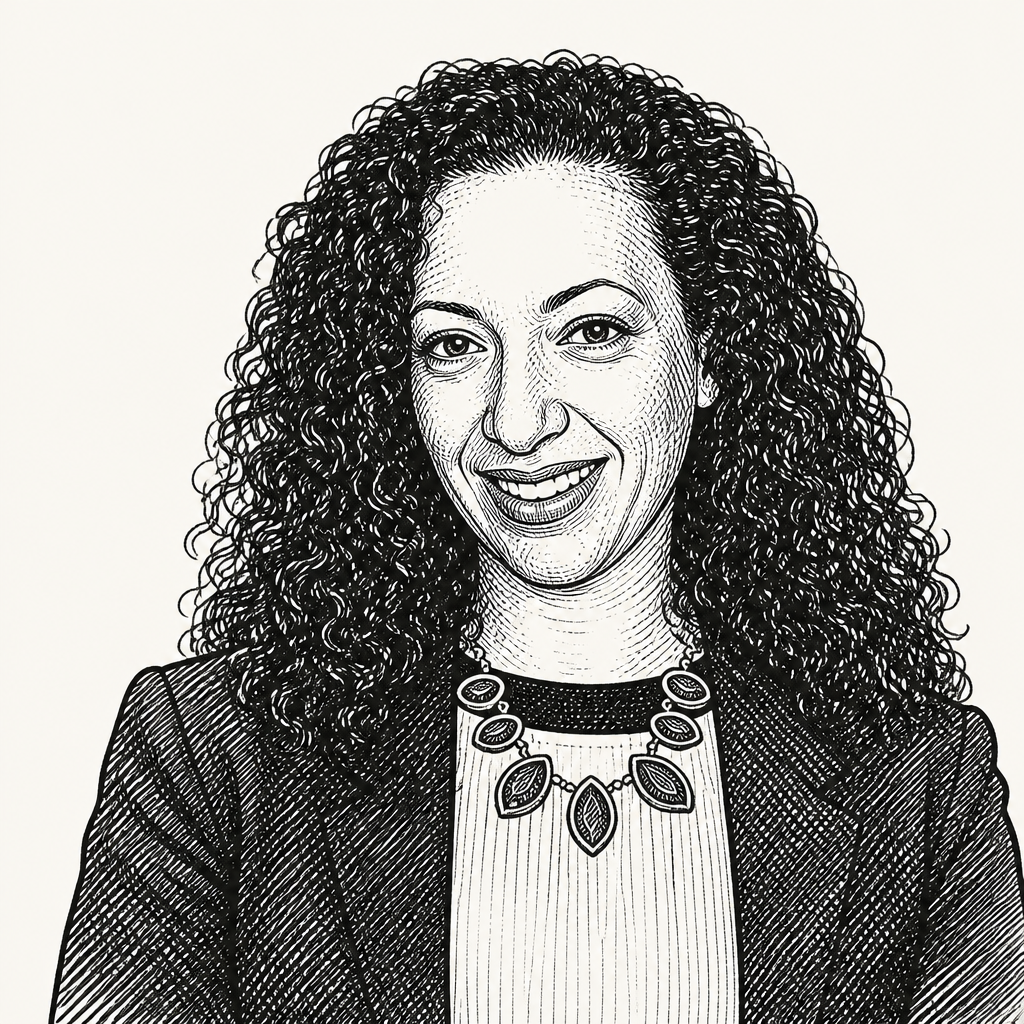
That visibility shaped years of coverage. Allam reported on retaliatory attacks, the birth of what she called the Muslim-focused security state, broad surveillance powers, the creation of the Department of Homeland Security, and the genesis of sweeping authorities that she said are now being applied to drug cartels, leftist protesters, pro-Palestinian activists, and others.
She also covered the wars abroad. Allam said US policies such as supporting friendly dictators and carrying out drone wars with high civilian casualties fueled terrorism rather than prevented it. Returning to the United States during the Arab Spring, she covered anti-ISIS operations and policy. ISIS recruiting, she said, was a real problem, but the coverage often became breathless enough that one could believe “every Muslim teenager was sneaking out of their bedroom window to go travel to Syria.”
In reality, she said, only a tiny fraction of an already small Muslim minority in the United States expressed any support for ISIS, much less attempted to travel to the caliphate. News outlets, in her view, rarely followed up when charges were dropped, interrogated why sentences were so long, or compared post-release conditions for Muslim defendants against non-Muslim defendants accused of identical offenses without a terrorism label.
Allam then moved to the Trump era. In 2017, BuzzFeed News hired her for what was billed as the “Islamophobia beat.” She considered the framing well-meaning and timely: Trump had singled out Islam in his inaugural speech, singled out Islam for a travel ban, called Islam “a cancer,” and publicly attacked a Muslim Gold Star family. But she found the beat too narrow. Her first move was to change it to “Muslim Life.”
That shift mattered because it allowed coverage of American Muslim communities beyond victimhood and backlash. Allam said younger Muslims were pressing questions about women’s leadership in mosques, race and racism within Muslim communities, LGBTQ Muslims, suicide, and the MeToo movement. In some communities, elders and status-quo defenders invoked Islamophobia to shut those conversations down: the argument was that Muslims were already too vulnerable to air internal problems. Allam treated that as its own chilling effect.
Political hate speech was severe enough, she said, that she and colleague Talal Ansari asked whether they could find public officials who had openly disparaged Islam in half the states. Their reporting, according to Allam, turned up examples in 49 out of 50 states; Utah was the exception. In covering these issues, Allam noticed that Mormons and Japanese Americans were often among the first to condemn anti-Muslim rhetoric and hate speech, because they understood where dehumanization leads.
At that time, Allam said, much of the rhetoric still felt fringe. In some cases, she had to search for local officials. But there was no Republican pushback or censure, she said, so the rhetoric was allowed to fester and be treated as fair public discourse. Today, she said, anti-Muslim prejudice can be found in the highest quarters of power: the White House, Defense Department, National Security Council, and Congress.
Allam identified two common themes in the current rhetoric. One is the refusal to acknowledge Islam as a faith, instead portraying it as an ideology so it can be stripped of religious protections. The other is the absence of meaningful acknowledgment of hate crimes and security vulnerabilities affecting Muslims. She cited a pardoned January 6 defendant in Michigan who, she said, has been harassing and antagonizing Muslims with little pushback.
At the same time, Allam said Muslims have a larger voice in the discourse than before. She named public scholars such as Uddin and Sahar Aziz, journalists such as Leila Fadel and Amna Nawaz, and pop-culture figures such as Ramy Youssef and Mo Amer. She described Muslims she interviews as living through a strange “best of times, worst of times” scenario: greater visibility and influence, paired with deep vulnerability as the administration vows to go after civil society and advocacy work.
Allam also drew a methodological lesson for covering Christian nationalism. Reporters, she said, should not repeat mistakes made in post-9/11 coverage of Islam: taking a fringe movement as representative of an entire faith tradition, or covering it only through outside voices rather than people within the faith. She described sitting in a packed church in Oklahoma City — in the “buckle of the Bible belt,” in one of the reddest states — and hearing white, devout Christians call white supremacy and Christian supremacy incompatible with both Christ’s teachings and the Constitution.
For Allam, covering such efforts is not sentimental balance. It is accuracy. Journalism must cover the divisions and threats, but it must also show those working across lines and toward solutions because they are part of the full picture.
Selective religious liberty weakens the rule for everyone
The argument that religious liberty might undermine itself rests on a fear: once a religious community that rejects pluralism is admitted into the public “sandbox,” it may use liberty to bully everyone else. Uddin’s answer was that religious liberty does not work if it is reserved for favored groups.
Asma Uddin said that for religious liberty to be robust, it has to be for everyone. Legal rules and precedents do not generally depend on which religious claimant wins a given case. The jurisprudence that comes out of a case applies across communities. She said Muslims have won at the Supreme Court by relying on precedents created in conservative Christian cases.
The reverse is also true. If the law begins to create carve-outs — religious liberty, except for these disfavored people — then the rule weakens. A broad rule becomes full of holes. More fundamentally, Uddin said, religious freedom concerns the relationship between government and religious believer. If the government gains the power to decide which religions deserve protection, then protection depends on who holds power and which religion that government likes.
That is why Uddin finds the exclusionary argument especially ironic when made by conservative Christians. In her account, many conservative Christians speak from a deep sense of vulnerability, believing culture and institutions are moving against them. If that is so, she asked, why equip those same institutions with arguments and tools that can later be used to limit conservative Christians’ own rights?
Asked about Muslim political alignment and conservative coalition-building, Uddin returned to the same principle. The questioner, Stephen Howard, framed the issue by saying Muslim Americans had voted for President Trump in the last election, were a pivotal swing vote, and probably helped deliver Michigan; he also cited a Montgomery County, Maryland, dispute in which Muslim parents opposed a progressive curriculum on gender and sexuality. On that premise, he asked whether the conservative movement is open to Muslim communities as part of its coalition, and whether Muslim communities are reconsidering their political alignments.
Uddin said many people in the religious-liberty world are acutely aware of the persecution Catholics and Mormons experienced in the United States, including mob violence against Mormons and an extermination order. That history has made the slogan “religious liberty for all” central in those circles. Religious liberty for some, she said, is religious liberty for none.
She said she has seen people such as Robert Jeffress, who had warned that religious liberty could lead to America’s downfall, shift toward the language of religious liberty for all because they understood the logic of self-interest: religious communities can protect themselves only by making space for Muslims and others. Uddin called that motive not necessarily altruistic, but a deeper recognition that religious rights are connected.
On Muslim political alignment, Uddin cited a report from the Institute for Social Policy and Understanding finding that roughly 50% of American Muslims were interested in working with conservatives around issues such as religious liberty, while roughly 50% were not. She said most American Muslims she knows tend to lean left, but the practical question is how to form useful coalitions and think of rights as interconnected.
The tension is sharpest here: the same religious-liberty expansion many conservative Christians celebrate can be hollowed out if Islam is politically reclassified as ideology, race, or threat. Uddin’s claim was not that conservative religious-liberty victories are inherently anti-Muslim. It was that the protections created by those victories cannot be made durable if Muslims are excluded from them.
Pluralist institutions need both roots and restraint
The institutional question is not only whether people have formal rights. It is whether the institutions through which they live — schools, churches, mosques, public rituals, protests, civic coalitions — build social trust or harden boundaries.
A question about Northern Ireland’s school system raised the problem in concrete terms. The questioner said that, even after the peace agreement, only 8% of children there are educated together in integrated schools, while Catholic schools and state schools seen as Protestant are publicly funded. Fraser Nelson answered through a broader question now under discussion in the United Kingdom: whether state-funded religious schools — Muslim, Catholic, Protestant, and others — are cohesive or divisive. Secular humanists, he said, would be happy to abolish them as signs of division. His own view is the opposite.
Nelson argued that Catholic schools can be socially cohesive within a community. His children attended a Catholic state primary school, where, as he put it, “a cleaner” and “the cleaner’s boss” could wait outside the same school gate for their children. That kind of institution can bridge class divides and create meaningful social cohesion. A church, mosque, or other shared institution can generate social capital, particularly at the poorer end of the spectrum. When such institutions weaken, he said, civil society weakens dangerously.
He acknowledged the problem of segregated communities, where Muslim children may not encounter Jewish children, or vice versa. But he said he sees strong examples of the reverse. He cited King David, a Jewish school in Manchester where he said 80% of students are Muslims because of the quality of the education. He also cited Katharine Birbalsingh’s Michaela Free School in London, where students are assigned seats at lunch so Jews, Christians, Muslims, and others sit together. Nelson described Michaela as the best-performing state school in the United Kingdom.
His conclusion was that religion is a force for good, and that the sense of community religious institutions provide can outweigh the risks they pose. Nelson’s position was not that religious institutions automatically produce pluralism. It was that they can produce the kind of social capital and cross-class solidarity that a purely secular integration project may fail to replace.
The same discussion turned from institutions to public restraint. Guthrie Graves-Fitzsimmons framed one of the central choices as a false binary: civilizationalism on one side, “godless globalism” on the other. Uddin’s answer was neither retreat into religious nationalism nor a public square scrubbed of religion. She called for “thicker pluralism”: a way of negotiating deep difference, recognizing that people will disagree about fundamental matters, identifying shared moral commitments where they exist, and negotiating rather than excluding.
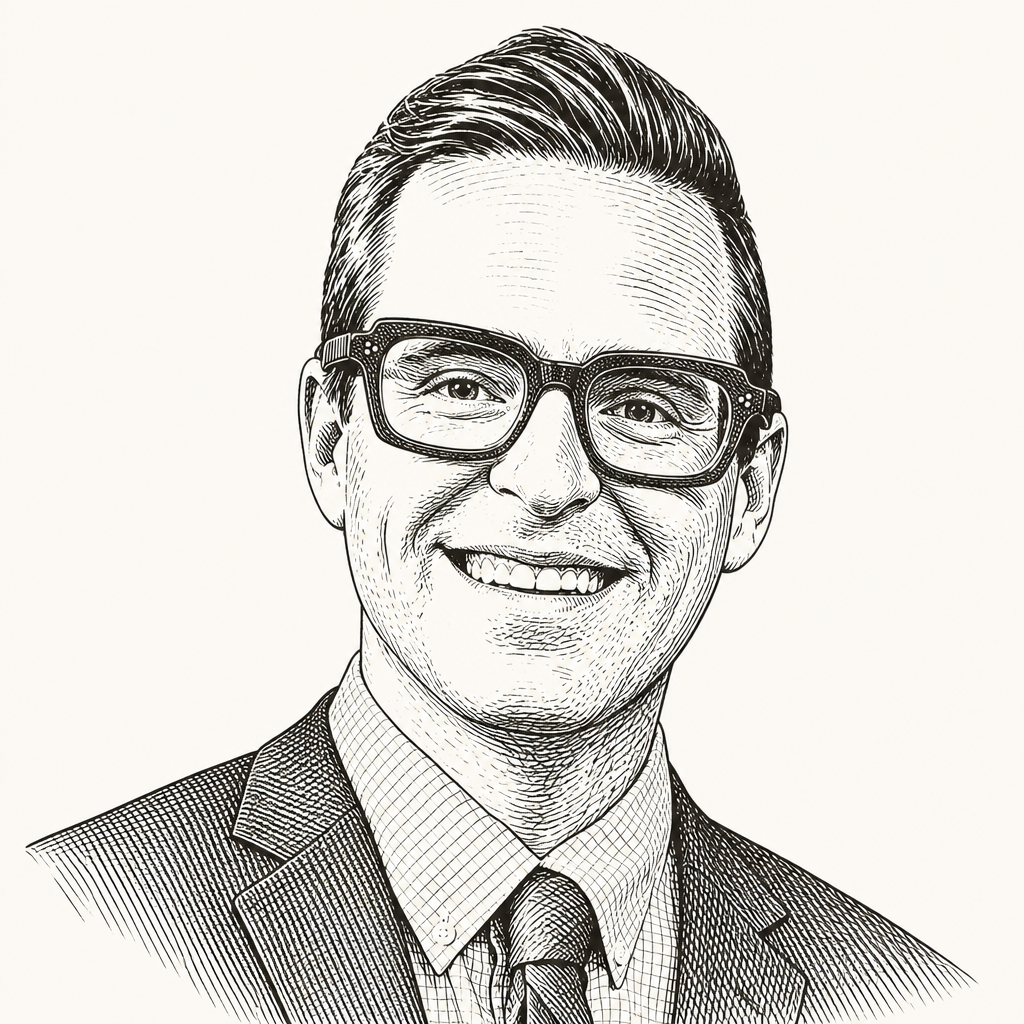
That framing applied not only to Muslims, but also to the divide between liberals and conservatives and to Christians themselves. Uddin said she sees many cases where certain people are simply treated as unable to be part of the conversation. Thicker pluralism, as she described it, is rooted in restraint, humility, and reciprocity.
Nelson added a more concrete ethic: a culture in which people give one another space. He used protests outside abortion clinics as an example of a position on which he has changed his mind. He once treated such protests as straightforward freedom of expression. He now thinks giving each other space requires mutual restraint: “the equality lobby” should not come into his church and lecture Catholics about female priests, and in exchange, “my lot” should not harass women outside abortion clinics on what may be the worst day of their lives.
He extended the point to Quran burning. A person can burn a Quran and claim free speech, he said, and Sweden has had problems with such acts because they inflame public opinion. But the question for Nelson is not only what one has the legal right to do. It is what respect requires, even if respect means “clipping our own wings.” In his view, pluralism requires difficult conversations about the freedom to protest outside abortion clinics or burn a Quran, not simply abstract celebration of rights.
The new fact may be minorities defending one another
The strongest source of hope in the discussion was not that anti-Muslim rhetoric will fade on its own. It was the emergence of cross-faith defense: religious and ethnic minorities recognizing familiar patterns and defending one another before the logic of exclusion reaches them too.
Fraser Nelson located that possibility in Catholic memory. Asked whether Catholics could be moved to understand their own history of marginalization as tied to current attacks on other religious minorities, Nelson said he sees this in Pope Leo and in Leo’s two predecessors. They have emphasized religious freedom rather than simply rights for the Catholic Church. In Britain, Nelson noted, anyone religious is now a minority according to the last census, because most people do not identify as religious or do not believe in God. That changes the frame: the fight is for everyone’s religion.
Nelson said he long avoided being labeled a Catholic journalist; he considered himself a journalist who happened to be Catholic. But when he sees Muslim children hearing a narrative like the one he heard growing up, he feels a responsibility. If one has benefited from living in a society that overcame an earlier sectarian hurdle — as Catholics did in the United States with John F. Kennedy’s election, in Nelson’s framing — then one incurs “a kind of debt” to fight for the liberty of others.
He offered several contemporary examples. In Scotland, Kate Forbes, a member of the Free Church of Scotland, faced hostile questions when she ran for first minister about gay marriage and sex before marriage. She gave traditional answers but said that in office she would govern for everyone. Nelson said Muslims came to her defense, rather than backing her Muslim opponent Humza Yousaf, because they recognized someone willing to defend personal belief while protecting everyone’s rights.
He also cited an open iftar in Trafalgar Square. When Muslims were criticized for it, the Jewish News defended them, warning that those saying “this is a Christian country” today would come after Jews next. Anglican bishops also stood up for the Muslims. Nelson said hostility to Muslims and religion is not new; what is new is seeing a cross-faith defense of a minority being attacked.
Hannah Allam added two examples involving Pope Francis that mattered to Muslims she knew: washing the feet of Muslim refugees and calling nightly to besieged Catholics in Gaza. She said those small acts moved people to tears and generated Muslim support for the Catholic Church. Nelson interjected that this kind of gesture is new: “We were not seeing this 20 years ago.” Allam agreed that it is different.
At the close, Nelson returned to the same point. Ancient enmities are familiar; the new moment is minorities coming to one another’s defense. He invoked Jonathan Sacks, the former Chief Rabbi, who in the House of Lords often quoted the idea that when people are persecuted, what they remember most is the silence of their friends. Nelson’s final claim was that many friends now need a voice, and that lending it can matter. “This is only inevitable if we allow it to be so,” he said.
Race is not incidental to anti-Muslim politics
Dwayne Royster pressed the panel on two absences. First, he pointed to what he described as a recently released anti-Christian bias report in the United States and a Religious Liberty Task Force established by the president with very conservative religious leaders. Royster said he believes some form of Christianity will be named as the national religion of the United States in the near future. Second, he argued that the discussion had not sufficiently addressed race, even though race deeply affects Muslim communities and American religion more broadly. Religions are not equal social categories, he argued; other factors attach to them.
Hannah Allam answered by rejecting monolithic treatment of any religion. When asked how to cover “the Muslim community,” she said she starts by correcting the phrase to “communities.” At least a quarter of US Muslims, she said, are Black and born in the United States, yet Islam is often portrayed as newly arrived, foreign, Arab, or South Asian. The same caution applies to Christianity. She said Black evangelicals and others have objected when media use “evangelical” as shorthand for right-wing, Trump-supporting white Christians.
Allam also described tensions inside Muslim activism. After the first Trump presidency, Arab and Muslim activists sometimes turned to Black Muslims for guidance, saying they had long experience with anti-Muslim and anti-Black hostility. Some Black Muslims responded, in her account, with frustration: only now were they being treated as Muslim and useful, after feeling isolated within Muslim communities. That intra-faith conversation was part of the reality reporters need to capture.
Her bottom line was direct: “We cannot divorce race from this.” When people talk about Christian nationalism, she said, they are talking about white Christian nationalism.
Asma Uddin added that scholars often describe Islam as racialized. One version of the “Islam is not a religion” argument is to treat Muslims primarily as a racial minority. That can be strategically appealing even inside the community, she said, because some scholars argue Muslim protection should be pursued through race-discrimination law rather than free-exercise law. Uddin said she does not think that is a good idea. But she also said racialization serves propaganda: if Muslims can be painted as uniformly nonwhite, it helps fear-based politics.
On Royster’s concern about government favoring Christianity, Uddin distinguished the Free Exercise Clause from the Establishment Clause. Much of her discussion had focused on the inability to practice religion freely. But government endorsement or favoring of one religion raises Establishment Clause questions. She also tied the anti-Christian bias frame to mega-identity politics: political leaders signal to a particular group that “this is who we are,” aligning politics with religion, race, and other traits.
Allam then sharpened the institutional stakes from her national-security beat. She said the issue is not limited to religious-liberty commissions or cable-news arguments. The US Counterterrorism Strategy had been released the previous week, she said, and she encouraged people to read its 16 pages. In Allam’s description, the document calls Christianity “the most persecuted faith on the planet” and invokes civilizational themes, including Europe as an example of what not to become. These ideas, she warned, are now woven into counterterrorism policy.