School Choice Must Not Weaken Public Education’s Universal Obligation
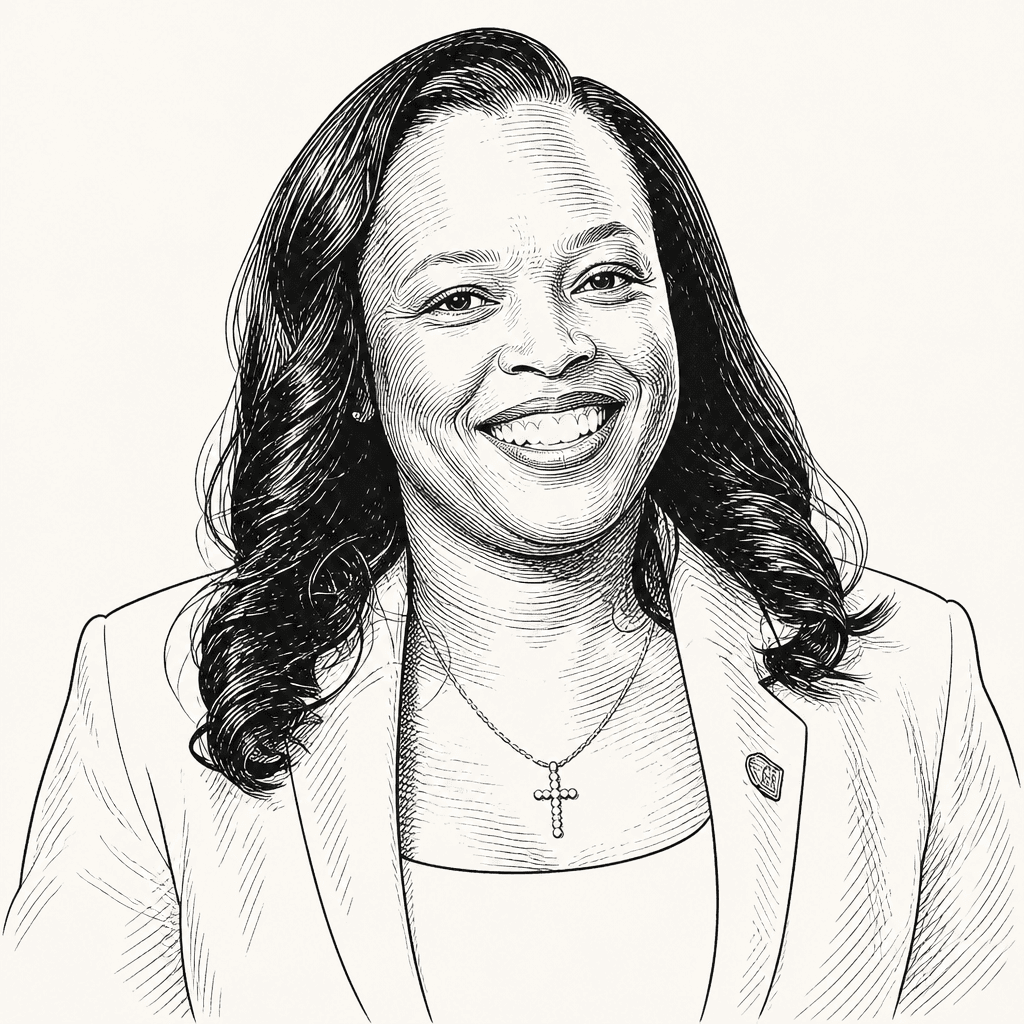

Janice K. Jackson, executive director of the Aspen Institute’s Education & Society Program, argues that public education’s central problem is a failure to define what the country owes every child. She supports family choice and accountability, but says neither can come at the expense of public schools’ obligation to serve all students or substitute for adequate resources and implementation support. Her proposed agenda focuses on practical guardrails for alternative school models, AI procurement, career pathways and state governance.

Education is a democratic obligation, not a minimum provision
Janice Jackson argues that the central failure in public education is not simply uneven performance. It is a failure to agree on what society owes children.
Education, in her view, is inseparable from economic prosperity, civic identity, and democratic strength. Yet she believes it has slipped down the country’s list of policy concerns. The practical consequence is a system in which many people accept adequate schooling for families without the money to live near well-resourced public schools, while treating high-quality education as something to be secured through income and geography.
Jackson contrasts that posture with the circumstances that produced modern mass education. At the turn of the 20th century, she notes, fewer than 20% of children continued in formal schooling beyond elementary school. The United States expanded access because it needed a more educated population as its role in the world changed. She sees a comparable question now: whether a country that is becoming less educationally competitive will remove the barriers that limit access to early education, college, and strong schools.
Her proposed test is straightforward. If education were genuinely treated as a core democratic institution, Head Start would not be optional; it would be free and universal. Every state, she believes, would offer a free four-year college option. The system’s unequal outcomes are not accidental in her account. They reflect the priorities embedded in its design.
That conviction is shaped by Jackson’s experience across the system: as a Chicago Public Schools student, teacher, principal, parent, and eventually chief executive of the district. She recalls annual strikes during her own schooling in the 1980s, and later saw the sharp contrast between the highly regarded school her children attended and the challenged West Side school she led as principal. The principalship remains, in her view, the job closest to the real work: policy becomes tangible there, in classrooms, staffing decisions, families, and students.
I think you're at the nexus between policy implementation, but you're actually still proximate to the work and real people where you can see your impact.
That proximity informs a broader criticism of education reform. Policy, research, and practice are too often posed against one another, Jackson argues, rather than used together. A system cannot be improved through policy ambition detached from implementation, but neither can it rely on isolated local practice while ignoring the structures that distribute money, authority, and opportunity.
Choice cannot erase the public system’s obligation
Janice Jackson supports school choice and has defended charter schools, including when that position put her at odds with Democratic colleagues. But she rejects an education marketplace that shifts risk and cost back onto public schools.
Her support begins with family experience. Her father drove a cab, which gave her parents enough mobility to take their five children to selective and gifted programs across Chicago. The family attended its neighborhood elementary school, but Jackson says it was always understood that the children would not automatically attend the neighborhood high school. Her parents used the limited options available to them to seek different opportunities.
She also objects on philosophical grounds to telling low-income families, particularly minority families, where their children must attend school in order to preserve the broader public system. Jackson’s question is who bears the cost when public-school protection becomes the reason to limit a family’s options.
That does not make every choice policy defensible. Jackson says she has seen vouchers work for families, including in Illinois’s former voucher program, and does not object in principle to their use at private schools. Her concern is with systems framed as parent empowerment but organized around creating a free market for education—one motivated, she argues, by access to the billions of public dollars spent on schooling rather than by a commitment to education as a democratic good.
The unresolved issue is what happens when alternatives fail, or when public systems must continue to serve students with fewer resources. Jackson points to Florida as an example in which a student can use a voucher, return to a public school when the arrangement does not work, and find that the funding has not followed the student back. In her telling, the public school is again expected to serve the child with limited resources after another system has drawn funding away.
The one thing I would argue to folks who are anti-choice at all is like, that debate is over. It is here.
For Jackson, the response cannot be to deny parental demand or attempt to restore a previous status quo. It must be to make public systems responsive and competitive while establishing guardrails for alternatives. The tension is not choice versus no choice. It is whether expanding options can coexist with public schools’ responsibility to serve every child, including children who return after another option proves inadequate.
Her resource-first view also changes how she interprets the legacy of desegregation. Jackson calls the struggle for integration the right fight, but believes it was, at its core, a struggle for better resources and outcomes. In hindsight, she worries that it reinforced an enduring association between proximity to whiteness and access to opportunity.
She would put the emphasis on what children deserve wherever they live. Students should not need to be among the few Black children in a school in order to receive a high-quality education, she argues, nor should they have to exchange cultural belonging for opportunity. She points to historically Black colleges and universities as a model whose outcomes should be replicated in more settings: places where students have the resources they need, feel culturally safe, and can receive a high-quality education without giving up part of themselves.
Accountability needs support, and leaders can move large systems
Janice Jackson supports accountability because she believes its absence harmed students in Chicago. No Child Left Behind, despite its controversy, made student performance more visible and placed accountability nearer the center of education policy. But accountability without resources, capacity, and support can become cruel. Measuring failure does not itself equip a school to remedy it.
Jackson describes Education & Society’s history as one of working through successive national policy moments. In her account, the program helped government and districts think through implementation after the Elementary and Secondary Education Act, and helped education leaders consider how accountability in the No Child Left Behind period could be paired with support and resources. She also points to Common Core work in which she participated as a principal and district leader, which she believes transformed education in Chicago and improved student outcomes there.
The institution’s durable lever, she argues, has been adult leadership—first through superintendents and more recently through principals. When Jackson led Chicago Public Schools, the district had 40,000 employees and 25,000 teachers. A superintendent could not personally hire 25,000 qualified teachers, she says, but could focus on 660 principals leading school buildings and hiring staff in turn.
You can't do everything. We don't have the money or the influence to do everything. But if you can bring together leaders, give them time to think so they can go back and do work that's transformational, I think that that impact is real.
That is the case she makes for leadership networks involving superintendents and principals. Convening is not valuable merely because people exchange ideas. Its value depends on whether leaders return to their institutions with stronger judgment, relationships, and capacity to act.
Jackson also argues that the field is operating in a particularly difficult moment. The effects of the pandemic remain unresolved; districts face enrollment declines and fiscal cliffs; youth and adults face mental-health needs that are not being adequately met; and educators often lack external support. Public education, she corrects, is not failing every student. It is “not working for everybody.”
The burden should not fall on school staff alone. Jackson calls on philanthropy, lawmakers, and institutions such as Aspen to ask what would make educators’ work more manageable and improve student outcomes. She sees inconsistent state support and less national energy around education, especially for local leaders whose politics differ from those of their state governments. Continuing the work requires what she calls radical optimism, but also institutional support substantial enough to make that optimism credible.
The proposed agenda is meant to produce usable guidance
Janice Jackson presents the proposed Rising Generation strategy group as an effort to turn broad concerns about public education into practical frameworks for the people making decisions in states, districts, schools, and employers.
Its intended composition is cross-sector, cross-partisan, and intergenerational, though she is explicit that this is an aspiration rather than an accomplished fact. Recruiting such a group means making difficult choices: which participants have standing with their constituencies, whether a diverse table can produce shared recommendations, and whether progress requires unanimous agreement. Jackson’s experience in Chicago leads her to believe that people with opposing views can find common ground when students are at the center, but she does not present the work as simple.
The group will not attempt to solve every education question. Jackson says Education & Society has chosen four areas where the stakes are immediate and the policy conversation needs sharper frameworks. Literacy illustrates the distinction: decades of research already exist, even if implementation remains inconsistent. The strategy group is meant to concentrate instead on issues where the field may need new assumptions, standards, or institutional arrangements.
| Priority | Question Jackson wants the group to address | Potential practical output |
|---|---|---|
| Alternative school models | What guardrails, policy frameworks, and practices should govern expanding options such as microschools and homeschooling? | Guidance for states considering new programs and protections for families and public-school capacity. |
| AI and education technology | Will AI reshape education as expected, and how should districts assess what they buy? | A stronger standard to help districts distinguish effective products from polished but unproven offerings. |
| Career-connected learning | What jobs offer viable pathways without a college degree, and what requirements should employers reconsider? | Recommendations for employers and civic leaders on skills, degree requirements, and access to living-wage work. |
| State governance | How should states relate to districts: through compliance, thought leadership, or capacity-building? | Frameworks for state-district relationships, including in politically divided states and cities. |
On alternative models, Jackson wants to widen the conversation beyond the familiar public-versus-charter or public-versus-private framing. Microschools, homeschooling, vouchers, and other arrangements are already changing the education landscape. The need, as she presents it, is to identify rules that protect families and public-school capacity rather than simply assuming expansion is either liberation or destruction.
On AI, her starting point is neither technological celebration nor denial. AI cannot replace a teacher, she says, but it will replace some jobs, and people who can use it effectively will have an advantage over those with limited experience. The immediate education question is procurement. Districts are being sold tools that may look compelling but lack demonstrated efficacy; a credible standard could help leaders protect limited budgets and make better decisions.
Career-connected learning raises a different problem: the mismatch between rhetoric and labor-market reality. Jackson argues that the conversation often focuses on what students must do to access jobs while ignoring how few jobs offer living wages without a college degree. Employers, not only schools, must reconsider whether degree requirements reflect actual skill needs and whether pathways into work are genuinely flexible.
State governance is the fourth thread. Jackson expects states to retain significant authority over education regardless of the federal Department of Education’s future. The consequential issue is how states use that authority. A district needs something different from a state that treats its role as capacity-building than from one focused primarily on compliance. The problem is especially acute for leaders in politically blue cities located in politically red states.
Jackson wants the group’s work to be public rather than confined to private convenings. The intended result is not simply a productive discussion among participants, but recommendations, standards, and guidance that can reach the people working daily with children and families. Without that wider use, she argues, a well-run convening does not amount to impact.