Climate Projections Show How Human Choices Shape a Hotter Earth
 Tom Skilling
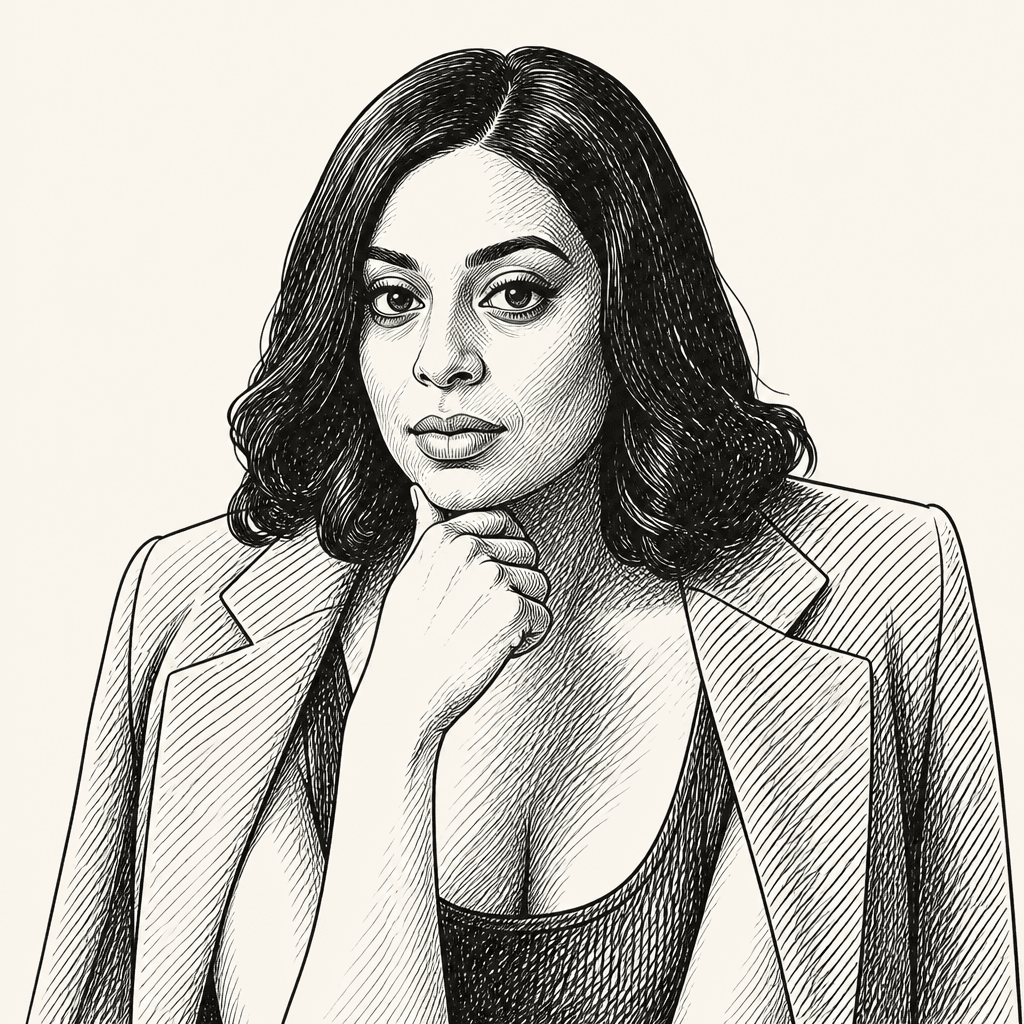 Sweta Chakraborty
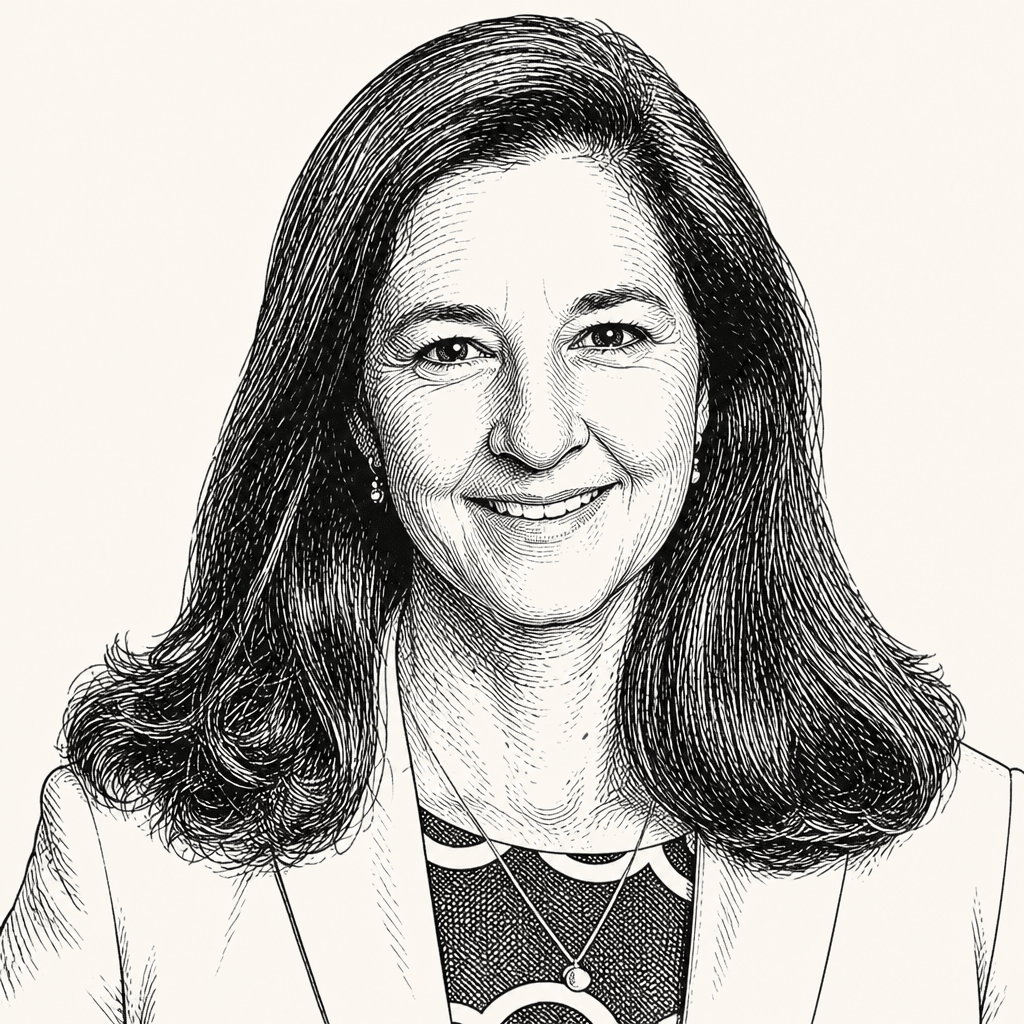 Monica Medina
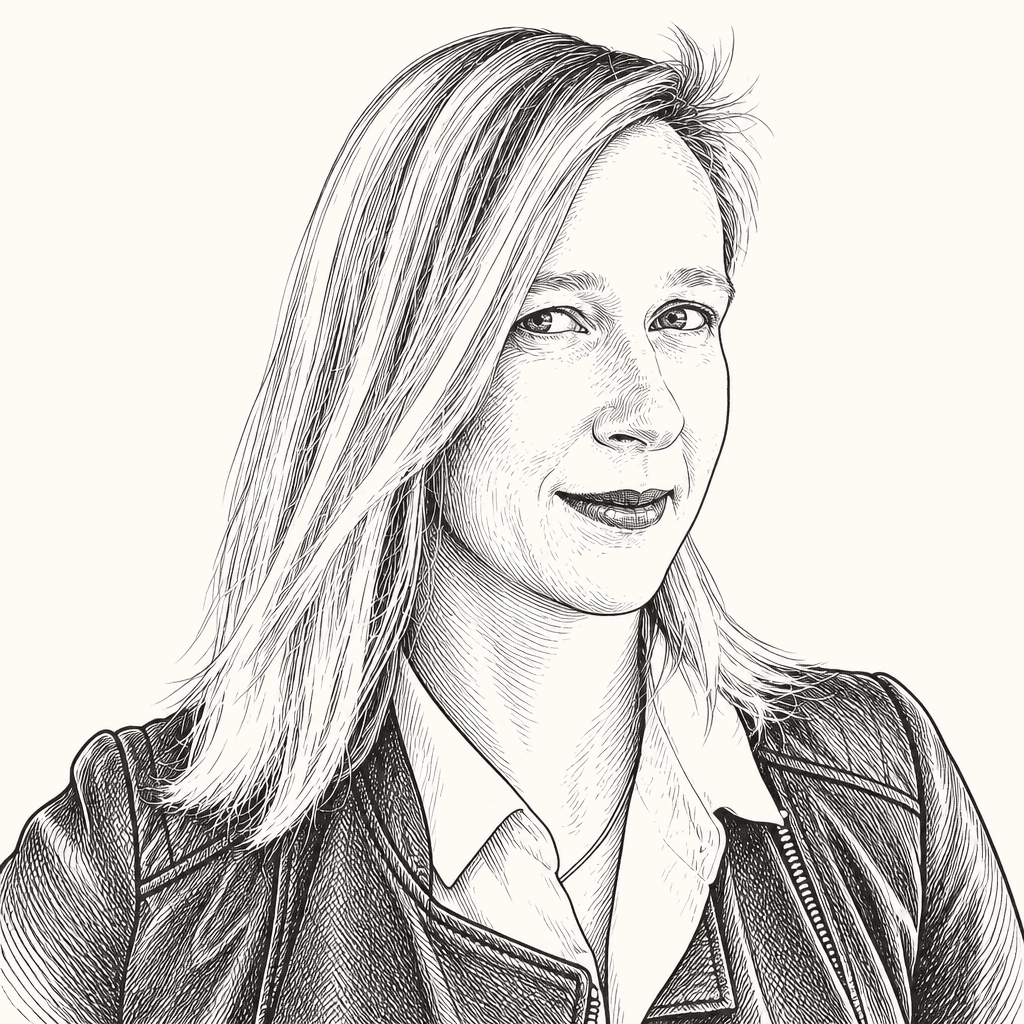 Kate MarvelThe Aspen InstituteThursday, July 30, 20267 min read
Climate scientist Kate Marvel argues that a warming planet is already intensifying heat, storms, drought, fire weather and sea-level rise, but that climate models describe conditional futures rather than an inevitable outcome. In a live recording of Scientista, Marvel tells co-hosts Sweta Chakraborty and Monica Medina that ending carbon-dioxide emissions would, by the best current estimate, produce no further warming beyond that point—and that communicating the stakes requires scientists to acknowledge feeling as well as fact. Earth, she argues, remains the only “Good Planet” people have to protect.
Warming is changing the conditions people live with
Kate Marvel describes the present climate moment in two directions at once: “the problems are getting worse, but the solutions are getting better.” The worsening is not mysterious, she says. Earth is warming because carbon-dioxide concentrations have increased, and the consequences follow from basic physical relationships.
Earth is habitable because its atmosphere retains some of the energy received from the sun. Marvel notes that without an atmosphere, a bare rock receiving solar energy and radiating it into space would be well below freezing. A very small fraction of the atmosphere—less than a third of 1%—consists of naturally occurring greenhouse gases, including carbon dioxide. Yet that trace quantity helps sustain an average global temperature of about 60 degrees Fahrenheit.
That baseline is why an increase in carbon-dioxide concentrations of roughly 50% matters, Marvel says. “We exist only because the sky does.” Adding more greenhouse gases is not a marginal alteration to a static background; it changes the conditions that make the planet livable.
The global average temperature can obscure what people actually experience. “Nobody lives in the global average,” Marvel says. But added energy in the Earth system translates into distinct risks: more widespread and severe heat waves; stronger hurricanes fueled by warm water; heavier downpours because warm air holds more water vapor; and elevated drought risk because warm air also drives evaporation. Hot, dry conditions create more fire weather. Melting land ice and the expansion of warmer seawater contribute to sea-level rise.
We know that as it gets hotter, we see more and more widespread and more severe heat waves.
Monica Medina emphasizes that drought can be overlooked because it lacks the immediate visual drama of a hurricane or flash flood. It is slow and drawn out, she says, drying places out and threatening food and water. Sweta Chakraborty makes the related point that some climate harms arrive with visible destruction while others accumulate with fewer images.
The physical effects Marvel names are already connected: warming changes heat, water, storms, fire conditions, ice, and coastlines. The question for models is not whether those relationships operate, but how far the climate will be pushed by the choices people make.
Climate models describe worlds that depend on human choices
Kate Marvel spent much of her career working with climate models, which she calls “very literally world-building machines.” A model takes a human story and translates it into physical inputs it can process: changing atmospheric composition, emissions, and what people put into the atmosphere. It then produces the world associated with those inputs.
If researchers give a model the history of human activity to date, Marvel says, it will show the world people inhabit now. But she insists on a distinction with practical consequences: climate scientists make projections, not predictions.
We don’t make predictions. We make projections. And the reason that that’s important is that projections are conditional. We say, if we do this, this is what will happen.
A projection does not declare one future inevitable; it specifies the physical result associated with a particular human course of action. Marvel likens the work to building science-fictional worlds. Continue putting carbon dioxide, methane, nitrous oxide, and fluorinated gases into the atmosphere “like it was this infinite garbage dump,” and the projected world is hotter and more frightening. Advance climate solutions already available, she says, and the climate can be stabilized.
If we choose to advance the climate solutions that we already have, if we choose to do more, then we can stabilize the climate.
That conditionality is especially important in Marvel’s account of warming already committed by past emissions. Monica Medina raises the intuitive concern that some additional warming has already been “baked in.” Marvel rejects that conclusion under a specific condition: if carbon-dioxide emissions were to stop, she says the best estimate of additional warming in the pipeline is zero.
Her explanation turns on two countervailing processes. The ocean is heating and, as Marvel puts it, “takes a very, very, very long time to get the message.” That slow response can seem to imply further inevitable warming after emissions cease. But the biosphere is acting in the other direction. Plants, phytoplankton, and other photosynthesizing life remove carbon dioxide from the air.
If people stop adding carbon dioxide, Marvel says, the expected delayed warming from the ocean and the expected carbon uptake by the biosphere would “cancel almost exactly.” The claim is not that past emissions have no consequences or that the ocean has stopped absorbing heat. It is that, in the scenario she specifies—an end to carbon-dioxide emissions—the best current estimate is not an additional increment of warming beyond the temperature reached at that point.
Facts and feelings are not competing forms of honesty
Kate Marvel organizes her book, Human Nature: 9 Ways to Feel About Our Changing Planet, around nine emotions: wonder, anger, guilt, fear, grief, surprise, pride, hope, and love. Sweta Chakraborty, who describes herself as a behavioral and social scientist, sees the approach as a bridge between physical and social science.
Marvel’s turn toward this framework began with the norms of scientific training. Scientists are often trained to be objective and neutral, she says—to behave as though they have no emotions. But studying Earth makes that pose implausible for her: “Everybody that I love lives here.” The pretense of having no preferences or feelings does not make physical scientists more credible, in her view. It makes them liars.
Marvel calls the book her “coming out as a human being.” Its central claim is not that emotion should substitute for evidence, but that the two do not conflict. A person can feel grief, fear, anger, hope, or love while still understanding the mathematics and science accurately.
You don’t have to choose between facts or feelings. You can have both. You can feel a full range of human emotions living on a changing planet. And at the same time, get the math right.
The emotional framing also addresses a familiar frustration in climate communication: knowing something is true does not ensure that others will act on it. Monica Medina invokes Cassandra, the Greek prophet whose warnings were not believed, as a figure with particular resonance for people who have long tried to convey climate risks.
Marvel returns to Cassandra in discussing wonder. The conventional reading is tragic: a person who foresaw the future and was ignored. But Marvel asks readers to consider another dimension—how extraordinary it would be to be the only one who knows the truth. Her argument is not for detachment from the implications of climate science, but for telling the truth about a changing world without pretending that receiving it is emotionally neutral.
Earth is not replaceable by Mars or anywhere else
Kate Marvel came to climate science from astrophysics, after astronomy revealed a version of physics she found more compelling than the mechanics she had encountered in school. Studying the universe, she says, also clarified the unusual value of Earth: “most of it is garbage.” That perspective underlies her designation of Earth as the “only Good Planet.”
When Monica Medina raises the prospect of living on Mars after damaging Earth, Marvel allows that people may be able to get there. But she treats it as no replacement for the conditions of ordinary life. There are no puppies or whiskey on Mars, she jokes, and—unless one’s preferred activity is slowly starving or rapidly suffocating—little to do there.
The same point applies, in her telling, to the Moon, Jupiter, and the 5,000 exoplanets she mentions. The rhetorical contrast is meant to bring attention back to the existing planet rather than a hypothetical exit from it.
The Earth is the only place that we have and we might as well take care of it.
A representative scientific community broadens who can do the work
Sweta Chakraborty asks why women should claim space and amplify their voices in climate science. Kate Marvel answers with a broader case for who should be able to practice science and why that participation matters in the current political environment.
Historically, Marvel says, women have been discouraged from doing science; now, she adds, men are discouraged as well. She compares science with journalism and history: each is a way of finding out what is true and telling people about it. That truth-seeking function, she argues, makes science dangerous to authoritarians and vital to democracy.
The practical implication is not simply that women should be better represented as communicators of established findings. Marvel argues that the people able to investigate the world, ask questions of it, and explain what they learn should be representative of the people who live on the planet. That means preserving broad participation in the work itself: women and men able to contribute to the discovery and public understanding of climate realities.
For Marvel, this is both a democratic need and a privileged kind of work—the chance to find out “cool stuff about the world.” The point is not that science should become less rigorous or less factual. It is that the community entrusted with rigorous inquiry should not be narrowed when the knowledge it produces bears on everyone.