Economic Mobility Depends on Connecting Jobs, Skills, and Local Capacity
 Stefan PryorPerrin Duncan
 Tim Roberts
 Derek Kilmer
 Polly TrottenbergDavid ClunieThe Aspen InstituteWednesday, October 21, 202612 min read
At Aspen Ideas: Economy in Tulsa, Derek Kilmer of the Rockefeller Foundation argues that economic growth will not create broad mobility on its own: communities need the capacity to connect workers to jobs and businesses to opportunity. The discussion, moderated by Edward Jones Foundation president David Clunie, makes the case for coordinating infrastructure, workforce training, public services and local institutions—and for directing investment to distressed places, where Kilmer says it can produce more jobs per dollar than in areas already growing.

Growth is concentrated, but distressed communities can recover
The gap between strong national economic indicators and weak household experience is not just a matter of perception. David Clunie opened with research on financial fulfillment conducted by Edward Jones and Gallup: among about 5,000 Americans across income and wealth levels, most said they did not feel financially fulfilled. More than half described themselves as financially constricted—able to make ends meet, but worried about the future and cutting back. He also cited an Aspen measure finding that three-quarters of Americans lack what they need not merely to survive, but to thrive.
For Derek Kilmer, the unevenness is also geographic. A community is considered economically distressed when its prime-age employment rate trails the national average by more than five percentage points. About one-third of U.S. counties—roughly 50 million people—meet that definition. Meanwhile, more than half of the country’s job growth has occurred in just 100 counties.


Kilmer’s own region, he said, went from exporting wood products around the world to exporting young people. He sees the pattern as evidence that the country has managed economic disruption poorly—and that another major disruption, from artificial intelligence, is coming. The response, he argued, cannot be a single intervention. Communities need strong organizations able to plan and carry out economic development, and they need to connect systems that are often treated separately. One local economic-development leader told him he had not realized he needed to care about child care until vacant jobs could not be filled because workers had nowhere to leave their children. Transportation, training and child care can all determine whether residents can take available jobs.
The case for investing in distressed places is not only about need. Kilmer cited research by Scott Andes showing that more than 200 communities that were distressed in 2000 had moved out of distress by 2023. Together, they connected more than 1.8 million working-age people to jobs—more than the prime-age job growth in Boston, Austin, San Francisco and Seattle over the period he described.
He also cited Tim Bartik of the Upjohn Institute, whose research found that spending produces three times as many jobs per dollar when directed to distressed communities rather than places already adding jobs. Investment in fast-growing areas can intensify housing shortages and traffic; in struggling places, Kilmer said, the same dollars can have greater impact.
That argument does not make the work simple. It shifts attention from concentrating growth where it is already happening to building the capacity and connections that let more places participate.
Infrastructure works when the workforce and local capacity are part of the plan
Polly Trottenberg described the Biden administration’s approach to the Bipartisan Infrastructure Law as an effort to make large-scale investment reach communities that had often missed out. The law authorized $1.2 trillion, with the largest share going to transportation, alongside investments in energy, water and other areas. One guiding principle, Justice40, aimed to direct 40% of the benefits to communities most in need.


Trottenberg said the administration also tried to link infrastructure spending to workforce development and small-business opportunities. That meant supporting job training and upskilling, including child care in the CHIPS Act, and designing some programs so that businesses with less access to government contracting could compete for work. It also meant working directly with local governments and tribal governments, rather than relying only on federal money flowing through states. Technical assistance and communities of practice were intended to help local partners design projects and manage them.
But Trottenberg also emphasized the cost of complexity. The infrastructure law ran to 2,700 pages and created many programs. Her reflection was that the federal government needed to make access to funding simpler, with fewer bureaucratic hurdles. A program can target the communities most in need and still be difficult for those communities to use.
The Reconnecting Communities program illustrates both the potential and the limits of federal incentives. It addressed the legacy of interstate highways that cut through communities, often communities of color and immigrant communities. In Tulsa, Trottenberg noted, the Greenwood community—already the site of a massacre—was later divided by an interstate. These projects are difficult because the highway may be controlled by the state while its effects are experienced locally over generations. Billions in federal funding brought local communities, states, researchers and philanthropies to the table. In some places, Trottenberg said, that helped state and local governments work together where they previously had not. In Tulsa, the effort to encourage collaboration around Greenwood remained a work in progress. Money can start relationships and make solutions politically possible, she said, but it does not guarantee agreement.
Smaller programs can address a different barrier: communities may lack the staff, data or expertise to compete for funding in the first place. The Thriving Communities program provided about $50 million for capacity building and technical assistance. Safe Streets and Roads for All, modeled in part on New York City’s Vision Zero effort to eliminate roadway deaths, directed funds to local communities and tribal areas rather than states. Some communities initially did not know how to gather the data or plan interventions. The program helped create a community of practice, Trottenberg said, and improved how communities analyzed roadway safety—even when they did not win grants. Some resulting safety measures were low-cost but potentially life-saving.
Local institutions can turn economic development into community agency
Tim Roberts argued that local loyalty and local authority can produce a sense of urgency that distant institutions may lack. As a Cherokee citizen and voter, he said he knows the agenda of the elected official he supports and sees it as aligned with his own. The Cherokee Nation’s role in health, education and human services, he said, is part of a broader contribution to Oklahoma. Roberts cited a map of economic mobility that, in his account, shows Oklahoma as an exception to generally low rates of movement from poverty to the middle class, with tribal nations playing a central role.
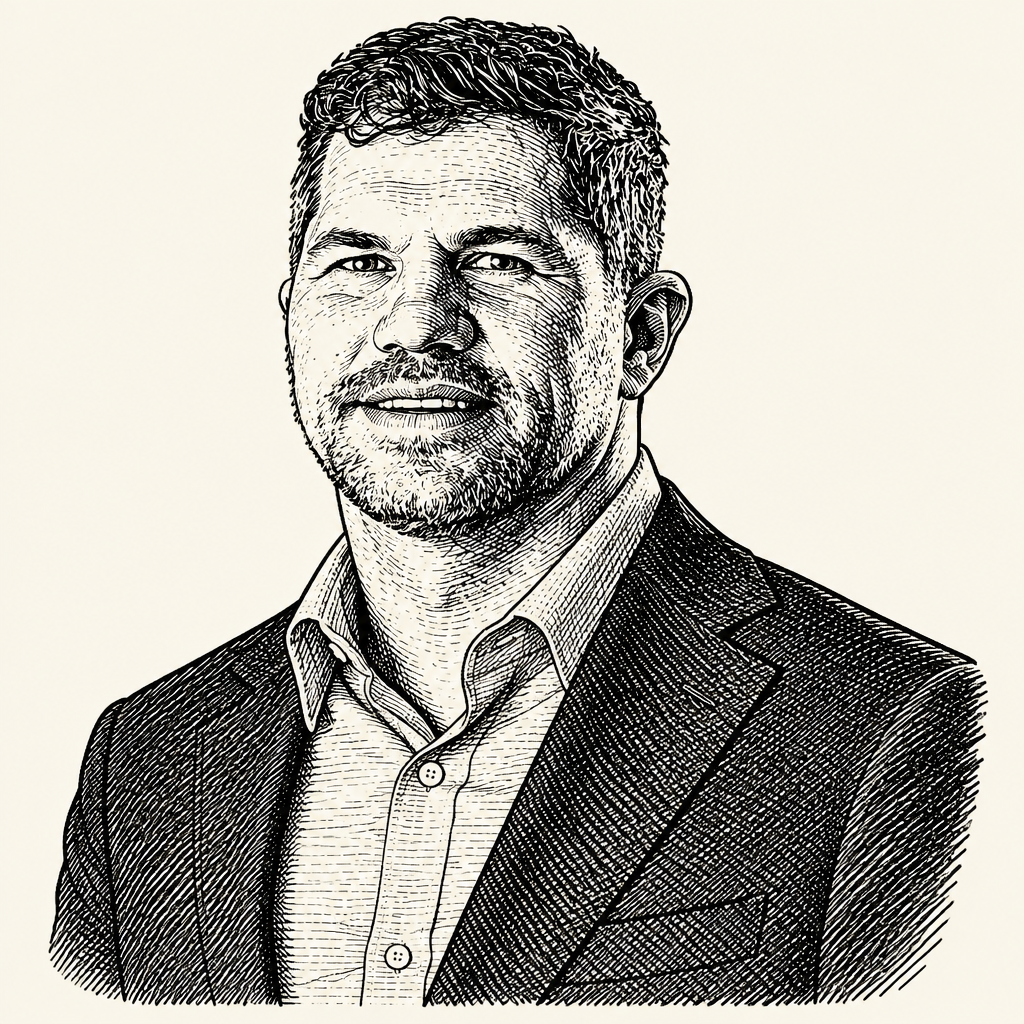
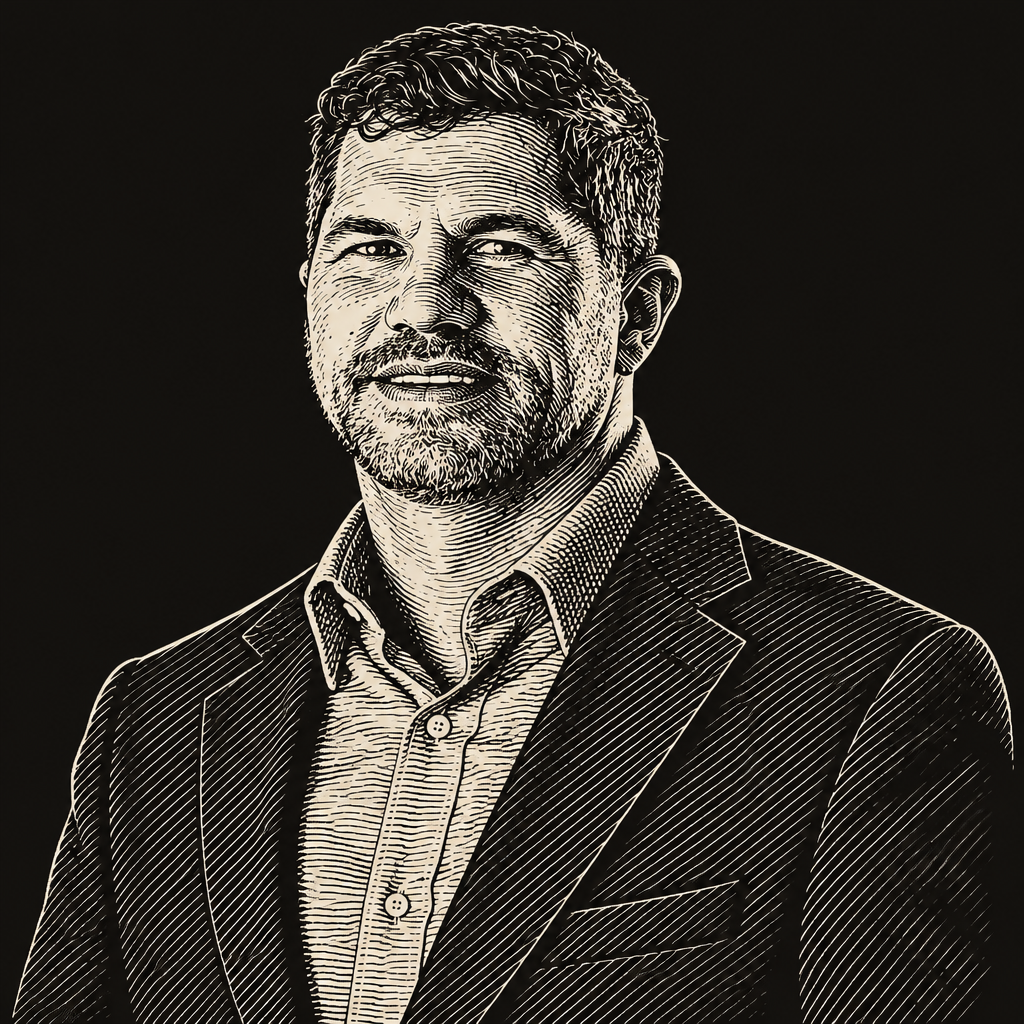
That local agency matters when communities face decisions about what kind of growth to accept. Roberts pointed to data centers as an example: rural residents may oppose them, but they are arriving anyway, with concerns about whether the investments are sustainable and what resource constraints they may create. He argued that government can use procurement and other incentives to shape where business goes and what opportunities accompany it. If data centers place pressure on some communities, he suggested, public policy could help bring other opportunities—such as drone manufacturing—to places facing the costs. He said the United States lacks the capacity to build drones at the rate required, and that Cherokee Nation Businesses is working with Tulsa Innovation Labs on a grant related to drone manufacturing.
The Cherokee Nation’s business strategy, Roberts said, reflects a longer time horizon. It buys companies to keep them, not to cut benefits, raise their value and sell them. The aim is to build continuing income streams for the Nation and its citizens. Roberts described Cherokee Nation Businesses as a “forever company,” with all its shareholders in Oklahoma and money going to the common good. He contrasted that approach with political arrangements in which elected officials may be more responsive to lobbyists or party interests than to their state. Local authority, in his view, is most useful when it is paired with the ability to act over generations.
Stefan Pryor offered examples of connecting physical assets, programs and workers. His framework for economic development has three parts: physical infrastructure, programmatic infrastructure and people trained to use the opportunities those systems create. In Newark, where he worked under Mayor Cory Booker, the downtown had not seen a new multifamily complex in about 40 years, and public schools struggled to hire teachers in time for the start of the academic year. The city created Teachers Village, a housing complex of more than 200 units, with over 150 dedicated in some way to public-school teachers. Retail space at street level was made available to small and predominantly minority-owned businesses that might not qualify as “credit tenants” and otherwise struggle to secure space. Pryor said only 19% of Newark teachers lived in the city, a separation that also meant tax dollars leaving the jurisdiction. The development was intended to address housing, teacher recruitment, local business access and the connection between teachers and students together.
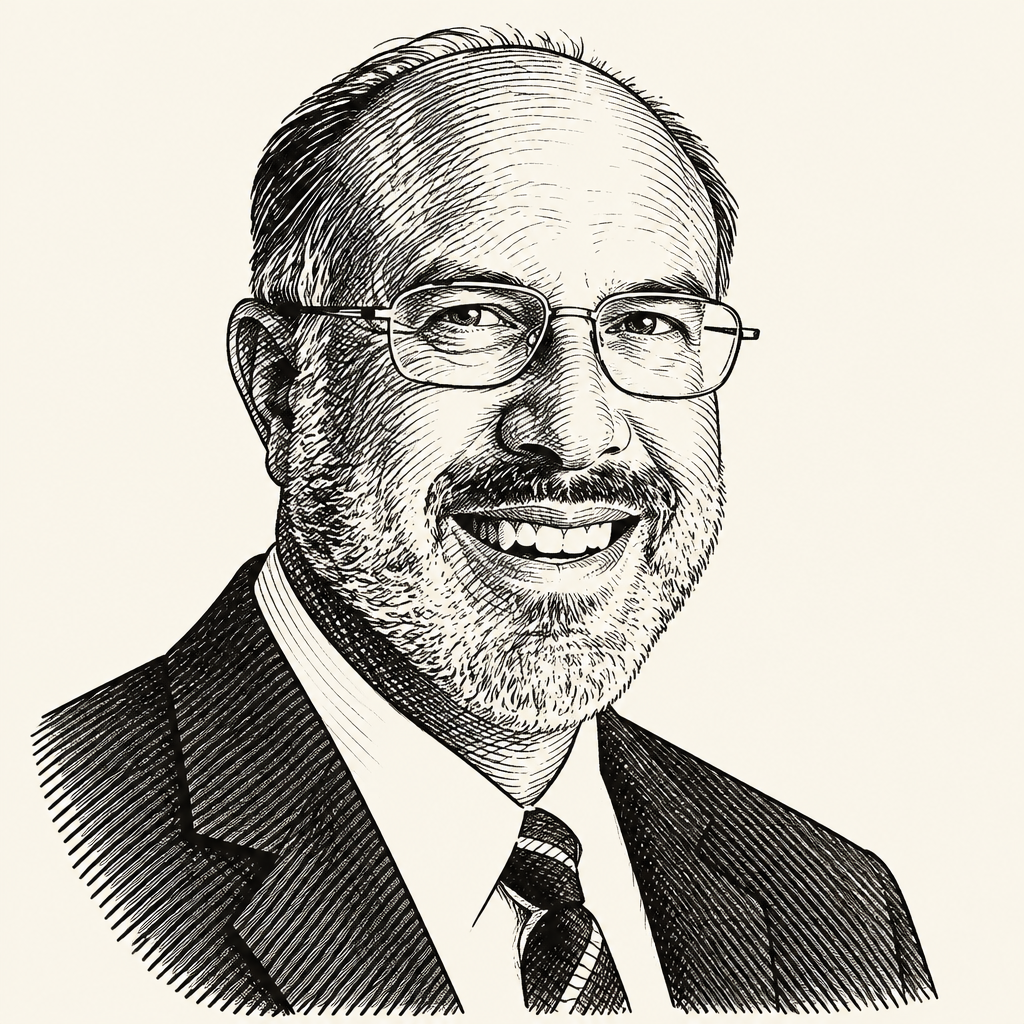

In Westerly, Rhode Island, the challenge was training workers for a growing submarine industry. Electric Boat needed thousands of new employees each year; Pryor said the state needed 3,500 in 2026. Rhode Island brought its public universities and community college system together to run a training center, with mock hulls where students could practice welding, pipefitting and related skills. The center had trained 7,000 people, with a 98% placement rate, Pryor said.
Pryor also described how Rhode Island has repurposed sites to connect existing assets with new industries. In Providence, the former route of Interstate 195 occupied 26 acres near the river and had disrupted a jewelry-manufacturing district. After the highway was shifted, the state developed the land as the 195 District, with residential units and business incubators intended to keep the area active beyond working hours.
One incubator, operated by the Cambridge Innovation Center, occupies 60,000 square feet within a larger 200,000-square-foot complex. Pryor said it was the best-occupied incubator in the CIC network, which includes locations in Boston, Berlin and Tokyo. He attributed the district’s prospects to the nearby presence of Brown University, the Rhode Island School of Design and state universities—and to the need for somewhere local businesses could go. The state also established a bioscience wet-lab incubator on a nearby site, anchored by a state laboratory that needed repair.
A former Navy installation offered another opportunity. Rhode Island turned 600 acres into a business park and seaport that, Pryor said, now contains more than 260 businesses and 15,000 employees. The site includes Electric Boat’s submarine work and Anduril’s undersea-vehicle construction. Even that development left the state short of industrial land, so Rhode Island expanded the site-preparation effort beyond the original jurisdiction through its Rhode Island Ready program.
These examples differ in scale and purpose, but Pryor’s framework connects them: physical spaces and programmatic partnerships are meant to meet specific needs, whether housing teachers, training submarine-industry workers, supporting business formation or preparing land for employers. The center’s reported placement rate and the districts’ business activity describe different outcomes; Pryor presented both as results of aligning facilities, institutions and employment needs.
Collaboration needs incentives—and the ability to keep going
Derek Kilmer used a boat metaphor for cross-sector work: it moves best when everyone’s oars are in the water and rowing in the same direction. In philanthropy, he said, he had been struck by how many foundations were doing consequential work in communities without coordinating with one another, sometimes even when they were addressing the same problem in the same place. The Rockefeller Foundation was preparing to announce All In for Jobs, an effort involving more than a dozen foundations to align investment, share learning and identify opportunities to work together.
He pointed to the Cleveland Site Readiness Fund as a local example. Distressed urban properties can be difficult to return to productive use; the fund brought together city government, a community foundation, national philanthropies, workforce-development providers and private-sector partners. Redeveloping a site is only part of the challenge, Kilmer said: workers also need training to fill the jobs that follow.
Pryor’s examples of housing, workforce training and land redevelopment, and Kilmer’s account of Cleveland, describe collaboration as a way to connect capital, training, employers and public services around a problem that no single institution can solve alone.
Trottenberg said competitive federal grants can help motivate that alignment. In the Reconnecting Communities program, the prospect of substantial funding sometimes brought a state transportation department and a local government into closer working relationships. Even where the grant did not produce a winning proposal, she said, it could begin durable conversations among government, community groups, faith organizations, universities and philanthropy. Still, the approach is harder in places with few staff and limited resources. Trottenberg’s example of the Thriving Communities program showed why technical assistance matters alongside the incentive: communities may need help simply to enter a competition.
The question of scale sharpened this tension. An audience member, Perrin Duncan, asked how communities could expand workforce and mobility programs that can be expensive per person. Pryor’s answer was to build structures that connect people to jobs and contracts, rather than assume that general economic growth will automatically benefit them.
Rhode Island’s Supply RI program works with government and private employers to connect local small, minority-owned and women-owned businesses to procurement opportunities. The state asks companies such as Gilbane Building Company and CVS, both headquartered in Rhode Island, to participate in matchmaking sessions with local contractors preparing to meet their requirements. Pryor said more than 2,000 contracts, worth over $800 million, had been issued through the effort, predominantly to minority- and women-owned businesses and all to small businesses in Rhode Island. The program, he said, creates the structure to help local firms participate in growth rather than relying on benefits to trickle through.
Trottenberg offered a caution from the federal level. During the Biden administration, federal agencies brought high-level expertise to address chronic underinvestment in Lowndes County, Alabama, including the need for major sewer-system investment. It was an important effort, she said, but it could not be replicated by sending the same level of federal attention to every community. States and regional organizations are essential to scaling solutions across a country of this size; the federal government cannot do everything at the same depth everywhere.
Kilmer’s account of federal, state and local roles was similarly divided by function. Federal programs can provide flexible, multi-year support—as the RECOMPETE bill he led in Congress was designed to do—or help identify and expand new approaches. States shape workforce and benefit systems, while communities can develop practical innovations, from training models to child-care solutions. The task is to find approaches that are innovative, replicable and scalable, he said; policy is often what allows them to reach scale.
AI calls for preparation before its effects are clear
Derek Kilmer resisted confident predictions about artificial intelligence. Economists disagree, he said, on whether it will cause disruption comparable to a severe hurricane, a mild one or no hurricane at all. His answer was to build levees before the scale of the storm is known.
For workforce systems, that means reconsidering who will need support. When the mill closed in Kilmer’s hometown, many of the people who lost jobs did not have postsecondary degrees. He expects this wave to affect more white-collar and entry-level workers, which may require shorter, stackable training rather than relying on older models of retraining.
Kilmer also raised the question of employer responsibility: when work is supplemented by AI, will businesses train and retain workers, or replace them? He cited an initiative led by former Commerce Secretary Gina Raimondo to work with states on changes to workforce systems, benefits and postsecondary education. The effort was operating in four states, with plans to expand, and Rockefeller supported it.
Philanthropy, Kilmer said, can act as risk capital for local experimentation. He pointed to a recently announced $50 million partnership with OpenAI intended to support cities testing how AI might help solve local problems, including challenges involving housing and public safety as well as economic development. Kilmer described AI as potentially useful in solving community problems as well as disruptive to work. His proposed preparation included changing workforce development and retraining; he did not claim the technology’s effects were settled.