Liberal Education Is a Condition of the American Republic
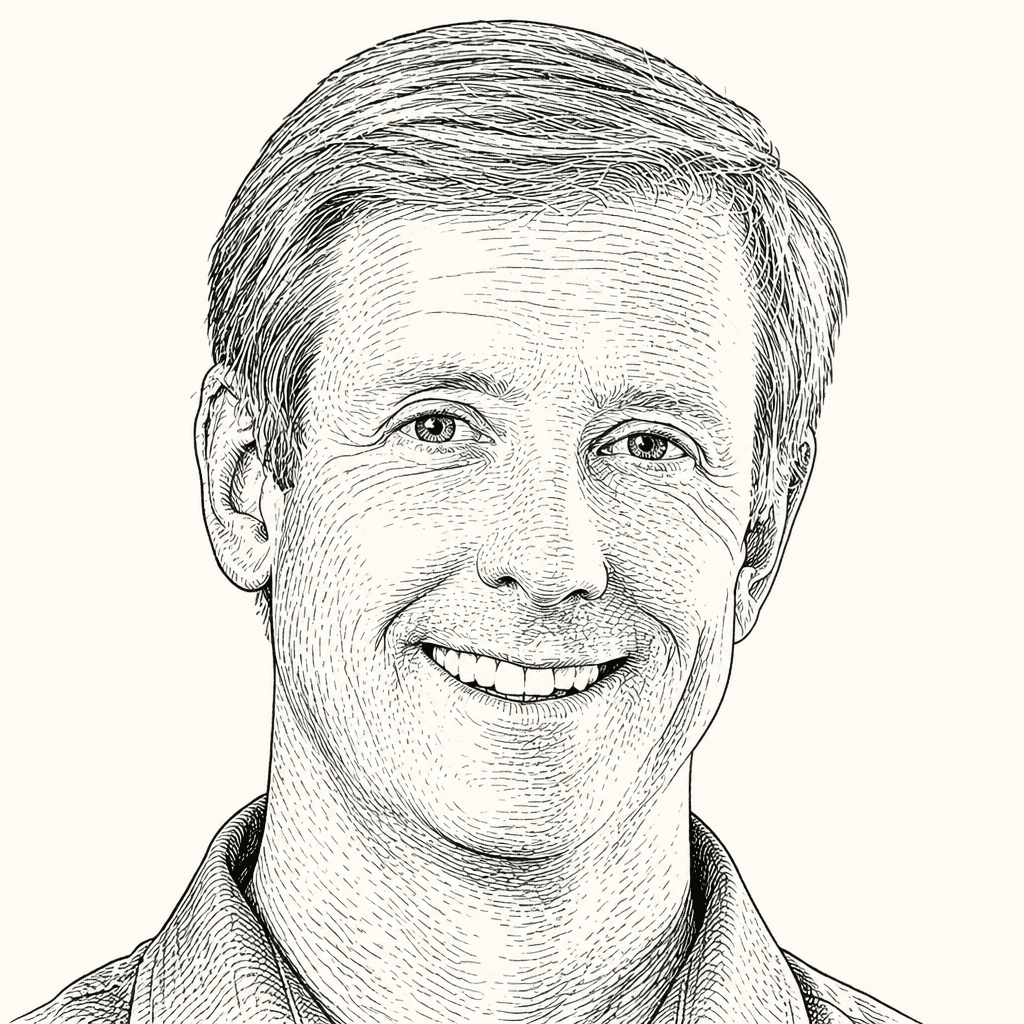 Todd BreyfogleJenna Mo
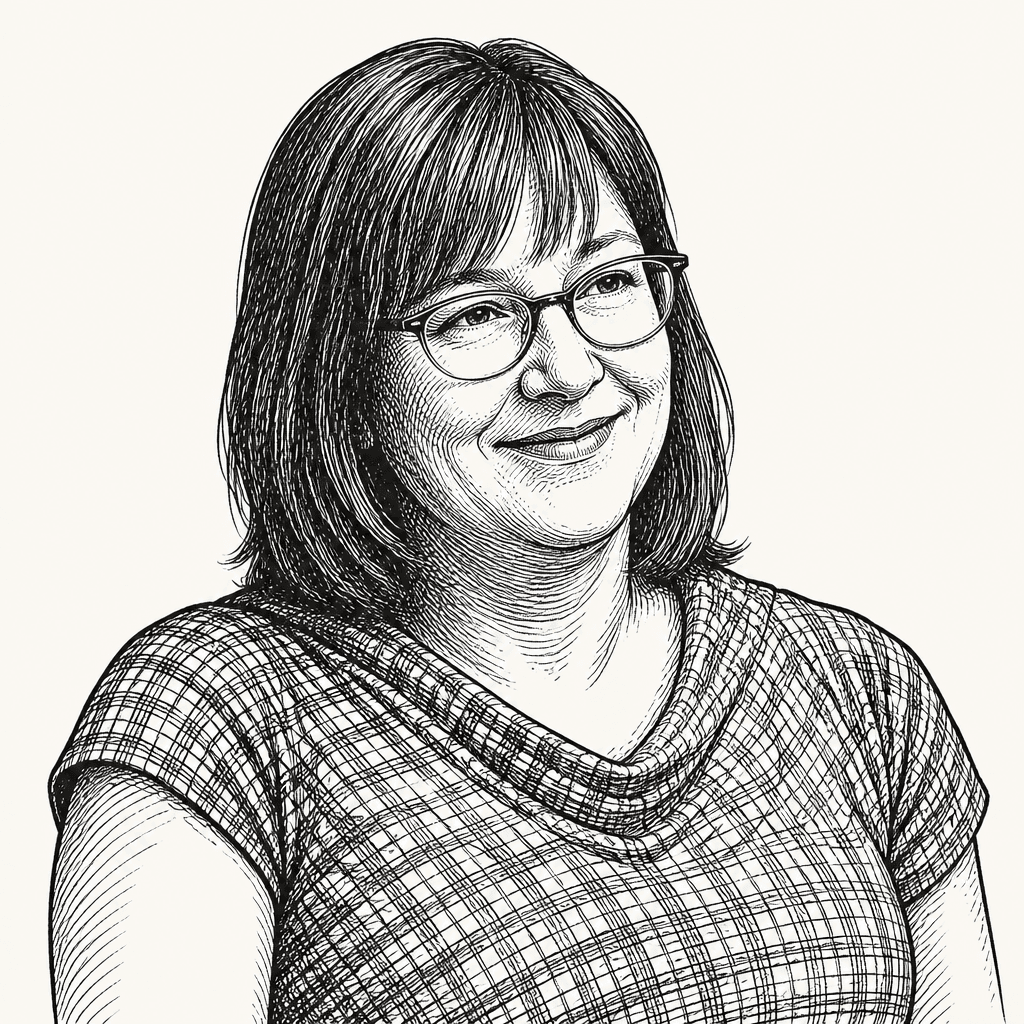 Breeze Richardson
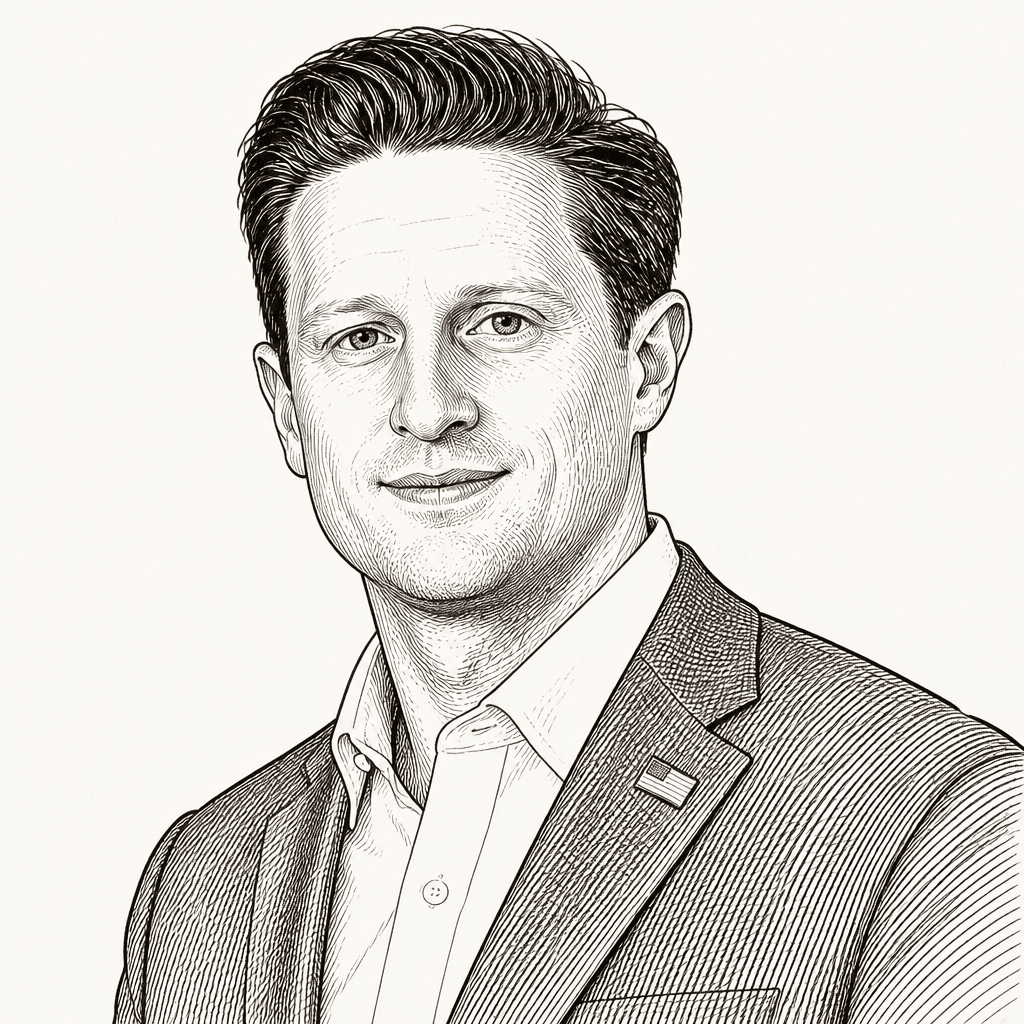 Shilo BrooksThe Aspen InstituteThursday, July 9, 202620 min read
Shilo Brooks, president and CEO of the George W. Bush Presidential Center, argues that America’s 250th anniversary should be treated as a test of civic formation, not an exercise in commemoration. In a conversation with the Aspen Institute’s Todd Breyfogle, Brooks makes the case that self-government depends on liberal education: citizens reading seriously, examining their own false convictions, practicing moderation, and learning to argue without contempt. His warning is that civic ignorance is not just an educational failure but a constitutional problem for a republic in which the people are meant to rule.
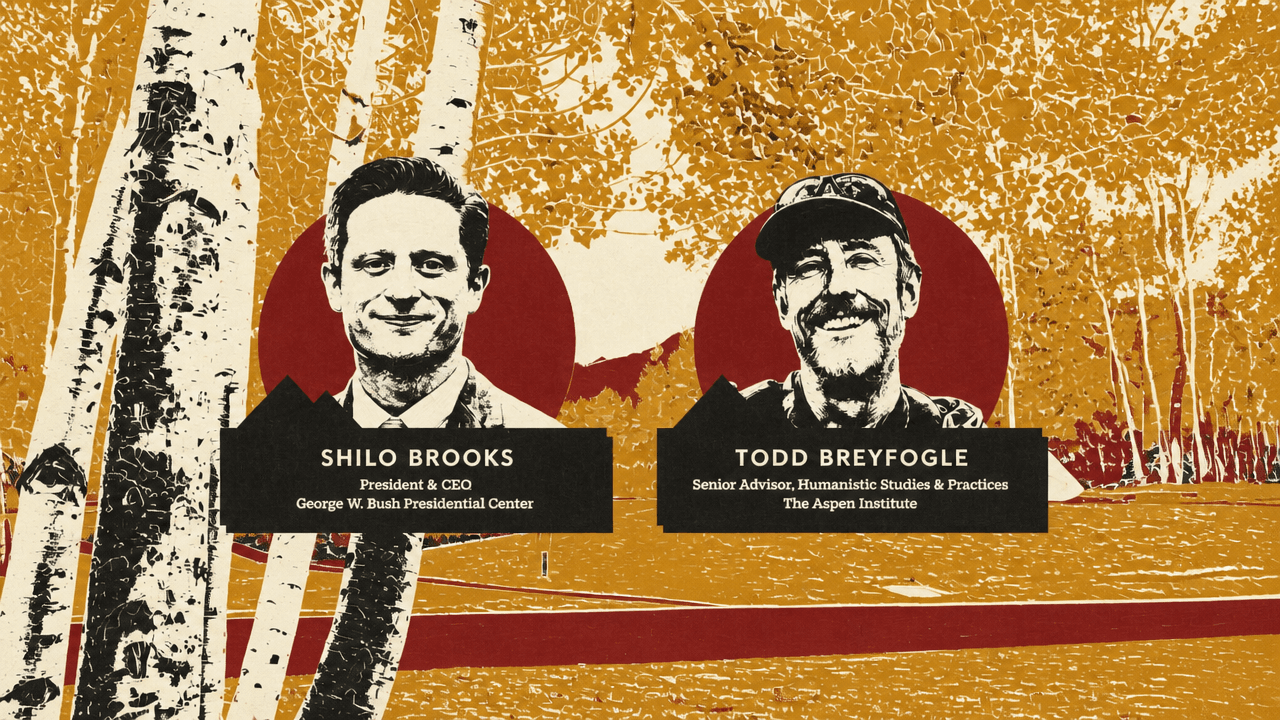
Civic ignorance becomes a constitutional problem when the people are the rulers
Shilo Brooks treated liberal education not as an ornament of citizenship but as a condition of republican government. Democracy, he said, rests on an offer: if the people are to rule, they must become enlightened rulers. In that account, civic ignorance is not merely a cultural problem or a failure of schooling. It cuts against the premise of self-government itself.
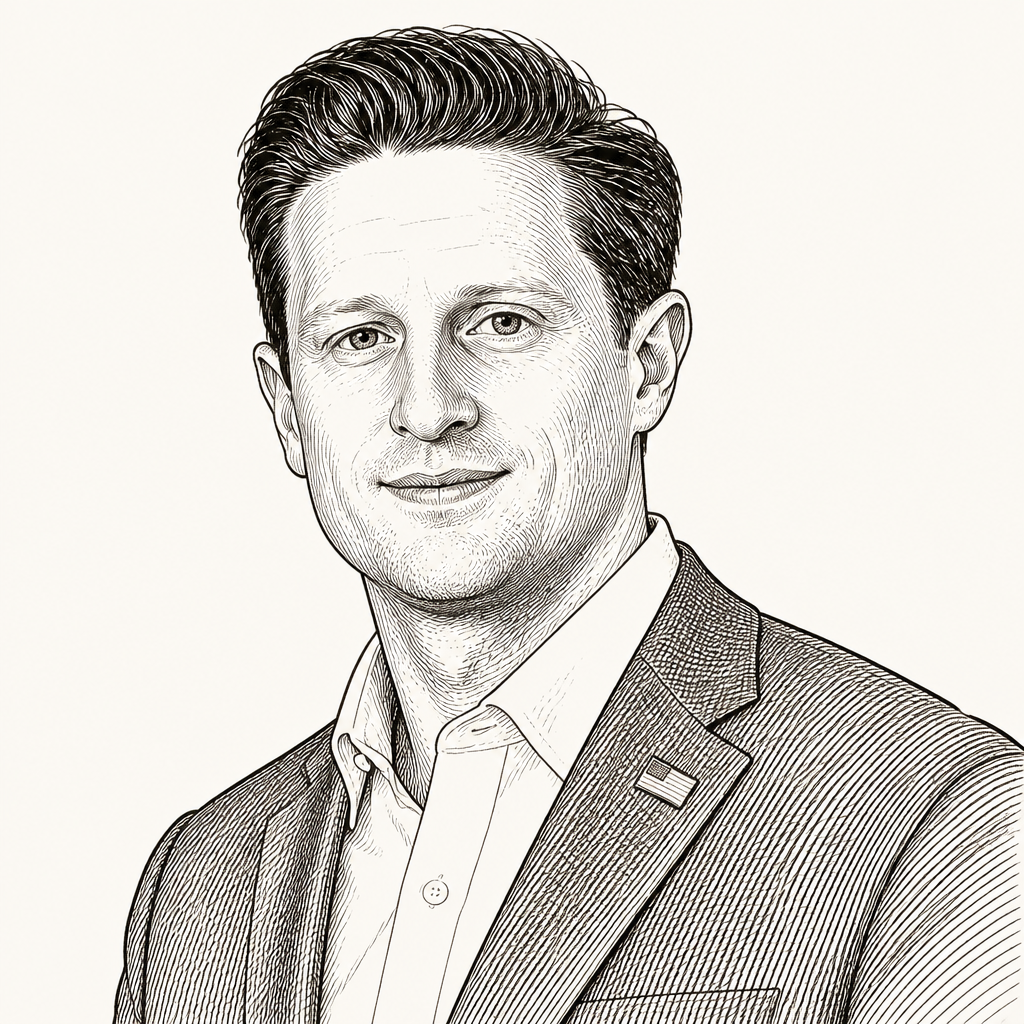
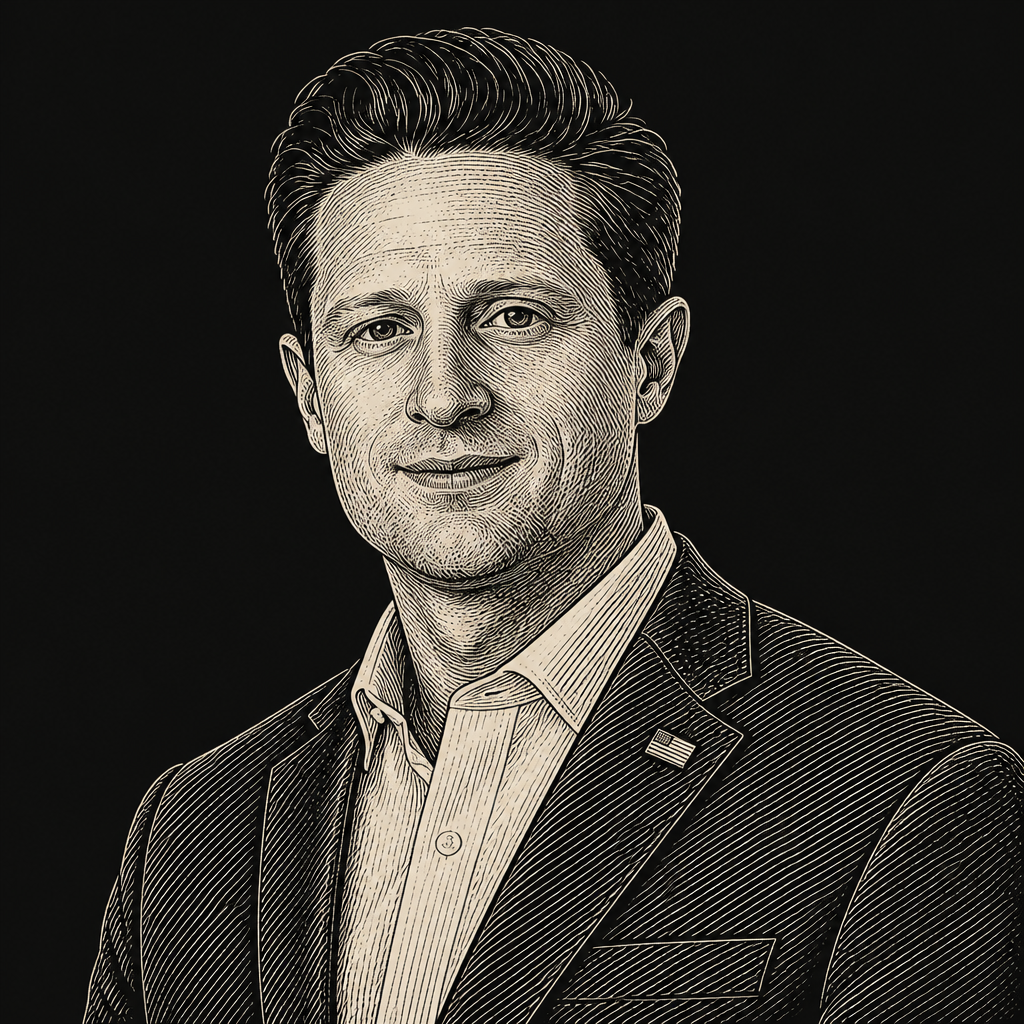
Brooks, president and CEO of the George W. Bush Presidential Center and a professor of practice in political science at Southern Methodist University, argued that citizens need the habits required to sustain a republic: judgment, reason, moderation, and sobriety. Those habits are not automatic. They have to be cultivated, and he placed liberal education at the center of that cultivation.
For Brooks, the documents of the American founding cannot be separated from the older intellectual tradition out of which they emerged. He traced his own attachment to those documents to St. John’s College, where he read the great books chronologically across mathematics, philosophy, science, literature, and music. By the time he reached The Federalist Papers, the Constitution, Frederick Douglass, and Booker T. Washington, he had already read Aristotle, Hobbes, Locke, Rousseau, and Montesquieu. That sequence mattered. It allowed him, he said, to see the American republic as an “extraordinary achievement” in the history of political philosophy.
Alexis de Tocqueville deepened that impression for him. Tocqueville’s account of America in the 1830s helped Brooks understand the United States as a political form that had to be studied seriously. The point was not that every citizen must become a scholar of every influence on the founders, but that voters should have “at least some acquaintance with the fundamental arguments on the basis of which our country was founded.” He included among those arguments not only The Federalist but Cicero, Plato, Aristotle, Montesquieu, and Locke. Brooks noted, by way of Paul Carrese, that George Washington had two copies of Cicero’s De Officiis on his shelf. Thomas Jefferson’s founding of the University of Virginia, in Brooks’s telling, reflected a similar conviction: American leadership needed a curriculum that exposed it to “the best that’s been thought and said” in preparation for public responsibility.
Reading those books, the best that’s been thought and said about the weightiest matters in all of human history, is the best preparation to cultivate the kind of judgment, reason, moderation, and sobriety necessary to govern a republic.
Todd Breyfogle connected this account to the Aspen Institute’s origins. The Institute’s first seminar, he said, was on “the idea of America,” and its founding aspiration was to explore the conditions of free and responsible democracy. He recalled the language of the original Goethe bicentennial advertisement: the question was how human beings, under new conditions of freedom and power, could become “masters of ourselves and of our institutions and of our governments.” That Aspen lineage ran through the University of Chicago, Robert Hutchins, and Mortimer Adler, the “great books guy” whose influence Brooks described as formative for his own thinking.
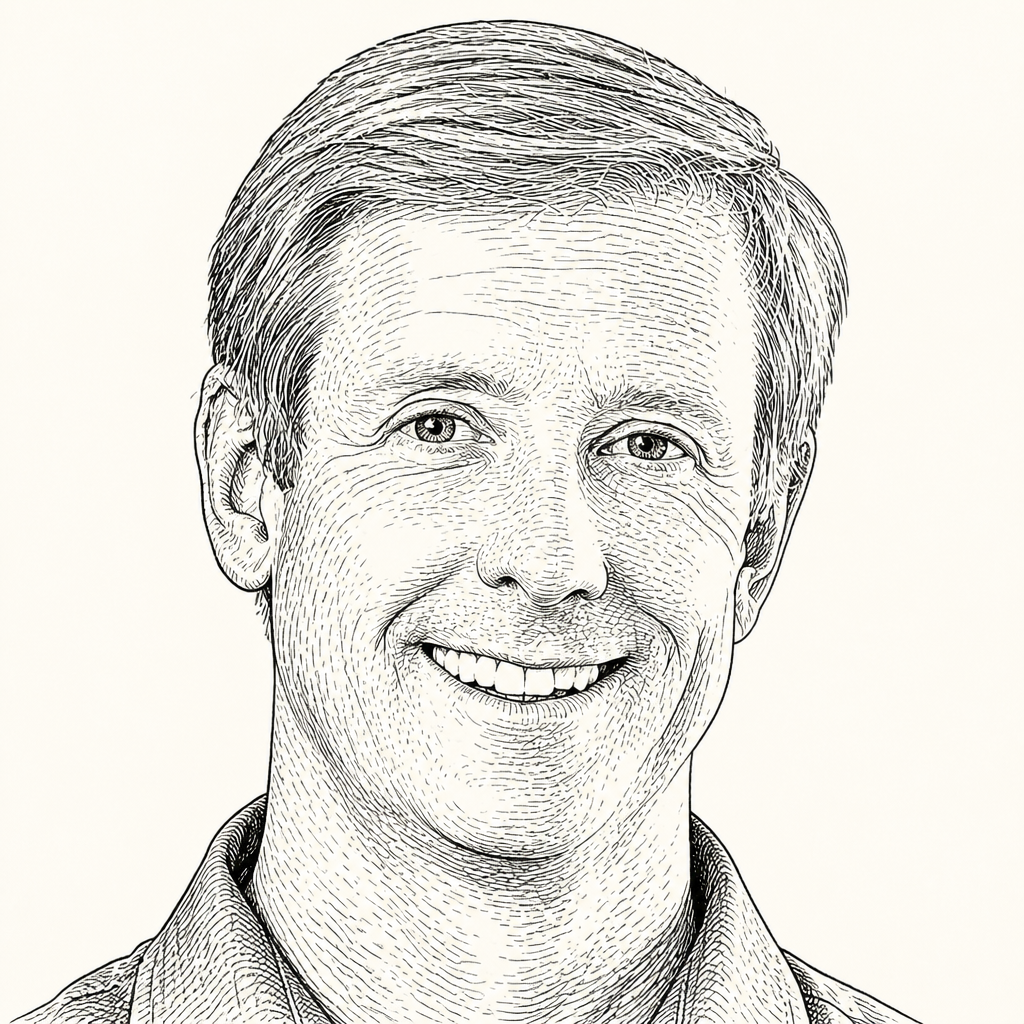
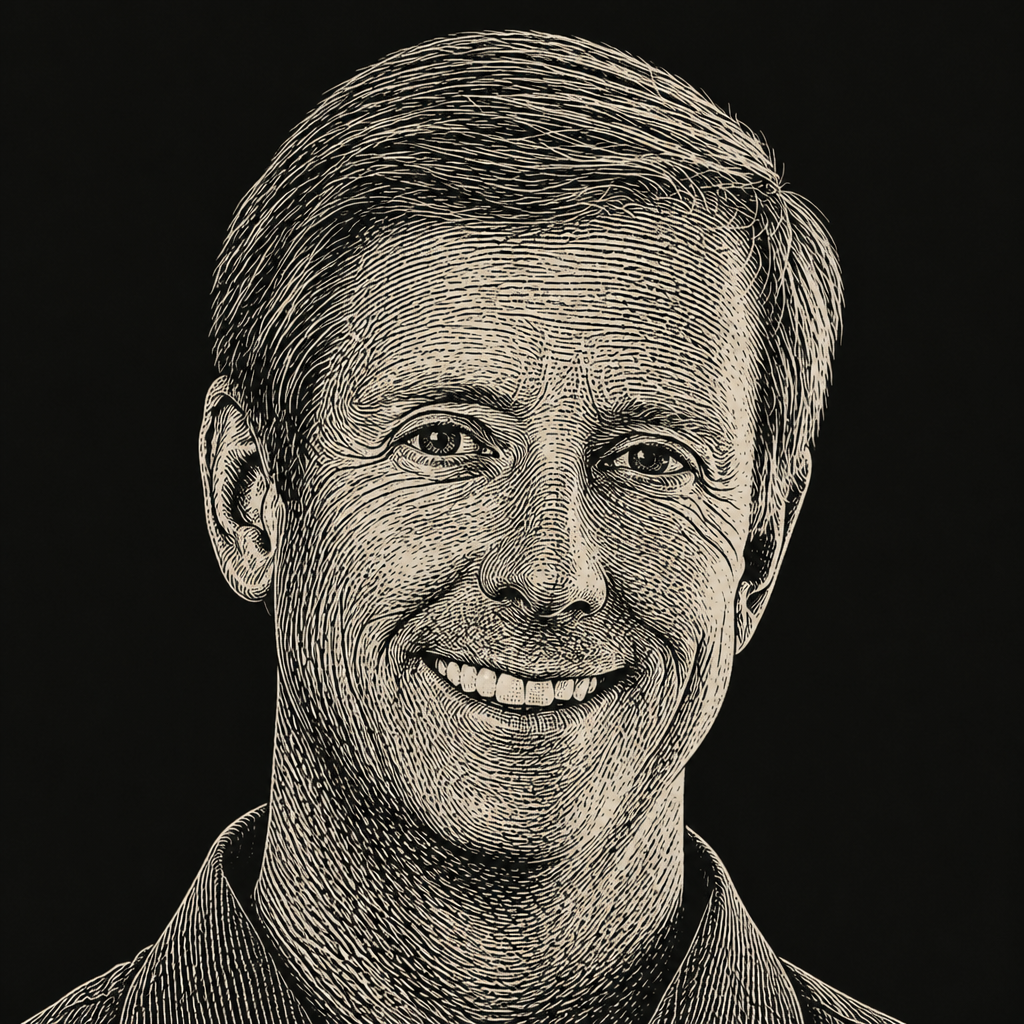
The shared premise was that freedom is not self-executing. It requires the capacity to examine oneself, discipline one’s passions, and judge public matters with some independence from fashion, faction, and appetite. Liberal education, in this view, is political because it prepares citizens for rule. But Brooks insisted that its political function depends on a deeper liberation of the mind.
Liberal education liberates people from the false things they already believe
Shilo Brooks’s account of liberal education turned on a pointed claim: people are “enslaved” by convictions they have not examined. He was careful to include himself. Everyone, he said, holds false opinions while believing them to be true. Liberal education requires a person to submit those convictions to serious opposing arguments, not merely to disagreement from a neighbor or friend, but to “the greatest minds in the world’s arguments.”
There are things in your head right now that are not true, that you think are true and they’re not true. Me too.
The examples were intentionally blunt. “You’re a capitalist, you should probably read Marx,” Brooks said. “You’re a Marxist, you should probably read Smith.” The point was not ideological sampling as a gesture of balance. It was an account of intellectual freedom: if a conviction cannot survive a confrontation with the strongest case against it, the person who holds it ought to be liberated from it. Truth-seeking requires a willingness to discover that one’s own mind is partly occupied by error.
Todd Breyfogle recognized the same idea in the Aspen Institute’s founding language. Walter Paepcke, he said, described the purpose of dialogue as becoming “dispossessed of the things that possess us.” For Breyfogle, that meant regaining humanity through becoming more self-aware, more self-correcting, and more self-fulfilling—not in the sense of private self-expression, but in the sense of putting one’s talents in service to something larger than oneself.
This account resists a narrow definition of education as credentialing or professional preparation. Brooks described liberal education as a practice that liberates the person undergoing it from untested assumptions, inherited prejudices, and intellectual complacency. Breyfogle emphasized that this is not merely a university project. Aspen was not founded as a university, he noted, but as an institute for humanistic studies: a place for people beyond the classroom to test opinions, encounter questions they were not already asking, and continue the work of self-correction.
The great books, Breyfogle said, can look quaint from the present vantage point. But at Aspen they were not selected for their answers. They were selected for their questions. They ask readers to examine what freedom is for, what justice requires, what power does to human beings, and what self-rule demands. Brooks’s claim was that those questions are not optional for a free people. They are among the disciplines by which a people remains capable of self-government.
Civic education is weak, but Brooks sees a reform movement with real demand behind it
Shilo Brooks described the condition of civic education with a formula: “concern filled with hope.” The concern is historical illiteracy. He said young people, including students at elite institutions where he has taught, often arrive without the basic building blocks needed to think about the Constitution as an achievement. They may be bright and capable, but they have not been prepared to understand American government, constitutionalism, or the political thought behind the founding.
That diagnosis did not lead him to despair. Brooks pointed to reform efforts in K-12 education, teacher seminars, and nonprofit work aimed at improving how American history and civic thought are taught. He mentioned the Jack Miller Center and said he was soon going to Philadelphia to teach 50 public school teachers about Frederick Douglass, with the expectation that they would bring that material back into their own classrooms.
At the Bush Center, Brooks said, education is a major institutional priority, especially reading in K-12. He described President George W. Bush’s continued concern with reading and the Center’s work around the “science of reading.” Brooks said that work includes phonics, teacher accountability, and related reforms.
Asked about the “Mississippi Miracle,” Brooks described Mississippi’s rapid improvement in reading scores as evidence that schools can move the needle. He also cited the Houston Independent School District as having seen similar results after incorporating some of the same practices. He said the relevant approaches included the science of reading, accountability, meeting students where they are, and small-group teaching.
Brooks said the Bush Center convened 19 state governors and their chiefs of education policy for a two-day workshop on how Mississippi and other states improved reading. The Center prepared customized notebooks for each state: where the state stood, what laws were already on the books, and what changes might improve outcomes. He said one governor later contacted the Bush Center after incorporating some of those ideas into state education policy and seeing success moving them through the legislative process. Brooks’s conclusion was direct: “We know how to move the needle on reading. We know how to do it. We just have to do it.”
He was most excited, however, by changes in universities. Brooks said many universities are “waking up” to the fact that they have not fulfilled their promise to educate the next generation of leaders in American political thought, history, constitutional law, and the foundations of political thought. He named centers and programs at the University of Texas, Ohio State, the University of North Carolina, the University of Florida, and Stanford, where faculties are building curricula, undergraduate programs, general education courses, and majors to bring these questions back into the university.
Brooks did not present the movement as simple or risk-free. He acknowledged political peril and institutional problems. But he said he had seen students leave those programs and go on to do extraordinary things. The 250th anniversary, in his view, has created an occasion for educators to ask what is missing and to rebuild civic education around the requirements of self-government.
The evidence for hope is not public mood but student hunger
When asked for his assessment of the state of American democracy, Shilo Brooks answered through his experience with students. He rejected a senseless optimism that pretends everything is going well. But he said that anyone who works seriously with young people has reasons for hope because of their hunger to make America better.
His central example came from Princeton. In spring 2022, he taught a course on statesmanship that read texts from the ancient Greek world through American political leadership. The class considered what it means to be a statesman of principle, character, judgment, prudence, moderation, and decency, drawing on figures and authors including Churchill, Lincoln, Theodore Roosevelt, Xenophon, and Machiavelli. In its first semester, 33 students enrolled. Brooks took that as a good sign.
The following semester, the department chair called him and told him to check the enrollment. Brooks was on a train to Washington. When he looked, 350 Princeton students had registered for the course. The next time he offered it, after assuming he had exhausted demand, about 300 students enrolled again. The scale required 20 teaching assistants and a large lecture setting.
| Course offering | Enrollment | Brooks’s interpretation |
|---|---|---|
| First semester | 33 students | Strong initial demand for a course on statesmanship |
| Next offering | 350 students | A surge in interest in founding texts, ancient sources, and leadership |
| Following year | 300 students | Sustained demand rather than a one-time spike |
Brooks stressed that the course contained precisely the material that students are often assumed to reject: the American founding, ancient Greek books, old texts on statesmanship, and figures often treated cynically in public commentary. The media, he said, might lead people to think students regard this material as “white supremacist and bad.” His experience suggested something else. “If you give it to them, they will take it,” he said.
Part of the problem, as Brooks described it, is that many students have little living memory of political examples before the past decade. Entering college freshmen, he said, were not born when George W. Bush was in office and were children during the Obama years. Their conscious political memory is dominated by only the last several years, and especially the last two or three. When he presents Abraham Lincoln, George Washington, or George H.W. Bush writing personalized thank-you notes to nearly everyone he met, even people serving him food at events, many students encounter a model of public character they have never seen before.
Todd Breyfogle added that there may be fatigue with the two-sentence or three-second version of civic understanding. After “an eternal diet of potato chips,” he said, people want “some real meat.” The hunger Brooks described, then, is not simply for information. It is for models, depth, and a language of public life that extends beyond reaction and contempt.
Presidential centers can become civic institutions, not only memorials
Shilo Brooks left Princeton to become president and CEO of the George W. Bush Presidential Center, and he treated that move as part of his broader argument about civic formation. Universities and K-12 schools matter, he said, but they are not the only institutions with civic obligations. Churches, private associations, the Lions Club, quilting groups, and presidential libraries all have roles to play in renewing the civic fabric.
Presidential libraries are, in Brooks’s phrase, a “unique feature of American democracy.” He said there are 17 of them and described their traditional function as memorials of a president’s time in office and repositories of documents for scholars and historians. He affirmed that role. But he argued that presidential centers can do more than preserve artifacts, display first ladies’ dresses, show presidential suits, or offer replicas of the Oval Office.
The Bush Center’s location on the SMU campus mattered to Brooks because it kept him close to university life, but he emphasized that the Center is a national institution. He said about 95% of what the Bush Center does is off the SMU campus. The Bush Institute, a think tank attached to the presidential library, works on public-policy issues of significance to President and Mrs. Bush, including education, veterans and military families, immigration, democracy abroad, and global public health.
Brooks used PEPFAR to illustrate what he called values-based or principled public policy: policy rooted in the decency and dignity of human beings. President Bush, in Brooks’s account, led with his heart, believed what he said, and acted as a man of decency and faith. The Center’s role, as Brooks understands it, is to keep that sentiment present in public-policy conversations around the country.
Leadership development is another part of that role. Brooks described the Presidential Leadership Scholars program, a partnership with the Clinton Library. The program brings young leaders with community projects—young mayors, nonprofit leaders, business people, and others—to the Bush Library, the Clinton Library, the Johnson Library, and Washington, D.C., over 12 weeks. Former administration officials from Democratic and Republican administrations appear together, not only to teach leadership but to model friendship across political difference.
For Brooks, this is what a presidential center can add to civic education: an institutional way of carrying forward a president’s distinctive legacy into the formation of future citizens and leaders. President Bush’s legacy, Brooks said, is principled leadership. Whether one agreed with him or not, Brooks argued, Bush had convictions, made difficult decisions, was transparent about where he stood, and understood the importance of humility and decency. Brooks also said that President Obama had “just opened his up” and that the Obamas were trying to do some similar work; he described Obama’s legacy as including his place as the first Black president of the United States and what he accomplished.
Presidential centers, in Brooks’s view, can become part of the civic-education fabric in ways Franklin Roosevelt, who founded the first presidential library, may not have imagined. They can take presidential legacy and put it to work in present civic formation.
Character gives conviction a democratic form
Shilo Brooks’s account of civic renewal repeatedly returned to character. He defined character not as personal branding or a list of admirable traits, but as the substance that allows trust to be built. Public service at its best, he said, depends on trust, and trust depends on people knowing what a leader stands for.
Young people, in his view, need to spend part of their education asking what they stand for and where their principles come from. He was explicit that this need applies beyond humanities majors. Engineers, business students, and English majors alike should have courses that “call” them—he intentionally used religious language—to consider what convictions will hold when pressure comes. Without that substance, he warned, people become “squish,” blown by the wind of institutions, incentives, and opinion.
Brooks sees that problem across the political spectrum. “There’s a lot of empty suits out there,” he said. “There’s nothing underneath that jacket but air.” The remedy is not simply stronger opinions. It is a discipline that gives a person both conviction and charity.
Lincoln supplied Brooks’s central democratic vocabulary here: “malice toward none” and “charity for all.” Brooks asked where that spirit can be found on the internet. For democracy to work, he argued, citizens must assume that people with whom they disagree are reasonable people of goodwill who have the country’s best interests in mind but see matters differently. One side may be right and the other wrong; Brooks did not deny that disagreement involves truth claims. But the democratic posture begins by refusing hatred.
You assume that they are reasonable people of goodwill who have the country’s best interests in mind but who see it differently from you.
That posture also shaped his answer to a question about whether Mortimer Adler’s six great ideas—truth, beauty, goodness, justice, equality, and freedom—are alive and well on Capitol Hill and in the White House. Brooks refused the invitation to condemn politicians as malicious. He invoked Socrates’s view that people act because, at the time of acting, they believe they are doing what is good. People can mistake the good, and education exists to illuminate the true good so that they do not act on false goods.
That principle led Brooks to extend charity to public officials on both left and right. He would not describe them as cartoon villains or “evil emperor” figures. He said they likely believe they are doing what is good, true, just, and right. They may be mistaken; so may he. The obligation is to make arguments, provide reasons, and be open to correction.
Todd Breyfogle linked the same discipline to the founders’ understanding of free government. Part of being free, he said, is being liberated not only from false opinions but also from the extremities of one’s passions. The founders created institutions intended to moderate passions. Moderation, he admitted, is not culturally glamorous. But for both Breyfogle and Brooks, moderation is not blandness. It is a discipline of judgment.
Imperfect exemplars are still necessary
Todd Breyfogle pressed Brooks on a contemporary habit of cynicism: if moral exemplars are imperfect, and all are, people often conclude they should not be emulated at all. Shilo Brooks rejected that purity test. If purity is required before one can learn from another human being, he said, “you ain’t gonna learn nothing.” Theodore Roosevelt, George Washington, and Abraham Lincoln were all fallible. So is every reader.
The humanities, as Brooks described them, are built for precisely this complexity. They do not present humanity as clean or uncomplicated. They bring forward beauty, truth, achievement, evil, hatred, mistakes, miscalculations, crime, and vice. A genuine student of the humanities wants all of that, he said: the justice and the injustice, the beauty and the ugliness, novels that make one cry with joy and novels disturbing enough to keep one awake at night.
That is why Brooks urged readers to abandon purity tests and self-righteousness. The task is not to declare historical figures pure or corrupt and then sort them into usable and unusable piles. The task is to read them charitably and critically enough to metabolize their lives into one’s own judgment.
His examples ranged widely: Theodore Roosevelt and Frederick Douglass’s memoirs, Jane Austen’s female characters, Booker T. Washington in Up From Slavery, Frederick Douglass in the Narrative, Alexander Hamilton at the founding. Reading allows a person with one narrow life to enter many lives. Brooks was almost comic in the harshness of his formulation: “You’re boring. Guess what, you’re boring. I’m boring.” Reading makes a person less narrow by allowing him or her to “become a thousand people.”
Theodore Roosevelt served as Brooks’s most vivid example of a life enlarged by reading, action, grief, and public service. Roosevelt is Brooks’s favorite president, a fact he acknowledged with some humor given his current association with the Bush Center. He admires Roosevelt because he seemed to live the fullest possible life: president, vice president, secretary of the Navy, governor of New York, New York state assemblyman, rancher, Rough Rider, historian, natural scientist, bird watcher, and author of 23 volumes of collected works. Brooks noted that the 23 volumes of Roosevelt’s collected works were on the shelves of George W. Bush’s Oval Office throughout Bush’s two terms.
Roosevelt’s literary life mattered as much as his public life. Brooks described him reading a book a day and recalled a story in which Roosevelt, while tracking a stolen canoe over several nights in the West, read Tolstoy’s Anna Karenina by firelight. “That’s who I want to be,” Brooks said.
He also dwelled on Roosevelt’s suffering. Roosevelt’s wife and mother died on the same day, Valentine’s Day. In his diary, Brooks said, Roosevelt placed a large X on the page and wrote, “The light has gone out of my life.” He then went west and remade himself into the Roosevelt later remembered. Brooks saw in that arc an American spirit of self-making also visible in Frederick Douglass and Abraham Lincoln: self-making through literature, thought, personal reflection, and confrontation with one’s demons.
Imagination is a civic capacity, not an escape from politics
Todd Breyfogle argued that reading cultivates moral imagination: the ability to have an interior conversation with oneself and an author, and then to extend that attentiveness to the people around us. Shilo Brooks agreed and called imagination “the key to the possibility of education.” To learn, one must be able to stand in another person’s shoes.
That capacity, Brooks said, is especially important in an era when images are constantly presented on screens and artificial intelligence can generate them. Reading requires the mind to make the image itself. The reader creates the movie in the head. For Brooks, that self-generated imaginative act is not incidental; it is part of the discipline by which people become capable of inhabiting perspectives beyond their own.
Breeze Richardson, who runs Aspen Public Radio, extended the point beyond books. Radio, Richardson suggested, also invites listeners to make the story in their minds. She asked how people can walk in others’ shoes in contemporary life, not only through historical reading.
Brooks answered first with civil discourse. If two people disagree, they should still approach one another as reasonable persons of goodwill and trade in “arguments, reasons, and evidence.” He pointed to Robert George of Princeton and Cornel West as a model: George, a Catholic conservative, and West, whom Brooks described as a socialist or democratic socialist, appear together publicly and find common ground. Their friendship and disagreement have resonated because they demonstrate a way of arguing without contempt.
He also pointed to everyday civic life. Neighbors who disagree should not isolate themselves from one another. They may cheer for the same local teams, share ordinary loyalties, and then talk seriously about their disagreements. Shared life creates conditions in which argument can be human rather than abstract. Breyfogle added that long-form narrative journalism and the patience required for listening can cultivate similar habits.
Brooks’s brief answer on the growth of the Democratic Socialists of America returned to the same discipline of complexity. He declined to offer a single-cause explanation and said he was not an expert on the question. He treated political extremes on both sides as a response and a barometer worth taking seriously, but warned against the cable-news habit of identifying one cause and using it to explain everything. As a political scientist, he said, he thinks instead in terms of “multivariable causality”: technology, social media, Trump, frustration with America’s failures to make good on its promise, and primary systems that seem to draw out party extremes were among the possible causes he named. A “sober mind,” in his view, does not reduce political phenomena to one explanation.
Teaching needs dignity, compensation, and love of subject
The final major question concerned teaching as a profession: how to move it from a labor of love into a profession with honor and compensation. Shilo Brooks resisted the “from” in that formulation. Teaching must remain a labor of love, he said. The best teachers love teaching, and they love the subjects they teach.
He was skeptical of a professional culture that emphasizes “best practices” over love of subject matter. He wanted more people who love Shakespeare and want to share it with ninth graders, who love American history and want fifth graders to eat, sleep, and drink it, who love mathematics and wake up wanting to teach it. Some of his students in history and political science want to become teachers, he said, but are deterred by low pay or by requirements to pursue additional education credentials. He did not claim to have a policy solution; compensation often lies with states and municipalities. But he said the pathway into teaching should be better compensated and more open to people animated by the subjects themselves.
Brooks described teaching as a calling rather than merely a profession. Teachers, in his view, resemble preachers in the sense that they are called to the work. He said teachers changed his life not because they were well versed in school-of-education best practices, but because they loved American history and wanted him to love it too.
He then added a concern about the gender composition of teaching and the condition of boys. Brooks said 90% of pre-K and kindergarten teachers are women, while 10% are men; across K-12, he said, 77% of teachers are women and 23% are men. Boys, he added, are behind a grade level in reading in every state. He argued that if society can rightly work to bring more women into STEM, it should also look at teaching and ask whether boys see enough examples of men reading books and loving them.
| Teaching level | Women | Men |
|---|---|---|
| Pre-K and kindergarten | 90% | 10% |
| K-12 | 77% | 23% |
Brooks connected this to broader social and political effects. Too many young men, he said, are getting lost in dark internet holes. Men commit suicide at higher rates than women and commit more violent crimes than women, he said. Young boys are “lost,” and he argued that this is having political effects. In his view, any serious reform of teaching has to include compensation and dignity, but also a renewed sense that teaching is a calling carried by people whose love of learning is visible to students.
Todd Breyfogle closed the thought by turning it back on learners. To change how society thinks about teachers, he said, people must also change how they think about themselves as learners and what education is for. The most important things, he said, are expressions of love; that is understood in many relationships, and education should be one of them.