Enterprises Are Shifting AI Spending From Token Volume to Outcomes


PwC TMT leader Dallas Dolen argues that enterprise AI spending should be judged by business outcomes, not by how many tokens employees consume or avoid. Speaking with Alex Kantrowitz at the Big Technology AI Summit, Dolen says companies need to benchmark AI costs, route work to the right models, and measure whether the output improves the product or service being delivered. His view is that falling model prices may give buyers more leverage, but they will not remove the need for discipline around cost, risk and employee trust.
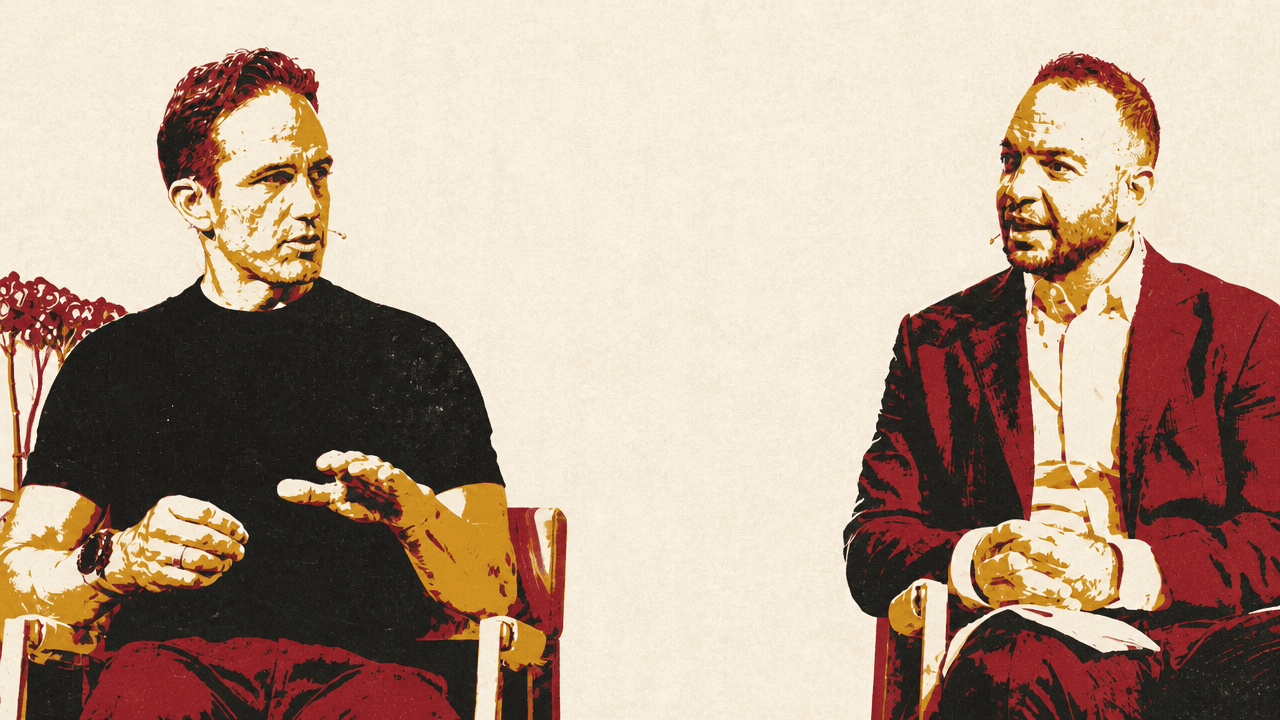
The enterprise question is not token maximization, but outcome maximization
The useful distinction, for Dallas Dolen, is not whether a company is “token maxing” or “token minimizing.” It is whether the spending produces a business outcome that justifies the cost.


Dolen, PwC’s TMT leader, did not accept the idea that token maxing was only a media narrative. He separated “above the plane” commentary — the story that circulates in mainstream media, social media, X, and podcasts — from what he says is happening inside organizations. In his view, the behavior is real enough to matter. Not every instance of high AI usage is a problem, and not every company spending heavily is being irrational. But there are enough cases where incentives, usage patterns, and costs create ROI concerns that enterprises have to ask whether they are structuring AI adoption correctly.
Alex Kantrowitz framed the question around a visible counter-movement: companies getting more serious about token minimization and AI costs, including examples he cited such as AT&T, Meta, and Uber spending its AI budget in less than half a year. Dolen’s answer was that the winner will not be defined by the side of that debate a company chooses. The winner will be the organization that maximizes outcomes rather than raw consumption.


That shift starts with incentives. Dolen pointed to leaderboards and other internal mechanisms that can push employees toward the wrong behavior if they reward usage for its own sake. The problem is not encouraging people to use AI; PwC is doing that. The problem is encouraging them to “take it too far,” spend too much money, or optimize for visible activity rather than useful output.
The other side is planning. Dolen said PwC discusses AI spending at the board level in both its U.S. and global organizations. The comparison is not only against other services companies. PwC also benchmarks against companies in other industries, including technology companies with large engineering workforces and coding-heavy use cases. The purpose is to establish a baseline: what is a normal amount to spend inside a given industry, outside that industry, and against a benchmark?
Only then does ROI become meaningful. Dolen said the question has to be whether the organization is getting an outcome, or whether it is “way outside the bounds” of what the spend should be.
He gave one example from the deal space where AI-generated output can be “incredible”: work that would take thousands of hours can become a product in seven minutes. The cost may be high, but the output can be impressive to customers and meaningful to employees who no longer have to stay up all night producing it. That kind of use case can justify heavy spend. Other processes, he said, have not yet been attacked in the same way. The enterprise task is to go process by process and ask how to maximize the outcome there, not simply how to maximize usage.
The winner and loser is going to be defined by did you outcome max or not.
ROI is measured in hours, but hours are not the whole answer
Dallas Dolen said PwC is already doing ROI calculations “a lot.” For the firm’s business, he said, AI ROI will be measured largely in hours: whether a person becomes more efficient, and whether they create more useful output in the time they spend.
He referred to a recent MIT publication that, in his telling, estimated about 23% of certain activities could be replaceable with generative AI, especially in vision and human-interactive work. Dolen said PwC’s business is “probably not as high as 23%,” but he rejected a simple replacement model. The more relevant equation, in his view, is that AI will affect “some percentage of every single thing that people do.”
Productivity metrics can mislead when they reward volume rather than usefulness. In software, the analog might be lines of code. In professional services, it might be a longer slide deck, pitch deck, or memo. Dolen’s point was that more output is not automatically better output. A tool that produces more lines of code is not necessarily creating a better product. A tool that produces a larger slide deck is not necessarily serving the client.
The fact that it produces more lines of code, or a longer slide deck, or a longer pitch deck, or a longer memo, is not better.
He said he had been discussing this with founders and investors at New York Tech Week, including people from Andreessen. For investors evaluating AI companies, the relevant question is not merely whether a product produces more material for its user. It is whether it helps the user build a product or service that is better and that customers actually want.
For an enterprise, hours saved are an input metric, not the ROI itself. Dolen’s warning is that a company can count efficiency gains and still miss the business question: whether the work product improved, whether customers or clients want it, and whether the organization is closer to the product or service it meant to build.
Price elasticity makes model routing an operating discipline
Alex Kantrowitz raised a concern he said he had heard from enterprise users: foundational labs and cloud providers make it easy to plug into their systems in ways that consume many tokens, while making measurement harder. Dallas Dolen did not argue that sales incentives disappear. He argued that enterprises need a control layer strong enough to decide which model or interface should be used for which activity.
Dolen called this a “control plane.” As he described it, the control plane is where governance, cost controls, data access, and human-interaction rules converge. It determines not only what an AI system can produce, but what a user is allowed to put into it. It can also guide which model a user defaults to for a given task.
His simplest example was deliberately mundane: checking the weather. An employee should not be allowed to check the weather five times a day using a high-end frontier model. Even when Dolen himself was worried about tornadoes in the Midwest while trying to get back for the event, he said, a premium model is not the right tool for that job. A weather app, or something inexpensive, is enough.
We are simply not best suited driving the Lamborghini to go pick up milk.
Dolen said this control-plane layer is where he expects large enterprises and functions to spend significant time, including companies such as AT&T and Meta, services companies, engineering organizations, sales and marketing teams, and back-office functions. His argument was not to prevent AI use. It was to make sure the right tool is applied to the right task.
At PwC, model selection is already being built into internal control-plane technology. Dolen said the system can recommend or automatically configure a specific model depending on who the user is and what the user is expected to do. A user can still choose something else, but they have to override the initial setting.
PwC operates at a scale where small pricing changes multiply quickly. Dolen said the firm has 350,000 people globally, all with access to one AI tool or another. Not all are engineers, and not all are doing highly productive things with AI, but they are all experimenting across a range of use cases. PwC encourages that experimentation, he said, while remaining highly price sensitive.
That scale turns price differences into routing decisions. As prices rise, PwC has more incentive to direct users toward cheaper models. If a provider offered a cheaper model, Dolen said, “100% the direction of travel” would move that way. If tokens or models became half-price, PwC would behave differently.
A price war would increase buyer leverage, not remove discipline
Enterprise buyers now appear more price sensitive than they did a few months earlier, in Dolen’s reading, and that gives them both more leverage and more reason to route workloads dynamically.
The pricing question had shifted since Alex Kantrowitz and Dallas Dolen discussed it several months earlier at Google Cloud Next. Dolen said that in April, when Kantrowitz asked a roughly 200-person audience whether they would pay double for AI, every hand went up. When the question moved to paying four or five times as much, roughly a quarter of the room still had hands raised.
At the current event, Kantrowitz ran a similar informal room poll. About half the room, by Dolen’s and Kantrowitz’s observation, indicated it would pay double for current AI capabilities. That was still meaningful pricing power for labs, but it was a different signal from the earlier room. Dolen read the contrast as evidence of growing skepticism about the value users are getting, especially as more options become available. He cited per-seat access, model capabilities, and open models that users can access for free while still doing “a lot of really cool things.”
Kantrowitz raised the possibility that the labs may be heading not toward straightforward price increases, but toward a price war, citing rumors that OpenAI might drop prices. Dolen said he thought the market was “absolutely right on the precipice” of such a shift. He did not go into detail about vendor conversations, but he said there are “definitely conversations going right now.”
If somebody was coming to us with a cheaper model, 100% the direction of travel would go, you know, to that.
For enterprise buyers, cheaper tokens do not make consumption strategy irrelevant. If a frontier model’s price falls, usage may rise. If another model becomes much cheaper, traffic may shift. A company that has already built model selectivity into its internal systems can respond to that pricing environment rather than being locked into one default mode of consumption.
Agents are constrained by risk, cost, and organizational tolerance
Dallas Dolen did not describe agent limitations as purely technical. He said the constraints fall into three categories: risk tolerance, cost tolerance, and expectations for what an agent should be allowed to do on its own.
The first is access and control. If an agent has broad access to company data, client data, or code, enterprises have to ask where it can go and what it can change. Dolen raised the possibility of an agent being asked to change something in one area and extrapolating that instruction too broadly. The limitation is not only whether the agent can act. It is whether the organization can govern the scope of that action.
The second is cost variance. There are tasks an enterprise may not want an agent to perform because a human can do them better or more cheaply. Dolen tied this back to the same ROI logic: not every task should be pushed into a premium model or an expensive agentic workflow. The existence of an autonomous system does not mean autonomy is the right economic choice.
The third is organizational judgment. Dolen connected this to workforce planning, ethics, and leadership. He said he had been at his grandmother’s funeral that morning in San Francisco and had spoken with a priest who, according to Dolen, had written a paper with members of the Anthropic team. Their discussion turned to where ethics fits into the broader AI conversation.
For Dolen, one under-discussed risk is the effect on employees if AI adoption feels like surveillance or replacement planning. He said he does not want to scare people into thinking the company is watching what they do and waiting to replace them. PwC is still hiring as many people as it did last year, he said, but changing the profile of who it hires. The firm is hiring more young people pursuing sciences and areas beyond engineering, and somewhat fewer people in “pure accounting,” though he attributed that partly to globalization and service delivery rather than simply AI substitution.
The agent question, then, is not just whether a system can do the work. It is whether the company has an acceptable tolerance for error, an acceptable tolerance for cost, and an acceptable view of what should be done by a machine rather than a person. Dolen added a leadership layer: how a company runs its business and acts as a positive leader within its community.
Comfort with agents comes from augmentation, not total surrender
Alex Kantrowitz pushed on the psychological side of agent deployment: using agents requires some willingness to lose control, especially in high-stakes environments. Dallas Dolen answered that enterprises already place trust in people they know only partially. In engineering, people write code; in PwC’s work, people prepare audits, tax returns, deal reports, and other services. The question is what changes when technology is layered into that trust relationship.
Dolen said he is more comfortable when AI is an augmentation of people rather than a full transfer of control to a system he knows less about. That framing shaped his example of travel booking.
Two nights earlier, with tornadoes affecting travel through Chicago and with a need to return for the event and his grandmother’s funeral, Dolen said he was able to contact his executive assistant late at night and ask for help finding a way back to the West Coast. An agent might have been able to query options and book a flight. But Dolen said there is value in the human response: someone saying, in effect, “I got you” and making sure the situation is handled.
The assistant is not outside the technology. Dolen said she uses internal tools to query options quickly and can book a flight within about 30 seconds. The technology makes her more effective. It does not remove the human relationship from the process.
That is also how he sees broader enterprise adoption. His executive assistant, chief of staff, and others can already support more people than the one-to-one model of the past. He described the shift as “one to like 12” — doing more with less. AI extends that pattern.
Dolen compared the adoption curve to self-driving cars. Kantrowitz said Waymo can feel like white-knuckling at first, until the passenger becomes comfortable enough to look at a phone. Dolen agreed with the parallel. Agentic systems may follow a similar path: discomfort at first, then increasing trust, provided the system proves itself and governance remains visible enough for users to feel protected.
The ROI argument returns to what technology is for
Dallas Dolen tied the enterprise AI question back to San Francisco and to his grandmother’s life. He described her as the daughter of an immigrant family whose members had picked crops in places including Argentina and Hawaii before moving to San Francisco to work in canneries around Fisherman’s Wharf. His grandmother later worked in the telecommunications industry, including for Bell.
For Dolen, that family history connected to the present technology boom in the Bay Area. He said the forces that made San Francisco a place of opportunity long ago still matter: work that improves people’s lives, makes difficult labor less punishing, and creates better possibilities than what came before.
Dolen used the story to define the output that should matter. The question is not how much a company pays, whether it uses the most tokens, or whether it wins a procurement negotiation with a lab. The question is whether the technology serves clients well and improves the product or service being delivered.
For entrepreneurs, that may mean building products that make customers’ lives better, simplify coding, improve customer support, or remove drudgery from a workflow. For PwC, it means asking whether clients receive better service and better deal outcomes. For enterprise leaders, it means measuring costs without losing the human reason for adopting the technology in the first place.