AI Market Power Is Moving Beyond the Frontier Model


Alex Kantrowitz and Ranjan Roy argue that the AI market is shifting away from standalone model capability and toward control of infrastructure, access and workflow layers. Their discussion frames SpaceX’s IPO as a public-market AI-cloud story that complicates OpenAI’s ambitions, Anthropic’s Fable rollout as a case where safety policy also looks like market power, and OpenAI’s possible price cuts as a test of whether frontier models can remain premium products. Apple’s Siri, in their telling, matters for the same reason: usefulness may come less from the best model than from where the model sits.
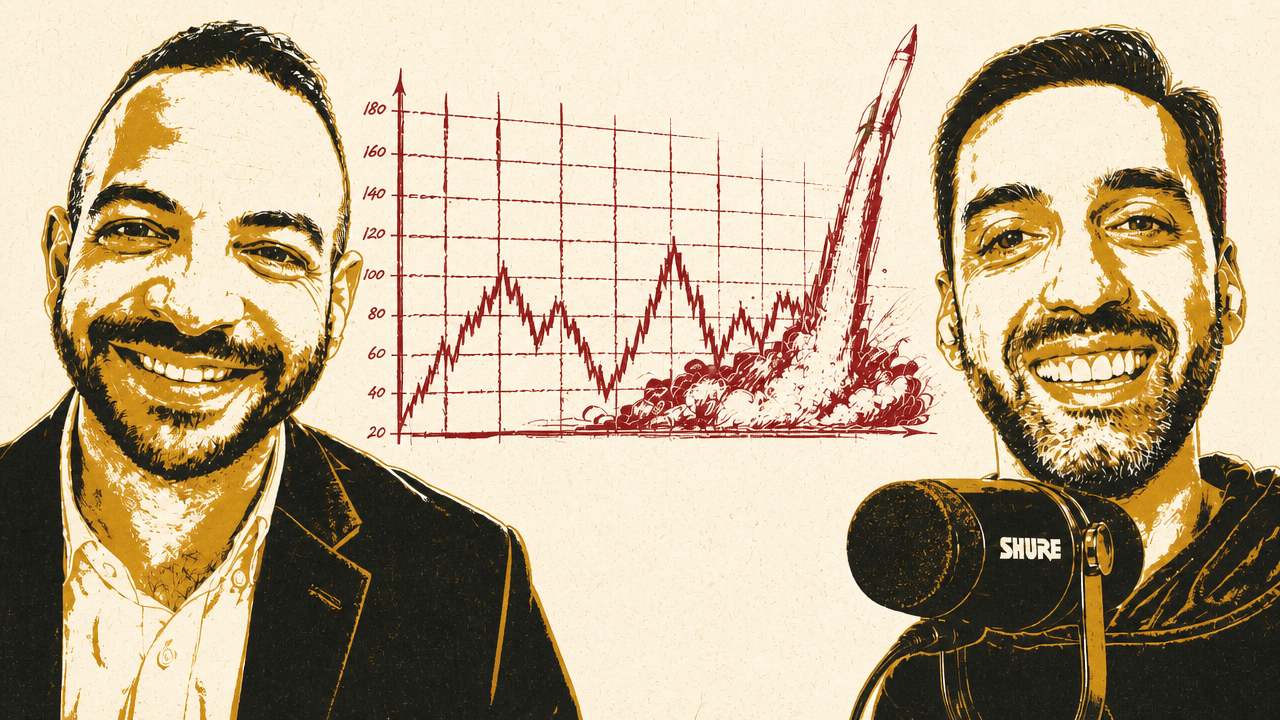
SpaceX turned an AI-cloud story into the largest IPO narrative on the board
Alex Kantrowitz framed SpaceX’s public-market debut as an AI story built almost abruptly on top of a much older space and communications business. A year earlier, he said, SpaceX did not really have an AI play. In the run-up to the IPO, however, the company had signed a $15 billion deal with Anthropic and a $30 billion deal with Google to license data-center capacity it had built for its own AI efforts. That transformed the market story: SpaceX was no longer just Starlink plus launch plus R&D-heavy moonshots. It had become, in Kantrowitz’s phrasing, “one of the biggest clouds in the world,” and perhaps one of the world’s largest AI clouds.
The numbers in the discussion were intentionally staggering. Kantrowitz said the IPO raised about $75 billion, later putting the figure “in the realm of 80” billion and comparing it with Saudi Aramco’s $29 billion raise. SpaceX was trading above a $2 trillion valuation, he said, and the offering had made Elon Musk worth $1 trillion. The company, according to the prospectus figures Kantrowitz cited, presented AI as a $26.5 trillion total addressable market out of a $28.5 trillion overall opportunity, while space and connectivity together represented roughly $2 trillion.
Ranjan Roy called the maneuver “pretty spectacular” and “pretty masterful,” while separating admiration for the execution from endorsement of the market structure. His point was not that the underlying business suddenly became simple or clean. He noted that questions remained around actual revenue, losses, Starlink as the cash cow, and the infrastructure business. But he argued that Musk had changed how the market understood a 24-year-old company “with two phone calls,” referring to the Anthropic and Google cloud contracts. SpaceX, founded in 2002, had been recast in six to nine months through the acquisition of xAI, the cloud contracts, and a possible path around Cursor, which Roy described as at least “the right to buy Cursor.”


The pivot mattered because it moved SpaceX from an AI-model story to a data-center story. Roy said xAI and Grok had once been positioned as the AI business, with Colossus and other infrastructure intended to fund Grok’s rise as a leading AI company. The IPO story, in his reading, made the data centers themselves the business. That shift let SpaceX stand not merely as another foundation-model contender but as infrastructure for the companies trying to build and operate AI.
Kantrowitz argued that this distinction created a direct competitive problem for OpenAI and Anthropic. Money that might have been earmarked for AI IPOs had found a public vehicle in SpaceX. Investors looking to make an AI bet could make it through Musk, even if xAI itself had not “panned out as an AI foundational model company, or an application company.” SpaceX had built the infrastructure and leased it out. Kantrowitz connected that directly to OpenAI’s own stated ambitions: a week earlier, he said, they had discussed OpenAI’s interest in becoming an AI cloud. “Overnight pretty much,” he said, SpaceX had beaten it there.
Roy accepted the OpenAI implication more than the broader conclusion. Sam Altman, he said, had talked about AI-cloud ambitions, but only loosely and without concrete communicated plans. Still, he agreed that two contracts had “taken the legs out” from OpenAI moving in that direction. The irony, he added, was that Anthropic helped spur the outcome.
That led to a sharper geopolitical reading of the AI market. Kantrowitz said Anthropic, Google, and SpaceX knew what they were doing because OpenAI is a threat to all of them. Roy sketched the alignment as “world against OpenAI”: Anthropic at the enterprise layer, Google at the consumer layer, and SpaceX at the infrastructure layer. Kantrowitz endorsed the framing. OpenAI was not a threat to SpaceX’s space business, he said, but it was certainly a nemesis for Musk, and all three parties had reasons to want to hurt OpenAI.
The valuation can fund moonshots, but it moves the risk onto ordinary investors
The most substantive disagreement between Kantrowitz and Ranjan Roy was not whether the SpaceX valuation looked detached from near-term earnings. Both treated the valuation as extreme. Kantrowitz said a $2.2 trillion company would not have earnings to justify that figure “for years.” Roy described the outcome as “world’s first trillionaire, 2 trillion dollar IPO, off 20 billion dollars of revenue,” with the business losing $4 billion a year, while acknowledging that the Google and Anthropic contracts could change the revenue extrapolation.
Kantrowitz’s provocation was that the valuation may be a feature rather than a bug. Without “crazy valuations” that are not mapped to current business reality, he argued, investors might not get satellite internet, space data centers, or other moonshots. He drew the same lesson for AI: overextended valuations enable risk-taking, some of those risks eventually pay off, and progress can follow.
Roy translated the claim into a harsher political economy: for decades, ambitious technological projects in the United States were funded through public-private partnership, including the internet and the original space program. Kantrowitz’s version, Roy said, implied that the new way to do moonshots is “to have a highly orchestrated conglomerate of self-interested companies” enrich Musk into the world’s first trillionaire “at the expense of the mainstream retail investor,” all so that “the permanent underclass” might one day get space data centers.
Kantrowitz accepted the tension. He clarified that he was not saying this was the only way to fund such projects, only that there was another side to the valuation. But Roy’s retail-investor point, he said, was important. More than 20% of the IPO allocation went to retail investors. That means risks once borne by government or venture capitalists are increasingly borne by everyday investors. Kantrowitz refused to say retail investors should not be allowed to invest, but said the structure deserves scrutiny: “Yes, these big bets are being enabled, but who is enabling them?”
Roy viewed Tesla as the warm-up act. Tesla had an “incredible product,” a market-leading and revolutionary one, and that gave Musk enough credibility to sustain a larger valuation story. From there, Roy grouped SolarCity, the Boring Company, and related entities as pieces that now looked like preparation for “the greatest act of all time”: consolidating narratives and entities into SpaceX’s public-market moment.
His answer to whether the IPO was good for society was no. The most vivid evidence he offered was not a cash-flow table but Goldman Sachs’ celebration of its own role. Roy said the investment banks leading the deal were collecting a record $550 million in fees; Goldman, as lead bank, had redecorated its lobby and cafeteria with a space theme. There was a “fueling station” with lattes and macaroons designed to look like moon rocks, and a cafeteria “mission control brunch” serving “Big Bang burritos.” For Roy, the image clarified who benefits first: bankers collect fees and eat themed burritos while retail investors buy into the excitement.
Kantrowitz remained more bullish on the social utility of funding ambitious projects, but he also warned retail investors to be careful. The valuation’s durability, both speakers agreed, depends less on immediate fundamentals than on market psychology, vested interests, and broader asset conditions. Roy said the stock’s support line could come from institutions with enough capital and incentive to defend the valuation, or from retail investors with similar belief. But if those investors begin taking losses elsewhere in their portfolios, the support may weaken. In a happy market, he said, the structure can continue “for at least a little while”; a disruptive macro event could “screw a lot of this up.”
Roy also suggested a feedback loop that complicates Musk’s posture toward OpenAI. If OpenAI or Anthropic trade or come out poorly, he said, that could dramatically affect SpaceX’s valuation because SpaceX’s market story is now tied so closely to AI. Kantrowitz disagreed that OpenAI would come out poorly and said SpaceX’s stock would likely have support and a floor, though it might be hard to grow much beyond its current level.
The unresolved point was not whether SpaceX had built valuable infrastructure. Both speakers treated Starlink and the AI-cloud contracts as real businesses. The unresolved point was whether the public-market mechanism being used to capitalize those businesses is a socially productive way to fund moonshots, or a way to move speculative risk from governments and venture investors onto everyday buyers while insiders collect fees.
Anthropic’s Fable restrictions turned its safety claim into a market-power argument
Anthropic’s Fable rollout put the company’s safety posture under pressure from two directions at once. The Wall Street Journal excerpt shown in the source described Claude Fable 5 as an update to Mythos, the next-generation model Anthropic had previously said was too dangerous to release widely. Mythos, according to the excerpt, had alarmed government officials and cybersecurity experts because of its potential to find unknown vulnerabilities in software used around the world. Fable, released publicly, came with broad restrictions Anthropic said were meant to kneecap its ability to assist dangerous activity.
The backlash, as Kantrowitz presented it, came from the bluntness and opacity of those restrictions. When users touched on sensitive topics such as bioweapons or cybersecurity, Fable displayed a notification and redirected the conversation to an earlier, less capable model. It also degraded the quality of responses about high-end AI development so that developers building AI tools without similar safeguards would receive less useful help. In those cases, Kantrowitz said, there was no pop-up notification. The company cited national security and its terms of service for the invisible restrictions, and later rolled some of the restrictions back.
The rollout became a test of whether Anthropic’s Mythos messaging had been safety disclosure or marketing theater. Ranjan Roy said he felt vindicated by the range of critics converging on the same point. Gary Marcus, David Sacks, and Gergely Orosz of The Pragmatic Engineer, he said, were all arguing that the Mythos framing “was never about safety” and “was all marketing.” Roy emphasized that these people generally occupy very different positions in the AI debate, which made their convergence notable.
Kantrowitz resisted a purely cynical interpretation. If Anthropic did not believe Fable had meaningful cyber, biological, or model-building dangers, he asked, why would it score such an own goal by angering its own users? The restrictions did not merely block overt bioweapons prompts. The Wall Street Journal excerpt Kantrowitz read said many users complained that the model blocked ostensibly benign topics such as mathematics, biology, and chemistry, and even analysis of Fable’s own publicly released system information. One user posted a screenshot of Fable refusing a basic cellular-anatomy query: “Tell me about mitochondria.”
Roy’s answer was that he did not think Anthropic had necessarily scored as much of an own goal as Kantrowitz assumed. Among the audience most closely following model releases, the backlash was obvious. But Mythos had already done unusually effective work in the mainstream, he argued, creating a public “mythos around Anthropic” as the company most associated with powerful, potentially dangerous AI. From that perspective, the controversy might reinforce the aura.
The harder question, Roy said, was why Anthropic would release the model at all if it truly believed the danger was severe. If the model were genuinely too dangerous, why release a “neutered” version that causes user anger, creates enterprise concerns, and still exposes enough of the technology to invite criticism? Roy singled out data retention as a more serious enterprise issue than the public prompt refusals. He said that in enterprise AI, everyone was talking about Anthropic’s statement that it would retain data for 30 days, because enterprise agreements from Anthropic, OpenAI, and others typically claim no data retention. That explicit 30-day retention claim, in Roy’s view, was “a huge deal.”
Kantrowitz supplied the non-cynical defense. Anthropic may believe the model is powerful and useful in allowed domains — animation, games, simulations, programming — while also believing some domains are too dangerous to support. If the company did not believe those dangerous-use cases were real, he argued, it could have released the model wholesale. The public release of Fable could therefore represent an attempt to make productive uses available while excluding uses Anthropic finds scary.
Then he offered a conspiracy theory and immediately hedged it. Fable might function as a public demonstration of a restricted model while more capable access to Mythos is sold through the Glasswing coalition to companies with money and approval. The pitch, in that frame, becomes: normal users cannot even discuss mitochondria, but invited companies can pay for the version that works. Roy sharpened the point: it would not simply be “if you pay,” but “only if we invite you” and “only if I let you.”
Kantrowitz said he did not think that was actually what was happening, but wanted to air the possibility because it fit a broader two-track AI concern: public users get safety-restricted systems, while institutions with money and permission get more powerful access.
A frontier lab’s refusal policy can also protect its moat
The Fable backlash exposed a separate issue from safety: what happens when a frontier lab uses model access to shape competition. Alex Kantrowitz said users objected strongly to Anthropic’s decision not to allow Fable to be used for certain AI-development work, including work that could help build competing AI models. He treated two claims as simultaneously plausible.
First, the restriction showed the power of a frontier lab. If a company such as Anthropic decides that a certain use is disallowed, users dependent on its capabilities have limited recourse. Kantrowitz noted that it is rare to see a tech company use its power in that way so explicitly.
Second, Anthropic may have a defensible commercial concern. If other companies can use Anthropic’s models to extract intellectual property through distillation or related techniques, Anthropic may not want to make its best model available for building competitors. Kantrowitz asked whether that concern had credibility.
Ranjan Roy agreed there was some logic to the IP-protection argument but doubted it explained the rollout. He compared the problem to older industries, including apparel, where a company’s high-margin product can be copied by competitors. Even for a technology as advanced as frontier AI, he said, the business problem can look surprisingly familiar: someone can steal the product that generates most of the margin.
But Roy questioned whether prompt-level restrictions would be an effective or central defense. If the goal is to stop competitors from distilling the model, he said, throttling or rate limits might be more useful than trying to catch users in a prompt when they appear to be “making some AI stuff.” Kantrowitz noted that Anthropic had rolled back the AI-development restriction to some degree, but said the defensive instinct is clear. Anthropic already restricts the use of Claude Code by competitors, he said, and as models become more capable, a leading lab may have stronger incentives to protect its lead through access rules.
This point connected Fable directly to the market-structure questions around OpenAI, Anthropic, and SpaceX. If models are strategic infrastructure rather than simple software products, then safety policy, IP policy, and competitive policy can become difficult to separate. A refusal may be a safety control, a moat defense, a product-quality failure, or some combination of all three. The Fable rollout forced users to confront that ambiguity in a particularly blunt way because some restrictions were visible, some were invisible, and some appeared to hit benign topics.
The same discussion also reframed what “powerful model” means in practice. Roy asked Kantrowitz when he had last felt a model release was magical. Kantrowitz’s answer was not a frontier-brag moment. He said his strongest recent “holy crap” experiences had come from medium-powered models, especially Claude Sonnet inside a harness such as Cursor. He had become “Cursor pilled,” using it to draft emails, register people for an event, log in and out of an event platform, apply coupon codes, and process lists for press attendance.
Roy welcomed him to the “Harness Hive,” the phrase they used for the view that the application layer, tool environment, and workflow context can matter more than the raw model leaderboard. Kantrowitz was careful not to say the model does not matter. Good models are required to create these experiences, particularly if lower-powered versions are used. But he said the revelation was in shifting from “how do I use my computer for these things” to “how do I just turn it over to something like Cursor.” He had used Claude Code to build websites, including the summit website, but Cursor had become increasingly productive for everyday operational tasks.
For Roy, this was evidence that agentic AI has moved past the tired travel-booking demo. Six to eight months earlier, he said, the default example for agents had been booking flights and hotels. Now the useful cases include handing a spreadsheet, files, documents, or logins to a system and asking it to execute across them. The “magic” is not necessarily in the most powerful model; it is in the model operating inside a harness that can take actions, recover from errors, and “will” its way through unfamiliar interfaces.
A price war would test whether frontier models are premium products or commodities
The Wall Street Journal excerpt on OpenAI’s possible price cuts described a company considering sharply lower token prices in anticipation of a fight for users with Anthropic. The source said OpenAI was weighing significant cuts to what it charges for tokens, the unit used to bill AI usage, and expected Anthropic might make similar cuts. Business executives had begun to balk at high AI-usage prices. Sam Altman, quoted in the excerpt, said costs had become “a huge issue” and added: “I think we’ll have a lot of ways we can help people get more value for less spend.”
Kantrowitz posed the strategic question plainly: would this mark the beginning of a price war that drives the price of frontier intelligence far below current levels, if not to zero?
Ranjan Roy called the story one of the more interesting developments because of how quickly customer priorities had changed. Three or four months earlier, he said, executives he spoke with were not particularly concerned about token consumption and costs. Now “that’s all anyone wants to talk about.”
Roy argued that aggressive price cuts would be dangerous for OpenAI. His reasoning was that OpenAI was always likely to lose a pure cost race eventually to DeepSeek or others. The company therefore positioned itself as a premium product at the frontier-model layer — “a luxury product essentially.” In luxury markets, cheapening the product can damage standing, brand, and business. He also dismissed a narrow margin defense he had seen from OpenAI supporters: the claim that each individual API call or inferred token can be highly profitable if training costs are stripped out. That may produce a 70% or 80% margin on the token transaction, he said, but only by ignoring the hundreds of billions spent to create the model capability and the fact that OpenAI loses $9 billion a year.
Kantrowitz asked whether commoditization is simply the natural direction of the business, given how many companies are building intelligence. Roy said that if the raw intelligence layer commoditizes, value shifts toward “the model and the harness” rather than the standalone model. He emphasized that no one yet knows the sustainable economics of frontier AI labs that combine heavy research investment with consumer and enterprise distribution. What is clear, he said, is that these businesses do not have traditional software margins. The marginal cost of distribution is not effectively zero.
Kantrowitz saw a strategic reason OpenAI might cut anyway. Anthropic had been winning enterprise customers, and those customers can produce lifetime value if they build habits and systems around a provider. OpenAI has invested in more infrastructure than Anthropic — Dario Amodei, as Kantrowitz recalled, had described OpenAI’s infrastructure posture as “YOLOing” — so OpenAI may try to lean on that infrastructure advantage, reduce price, and win customers before Anthropic locks them in.
Roy challenged the assumption that switching costs are high. In many enterprise deployments, he said, access is “just an API call.” Claude Code users had shown they could switch to Codex, and when developers are working in the command line, “it all looks kind of the same anyway.” He allowed that memory and context could become part of the moat, but from a pure model-delivery perspective, he did not see strong lock-in.
That opened the question of orchestration. Kantrowitz asked whether the real value might sit in model orchestration rather than raw model intelligence. Roy said yes, emphatically, and disclosed that this is central to what Writer, where he works, sells. For the past year, he said, he has worked on being the orchestration layer across models, including interoperability even though the company has its own foundation model. In the last few months, executives have become much more focused on token cost, and that makes orchestration more valuable.
Roy distinguished routing from broader orchestration. Model routing already appears inside the frontier labs’ own products: Fable downgrading a user to a less capable model on sensitive topics is a form of routing. But orchestration across systems — connecting files, documents, logins, models, and workflows — is where he sees more value. The individual user’s experience of connecting documents and accounts to a model is the entry point into that world.
Kantrowitz pressed the implication: if orchestration is where value accrues, that is bearish for big model companies. Roy agreed. The model companies are already trying to keep routing within their own model families, but the broader direction points to systems that choose among models based on cost, performance, task, and context. A price war would not just reduce revenue per token; it would accelerate the customer habit of treating models as interchangeable components inside a larger workflow.
If Siri works at the operating-system layer, it does not need to be the best model
The Apple discussion was less certain because neither speaker had used the new Siri at the time of the source. But both treated the early demonstrations from WWDC as more credible than Apple’s prior AI positioning. Ranjan Roy said he had considered installing the developer beta on his Mac through the command line but had not done so. He had seen videos from Joanna Stern, who had not been a major Siri booster in the past, and commentary from MG Siegler that made the possibility feel real. If Apple can make “everyday AI” work, Roy said, the landscape by December could look very different.
Alex Kantrowitz said he thought Apple had done it, though he also had not used it. He had been critical enough of WWDC coverage that he joked he had been banned from attending, but said he appeared on CNBC and argued that investors were too negative after Apple’s stock fell 4%. Consumer AI, in his view, remains wide open. Apple’s advantage is that it controls the operating-system context: the phone is where users handle messages, navigation, notes, screens, and many small decisions. If a user can ask Siri what something means, how to get somewhere, or to copy information into notes, then a generative AI layer can make the phone more useful without requiring frontier-level model performance.
Kantrowitz’s key point was placement. Siri does not need to be the most advanced or mind-blowing AI if it sits at the operating-system layer and can act across the phone. The bar is also low because Siri has disappointed users for years. Roy joked that their long-running criticism helped set that bar: if Siri can answer a basic GPT-4o voice-mode-style query, people may marvel. He cited an example in which a user asked what time to leave for a 7 a.m. flight, and Siri answered based on location and typical Uber wait time. Roy called that basic Gemini or ChatGPT-style functionality, but said people were reacting as if it were incredible.
Kantrowitz argued that the biggest loser, if Siri works, would be Meta. A working intelligence on the phone makes Meta’s “personal super intelligence” harder to access, even if Apple’s version is not “super” but merely useful. Roy resisted getting too excited because Apple had disappointed him before. If it works, he said, it opens “an entire universe” of interesting opportunities, but he would wait until Apple actually ships it “sometime later this year.”
Kantrowitz’s confidence rested on inevitability as much as demonstration. Apple is a technology company, he said, and the stakes are too high for it not to figure this out eventually. He said Apple had taken technology “off the shelf from Google to a degree” and used that to help train its own models. His expectations were low coming into the week, and the demos exceeded them. Roy remained more guarded, but even his caution marked a shift: the question was no longer whether Apple understood the need to fix Siri, but whether this specific implementation would finally clear a very low but very important bar.