AI Agents Threaten Google’s Control of Search, Chrome, and Gmail

M.G. Siegler, author of Spyglass.org, argues on Big Technology that Google’s AI risk is shifting from model performance to control of the next software interface. In a conversation with Alex Kantrowitz, he says Anthropic and OpenAI are moving faster in coding agents and computer-use workflows that could make search, browsers, Gmail and other web products less central to users’ daily work. The discussion extends that frame to Apple’s WWDC, Meta’s subscription sprawl and Anthropic’s confidential IPO filing, but the core claim is that the AI race is increasingly about who operates the computer on the user’s behalf.

Google’s AI problem is no longer just model rank
Alex Kantrowitz framed Google’s position after I/O as a “double whammy”: the Pro version of Gemini that he expected to be the company’s strongest model was not ready for its flagship developer event, and Google still did not appear to have a credible answer to Claude Code or OpenAI’s Codex.

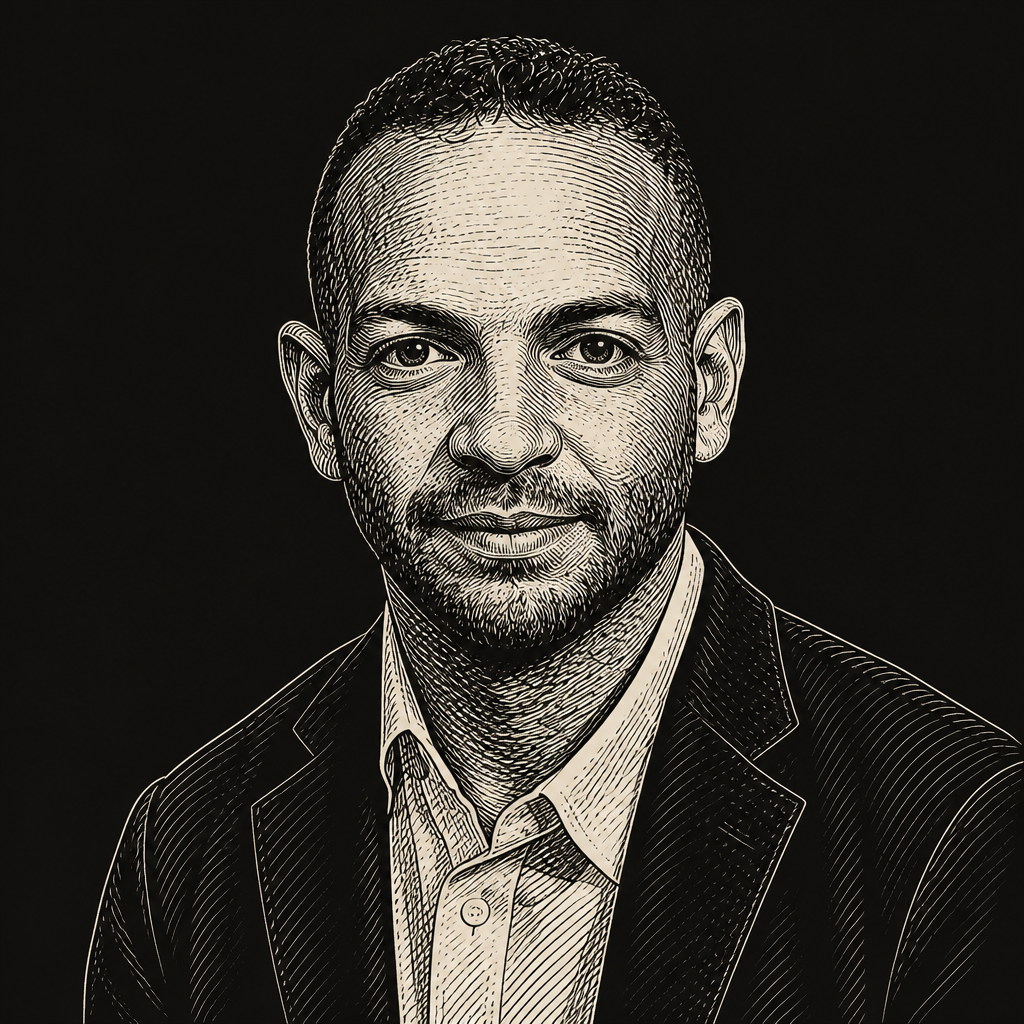
MG Siegler agreed that Google’s event looked awkward in the current AI cycle. Google did release Gemini Flash, and Siegler said the company deserved credit for rolling what seemed like nearly every product over to the new model. But Flash was not the flagship model. Google had to say Pro was coming later, likely in June, at an event where people expected a larger leap. The surrounding competitive context made the absence more visible: Siegler and Kantrowitz referred to recent model activity from Anthropic and OpenAI, and to discussion of stronger models around those companies, as part of the pressure on Google.
Siegler’s criticism was less that Flash was useless than that it was not enough to anchor I/O. After the initial momentum around the launch, he said, people began to find that Flash was “a little bit expensive” and good without clearly moving Google ahead of the other frontier labs. That raised a tactical question: why use the company’s biggest annual stage to lead with a non-flagship model rather than wait until Pro was ready?
The deeper issue, for both Kantrowitz and Siegler, was cadence. Large technology companies inherited an Apple-like event rhythm: hold back product news, gather it into one annual showcase, and make the event feel consequential. Siegler argued that AI does not fit that rhythm. Frontier model releases, coding agents, and app-level capability shifts arrive when they are ready, not when the conference calendar says they should. Google, he said, looked “sort of silly” for not having its strongest model ready at I/O, and might have been better served by holding an event later in June if that was when the Pro model could ship.
But model timing was only the smaller worry. Kantrowitz argued that if Google’s AI bet is primarily about making models efficient — as with Flash — that leaves it exposed in the product layer now driving much of the excitement and usage in AI: coding agents that may become general-purpose agents. Claude Code and Codex are useful to developers today, but the strategic question is whether their pattern becomes the interface through which ordinary users ask software to act across their computer, browser, email, and web accounts.
Siegler said Google itself appears to recognize the coding gap. He cited Sundar Pichai saying on another podcast that Google was “a little bit behind” in AI coding. Siegler treated that admission as significant because coding is not just another use case. Many in the industry see it as the leading edge for agentic systems: models that take goals, manipulate tools, and complete work across software environments.
You even heard Sundar Pichai was on with Casey Newton and Kevin Roose on their podcast, and he explicitly said like, just straight up like, that they’re a little bit behind in coding, you know, with regard to AI.
Google has not been idle. Siegler credited the company with reorienting search around AI without wrecking its core business. Google said searches are at all-time highs, though Siegler noted there are likely caveats around what counts as a search when users interact back and forth with AI mode. The feared disruption to Google’s business from AI search has not materialized in the severe way many expected 18 months earlier, and Google’s market performance has recovered, according to Siegler.
That success may also explain the problem. Google focused heavily on defending and adapting search because search is the core business. But Siegler suggested that Anthropic’s apparent business growth exposed what others had missed. Microsoft, Google, and even OpenAI may not have fully appreciated the value of the developer and agentic workflow Anthropic was pursuing until Claude and Claude Code began to “explode from a business perspective.” He referred to market discussion of Anthropic approaching very large annual recurring revenue and higher valuations than OpenAI as part of why competitors are reassessing their priorities. The strategic point was that attention has shifted toward the workflow layer where Anthropic looks strongest.
The “super app” is not WeChat. It is the computer itself
Alex Kantrowitz argued that “super app” may be the right term for what OpenAI and Anthropic are building, even if it does not resemble the Asian super-app model of payments, rides, banking, lotteries, and commerce inside one mobile app. In the AI context, he said, the super app is less a bundle of consumer services than an interface that can take control of the computer and browser to get work done.
The early beachhead is coding. But in Kantrowitz’s view, coding is only the first area where these systems are competent enough to be broadly useful. The ambition is larger: a user asks for an outcome, and the AI handles the web, email, applications, forms, and follow-up.
His example was hiring an entertainer for a child’s birthday party. Today, the research stage might happen in ChatGPT, but the user still goes to websites, emails vendors, checks availability, and books. Kantrowitz said AI labs likely see that split as “an accident of history” or an incomplete path. The target experience is that the agent researches options, emails entertainers, checks whether they meet specifications, verifies availability, perhaps runs a background check, and books. That would stand the web on its head because the user’s relationship with websites would be mediated by the agent rather than by search results, browser tabs, and forms.
MG Siegler agreed with the direction and tied it back to Google’s product posture. Google showed a product at I/O that Siegler referred to as “Spark,” though he was openly unsure about the branding and said the name was confusing because other major companies also have products with similar names. Some users, he said, appeared to have early access through an Ultra tier, itself complicated by Google having more than one Ultra tier. But in his view, that product and related tools were still not a coherent answer to the agentic super-app question.
He also pointed to the slow arrival of a standalone Gemini app as evidence of Google’s web-centric instincts. Google may have assumed that AI could live in the browser because it controls Chrome, and Gemini is now integrated into Chrome. But Siegler said the eventual standalone Gemini app is still rudimentary: a native way to access Gemini on a Mac, not a true super app. He speculated that it may set up future rollouts of Google’s coding product — which he referred to, with some hesitation, as “Anti-Gravity” — and more general computer-use tools, but Google is behind competitors in turning those pieces into a native, agentic product.
The distinction matters because a browser is not necessarily the final AI interface. Siegler said Google’s history as a web company may be slowing the mental shift toward native apps that use local computer tools and take over parts of computer usage. The company’s instincts are to organize around the web, but Claude Code and Codex point toward software that acts across the computer.
Email made the tension concrete. Siegler said he uses Claude daily to check Gmail rather than using the Gmail interface itself. He asks Claude to find places where he has written about a given topic before, and Claude returns a natural-language answer with dates, newsletters, and links. Gmail, by comparison, still largely reflects the old search paradigm. Google has Gemini inside Gmail, but Siegler said it is not as seamless or useful as the agentic experience in Claude.
You would think that they would have like the single best place, they should have the single best place to do any sort of agentic email workflow, whether it’s sending emails or searching emails or doing anything with email, they should own that and they don’t own that right now.
Kantrowitz said the same pattern appears when using ChatGPT to search Gmail: it can be better than searching Gmail with Gemini inside Gmail. That should be alarming for Google because Gmail is one of its own products. Siegler said he does not know anyone using agentic AI workflows who has not connected them to Gmail. Google owns the underlying service, but other AI companies are becoming the interface.
The broader implication is that the power of the web may move from websites and search engines to AI interfaces. Kantrowitz used Booking.com as another example. Booking.com can have its own chatbot with its own inventory data, but ChatGPT can compare across the web. If the Booking API is unavailable because Booking wants to preserve its own experience, a computer-use agent could still open Booking.com, log in as the user, and book the hotel ChatGPT recommended.
That is the core strategic threat: the most important interface may become ChatGPT, Claude, Gemini, or another agentic system, rather than Google Search, Chrome, Gmail, Booking.com, or Amazon’s storefront. If Google is not one of the primary agentic interfaces, its ownership of many underlying web products may matter less.
Agents may bypass permission, but platforms will fight to keep the interface
MG Siegler warned that the move to agentic interfaces will not be seamless because companies do not like surrendering control of the user relationship. He compared the situation to streaming video. Consumers have long wanted a unified interface across Netflix, Amazon, Apple, and other services. Apple and Amazon have partial versions, but Netflix refuses to fully participate because it wants to control its own interface and customer relationship.
He extended the analogy to earlier digital markets. Some entertainment companies later regretted giving Apple so much control through iTunes, even if Apple arguably helped rescue them from piracy and fragmentation. Many publishers and web businesses also came to regret depending on Google Search as the main way users found them. In AI, companies may look at those histories and resist becoming suppliers to someone else’s agent.
Shopping is already a likely battleground. Siegler said he worries the ideal of one AI tool that can do everything will give way to a fragmented reality where users need three or four AI agents because different platforms refuse to cooperate. He asked whether Amazon purchasing through Gemini would ever be as seamless as purchasing through Amazon’s own tools and Alexa, and doubted it would happen soon.
Alex Kantrowitz pushed back with the key difference: agentic tools may not need permission in the way earlier integrations did. They can fall back to controlling the user’s browser and computer, acting as the user on ordinary websites instead of relying on formal plugins or APIs. If the AI is effectively using the web as a human would, the platform’s ability to block it may be limited.
Siegler accepted that the fallback exists, but said the conflict is already visible at the edges. Some services may support protocol or API-like layers, including MCP-style integrations, while others may force agents back to ordinary web usage. Blocking agents could become complicated. If a company blocks Google’s Gemini crawler, it may risk blocking Google Search, which few businesses are willing to do. That gives Google leverage. Amazon may have its own leverage through Amazon Shopping. These conflicts, Siegler said, will likely be litigated and negotiated extensively.
Content rights add another layer. Siegler described trying what he called OpenAI’s browser, “Atlas,” on a New York Times story. His wording was tentative, and the point was not the product name so much as the constraint: when he asked the ChatGPT feature built into that browser to summarize the page, it refused because OpenAI does not have an agreement for that content. Siegler found that strange because he, the user, could see the article and was asking his agent to summarize something on his screen. He could work around it by copying and pasting the text into the chatbot, but the example showed how legal and platform constraints can break the agentic experience even when the user has access.
Trust and coverage are linked. Kantrowitz said once users become comfortable with AI taking control of the computer, they may stop checking each step — at least until an agent makes a serious mistake. He said he has connected Gmail to ChatGPT and is nearing the point where he lets these systems act with less supervision. Siegler was more cautious. He sees the path, but for him the key threshold is when he can use voice to ask an agent to search email and send a response without needing prompts, visual cues, or manual confirmation.
Voice matters, but Siegler did not argue it becomes the only interface. He said OpenAI appears to be preparing for more voice-driven use, likely connected to its work with Jony Ive’s team on a new device. Apple’s AI work also appears voice-dependent. Text will still matter in public or private contexts. Voice becomes crucial for ambient, device-light use cases: telling an assistant while walking to email someone that you will be ten minutes late, with the assistant understanding the context from prior messages.
The problem is that the agent has to work reliably. Siegler compared the risk to the first generation of Alexa, HomePod, and Google Assistant. Because those systems could not do enough, users fell back to simple tasks: music, weather, alarms. If new AI devices cannot execute richer workflows without a screen, they may become expensive versions of the same thing.
Google’s size may make the needed product reversal harder
Alex Kantrowitz proposed that Google’s organizational structure makes the super-app problem especially difficult. When Google built Gemini, he said, it centralized model work in an “engine room” and then collaborated with product areas to integrate AI outward into Search, Gmail, Chrome, and other products. That push-from-the-core approach worked for distributing AI across Google’s existing surfaces.
The agentic super-app pattern may require the reverse. Product areas may need to feed into a centralized AI interface, letting their own surfaces recede. That is much harder politically. If Gmail’s future is that users no longer open Gmail but instead receive AI-managed tasks and summaries inside Gemini, the Gmail product organization is being asked to diminish its own interface for the broader company strategy.
MG Siegler said that point clarified why Google’s scale can become a hindrance. If OpenAI launches a product that combines ChatGPT, Codex, and the browser Siegler had been referring to as Atlas, Google’s answer might need to combine Gemini, Chrome, and its own coding product. Those are large, distinct teams, and Chrome in particular was not historically built as an AI-native product. Gemini in Chrome, Siegler said, still feels tacked on rather than native. Reworking Chrome into an AI-native product while coordinating with Gemini and coding tools would be far harder for Google than for a smaller, more tightly oriented company.
That is the startup advantage against a giant. Siegler described the view from OpenAI’s side: Google has an enormous market value, hundreds of thousands of employees, cloud capacity, TPUs, and deep engineering talent. The way to compete is to turn those strengths into weaknesses. Google’s legacy products, product politics, and integration burden slow the very consolidation that the agentic interface may require.
You use their strengths against them as a weakness. Whereas like they can’t integrate as well and as quickly as you can because they have all this legacy stuff.
The email example made the organizational tension concrete. Kantrowitz said if OpenAI owned Gmail and wanted the best possible super app, Gmail would almost disappear into the background. Messages would surface inside ChatGPT, and ChatGPT would handle the workflows. For a Gmail product leader, that is a difficult thing to accept: “You want me to disappear myself for the greater good?”
Siegler said the successful future of email in AI likely means people open email clients far less often. Agents email each other, users receive summarized decisions and to-do prompts, and the email happens behind the scenes. He imagined a scheduling workflow in which Alex’s and MG’s agents coordinate the next podcast time, then present a small set of options to approve. Google is working on a more agentic version of Gmail, according to the screenshots and descriptions Siegler had seen, with to-dos and high-level summaries. But both questioned whether that belongs inside Gmail at all. Kantrowitz said it belongs in Gemini.
This is why Google’s missing Claude Code or Codex competitor matters beyond developers. If the next interface is an agentic environment that absorbs tasks from the browser, email, search, and apps, then defending each product surface separately may not be enough. Google has the assets, but the strategic move may require making some of those assets less visible to users.
Apple’s WWDC may be a reset, not a hardware showcase
Alex Kantrowitz was most intrigued by the rumored iPhone Fold, though he and MG Siegler did not expect Apple to preview it at WWDC. The attraction was not just a folding screen. It was whether Apple could turn an odd new form factor into a distinct kind of iPhone rather than a novelty version of the old one.
The device described in the conversation sounded shorter and squatter than existing foldables. Kantrowitz initially wondered whether that meant something closer to an old flip-phone form factor than a book-style fold that opens into a larger tablet-like display. Siegler thought Apple would probably still market it as a book-style fold, but said the rumored dimensions would make it feel different from a Pixel Fold, which closed looks more like a normal smartphone.
That shape could create what Kantrowitz called, drawing on Siegler’s writing, an “iPhone’s BlackBerry moment.” A slightly wider folded device might be better for two-thumb typing, recalling the BlackBerry era when physical-keyboard phones made messaging feel central. The unfolded state could support video, gaming, content consumption, two-app multitasking, or more “real work.” Siegler expected the unfolded interface might resemble an iPad mini-like experience without literally running iPadOS — more likely a more capable version of iOS with widgets or layouts beyond a simple app grid.
The larger question is whether Apple can make the device meaningfully different rather than merely another iPhone shape. Siegler said Apple would likely frame it as a new style of iPhone with distinct use cases. But he did not expect WWDC to be the venue. Apple, he said, will have enough to do with Siri.
On Siri, Siegler expected a relatively straightforward WWDC. He said Apple may show the new Siri and could face an awkward branding question if reports are right that Gemini is involved. Apple may not want to emphasize Google too much, but it may need to signal that the underlying AI is more capable this time. Siegler would be shocked to see glasses or the foldable phone. A new HomePod was more plausible, because reports suggest such hardware has been in the works and may have been waiting for AI readiness. AirPods with cameras were also closer to an AI-device category, but he still doubted Apple would show them.
The likely pitch, in Siegler’s view, is a “do-over AI event”: Apple shows Siri, visual intelligence, improved Genmoji, better Image Playground results, and a version of the famous “getting mom home from the airport” demo that actually works. Kantrowitz joked that the pitch might be “Siri that almost works now, more now more than ever.” Siegler thought Apple would phrase it more elegantly, but did not reject the underlying risk.
The same event-cadence issue applies. WWDC is a developer conference that has become more consumer-facing over time, but it is not supposed to be the iPhone event. If Apple’s AI work is not ready for a dramatic leap, the event may feel underwhelming just as Google I/O did.
Siegler’s wildcard was not a device. It was the App Store. If Apple is moving from the Cook era toward a John Ternus era, he suggested, it could use WWDC to change the App Store fee structure — for example, moving away from the long-running 70/30 split toward 80/20 or 85/15. That would not be purely magnanimous, given legal pressure around the App Store, and Kantrowitz noted that it would hit the services business. But Siegler argued it could change the perception of a transitional WWDC and set a tone for Apple’s next phase, much as Satya Nadella’s early move to put Office on iPad helped signal a new Microsoft posture.
Meta’s subscription sprawl looks like pressure, not strategy
Meta’s product and business direction looked messy to Alex Kantrowitz and MG Siegler. Kantrowitz read through the subscription lineup Siegler had highlighted in his writing: WhatsApp Plus for $2.99, Facebook Plus for $3.99, Instagram Plus for $3.99, Meta One Plus for $7.99, Meta One Essential for $14.99, Meta One Premium for $19.99, and Meta One Advanced for $49.99. Siegler had written that Meta was “not quite in Microsoftian territory, but close,” and wondered whether Meta should stick with ads.
| Subscription | Price |
|---|---|
| WhatsApp Plus | $2.99 |
| Facebook Plus | $3.99 |
| Instagram Plus | $3.99 |
| Meta One Plus | $7.99 |
| Meta One Essential | $14.99 |
| Meta One Premium | $19.99 |
| Meta One Advanced | $49.99 |
Siegler said Meta’s situation is not helped by how aggressively the company pushes back on negative cultural reporting. At a company that large, he argued, there will inevitably be turf disputes, morale problems, and factions moving in different directions. Pretending everything is fine can feel “gaslighty” and worsens the company’s public vibe.
On AI, he placed Meta behind the frontier. The company has released early models and acknowledged they are not yet at the frontier, promising more later. Siegler grouped this with Google’s posture: major companies promising stronger AI work down the road while competitors push ahead now. Meta also appears behind in coding relative to the earlier discussion of Claude Code and Codex.
The subscription strategy, in Siegler’s view, reflects pressure to find revenue beyond advertising. Meta’s business is still overwhelmingly ad-driven — he put it at roughly 98% — and while Facebook and Meta properties have repeatedly defied predictions of saturation, growth in Western markets is no longer the same. The company may still grow in other regions, but not necessarily where its ad monetization is strongest.
That pressure is intensified by enormous capital expenditures for AI and earlier spending on the metaverse, whose eventual payoff remains uncertain. Siegler interpreted Mark Zuckerberg’s suggestion that Meta could roll out a cloud business if needed as a sign of this pressure. If Meta is spending heavily on compute, perhaps it could turn some of that infrastructure into a “neo-cloud” offering for other businesses.
Siegler connected that thought to the way xAI and SpaceX were being discussed in the market, as he understood it: if expensive AI infrastructure can be recast as a cloud business serving other AI companies, the narrative becomes more palatable to investors. He joked about Meta becoming a neo-cloud company but did not dismiss it entirely. If Wall Street demands more evidence that Meta’s AI spending can produce returns beyond improving ads, Meta may look for ways to show revenue from the infrastructure itself.
The subscription sprawl, then, was not just bad naming. It looked like a symptom of a company trying to diversify a massive ad business while simultaneously funding AI and metaverse ambitions. The confusing tiers suggested a lack of product clarity at the moment when clarity matters most.
Anthropic’s confidential filing sharpens OpenAI’s problem
Breaking news during the discussion changed the final thread: Alex Kantrowitz said Anthropic had confidentially submitted a draft registration statement on Form S-1 to the U.S. Securities and Exchange Commission for a proposed initial public offering of common stock. He said Anthropic announced the filing in a two-paragraph blog post and did not appear to have pre-briefed news publications.
Today Anthropic confidentially submitted a draft registration statement on form S-1 to the U.S. Securities and Exchange Commission for a proposed initial public offering of our common stock.
For MG Siegler, the important point was not that Anthropic must go public immediately. A confidential filing creates optionality. The pressure comes from timing. Reports the prior week had suggested OpenAI might file confidentially soon, perhaps around the same period as SpaceX-related market activity discussed in the news. Because confidential filings are not necessarily public, Siegler allowed that OpenAI may already have filed without the news leaking. But if Anthropic filed first, he said, it would put OpenAI in a difficult position.
The reason is narrative. Anthropic and OpenAI are more direct comparables than OpenAI and SpaceX or xAI. SpaceX may have an AI-linked story through xAI, but it also has rockets and other businesses. Anthropic and OpenAI are frontier AI companies whose strategies are converging around coding, agents, and enterprise workflows. That makes public-market comparisons hard to avoid.
Siegler argued that OpenAI’s story would have been cleaner when ChatGPT looked like the overwhelming consumer leader and Anthropic looked narrower. OpenAI could have pitched higher spending and deeper losses as investment into a larger market opportunity. But he treated Anthropic’s developer traction, coding strength, and reported business acceleration as making that pitch harder. If Anthropic can present stronger growth, a better path toward profitability, or a more efficient business in the workflow layer, OpenAI has to explain why investors should prefer its version of the same broad race.
OpenAI could counter with usage. Siegler said it would likely emphasize roughly 900 million monthly active users and much broader consumer adoption than Anthropic. But even that number carries a narrative issue in his view: it has not moved above one billion, and Sundar Pichai said onstage at I/O that Gemini also had 900 million monthly active users. That weakens the uniqueness of OpenAI’s scale story.
Kantrowitz questioned why either company needed to go public so soon given the enormous fundraising figures being discussed around them. In the live exchange, he referred to Anthropic as having just raised $65 billion and OpenAI as having just raised $122 billion; Siegler did not verify those figures, and the discussion treated them as part of the broader market narrative rather than audited claims. Siegler’s answer was that going public can improve access to debt, make stock more liquid, and create other financing advantages. More importantly, he said, the market window is open. Companies that expect to need continued financing may not want to wait until conditions change.
For Anthropic specifically, Siegler said profitability talk does not eliminate the need for capital. The company has struggled to meet demand, he said, and is striking expensive capacity deals with neo-cloud providers. He referred, again as part of the fast-moving market discussion, to a report that Anthropic might pay around $15 billion a year to SpaceX to lease the Colossus data center. His point was not the exact number; it was that a company can burn through a large raise quickly if it must immediately spend billions on compute capacity to serve demand.
Siegler also raised a market-structure factor: potential index inclusion. He said changes around major indices could allow very large new listings such as SpaceX, OpenAI, and Anthropic to enter indices faster, forcing mutual funds and other large funds to rebalance and buy. He framed this as a live and somewhat controversial possibility, not a settled outcome. If that happens, public-market demand could depend less on ordinary comparable-company analysis. SpaceX, which Siegler expected to test public-market appetite soon, would show how much automatic buying matters.
Still, the strategic point remained: Anthropic’s filing is a direct challenge to OpenAI. Kantrowitz compared it to book-publishing tactics, where one similar book’s announced publication date can force the other side to react. Siegler’s closing formulation was simple: “Your move, OpenAI.”