Agents Push Applied AI’s Bottleneck Into Infrastructure And Control
Jeff Dean’s systems framing and NVIDIA’s platform pitch both point to inference, orchestration, memory, and validation as the next constraints for agentic AI. The same shift shows up in local PCs, robotics stacks, Travelers’ claims workflow, and Tailscale’s access-control model: applied AI is moving from isolated model calls toward operating environments that must run repeatedly, cheaply, safely, and under policy.

The new bottleneck: inference, orchestration, and agent work
Jeff Dean offers the broadest systems diagnosis: AI progress is not chiefly blocked by exhausting public text. Dean, Google’s chief scientist, acknowledged that much public text has already been used, but argued that capability can still improve through video data, synthetic data, repeated passes over existing data, better algorithms, and action-driven training loops that generate and filter attempts.
His coding example is useful because it reframes “data” as something embedded in a larger system. A model can generate 100 or 1,000 candidate programs, discard the ones that do not compile, reject those that fail tests, and learn from the remaining candidates. A Python codebase plus its tests can also become a behavioral specification for generating a faster or differently implemented version. Dean’s point is not that raw data no longer matters. It is that validation, simulation, filtering, and action create additional learning signal.
The hardware conclusion follows from that. Dean said machine-learning workloads are shifting toward inference: offline inference, online user-serving inference, reinforcement-learning rollouts, and agentic behavior. Those workloads differ from training because weights may be fixed, lower precision may be acceptable, latency and energy matter more, and request volume can be enormous. That makes inference-specialized hardware, smaller distilled models, context orchestration, and efficient serving systems central to the next phase.
NVIDIA’s keynote framing arrives at a similar destination from the vendor side. The company’s recap defined “useful AI” as agents “working by your side,” then used agents as the connecting workload across Vera Rubin inference, cheaper tokens, BlueField memory, CPU improvements, enterprise guardrails, Windows PCs, DGX infrastructure, robotics simulation, and humanoid systems. Where Dean describes the underlying constraints, NVIDIA packages those constraints into a platform story.
Agents are not just an app layer. They stress the whole computing stack: inference hardware, CPU orchestration, memory, context, sandboxes, local execution, monitoring, and credentials.
The difference matters for buyers and builders. Dean’s framing says the next bottlenecks are systems problems: how to generate useful attempts, test them, distill larger models into cheaper ones, retrieve and rank context, and keep learning behind safety gates. NVIDIA’s framing says those systems problems create demand for a vertically connected compute stack. They are not contradictory. They are talking at different layers: one at the research-and-systems level, the other at the commercial infrastructure level.
Agentic workloads also make the old separation between “model” and “application” less stable. If an agent writes code, calls tools, performs retrieval, runs SQL, uses a sandbox, or iterates through simulations, the performance and safety of the system depend on everything around the model. The shared signal is that applied AI is becoming a full operating environment rather than a model call.






NVIDIA is trying to own both sides of the agent loop: tokens and CPUs
NVIDIA’s “AI factory” metaphor is the cleanest expression of its market narrative. The company frames tokens as the manufactured output of a new kind of factory: units that turn data into “knowledge, reason, action.” In its GTC Taipei opening, that metaphor stretched from scientific discovery and drug design to city modeling, robotics, healthcare, factories, data centers, mining, and space. Taipei was not treated only as a location; NVIDIA tied the story to partners in Taiwan and presented the region as a starting point for the industrialization of AI.
The metaphor does a lot of work. If tokens are industrial output, the relevant questions become throughput, cost, power, factory design, supply chain, and utilization. That is useful language for NVIDIA because it turns model-serving into production infrastructure. It also sets up the company’s CPU argument: if tokens are the output, every part of the system that slows token production becomes strategic.
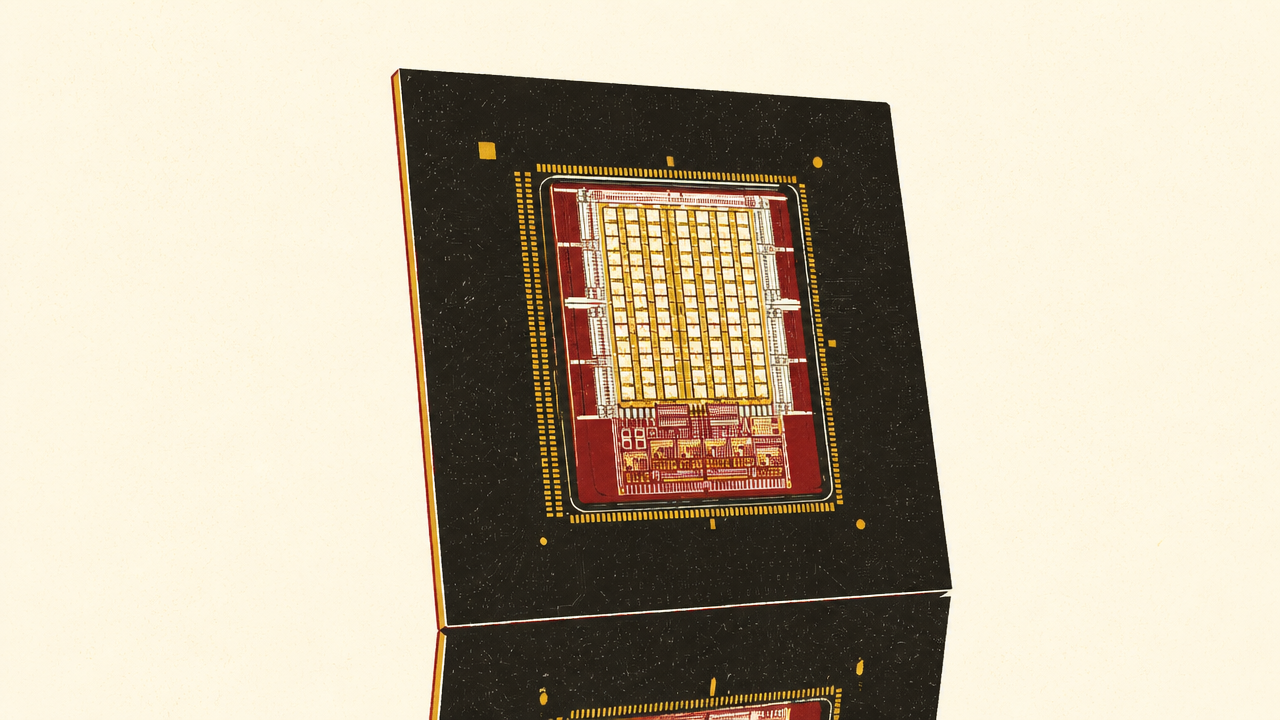
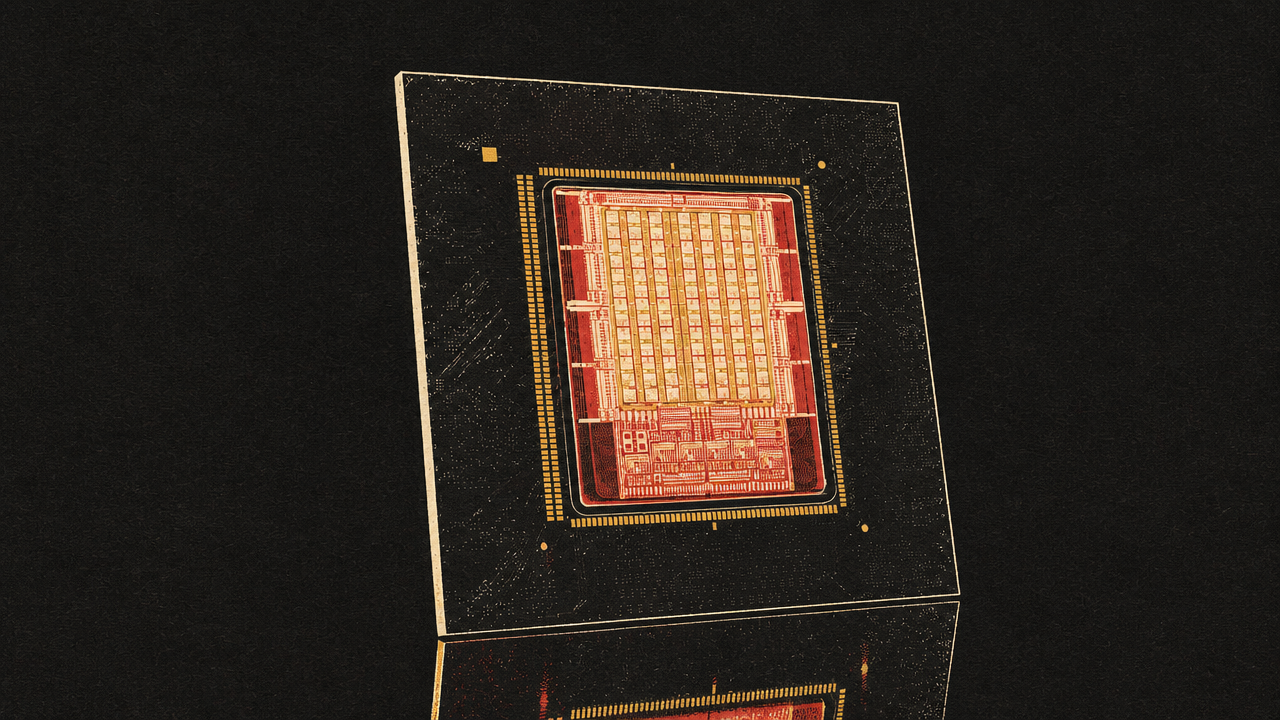
Vera is NVIDIA’s concrete claim about the orchestration side of that factory. The company presents Vera not as a conventional cloud CPU optimized mainly for core count and virtualization, but as a data-center CPU built for the CPU-side work agents generate around GPUs. NVIDIA’s described workload list is explicitly agent-shaped: Python runtimes, tool calls, code compilation, scripting, debugging, data analysis, evaluation, decision-making, web search, SQL, simulation, and sandboxed execution.
The logic is straightforward: if the GPU is waiting on the CPU to prepare tool calls, run sandboxes, move data, handle retrieval, or coordinate branching workflows, GPU utilization falls and token throughput suffers. NVIDIA’s formulation is that “the CPU is now the conductor, and the GPU is the orchestra.” Vera’s design claims — Olympus cores, LPDDR5X bandwidth, a coherent 88-core fabric, and NVLink-C2C links into GPU systems — all serve that orchestration argument.
| Layer | NVIDIA’s claim | Why it matters for agents |
|---|---|---|
| Tokens | AI factories manufacture tokens as useful intelligence | Frames inference as industrial production, not chatbot response generation |
| GPU inference | Vera Rubin is tied to cheaper tokens and faster inference | Agent workloads multiply model calls and make cost per token central |
| CPU orchestration | Vera is built for agentic CPU-side work | Tool calls, Python, retrieval, SQL, sandboxes, and data movement can starve GPUs |
| Memory and fabric | LPDDR5X, coherent fabric, and NVLink-C2C keep data moving | Longer context and tool-heavy workflows are constrained by data movement as much as raw compute |
| Enterprise controls | Guardrails and sandboxes are part of the agent stack | Production agents need boundaries around action, not just better model outputs |
The performance claims should be treated as NVIDIA’s positioning unless independently validated. But the strategic move is clear. NVIDIA is extending its platform argument from GPU acceleration into the surrounding control plane for agents: the CPUs that keep GPUs fed, the memory that preserves context, the interconnects that bind systems together, and the software boundaries that let agents act inside enterprises.
That is a different pitch from “buy a faster accelerator.” NVIDIA is arguing that agentic AI turns the entire server into an AI production line. If that argument sticks, the company’s addressable role expands from training and inference acceleration into the orchestration layer that determines whether agent systems run cheaply, repeatedly, and with acceptable latency.


Local AI is becoming part of the same infrastructure story
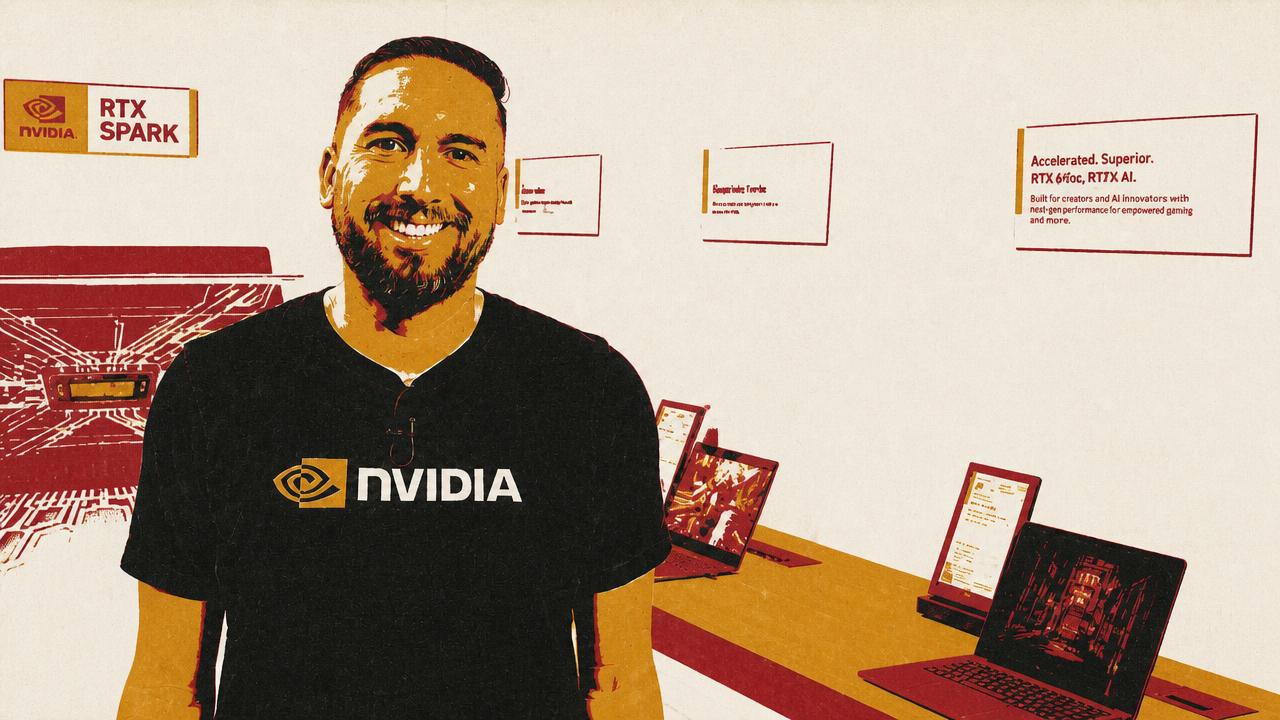
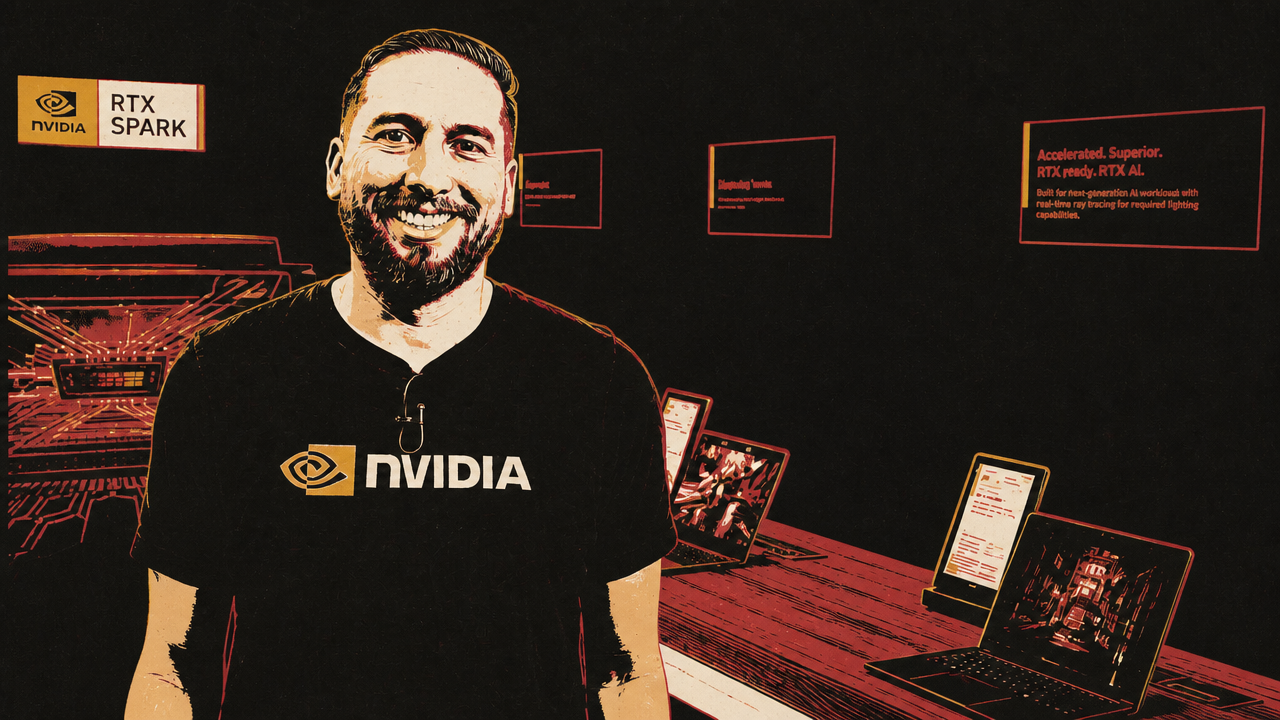
RTX Spark extends the same argument from the data center to the endpoint. NVIDIA positioned the platform as a compact Windows system for local AI agents, creative production, and RTX gaming, built around a Blackwell RTX GPU paired with a Grace CPU. The most important specification was not a gaming benchmark. It was memory.
The 128 GB unified-memory claim matters because local AI becomes more plausible when larger models, complex creative scenes, and agent workflows can fit on the machine rather than depend entirely on a remote service. NVIDIA presenter Joel Pennington connected that memory directly to running “big models” locally, while also saying NVIDIA was working with Microsoft so that “everything’s local.” Pennington presented privacy and security as benefits of keeping the work on the user’s machine.
The agent demo made the endpoint claim concrete. Pennington used OpenDevin to operate ComfyUI, a complex image-generation workflow tool, instead of manually manipulating the tool himself. His prompt asked the agent to create a new image from a sketch and snowy background; he described OpenDevin as handling the prompts and hyperparameters. He then used the generated image as a start frame for a short video prompt, asking the camera to move back from the griffon.
The point is not that image generation is new. The point is that NVIDIA showed a local agent sitting between a user and a parameter-heavy creative tool. That is the same workflow pattern as enterprise agents calling tools, except in a personal workstation context: the model does not merely answer; it operates software.
The creator pitch used the same memory premise. Gerardo Delgado said RTX Spark laptops could edit up to 12K 4:2:2 video and render scenes up to 90 GB. NVIDIA also showed Blender using DLSS 4.5 Ray Reconstruction, arguing that a clearer live preview changes creative decision-making because artists can see something closer to final output while navigating a scene. Gaming remained one of the three pillars, with RTX titles, DLSS 4.5, and broad DirectX, OpenGL, and Vulkan support, but the applied-AI relevance is local execution.
The bridge back to the infrastructure story is latency, privacy, cost, and user experience. If agents become normal workflow operators, not every agent action will be best served from a cloud data center. Some work will remain local because the user’s files, creative assets, enterprise policies, or responsiveness requirements make endpoint execution attractive. NVIDIA’s endpoint pitch is therefore not separate from its AI-factory pitch. It is a claim that the agent loop will run across cloud systems, PCs, and compact desktops.
Physical AI’s bottleneck is shared infrastructure and generalization
The same system-capability shift appears in robotics. NVIDIA’s Isaac GR00T story begins with a practical bottleneck: humanoid teams still spend months assembling the infrastructure required before research can begin. In NVIDIA’s account, developers stitch together simulators, teleoperation systems, data pipelines, training infrastructure, evaluation tools, deployment paths, and hardware bring-up. GR00T is positioned as a way to standardize that path.
NVIDIA’s workflow runs from setup to data creation, training, evaluation, and deployment. Isaac Lab provides simulation environments. Isaac Teleop captures human demonstrations in real and simulated settings. Omniverse and Cosmos generate synthetic data. Training scripts produce policies. Isaac Lab Arena and Isaac ROS evaluate those policies in simulation and on hardware. Jetson Thor becomes the onboard compute target. NVIDIA’s stated claim is that this can reduce setup from months to hours.
The demonstrations emphasized the movement between simulation and hardware: a simulated humanoid manipulating a bin, a VR operator controlling a physical robot, synthetic data turning one demonstration into many, and a robot picking up objects in simulation and then in the real world. NVIDIA also introduced a Jetson Thor-based reference humanoid, giving research teams a starting hardware design rather than only a software stack.
Luma AI’s Amit Jain approaches the robotics problem from a different angle. He argues that robotics remains trapped in task-by-task training: robots are shown a few examples of specific tasks, then repeat those tasks. The missing capability is generalization — a robot that can handle a new instruction in a new situation rather than only the narrow behavior it has been explicitly taught.
Jain’s answer is large-scale multimodal infrastructure. Luma’s open physical AI lab is meant to bring the company’s experience with video, image, and 3D models into control, simulation, and embodied action. He described the brute-force alternative as collecting data for every task and every combination of tasks, from picking up cups to digging mines. That is the scale of the generalization problem if robotics remains dependent on explicit task catalogs.
The more consequential tension is about control of the stack. NVIDIA presents GR00T as open and modular, with components that teams can use or replace, but the center of gravity is still NVIDIA’s development path: Isaac, Omniverse, Cosmos, Isaac ROS, Jetson Thor, and a reference humanoid built around those assumptions. Jain argues that physical AI should be open science and open source because robots may operate in homes, factories, hospitals, food systems, streets, and other productive systems. He says it would be “completely untenable” for one or two actors to control the entire physical AI stack.
| Question | NVIDIA GR00T | Luma AI |
|---|---|---|
| Primary bottleneck | Repeated setup of simulation, teleoperation, data, training, evaluation, deployment, and hardware infrastructure | Robots trained one task at a time, without generalization to new situations |
| Proposed answer | A modular humanoid development path centered on Isaac, Omniverse, Cosmos, Isaac ROS, Jetson Thor, and a reference robot | An open physical AI lab built around large-scale multimodal data systems |
| Strategic posture | Make the development stack faster and more standardized | Keep the physical AI stack open because it will touch economically critical systems |
| Unresolved issue | Whether an open modular stack still recenters robotics around NVIDIA’s platform | Whether multimodal infrastructure can produce the required physical generalization |
They are not debating whether robotics needs more infrastructure. They agree on that. They differ on what kind of infrastructure should become default: a standardized platform built by the dominant AI-compute supplier, or an open multimodal ecosystem designed to avoid concentrated control over physical production systems.





Production AI is an operating model, not a model call
Travelers supplies the clearest example of what applied AI looks like once it enters a regulated, customer-facing workflow. Erik Roen, Travelers’ claims CIO, described the insurer’s first-notice-of-loss assistant as an operating-model change, not just an AI feature in a call flow.
The workflow matters because first notice of loss is the first decision point in a claim. A customer may have just been in an accident, may be dealing with storm damage, may not know whether to file, and may need guidance on coverage, deductible, fault, or whether another insurer should handle the claim. Travelers handles about 1.5 million claims a year, so the workflow is high-volume. It is also high-stakes because downstream triage, assignment, scheduling, rental car coordination, body shop steps, and customer trust depend on the initial record.
The assistant is optional. Customers can choose it when calling to file a claim and can switch to a contact center specialist. Roen said multiple agents work together invisibly to the customer: listening, understanding intent, explaining options, answering questions, creating the claim in legacy systems, and triggering follow-on activities. Denise Dresser of OpenAI cited an 80% to 90% completion figure for customers completing through the assistant, while Roen separately said about 35% of people offered the AI option still want a person.
The production lesson is in the operating scaffolding. Roen said the AI claims assistant required a much closer split between technology and business ownership than traditional software delivery. Instead of business teams handing off requirements and returning for user acceptance testing, Travelers involved data engineers, software engineers, data scientists, legal teams, architects, subject-matter experts, and business stakeholders in evaluations, LLM judges, prompts, testing, and deployment decisions.
Mission Control was the deployment mechanism. Roen said Travelers moved from an eight-state pilot to countrywide deployment within two months, supported by near-real-time data in 15-minute increments. Mission Control tracked business outcomes, system performance, model performance, customer experience, and intervention monitoring. Synthetic callers generated thousands of claim-call scenarios. LLM judges assessed tone, accuracy, required information capture, hallucination risk, and promissory statements the assistant should not make. Roen said the team could turn the agent off within 10 minutes if needed.
This is the counterweight to the infrastructure-heavy NVIDIA narrative. Hardware, memory, and inference economics may be necessary, but they do not make a production system safe or usable by themselves. Travelers’ example shows the workflow layer: instrumentation, synthetic testing, governance rules, escalation paths, monitoring, employee change management, and a credible shutoff path.
Roen also described claims-specific governance, including Travelers’ internal “claim three laws”: pay what the company owes, provide a strong customer or agent experience as long as that does not violate the first rule, and operate efficiently as long as that does not violate the first two. That hierarchy is important because the assistant is not optimizing for containment rate alone. It is operating inside a regulated claims process where the first obligation is claim correctness.
The broader applied-AI point is that deployment capacity becomes an organizational capability. The question is not whether a model can answer a claims question once. It is whether the company can observe, evaluate, correct, escalate, and shut down the system while customers are using it.




Agent access control is becoming its own layer
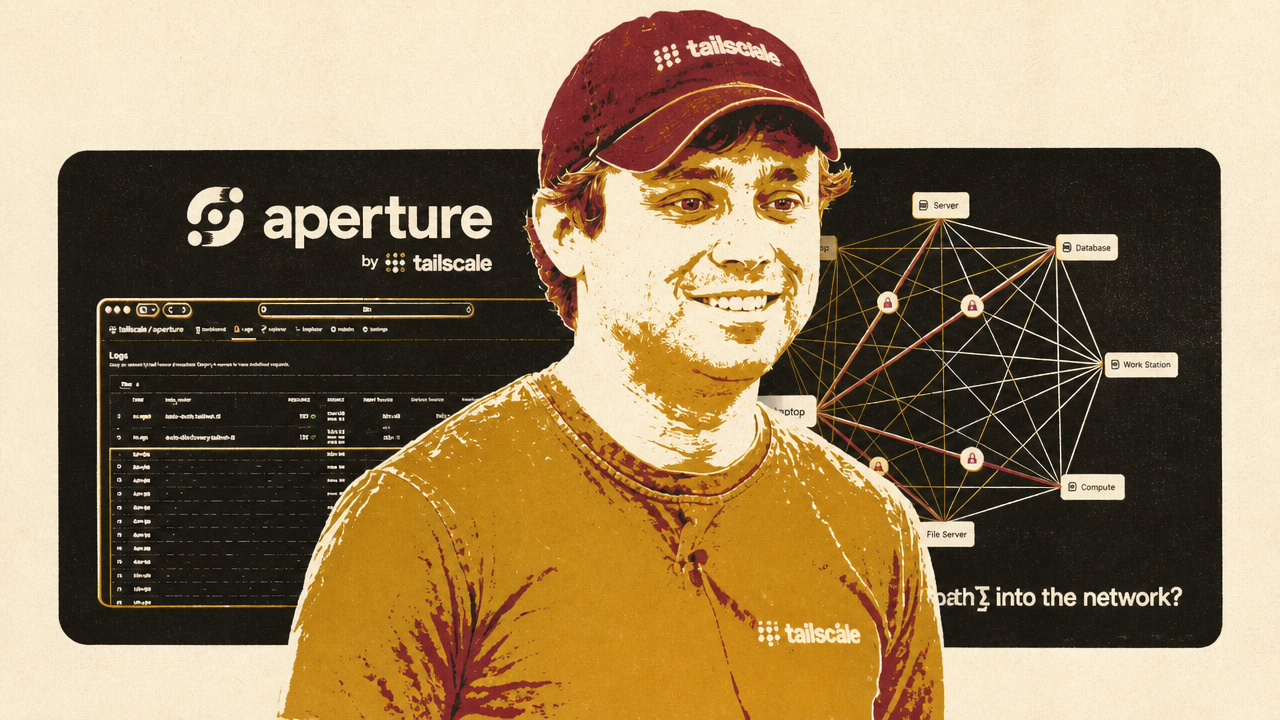
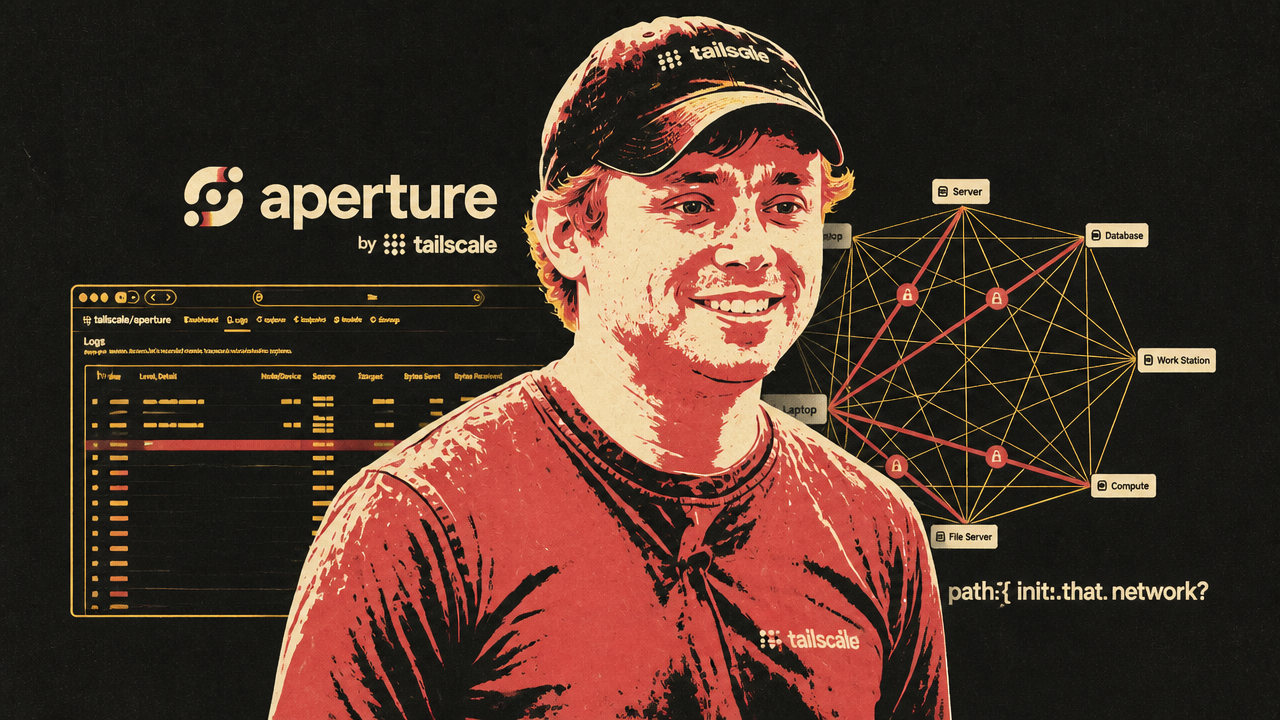
Tailscale’s Aperture argument sharpens the security implication of agentic work. Remy Guercio’s central distinction is between isolating where an agent runs and controlling what it can access. Many teams solve the runtime boundary with a container, VM, GitHub Actions runner, or other sandbox, but then place the credential inside that same sandbox. The agent is boxed in, yet the API key or OAuth session that gives it power is inside the box.
That is a different failure mode from a container escape. A sandbox can successfully isolate execution while still giving the agent a bearer credential it can misuse, leak, or try against alternate endpoints. Guercio’s proposal is to move real credentials out of the sandbox and into the network path.
Aperture, Tailscale’s LLM gateway, does that by keeping provider keys at the gateway. The agent receives a placeholder key — in Guercio’s Claude Code example, just a dash — and points to Aperture as the endpoint. The real Anthropic, OpenAI, Gemini, Vertex, or Bedrock key sits on the gateway. If policy denies the request, the agent cannot fall back to a real provider key because it never had one.
The authorization layer is Tailscale’s network identity. Tailscale uses WireGuard for secure network connections and adds identity: user, group, machine, tag, or service identity. A GitHub Actions runner can join the tailnet using GitHub federated OIDC and receive a Tailscale tag. That tag becomes the basis for what the runner can do through Aperture. The relationship changes from “agent has provider key” to “tagged network identity calls gateway, gateway decides what is allowed.”
That design turns the gateway into a control point for policy, logging, quotas, hooks, cost controls, and tool-call visibility for routed LLM traffic. Guercio showed dashboards for requests, tokens, estimated cost, model usage, user agents, request bodies, response bodies, and activity by human or bot identity. He also showed Aperture extracting bash commands, file reads, grep calls, and MCP calls from Claude Code sessions when those tool-use representations crossed the LLM gateway.
The limitation is important. Aperture does not claim to observe arbitrary behavior outside its path, and Guercio acknowledged that agents writing or executing obfuscated code complicate tool-level permissioning. His narrower claim is practical: if configured LLM access goes through Aperture, the gateway can see and control the traffic that crosses it, without putting durable provider keys into the agent runtime.
That makes agent identity and access control its own applied-AI market. As agents do more real work, the credential becomes one of the most dangerous objects in the system. Runtime isolation remains useful, but it is not sufficient. Builders need a way to assign identity to agents and machines, route access through policy, attribute cost and behavior, and revoke access without trusting the sandbox to protect the key.