Juggling Startup Ideas Produces Bad Data for Founders

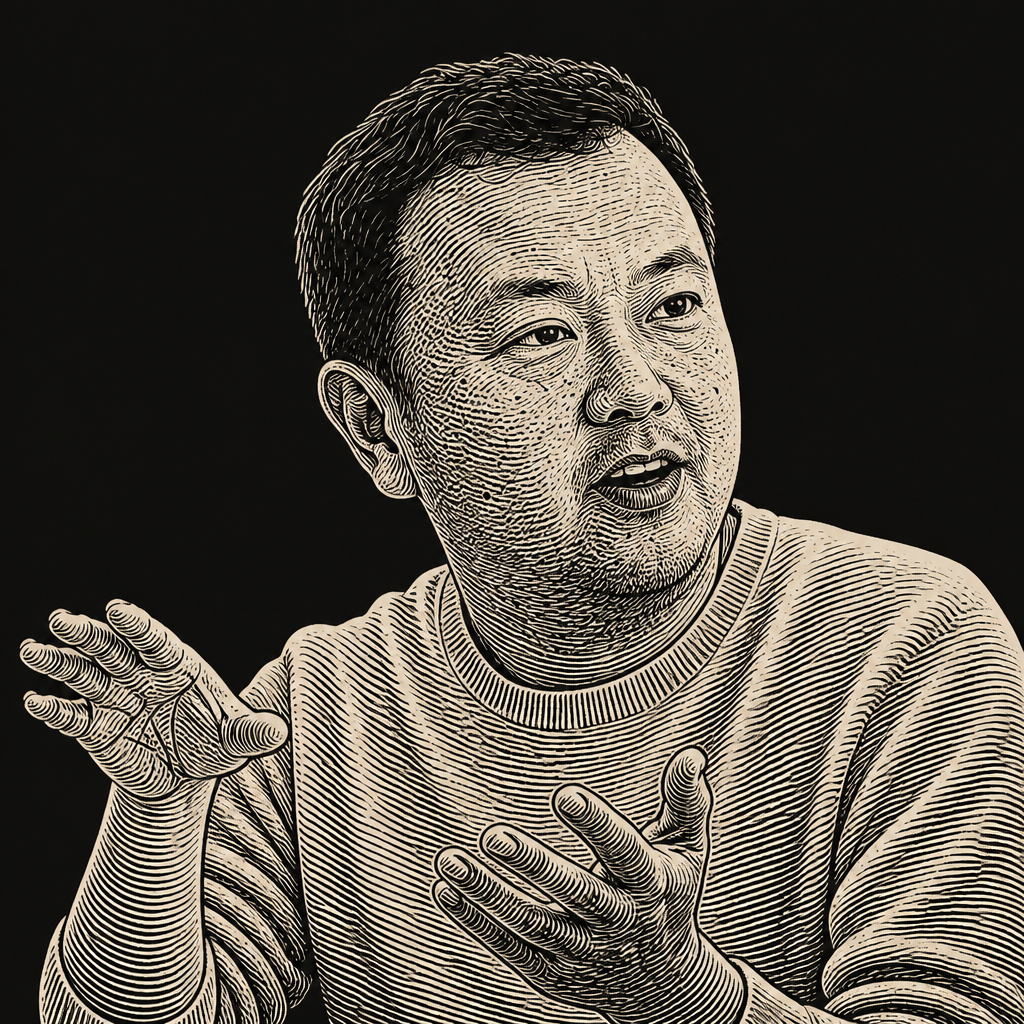
YC General Partner Jon Xu argues that aspiring founders learn less by testing several startup ideas in parallel than by committing to one and going deep. In a Startup School talk, Xu says shallow exploration creates bad data: founders cannot tell whether an idea is weak or whether they simply failed to understand the customer, the market, or the execution required. His prescription is to pick a direction, close off alternatives, learn the customer’s business in detail, and let sustained contact with reality either build conviction or reveal the better company underneath.

Working on several ideas creates bad data
For founders choosing among startup ideas, Jon Xu’s sharpest operational warning is against treating parallel exploration as a better way to learn. Founders often assume they can run several ideas at once, compare the response, and double down on whichever one produces the strongest signal. Xu says that usually produces the opposite of signal.

If founders do not go deep on an idea, they cannot tell whether weak results mean the idea is bad or the execution was too shallow. That ambiguity cuts both ways. A founder might abandon a good idea prematurely because they never committed enough to see it work. Or they might keep a bad idea alive because the limited evidence never became clear enough to force a decision.
The remedy is to choose one idea and go deep before comparing alternatives. Xu describes this as “burning the other boats”: explicitly closing off the other startup options, stopping work on them, telling customers that the company has pivoted, and focusing the team around the chosen idea.
One way to think about going deep is that it should feel like wearing a new skin.
That change can be concrete. Founders may need to change the company name, email addresses, website, and internal narrative about why the company exists. Xu’s example is GovDash, a YC company that helps customers win government contracts. He says GovDash pivoted at least five times before finding that idea. Each time it explored something new, the company changed its name and how it described its mission. At one point, he forgot how to contact them because they had changed email addresses with each pivot.
The fifth idea worked, in Xu’s telling, because the team became domain experts in government procurement. Demand became difficult to keep up with, and the company later raised a Series B to scale. The lesson is narrower than “pivot often.” GovDash did not casually sample adjacent concepts; each pivot required the company to inhabit the new domain seriously enough to learn whether it could become a business.
The perfect idea is not available in the abstract
Jon Xu tells founders stuck between startup ideas to stop overthinking, pick one, and force contact with reality. His point is not that idea selection is unimportant. It is that early-stage founders cannot reason their way to the “perfect” idea before they have customers and constraints in front of them.
You can only figure out what you should be working on by making contact with reality and getting feedback from customers.
The first failure mode is the search for the perfect idea. The impulse is understandable: startups are difficult, so it seems rational to find the best possible idea before committing. But Xu says this reverses the order of learning. The quality of an idea cannot be established “in the abstract.” Founders learn what they should be working on by testing an idea against the world, especially by talking to customers.
The second failure mode is asking too early, and too severely, whether the founder is the perfect person to build the company. Xu does not dismiss founder-market fit. A non-technical founder is unlikely to be the right person to originate a “killer dev tool” startup, he says. But founders, especially second-time founders, can turn founder-market fit into a reason not to start at all. They tell themselves they need a decade of domain experience before they are allowed to work on a problem.
Xu’s counterclaim is that curiosity, intensity, and customer contact can compress learning. A founder who picks a domain, goes “extremely deep,” and talks to customers can develop unusual knowledge quickly. His example is Blake Scholl of Boom Supersonic, who spent his early career in ad tech at companies including Amazon and Groupon before working on commercializing supersonic flight. Xu says many people probably thought the move was irrational, but Boom became a billion-dollar company.
The point is not that any founder can build in any market. It is that uncertainty about permission or credentials should not become a substitute for doing the work.
Depth means knowing the customer well enough to run the business
The standard Jon Xu sets for going deep is severe: could the founder actually run the customer’s business? Customer discovery, in this framing, is not satisfied by a fixed number of interviews. Talking to 20 owners of cleaning businesses, for example, is not enough if the founder still cannot explain their daily crises, their top operational problems, or the economics of missed calls.
For a company building voice customer-service agents for cleaning services, the founder should know whether answering the phone is a top-five problem, how much business is lost when a call goes unanswered, and what the owner would pay to never lose another one. The founder should be able to answer these questions with “very high confidence.”
He offers a second test: could the founder teach a class on the problem? Are they among the most informed people in the world on the subject? Getting there may require many customer conversations and, in some cases, literally doing the job. But Xu cautions against turning customer research into a reason not to build. The objective is not to speak with hundreds of customers before writing code. It is to create a tight loop: understand customer needs, deliver product, use real customer behavior to deepen understanding, then improve the product.
That loop matters because abstract knowledge and product delivery generate different kinds of evidence. Conversations can reveal pain, vocabulary, workflow, and willingness to pay. Real customers using the product produce concrete data about whether the company is solving the problem in practice.
In AI, good ideas sit at the edge and move toward outcome ownership
Jon Xu gives founders three qualities to look for while validating an idea in the AI era.
First, the idea should sit at the edge of what models can do today. This may mean the product barely works with current frontier models but should improve as the models improve. Founders should understand the bottlenecks limiting the product’s performance intimately. If a bottleneck does not clear as expected, solving that bottleneck may itself become the company. Xu frames this as a version of Paul Graham’s line: “You should live in the future, and then build what’s missing.”
Second, the idea should “verticalize.” Xu means that the company should ultimately sell an outcome rather than only sell software. His argument is that, in the AI era, the cost of producing software is going to zero. The valuable parts of the business therefore shift toward customer trust, licenses, regulatory permission, and ownership of the outcome. If a founder wants to enter insurance, he says, do not merely build software for insurance companies; be the insurer. If the opportunity is banking, do not just sell back-office software to banks; be the bank.
Corgi Insurance, a YC Summer 2024 company, is his example. Corgi presents itself as offering “instant quotes and modular coverage” for business insurance. Xu describes it as an AI-powered commercial insurance company that was not satisfied with being a tech-enabled broker or managing general agent because those roles would own only part of the solution. Instead, Corgi aimed to own the full commercial insurance stack, including underwriting, customer service, and the carrier layer, and acquired an insurance carrier during its YC batch. Xu says that full-stack position lets Corgi underwrite insurance lines across verticals with far less headcount than traditional carriers, offer better pricing and faster turnaround, and own the economics.
Third, the idea should be the most ambitious version of itself. Xu argues that a modest startup and a wildly ambitious startup impose roughly the same cost on the founder: both are hard, both consume time, and both make extreme demands. Given that, founders should aim at the version that could rewrite a sector of the economy if it works.
Ambition also changes the company’s strategic position. The larger version can protect against competitors, attract better talent, and create a moat worth building. That might mean selling into regulated industries such as legal, healthcare, or financial services; taking on large incumbents such as a $10 billion legacy SaaS company; or building hard tech such as robotics for space assembly.
A failed idea can still produce the company
Commitment does not make the first idea work. Jon Xu’s argument is that deep commitment makes failure useful. If the idea fails after the founder has gone deep, the founder is left with unambiguous customer data: whether the problem is truly urgent, whether demand exists, and whether the founder had merely reasoned themselves into believing it did.
That evidence gives the founder a stronger basis for a pivot. More importantly, Xu says the process often reveals a better idea underneath the original one. Founders tend to begin with surface-level pain points. The real opportunities are usually deeper structural problems. By going deep, especially near the edge of model capabilities, founders encounter the bottlenecks, missing tools, workflow gaps, and constraints that were not visible from the outside.
Xu’s final metaphor is the “early idea fog,” where the founder can see only 10 feet ahead. The cautious response is to take a few steps in several directions and remain close to the starting point. Xu argues that this produces little information. The better approach is to choose one direction and walk fast. That path may still be wrong, but it generates more information per unit of time and may lead to a destination the founder could not have seen at the beginning.