Zen Practice Offers a Path Beyond the Pursuit of Awakening
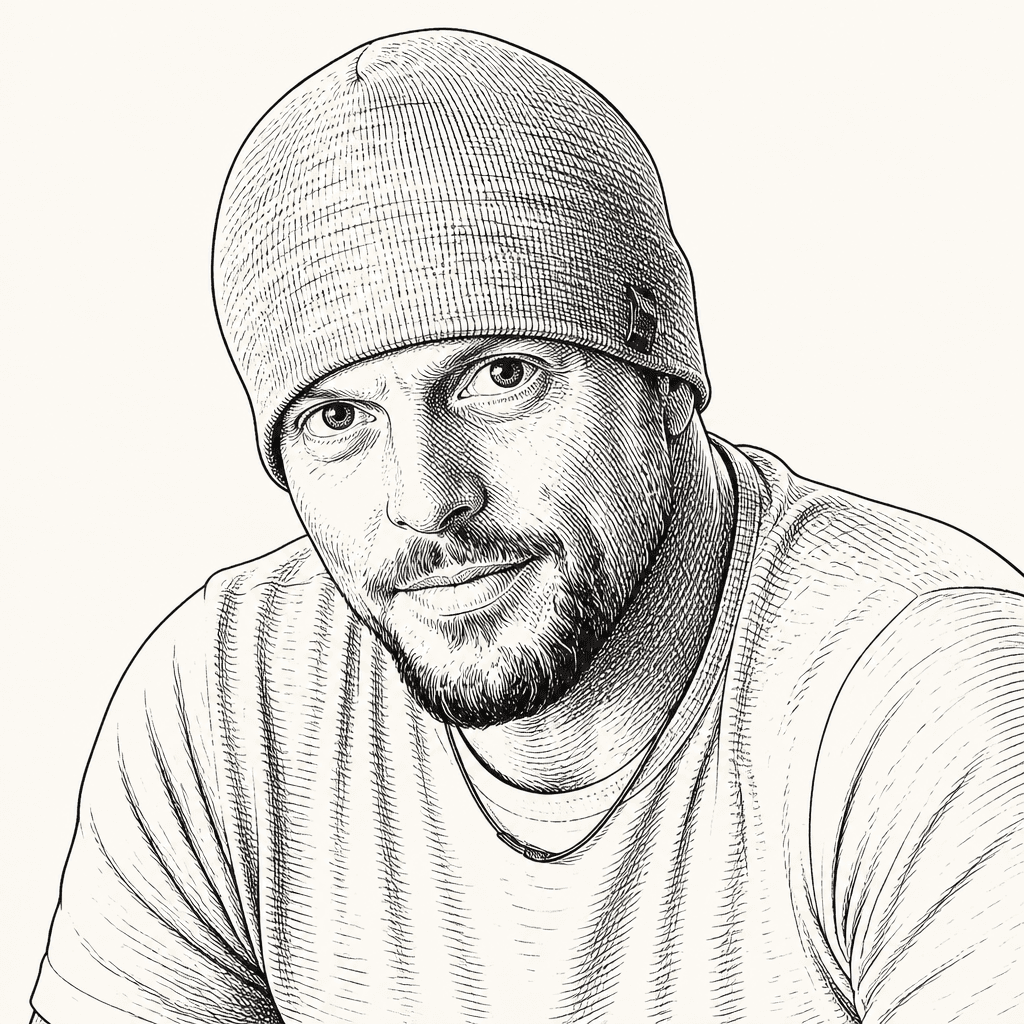
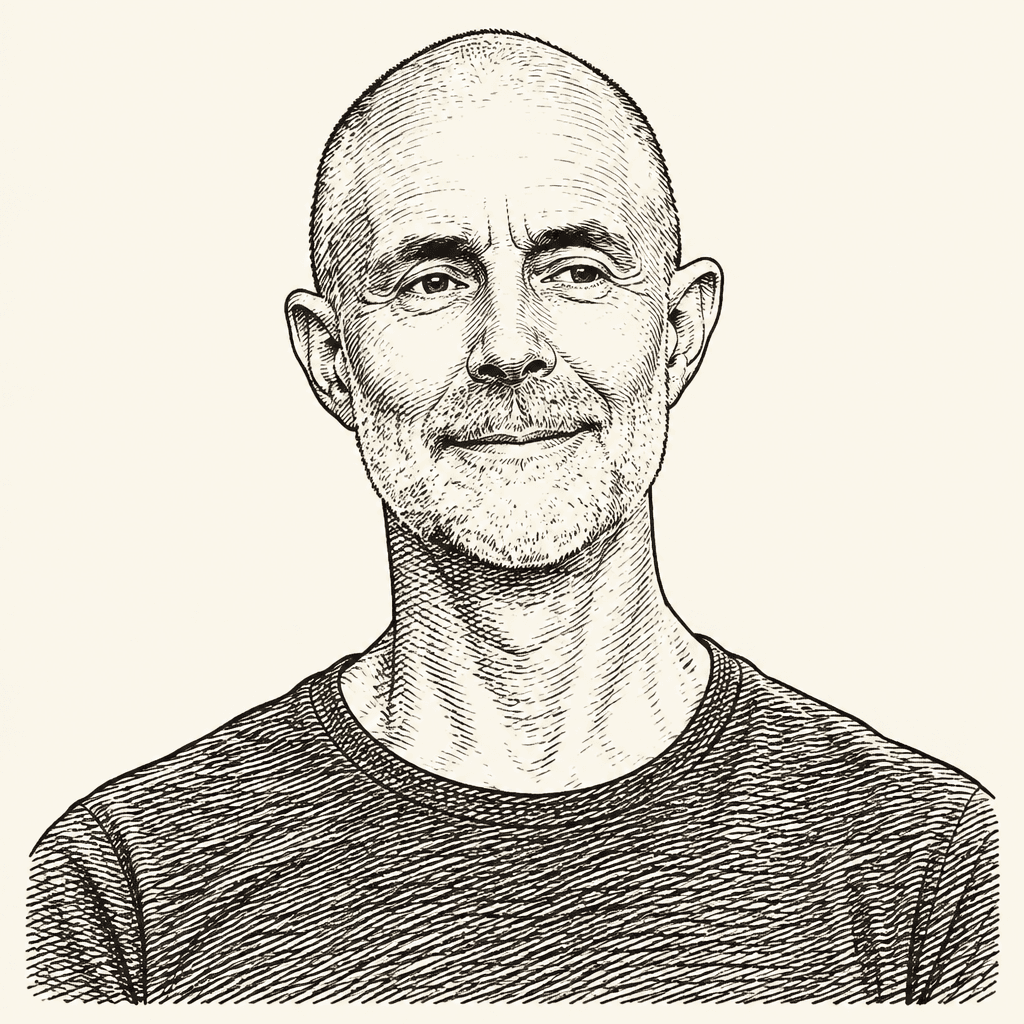
Zen teacher Henry Shukman argues that meditation is not valuable only as a route to awakening: it can support examination, growth and development even when awakening does not occur. He describes how grief and reduced cognitive stamina brought his own practice into the body, and makes a related, more limited case for poetry: it can interrupt habitual attention and reconnect readers with themselves and other people, but cannot guarantee awakening.
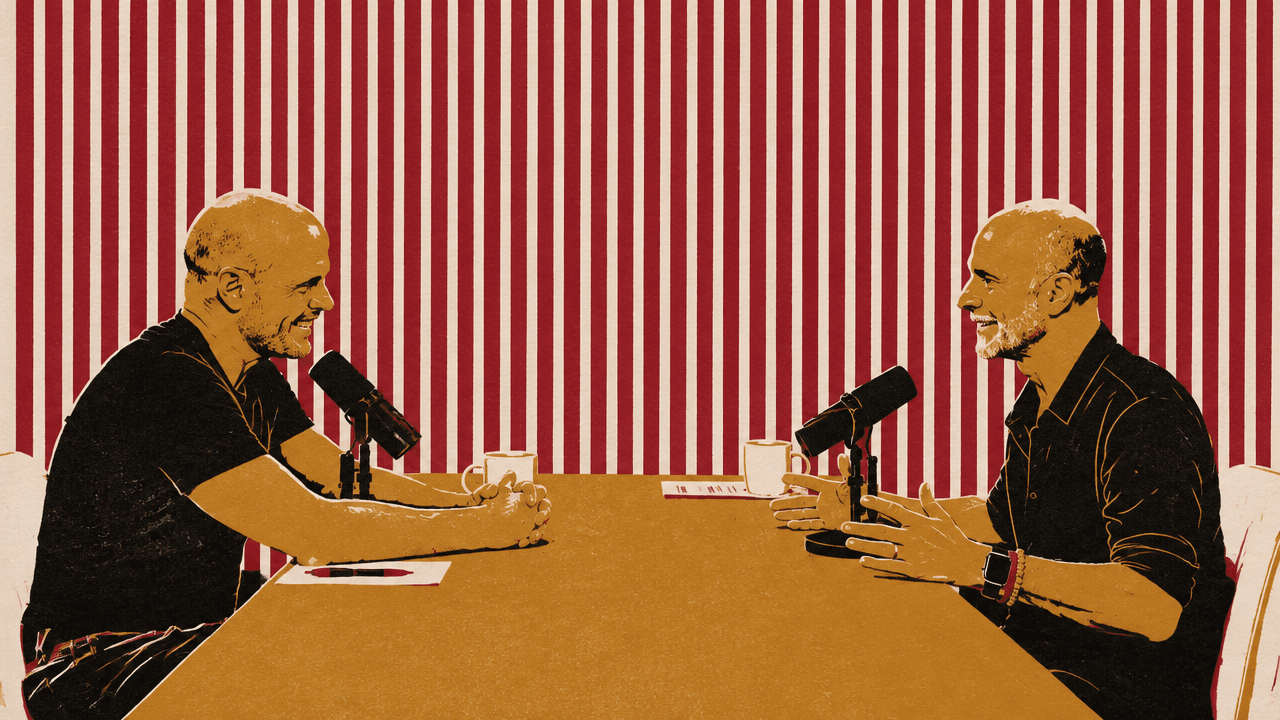
A life in writing brought Shukman to New Mexico—and an unexpected opening into Zen
Henry Shukman traces his interest in Zen to an experience he had at 19, while sober and without seeking anything like it. His ordinary sense of himself as a person contained in a body and separate from the world suddenly collapsed. He felt himself to be part of everything—“boundlessly, truly everything.”
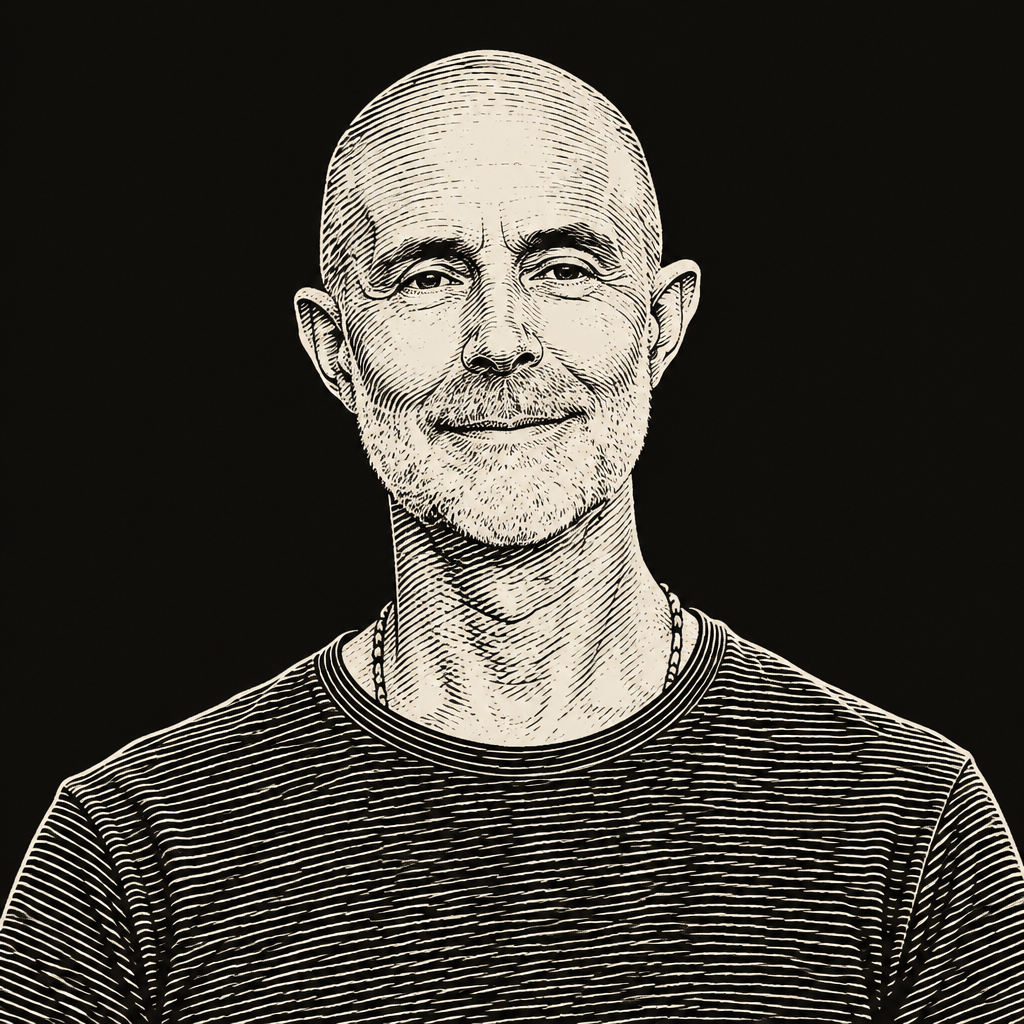
Before Zen became his central work, Shukman was a poet and a writer of travel books. As a teenager, he had been drawn to D. H. Lawrence’s writing about New Mexico, especially Mornings in Mexico. Lawrence’s descriptions made the place feel so vivid, Shukman says, that reading them was almost like receiving a transfusion of it. At 19, he traveled through Bolivia’s high Altiplano with a friend, trying to evoke the landscape in writing as Lawrence had done. The book they planned was published a few years later as Sons of the Moon: Travels among the South American Indians. Shukman went on to write about playing trombone in Caribbean bands, then proposed a book about New Mexico.
His first stop was Cloudcroft, in southern New Mexico, but he soon realized it was not the place Lawrence had written about. He took buses north to Taos, where he spent about two months without a car, choosing a room within walking distance of a grocery store. The adobe architecture, Taos Mountain, and the people he met from Taos Pueblo were unlike the English countryside he had grown up in. Yet the surrounding fields and hills sometimes gave him a feeling of déjà vu. He later wrote Savage Pilgrims: On the Road to Santa Fe about looking for traces of Lawrence in New Mexico and meeting people along the way.
Poetry continued in the background while Shukman made a living from prose. For a time, his poetry career gathered unusual momentum: he won several prizes in the UK, published with a major publisher, and received invitations to read around the country. He also began publishing fiction. But he eventually stopped that writing trajectory as he became more serious about Zen.
The experience at 19 was beautiful and left him feeling weightless and clear, with what he remembers as a fountain of love welling up inside him. About six weeks later, after returning from South America, he had what he now understands as a kind of breakdown. At the time, he did not know how to name it. He describes the return as hellish.
In retrospect, he connects the two events to complex childhood trauma. He had developed ways of defending himself against feelings that seemed overwhelming. The awakening experience, he believes, left him unusually open; when he returned home, those defenses and adaptations had fallen away. The openness did not make the pain disappear. It left him exposed to it.
He had been meditating regularly since 24, but for years he resisted joining a community. He would attend retreats and visit different centers, then leave when they were over. He wanted to go deeper into practice without becoming part of what he saw as a “weird band of people” gathered around a strange activity.
That changed in Oxford, where he began attending a local Zen center. He would arrive just before the weekly sitting and leave as soon as it ended. One afternoon, he happened to meet the teacher in the corridor. They sat down for tea. The teacher asked ordinary questions—why are you here, what are you doing the practice for?—and Shukman found himself wanting to describe his experience and practice to him.
What persuaded him was not an elaborate spiritual persona. The teacher was an ordinary man, a retired lawyer who ran two charities. He did not wear robes or present himself as someone set apart. Yet, Shukman says, he could move from everyday conversation into the depths of Zen without strain. When Shukman described the experience that had made him curious about practice, the teacher understood it in a way Shukman could feel.
That combination—plainness and depth—helped Shukman trust the teacher. His account of the encounter is not that the teacher supplied an explanation that settled everything, but that he recognized the experience and could meet Shukman’s questions about it.
A gentler teaching emerged when intensive teaching became impossible
Henry Shukman says a bike accident changed how he could teach. He suffered a concussion whose effects lingered; he remains functional, he says, but has less stamina. Before the injury, he could conduct more than 150 one-to-one practice interviews, or dokusan, during a week-long retreat. After the accident, the meetings left him befuddled and confused. The loss of that capacity coincided with the pandemic.
Just before the injury, while staying in a mountain cabin in northern New Mexico, he had intended to rest. Instead, a sentence came to him while he was making breakfast. He wrote it down and spent the next 12 days writing on yellow pads. The result was Original Love, a book organized around four dimensions of practice. Shukman recognized that the same four dimensions had been guiding his conversations with students: what he emphasized depended on what a student was working through.
Unable to continue the interviews, he began teaching courses built around those areas. The courses drew more people than the “hardcore Zen retreats” he had led before, partly because people could take part from home. He also found the approach more compassionate. Some forms of Zen, he says, can imply that practice is for one overriding purpose: awakening. But neither teacher nor student can force awakening to happen. And there is valuable work to do whether or not it happens: examination, growth, and development that should not be mistaken for awakening, or dismissed because they are not awakening.
Shukman’s point is simple: “There's lots of good stuff you can do that's not awakening.”
This shift also explains the structure of The Way, the meditation app he co-founded. Shukman had a framework he had written about and taught in courses; an app could take users through it experientially, rather than leaving them with a book or a menu of unrelated options. He says he probably would not have wanted to make an app without that fit between the teaching and the format.
The approach is not to promise a particular experience. It is to give practice a path: a sequence that lets a student keep going without deciding what to do next at every turn. The app’s interface presents numbered sessions, including instruction on posture, arriving, and why to meditate. Shukman says the app has about three years of sessions, and that he himself still uses it once or twice a day without reaching the end.
Grief brought practice out of the head and into the body
Henry Shukman says the injury was not the only event to reshape his practice. A loved one received a grave diagnosis, and his family moved to Southern California to support that person. The combination of heartbreak and reduced cognitive stamina made his usual ways of working less available. For several years, he found himself anchored in what he calls his “feeling center”—the heart, diaphragm, or solar plexus.
He had visited that territory before, he says, but had not lived there in the same way. The distinction between living in his head and living from the body became unmistakable. When attention rests in the body, he agrees with Tim Ferriss, it is harder to get caught in the past or future. The present moment becomes more immediate.
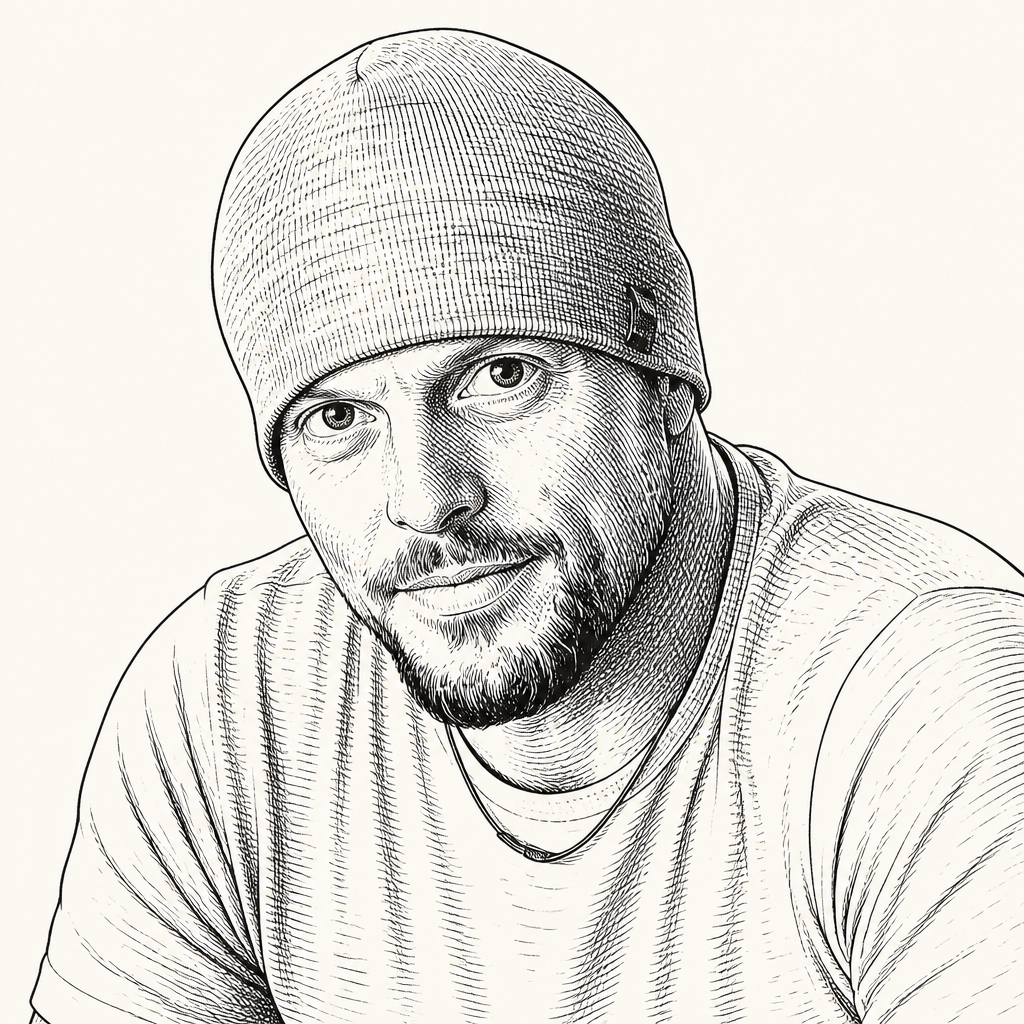
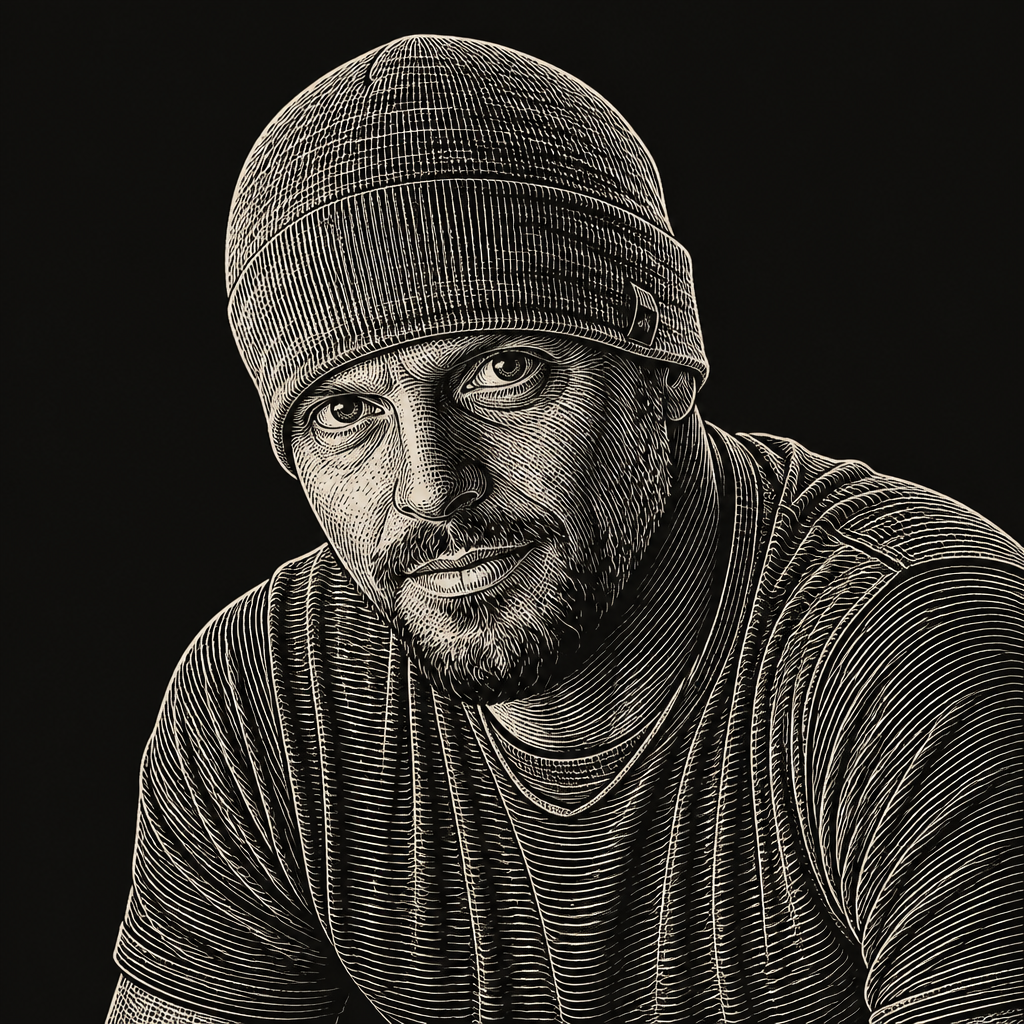
For Shukman, this was not a claim that life in the heart is painless. It was a recognition that feeling includes both joy and grief. Love and grief, he says, are joined at the hip: grief is one of love’s harder forms. To feel either is to be alive and connected. He describes this as a more authentic self—not an immortal soul, but something deeper and more present.
One morning, he returned from swimming at the beach before dawn and noticed that he had been on autopilot on the way home. The sea had been beautiful: the water dark purple, almost black, its surface like animal hide moving in a slow rhythm beneath the rising sun. He had been absorbed in it, but then the morning’s errands had taken him away before he had fully registered what he was seeing.
A poem, “Slow,” began with the sentence “The other me moves slowly.” In the poem, this other self studies the sea, enjoying and learning from it, while a faster, heedless self has already showered, dried off, and driven into traffic. The slow self is still looking back at the water and light, which, in the poem’s language, seem to show him his true place in the world.
Shukman remembers the recognition behind the poem as a sharp pain with sweetness in it: there is someone in him capable of savouring the world, and he has overridden that person. The poem makes the loss of attention visible—the difference between being present to a moment and being carried past it.
His account of writing poetry also begins with that kind of recognition. A poem may start with an image, a feeling, and a line that seems to contain more than its literal words. If he can catch the end of that thread, he follows it. A poem may arrive quickly, but take years to revise. Sometimes, after all the tinkering, it returns close to its original form.
Poetry can interrupt the rush, even when it cannot guarantee awakening
Tim Ferriss asks whether a poetry-only curriculum could substantially increase the likelihood of an awakening experience. Shukman says that is too much to promise. But poetry can do something more immediate: it can “hit the pause button” and help someone become grounded, centered, and reconnected with themselves.
He illustrates the point with a poem by A. E. Housman, which he had included in a guided meditation. Shukman describes Housman as a classical scholar known for editing Latin texts, rather than someone who set out to become a poet. In Shukman’s account, poems began arriving to Housman during a period of his life, sometimes fully formed and sometimes incomplete. Housman said the lines that came spontaneously were better than the parts he had to work out.
The poem Shukman reads begins:
From far, from eve and morning
And yon twelve-winded sky
The stuff of life to knit me
Blew hither: here am I.
It goes on to describe a brief stay in the world: “Now for a breath I tarry / Nor yet disperse apart.” While that breath lasts, the speaker asks another person to take his hand and say what is in their heart. “Speak now, and I will answer / How shall I help you, say,” before the speaker returns to the winds from which he came.
Shukman reads the poem as a meditation on impermanence and connection. The speaker does not claim to know where he came from. Housman was an atheist, Shukman notes, and he takes the poem’s image to be of the materials of life temporarily gathered into a person, rather than an account of that person’s origin within a religious framework. We are here for a short time; we are made from an immense convergence of causes and conditions; then we disperse. The poem turns that impermanence toward connection: take someone’s hand, ask what they feel, ask how you can help.
Ferriss describes being moved by poetry even when he does not understand every word. Shukman agrees that a poem can work as a screen to look through: readers may perceive something the poet has seen without being able to paraphrase it fully. He also argues that reading another person’s life can loosen a sense of separateness. Ferriss offers Ocean Vuong’s Night Sky with Exit Wounds as an example: despite encountering material that was not his usual reading, he found the poems vivid enough to make him feel the places and longings they described.
Shukman’s claim for poetry is modest but consequential. It cannot ensure awakening. It can interrupt habitual attention, evoke a felt experience, and bring a reader into contact with another person’s world. In that sense, poetry can support meditation without replacing it.
Ferriss observes that some poems become more legible after a person has had an experience that seems to match their metaphors. The words may initially look like nonsense; later, they offer a way to recognize or articulate something that has been felt directly. Shukman agrees: the poem becomes something one can see through.
He also sees meditation as a possible follow-up to psychedelic experience. Some of his friends who use psychedelics have found daily practice helps keep alive what those experiences opened, or gives them a serious way to respond to it. Others want another trip because they do not want the experience to close. Meditation, Shukman suggests, can offer a continuing thread rather than another attempt to recreate the peak.
Neither he nor Ferriss frames the choice as meditation against psychedelics. Shukman has tried psychedelics, including 5-MeO-DMT, and describes the experience as beautiful but familiar: a place of nothing, with a great deal of love. He thinks psychedelic experiences can show what is possible, while meditation can build a relationship to that possibility gradually. Ferriss says he has substantially reduced his own psychedelic use in recent years, while still seeing a place for it as a catalyst rather than a constant intervention.
Nonduality does not cancel ordinary responsibilities
Henry Shukman offers the example of his Zen teacher, Yamada Roshi, who held demanding jobs throughout his working life. When asked how he balanced work and Zen, Yamada’s answer was that there was nothing to balance. Zen was not separate from work; what he found in practice was present in the office as well as in the meditation hall.
Tim Ferriss presses on a different problem. A powerful experience can make a career or business feel like a game rather than a matter of life and death. Once that shift occurs, what makes it worth returning to work on Monday? Ferriss describes questioning the sacrifices involved in aggressive business growth, and whether a startup’s claims about changing the world are sometimes useful fictions that help its founders perform the game they have chosen.
Shukman does not answer by insisting that the game is ultimately important. He says it helps to see the games we are playing so we do not become unwitting participants in a kind of theatre. But seeing that the world is empty, or that a pursuit is constructed, does not mean nothing matters or that one can simply opt out of ethical conduct.
To explain, he points to a Zen idea: everything in ordinary life is made of the same emptiness. That does not mean ordinary life can be disregarded. Yamada Koun Roshi put it this way: “Just because it’s a dream, just because this whole world is a dream, doesn’t mean we should still work to make it a happier dream.” Sheng Yen, another Chan master, said that even if things appear in a way that may not be quite what they seem, we must still treat them as if they are appearing.
Shukman warns against using emptiness as a justification for abuse. A teacher who says that everything is empty, and therefore he can do whatever he wants, has taken a dangerous wrong turn. Seeing through a game does not cancel the obligation to honor the world and the people in it. It may instead change how one participates: with less confusion about what is being played, but still with care about how the game affects others.
For Ferriss, the shift can still reduce the felt importance of achievement. He says he could have pursued more aggressive growth in his work, but decided against it; the work might have become larger and more profitable, yet he cared more about relationships and felt at peace with the choice. The outside interpretation might be that he had lost his edge. He does not experience it that way, but finds it harder to persuade himself that certain goals are worth great sacrifices.
Shukman’s answer is not that ambition must be restored to its former intensity. The point is that ordinary activity need not be opposed to insight. Zen asks whether its understanding can be present in everyday activity—in work, in making tea, in cooking rice—not only in an elevated state or a retreat setting.
He also offers a related idea about talent: sometimes a person’s most celebrated work is not the work they care about most. Housman was devoted to classical scholarship; his poems, which he treated as a side matter, continued to be read long after their publication. Wordsworth planned a philosophical masterwork but wrote The Prelude, which grew beyond its intended role as an introduction. Leonard Cohen hoped to write a great Canadian novel, Shukman says, but became known for songs he initially regarded as secondary.
The practical suggestion is not to abandon a central ambition in favour of whatever comes easily. It is to notice when others value something one does exceptionally well, even though one does not regard it as the main thing. That work may deserve more attention without being made more important. Ferriss wonders whether recognizing the “second” thing as one’s stronger work could make it stiff or self-conscious. Shukman accepts the risk: making it the main thing could change it. The point is to notice the possibility, not turn it into another demand.
Flow loosens the grip of clock time
Henry Shukman links meditation, poetry, and flow through their capacity to change one’s experience of time. In a flow state, time becomes less salient. Regular meditation, he says, can make someone more liable to flow in daily tasks, not just on the cushion. In Buddhist practice, absorption is called samadhi; some meditation methods cultivate it directly.
He describes a long tradition connecting poetry and meditation, particularly in China. During the Tang dynasty, poetry was part of the education required for entry into the civil service. For educated people who could choose a different life, the ideal could be to leave the competition of court and city, go into the mountains, meditate, and write poems. The attraction was access to a different scale of attention: time to watch clouds change over a forest, or listen to a river without being pulled along by the clock.
That contrast leads Shukman to the difference between short, linear accounts of time and much larger cyclical ones. He recounts joining an undergraduate society at Cambridge that met once a year to drink to Bishop Ussher, who in the seventeenth century calculated the date of creation as October 23, 4004 BC. That view places the world within a relatively narrow span running from creation to judgment.
By contrast, Shukman describes early Indian cosmologies as imagining vast cycles called kalpas: periods of becoming, enduring, disintegration, and emptiness, cycling endlessly. He gives two traditional analogies for the duration: a block of stone a cubic mile in size, worn down by a cloth brushed across it once every hundred years; and a cubic-mile tank of birdseed emptied by a bird taking one seed every hundred years. He presents these as examples of a scale of time far beyond ordinary human measures, not as a precise chronology.
Shukman says he does not know why ancient Indian traditions developed such immense ideas of space and time. His own strongest influence on time comes from meditation. When the usual sense of self and world falls away, he says, what remains is difficult to describe. “Nothing” is the easiest word, but it is not quite adequate. He calls it indeterminate: without ordinary qualities, distance, or time. His sense is that time emerges from this timeless ground, though he says plainly that he cannot defend the idea.
He distinguishes that felt sense from a scientific account. At a conference on time at the Santa Fe Institute, he heard physicist Sean Carroll discuss the arrow of time and entropy. Shukman also mentions quantum indeterminacy as raising questions about causation and time, but does not claim meditation reveals the laws of physics. It can offer a visceral sense of timelessness, he says, perhaps because one has disengaged from the consensus view of the world and fallen back into an awareness that seems always to have been present.
Jhana makes absorption a sequence of trainable states
Tim Ferriss asks what jhana is and how it relates to samadhi. Shukman explains that Buddhist usage often treats samadhi as absorption, closely associated with jhana. He describes jhana in Pali and dhyana in Sanskrit as related to the Chinese chan and Japanese Zen, while noting that Zen’s practices and jhana’s staged system are not identical.
Shukman was trained in a Burmese jhana system associated with Pa Auk Sayadaw, through the teacher Stephen Snyder. In the method he learned, the meditator watches the breath at the nostrils and upper lip, sustaining attention there. A light-like effect may appear at a certain point; Shukman calls this access concentration. From there, the practitioner may be ready to explore entering the first jhana.
He describes the first jhana through five factors, including applied and sustained concentration, piti, sukha, and ekaggata. Piti is a Pali term often translated as rapture or glee, experienced as a pleasurable buzzing or tingling in the body; sukha is a sense of well-being; and ekaggata is a feeling of wholeness or oneness. When the factors come together, he says, there can be a gear shift: instead of feeling like a person sitting and trying to meditate, one feels immersed in a whole, buzzing, joyful presence.
The later jhanas, in his account, involve fewer of those factors. He describes well-being and wholeness in the second and third, and equanimity in the fourth. The fifth is boundless space; the sixth, boundless consciousness; the seventh, nothingness. The eighth is “neither perceiving nor not perceiving”—not quite something and not quite nothing. These are Shukman’s descriptions of the states as he experienced and was taught them, rather than a complete account of every jhana system.
Ferriss finds the technical sequence appealing. Unlike instructions that leave him unsure what progress is supposed to look like, jhana practice has stages and transitions that feel graspable. Shukman agrees that it has discrete stages, though he emphasizes that they are not merely conceptual markers. Practitioners may feel the shift from one state to another.
The appeal is not only the map. Shukman says jhana can feel wonderful and can also be cathartic. A long sit may leave someone flushed and cleansed, tender and loving. He says shorter practice can sometimes bring some of the same effects, even without deep entry into jhana, though the training he describes can involve sitting for two hours.
Jhana is not, in Shukman’s account, the whole of Zen. Zen has a strong emphasis on deep meditation, and he connects its name to that emphasis, but the traditions do not map onto one another exactly. He suggests that when Chan Buddhism emerged in China, it was identified with meditation rather than scripture or liturgy. The jhana stages may still be discernible in Zen, he says, but Zen does not offer a particularly clear account of the relationship. Ferriss jokingly calls it the “Lost Child of Zen”; Shukman allows that it may be wayward in some sense.
“Rice in the bowl, water in the bucket” brings practice back to the present
To close, Henry Shukman offers a koan about moment-by-moment samadhi. A student asks Yunmen, a Zen master who lived from 864 to 949, what the term means. Shukman explains that it can suggest such close attention that even the smallest granules of sense experience become clear. Yunmen’s answer is: “Rice in the bowl, water in the bucket.”
The answer does not define absorption as an exotic state. Shukman takes it to point instead to the ordinary facts in front of us. Zen resists drawing a distinction between what happens in meditation and what happens in daily life. Shukman says Zen poetry makes a related point: having something in a mountain hermitage is one thing, but until it is available in a busy city street, one has not fully got it.
Ferriss recalls a story told by Jack Kornfield about a dedicated meditator who would storm away from arguments in the retreat dining room to return to the meditation hall. If one has to escape ordinary conflict to recover one’s practice, the story suggests, one might be missing something essential.
Shukman agrees. He says that when he repeats “Rice in the bowl, water in the bucket” to himself during meditation, he drops down a gear. Students have reported a similar effect. The phrase’s simplicity seems to induce quiet without requiring a complete explanation.
He offers two possible accounts. The more esoteric one is that Yunmen’s words carry the clarity of the awakening from which they came; if that reality is outside time, then the words can still convey it centuries later. The less esoteric possibility is that the words express a sense of order: rice where rice belongs, water where water belongs. Beneath the apparent chaos, perhaps, there is a pattern.
Shukman is careful not to claim that he has mastered this. He says he has only scratched the surface. But he has enough experience to recognize that the boundless, indeterminate quality he associates with practice is not somewhere else. It is here, in the present moment, and nothing that happens has to take someone out of it. Remembering that, he says, can make it possible to respond better to whatever happens.