AI Makes Defining Priorities More Important Than Ever
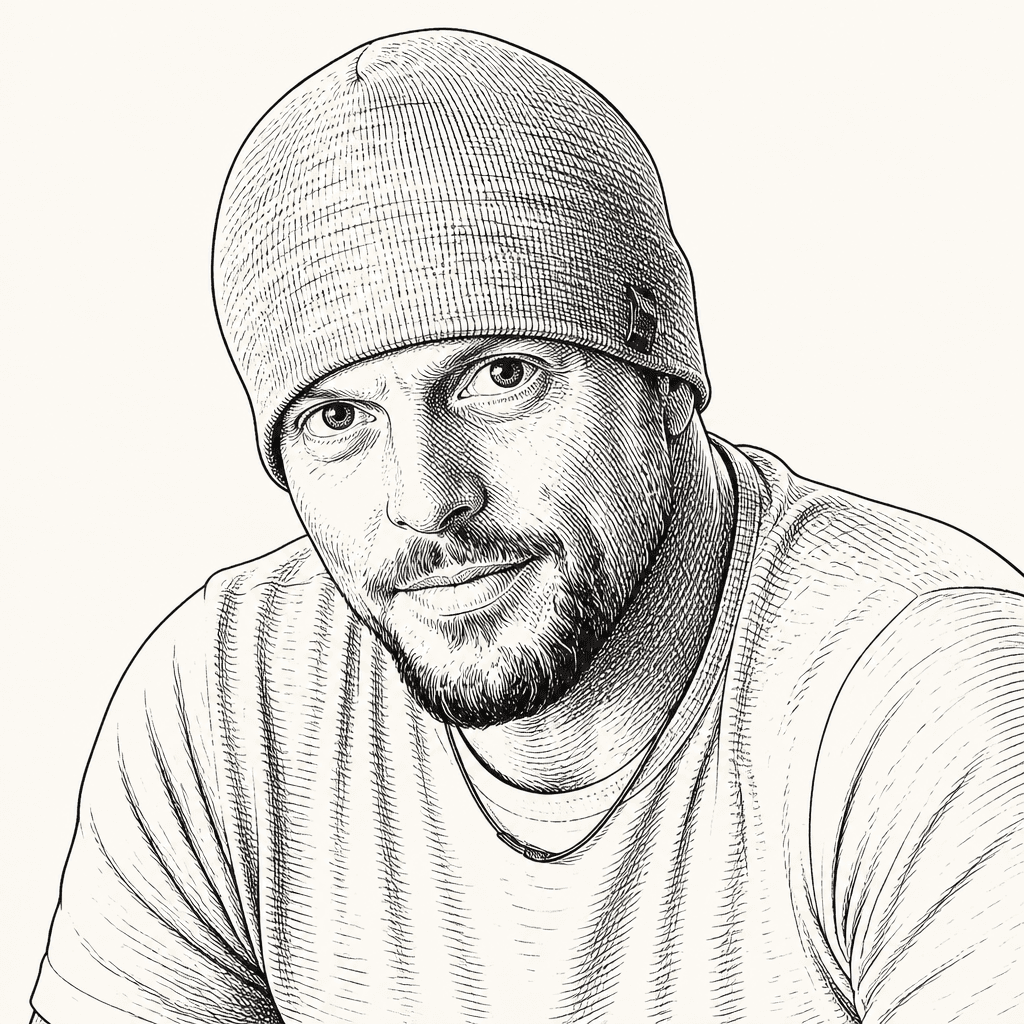
Tim Ferriss argues that AI makes the core discipline of *The 4-Hour Workweek*—deciding what matters and eliminating what does not—more important, not less: without those choices, automation can multiply low-value work instead of freeing time. In a wide-ranging Q&A, he also revisits how his advice on health, work and relationships changes with age and circumstance, emphasizing small actions, selective commitment and room for unexpected opportunities.

AI makes choosing what not to do more important
Tim Ferriss describes The 4-Hour Workweek as a four-step process: definition, elimination, automation and liberation. Definition means deciding where you want to go and calculating what that life requires. Elimination uses tools such as 80/20 analysis to remove the trivial many and protect the critical few. Automation applies processes and technology to what remains. Liberation is using the time and space those steps create in ways that are enjoyable and high-leverage.
The book’s original automation advice often brought virtual assistants to mind, Ferriss says, but people are only one means to an end. The deeper idea is to define the rules and policies that govern your life and work, decide what you will and will not do, and optimize only activities already identified as important. In the book excerpt shown during the Q&A, the DEAL framework is presented as a process for becoming part of the “New Rich,” and its manifesto begins: “Reality is negotiable.” Ferriss’s emphasis here is less on breaking rules for its own sake than on establishing which rules and priorities will govern your time.
In a world of AI agents, he expects the first two steps—definition and elimination—to matter more, not less. AI accelerates what people give it. If they have not identified the few things that could make a meaningful difference, he argues, the technology will multiply the unimportant: people will automate tasks that should not be done at all and produce more work rather than less. Ferriss estimates that more than 90 percent of the AI use cases he has seen follow that pattern.
“If you do not first identify the critical few, the very, very limited set of things that stand a chance of making a huge difference, AI and so on simply multiplies the useless.”
That is why Ferriss doubts the promise that AI will deliver unlimited leisure. Technology has repeatedly been introduced with the prospect of freeing people from work, he says, without delivering that outcome. Used indiscriminately, AI may instead increase work and stress, leaving people buried in distractions.
The tools change; the principles do not. Ferriss wrote the book at 29, and its ideas were intended to last longer than the technology of the day. He recommends Peter Drucker’s The Effective Executive as a short, dense example of a book whose principles can outlast dated particulars. The task is to update what has become obsolete without discarding the underlying ideas.
That durability does not mean advice applies equally at every stage of life. Ferriss says he could not find a blanket recommendation from his books that he now wishes people would stop following. But readers should consider when an author wrote a book and what responsibilities shaped their perspective. He wrote The 4-Hour Workweek at 29; at 49, with friends and family having died and responsibilities changing, he says his own values have shifted. Losses, including a friend’s death in a plane crash, have changed how he thinks about what matters. A reader approaching retirement, raising a family or managing different obligations may see the same advice through a different lens.
One idea he thinks readers may underweight is the book’s chapter on “filling the void.” Creating free time does not, by itself, create meaning. Ferriss sees filling that space as a necessary defense against the digital malaise, overwhelm and meaninglessness he believes are becoming more common.
Small actions rebuild trust faster than more self-analysis
For someone caught in overthinking and inaction, Tim Ferriss’s starting point is a bias toward immediate, small actions. He recognizes the trap in the question itself: introspection can become an elaborate form of avoidance, a pattern he says he also catches in himself.
His prescription is deliberately modest. Do five push-ups before each meal, or meditate for ten minutes before bed. Call or text someone to thank them; a phone call is better, he says. Even thanking a barista can be a way to direct attention outward. The point is not that any one gesture solves a larger crisis. It is to put action on the daily menu and begin accumulating evidence that you can follow through.
Ferriss warns that self-help can turn into self-fixation, feeding self-recrimination rather than improving someone’s life. Small acts of service interrupt that inward loop. He advises doing less than you think you can manage, so that you can repeat it each day. Daily action, rather than an ambitious plan, helps rebuild the identity of being someone who acts. Once that confidence has evidence behind it, he says, taking on slightly more becomes easier. He describes the process as rebuilding trust in yourself through proof: small actions completed consistently.
The same preference for concrete action shapes the question he would ask a podcast guest if he could ask only one. He considered “What are you most excited about, and why?” and “What keeps you up at night, and why?” but revised both to add: “What are you doing about it?” He is less interested in an abstract account of someone’s hopes or worries than in what they are doing, or considering doing, in response.
For people deciding whether to persist with a project, relationship or business, Ferriss suggests questions that unsettle habitual thinking rather than supply an instant verdict. One he attributes, approximately, to Peter Thiel is: if you had to accomplish your ten-year goals in the next six months, what would you do? The exercise is not meant to make an impossible deadline achievable. It is meant to expose constraints someone may have accepted without examining. A related question Ferriss returns to is: what might this look like if it were easy?
He also recommends identifying milestones that could give the effort more energy within six months. He treats energy as a basic currency of endurance, and endurance as a source of advantage. The milestone need not prove that the whole project will succeed; it should help reveal whether the work can renew the energy required to continue.
Finally, he advises asking trusted friends to “red team” the decision—to look for failure modes rather than reassure. A question he learned from an experienced consumer-goods investor is: if this company or relationship fails in two or three years, what are the most likely reasons? People often want to encourage a friend, even when they have serious doubts. Framing the question around a possible failure makes it harder to offer only reassurance. Ferriss says to press for an answer rather than let the friend retreat into encouragement; if one person will not answer directly, ask someone else. The point is to bring doubts into view while there is still time to respond to them.
Staying close requires better conversations—and accepting some endings
When friends’ beliefs and information environments diverge, Tim Ferriss says the first responsibility is to improve your own communication. He recommends learning how to handle difficult conversations rather than approaching a friend from a position of moral superiority. He mentions Crucial Conversations as one resource.
If a friend seems caught in pessimism, nihilism or constant complaint, his advice is to model a change before prescribing one. Try a social-media break together, or a defined period without complaining. He points to his own “21-Day No-Complaint Experiment,” described in a blog post visible during the Q&A. The experiment used a bracelet: each time someone complained, they moved it to the other wrist and restarted the count. Ferriss presents it as a way to build awareness of how language shapes thought and action.
Another tactic is to ask a friend to flag the use of absolutes—words such as “everyone,” “no one,” “always” and “never.” The correction can reveal how a person’s own descriptions may be intensifying their distress, without requiring a direct accusation. Ferriss suggests offering to have the same thing done to you: the exchange is more constructive if both people are examining their own language.
That effort has limits. Some friendships drift too far to recover, Ferriss says, and not every relationship is worth trying to salvage. At the same time, he rejects the idea that people must stay confined to their existing social circles: thoughtful people are everywhere. The decision about where to spend energy is a larger question he says he is exploring in a forthcoming book, which he refers to by the working title The No Book.
He connects that question to what he calls “infinite optionality.” AI tools, he says, can make an already difficult problem more acute: people are not well suited to endless choices, and the psychological consequences may be precarious. In this context, deciding what not to pursue is not merely a productivity tactic. It is part of protecting attention and relationships.
Intentional plans need room for unplanned encounters
Tim Ferriss agrees that over-engineering a life can make someone less receptive to unexpected opportunities. But he does not see planning and serendipity as opposites. He describes periods of deliberate focus alongside periods when he makes room for chance encounters by putting likely opportunities into his calendar. There is no single daily formula, he says; he moves between those modes.
One way he creates that openness is by speaking with people who disagree with him. He describes a politically conservative friend in Austin whose intelligence and ability to question assumptions make him worth listening to. A personalized feed, Ferriss argues, tends to reinforce the user’s existing biases; a thoughtful conversation with someone outside that feed can expose ideas that would not otherwise arrive. Listening is intentional, but the ideas that may come from the exchange are not predictable in advance.
He also read Michael Singer’s The Surrender Experiment as a counterweight to his own instinct to plan and engineer. He found it useful, while noting that the story of surrender may involve its own form of selection: Singer must have said no to many things in order to pursue the path described in the book. Ferriss sees a question there about the difference between surrendering broadly and surrendering selectively.
His own answer is not to adopt a permanent “go with the flow” identity. That, he warns, can turn into treating every distraction as an opportunity. Instead, he looks for a middle ground: enough structure to direct effort, but enough openness to notice what the structure did not anticipate.
Investing more in health and relationships is one way he tries to create that openness. Group fitness and coaching, for example, bring him into contact with people he might not meet through work. The investment is intentional; the encounters it creates are not necessarily so.
Ferriss also describes live Q&As as a source of serendipity. He does not choose the questions, and says that reviewing them gives him a sense of what his audience is thinking about. He has used language-model analysis to identify broad patterns, including that AI appears in roughly one in five submissions. The sessions interest him partly because they force him out of familiar lines of thought.
Spend more on the priorities that crowd out lesser ones
Asked what he no longer tries to optimize, Tim Ferriss answers by naming what he is trying to invest more in: health and relationships. He borrows a question from Ramit Sethi: what would it look like to invest ten times more in one or two areas that matter most?
The question is useful even without an immediate answer, Ferriss says, because it forces a different scale of thinking. Investing ten times more in health might mean changing how much time, money or attention goes toward it. The same question applies to relationships. These priorities can crowd out activities that look productive but do little to improve a life. Ferriss calls this a “more to-do” list: rather than focusing only on what not to optimize, ask what deserves much more investment.
Personal experiments shape his account of health
Tim Ferriss describes software called Oryx that he used for eight minutes a day over 30 days to address near-vision difficulty. He says that, before using it, he struggled to read at close range; afterward, he could read small print on a menu in dim restaurant lighting. He became an investor only after trying it, he says. At the time of the Q&A, the program was still being piloted.
The offer shown during the Q&A was for 100 spots at $999, compared with a listed price of $1,299, with a waitlist after those spots filled. Ferriss describes Oryx as training visual processing to distinguish blurred images and construct a sharper visual picture. He says the effect has lasted for some users for months or years, and describes his own experience as unlike anything he had encountered before. While on a book deadline, he also wears minimally magnified glasses to extend his reading endurance, though he says he would not wear them otherwise.
He discusses accelerated transcranial magnetic stimulation (TMS), which he says he has used in connection with obsessive-compulsive symptoms. He says an earlier accelerated approach compressed a treatment course of several months into about a week. The ONE-D protocol then added D-cycloserine, which Ferriss describes as a neuroplasticity agent given before stimulation, and compressed the regimen into one day.
The on-screen Research Square page identifies the ONE-D account as a preprint that had not been peer reviewed at the time shown. It describes a retrospective case series of a single-day regimen. Ferriss says the protocol is most established for depression and has also been applied to generalized anxiety disorder; he sees possible applications to OCD and sleep. Based on his experience, he suggests that people looking into it seek a provider familiar with accelerated TMS and, ideally, the ONE-D protocol. He mentions several devices and providers, but says the approach does not depend on the company with which he is involved.
On bioelectric medicine, Ferriss points to TMS and research related to the vagus nerve, while warning that much of what circulates online about vagus-nerve stimulation is, in his view, bogus. He mentions stimulation at the cymba concha of the ear as one way to access a limited portion of the vagus nerve, and says box breathing and cold exposure may also affect vagal tone. He recommends Kevin Tracey’s The Great Nerve for readers interested in the subject and mentions Michael Levin’s interview as another place to explore it.
His account of meditation is similarly framed as a personal routine. Ferriss currently uses the Way app, where he likes following one teacher through a progression of skills. He meditates for ten minutes, usually twice a day, and says frequency seems to matter more to him than duration. He still uses Transcendental Meditation at times. He values practical skills such as noticing thoughts without trying to change them and separating what is happening internally from what is happening outside. Those skills, he says, can be used beyond the meditation session. He speculates that the twice-daily cadence may relate to effects on vagal tone, while acknowledging that he may be connecting the dots incorrectly.
| Approach | Ferriss’s account | Qualification he gives |
|---|---|---|
| Oryx near-vision training | Eight minutes daily for 30 days; he says he could then read small menu print in dim light. | The software was still being piloted; the on-screen offer listed 100 spots. |
| Accelerated TMS / ONE-D | He describes a one-day regimen using stimulation and D-cycloserine. | The displayed Research Square paper was a preprint not yet peer reviewed; he says depression is the most established use. |
| Meditation | He usually meditates for ten minutes twice daily and values skills he can use outside the session. | His proposed connection between cadence and vagal tone is speculation. |
Back pain resists one-size-fits-all explanations
Tim Ferriss credits John Sarno’s Healing Back Pain with helping several friends recover from long-standing pain. He considers those outcomes meaningful. But he objects to treating Sarno’s account—that back pain is largely psychosomatic and that people should resume their activities—as a universal explanation.
Ferriss questions the inference that because some people have severe-looking findings on MRI without pain, while others have fewer visible changes and do have pain, mechanical causes can be dismissed. He argues that people differ in pain sensitivity and in how they interpret or respond to pain. The mental and emotional dimensions matter, but, in his view, they do not make all pain internally generated. He uses a deliberately stark hypothetical—whether striking someone’s spine with a hammer would cause pain—to make the point that not every cause can be reduced to belief or expectation.
He describes the lower back as unusually difficult to diagnose and argues that specialists can gravitate toward the tools they know: a physical therapist may emphasize muscular causes, a surgeon may recommend surgery, and a psychotherapist may focus on emotional factors. Each may hold part of the explanation without having the whole picture. Ferriss compares this to several people describing different parts of an elephant: the limitations of a perspective do not make it worthless, but they matter when someone treats it as complete.
After six years of investigating his own back problem, Ferriss says he has reached a set of diagnoses he feels more confident pursuing, but he does not disclose the specifics here. He says he intends to be transparent about the outcome. He recommends Stuart McGill’s Back Mechanic and says he continues to use exercises from the Egoscue method before bed, which he finds helpful for sleeping through the night. His larger point is that a complex problem may require more than one lens. He also notes that interventions can carry risks and that the approach depends on the nature of the problem.
The 4-Hour Body remains his default, with one stated caveat
Tim Ferriss says he still stands by most of The 4-Hour Body, including the Slow-Carb Diet and the Egoscue method. He wrote the book using early continuous glucose monitoring technology, he recalls, and says some of its approaches have since become more familiar.
His own current eating pattern is a hybrid of Slow-Carb and intermittent fasting. He says he fasts for at least 16 hours, usually beginning to eat in the early or mid-afternoon and finishing within an eight-hour window. He sometimes alternates this with a ketogenic diet, which he finds useful for energy. In his experience, four to six weeks of intermittent fasting substantially changed his glucose-tolerance and insulin-sensitivity tests. He advises counting the fasting interval from the end of the previous meal, not from the start of dinner.
He calls Slow-Carb a reliable option for body composition and performance, in part because he believes a sustainable diet is more useful than a theoretically perfect one that someone abandons. A blog post shown during the Q&A describes the diet’s basic rules: avoid white or potentially white starchy carbohydrates, including bread, pasta, rice, potatoes and grains, and repeat a small set of meals, especially at breakfast. Ferriss points readers to the post’s accounts of people who say they lost substantial weight using the approach.
He says he is also using the book’s Occam’s Protocol to build muscle before a planned surgery, expecting some muscle loss during recovery. The caveat he raises is the PAGG supplement stack, which combines policosanol, alpha-lipoic acid, green tea extract and garlic. Ferriss says his main question is policosanol, and that he would want to reassess the research, especially research not funded by industry. Apart from that qualification, he says, he does not currently see much in the book he would retract.
For new parents, prioritize the relationship and low-cost movement
Asked what he would prioritize as a new parent with limited money and family support, Tim Ferriss returns to relationships and physical activity. For the relationship side, he recommends Terry Real’s audio program Fierce Intimacy, which he describes as direct and grounded in Real’s work with couples. He also mentions Crucial Conversations as a useful resource, but says he would choose Fierce Intimacy if selecting one.
For movement, he recalls Richard Branson saying that daily exercise gave him several more hours of focused productivity. Ferriss translates that idea into energy rather than productivity for a new parent. He points to two low-cost options that require little equipment.
The first is The Happy Body, a program by Jerzy and Aniela Gregorek built around a daily sequence of exercises. Ferriss says the couple, then in their sixties, demonstrated strength and balance he found exceptional. He describes Jerzy as about 70 or 71 and says a mat and inexpensive dumbbells—or improvised weights—are enough to start.
The second is gymnastic strength training, associated with coach Chris Sommer. Ferriss describes it as bodyweight work that can require little more than floor space. He says he was in the best shape of his life when he combined it with The Happy Body and AcroYoga, though he presents the first two as the more accessible options.
Grief and daily routines call for practical starting points
Asked what has helped with grief besides psychedelics, Tim Ferriss recommends On Grief and Grieving by Elisabeth Kübler-Ross and David Kessler. He says he has not read it recently, but that friends whose parents or spouses have died have recommended it to him repeatedly. He offers it as a resource, while acknowledging that he is sorry for what the questioner is going through.
Ferriss also explains how he tries to answer questions well: “state, story, strategy.” Borrowing the framework from Tony Robbins, he says people often jump straight to strategy—what should I do?—without first considering their state or the story they are telling themselves. If someone is exhausted and already thinking “I can never focus” or “I’ll never manage this,” he doubts that asking for a plan will produce a good answer.
For a live recording, he says, he pays attention to his own energy and preparation. He describes using a small amount of caffeine and, occasionally, exogenous ketones before recording, while cautioning that people should be careful with such products and saying he does not use them all the time. He prepares notes for written questions. And when answering, he advises pausing instead of filling silence with words: say you need a moment to think, then take it. The pause buys time without rushing to a weak response.
His writing routine uses familiar surroundings to make long sessions feel less isolating. He plays movies he knows well—such as Spirited Away, Snatch or Babe—on mute while writing late at night, so they provide company without demanding attention. He listens through headphones to instrumental music, often a playlist without vocals. He says the setup is part of managing his state, not a productivity formula he expects everyone to adopt.