Methylone’s Promise Met the High Cost of FDA Development

Kevin Ryan says he moved from funding Yale psychedelic research to building a company around methylone because developing a drug through FDA approval could cost $200 million to $250 million—too much for philanthropy alone. In a discussion with Tim Ferriss, he describes the company’s rationale and the financial limits that forced it to begin with one indication. Despite the title’s $700 million figure, the discussion does not explain a sale or provide transaction details.
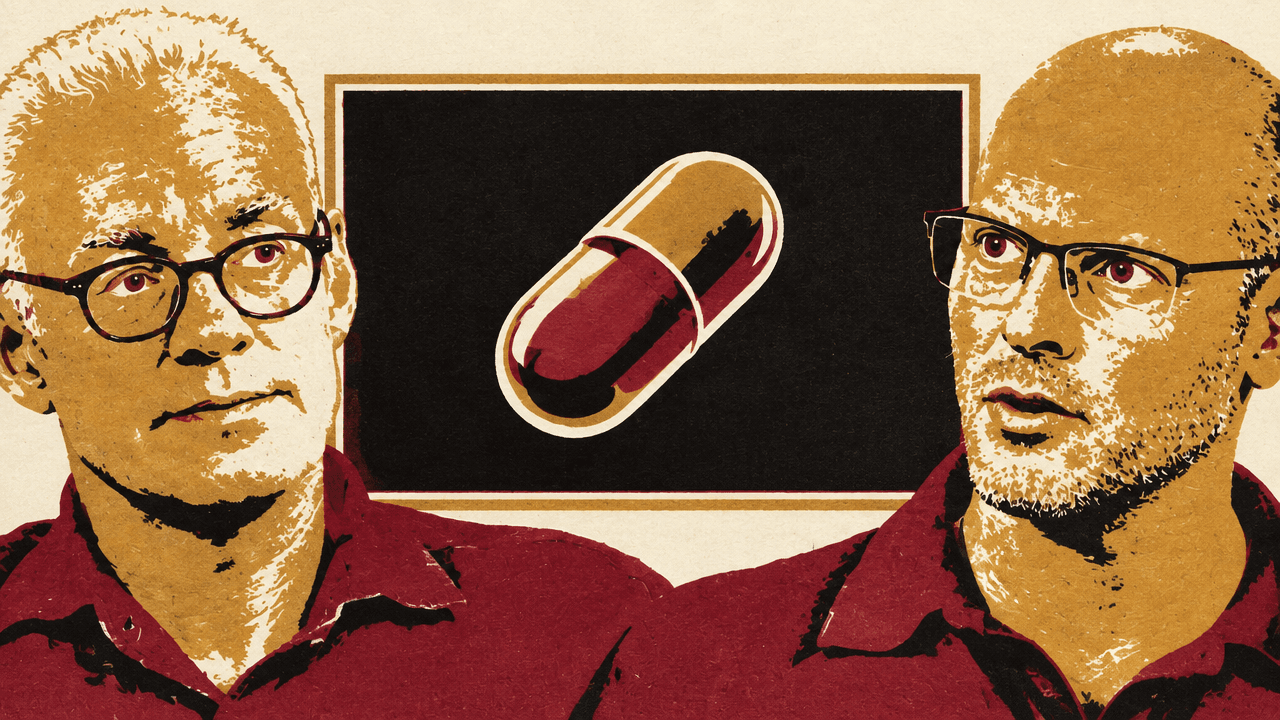
The $700 million outcome is absent from the account of how the company began
The supplied title says the company sold for $700 million. The discussion provided here does not describe that sale: it gives no buyer, date, or transaction details. Its account is instead about why Kevin Ryan moved from supporting psychedelic research to starting a company around methylone.
Ryan said he was 54 and had never tried psychedelics when he read Michael Pollan’s How to Change Your Mind. The book changed his view. He said he came to believe he had been wrong to dismiss the medicines, and that academic research already suggested potential benefits for PTSD, depression, and anxiety.
As a Yale board member, Ryan looked at research underway there, including work by John Krystal and Ben Kelmendi. The Yale School of Medicine page shown during this discussion identifies a Yale Program for Psychedelic Science and describes research into psychedelic drugs and related molecules, including psilocybin and MDMA. Ryan said he became one of the larger donors to the center; at that stage, he said, he was persuaded by the long-term importance of the work, not considering an investment.
The case for a company rested on the cost of drug development
By 2021, Ryan and Kelmendi, then a Yale professor, thought the work needed a for-profit phase. Ryan put the cost of taking one compound through the FDA process at roughly $200 million to $250 million, arguing that philanthropy would not raise enough to fund development. He, Kelmendi, and Blake Mandell, then on Ryan’s AlleyCorp team, developed a company around methylone. Mandell left AlleyCorp to become its CEO.
Ryan said they wanted a compound that was not widely known but had preliminary results suggesting it could have an impact. He described methylone as having possible advantages over MDMA, which he called valuable both recreationally and therapeutically, with good trial results. In the company’s trials, he said, methylone could be taken once a week, unlike MDMA, which he described as somewhat more toxic and more depleting of serotonin. He also said methylone tended not to produce the “downer” some people experience after MDMA.
Those were reasons to investigate the compound, not settled comparative findings. Ryan cautioned, “We still don’t know until you do a full double-blind study.” He said the company began that process, raised money, and got results he described as incredible, without specifying the results in this discussion.
We still don't know until you do a full double-blind study.
Ferriss described methylone as a gentler, shorter-lasting relative of MDMA and said its duration could be more compatible with healthcare delivery. He also raised a practical constraint: sessions lasting four to six hours can require additional nurses and staff, potentially making care difficult to scale and expensive. His own description of methylone’s effects came from personal experience, not from the company’s trial evidence.
A broad patent still meant choosing one indication
Ryan said the company had a patent covering methylone for PTSD, depression, and anxiety, and said others could not use it in those categories for 20 years. The company could nevertheless begin development with only one indication, he said, because each indication requires roughly $200 million to take through the FDA process. Pursuing all three was not financially feasible, particularly during what he called a “desert period” for psychedelic fundraising.
The distinction matters: the patent’s stated scope covered three categories, but Ryan described a development plan constrained to one starting indication. The discussion does not say which indication the company chose or provide details of the development results.
Regulatory and operational choices shaped the lessons Ryan took from the field
Ferriss identified two difficulties he had seen in psychedelic development: underestimating the staffing demands of long sessions, and combining a drug with psychotherapy. On the latter, he referred to Lykos Therapeutics’ MDMA-assisted therapy for PTSD. A Lykos press-release screenshot shown during the discussion is headed “Provides Update on FDA Advisory Committee Meeting for Investigational MDMA-Assisted Therapy for PTSD.”
Ferriss said the advisory committee did not know how to evaluate or standardize the psychotherapy component and, in his account, the application did not pass; he also acknowledged that there was more to the story. His point was that pairing a drug with psychotherapy can make regulatory evaluation more complicated when the therapy itself must also be assessed. Ryan said his team tried to learn from what it had seen elsewhere and change aspects of its approach, but this discussion does not specify which design choices they changed.
Ryan summed up the timing lesson with a familiar reversal: “The early bird gets the worm, but the second mouse gets the cheese.” The first entrant can be “smashed,” he said; a later entrant may still find the opportunity, with a chance to learn from earlier attempts.