Lower Qubit Requirements Narrow Quantum Computing’s Path to Utility

Yaqumo CEO Kazuhiro Nakashoji argues that quantum computing’s long-delayed commercial timeline is narrowing because hardware capabilities are rising as the number of qubits needed for useful work falls. He says progress in algorithms, error correction and neutral-atom hardware could bring those curves together around 2030, though quantum processors would serve as specialized accelerators alongside conventional systems rather than replace them. Yaqumo’s bet is that integrating the lasers, vacuum equipment and software behind those machines can turn laboratory research into deployable infrastructure.
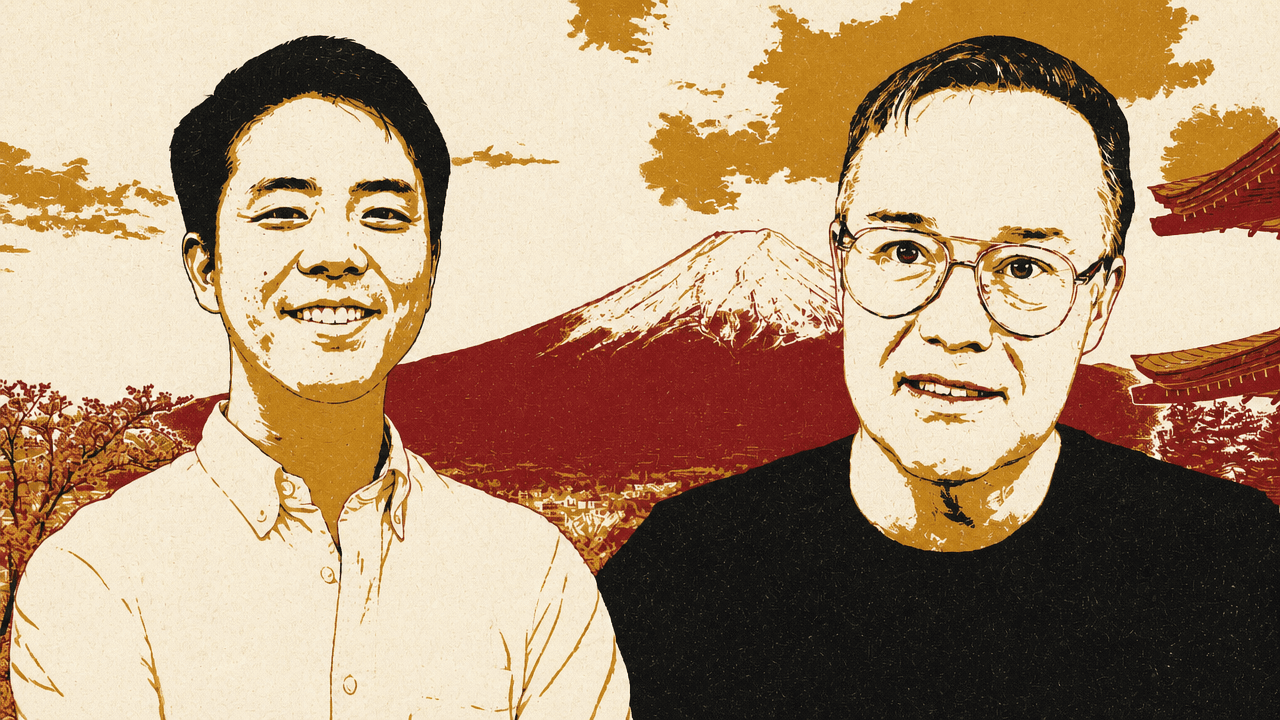
Quantum’s deadline moved because both sides of the equation changed
Kazuhiro Nakashoji attributes quantum computing’s long-running “five to 10 years away” horizon primarily to hardware. A useful quantum computer requires quantum processing units, or QPUs, built at scale—and the units themselves are difficult to create and stabilize. But he argues that the perceived distance to useful systems has narrowed not because one obstacle vanished, but because progress is arriving from two directions at once.
On the demand side, the number of qubits thought necessary for useful calculations has fallen sharply. Nakashoji says that five years ago, solving certain problems was commonly expected to require roughly one million qubits. Improved software, algorithms, and computational schemes have brought some estimates down toward 10,000 qubits—about 1% of that earlier figure.
On the supply side, hardware demonstrations have advanced substantially. Nakashoji says systems a decade ago had perhaps one to 10 qubits, while one U.S. university has recently demonstrated 6,000 physical qubits. His central forecast is that the number of qubits needed for useful work and the number hardware can provide could meet around 2030.
That does not mean today’s physical-qubit counts are broadly useful computers. Nakashoji’s account puts error correction between a physical-qubit demonstration and a robust machine: quantum information must be protected against repeated errors before a system can scale reliably. Yaqumo’s own commercial sequence follows that gap. Nakashoji says it plans to sell full-stack systems over the next five years primarily to academic researchers, then pursue fault-tolerant systems for data centers after 2030. Service-like models may become relevant after roughly 2035.
Quantum machines also are not general-purpose replacements for CPUs or GPUs. Nakashoji calls that a major misconception. They apply to particular classes of problems, including combinatorial questions and RSA cryptography. The likely future, in his telling, is a hybrid architecture: QPUs take on narrow workloads where quantum methods matter, while conventional CPUs and GPUs do the rest.
I cannot say that quantum computers take over all the position of the classical computers. Just one part of it. But I believe quantum computer could be the very, very great accelerator to make classical computer even smarter.
Some quantum systems are already installed in data centers, Nakashoji says, including in Japan. But installation is not the same thing as broad commercial utility. The remaining gap is reliability—and, for Yaqumo, the ability to turn a research machine into an integrated system that data centers can deploy.
The machine’s central problem is that it makes mistakes
A qubit can represent quantum superposition—the state associated with being, in a technical sense, both zero and one at once. But that unusual computational capability comes with fragility. Kazuhiro Nakashoji says quantum calculations can produce errors every hundred or thousand operations. Those failures make scaling hard: a machine cannot merely add more qubits if the information stored in them repeatedly degrades.
The answer under development is quantum error correction, or QEC. The task is to protect information encoded in qubits sufficiently well that the system becomes scalable and robust. Jason Calacanis compares the current state to early classical computing, when users rebooted computers constantly because of memory leaks, unreliable drives, and sluggish operating systems. Nakashoji accepts the analogy: quantum computing is going through a stage that classical computing experienced decades ago.


The engineering path remains unsettled because the field is still testing several physical approaches to a QPU. Google and IBM have pursued superconducting qubits, which Nakashoji says require chips to be kept in enormous refrigerators at extremely low temperatures. Other groups use charged ions. Yaqumo uses neutral atoms: individual atoms arranged in a vacuum chamber, with each atom functioning as a qubit. Photons and semiconductors are also being explored.
Nakashoji describes this as a period of competition over which kind of QPU will prove best for quantum calculations, analogous to the earlier period before classical computing converged around silicon. The challenge is not simply demonstrating a qubit, but developing a hardware approach that can support scale and error correction.
For Yaqumo, the neutral-atom route is also a cost thesis. Responding to an audience question about high quantum-computing rental prices, Nakashoji says a colleague estimated the cost of a superconducting physical qubit at close to $1 million. He argues that a neutral-atom qubit could be 100 to 1,000 times cheaper, making the technology more financially scalable if the architecture works as intended.
Yaqumo’s bet is to assemble a quantum computer like an automaker
Kazuhiro Nakashoji does not describe Yaqumo as a company that will manufacture every element of a quantum computer internally. He compares its intended role to Toyota’s: an automaker does not necessarily make every tire or engine component, but designs and integrates the system into a vehicle sold to the market.
For a neutral-atom quantum computer, that integration includes lasers, vacuum chambers, mirrors, and other specialized equipment. The critical component, Nakashoji says, is a high-power, low-noise laser. He describes NKT Photonics as Hamamatsu Photonics’ Copenhagen-based subsidiary, and says Yaqumo, Hamamatsu Photonics, and NKT Photonics have signed a memorandum of understanding to develop specialized devices for neutral-atom quantum computing.
The partnership illustrates Yaqumo’s view of what industrialization requires. Quantum hardware is not, in Nakashoji’s framing, a self-contained chip-design problem. It depends on specialized optics, vacuum systems, atomic physics, control systems, and software, with suppliers spread across countries. He calls that supply chain crucial to industrializing quantum computing.
Yaqumo emerged from an effort to combine research from Kyoto University and the Institute for Molecular Science in Aichi Prefecture. Nakashoji says Kyoto University’s Yoshiro Takahashi, who has studied the neutral-atom species ytterbium for more than 30 years, and IMS head Kenji Ohmori could have supported separate startups. Yaqumo instead combined research output from both institutions, with the two professors serving as advisers.
The research base is also part of its recruiting case. Nakashoji says Yaqumo grew to nearly 70 people within 15 months of launch, mostly engineers, scientists, and mathematicians. He says roughly 20% to 30% of its technical staff are non-Japanese, and that non-Japanese leaders head two of the three divisions under its CTO. Hiring, he says, is his biggest job.
The spinout arrangement also reflects a commercialization constraint in Japan. Nakashoji says Japanese universities have less experience than overseas institutions in turning academic IP into startups, and that no settled methodology has emerged. Universities may receive stock options or equity in exchange for IP; he describes those negotiations as difficult.
AI is already useful to quantum computing, but the reverse remains speculative
Kazuhiro Nakashoji describes the practical relationship between AI and quantum as asymmetric. “AI for quantum” is real and powerful today: classical computers use CPUs, GPUs, AI models, large language models, and transformers to estimate what errors occurred in quantum computations and help correct them. Since error correction is central to making quantum machines usable, this is part of the machinery required to get quantum hardware to work rather than an ancillary application.
“Quantum for AI,” by contrast, does not yet have a tangible practical example, Nakashoji says, because quantum machines do not yet have enough computational power. He points to recent MIT research papers as work on how that relationship could develop, but does not present quantum computing as an imminent replacement for AI training or inference.
One possible route is through data that conventional computing cannot readily produce. Nakashoji offers fluid-dynamics calculations as an example: if a quantum computer yields results unavailable from a classical computer, those outputs could become new training material or otherwise differentiate an AI model. In that scenario, quantum computing would not necessarily execute the entire language model; it would provide particular computations and data that improve conventional models.
He also argues that quantum computation could eventually matter for AI’s energy use. Citing a paper he had seen, Nakashoji says that for a particular problem, a quantum system with roughly 40 to 50 qubits could consume less energy than a classical computer. The implication is conditional—not a claim that every quantum workload is automatically greener—but he sees a potential role for quantum systems in reducing energy use for selected AI-related computations.
Calacanis frames the likely result as a hybrid machine, analogous to a hybrid car. Nakashoji agrees: workloads would be shared across quantum and classical processors, perhaps with shared memory. He says early research and demonstrations of quantum-classical hybrid systems are already under way in Japan, including in Tsukuba.
The cryptography threat begins before a quantum computer can break anything
Kazuhiro Nakashoji says the security concern is not only the day on which a sufficiently capable quantum computer can break RSA encryption. A survey of quantum-calculation researchers, he says, suggested organizations should be very careful within the next five to 10 years. He does not expect RSA-breaking capability in the next two years, but says research has shown that a QPU of sufficient size could solve RSA cryptography.
The more immediate strategic risk is “harvest now, decrypt later.” A state or other actor can collect encrypted material today—even material it cannot currently read—and preserve it until future quantum hardware makes decryption feasible. Nakashoji points to sensitive information held by governments as an especially consequential category: an attacker need not crack material now if it retains value years later.
Some country already collected top secret which is already protected by RSA cryptography, but they already has that.
Nakashoji treats this as a dual-use problem requiring careful communication with governments about how the technology will be used and protected. He says the United States has announced an ambition to have a useful quantum computer by 2028, which he characterizes as aggressive. He also identifies China, the United States, the European Union, and Japan as major quantum centers, while cautioning that countries do not disclose everything they are doing through scientific papers.
The cryptographic risk is important, but Yaqumo does not see it as the only commercial application. When Karthik asks whether expanding AES key sizes might buy time against future attacks, Nakashoji does not directly assess the proposal. He instead points to quantum chemistry as another application category that could create new markets. The exchange raises virtual cells and biological modeling as prospective possibilities, rather than established products.
The commercial thesis therefore depends on more than a future ability to threaten encryption. Yaqumo’s nearer market, as Nakashoji describes it, is research hardware; its post-2030 data-center ambition depends on fault tolerance; and any quantum service business would come later still. The compressed timeline is not a claim that quantum has already crossed those thresholds. It is a claim that lower estimated qubit requirements, more capable hardware demonstrations, error-correction work, and a specialized supply chain may make the next set of thresholds reachable.