OpenAI and Anthropic Are Compressing the Market for Thin AI Wrappers
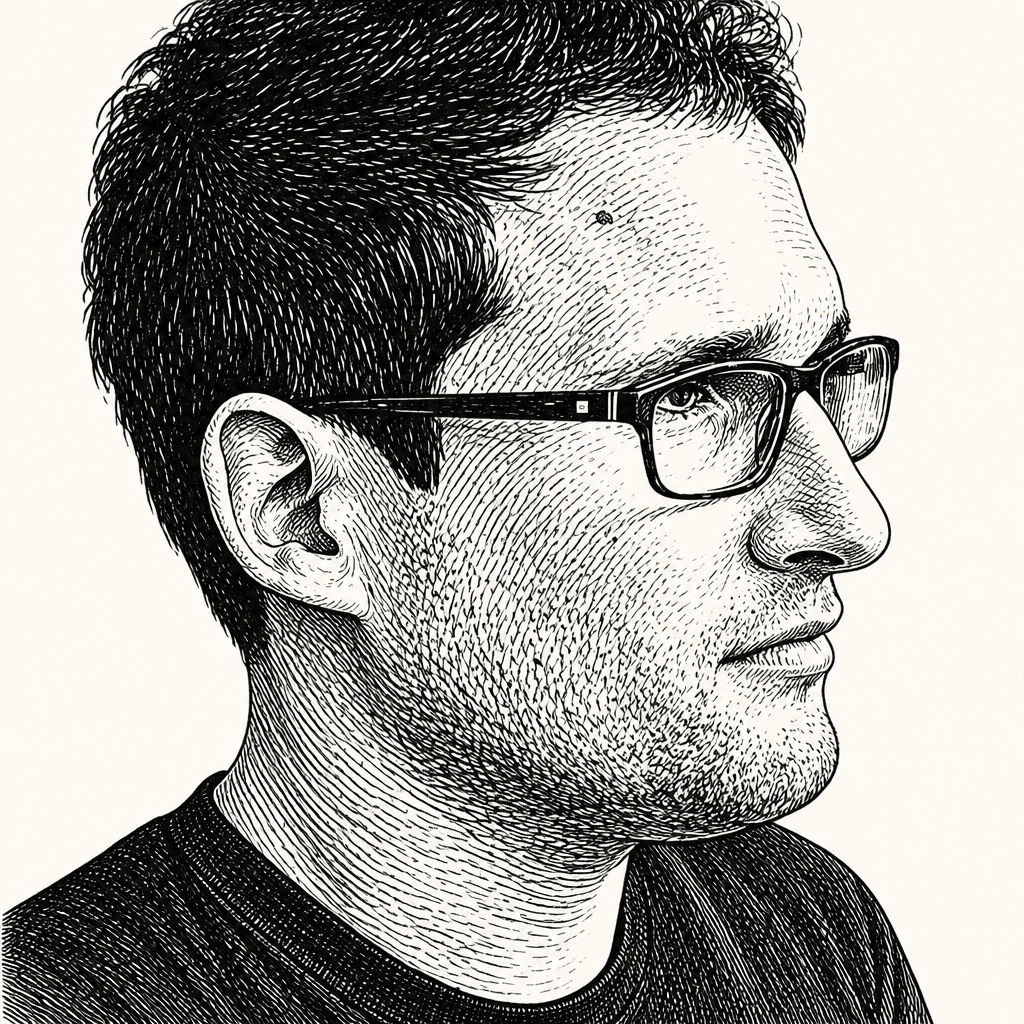


Sam Lessin of Slow Ventures argues that OpenAI and Anthropic are moving into the application layer fast enough to threaten many AI startups built as thin wrappers on foundation models, while Jenny Fielding and Dave McClure contend that workflow depth, distribution and niche focus may still protect some companies. The broader debate links that pressure to a weak secondary market, a doubtful 2026 IPO rescue and a venture model Lessin says must shift away from multi-stage capital deployment toward early, priced exposure to scarce founder talent.
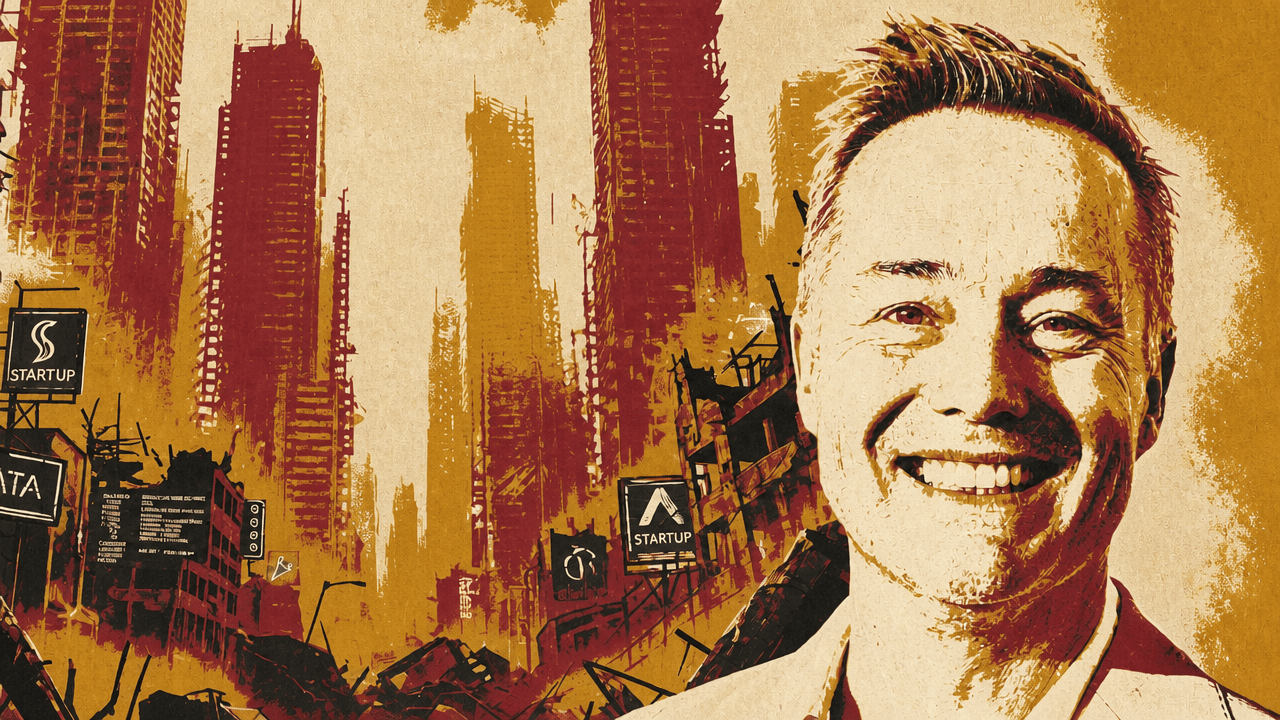
The application layer is under pressure from the labs, but not every startup is a wrapper
Sam Lessin frames the central threat bluntly: as Anthropic and OpenAI move further into application layers, many startups built around foundation models face an “incredibly low” survival rate. His concern is not that every AI application company disappears. It is that a large class of companies have been financed as if access to a model plus a product surface were a durable business, while the labs themselves are moving quickly into those surfaces.

During Lessin’s remarks, the lower-third on screen read: “Will AI Labs Eat the Application Layer?” The framing matches his claim that the labs are not staying confined to infrastructure, and that the boundary between foundation model and application is moving faster than many startups expected.
For Lessin, the decisive distinction is between an application with a moat and a thin wrapper. If a startup is “just building a thin wrapper around a foundation model,” he argues, it is unlikely to survive the next two years. The margin in that category, in his view, goes to zero as the model providers absorb more use cases and product capabilities.
The foundation models are eating the application layer faster than anyone anticipated.
Jenny Fielding does not reject the danger, but she pushes against treating the application layer as a single vulnerable category. Her counterpoint is distribution and workflow depth. Founders, she says, are not all simply placing a light interface on top of OpenAI or Anthropic. The stronger companies are integrating deeply into enterprise workflows, where the large labs may not have “the last mile distribution.”


That distinction matters because model capability is not the same as the integrations and workflow presence Fielding says she is seeing from founders. In her version of the market, specialized vertical AI companies may still be able to reach liquidity if they are not dependent on raw model access as their only advantage.
Dave McClure takes a middle position. He agrees with Lessin “to some extent” that wrapper companies are exposed, but argues that niche applications still have room where the large labs “just won’t bother to go.” His point is narrower than a broad defense of the application layer: there may be categories or use cases too specific for the largest labs to pursue directly.


The disagreement is over what remains durable as the labs expand upward. Lessin’s test is severe: if the AI itself is the moat, the company is structurally fragile. Fielding’s answer is that some founders are already building deeper into enterprise workflows. McClure adds that some niches may simply fall outside what the labs choose to prioritize.
The liquidity problem is already reshaping the venture market
Dave McClure is equally blunt about the state of the secondary market: “pretty cooked,” and later, “absolutely cooked.” His point is not that no transactions are happening. It is that the broad market for late-stage private company liquidity has weakened badly, with buyers demanding steep discounts and sellers waiting for a future public-market reopening that may not deliver the valuations they expect.
McClure says some late-stage SaaS companies are seeing secondary discounts of 60% to 70% because “there’s just no liquidity.” Everyone, in his telling, is waiting for the 2026 IPO window to open, but he is skeptical that it will be “the savior everyone thinks it is.”
Sam Lessin agrees on the severity of the liquidity crunch. He calls the secondary market “completely cooked” and warns that companies counting on a 2026 IPO window need the balance sheet to survive until then. That makes the public-market reopening less a solution than a survival checkpoint in his framing: if companies cannot bridge the time between private-market pressure and possible public-market access, the theoretical IPO window is not enough.
Jenny Fielding also accepts the liquidity problem, but looks at it from the founder and early-stage investor’s point of view. At Everywhere Ventures, she says, founders are having to rethink runway completely. If the IPO window does not meaningfully open until 2026, “the bridge rounds are going to be brutal.” Her emphasis is on the operating consequence for founders: delayed liquidity changes how long companies must survive and how painful interim financing may become.
McClure later qualifies his own severity. Secondary liquidity, he says, is “still happening for the right companies.” But it is “highly concentrated.” That matters because it separates market closure from market selectivity. The strongest companies may still find buyers. The broader late-stage universe may not. A liquidity market can technically exist while being unavailable to most companies at the prices their last rounds implied.
For companies marked up in the zero-rate period, McClure’s warning is that a public-market reopening could expose valuations that “are just not going to hold up when the liquidity finally hits.” For founders trying to survive until then, the intervening period is a financing problem before it is an exit opportunity. For investors, the secondary market’s concentration means private liquidity can no longer be assumed as a general release valve across the portfolio.
Incrementalism, not vision, is Lessin’s theory of company-building
Sam Lessin rejects the idea that great companies require a founder to begin with a grandiose vision. When McClure challenges him by invoking Drop.io, Lessin’s file-sharing startup from 2007, Lessin insists that even then he was not claiming to change the universe. He describes the original Drop.io thesis as deliberately incremental: there was no new human need, only a product that was “incrementally better and faster” than what existed and “a little bit easier to use.”
Dave McClure needles the point by calling Drop.io “a fucking shared file folder.” Lessin does not dispute the basic plainness of the category. He disputes the implication that plain, incremental improvement is a lesser kind of company-building. He says he has been consistent since he was 23: “I’m not a visionary. Like I really mean it.”
Jenny Fielding pushes back: “the incremental changes aren’t the things that build enormous enterprise value.” Lessin and McClure both reject that. Lessin’s answer is sweeping.
No, incremental change over time compounded is all that builds anything in human history. Period.
The exchange matters because it explains how Lessin thinks about venture investing. He is not looking for vision as a story asset. He is looking for compounding improvements applied by unusually strong people over time. The problem, as McClure points out, is that most venture capitalists cannot model that and predict which founders will be able to compound incremental progress into major outcomes.
Lessin agrees. In fact, he treats that difficulty as a structural feature of the asset class. Venture, to him, increasingly resembles public-market stock picking. The investor is not reliably identifying the future winner by reading a visionary deck. The investor is trying to gain exposure to a class of human talent and technological opportunity where selection is difficult and outcomes are distributed unevenly.
McClure sharpens the analogy by saying venture looks more like “a mutual fund or an index” if investors are honest. Lessin accepts that framing. If venture is an index-like asset class, the job is not to pretend that investors can consistently foresee specific category winners. It is to buy the right exposure to the right talent base at the right stage and price.
That view also helps explain why Lessin resists Fielding’s distinction between incremental change and enterprise value. He is not saying small product improvements are automatically large companies. He is saying the way large value gets built is not through a single act of vision, but through repeated incremental advances that compound. The venture problem is that this compounding is obvious only after the fact; before it happens, it is hard to separate meaningful compounding from ordinary product iteration.
Seed investing is beta exposure to talent, not a heroic selection game
Sam Lessin describes Slow Ventures as fundamentally a seed-stage capital allocator. In his account, the firm’s role is not to provide company-by-company clairvoyance. It is to build a diversified pool of exposure to top-tier human talent applying itself to technology problems at the earliest possible stage.
He traces that view to a broader shift in company formation. In a capital-constrained world, money itself was the scarce input. But after startup infrastructure became cheap enough — he marks the shift around 2004 with AWS — the scarce input moved from capital to human talent. Once starting a company became inexpensive, the asset class became, in his words, “entirely an index to the talent base.”
That premise leads Lessin to a narrow definition of the venture capitalist’s role. VCs should ask what function they perform for limited partners. His answer: they provide “a very specific type of beta exposure.” The firms best suited to do that are those with structural advantages in building a diversified pool of early-stage companies.
When Jenny Fielding asks about the portfolio math, Lessin says Slow’s core funds typically invest in “40 or 50” companies. He also says that in a $500 million exit, the firm can “get a ton of money” because it is targeting roughly 10% underlying ownership. The model, as he describes it, is not built around tiny positions spread across hundreds of companies, nor around late-stage capital deployment. It is built around early ownership in enough companies sourced from a high-quality talent pool.
| Question | Lessin’s answer |
|---|---|
| Stage | Entirely seed |
| Core-fund portfolio size | About 40 to 50 companies |
| Ownership target | Roughly 10% underlying ownership |
| Primary job | Sourcing and pricing |
| Selection | Described as mostly noise |
Lessin’s most provocative claim in this part of the discussion is that “selection is kind of basically noise.” He does not mean that anyone should invest randomly. He means that, given the uncertainty of early-stage outcomes, the durable edge is not a venture capitalist’s ability to perfectly forecast winners. The edge is sourcing access to exceptional founders and buying enough of that exposure at the right price.
This is why pricing matters in his description. If a seed investor is trying to buy exposure to a talent base, the entry price determines how much of the eventual compounding the fund owns. A good company bought at the wrong price can still be a weak fund investment. A diversified pool of strong founders bought early enough, with meaningful ownership, can make smaller exits matter more. Lessin’s example of a $500 million exit is meant to show that the model does not require every company to become a giant public company if the fund owns enough at entry.
Fielding’s questions expose the practical tension. If many firms have moved multi-stage, how does a seed-focused model keep buying into the winners over time? Lessin’s answer is that it does not — and should not. The multi-stage model, in his view, was designed for a different environment. His seed model depends on the premise that the scarce thing is early access to talent, not the ability to continue deploying more capital into the same company at later marks.
Multi-stage venture works when capital is scarce; Lessin says it fails when talent is scarce
Sam Lessin states the core claim plainly: “multi-stage venture works in a capital constrained environment” and “totally fails in a talent constrained environment.” The distinction is the backbone of his critique of modern venture capital.
In a world where money is scarce, the investor able to provide capital across stages has structural power. The capital itself is valuable because companies cannot easily get it elsewhere. But in a world where money is abundant and the scarce resource is exceptional human talent, Lessin argues, multi-stage firms do not create value by supplying scarce capital. Instead, he says, they create structures that allow them to mark up their own books, raise larger pools, and collect fees on illiquid capital that has not been returned to limited partners.
He calls this the “factory farm” of multi-stage venture. His criticism is not merely aesthetic. He argues that over the last decade the enterprise value created per venture dollar has “plummeted,” because too much capital has been poured into companies that cannot productively absorb it. In pure software, he says, spending more money does not automatically make the company grow faster. Adding more engineers can make a project move slower rather than faster.
The critique is also an attack on reported performance. Lessin says multi-stage venture enabled firms to create “completely fake alpha” in a highly illiquid asset class. The mechanism he describes is straightforward: a firm invests early, later participates in or leads financings that raise the company’s valuation, marks up its own position, and earns fees on a larger base of unrealized value. The underlying company may not have returned cash to LPs. The fund may still appear to be performing because the private marks have moved up.
In that sense, Lessin’s complaint is not just that multi-stage funds became too large. It is that the structure blurred the difference between realized value and internal valuation. When capital is abundant and companies remain private longer, markups can function as a substitute for distributions. His argument is that this substitute looked like alpha during the boom, but was really a product of capital flows, illiquidity, and fee structures.
Dave McClure partially agrees but adds a macro explanation. He says it was not simply that “all VCs” chose this structure in a vacuum. Interest rates mattered. There were macro tailwinds that allowed venture firms to gather multibillion-dollar, multi-stage funds, along with a lack of other attractive places to put capital.
Lessin accepts that. He says this was his argument in “The End of Venture Capital as We Know It,” which he believes many people misunderstood. When interest rates went to zero and yield disappeared elsewhere in the economy, large pools of capital — especially from sovereign wealth and institutional managers — went looking for return. Venture was one of the few asset classes able to tell a compelling growth story that those capital providers could not easily underwrite in conventional terms.
In Lessin’s telling, that capital was “un-price-sensitive.” It flowed into venture not because venture could absorb it efficiently, but because the macro environment forced allocators to chase yield. Multi-stage venture became the structure through which that capital entered private technology markets.
This is where McClure’s caveat and Lessin’s critique fit together. McClure emphasizes the conditions that made the model possible: low rates, excess capital, and limited alternatives. Lessin emphasizes what the model did once those conditions existed: poured capital into software companies beyond what they could productively use, encouraged markups, and generated fees on unrealized value. Cheap money explains the scale; it does not, in Lessin’s view, justify the structure.
The talent-constrained premise is the hinge. If the scarce input is capital, bigger funds and multi-stage firepower can be an advantage. If the scarce input is talent, bigger funds can become a pressure to deploy money into a system that cannot convert that money into proportionate enterprise value. Lessin’s seed-stage model is built around the second premise: own enough of the right talent early, rather than keep adding capital later because the fund structure demands it.
The next venture model has to justify its edge
Jenny Fielding is focused less on the 2026 IPO window than on what venture becomes after the AI transition and liquidity reset. For early stage, she says, “we are not even thinking about 2026.” The priority is supporting founders through a market where AI changes product assumptions, financing assumptions, and the meaning of defensibility.
Fielding argues that the next generation of venture will be “much more specialized.” Her view is that investors cannot simply operate as generalists writing checks.
You can't just be a generalist writing checks anymore.
That claim sits in productive tension with Lessin’s index-like theory. Lessin emphasizes broad exposure to top-tier talent at seed; Fielding emphasizes specialization as a response to the complexity of the AI transition and the demands of founder support.
Taken together, the speakers describe several possible answers to the same pressure on venture. Lessin’s answer is structural access, diversification, ownership, and price at the earliest stage. Fielding’s answer is specialization: knowing enough about a market, workflow, or vertical to help founders build something deeper than a model wrapper and navigate the financing environment around it. McClure’s comments imply another discipline: in a liquidity-constrained market, investors have to pay closer attention to which companies can survive without generous public-market exits or easy private-market markups.
Those are not presented by the speakers as a formal taxonomy of venture edge. They are the positions that emerge from their arguments. What becomes harder to defend is the generic model they are all circling in different ways: abundant capital, broad markups, limited distributions, and a promise that a future IPO window will clean up the gap between private valuations and realizable liquidity.