Wine Complexity Depends on the Drinker as Much as the Glass
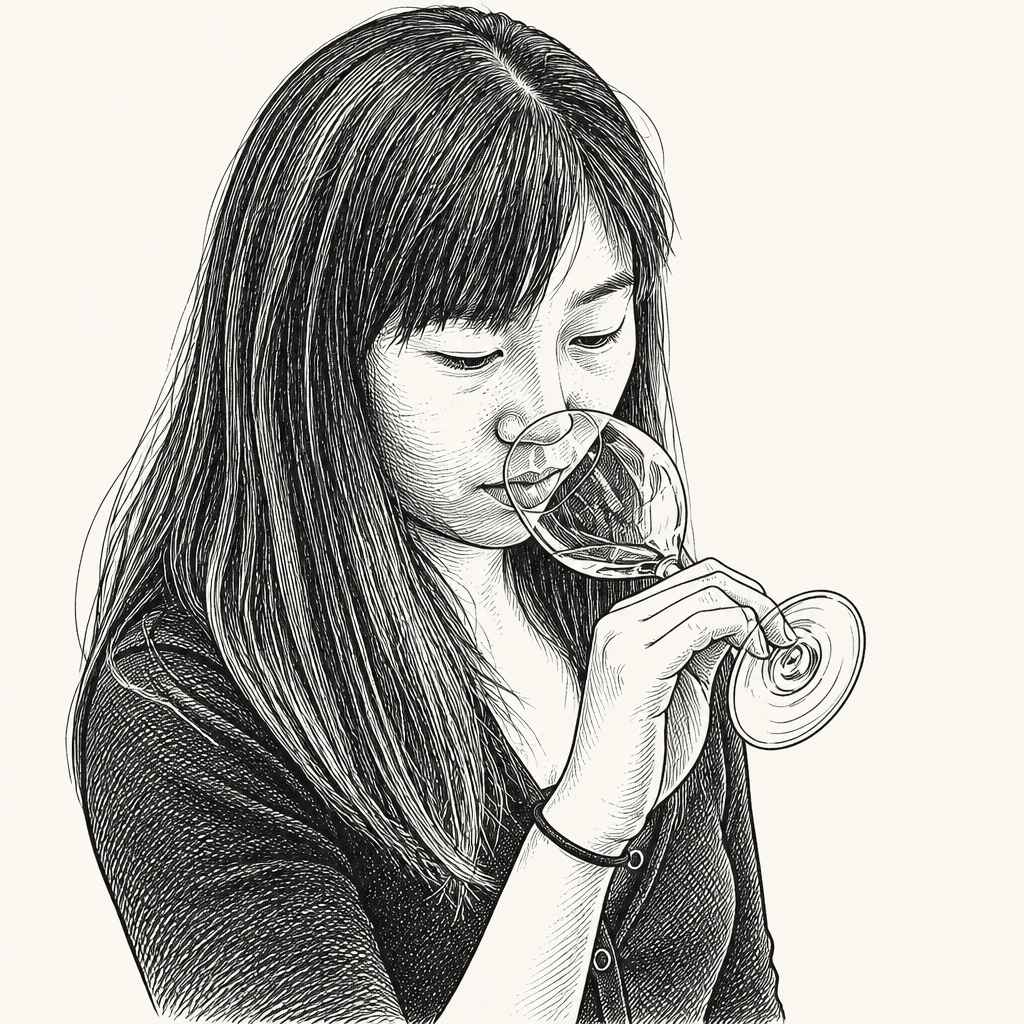
Sensory scientist Qian Janice Wang argues that wine complexity is not a single property waiting in the glass, but a perception shaped by chemistry, time and the drinker’s expertise. In a TEDxNoVA talk, she describes studies in which blends were not perceived as more complex than single-variety wines, oak cues predicted higher complexity ratings, and experts experienced older Madeira as more complex and dynamically distinct in ways novices did not.

Complexity is wine’s prestige word, but it is not a settled measurement
Qian Wang begins with a problem familiar inside wine culture and slippery outside it: when someone calls a wine “complex,” what exactly are they claiming? Her answer is not that complexity is either real or imagined. It is that wine complexity has to be separated into what is chemically present, what the drinker perceives, and how expertise changes that perception.
Wine critics use the term often. Wang says she uses it herself when writing tasting notes. But she also calls it “an industry secret” that asking 10 people what complexity means may produce 10 different answers. The word carries authority in wine, yet its meaning is unstable enough that a sensory scientist has to decide what, precisely, can be investigated.
If you ask 10 different people, what does complexity mean, you might get 10 different answers.
Wang frames the question through a psychological model often used to explain how people respond to complexity more generally. The Berlyne curve proposes an inverted U-shaped relationship between complexity and preference: too simple is boring; too complex is unpleasant; somewhere in the middle is an optimal level. In the version Wang shows, preference rises from a sub-optimal low-complexity region, peaks at “optimal,” then falls into a “supra-optimal” region as complexity increases. The chart is attributed on screen to the University of Copenhagen and to Tan, Spackman and Peaslee’s 2006 paper in Music Perception.
She demonstrates the intuition with music: a very simple audio example, a second example with more complexity, and a third that is intentionally much more complex. Only a few audience members say they liked the third. The point is not composition; it is perception. In many domains, Wang says, too much complexity can reduce liking.
Wine complicates that model. Wang quotes wine critic Matt Kramer, writing in Wine Spectator in 2012, who called complexity “the single greatest standard used in assessing the quality of a wine.” Kramer’s formulation is not about a moderate dose of complexity. It is expansive: “The more times you can return to a glass of wine and find something different in it—in the bouquet, in the taste—the more complex the wine. The very greatest wines are not so much overpowering as they are seemingly limitless.”
For Wang, that kind of language is both beautiful and hard to test. As a researcher, she says her work requires her to define what wine critics say. The question becomes whether complexity is something in the wine itself, something in the drinker’s perception, or some interaction between the two.
She separates the problem into two forms. The first is chemical complexity: “the stuff that’s in the glass,” the molecules present in the wine. The second is psychological complexity: the possibility that complexity “is not really in the wine, but it’s in the mind of the drinker.”
Blending wines did not make tasters perceive more complexity
Qian Wang’s first study, conducted at the University of Oxford, tested a seemingly straightforward version of chemical complexity. If two wines are combined into a 50-50 blend, the blend should be chemically more complex than either component alone. The experiment used three single-variety wines from the same producer and three 50-50 blends made from them, for six wines total.
Participants were given the six red wines blind. They were not told which were blends and which were single varieties; they were simply asked to taste them. The tasting setup shown on screen included six glasses of red wine, water, a spittoon, and an evaluation form. The form asked tasters to report their wine expertise, with categories for novice, intermediate and expert. It also asked them to guess whether each wine was a blend, choose five flavor descriptors from a list, and rate liking, familiarity, complexity, flavor intensity, quality and willingness to pay for a 750 ml bottle.
The study included around 80 people. Some, Wang says, “knew nothing about wine” and worked in the department; they came for free wine. Others had wine certifications, and some came through the Oxford Blind Tasting Society, which Wang was running.
The first finding was counterintuitive. Across all participants, people could not distinguish blends from single-variety wines. But among subgroups, beginners did better than expected: Wang says the people who knew less about wine guessed whether wines were blends at a rate higher than chance. She does not offer an explanation for why. She emphasizes that it was surprising.
The more consequential finding for the complexity question was that the blends were not rated as more complex than the single-variety wines. If blending increased chemical complexity, that increase did not translate into perceived complexity for the tasters.
Wang’s conclusion from this study is deliberately narrow: chemical complexity in the glass does not necessarily equal perceived complexity when people rate wine. The fact that a wine contains a mixture of components does not mean drinkers will experience it as more complex.
But one thing did predict higher complexity ratings. It was not whether the wine was a blend. It was how much oak tasters perceived. Participants who wrote flavor words such as vanilla, spice or cinnamon tended to give higher complexity ratings. Those oak-associated descriptors were also predictive of greater willingness to pay.
Wang’s practical formulation is blunt: “If you put your wine in oak, people are gonna think it’s more complex and they might like it more.” This is not presented as a universal account of wine quality. It is evidence that, in this study, a recognizable sensory cue associated with oak explained perceived complexity better than the experimental manipulation that was supposed to increase chemical complexity.
Complexity can be static, but wine also changes while it is being tasted
The second study shifts from what is chemically in the glass to what happens in perception over time. Qian Wang asks whether complexity is “in the mouth” of the taster, adapting the familiar idea that beauty may be in the eye of the beholder.
To make the distinction, she separates static complexity from dynamic complexity. Static complexity is the number of different flavors perceived at a given moment. Dynamic complexity is how the wine evolves in the mouth over time: what appears, fades, intensifies or lingers as the drinker continues tasting.
Again, Wang uses music to make the point. A standard major triad has little static complexity; then, with more notes added at once, it becomes more complex in a static sense. A separate musical example illustrates dynamic complexity by changing over time. Music is useful, she says, because everyone understands that it evolves temporally. Flavor can be treated similarly.
For this work, Wang chose Madeira, which she calls her favorite fortified wine. She says that in the wine world it is widely believed that older Madeira becomes more complex. Her study tested whether that belief would hold under controlled tasting conditions.
The wines came from Justino’s Winery and were Madeira samples aged in barrel for three, 10 or 20 years. The tasting setup differed from the earlier red-wine study in one important way: the wines were served in opaque black glasses. Wang explains the reason. Madeira and Port change color as they age, so clear glasses would allow tasters to infer age visually. The black glasses removed that cue. The glasses were also marked with randomized three-digit numbers. Participants were told they were tasting Madeira, but not which samples had which ages.
The study included both novices and experts: about 70 novices and 30 experts. The first task was simple. Participants tasted each wine and rated its complexity on a 1-to-9 scale.
For novices, the ratings showed a slight upward trend as the wines got older, but Wang says this was not statistically significant. Experts showed a steeper increase. In blind tasting conditions, without access to the wines’ color, experts consistently rated older Madeira as more complex.
| Study element | Design choice | Reason or result |
|---|---|---|
| Wine ages | 3, 10 and 20 years in barrel | Used to test the wine-world belief that older Madeira is more complex |
| Glassware | Opaque black glasses | Prevented tasters from using color as an age cue |
| Participants | About 70 novices and 30 experts | Allowed comparison between different levels of wine expertise |
| Initial rating | Complexity scored on a 1-to-9 scale | Experts, but not novices significantly, rated older wines as more complex |
For Wang, this gives some support to the wine-trade belief that aged Madeira is more complex. But the finding is expertise-dependent. Experts perceived the age-related complexity reliably; novices showed only a weak trend.
Experts experienced the wines as different trajectories; novices experienced them as more similar
The Madeira study did not stop at a single complexity rating. Qian Wang also used a method called TCATA, short for temporal check-all-that-apply, to measure how flavor perception changed moment by moment.
The task sounds, in Wang’s words, “like a crazy video game.” While holding wine in the mouth for 30 seconds, participants saw eight descriptors and had to check every descriptor they perceived at each moment. Each second, they indicated whether they were tasting caramel, orange zest or other attributes. Wang says participants spit the wine out at some point, but the measurement continued into the aftertaste.
The purpose was to capture both in-mouth sensation and the flavor evolution afterward. Instead of asking what the wine tasted like as a summary, the method records how the tasting experience unfolds.
Wang then shows trajectories for Tinta Negra Madeira aged three, 10 and 20 years. The visualization placed flavor descriptors in a “flavor space,” including apple, sweet, sour, ground coffee, roasted walnuts, orange zest, bitter and burnt caramel. The closer a wine’s line moved toward a descriptor, the more that descriptor was being perceived. Darker lines represented older wines.
| TCATA visualization | What was shown | What Wang drew from it |
|---|---|---|
| Experts | The three Tinta Negra age lines moved through the flavor space on different paths; the 20-year wine moved more distinctly, especially toward burnt caramel and roasted walnuts. | Experts were able to differentiate how the three wines evolved over time. |
| Novices | The same three age lines stayed closer together and largely followed similar paths. | Novices experienced the wines’ flavor evolution as more similar. |
The expert chart was labeled “TCATA Trajectories (Tinta Negra) — Experts.” In the animated version, the three age lines moved through the flavor space on different paths. The 20-year wine, shown as the darkest line, moved more distinctly than the three-year and 10-year wines, especially toward descriptors such as burnt caramel and roasted walnuts. Wang interprets the expert plot as showing that the flavor evolution of the older wine was different from the other two.
The novice chart used the same flavor space and the same three Tinta Negra age lines, but the pattern changed. The trajectories stayed much closer together. The lines “all kind of follow each other,” Wang says. The novices did not differentiate the three ages in the same way experts did.
This is the clearest evidence in Wang’s argument that complexity is not only a property of the wine. The same set of wines, tasted blind, produced different perceptual structures depending on the drinker’s expertise. Experts could clearly differentiate the wines’ evolution over time; novices experienced the wines as more similar.
That does not mean novices tasted incorrectly. Wang’s language is not corrective. Her point is that novices and experts have different mental experiences and different concepts of what complexity means. In this study, expertise was associated with different patterns in how tasters tracked flavor evolution, not merely with different labels applied after the fact.
Wine may not follow the usual rule that too much complexity reduces liking
Qian Wang returns at the end to the Berlyne curve. In music, she says, too much complexity may not lead to greater preference. That was the point of the simple and over-complex audio examples: listeners often dislike stimuli that exceed their preferred level of complexity.
Wine remains unresolved. Wang says one open question in the wine world is whether more complexity equals better. The evidence she presents does not show that too much wine complexity becomes bad. The critical language she cites, especially Kramer’s idea of great wines as “seemingly limitless,” points in the other direction: in wine discourse, complexity is often treated as a marker of quality rather than a risk.
But Wang does not turn that into a universal law. “Maybe it depends on the mind of the beholder,” she says. The studies she describes point toward that conclusion. Blending did not automatically produce perceived complexity. Oak-associated cues predicted greater complexity ratings and willingness to pay. Older Madeira was rated as more complex by experts, but not significantly by novices. Dynamic flavor trajectories separated clearly for experts and much less for novices.
The practical implication is modest and sensory rather than prescriptive. Wang’s final request is that the next time people drink or eat something, they slow down and notice how flavors evolve over time. Complexity, in her account, is not just an inventory of molecules or a critic’s adjective. It is a perceptual event shaped by attention, time, experience and the mind of the taster.