Science Lessons Should Start With a Phenomenon, Not a Formula
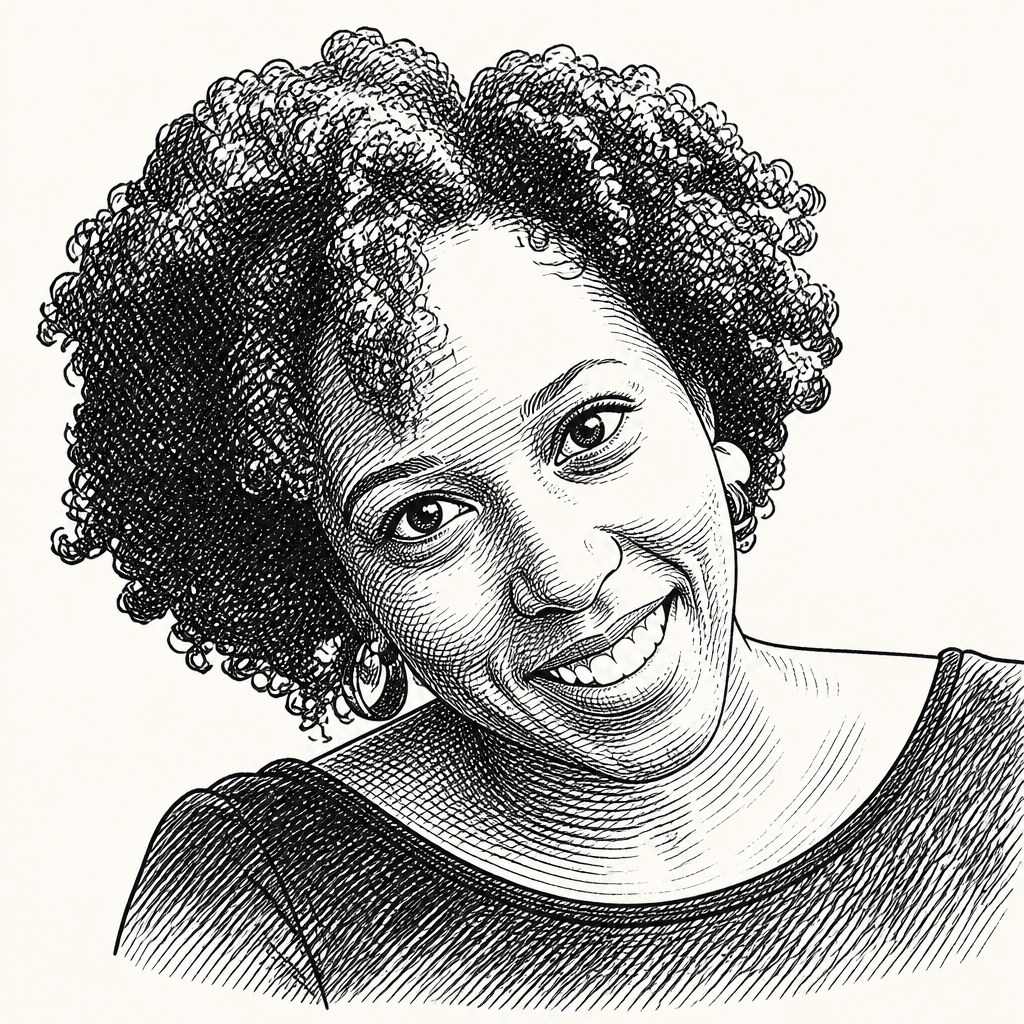

Former NASA engineer and YouTube creator Mark Rober argues that science instruction should begin with a phenomenon students want to explain, rather than with formulas or vocabulary they are asked to absorb. His free Class CrunchLabs curriculum for grades three through eight uses short videos and low-cost experiments to prompt investigation, with teachers leading the discussion and sense-making. Rober’s claim is not that screens can replace teaching, but that a stronger initial hook can help teachers overcome what he sees as a motivation gap.

Rober’s operating diagnosis is a motivation gap he believes he can solve
Mark Rober does not claim to have a complete prescription for American education. Asked what three changes he would make if he could take a wrecking ball to K–12 schooling, he declined to offer a systemic redesign. He has not, he says, studied the system in that way. What he believes he can address is narrower: the gap between presenting scientific content and making students want to engage with it.
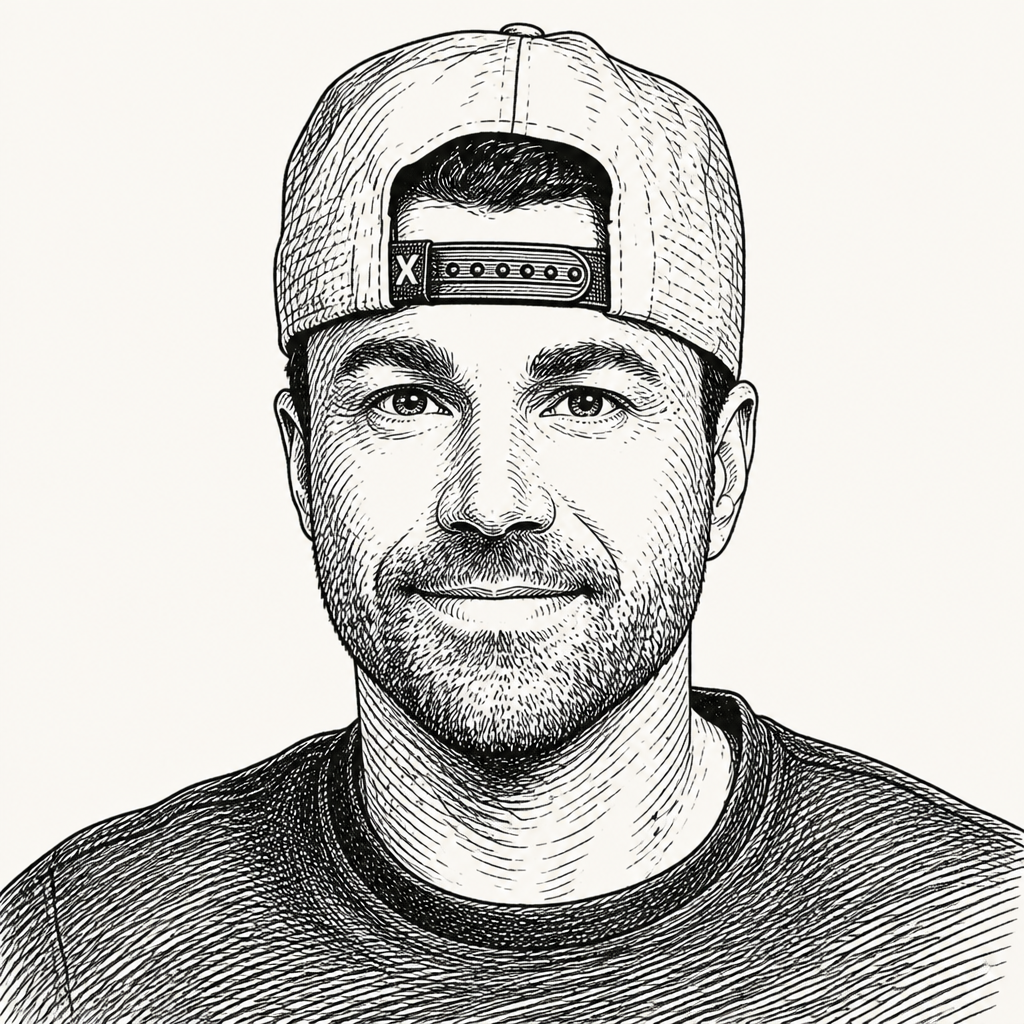

That diagnosis led to Class CrunchLabs, a free science curriculum intended for grades three through eight. Rober’s aim is not to replace teachers, make every lesson viral, or force schools into a new model. It is to apply what he has learned in an environment where attention is voluntary. On YouTube, he says, viewers can choose anything else at any moment; earning 18 billion views has trained him to recognize how quickly an audience decides whether something is worth its time.
The immediate prompt came from a friend’s eighth-grade child, who said her science class had watched a Bill Nye video and showed Rober a repeatedly photocopied worksheet. Rober emphasizes that Nye is a personal friend and that his concern is not with him as an educator. The issue, as Rober sees it, is that material made in the 1990s was not built for students who have grown up with YouTube, TikTok, and a near-limitless supply of alternatives competing for their attention.
His response is what he calls “hiding the vegetables.” The science is not removed or simplified into spectacle; the spectacle creates a reason to pursue the science. A trash can full of ping-pong balls exploding, a package thief caught in glitter and fart spray, a person launched from a water blob, or a train apparently floating on magnets can each produce the first useful question: Why did that happen?
If you want to reach someone’s brain, you have to enter through the heart.
For Rober, an emotional or visceral entry point is not optional packaging around an explanation. It is the mechanism by which an explanation becomes memorable. He compares this to trying to change the mind of a person who believes the Earth is flat. A list of facts may be correct, but it does not address the community, trust, or emotional reward that drew the person to the belief. Facts do not necessarily move someone whose commitment was not formed through reasoning alone.
He applies the same sequencing principle to teaching. A lesson that begins with the answer, the equation, or the vocabulary may be technically complete while failing to give students a reason to care. Rober’s theory is that instruction should begin with something that invites a reaction, then use that reaction to carry students toward the underlying concept.
That is also his advice to teachers who may feel they lack the personality or production resources of a prominent YouTube creator. He does not suggest they imitate him. The important starting point, he says, is showing care through attention, effort, and responsiveness to students. “They don’t care what you know until they know that you care,” he says. The point is not a better catchphrase or a more polished lecture. It is establishing a relationship and a reason to lean in before demanding sustained attention.
Rober is clear that he cannot make every topic equally engaging. He offers U.S. GAAP accounting practices from the 1950s through the 1970s as a subject he would struggle to turn into a compelling video. But he argues that any subject can be placed somewhere on a spectrum between more and less interesting presentation. His bias is toward finding the most interesting legitimate entry point, then making sure the student does not regret the time spent following it.
The screen is meant to give teachers an assist, not take over the class
Mark Rober describes Class CrunchLabs as a classroom partnership rather than screen-based instruction. At the time of the discussion, three beta units were publicly available from a planned 40-unit curriculum intended to cover applicable state science standards for grades three through eight. Rober said the team was working on roughly its eleventh unit and expected the project to require four more years of sustained production.
He plans to spend one week of every month making the videos. But he resists the idea that the curriculum is simply an extension of his own channel. The project has a team of about 50 people, he says, including roughly 30 current or former teachers. Those educators help shape the units, test the materials, and revise them in response to feedback. Rober characterizes the public materials as a beta: an opportunity to learn what needs changing rather than a completed product delivered from above.
The intended classroom rhythm divides responsibility deliberately. A Rober video introduces an anchoring phenomenon—a puzzling observation that gives the class a shared problem. The teacher then takes over: asking questions, guiding discussion, setting up activities, and helping students make sense of what they observe. A later video may add another clue or frame the next question, then hand the work back to the teacher.
“The teacher is still the hero,” Rober says. He sees his own role as providing an assist: using familiarity, production, and an initial hook to reduce the motivation problem, while the teacher does the work that a video cannot do. Pressing play, he says, is not enough to teach a class; but neither does he think a teacher must separately solve every student’s initial resistance to the subject. The model is intended to feel like co-teaching.
This division of labor is central to his answer to concerns about children, screens, and attention. The video is supposed to initiate an investigation, not complete one. Students are meant to manipulate objects, compare results, talk through what they see, and gradually revise their explanations. In Rober’s account, the productive sequence is not passive viewing but a cycle of prompt, question, activity, discussion, and another prompt.
The curriculum’s material constraints are part of that design. Rober has told the product designers working on classroom activities that a lesson cannot depend on a $10 kit, or even a $5 kit. It must be possible with objects already in a classroom or found in its trash. That constraint makes broad use more plausible, but it also serves his engagement theory. A student who sees an experiment built from ordinary objects can imagine making something of their own, rather than treating engineering as an activity reserved for people with specialized equipment.
Rober says almost half of the pilot downloads had come from homeschool users. The curriculum is nevertheless intended for homeschool, charter, private, Title I, and other settings. Its materials are free through CrunchLabs.org and editable in Google Docs rather than locked into static PDFs. Teachers can copy and alter them for their own classrooms.
He frames free access as a deliberate effort to eliminate friction. Charging even a dollar, he argues, gives people a reason not to try it. Rober also says the nonprofit curriculum work is kept separate from CrunchLabs’ commercial business, which sells toys. It is not meant to function as a sales funnel; he says the organization is careful not to promote products within the curriculum because that could put the nonprofit arrangement at risk.
That posture extends to other curriculum providers. Rober says others are welcome to use the materials even within offerings for which they charge, with a possible license fee directed as a donation to the nonprofit. His stated objective is reach and impact, not extracting revenue from the curriculum.
A potential-energy lesson asks students to find the pattern before naming it
Mark Rober uses a potential-energy unit to show what this classroom model requires in practice. Rather than beginning with the formula , the lesson begins with an event that needs explaining: people launched from water blobs, or a crash-test dummy sent flying in a collision. The first question is not what the equation means. It is why a person or object went farther in one case than in another.
Students then make their own small tower and “blob” with a ziplock bag, and launch a tiny crash-test dummy. They vary the conditions. Raising the drop height changes the outcome. At the same height, using a heavier object also changes it. By testing those differences, students encounter the role of height and mass before Rober identifies the formal relationship as mass times gravity times height.
His phrase for this process is that students “Scooby-Doo” their way to the equation. The intended advantage is not merely better recall. Students have developed an intuition for the pattern that the equation describes, because the formula arrives as an answer to something they have already observed.
The dummy illustrates the low-cost design constraint. Instead of an expensive instrument, its head, arms, and legs are made from paper clips. A more severe launch knocks more pieces off. It is not presented as a calibrated measurement of energy, force, or acceleration. It is a visible, inexpensive indicator of how violently the dummy was launched, one that students can compare across trials as they investigate the effects of mass and height.
Other units use similarly improvised materials. Rober mentions small cars made from note cards, binder clips, and soda-bottle tops used as wheels. The aim is not to make scarcity seem charming; it is to make experimentation feasible and to encourage the habit of seeing ordinary materials as potential mechanisms.
This is why he thinks physical engineering appealed to him from an early age. He wanted to create objects he could see, touch, and modify. High-school physics strengthened that interest because equations made the physical world predictable: a dropped rock, a trajectory, or a spacecraft sent toward Mars could be described in shared mathematical terms. He later worked at NASA for a decade, including seven years on the Mars Curiosity Rover, but the curriculum draws less on the prestige of that career than on the underlying practice of making, observing, and revising.
His online work developed the same preference for familiar ingredients. His first YouTube video came from a Halloween costume: holes cut into the front and back of a shirt, red paint around the edges, and iPads connected by FaceTime to create the illusion of a hole through his body. The video reached CNN’s front page and drew millions of views. Rober says he values ideas that prompt the response, “How did I not think of that?”—ideas built from recognizable parts but combined in an unexpected way.
The classroom approach also resembles a model Rober credits to OpenSciEd, which he says helped pioneer this style of science instruction around 2019. His contrast is with the “sage on the stage” approach: state the right answer, explain it, and ask students to memorize it. The alternative begins with what he calls “the wow,” then works toward the how.
Rober wants adoption to follow a better offer, not a mandate
Rober’s approach to changing schools is incremental and demand-driven. He compares it to Uber’s effect on taxis: when an alternative is sufficiently better for users, adoption can happen organically. He does not propose beginning with a restructuring of districts, reporting requirements, or other institutional machinery. His first objective is to offer science materials that teachers and students actively want to use.
He believes the motivation gap accounts for “90 percent” of the problem he is trying to solve, though he presents that as his practical judgment rather than a comprehensive analysis of education. Once educators have a useful tool, he argues, questions about systems and administration become easier to address because there is already trust, evidence, and a constituency for change.
His existing audience is part of the proposed distribution strategy. Rober says teachers already show his videos in 40 percent of classrooms, though those videos may feature jello pools, squirrel obstacle courses, or package-thief traps rather than curriculum-aligned content. The opportunity, as he sees it, is to use the attention mechanics of those videos for material designed to meet or exceed state standards.
He has outlined a prospective national rollout that would include a map of U.S. school districts, three teacher volunteers and three parent volunteers in each district, direct outreach to teachers and students, and work through state-level channels. He also says he can reach tens of millions of people directly and could ask students to tell their teachers they want to use the curriculum. These are plans for distribution, not results already achieved.
The project’s more important claim is that an engaging curriculum should also produce better learning outcomes. Rober says independent groups are conducting classroom curriculum studies against a control condition. He does not want to invest his own money, or other people’s time and money, in something that is not materially better than alternatives. The team’s hypothesis is that it can be “way better”; its stated commitment is to keep revising until it is.
That distinction matters. A lesson that gets students excited is not, by itself, evidence that it teaches them more effectively. Rober treats feedback, classroom testing, and ongoing revision as necessary to determine whether the motivation strategy translates into educational value.
The United States is the initial focus because its science standards give the team a defined target. International access is a later goal. The materials are already free to download and edit, and Rober expects much of the science to transfer across borders. But he says different countries have different standards, so global expansion would require country-by-country adjustments after the U.S. version is established.
Iteration is the habit Rober wants students to inherit
Mark Rober treats iteration as the central discipline of engineering and the discipline that should govern the curriculum itself. Engineering is difficult, he says, because it asks someone to bring into existence something that has never existed. That is also what makes it satisfying.
The number one mistake people make when they’re trying to build something is they want their final version to be their first version.
A first prototype, in his account, can be cardboard and duct tape. It does not need to resemble the final product. Scissors, headphones, and even a cap have passed through many revisions, he says; each version solves some problems and exposes others. The work is iterative rather than revelatory.
That is also how he describes idea generation. He did not sit down to brainstorm the squirrel obstacle course; squirrels were stealing his birdseed. A package theft led to the glitter bomb. The useful habit is to meet a familiar irritation or unexpected outcome with a question: what would a clever solution look like here?
Rober prefers “That’s interesting” to “Eureka” as the defining scientific response. Unexpected observations create the opportunity to investigate. He cites the account of a chocolate bar melting near radar equipment as an example of an ordinary observation opening a path toward the microwave oven. Curiosity, testing, and revision are the feedback loop through which new things get made.
He extends that logic to artificial intelligence in education. AI could help adapt a strong curriculum to a particular class: a teacher might specify that 17 students have particular learning needs, that the class has already covered certain topics, and that students struggled with a related concept. An AI system could reorganize the next CrunchLabs unit around those conditions. But, Rober says, “the input has to be good to get a quality output.” AI may be an adaptation layer; it cannot compensate for weak underlying material.
He also imagines students showing an AI version of Rober or a CrunchLabs engineer a catapult design and receiving a prompt rather than an answer: where is the energy source, and should they reconsider part of the design? The student would return to the build, revise it, and then involve the teacher.
Rober does not see that as a substitute for human instruction. He thinks a purely robotic teacher would work against a deeply rooted human need for connection. At the same time, he rejects the idea that schools should refuse AI outright. The question is how to combine tools, teachers, and hands-on inquiry so that each improves the work of the others.