Science Lessons Should Start With Questions, Not Answers

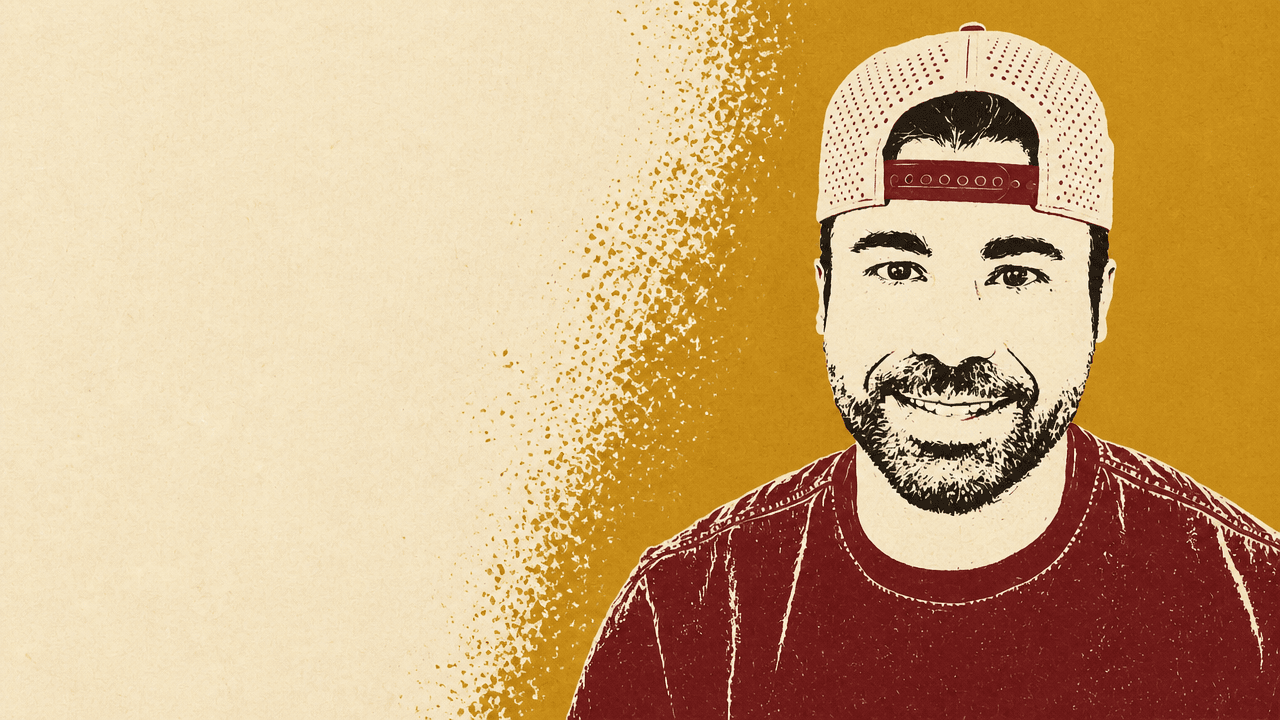
Former NASA engineer and YouTuber Mark Rober argues that science instruction should begin with a phenomenon that makes students want an explanation, rather than with equations or definitions they are asked to memorize. His proposed free Class CrunchLabs curriculum for grades three through eight uses videos to create that initial question, hands-on activities to investigate it, and teachers to guide the learning. Rober’s case is that spectacle can earn attention, but inquiry and teacher-led discussion must turn it into understanding.
Science lessons should begin with a question students want to answer
Mark Rober argues that the instructional model he wants to move away from starts with an answer: a scientific principle, equation, or definition that students are expected to retain. His alternative begins with an experience strong enough to create a genuine question, then uses that question to carry students toward an explanation.


“If you want to reach someone’s brain, you have to enter through the heart,” Rober says. In his own work, that can mean a trash can exploding with ping-pong balls, a squirrel navigating an obstacle course, or a package thief encountering a glitter-and-fart-spray trap. The spectacle is not meant to be the lesson. It is the entry point: a way to make someone care enough to follow the reasoning that follows.
For teachers, Rober says, this does not require reproducing a large-scale experiment or performing on camera in his style. The more basic requirement is to establish care and attention before trying to improve an explanation. “They don’t care what you know until they know that you care,” he says. A teacher’s effort, responsiveness, and relationship with students can create the conditions in which instruction lands.
You start with the wow. And then we give you the how.
Rober characterizes motivation as roughly 90 percent of the challenge in teaching science. A compelling setup does not eliminate the need for an educator. It gives the teacher something to work with: students who have noticed a problem, want to test an idea, and are ready to discuss what they observe.
Rober’s curriculum is meant to give teachers an opening, not replace them
Mark Rober describes Class CrunchLabs as his proposed free STEM curriculum for grades three through eight, organized around a division of labor between video, hands-on activity, and classroom instruction. The effort began, he says, after a friend’s eighth-grade child showed him a repeatedly photocopied worksheet accompanying a Bill Nye video. Rober says he admires Nye, but saw a gap between videos made in the 1990s and a generation that has grown up with YouTube and TikTok, where the techniques for holding attention are different.
Rober says his 18 billion YouTube views came from operating in an environment where a viewer can leave for something else at any moment. Class CrunchLabs is his attempt to apply the engagement techniques learned there to material he says is aligned with, and exceeds, state science standards.
The model Rober describes is deliberately not screen-only instruction. A video opens with a problem or demonstration; the teacher leads questions and an activity; the video returns to advance the lesson; and the teacher again becomes the focal point. Whitney Rodgers describes this as co-teaching with Rober. He agrees, but insists that the teacher remains “the hero”: a video can create curiosity, but it cannot independently teach a room of children.
| Element | Rober’s stated role |
|---|---|
| Opening video | Creates a compelling problem or phenomenon for students to investigate. |
| Teacher | Leads questions, discussion, and classroom learning after the initial hook. |
| Hands-on activity | Lets students test ideas with materials intended to cost schools nothing. |
| Follow-up video | Moves the class toward the next stage of the explanation. |
| Editable curriculum | Allows teachers and other users to adapt materials to their own setting. |
Rober says teachers already show his videos in 40 percent of classrooms, though those videos are often about Jell-O pools, squirrel obstacle courses, or glitter bombs rather than a required science sequence. His stated aim is to bring the same attention-getting methods to a coherent sequence of science lessons.
He says independent researchers are conducting classroom studies comparing the curriculum with control conditions. His standard, he says, is not simply adoption: he wants the program to be “way better” before pushing it broadly, because otherwise it would waste teachers’ time as well as financial resources.
The materials, according to Rober, are free to download from CrunchLabs.org and editable in Google Docs rather than fixed PDFs. His rationale is that charging even a dollar creates friction, while editable materials allow teachers and other users to make the curriculum fit their setting. He says he wants the materials to be usable across homeschool, charter, private, Title I, and other school environments; nearly half of pilot downloads so far, he reports, have come from homeschool users. He also presents the effort as open to collaboration with other curriculum providers rather than as a closed product.
Spectacle creates the question; inquiry is supposed to do the teaching
Mark Rober uses a potential-energy lesson to distinguish between getting students’ attention and helping them learn. It opens with what he calls an anchoring phenomenon: clips of people being launched from lake water blobs and a crash-test dummy propelled by a car. The purpose is to leave students asking why one setup launches someone farther or higher than another.
The lesson does not begin by supplying the equation for potential energy, . Instead, students make a classroom version of the phenomenon with a Ziploc bag, a small tower, and a small figure. They vary the height from which an object is dropped and the object’s weight. In Rober’s account, the activity makes two relationships visible: increasing height changes the result, and a heavier object dropped from the same height changes it too.
He calls this “Scooby-Dooing your way to this equation.” The intended sequence is for students to develop an intuition from repeated observations before the formal expression is introduced. The video is there to produce the initial “wait a second” moment; the inquiry comes from students comparing trials, arguing about what changed, and moving over successive lessons toward an explanation.
The activity design carries a strict cost constraint. Rober says he told CrunchLabs’ product designers that a classroom activity could not cost $10 or even $5 per student; it had to cost zero, using materials teachers already have or might find in a trash can. A kinetic-energy activity, for example, uses a note card, binder clips, and soda-bottle tops as wheels to make small cars.
That physical work is central to Rober’s answer to concerns about screens and children’s attention. He acknowledges that online content faces what he calls an arms race: what felt spectacular a decade ago may not evoke the same reaction now, so creators must continually adapt. But the Class CrunchLabs model he describes is not an argument for replacing classroom activity with more persuasive video. The screen sets up the problem; students’ own trials are meant to give the question substance.
Rober cites OpenSciEd as an example of this kind of phenomenon-led science instruction. The contrast with the “sage on the stage” approach matters to him: rather than announce the right answer and ask students to retain it, present a phenomenon, return to it across a lesson sequence, and let students move incrementally toward an explanation.
Teachers are the people Rober wants the curriculum to reinforce
Mark Rober speaks about Class CrunchLabs partly as a response to what he sees as teachers’ position in the education system. He describes teaching as among the most important jobs there is, while also saying teachers are not compensated or supported in proportion to that importance. “We should be ashamed,” he says, of the level of support teachers receive.
That view explains why he frames his curriculum as reinforcement rather than a substitute for instruction. In his earlier TED address, Rober used music in the auditorium while addressing teachers because the staging was meant to demonstrate his larger point: if he wanted the promise to be remembered, he had to make people feel it rather than simply state it.
To all those teachers out there in the trenches, I want you to know reinforcements are on the way.
Rober says the undertaking has grown far beyond his initial expectations. He attributes his willingness to start to “naive optimism”—the tendency to see an idea and assume it should be manageable—but says the actual work has been much harder and broader than he anticipated. Even so, he regards that expansion as part of what his approach requires.
For audiences outside the United States, Rober’s stated plan is to establish the curriculum domestically before adapting it country by country. He expects much of the science content to transfer where standards overlap, but recognizes that different countries have distinct requirements. The editable materials give users a way to make local adjustments now; broader international scaling, in his account, comes after the U.S. version is established.
AI can tailor material, but Rober does not think it can remove the human element
Mark Rober sees AI as potentially useful in education because ready access to answers raises the value of asking good questions. A person with a phone can already obtain a strong answer to nearly any factual or personal question, he argues; the more important skill becomes curiosity itself—the ability to formulate a question worth pursuing.
He imagines AI versions of himself or of BAM, a CrunchLabs toy engineer, working with individual students on a design problem. A student might show an AI tutor a catapult design. The system could notice that the design lacks an energy source, ask the student to reconsider it, and then recognize when the student is ready to bring the finished work back to the teacher.
In that model, AI supports individual iteration while the teacher remains in the classroom’s instructional and social center. Rober rejects both extremes: categorically refusing AI, and allowing a robot to do all of the teaching. Removing the human element entirely, he says, would mean working against “a couple million years of evolution.” The question is how to combine human teaching and AI tools in a way that improves learning.
He also imagines AI adapting curriculum to particular classes. A teacher could provide the next Class CrunchLabs unit along with information about class size, learning disabilities, concepts already covered, and areas where students have struggled or succeeded. An AI system could reorganize those materials for that class. But his qualification is direct: “The input has to be good to get a quality output.”
Engineering becomes learnable when problems are treated as invitations to iterate
Mark Rober connects the curriculum’s approach to his own view of engineering. Mechanical engineering appealed to him because it involved making objects he could see and touch. He says he spent a decade at NASA, including seven years on the Curiosity rover, and that hardware he designed, built, tested, and integrated is now on Mars.
But the habit he wants to cultivate does not depend on advanced equipment or credentials. It begins with treating ordinary frustrations as design prompts. When squirrels stole his birdseed, Rober built an eight-part Ninja Warrior-style obstacle course. When someone stole a package from his porch, he eventually turned the problem into a glitter-bomb trap.
The relevant lesson, he says, is not to build projects at that scale. It is to keep asking, “What would my solution be?” He offers a smaller prompt: how would you turn off a bedroom light after getting into bed? A string, a weighted mechanism, or a target struck with a dart could each be an answer. Cardboard, duct tape, household materials, and a willingness to try are enough for a first version.
For Rober, the hardest part of engineering is also its appeal: bringing into existence something that has never existed. The common mistake is expecting a first prototype to be a final product. Scissors, headphones, and even a cap, he says, have all gone through many revisions. The better approach is to start with a crude version, solve a few problems, make another version, and repeat.
That iterative orientation also shapes how he thinks about success. He does not expect to reach a point where Class CrunchLabs is simply finished and its mission accomplished. The satisfaction, he says, is in making something incrementally better—“the happiness of the pursuit, not the pursuit of happiness.” If improvement compounds by five percent each year, he argues, the results compound too.