YouTube Is Becoming Hollywood’s Talent Market and IP Proving Ground
 Jordi Hays
 John Coogan
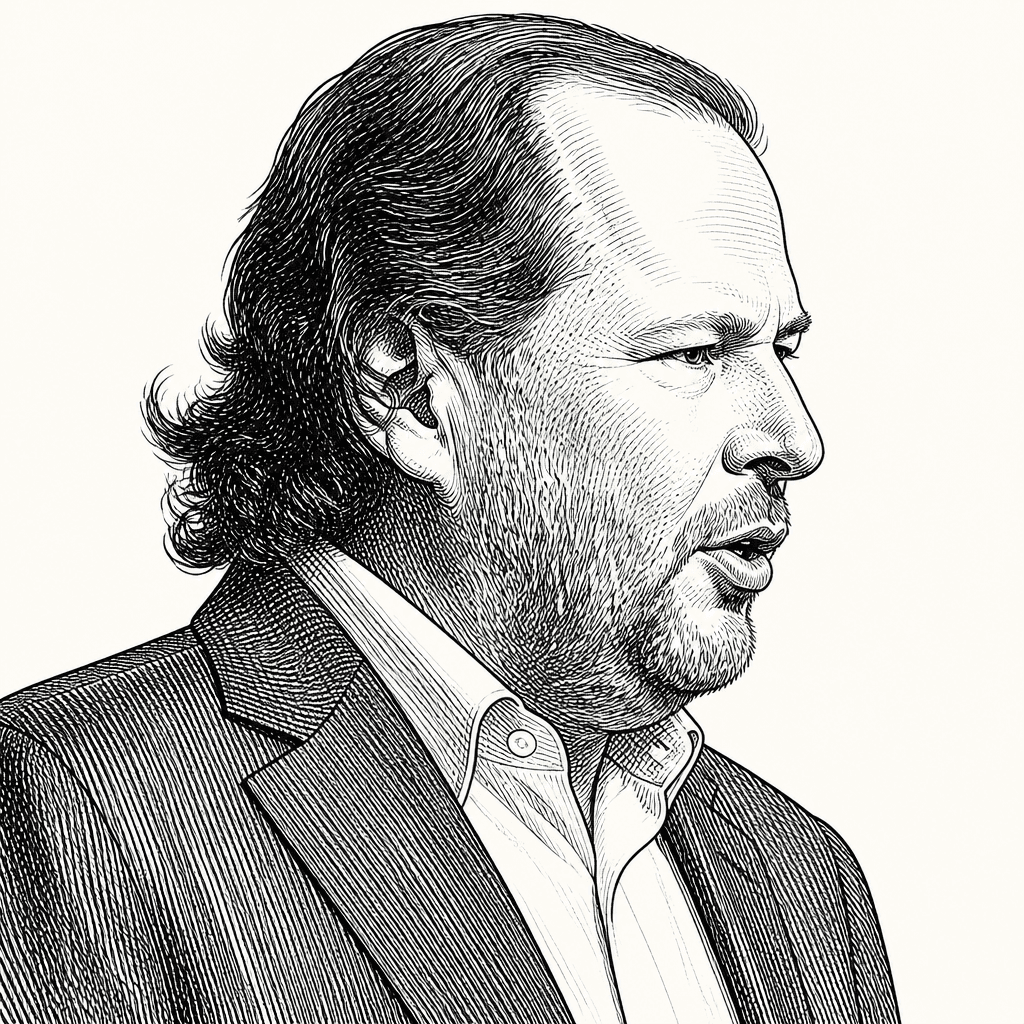 Marc Benioff
 Nico Ferreyra
 Mike Schroepfer
 Graham Stephan
 Bernie Su
 Sue KhimScott Trinkham
 Adam Iscoe
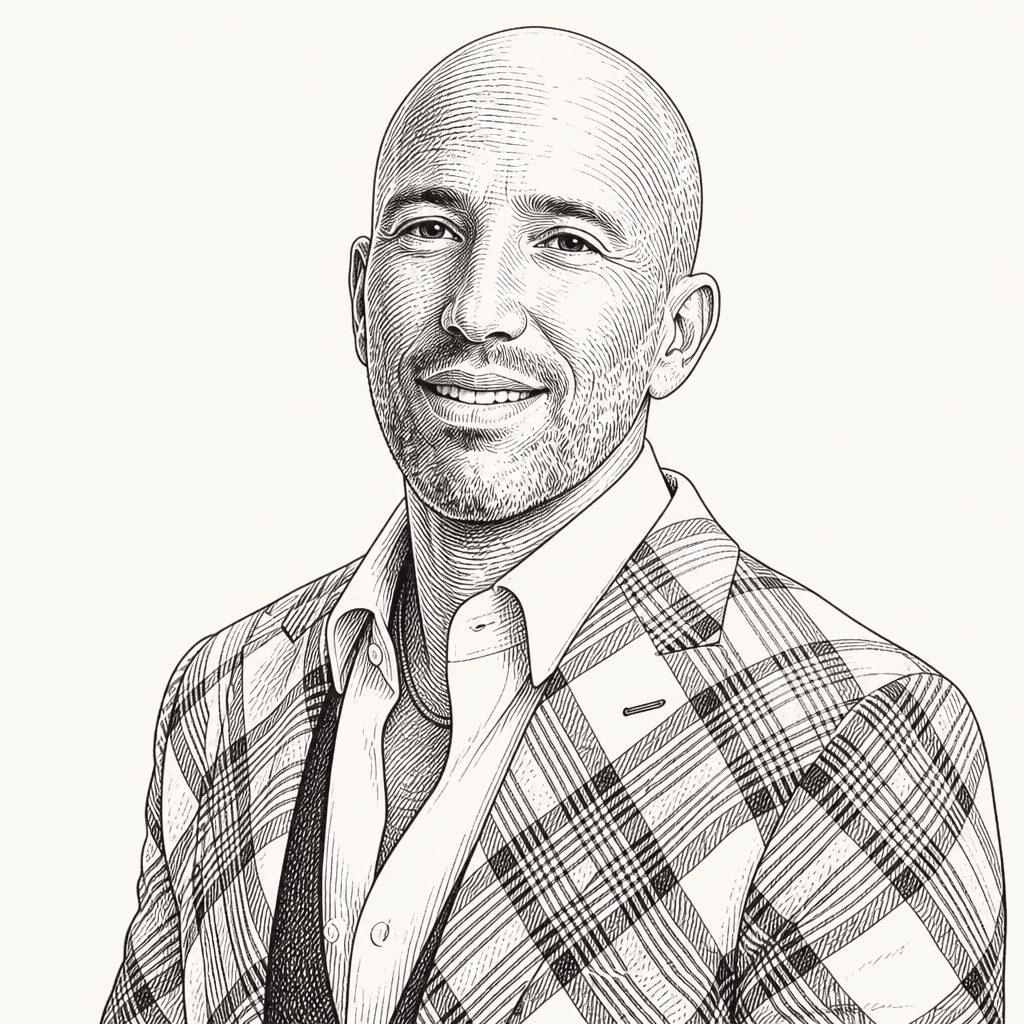 Jason Oppenheim
 Danial JameelTyler BohallTBPNMonday, June 1, 202627 min read
TBPN’s John Coogan and Jordi Hays argue that YouTube is moving from Hollywood competitor to Hollywood’s talent market, where creator-led films prove creative judgment, production ability and audience response before studio capital arrives. The episode extends that pattern to AI policy, software and prediction markets: established institutions are trying to absorb signals formed outside their usual channels, from internet-proven filmmakers and frontier AI labs to traders and startups testing demand before regulators, studios or public markets have settled their response.

YouTube is becoming Hollywood’s talent market, not just its competitor
The box-office story around creator-led films is not simply that YouTubers have large audiences and can convert subscribers into ticket buyers. John Coogan and Jordi Hays treated the recent breakout of Backrooms, Obsession, and Iron Lung as evidence of a more specific shift: YouTube has become a proof-of-work system for filmmakers who can show creative judgment, audience response, production competence, and internet-native distribution before Hollywood capital gets involved.




Hays framed Hollywood’s long decline in familiar terms: piracy, the rise of prestige television, streaming, Covid shutdowns, labor strikes, lower-cost production markets, and the erosion of theatrical exclusivity. The creator economy, in his telling, provided a kind of offset: even as traditional Hollywood shoot days fell sharply after Covid, more people were working “in front of the camera, behind the camera, around the camera” through creator businesses. But that did not satisfy the cultural role movies used to play. Viral videos and niche creators could be economically meaningful without producing the shared experience associated with Titanic, The Godfather, or Star Wars.
The recent films supplied the missing bridge. Hays cited Backrooms opening to roughly $81.5 million in North America and $115 million worldwide on a reported $10 million budget. Obsession, from Curry Barker, reached $104.7 million domestic in its third weekend and became Focus Features’ highest-grossing domestic release, from a movie widely reported to have cost around $1 million. Markiplier’s Iron Lung, reportedly self-financed on a $3 million production budget, opened to $18.2 million domestically before reaching $41.1 million domestic and $51.2 million worldwide.
| Film | Creator | Reported budget | Box office cited |
|---|---|---|---|
| Backrooms | Kane Parsons / Kane Pixels | $10 million | $81.5 million North America; $115 million worldwide |
| Obsession | Curry Barker | About $1 million | $104.7 million domestic |
| Iron Lung | Markiplier / Mark Fischbach | $3 million | $41.1 million domestic; $51.2 million worldwide |
| Ryan’s World the Movie: Titan Universe Adventure | Ryan’s World | About $10 million | $624,000 |
Coogan pushed against the simplest explanation. Ryan’s World, he noted, had an enormous children’s YouTube audience, but Ryan’s World the Movie: Titan Universe Adventure grossed only $624,000 on something like a $10 million budget. Hays added that children’s channels face an extra conversion problem: the viewer may love the content, but the buyer is a parent. Coogan allowed that this “translation step” can work in consumer products, but the failed film demonstrated that subscriber count alone is not enough.
The more important pattern, Hays argued, was that these creators had already demonstrated full-stack filmmaking. Barker’s sketch channel, That’s a Bad Idea, gave him a tight audience feedback loop for writing, acting, and editing. Kane Parsons built The Backrooms series in Blender and After Effects from internet lore around a viral liminal-space image. Markiplier’s production story was even more literal: Hays described him building a server rack in his bathroom, including 220-volt outlets and a large electricity bill, so he could render VFX shots faster rather than wait on a studio pipeline.
That mattered because Hollywood’s traditional division of labor is expensive. Hays argued that segmented teams — the dedicated writer, cinematographer, sound designer, and other departments — make sense for existing IP like The Mandalorian and Grogu, where there is a known floor of demand. For new IP from a new creator, the underwriting case changes if the creator can “leave their fingerprints” on every part of the production.
Coogan compared the emerging model to venture capital. If movies are hits-driven, then a studio with $100 million might rationally make many lower-budget bets rather than one blockbuster. One $10 million film can be a “fund returner.” He suggested that some Hollywood executives are optimized for deploying $100 million or $200 million into known franchises — Avatar, Marvel, DC, Harry Potter — but that the next generation of film finance may increasingly resemble a portfolio of smaller, internet-proven projects.
Ben Thompson’s analysis, as Coogan read it, sharpened the same point. Thompson had written in 2017 that YouTube was already competing with Hollywood for attention: “Video is a zero-sum activity.” Movies, however, were the hardest traditional medium for the internet to change because they are expensive to make, difficult to distribute theatrically, and ask the most of customers, who must leave the house.
The AWS analogy was central. Cloud computing lowered the cost of starting a company, which allowed investors to evaluate products and market signals rather than PowerPoint decks asking for server money. Coogan applied that analogy to YouTube: the creator’s channel, series, views, and audience response become the audition tape. A filmmaker does not arrive with only a manuscript or pitch. They arrive with evidence.
Thompson’s second “true but unsatisfying” explanation was that creators bring audiences. Coogan agreed that this is real, especially in Markiplier’s case. Bloomberg’s account, as Coogan summarized it, was that Iron Lung had initially been set for 60 independent cinemas before Fischbach encouraged followers to call local theaters and request screenings. The campaign helped lead to major-chain pickup, including AMC, Regal, and Cinemark. Hays and Coogan compared this to brands asking fans to request products at Whole Foods or Erewhon: conversion is usually tiny, but a creator with tens of millions of followers may still be able to mobilize thousands of true fans.
But the larger claim was not that YouTube supplies captive demand. It was that YouTube supplies selection pressure. Coogan read Thompson’s argument that Disney had treated Star Wars as an IP pipe through consolidated distribution, while YouTube distribution is free and indifferent: almost anyone can upload, and almost no one is seen. The content that breaks through must do so by compelling actual viewers. As Thompson put it in Coogan’s reading, the quality bar to get onto YouTube is nonexistent, which means the quality bar to get noticed is much higher than any gate.
That logic also complicates the next wave. Coogan mentioned Wesley Wang’s Nothing, Except Everything, a non-horror YouTube short picked up by TriStar with Darren Aronofsky’s Protozoa producing. He also discussed Skibidi Toilet, created by Alexey Gerasimov using Source Filmmaker, which created a potential IP thicket because many assets came from Half-Life 2 or Counter-Strike: Source. A film or TV adaptation may therefore require negotiations with Valve, not just a deal with the creator.
The underlying forecast was that Hollywood executives will start combing obscure YouTube playlists for new IP. Hays described this as overdue, but Coogan cautioned that it is not “total disruption.” The more accurate model is collaboration: Hollywood brings financing, distribution, marketing, and franchise machinery; YouTube brings discovery, proof of creative talent, and sometimes direct audience mobilization.
The creator-film breakout is also a franchise story
Bernie Su gave the Hollywood discussion a longer memory. Su, an Emmy-winning creator whose work includes Emma Approved, The Lizzie Bennet Diaries, and Artificial, said the creator-to-Hollywood ramp has been visible for years. He has been asked at VidCon, repeatedly, when YouTube creators would “take over Hollywood.” His answer: they already have been moving in that direction; the recent box-office run only makes the trend visible to outsiders.


Su distinguished the current moment from the earlier era of influencer-led movies. In that model, a creator with millions of followers could be “plugged and played” into a traditional film. The problem, he said, was that it often was not on-brand for the audience. Markiplier’s Iron Lung is different because “it’s his.” Su put MrBeast in the same category: Beast Games is MrBeast amplified, not an unrelated Hollywood product with a famous internet personality inserted into it.
That difference explains why casting based on social following is a weak proxy. Coogan observed that actors are increasingly asked about Instagram numbers in casting processes, but a few thousand or even tens of thousands of followers may not materially affect box office. Hays said he has long been surprised by aspiring directors and producers in Los Angeles who do not publish on YouTube or otherwise make work directly, because they are effectively leaving their creative output to gatekeepers. Su agreed emphatically: young creators are now armed not only with audiences but with tools, including AI and automation, that let them make more work and accumulate more reps.
Su’s more important frame was franchising. YouTube may be economically larger in aggregate, but it is fragmented across countless channels and formats. Hollywood remains powerful at taking something that works and amplifying it across formats, markets, and licensing opportunities. He cited K-Pop Demon Hunters as an example of a franchise that appeared to emerge overnight, with Hollywood then trying to catch up on merchandise, toys, videos, and follow-on series. The money is not limited to a sequel; if a film becomes a video game, toy line, or other format, that may count even more.
Creator-led franchises, Su argued, may be more nimble than studio-born franchises. Hollywood has resources but also bureaucracy. YouTubers and internet-native teams can move faster, test faster, and adapt formats more quickly. The ideal Hollywood role may therefore be to help scale the franchise while getting out of the creator’s way.
Horror sits at the center of the current breakout for structural reasons. Coogan asked why the category repeatedly works at low budgets. Su’s answer was that fear is more universal than comedy and less dependent on language or cultural jokes. A house in the woods can be frightening without expensive sets or stars. The production side supports the same point: a romantic comedy may need Manhattan streets; science fiction may need spaceships and heavy CGI; horror can work with unknown actors and confined locations. Hays added that no-name actors may even improve suspense because the audience does not know who is safe. If Tom Cruise is in a horror film, Coogan said, viewers assume he will survive.
The likely result, Su said, is not “one million” Obsession knockoffs, but certainly more attempts. Hollywood has repeated this pattern before with The Blair Witch Project and Paranormal Activity, which were cheap, clever, viral, and became franchises. The question will be quality.
AI adds another axis, but Su was careful not to reduce it to cost-cutting. Coogan asked when a theatrical hit might arrive with 90% of its budget spent on AI compute. Su said it will come “sooner than later,” but there are two gating questions: whether the models are good enough, and whether public vitriol toward AI-generated work remains a blocker. Most audiences, he said, primarily want to be entertained and have accepted CG for generations. But visible AI use can still trigger backlash.
The more promising direction, for Su, is not an AI clone of existing movies. It is work that cannot exist without AI. He described a project at Pickford: a detective series in which the audience can interact in real time while AI writes the show as it goes. The experience is designed for theaters, with audiences participating on phones; Su said the project is expected to run at Alamo Drafthouses. The point is not merely cheaper production, but a new form: live, communal, consequential, interactive narrative.
Coogan and Hays explored personalization as another possibility. Hays recalled watching Kill Bill in Pasadena and seeing an on-screen label that the scene took place in Pasadena, which made the moment feel oddly localized. He imagined a horror film that uses geolocation to make itself feel as though it is happening outside the viewer’s window. Coogan extended the idea: an AI system could generate a quick “Welcome to Anytown USA” shot from map-like inputs.
Su said that kind of customization plays to AI’s strengths: speed and optimization. AI is unlikely to “out-Game of Thrones Game of Thrones,” he argued. Great artists may use some AI, but end-to-end replacement is not where the strongest art will be. The more interesting possibility is consequentiality: whether viewers feel they affected the work. Younger audiences already have parasocial relationships with creators and interactive expectations from digital media. Su sees the “blue sky” in entertainment that lets audiences feel they are part of what happens.
Bernie Sanders’ AI stake proposal exposes a conflict between safety politics and redistribution politics
The AI policy thread began with Senator Bernie Sanders’ claim that AI is built on “humanity’s collective knowledge” and therefore the wealth it generates should benefit the public rather than “Elon Musk, Sam Altman and other AI oligarchs.” A tweet from Sanders announced the American AI Sovereign Wealth Fund Act, which he said would give the public a direct ownership stake.
Coogan read a summary from Andrew Curran stating that Sanders was proposing a one-time 50% tax, directly in stock, from AI labs. That stock would fund an American AI Sovereign Wealth Fund, give the government voting rights and board seats, and pay dividends to American citizens. Hays called the idea “rough.”
The immediate question was practical: when would these companies produce cash dividends? Coogan noted that many technology companies take decades to return cash to shareholders and often favor buybacks over dividends. Hays suggested that perhaps Sanders expected sales after IPOs. Coogan treated the dividend structure as unclear.
The larger objection was definitional. Coogan asked: what is not built on humanity’s collective knowledge? Hays made the same point more broadly: homes, nails, 2x4s, and nearly all modern economic activity rest on accumulated human knowledge. If that premise justifies the government taking half of an AI lab, it could justify far more. Hays joked that this line of reasoning ends at a corporate profits tax — a thing that already exists.
The timing sharpened the question because, as Coogan noted, Anthropic had confidentially submitted a draft S-1 registration statement, with OpenAI, SpaceX, Google, Meta, Salesforce, Microsoft, Amazon, Walmart, and Nvidia all adjacent to the AI boom in different ways. If the proposal targets “AI labs,” what counts? Google is a leading lab and already public. Meta is spending heavily and pursuing personal superintelligence, but could plausibly say its value comes from recommendations and social platforms. Microsoft has a huge OpenAI partnership and Copilot distribution but does not fit neatly as a frontier foundation model lab. Amazon has Rufus for shopping; Walmart has Sparky. Nvidia is central to the stack. Coogan asked how far down the stack Sanders would go.
Dean Ball’s critique, shown on screen and read by Hays, captured a deeper inconsistency: is AI an existential risk that needs to be banned, or a public good that should be redistributed? Ball argued Sanders wanted both, suggesting the AI safety posture was “mostly for show” and the issue was capital. Coogan partially challenged that. If one genuinely believes AI is an existential risk, a 50% stake and board seats in every lab could, in theory, make coordinated slowdown easier. Tyler countered that one could create an “AI FDA” rather than take equity. Coogan agreed that a regulator would be the more direct path.
Tyler also offered a contrarian reading: the proposal is bullish. Sanders, not typically seen as a capitalist bull, was implicitly saying these companies will be the largest and most valuable in the world. If the stocks were going to zero, there would be nothing to redistribute. On that interpretation, Sanders is “extremely AGI pilled.”
The discussion did not treat the op-ed as legislation with settled mechanics. Coogan emphasized that it was a New York Times op-ed meant to provoke thought, not a bill text. But the hosts used it to surface a central tension in AI politics: the same technology is described as dangerous enough to stop and valuable enough for the state to seize.
The AI jobs debate is split between macro data, extreme forecasts, and implementation-level evidence
The labor-market discussion turned on three incompatible signals. The first was macroeconomic optimism. Coogan cited Apollo Chief Economist Torsten Slok, whose report said there was “zero evidence of AI-related job losses.” Slok pointed to weekly ADP employment data, firms hiring AI implementation experts, and data-center buildout driving salaries for AI experts as well as prices for semiconductors, equipment, and energy. His bottom line, as Coogan read it, was that the AI spending boom was stoking employment and inflation, potentially lifting nonfarm payrolls above consensus expectations.
Coogan accepted the good news but resisted the victory lap. The employment strength, he said, was driven mostly by healthcare jobs. AI-affected white-collar areas were not showing a broad unemployment spike, and tech companies were conducting layoffs in places, but the positive aggregate trend did not yet prove Jevons Paradox for AI labor. It was “soon” and “early,” with implementation just beginning.
The second signal was extreme displacement rhetoric. A clip from Jason Oppenheim on The Iced Coffee Hour showed him saying he disagreed with Kevin O’Leary and expected “80% of people out of the workforce that we know today.” Oppenheim argued society would need to assign more value to family, hobbies, sport, and relationships rather than work.
Graham Stephan challenged his credibility directly: viewers see Oppenheim and the other guests as real estate people, so what gives them authority to talk about AI? Oppenheim answered that he had spent probably 500 hours listening to and reading podcasts, calling AI the “quintessential intellectual pursuit” of the last two years of his life.


Coogan and Tyler treated the 80% number as unsupported and extreme. Tyler supplied context: peak Great Depression unemployment was 24.9%. Coogan noted that 80% would be more than three times that. He added that a forecast of that magnitude would need to specify the technologies that make it possible — highly effective, efficient humanoid robots fully deployed across society, for instance — not just generalized AI enthusiasm.
The third signal came from Danial Jameel, founder and CEO of Saris AI, whose company builds AI workflow agents for bank and credit-union back offices. Jameel’s examples were neither mass unemployment nor abstract macro optimism. They were implementation-level productivity gains.


Saris focuses on the “unsung heroes” of back-office work in financial institutions. Jameel said the market includes roughly 8,000 banks and credit unions across the United States, serving borrowers such as a lumber mill in Mississippi, a young family in Arkansas seeking a first mortgage, or farmers in Illinois seeking agricultural loans. The technical problem is not a clean point solution. Banks have regulatory constraints, legacy systems, semi-structured and unstructured data, paper documents, and integrations that are not always API-accessible. The “magic,” in his words, is orchestration across humans, systems, rules, and data.
His labor example was concrete. One customer had a backlog of 300 loan documents, with staff working from 5 p.m. to 9:30 p.m. five days a week to complete that backlog before starting the next one each morning. After Saris launched, he said, those workers were going home at 6:20. He described that as “the dignity of work.”
Jameel said the pattern he sees is not primarily people being fired. It is institutions not adding headcount they had planned to add. In one case, a credit-union president texted him that they had planned to hire five people that quarter, but because Saris increased output, they did not make those hires; instead, they gave raises to the existing team.
That distinction matters. It is not the same as no labor impact. Forgone hiring is labor displacement relative to a counterfactual. But it is also not the sudden 80% unemployment scenario. In the examples given, AI reduced overtime, increased output, and redirected some gains to incumbent employees.
Jameel also announced that Saris had raised a $28.8 million Series A led by 8VC. The fundraising news sat inside the same labor debate: the capital is flowing into companies whose immediate promise is not replacing all workers, but making regulated operational work faster and less miserable.
Anthropic’s IPO filing and Salesforce’s results complicated the SaaSpocalypse narrative
Anthropic announced that it had confidentially submitted a draft S-1 registration statement to the Securities and Exchange Commission, giving it the option to pursue an initial public offering pending SEC review. Coogan framed this as part of a race among Anthropic, OpenAI, and SpaceX to reach public markets and absorb public-market capital.
The AI IPO wave coincided with a reversal in the anti-SaaS narrative. Coogan said it had recently seemed “so over” for SaaS companies, but that the “SaaSpocalypse” might be canceled. Some stocks were rising because of Anthropic exposure, others because their core businesses still had traction.
Salesforce was the main example. Hays said Marc Benioff had invested $50 million into Anthropic in 2023 or 2024, joking about a “cheeky 100x.” Coogan then moved to Salesforce’s own operating results as cited by Benioff: fiscal Q1 revenue of $11.13 billion, up 13% year over year; operating cash flow of $6.7 billion; Agentforce crossing $1 billion in ARR; and Agentforce, Data 360, and Informatica combining for $3.4 billion in AI and data ARR.

Benioff’s post, shown on screen, declared that Salesforce was “not just talking about the agentic future” but delivering it, with the “#1 Agentic CRM.” Coogan read the post in full, including the claim of “unstoppable momentum.”
A prior TBPN clip of Benioff added nuance. In that appearance, Benioff said Salesforce had not hired more engineers in fiscal 2026 because coding agents gave the company the extra capacity it needed. He said Salesforce also held service-agent headcount flat and then reduced it slightly because it was using service agents. But he hired almost 20% more salespeople because demand was higher than ever across small, medium, and large customers.
Hays identified the tension. Salesforce sells customer-service agents and sales-focused agents. Benioff was saying AI reduced the need for engineers and service workers, but that Salesforce needed more human salespeople because demand was booming. Hays asked whether that was inconsistent: if Salesforce sells products in the sales category, should they not also reduce the need for sales reps?
Coogan answered with a “yes and no.” Salesforce sells tools that sit alongside sales reps, and if the economy is booming or a company has more demand, more people may go into sales and need Salesforce-like infrastructure. He also emphasized that AI diffusion often requires humans in the loop: people meeting customers, helping them implement tools, and managing practical constraints.
The Salesforce discussion therefore did not resolve into either “AI kills SaaS” or “AI saves SaaS.” Instead, it showed the messy middle: AI can reduce hiring in some functions, increase sales capacity needs in others, and create new ARR categories that incumbent software companies can sell into.
Prediction markets are becoming information infrastructure, but the winners may not be institutions
Adam Iscoe, a journalist newly at Notion after five years at The New Yorker, joined to discuss his reporting on prediction markets. He described his writing background as broad — mental illness and homelessness in New York City, cool boats in New York Harbor, and other reported stories — before turning to markets.


Coogan said prediction markets gained mainstream goodwill during the presidential election because they seemed to offer a less obviously partisan view of the future. Instead of refreshing polling dashboards, people watched prices. Hays was interested in the tension between prediction markets as data sources and as regulated gambling-like products. If the only goal is accurate forecasting, Hays said, insider trading might make prices more informative. But that creates obvious social and legal problems, especially in markets involving military strikes or national security.
Iscoe rejected the idea that accuracy requires insiders. For elections, unemployment, Fed rates, and similar markets, he said traders can do what Wall Street has always done: seek an informational edge through research. They can talk to people, analyze complicated data, and build models. He said one surprising statistic from his reporting was that a third of adult voters in America consulted a prediction market.
Coogan raised the possibility that prediction markets could create political feedback loops. If a campaign’s supporters push its odds higher, the campaign can advertise momentum, attract donations, and make the market move self-fulfilling. Iscoe said that may have been more plausible before the 2024 election, but markets have since become more efficient. If someone tried to artificially hype a candidate without genuine support, he argued, smarter money would take the other side and “crush” them.
The question was who that smarter money is. Iscoe divided participants into average traders, sharps, and institutions. Average traders, including himself, are “getting crushed.” He quoted one source, a trader called Frozen, who turned $200 into half a million dollars in a year and described the market bluntly: “Every dollar I gain is someone else losing, and there’s a lot of people joining and betting and losing and leaving, and then there’s a group of a couple hundred guys winning, and that’s the whole story.”
Coogan expected the most sophisticated institutional traders to dominate. Iscoe said his reporting suggested otherwise. He spoke with Jeff Yass, co-founder of SIG, who told him SIG was getting “taken for a ride” by the sharps. One reason is that individual traders can use techniques that institutions may avoid for policy reasons. Iscoe described a Rotten Tomatoes trader who had made seven figures by modeling film-score markets and scraping websites. The trader had asked SIG whether he could use certain techniques there and was told probably not. The techniques were not necessarily illegal, Iscoe said, but could violate terms of service, which is a different risk for a large firm than for an individual.
The appeal for some sharps is social as much as financial. Iscoe quoted one trader who described himself as a “dipshit from the Midwest” who did not attend an Ivy League school and could never have gotten a Wall Street job, yet was outcompeting Wall Street with a $600 Lenovo laptop. Hays called that “the American dream.”
Regulation was the unresolved problem. Iscoe said the Trump administration had been favorable to Kalshi, Polymarket, and the CFTC-regulated prediction-market structure. But that could change in 2028 or 2029 with a change in Washington. He also noted work by institutions such as the Council on Foreign Relations on sensible approaches to regulation.
The hardest cases are not broad presidential markets, which Hays said he finds useful, but markets with negative externalities. A Venezuela strike market was discussed as an example where someone with inside knowledge could endanger national security by trading. Iscoe said that case was terrible and that the Justice Department and CFTC were prosecuting it. He also said platforms claim to be building AI systems and teams to detect insider trading, but journalists and regulators will need to test whether that is true.
Hays mentioned a Wall Street Journal story about an independent watchdog finding a Polymarket trader betting on Google search results while working for Google, giving the trader access to the exact data. Iscoe acknowledged that bad actors exist but argued that the sharps he focused on — people doing intense research to make markets more efficient — are a different category from insiders misusing privileged information.
Iscoe also explained why he left journalism for Notion. Asked why a New Yorker writer would join an AI tech company, he said he increasingly felt AI was “the thing” he needed to understand over the next several years and that he could not do it fully from the outside. He said he looked for a place whose values he shared and found that at Notion under Ivan Zhao. He resisted the framing that his role was simply product or marketing; he described it as asking questions inside and outside the company and telling real stories about what is changing in the world.
Atoms are back because software’s marginal cost is falling
Mike Schroepfer, former CTO of Meta and founder of Gigascale Capital, described his new $250 million institutional fund as a bet that the physical world matters again. After 25 years in Silicon Valley and a Meta career spanning data centers, Oculus, Instagram, and Facebook AI Research, he said he saw the world moving “from bits to atoms.” As the marginal cost of software goes to zero, the bottleneck becomes how much physical stuff can be built and how quickly.


Gigascale’s early examples were all infrastructure-heavy. Pantalassa is building ocean data centers for inference. Heron Power is rethinking how data centers receive electricity by using power electronics derived from Model 3 and Model Y systems on the grid. Radiant Nuclear is building a container-sized microreactor intended to provide 1.5 megawatts for five years without refueling. Form Energy is building long-duration batteries based on iron rusting and unrusting — cheap, heavy, and suitable for the grid.
Schroepfer’s view is that startups are unusually well positioned despite the capital intensity of atoms. He argued that AI tools, robotics, Stripe, Ramp, and other modern infrastructure let 6-, 10-, or 12-person teams have enormous impact. If a company started six months ago, he said, it would form differently than one started 12 months ago, because the AI tooling changed so quickly.
He also pointed to talent flowing out of SpaceX and Tesla. These operators are approaching old industrial problems with a “10x better, faster, cheaper” mentality and new technical assumptions. Schroepfer used the electrification of factories as an analogy: early factories swapped steam drives for electric motors without redesigning the factory, so productivity gains were limited. The real gains came when factories were rebuilt around electric motors at each workstation. Robotics, he argued, is at a similar stage. Dropping a robot where a human used to be is only the first step. The larger gains come from designing a factory whose goal is to feed robots and keep them 80% utilized.
On robotics timelines, Schroepfer was bullish but specific. He is more excited about industrial robotics than home robotics in the near term. Factories and warehouses contain tasks that are hard for traditional robots but constrained enough for modern systems: opening boxes, dealing with bags, moving varied items through semi-structured environments. Homes are harder because they include pets, spills, dropped devices, and uncontrolled hazards. Having shipped Oculus devices, he said consumer hardware taught him how much damage ordinary users can create. A robot making breakfast adds hot oil and flames to the risk profile.
Solar, in Schroepfer’s view, is not primarily a cell-manufacturing startup opportunity. Solar costs have fallen dramatically, and most manufacturing is scaled in China. Competing on panel manufacturing against China is not attractive for a startup. The opportunity is deployment. Panels used to be treated like precious objects, so solar farms used extensive steel and framing to position them carefully. Now the panel may be the cheapest thing on the field, with the frame and installation costing more. Schroepfer expects startups to rethink solar deployment, form factor, and automation on the assumption that the cell is almost free.
On fund structure, Hays asked whether capital-intensive companies would require SPVs or other vehicles to maintain ownership. Schroepfer said the first priority is helping companies raise successful rounds. Fervo, for example, had recently raised a large round from Peter Thiel after Gigascale invested early. Schroepfer said the firm was oversubscribed and may later raise additional vehicles, but for now he wants to stay focused and prove early-stage opportunity in atoms.
The next enterprise AI wedge may be the data layer under go-to-market work
Nico Ferreyra of Default described a B2B go-to-market product that began with top-of-funnel orchestration — inbound scheduling, routing, enrichment, and related tools — and has moved toward an agent-ready data layer. Default spent two years building tools for fast-growing B2B companies, then heard customers repeatedly say they were trying to deploy agents but running into the same problems they had faced for a decade.
The company’s old flow was to hook into forms on a website, add code to understand visitors, and build middleware between forms, the website, top-of-funnel signals, the CRM, and the sales team. The new product gives customers an out-of-the-box real-time data warehouse. It connects to Salesforce, HubSpot, or similar systems and brings in the context agents need to answer difficult business questions. Ferreyra described a semantic modeling layer that translates CRM records, meetings, form submissions, website visitors, and other activity into a language agents can use.
Coogan asked whether this inevitably becomes a CRM. Ferreyra did not deny the gravitational pull. Every road in the category, he said, leads to an incumbent like Salesforce or something similar. But he emphasized that customers are still struggling with old problems, and there is no shortage of surface area before becoming a full CRM.
The core customer pain is what Default calls the “Frankenstack.” Companies accumulate systems that do not speak cleanly to one another. That creates a “growth tax”: after a certain revenue threshold, every incremental dollar of growth requires more operations staff to maintain the stack. Ferreyra said he has never met anyone who does not hate their CRM. Many revenue organizations are not deeply technical, do not live in a data warehouse, and are not writing SQL. They are pulling reports and trying to answer questions that should be easier.
At the high end, he sees a different pattern: the best growth companies treat distribution as product. He cited owner.com, Ramp, and Rippling as examples of companies that invest early in internal go-to-market operations infrastructure and gain competitive advantage by building their own distribution systems.
The work-culture debate from earlier in the show bled into the interview. Hays asked about seven-day work weeks and company tattoos. Ferreyra said Default’s culture is intense because the team has been doing a hard thing for much of the past year. He did not endorse beach life as compatible with winning. But he framed the intensity around solving customer growth problems rather than performance theater.
AI tutoring should optimize for understanding, not explanation
Sue Khim, co-founder and CEO of Brilliant, introduced Koji, Brilliant’s new AI tutor. Koji is designed as a visual, interactive tutor for math and coding. It can see how a learner is interacting with concepts and problems, then point, sketch, and annotate on the screen. Khim called it a “graphical tutor” meant to feel like someone sitting next to the learner, looking over their shoulder.


Coogan said one of AI’s strongest educational uses is letting students ask “dumb” questions they might be embarrassed to ask a teacher, tutor, or friend. Khim agreed that lowering embarrassment is important. Students who would not raise their hands in class, or who feel awkward asking a tutor to explain something a third way, may be more willing to ask an AI.
But Khim argued that most AI education tools overfocus on explanation. Brilliant designed Koji for the “moment of understanding,” not merely the moment of explanation. Research on tutoring, she said, shows that effective human tutors do not just explain; they create interactive conversations in which students do more of the work. The benefits of tutoring often come down to learners spending more time with the material. A tutor that talks too much and produces long blocks of text can be worse than a student actively working through confusion.
Hays asked whether Brilliant has a duty to make learning addictive, given that algorithmic feeds compete for time so aggressively. Khim’s answer was more subtle. A key marker of tutor success is whether the tutor can make itself unnecessary. The goal is to scaffold the learner until they begin asking themselves the questions the tutor used to ask. She compared this to consumer dating apps, where a successful product should produce churn when users find long-term partners. Brilliant measures churn differently from typical consumer apps because progress may mean a user needs less help on a given concept.
Hays pushed back that learning is more continuous than dating: lifelong learning is healthy, while lifelong dating may not be. Khim’s point was not that learners should stop learning, but that the tutor should fade as the learner gains independence on a concept.
On multimodality, Coogan noted that model labs can now produce text, images, infographics, videos, whiteboard explanations, and other outputs, but users often have to know which modality to ask for. Khim said chatbot learning remains too proactive: the user asks, receives an answer, and leaves. The model gets little data on whether learning happened. Brilliant’s approach is to immerse users in dense, real-time reps, build a dense user model and learning graph, and personalize the next step. That requires purpose-built UI, deterministic correctness in some places, and a system designed to pull the learner into the right next action rather than wait for the learner to structure their own education.