Thinking Machines Bets on Open Weights and Fine-Tuning Services
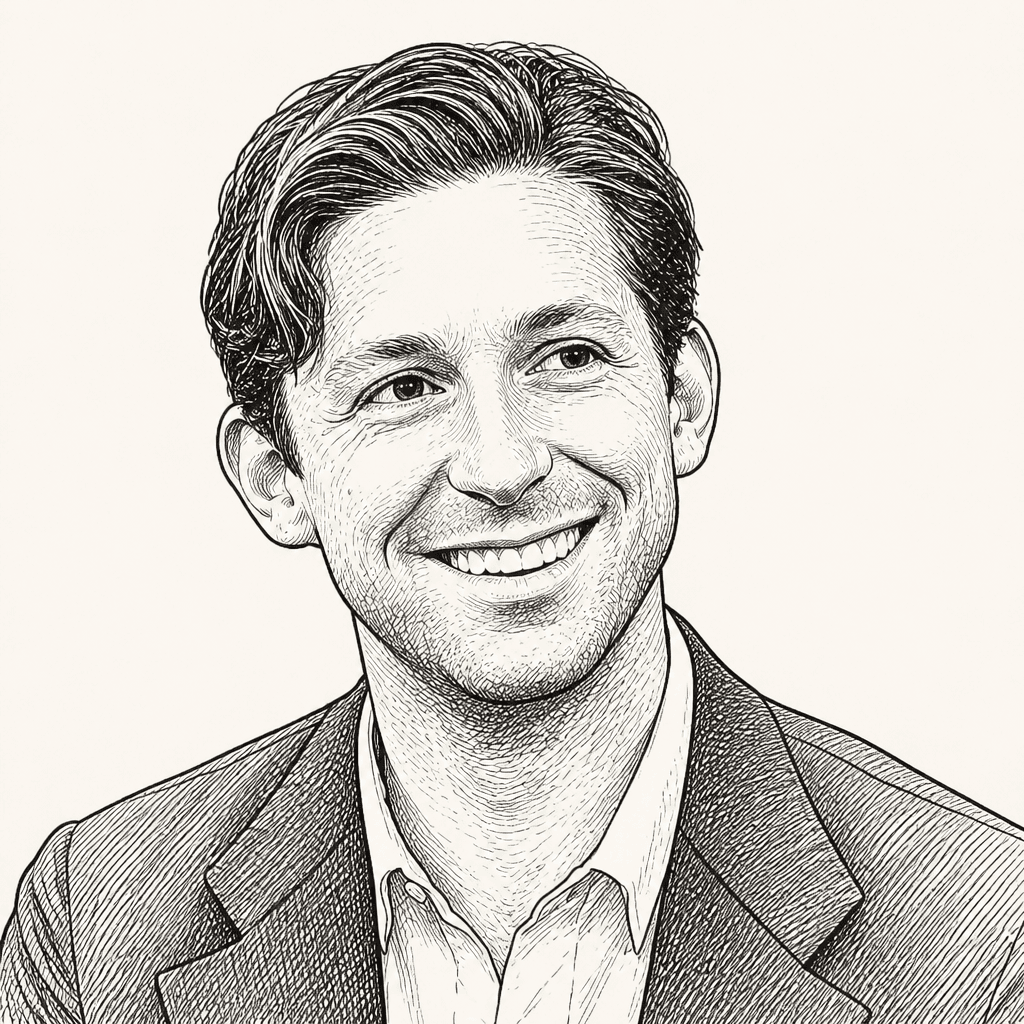

Thinking Machines Lab is positioning its first model, Inkling, as an open-weight system built for customer customization rather than as the industry’s benchmark leader, TBPN’s John Coogan argues. Led by former OpenAI technology chief Mira Murati, the company pairs the model with a fine-tuning service that could let customers retain control of the weights while paying Thinking Machines to adapt and operate them. Coogan and Tyler Cosgrove also question how cleanly Inkling can be described as free of distillation, given its reported use of synthetic data from another open-weight model.

Open weights are becoming a commercial and geopolitical alternative
John Coogan treated Thinking Machines Lab’s release of Inkling as more than another model launch. The company, led by former OpenAI technology chief Mira Murati, is offering open weights: customers can modify the model with their own data rather than depend entirely on a proprietary API. Murati’s stated pitch was a broad, balanced foundation model that is strong across domains and flexible enough to adapt. She also said Inkling was not the strongest overall model available, open or closed.
That is a conspicuous departure from the usual frontier-model framing. Inkling’s value proposition is customization, especially alongside Thinking Machines’ Tinker API, which is designed for fine-tuning. Coogan’s reading was that the company can make openness part of its business model rather than a concession against it. Customers can retain the freedom to take the weights elsewhere, while Thinking Machines sells the work of tuning, integrating, and operating the system. He compared the arrangement to Red Hat: the provider need not own the software exclusively if it remains valuable in implementation.
Inkling has 975 billion total parameters. Tyler Cosgrove said that roughly 41 billion are active at a given moment, making it large by open-model standards without being a conventional dense model in the older sense.


The distinction between total and active parameters matters less here than the product strategy. Inkling is built to be tuned, not marketed principally as a benchmark champion. Coogan highlighted a favorable assessment from Deedy Das, who called it the best open-weight AI model outside China, said it outperformed Nemotron 3 Ultra, and placed its benchmarks between Kimi 2.5 and 2.6. The on-screen post supplied the comparison as a chart against other frontier models, while its headline made the geographic qualifier central: “the best open weight AI model outside of China.”
For U.S. companies, Coogan suggested, that positioning may matter independently of raw performance. Some buyers may prefer to work with a U.S.-based model provider rather than a Chinese open-model supplier for policy, alignment, or procurement reasons. The appeal is not necessarily a claim that Chinese weights contain a malicious backdoor; it can simply be a preference for a provider situated in the same commercial and political environment.
Cosgrove connected Inkling’s timing to reporting, cited in the discussion, that Beijing was considering curbs on overseas access to leading Chinese AI systems. If foreign developers cannot assume they will retain access to Chinese open models, he suggested, the case for American and Western open-weight alternatives becomes more practical.
Coogan saw an apparent tension between Chinese model companies and Beijing. In his characterization, the companies want Nvidia chips, access to the strongest available capabilities, and global competition through open releases. Beijing may instead prefer an indigenous supply chain, tighter control over advanced systems, and an advantage held closer to home. He presented that as an impression of diverging preferences, not a settled account of Chinese policy.
The commercial proposition, then, is not openness in the abstract. Thinking Machines is offering a model customers can adapt and retain control over, paired with a service layer for doing that adaptation. Its usefulness may grow if access to competing Chinese open models becomes less predictable.
Distillation is a question of training lineage, not a binary label
Engram Labs founder Jack Morris described Inkling as the only open-weight model trained without distilling from OpenAI or Anthropic. He contrasted it with Kimi, GLM, Qwen, and Nvidia’s Nemotron line, calling Inkling “a fully different tech stack” and “the first pure open frontier coding model.”
Tyler Cosgrove objected that the claim was not exactly true. Thinking Machines’ own blog post, he said, described bootstrapping post-training through an initial supervised fine-tuning stage using synthetic data generated by open-weight models, including Kimi 2.5. In the ordinary usage of the term, Cosgrove argued, that is a form of distillation.
Cosgrove’s concise assessment was: “I think this tweet is not exactly true.”
The disagreement was not over whether Inkling had directly copied Claude or OpenAI outputs throughout training. It was over whether a narrow post-training step using another open model’s synthetic data disqualifies a claim of non-distillation. Coogan characterized Inkling’s approach as the lightest touch: one component of the pipeline and a limited amount of data, rather than a model so shaped by another system that it begins identifying itself as Claude or ChatGPT.
Cosgrove supplied the more uncomfortable version of the lineage question. If Inkling is trained in part on Kimi-generated material, and Kimi has itself been influenced by closed-model outputs, the process may amount to “two-layer distillation.” The hosts treated that possibility as a complication for any simple original-versus-copied distinction, rather than as proof of what Inkling ultimately depends on.
The consequential question is why labs take that shortcut. One answer, Cosgrove said, is efficiency: capabilities already available through useful outputs do not need to be reconstructed from zero. Another is that those capabilities are indispensable, and that the model would perform materially worse without them. Neither host claimed to resolve which explanation applied in Inkling’s case.
Engram later issued an on-screen apology saying that its founder’s claims, follow-up, and further follow-up had been unfounded and had received a community note. The company nevertheless maintained support for Morris’s conviction in his own views and for “strong open-source models like Inkling.”
That correction does not make the broader issue disappear. Coogan and Cosgrove treated distillation as a continuum: direct use of proprietary outputs, indirect use through an open intermediary, and limited synthetic-data use in post-training are technically and competitively different cases. The term becomes less useful, in their view, when treated as a clean binary.
They also resisted the claim, common on X, that distillation is the sole explanation for Chinese model quality. Cosgrove described that as a scapegoating explanation and said it was probably not true. Distillation may transfer capabilities and compress development time, but the discussion did not support reducing the performance of Chinese labs to that one mechanism.
The security stakes are becoming more explicit. Coogan cited remarks attributed to Anthropic’s head of national security policy, Tarun Chhabra, accusing Zhipu of distilling both Claude and OpenAI models for GLM-5.2. The on-screen summary said this was the first time Anthropic had named Zhipu specifically after previous allegations involving DeepSeek, Alibaba, Moonshot, and MiniMax.
Anthropic also accused DeepSeek of continuing an “adversarial campaign” of distillation and said it was shutting down distillation accounts on the order of millions per week. Coogan focused on the scale implied by that claim. A distributed operation need not look like a single lab accessing an API from a fixed set of addresses; it could move through resellers or intermediary businesses that outwardly resemble legitimate wrappers. He offered that as a hypothetical explanation for why enforcement becomes difficult once API outputs pass through multiple entities and jurisdictions.
The reported Anthropic remarks described GLM as probably the most advanced Chinese model on the market and raised significant cybersecurity concerns. Coogan said Anthropic had also hinted at expanding access to Mythos for cyber defenders, while framing distillation as a force that could shrink the U.S. lead in AI. He suggested that Washington could seek to limit adoption of Chinese models internationally through allied coordination resembling trusted-telecom efforts involving Huawei and ZTE. How far government should go, he said, remains an open political question.
California’s shipyard loss became a warning about project approvals
California’s loss of Saronic’s planned automated shipyard to Brownsville, Texas, was presented by California labor advocates and John Coogan as a warning about the state’s ability to secure large industrial projects when approvals move slowly. Coogan called the decision bad news for California, even as the Texan in the studio welcomed it.
| Measure | California proposal | Texas outcome |
|---|---|---|
| Saronic investment | $3.2B shipyard project | Brownsville selected for the project |
| Expected employment | Roughly 10,000 permanent jobs, plus thousands of union construction jobs | Jobs tied to the Brownsville project |
| Labor and land commitment | 40-year construction labor agreement covering 70,000 acres | — |
| Public-policy action | Fast-track review and permitting legislation had not advanced | $211M tax-abatement package approved in June |
The shipyard, referred to as Point Alpha or Port Alpha in the discussion, was expected to create roughly 10,000 permanent jobs and thousands of union construction jobs. A TBPN graphic made the result blunt: “California loses $3.2B shipyard,” over an image of Saronic’s autonomous vessel Vanguard.
California Forever had identified a major shipbuilding tenant as evidence that its planned city in Solano County could anchor a new era of American shipbuilding. It had signed a 40-year construction labor agreement covering 70,000 acres, while labor groups supported legislation intended to fast-track environmental review and permitting for the shipyard. The legislation had not advanced.
Texas, meanwhile, approved a $211 million tax-abatement package in June to secure Saronic’s Brownsville investment, at a site roughly 20 miles from Starbase. Coogan quoted Joshua, the executive director of the California Alliance for Jobs, saying California failed to offer the clear, expedited process the project required while Texas moved quickly and aggressively. Labor leaders had warned that the project would leave without faster approvals; it did.
A project insider cited by Coogan said California Forever itself remained on track. But the departure of a major defense contractor was, in Coogan’s view, a significant signal about California’s ability to compete for large industrial investments. He remained supportive of California Forever and expected it to seek another anchor tenant.
TSMC offered a separate investment story. The company beat earnings, raised its capital-expenditure guidance, and pledged an additional $100 billion in U.S. investment, including Arizona fabs. Tyler Cosgrove described the plan as record spending that reinforced TSMC’s place at the top of the semiconductor supply chain.
Coogan noted that the Nasdaq fell 1% on TSMC’s spending plans despite the strong results. He found the reaction notable because TSMC has lived through smartphone and semiconductor cycles rather than behaving, in his view, like a company newly swept up in AGI enthusiasm. Its expansion plan signals confidence in demand, while the market’s reaction reflected concern about overspending and the possibility of another overcapacity cycle.
Avoiding generic design defaults is not the same as creating taste
A post by Grace Li about OpenAI’s GPT-5.6 Sol raised a narrower practical question about how models are made to produce more acceptable design work. Li’s post claimed the model had learned better design taste by avoiding patterns associated with earlier outputs that had a bad “AI smell,” including bento-box dashboard layouts, oversized hero typography, and offset layouts.
Tyler Cosgrove cautioned that removing recognizable bad patterns is not necessarily the same as making a model more creative. A first generated site can look impressive, he said, but after ten attempts the recurring signatures become obvious.
Coogan accepted that one set of model habits could simply be replaced by another over time. His practical answer was to provide a concrete reference point. He described directing Codex to build a page for a Nick Bostrom appearance on Joe Rogan in the style of a UFC fight card or fight-promotion site. The result still had AI-generated elements, he said, but did not fall into the standard bento boxes, purple accents, or Linear-like visual language.
That distinction is useful for the broader discussion of model customization. Model-level training can suppress known antipatterns; a user’s reference material can give the output a specific aesthetic or operational context. Coogan also noted that enterprise users may upload references for their work so that generated designs remain consistent with an established brand.