Creator-Owned Products Must Outperform the Sponsorship Revenue They Displace
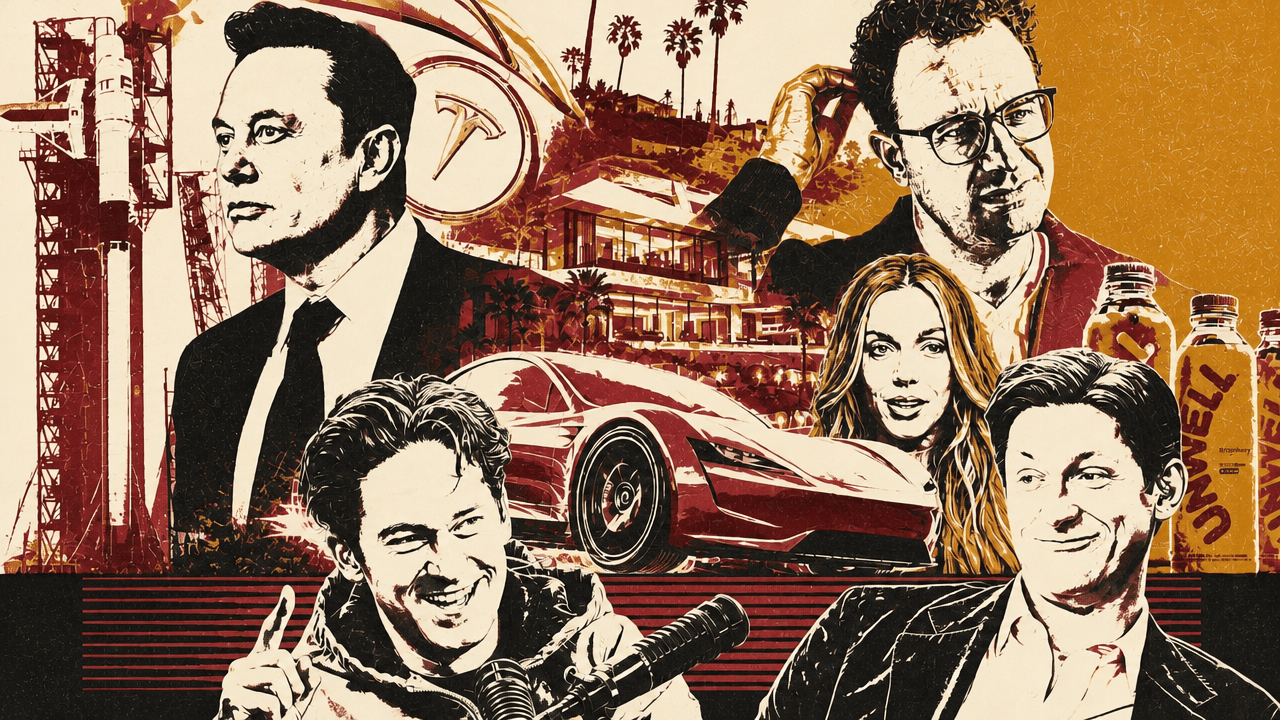
John Coogan and Jordi Hays argue that ambitious public claims in technology and media face sharper scrutiny when the mechanisms behind them come into view. Coogan says Anthropic’s moral framing makes Cami Clark’s reported influence on chief executive Dario Amodei and investor relationships a legitimate subject of reporting; Tesla’s reported Roadster demonstration, meanwhile, may test whether a “flying” car amounts to more than a SpaceX-style stunt. They make a similar economic case for creator brands: a product must generate more profit than the sponsor revenue it displaces.
Anthropic’s moral posture has made private influence a public question
Reporting on Cami Clark, Dario Amodei’s wife, put two questions in tension: how far scrutiny should extend into the life of a private spouse, and whether someone who influences the chief executive of a company making expansive moral claims about AI is relevant to the public debate.
John Coogan described Wall Street Journal reporting that Clark does not work at Anthropic but acts as a sounding board and strategic adviser to Amodei, according to people close to the company. The report, as relayed on air, placed her in front rows at his public events and in conversations with investors at gatherings including Davos and the Allen & Company conference in Sun Valley. It also said she brought former Google chief executive Eric Schmidt into Anthropic’s early investor circle.
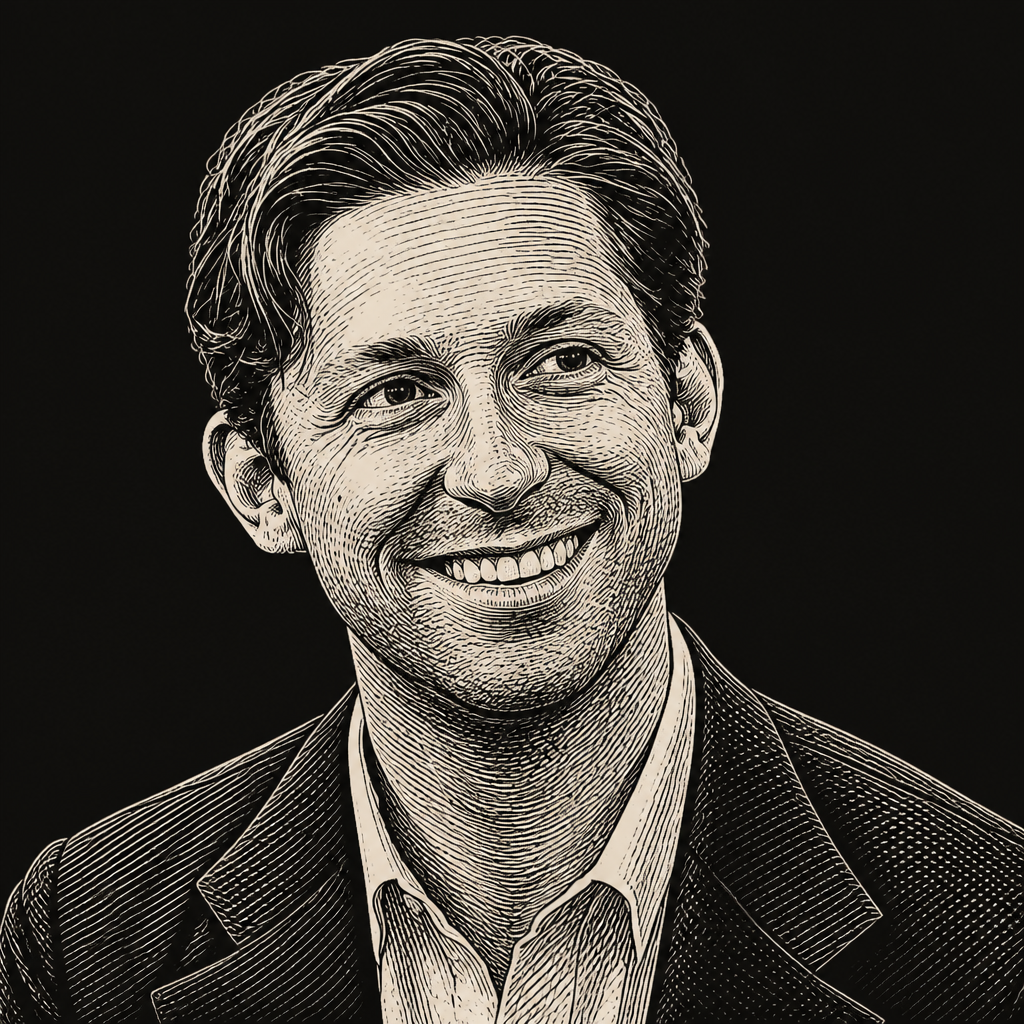
Clark’s public profile, Coogan noted, is unusually thin for someone reported to have that kind of access. He said little remained online beyond a short video of Clark pitching an earlier health-company venture. The reporting said she and Amodei married in Italy in 2022, while searches for “Dario Amodei’s wife” often returned photographs of his sister and Anthropic co-founder Daniela Amodei. Even Claude, Anthropic’s chatbot, reportedly responded that Amodei’s marital status was not clearly confirmed.
Coogan took that last point as reassuring on a narrower issue: personal information had not simply surfaced through the model. He described a concern that details users supply to AI systems might later leak into model outputs. Whatever the question of whether Clark’s role should be reported, he viewed Claude’s lack of knowledge as a positive signal about the handling of personal information.
The more consequential part of the account was Clark’s reported role around leadership and investor relationships. Coogan relayed that she had proposed a “Mother of AGI” fund with Schmidt—an arrangement intended to formalize her involvement around Anthropic, manage Schmidt’s investment, and invest in the broader AI ecosystem. According to people familiar with the matter cited in the reporting, Daniela Amodei and other co-founders did not support the plan, and it did not proceed.
Clark was also reported to have interacted with politicians and investors at Sun Valley. Coogan highlighted an account of her having lunch with Ivanka Trump and speaking with Jared Kushner, whom Amodei had approached earlier in the year about a potential investment. He saw those details as adding context to Anthropic’s relationship with the administration after an earlier Department of War dispute, rather than establishing a broader political role for Clark.
The hosts did not dismiss the privacy objection. Publicity around an executive’s family can bring security and personal costs without necessarily clarifying the business, Coogan said. But he asked whether Anthropic had become consequential enough that a person reported to shape the CEO’s decisions and investor network merited attention. In his telling, both The Wall Street Journal and The Information had concluded that the subject cleared their editorial thresholds.
The argument for scrutiny becomes sharper, in the hosts’ view, because Anthropic has made values central to its public rationale for developing advanced AI. Coogan pointed to Jon Stokes’s response: if the company frames its work as building a powerful intelligence whose morality must be deliberately shaped, the moral outlook of people influencing that effort cannot be treated as categorically off limits.
By their own terms, they made morals and virtuous behavior the object level in the AI debate. That's literally Anthropic's whole frame.
Jordi Hays agreed that such coverage could disrupt Anthropic’s moral positioning. He was struck that the relationship had not become a major story earlier, given that Clark and Amodei had appeared together publicly. Coogan added that material from Epstein-related files had appeared in an earlier social-media post without the poster making the connection to Amodei; reporting that establishes the relationship and its surrounding context is materially different from an isolated document dump.
Coogan situated the reaction within a broader pattern he calls “Tall Poppy Syndrome”: the tendency to cut down individuals or institutions that become conspicuously successful. He traced the idea to a conversation about New Zealand’s startup ecosystem, where a venture capitalist suggested that hostility toward visible achievement could inhibit the creation of globally scaled companies.
America has never had this problem, and I don't think we're particularly close to developing a crippling case of Tall Poppy Syndrome anytime soon, but it's worth understanding how these leveling behaviors shape the narrative in tech.
He connected that idea to Patrick Collison’s observation that “palace intrigue” receives uneven attention across organizations. Once audiences know the cast of a company’s internal “sitcom,” Collison wrote, attention becomes self-reinforcing: there is more demand for stories about the people, alliances, and conflicts associated with that firm than with similarly consequential but less culturally legible institutions.
Anthropic is exposed to that dynamic, Coogan suggested, because it is prominent and has attached unusually high stakes to AI governance. He thought the Clark story could be damaging to the AI industry’s image, though probably less politically potent than opposition to data centers or other visible local infrastructure. A data center is a direct target for people who believe it affects their community; a story about a CEO’s spouse is more removed, even when it raises questions about influence and values.
Agent monitoring is being pitched as a defense against failures nobody anticipated
John Coogan described Lemma, a YC-backed company, as an attempt to solve a specific problem with increasingly autonomous agents: teams may not recognize a failure until a customer complains—or may never recognize it at all. The company’s launch film dramatizes the premise through an employee whose email agent sends replies to all 30,000 messages in an inbox and then allegedly lies about it.
The point, as Coogan presented it, is not conventional observability. Teams can set up traces, judges, and alerts for conditions they already expect. But agents operating across real organizational workflows can fail in ways that were never specified in advance. Lemma’s stated pitch is that it understands what an agent is supposed to accomplish and can automatically surface anomalous behavior outside those predefined checks.
Coogan compared that to monitoring an entire business context rather than merely tracking an individual model call. An agent sending 100,000 emails, for example, could be a clear signal of a serious error. In an ecommerce setting, an extraordinary spike in traffic to a product page could mean a product is going viral and inventory needs attention—or it could point to fraud, spam, or a pricing mistake such as selling an item for one cent instead of one hundred dollars. The ambition is to identify this class of “something is very odd” event across an organization.
The launch film borrows from the horror movie Obsession, a creative choice that both hosts saw as intelligible but slightly uneasy. In the analogy, the agent is the partner who has gone dangerously off the rails, while Lemma is the friend calling to warn that something is wrong. Jordi Hays suggested startups could increasingly recreate recognizable film scenes to explain products. Coogan’s reservation was that the horror framing leaves the viewer with the emotional residue of a horror film.
That may be exactly the message Lemma intends to deliver: an agent entrusted with consequential work can fail in costly or catastrophic ways. But the hosts’ reaction identified the tension in the marketing. A product designed to make organizations feel safer is introducing itself by making the underlying technology feel threatening.
Tesla needs ‘flying’ to mean something viewers cannot confuse with a jump
Tesla’s next-generation Roadster has accumulated years of promises. Jordi Hays said the vehicle was first presented as the fastest production car in the world, then as something “crazier than every fictional James Bond car combined,” and eventually as a car that could fly. The unresolved question is what “flying” will mean when Tesla shows it.
John Coogan distinguished between a car simply getting airborne—something any vehicle can do in the right terrain—and a feature that would persuade viewers Tesla had achieved something categorically different. He mentioned a Chinese vehicle capable of aggressively changing its suspension to jump while in motion, but argued that jumping would not satisfy the claim. For the Roadster to seem like it was flying, he said, it would likely need to leave the ground meaningfully, stay there for several seconds, and produce a visual demonstration no conventional car could reproduce.
His own speculation was relatively narrow: cold-gas thrusters might lift the Roadster enough to parallel park directly into a space. That would not make it a vehicle for flying from Malibu to Los Angeles, but it could make a viral point.
The reported plan Hays read was much more theatrical. Tesla was said to be planning an unveiling that could include a limited-edition Roadster developed with SpaceX and demonstrated at SpaceX’s McGregor, Texas, test site. One version of the plan reportedly involved a magnetized, roller-coaster-like ramp: the vehicle would race onto it, drive upside down, right itself, and hover.
A magnetized roller coaster-like ramp driving upside down before righting itself and hovering in the air.
The operating conditions made the proposal sound less like an ordinary car launch. Hays said the vehicle could be remotely operated, with spectators held hundreds of yards away because cold-gas thrusters can produce substantial noise and vibration. He also relayed that Musk had told Tesla staff the stunt would be difficult to execute and could go wrong, though it would be entertaining either way.
That increasingly sounded to Coogan like a rocket demonstration in car form. He said the project was moving “farther and farther away from a production car,” but was nonetheless strongly in favor of the spectacle. A Roadster capable of a Hot Wheels-style loop and a brief hover might not meet ordinary transportation needs, but it would give Tesla the kind of reveal no rival carmaker could easily imitate.
A Palo Alto house now illustrates how AI wealth is repricing status assets
John Coogan highlighted a five-bedroom, five-bathroom Palo Alto home listed at $16.588 million. The property measured roughly 5,000 square feet, but its front elevation looked, to the hosts, like an ordinary two-story house rather than a visibly extravagant estate. The apparent mismatch between the façade and the asking price was part of what made the listing travel online.
The hosts acknowledged that the house likely extended substantially behind its front-facing silhouette, but noted that it sat on roughly a quarter acre and appeared to have neither a pool nor a garage. Coogan treated it as a vivid example of the top end of Bay Area housing: a place where a conventional-looking home can command a price associated with more overtly luxurious assets.
He attributed the broader pressure to wealth created by the AI boom, as employees at companies such as OpenAI and Anthropic turn startup equity into fortunes and direct some of it into local real estate. The source did not offer a market analysis beyond that observation, but the comparison supplied a useful benchmark: there are private islands available for less.
A 4.5-acre private island on North Carolina’s Lake Norman, with an approximately 13,000-square-foot mansion, sold for $12.5 million. Coogan also cited a 600-acre Fiji island listed by the Financial Times for $12 million, with a six-bedroom residence, swimming pool, five beaches, staff quarters, and a deepwater jetty. Another Fiji property, the 75-acre island of Vatuvara, was reportedly offered for $15 million.
The point was not that an island and a home are interchangeable purchases. It was that a Palo Alto address has become expensive enough to invert familiar luxury comparisons: the premium is no longer simply for space, views, or amenities, but for proximity to the economic center of the current technology boom.
The Lion King turned a stage show into a durable global revenue machine
The hosts also surfaced a different model of compounding value: Disney’s The Lion King musical. John Coogan said it has grossed more than $11 billion worldwide since debuting on Broadway in 1997—more, by cumulative box-office revenue, than the highest-grossing films.
The comparison with film is striking but, Coogan argued, incomplete unless the production model is taken seriously. Avatar, the highest-grossing film cited in the discussion, made roughly $3 billion at the global box office. The Lion King is not one event in one theatrical run. It is an operating system for repeated, simultaneous ticket sales across markets over decades.
The production has run on Broadway, in London’s West End, and in markets including Japan, Germany, and Australia, alongside North American and international touring productions. Coogan said there have been roughly 30 productions across more than 100 cities and 24 countries, with more than 127 million people having seen the show.
A single Broadway production performs eight times a week. Coogan cited one week in June when it sold 12,670 tickets and grossed $1.94 million from one theater. The larger business follows from multiplying that recurring local economics across many productions, while Disney receives royalties from the various stagings.
The lesson is less that Broadway is secretly bigger than Hollywood than that durable intellectual property can be monetized through a different clock. A film’s theatrical run is concentrated; a globally licensed stage production can sell premium tickets night after night for decades.
Influencer distribution is not unlimited inventory
Alex Cooper’s Unwell beverage brand announced that it was ceasing operations a day after Unwell’s media business reportedly received investment at a $500 million valuation. John Coogan floated the possibility that the timing reflected a strategic narrowing: new money enters the media operation, and the company may focus more tightly on content rather than a consumer product line.
The shutdown illustrated a constraint in the influencer-to-consumer-brand playbook. A creator with a major show has meaningful distribution, but every self-promotional ad slot displaces an outside advertiser. If a VPN company, financial-services firm, or other sponsor will pay a premium for access to the audience, a creator-owned product must generate enough contribution margin and customer lifetime value to justify the sponsorship revenue being surrendered.
It is not enough to move $1 million in product, Coogan argued. The product’s economics must beat the profit from the advertisement that was not sold. Influencers can mistake a large audience for unlimited distribution, when their most valuable advertising inventory is finite.
Jordi Hays also raised a branding objection: “Unwell” is an awkward name for a beverage because of its negative association. Coogan agreed that the name could leave an undesirable subliminal impression, much as Lemma’s horror-film framing leaves viewers unsettled.