Boomer Politics May Be Weakening the Market’s Longstanding Safety Net
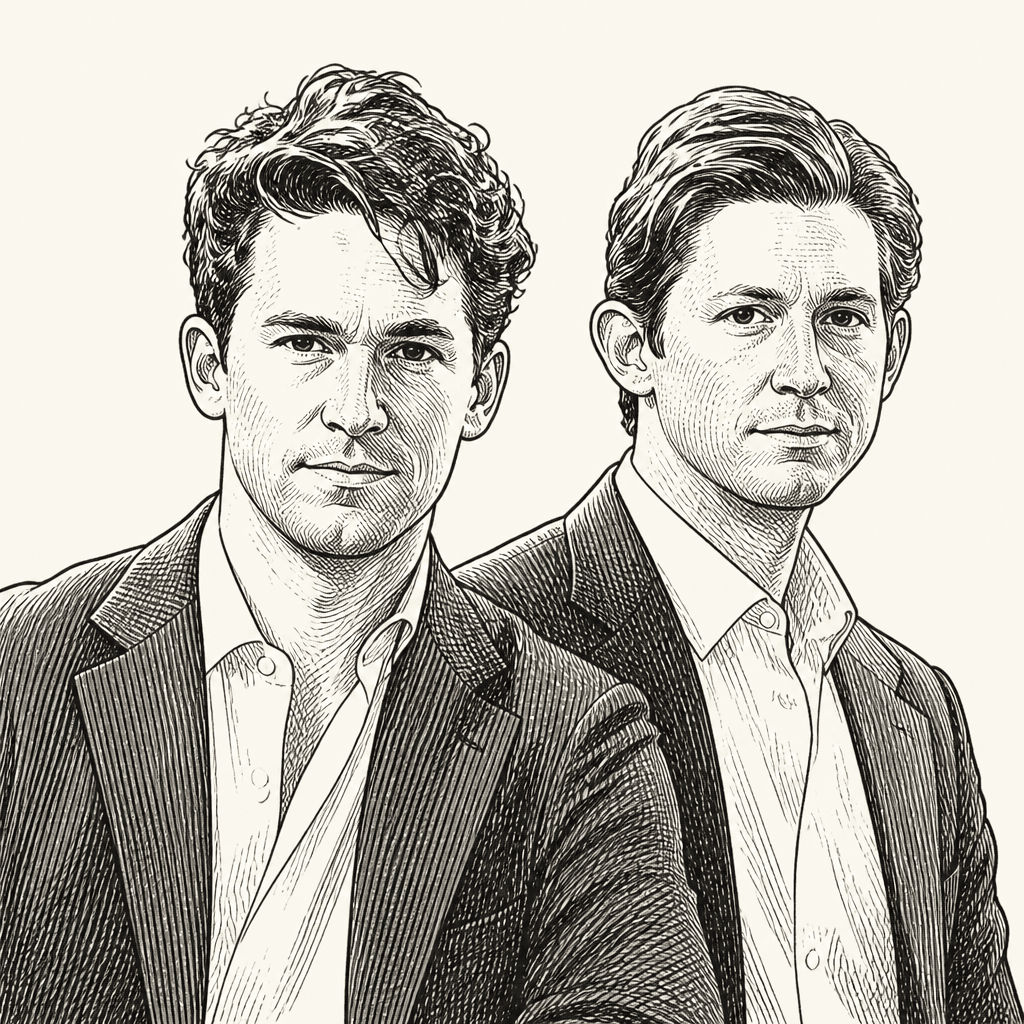

John Coogan argues that the political support behind decades of rising asset prices may weaken as baby boomers retire and die, leaving investors less certain that policymakers will step in when markets fall. In a discussion with Jordi Hays, he considers whether recent technology-stock declines signal an AI-bubble burst—and whether a market backstop, if it comes, might look less like a Federal Reserve rate cut and more like direct government intervention. The article also examines Stripe’s reported $200 billion valuation and its use of employee share buybacks to remain private.
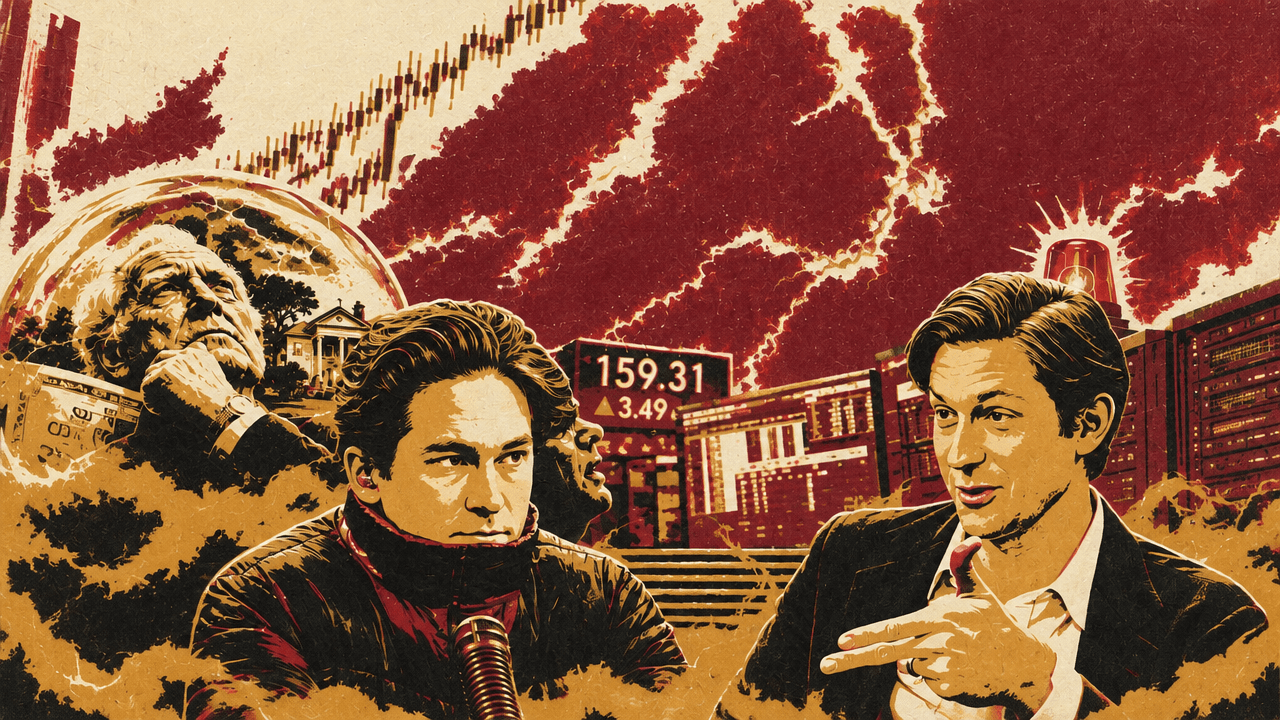
The market may still get a put, but not necessarily from the Fed
John Coogan describes the “boomer bubble” thesis from Jason Zapotkin and a partner at Istari Capital Management as a political alignment that helped sustain roughly 40 years of rising asset prices. Baby boomers became America’s dominant voters, consumers and asset owners, Coogan said. Protecting accumulated wealth therefore also meant protecting the median voter. Governments repeatedly cut rates, injected liquidity and rescued markets because those measures aligned with the interests of people who held a large share of the assets and political influence.


That alignment may weaken as boomers retire and die. Some wealth will pass to younger generations, Coogan noted, but those generations have less wealth to protect and may have stronger reasons to favor cheaper housing, redistribution and economic restructuring. The question for Coogan and Jordi Hays was what that shift could mean for the expectation that policymakers will step in when asset prices fall.
Coogan described the Greenspan put as a signal that investors would have a floor beneath stock prices: the Federal Reserve would intervene to prevent a crash, even if markets could still rise or draw down. A political system with many asset-owning voters had reason to support that protection, he argued. A less asset-rich electorate might not respond to falling markets in the same way.
The question felt immediate to Coogan because markets had sold off while interest rates remained high. He initially thought the Nasdaq’s last peak had been in the summer, when semiconductor sentiment seemed to turn. Instead, he found that the Nasdaq reached an all-time high in October, less than two months earlier. That gap between poor market “vibes” and the timing of the peak prompted a broader question: had the AI bubble already burst, with investors now living through the aftereffects?
Coogan and Hays had long joked that a small market decline meant the bubble had popped, only for stocks to recover and move higher. Hays recalled a correction in the fourth quarter of the previous year followed by another leg up, this time around agents. A comparison in a Wall Street Journal column by James Mackintosh made the current declines harder for Coogan to dismiss as ordinary turbulence.
Mackintosh compared the drawdowns of seven technology companies that survived the dot-com era with their declines in 2026. The comparison did not make a clean case that one period was a bubble burst and the other was not:
| Company | 2000 drawdown | 2026 drawdown |
|---|---|---|
| Intel | -60% | -64% |
| Oracle | -37% | -60% |
| Cisco | -52% | -30% |
| Micron | -63% | -53% |
| Qualcomm | -54% | -42% |
| Seagate Technology | -37% | -60% |
| Nvidia | -62% | -48% |
Coogan’s point was not that the comparison settles whether today’s AI market is a bubble. It was that the listed declines resemble the severity of the dot-com aftermath closely enough to make the question real. In 2000, rates were being cut; Coogan said there had been no strong employment or inflation rationale for cuts in the current moment. If the Fed was not positioned to deliver the familiar put, he asked, what form might intervention take instead?
Coogan connected that question to the reported return of Nvidia CEO Jensen Huang. He said he had not expected Huang to return so quickly, and described the call to Nvidia’s board and the push for Huang’s return as a possible new shape for the “boomer put.” Hays said Trump called into a board meeting and described that as a form of government intervention in the markets. Their remarks offered an interpretation of the events, not a settled account of who made the decision or why.
The market reaction added to Coogan’s reading. He said that if someone had explained a 6.5% rise in the Nasdaq and a 30% rise in Nvidia by saying interest rates had been cut, that would have sounded plausible. But rates had held steady while Huang returned. Coogan cited technology writer Te Kim’s account of Huang’s role inside Nvidia: Huang has described the company as a car built so he can drive and steer it, while Kim argued that the company’s senior people, though impressive, were not at Huang’s level. Coogan also pointed to Huang’s attention to top-priority emails and internal AI discussions as evidence of how personally he manages the company.
Hays offered a more bearish reading. If one person’s presence or absence can move the market that much, he said, it may signal fragility: investors lack sufficient confidence in the broader narratives that brought markets to this point. Coogan agreed that the response was striking. The larger lesson he drew from Istari’s thesis was that interventions may continue, but their form may be becoming less conventional.
The wildcard of government intervention amid a falling stock is not crazy to reason about if you think back for the last 40 years. It's happened again and again and again. I just wasn't expecting it to take this shape.
Stripe’s tender offer extends the case for staying private
A Wall Street Journal report put Stripe’s valuation above $200 billion in discussions about a new employee tender offer, which the report said would likely be completed early the following year. Coogan said that would be about 20% above Stripe’s previous $159 billion valuation. Rather than relying on an initial public offering to give employees a route to sell shares, Stripe has bought back employee stock annually, often announcing the offers early in the year.
The reported transaction would let employees sell shares, with existing investors potentially buying some of them. In last year’s tender offer, Stripe said it used a portion of its own capital to repurchase shares. That gives employees and investors periodic liquidity while leaving the company private, a model Coogan said Stripe helped make more familiar to founders and venture investors. He described it as a financing and underwriting model that has opened a different path for a limited group of highly valued businesses, not as an easy or automatic choice for every company.
Stripe has also been expanding its footprint through acquisitions. Coogan cited its purchases of OpenRouter, which routes users’ requests to different AI models; Metronome, which lets software companies bill customers based on usage; and Parafin, a small-business lending platform. He also recalled Stripe’s unsuccessful bid for PayPal with private-equity firm Advent International. Hays called the proposed combination an interesting arbitrage; Coogan noted the headline appeal of a Thiel-backed fintech trying to buy a Thiel-founded one.
Stripe is also positioning itself in agentic shopping, where an AI system makes purchases for a person. Coogan said Stripe’s consumer-facing checkout tool and digital wallet, Link, had become one of the default payment options for AI-agent tools that had already launched, including Meta’s Muse. That expansion, alongside periodic share liquidity, helps explain why the company can continue to grow without a public listing, he said.
Hays put the valuation in the context of businesses such as LVMH, Alibaba, Disney, American Express, Verizon and Dell. At more than $200 billion, Stripe would be worth more than McDonald’s, Coogan noted. Hays argued that private status can suit capital-efficient businesses that do not need to raise enormous sums and do not want thousands of employees following daily public-market moves. He added that private-market holdings can be easier to leave unchanged when public comparables fall: people do not necessarily mark down their private positions in response.
The cybersecurity deal pairs scale with a long founder bet
CrowdStrike and Zscaler had agreed to a $43.9 billion all-stock acquisition that would combine two of the cybersecurity sector’s largest pure-play companies. The Financial Times described the transaction as creating a cybersecurity giant. Coogan said Zscaler shareholders would receive 1.135 shares of CrowdStrike common stock for each Zscaler share they own. The companies already shared more than 2,000 customers through an existing alliance.
The strategic case, as CrowdStrike CEO George Kurtz put it, is that security’s job is changing as AI systems enter company networks. Coogan relayed Kurtz’s description: security used to be about keeping adversaries out; now it is also required to let AI in. The network, in this formulation, is shifting from connecting people to places toward connecting data and agents to data.
Coogan said the combined company was expected to have $10 billion in annual recurring revenue at closing. CrowdStrike projected roughly $1 billion in annual run-rate revenue synergies within 30 months and $500 million in annual cost savings within 18 to 24 months, driven by changes to data-center infrastructure, vendors and operations. Earlier in the month, CrowdStrike had also agreed to buy two AI-security startups for a combined $495 million, expanding its effort to monitor and safeguard autonomous agents as businesses adopt the technology.
Hays focused on Zscaler founder Jay Chaudhry’s financing history. Chaudhry and his wife, Jyoti, put $500,000 of their life savings into his first company, SecureIT, which sold for $70 million. Hays said Chaudhry used the proceeds to build and sell three more companies: CoreHarbor, acquired by AT&T; CipherTrust, which merged with Secure Computing; and AirDefense, acquired by Motorola.
In 2007, Chaudhry put $50 million of his own money into Zscaler. Hays said the company turned down investors for five years and did not take outside money until 2012, when Lightspeed led its first round. TPG followed with a $100 million investment in 2015. Hays estimated that Chaudhry’s $50 million investment would now translate into roughly $14 billion through the deal. The history makes the acquisition more than a large-company combination: it is also the prospective payoff from a founder’s extended period of building before bringing in institutional capital.
Microsoft’s outage puts incident response under scrutiny
Coogan said Microsoft had internally declared a “code red” after an outage affected Outlook, Teams, Exchange and Copilot. He said Microsoft attributed the incident to a Windows bug discovered in July and said it was not a cyberattack. Microsoft described it as the most customer-impacting incident in Exchange Online’s history.
The outage lasted around 24 hours. Coogan said engineers exchanged more than 11,000 messages across 11 Teams chats while trying to diagnose it; one executive described the situation as “the fog of war.” Under the code red, he said, Microsoft planned to solve future cybersecurity issues within one hour.
Coogan raised, but did not resolve, a question about the role of AI in the incident. A serious bug could require a long patching process even if no one is exploiting it, he said. Taking systems offline to address a flaw can disrupt business and service commitments. The outage therefore raises questions not only about the underlying bug but also about how engineers coordinate when a critical service is affected.
Tidal’s AI-music rule depends on what counts as “wholly” generated
Tidal said it would begin removing tracks created wholly with generative AI on December 9, with removals expected to be complete by the beginning of the year. Coogan and Hays questioned how the service would distinguish fully generated music from recordings that use AI for only one part. Hays compared the problem to requests that search engines remove AI from results: separating content according to whether AI played any role is not straightforward.
Coogan suggested drawing a line at 2023, turning Tidal into an archive of music made before then. Hays argued that such an archive would not be a viable business, since listeners could find older music on other services. Tidal’s rule, as Coogan read it, was narrower: the company would remove a track if its distributor said it was created solely with generative AI tools, or if Tidal detected that it was. The distinction between “wholly” and partly generated music is central to whether the policy can be enforced consistently.
The hosts considered whether detection could assess particular elements rather than a track as a whole. Coogan wondered whether the service would set a threshold—50%, 10% or 1%—while Hays noted that image-detection systems can identify AI use in specific parts of an image. A threshold could also invite workarounds: Coogan joked that an almost entirely generated track might evade a rule if someone added a single human-played note.
The figures Tidal reported suggest both the scale of the catalog and the uncertainty involved in moderating it:
| Tidal-reported figure | What it measures |
|---|---|
| 6% — 27 million tracks | Share of the catalog with an AI badge |
| 43% | Share of tracks delivered on average over the prior 90 days that received an AI badge |
| 96% | Share of AI-badged tracks with zero streams in the prior 90 days |
| 94% | Share of AI-badged tracks attributed to Suno |
| About 66,000 | Tracks automatically removed over suspected artist-name impersonation |
Coogan saw the policy as a difficult classification task and a possible source of differentiation. An “AI-free” service could appeal to listeners, he said, even if Tidal is only one part of Block’s business. Hays questioned whether the music service was important enough to justify such a move. Coogan replied that competing head-on with Spotify across music, podcasts and video could become an endless treadmill for a subsidiary whose parent company has other priorities. A narrower identity might give Tidal a reason to remain distinct; whether the ban can be enforced without rewarding workarounds remained open.
An auction estimate and a bare wrist invite competing readings
A Nanotyrannus skeleton named Jodi sold for $47.3 million after a bidding contest at Sotheby’s in New York. Coogan identified the seller as Christian Angermayer, who described the sale as one of his more special “exits.” Angermayer said the dinosaur had originally been named Chomper but was renamed after potential copyright issues. He also said bidders competed for more than 12 minutes, pushing the price to more than five times the high estimate. Jodi became the second most valuable dinosaur sold at auction, behind a T. rex called Gus that fetched $50.1 million in July.
The on-screen photograph showed the mounted skeleton under the name “Jodi the Nanotyrannus”; Angermayer’s posts supplied the sale price and the bidding details. Hays suggested that the low estimate helped draw bidders in. Once bidding begins, he said, people do not want to lose.
A bare wrist in an image promoting the next James Bond film prompted speculation about the franchise’s watch partnership. The billboard shown on screen displayed Robert Pattinson as Bond, with the words “James Bond Will Return 007.” Coogan said the image was real, despite people saying it was AI-generated; he argued that the apparent “two thumbs” on the gun were not a tell, since a person can place both thumbs there when holding one. Coogan pointed to the absence of a watch as a detail that had people wondering which brand might appear.
Omega has been associated with Bond since GoldenEye in 1995, Coogan said, but Pattinson is a brand ambassador for Jaeger-LeCoultre. Coogan speculated that the still might avoid showing a watch while Pattinson remained under his JLC deal, leaving open whether Omega or another brand would appear in the film. He said Bond originally wore a Rolex in the books, while Omega’s film partnership reflected the value of product placement.
The brand question also touches a particular price range. Coogan placed Omega watches around $8,000 to $10,000 and said Jaeger-LeCoultre models tend to cost more but remain in the mid-tier luxury range. He described that part of the watch market as being squeezed, and noted that Zenith had chosen to move upmarket. Hays suggested Richard Mille as a more conspicuous choice if the new Bond needed a watch that would provoke a reaction.